Wisconsin Wolf Hunting 2027: Legal Status, Regulations, Season Dates & Updates
Wisconsin has one of the most closely watched gray wolf populations in the United States. Across northern forests, agricultural landscapes, and portions of central Wisconsin, wolves have established themselves as a permanent part of the state's wildlife community, sparking ongoing discussions about predator management, livestock protection, hunting dogs, deer populations, and the responsibilities of state and federal wildlife agencies. As of October 14, 2026, gray wolves remain federally protected as endangered in Wisconsin under the Endangered Species Act, meaning no legal 2027 wolf hunting season has been established and recreational hunting and trapping are prohibited.
However, Wisconsin has a state law requiring the Department of Natural Resources to establish a wolf hunting and trapping season when wolves are no longer protected under applicable federal and state endangered species laws. That means the possibility of a future season depends heavily on the legal status of gray wolves. Understanding how federal protections, state regulations, wildlife management plans, and hunting license systems interact is essential for anyone interested in Wisconsin wolf hunting. This guide explains the current rules, how a future wolf season would work, where wolves are found, and what hunters should monitor heading into 2027.
Current Legal Status: No Wolf Hunting Allowed
As of October 14, 2026, gray wolves are federally protected as endangered in Wisconsin, which means recreational wolf hunting and trapping are not permitted. The current protections follow a federal court ruling issued February 10, 2022, which restored Endangered Species Act protections for wolves across much of the contiguous United States. Wisconsin is among the states where wolves remain federally endangered. The Wisconsin DNR explicitly states that wolf harvest is prohibited while these protections remain in place, regardless of whether a person is hunting on public land, private property, or land where wolves have been observed.
Federal protections also restrict lethal control of wolves involved in livestock or pet conflicts. The Wisconsin DNR states that shooting a federally endangered wolf is unlawful unless there is an immediate threat to human safety. Suspected livestock or hunting dog depredation should be reported to USDA Wildlife Services. Property ownership does not create a general exemption from federal wildlife protections.
Will Wisconsin Have a Wolf Hunting Season in 2027?
A 2027 Wisconsin wolf hunting season has not been confirmed. For a recreational season to occur, wolves would need to be legally eligible for harvest under applicable federal and state laws. Wisconsin already has legislation establishing how a season would operate when wolves are not listed as threatened or endangered. Under Wisconsin Statute 29.185, the state directs the DNR to establish an annual wolf hunting and trapping season when the relevant legal conditions are satisfied, but the statute does not override federal endangered species protections.
Several steps may be necessary before wolf hunting can resume: a legally effective change to federal wolf protections, compliance with applicable Wisconsin endangered species requirements, Wisconsin DNR authorization of a harvest season, establishment of harvest quotas and management zones, announcement of application and licensing procedures, and publication of final season regulations. The timing of any future season cannot be established from the existence of state law alone. Hunters should be cautious of claims that a wolf season is guaranteed to open in 2027, as the legal framework remains in flux.
Why Wolves Are Federally Protected in Wisconsin
The legal status of gray wolves has changed repeatedly over the past several decades. Gray wolves were historically widespread across Wisconsin before habitat changes, persecution, and predator control contributed to their decline. Federal endangered species protections helped support the recovery of wolf populations in the Great Lakes region. As wolf populations expanded, federal wildlife managers considered whether continued Endangered Species Act protections were necessary. The U.S. Fish and Wildlife Service removed federal protections for gray wolves across much of the lower 48 states in January 2021, which allowed Wisconsin to conduct a wolf hunting season in February 2021. However, a federal court ruling in February 2022 restored protections, and since then Wisconsin has been unable to conduct a recreational wolf harvest.
Wisconsin monitors wolves and implements management programs within the limits of federal law. The DNR conducts population monitoring, evaluates wolf conflicts, works with tribal governments, and coordinates with USDA Wildlife Services. However, federal endangered species protections currently restrict certain management actions, including public hunting and recreational trapping. The state's authority would expand if wolves were legally removed from the relevant protected-species lists.
What Would the 2027 Season Dates Be?
There are no confirmed Wisconsin wolf hunting season dates for 2027. However, Wisconsin law establishes a season framework for years when wolf hunting is legally authorized. Under that framework, the annual wolf hunting and trapping season begins on the first Saturday in November and continues through the last day of February. Management zones may close earlier when harvest quotas or other management considerations require closure.
If a season were legally authorized under the existing statutory calendar, the corresponding dates would be: potential opening on Saturday, November 6, 2027, and potential closing on Tuesday, February 29, 2028. These dates describe the statutory calendar window only and are not approved hunting dates. Hunters must not treat them as an announced season. Individual wolf management zones could also close earlier if harvest limits were reached.
Free to join
Download mobile app
- Detailed draw odds
- Point tracking
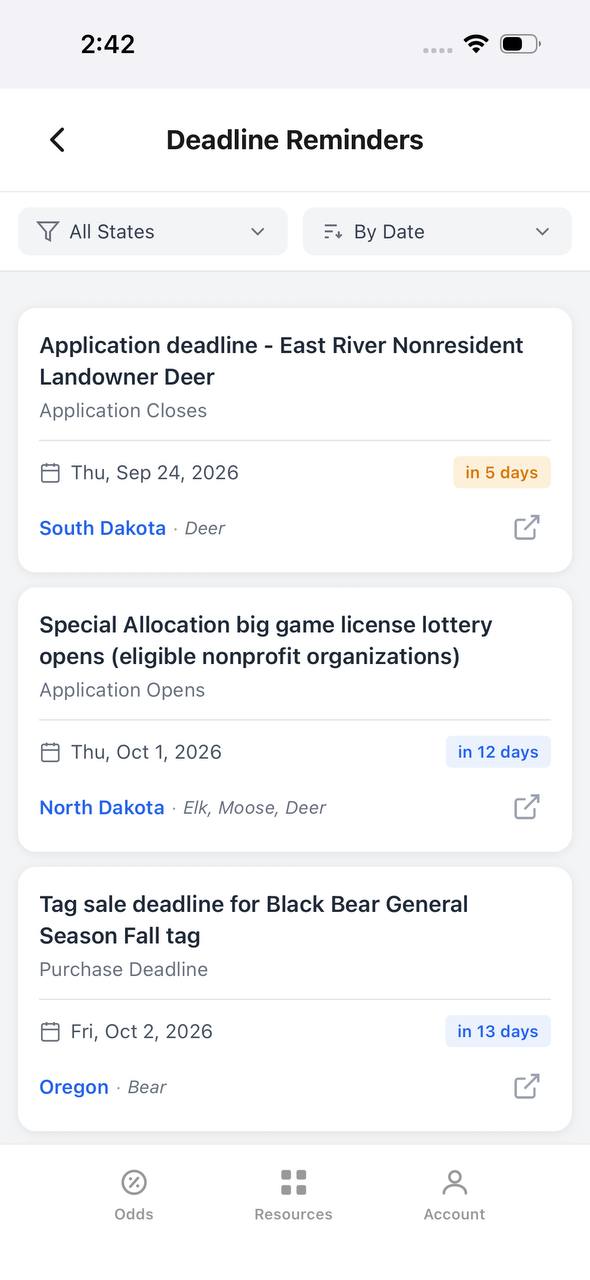
- Deadline reminders
- 19 states covered

Free to join
Download mobile app
- Detailed draw odds
- Point tracking
- Deadline reminders
- 19 states covered
Free to join
Download mobile app
- Detailed draw odds
- Point tracking
- Deadline reminders
- 19 states covered
How the Wisconsin Wolf License Draw Would Work
Wisconsin has an established wolf hunting license drawing system. When a legal wolf season is available, licenses are issued through a two-stage drawing. The first 50% of available licenses are awarded through a random lottery, where all eligible applicants participate. The remaining 50% of available licenses are distributed based on accumulated preference points, with hunters who have more preference points receiving priority within this stage. Wisconsin DNR states that residency does not influence the wolf license drawing; residents and nonresidents participate under the same drawing allocation framework, subject to applicable licensing and eligibility requirements.
Under the established system, each purchased wolf harvest license authorizes the harvest of one wolf using a legal method during an authorized season. Additional reporting, registration, zone, and method restrictions would apply. Because there is no wolf harvest season currently, applications are not accepted and preference points cannot be purchased. Hunters who accumulated points previously can check their records through the state's licensing system.
Regulations That Would Apply If a Season Opens
Wisconsin adopted updated permanent wolf hunting regulations that took effect in November 2025. These regulations establish management procedures for a future legally authorized harvest, but the existence of regulations does not mean hunting is currently permitted. A future season could involve rules covering hunting and trapping methods, harvest quotas, wolf management zones, license requirements, hunting hours, registration deadlines, carcass handling, mandatory reporting, zone closures, and enforcement and penalties. Hunters should consult the final regulations published for the actual season rather than relying on older rules.
Wisconsin has historically allowed certain hunting methods involving dogs during authorized wolf seasons, but federal protections currently prohibit recreational wolf hunting regardless of method. If a future season opens, hunters must verify the applicable rules governing dogs, training, pursuit, season dates, and other restrictions. Recreational wolf trapping is also currently prohibited, though a future authorized season could include trapping under the state's applicable regulations. Hunters and trappers would need to follow all equipment, method, licensing, and registration requirements. Hunters should also verify any electronic calling regulations in the final rules for an authorized wolf season, as no calling method creates an exemption from federal protections.
Wisconsin Wolf Population and Distribution
Wisconsin maintains an established wolf population, primarily across northern and portions of central Wisconsin. The Wisconsin DNR uses scientific monitoring methods to estimate wolf abundance and distribution, including field observations, population modeling, tracking information, and other biological data. Population estimates should always be identified by monitoring year because numbers can change. Rather than relying on a single historical estimate, hunters should review the most recent official annual wolf population report.
The Wisconsin DNR describes the state's wolf population as healthy and secure. Its 2023 Wolf Management Plan recognizes the biological recovery of wolves in Wisconsin while outlining management goals intended to maintain a viable population. Biological recovery and federal legal classification are separate questions; a population can be considered recovered under a state management assessment while still receiving federal endangered species protections.
Wisconsin's primary wolf range includes large forested landscapes in the northern part of the state, with wolves also found in portions of central Wisconsin. Northern Wisconsin provides extensive forest habitat and relatively large areas of connected wolf territory. Counties and regions frequently associated with wolf activity include areas around Douglas, Bayfield, Ashland, Iron, Vilas, Oneida, Forest, Price, and Sawyer counties, though wolf distribution is not limited to these counties. Wolves also occupy suitable habitat in parts of central Wisconsin, depending on factors including habitat connectivity, prey availability, territorial behavior, and human activity. Individual wolves may disperse beyond established breeding territories, but the primary established wolf population remains concentrated in northern and portions of central Wisconsin. Hunters should use official distribution and monitoring resources rather than assuming that a wolf sighting establishes a resident pack.
Wisconsin Wolf Management Plan 2023
Wisconsin approved an updated Wolf Management Plan in 2023. The plan replaced an older framework and established a more adaptive approach to wolf management. It addresses wolf population monitoring, population sustainability, wolf-human conflicts, livestock depredation, tribal consultation, habitat and distribution, public education, wildlife management, potential harvest management, and research and biological data. The plan emphasizes long-term wolf conservation and management informed by science.
The 2023 management plan does not establish a single fixed statewide population target in the same manner as Wisconsin's earlier wolf management framework. Instead, it emphasizes adaptive management, population monitoring, and management objectives. That approach has generated debate among lawmakers and stakeholders who favor a specific numerical target. In January 2026, Wisconsin legislators held a hearing on a proposal that would require a numerical wolf population goal, though a legislative proposal is not the same as enacted law.
Free to join
Download mobile app
- Detailed draw odds
- Point tracking
- Deadline reminders
- 19 states covered
Free to join
Download mobile app
- Detailed draw odds
- Point tracking
- Deadline reminders
- 19 states covered
Free to join
Download mobile app
- Detailed draw odds
- Point tracking
- Deadline reminders
- 19 states covered
Wolf Hunting on Public Land
Wisconsin contains extensive public lands that provide habitat for wolves, including national forests, state forests, and other public hunting areas. However, the presence of wolves on public land does not make wolf hunting legal while federal protections remain in place. If a future wolf season is authorized, hunters would need to verify both species-specific regulations and land-specific access rules. Useful public-land research resources include the Wisconsin DNR Public Access Lands website, the Chequamegon-Nicolet National Forest, and the Wisconsin DNR Hunting Information page.
Wolf Conflicts With Livestock and Hunting Dogs
Wolf management in Wisconsin involves more than potential recreational hunting. The state also documents wolf interactions with livestock, pets, and hunting dogs, which can create economic losses for agricultural producers and serious concerns for hunters using dogs. The Wisconsin DNR works with USDA Wildlife Services to investigate suspected wolf depredation. The DNR recommends reporting suspected wolf depredation promptly, as early reporting can help investigators examine evidence and determine whether wolves were involved.
Hunters using dogs in wolf-occupied areas should review Wisconsin's wolf caution areas, which identify places where verified wolf conflicts have occurred. The DNR provides maps and reports that can help hunters understand known conflict areas. For northern Wisconsin, the USDA Wildlife Services contact is 1-800-228-1368 or 715-369-5221. For southern Wisconsin, call 1-800-433-0663 or 920-324-4514. These contacts are intended for reporting suspected wolf depredation and related conflicts.
Do Wolves Affect Wisconsin Deer Hunting?
Wolves are predators of white-tailed deer and can influence deer survival and behavior. However, wolf predation is only one factor affecting deer populations. Other important influences include winter severity, habitat conditions, food availability, disease, hunting harvest, fawn recruitment, other predators, and regional land-use patterns. The effect of wolf predation can differ substantially between areas. For example, deer populations in northern forest landscapes may respond differently to predation and winter conditions than deer populations in agricultural regions.
Hunters should avoid attributing every change in deer abundance to wolves without considering the broader biological evidence. Wisconsin's deer and wolf management programs provide information that can help hunters understand regional population trends. For context on how hunters can navigate complex deer management frameworks, see our guide to Wisconsin deer hunting regulations for 2027, which covers season dates, licenses, tags, and CWD rules.
Free to join
Download mobile app
- Detailed draw odds
- Point tracking
- Deadline reminders
- 19 states covered
Free to join
Download mobile app
- Detailed draw odds
- Point tracking
- Deadline reminders
- 19 states covered
Free to join
Download mobile app
- Detailed draw odds
- Point tracking
- Deadline reminders
- 19 states covered
Why Wisconsin Wolf Management Remains Controversial
Wisconsin's wolf management debate involves competing priorities. Some hunters, agricultural producers, and rural residents support expanded state management authority, including the possibility of regulated harvest. Their concerns include livestock losses, hunting dog conflicts, and the role of wolves in local deer populations. Wildlife conservation organizations and other stakeholders have expressed concerns about harvest levels, population monitoring, ecological impacts, and the consequences of removing federal protections. Tribal governments also have important interests in wolf management, including cultural relationships with wolves and treaty-related considerations.
Wisconsin's management decisions must operate within applicable federal law while accounting for wildlife biology, public interests, and the state's legal responsibilities. The Wisconsin Wolf Management Plan provides the state's current framework for addressing these issues. For broader context on wolf hunting regulations across the West and Midwest, see our state-by-state wolf hunting regulations guide for 2027.
Could Federal Wolf Delisting Change Hunting Regulations?
A legally effective removal of federal endangered species protections could change Wisconsin's authority to manage wolves. However, delisting alone would not establish all the details of a hunting season. The DNR would still need to implement the applicable state requirements, determine quotas, and provide official season information. Hunters should distinguish among three different developments: federal delisting (a change in Endangered Species Act protection), state authorization (Wisconsin's legal ability to establish a harvest season), and season announcement (official publication of dates, quotas, licenses, and regulations). These developments are related but are not interchangeable. A political statement, proposed bill, agency review, or court filing does not by itself authorize hunters to harvest wolves.
What Hunters Should Monitor Before the 2027 Season
Hunters interested in Wisconsin wolf hunting should watch several official sources. The U.S. Fish and Wildlife Service publishes information on wolf recovery and legal classification. The Wisconsin DNR is the primary source for official state hunting rules and wolf hunting announcements. The Wisconsin Wolf Management Plan provides the framework for state wolf monitoring and management. Hunters should also review the appropriate license-year hunting regulations and follow changes to state wildlife laws through the Wisconsin State Legislature's official website.
For hunters tracking wolf hunting opportunities in neighboring states, our Idaho wolf hunting guide for 2027 and Idaho wolf tags, seasons, and regulations overview provide detailed information on states where wolf hunting is currently legal. Additionally, understanding Wisconsin's wolf population trends for 2027 can help hunters contextualize management decisions and future season possibilities.
Stay Informed About Wisconsin Hunting Opportunities With TAGZ
Wildlife regulations can change, especially when federal protections and state management authority intersect. For hunters planning future opportunities in Wisconsin and other states, understanding the legal status of a species is just as important as researching hunting seasons and license requirements. TAGZ was founded by hunters, guides, and outfitters who understand the challenges of navigating different wildlife regulations across the country. The platform began with firsthand guiding experience in Idaho, where researching hunting regulations and application systems inspired a more organized approach to planning hunts.
TAGZ helps hunters research supported hunting opportunities, compare available draw information, track applications, and plan across multiple states. For Wisconsin hunters, staying informed about official DNR announcements is essential, particularly when researching species whose hunting opportunities depend on federal legal status. Explore TAGZ to research hunting opportunities, organize your applications, and plan future seasons with a platform built by hunters for hunters.
FAQ — Wisconsin Wolf Hunting 2027
Is wolf hunting legal in Wisconsin in 2027? As of October 14, 2026, no 2027 wolf hunting season has been authorized. Wolves remain federally protected, and recreational hunting is prohibited.
Will Wisconsin have a wolf hunting season in 2027? That has not been determined. A season would depend on the legal status of wolves and subsequent state authorization.
When would Wisconsin's wolf season open if hunting became legal? Under the established statutory framework, the season begins on the first Saturday in November. For 2027, that date would be November 6, but it is not an authorized opening date.
Can nonresidents apply for Wisconsin wolf tags? Under Wisconsin's established wolf license drawing system, residency does not affect the drawing. No wolf applications are currently being accepted.
Does Wisconsin use preference points for wolf hunting? Yes, when a wolf season is available. Half of the licenses are allocated through a random drawing and half through cumulative preference points. No applications or point purchases are available under the currently closed wolf harvest system.
Can Wisconsin landowners shoot wolves attacking livestock? Federal protections restrict lethal control. Landowners should contact USDA Wildlife Services and must not assume livestock damage automatically authorizes shooting a wolf.
Was this article helpful?
Previous
Planning a Whitetail Hunt Around the Rut 2027: Best Dates, States & Strategies
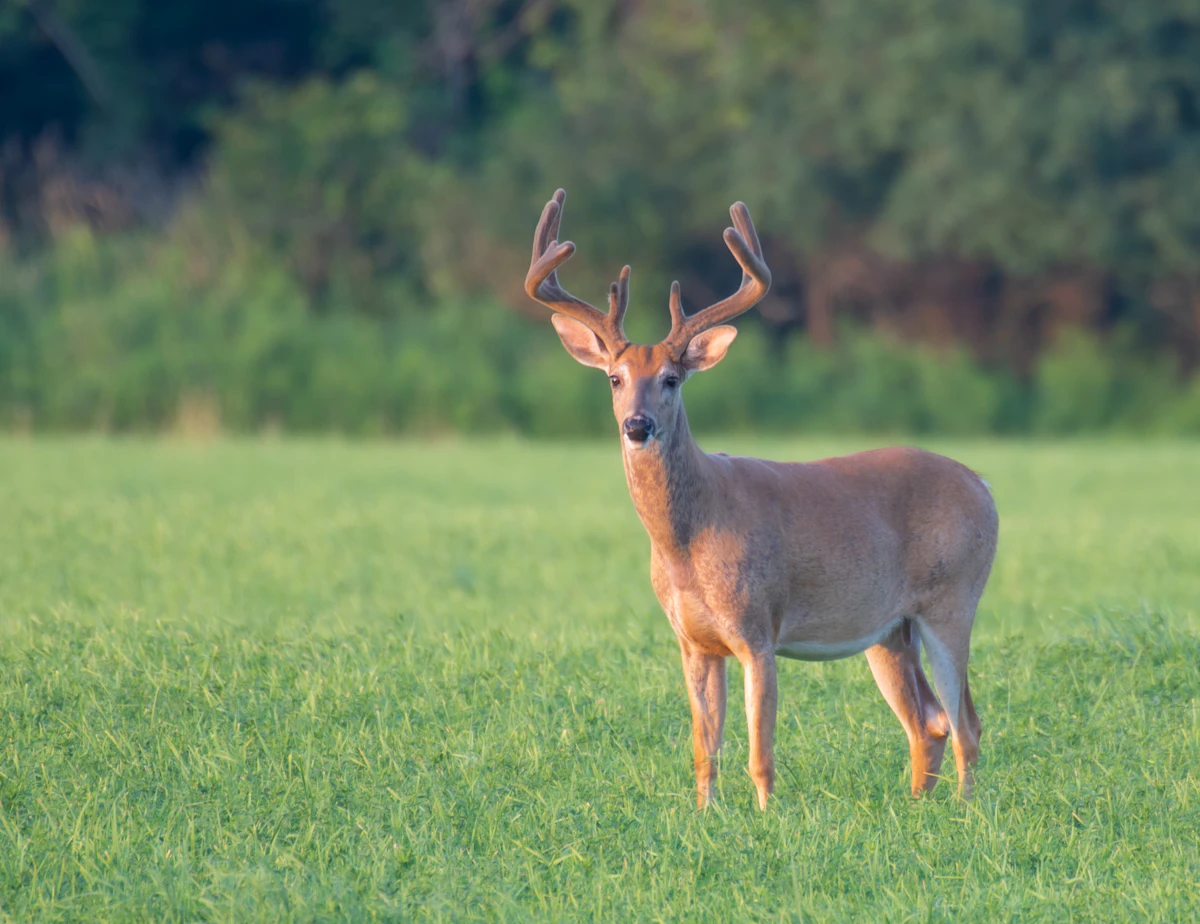
The whitetail rut varies significantly across the United States, with northern states peaking in November while southern populations may breed in December, January, or February, requiring hunters to research local timing and regulations.
Related
California Big Game Draw Guide 2027: Deer, Elk, Antelope & Sheep Tags
California's big game draw awards most premium tags through accumulated preference points while preserving random draw opportunities, covering deer, three elk subspecies, pronghorn, and bighorn sheep with applications typically opening April 15 and closing June 2.
Next
How Wolves Affect Wisconsin Whitetail Deer Populations in 2027: Predation, Hunting & Management
Wolves are a major prey predator of whitetail deer in Wisconsin, particularly in northern forests, with predation impacts varying by location, winter severity, and habitat conditions, while black bears and coyotes are also significant fawn predators.