Species You Can Hunt
- White-tailed Deer
- Mule Deer
- Elk
- Pronghorn
- Moose
- Desert Bighorn Sheep
- Mountain Bighorn Sheep
- Mountain Goat
- Bear
- Mountain Lion
State Overview
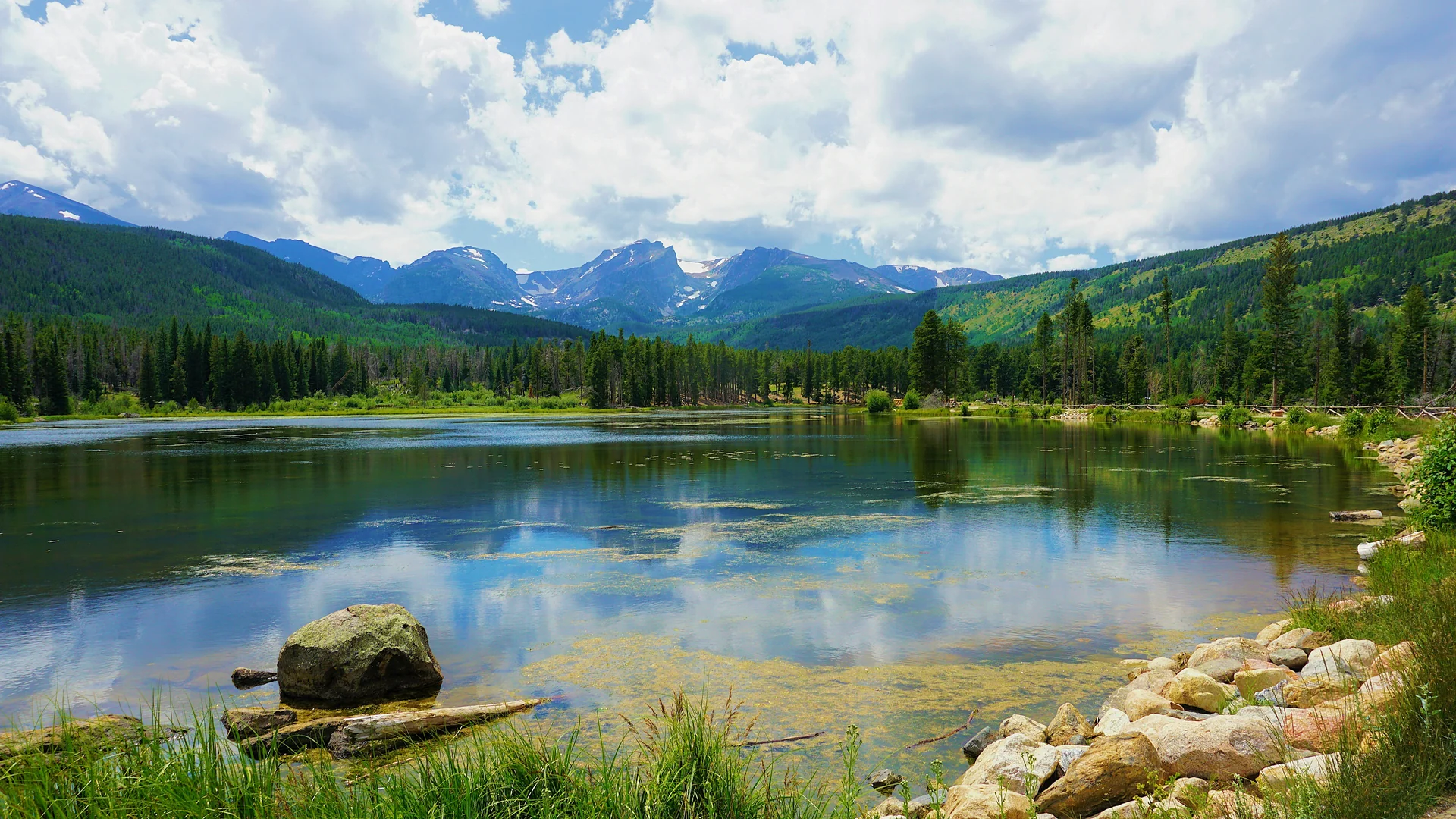
Colorado is the heart of the Rocky Mountains, with high alpine peaks and basins, vast national forest and BLM holdings, red-rock canyon country on the Western Slope, and shortgrass plains in the east.
It is a bucket-list big game destination, home to the largest elk herd in North America along with strong populations of mule deer, pronghorn, moose, black bear, bighorn sheep, and mountain goat. Abundant public land and generous over-the-counter elk opportunity make it one of the most accessible western states for do-it-yourself hunters.
Licensing & Draw
How it works
Colorado's big game hunting is managed by Colorado Parks & Wildlife (CPW), and most limited licenses are awarded through a preference point draw. Colorado offers deer, elk, pronghorn, moose, bear, and (newly classified) bison.
Two things make Colorado stand out: a large amount of over-the-counter (OTC) elk opportunity that needs no draw, and a preference point system where points accumulate until you draw your first choice. Some premium hunts use a hybrid draw that mixes a preference-point queue with a random component.
To apply for any draw you must first hold a qualifying license (such as an annual small-game or combo license) and a Habitat Stamp. You earn one preference point each year you apply and don't draw your first choice, or by applying with a point-only hunt code.
Moose, Rocky Mountain bighorn sheep, and mountain goat use weighted preference points: once you reach at least three points, you gain weighted preference in later draws. Licenses are also classified List A, B, or C, which controls how many tags for a species you can hold in a year.
Applying & deadlines
Apply online at cpw.state.co.us/buy-apply or by phone. You may submit one application per species per draw, listing up to four hunt-code choices, and only one license is awarded per species per draw.
There are two draws: the primary draw and a secondary draw (which replaced the old leftover draw). Any licenses left after the secondary draw, plus unlimited OTC licenses, go on sale to everyone in early August.
For 2026, primary draw applications are accepted March 1–April 7 (deadline 8 p.m. MT), with results posted in late May. The secondary draw runs June 18–30 (deadline 8 p.m. MT), with results in early July.
Leftover and unlimited OTC licenses go on sale August 4. Dates shift slightly each year, so confirm them in the current brochure.
Draw mechanics
In the primary draw, applicants with the most preference points for a hunt code draw first; the secondary draw does not use or award points. Hybrid hunts award some tags to the highest-point applicants and the rest at random. Youth (ages 12–17) receive priority in the secondary draw.
How TAGZ turns these mechanics into projected draw odds is covered separately in the odds methodology.
Fees at a glance
Figures are approximate—see the current fee schedule. A resident deer license is about $51 and elk about $70; nonresident deer runs about $507 and nonresident elk about $845 (both include a fishing combo). Moose is far higher (about $386 resident / $2,824 nonresident).
A Habitat Stamp (about $13) is required to apply, and there's a per-species application processing fee (about $8.93 resident / $11.49 nonresident). Preference-point-only applications for moose/sheep/goat carry a $50 resident / $100 nonresident fee.
How TAGZ Projects Odds in Colorado
Colorado uses preference points for most big game draws, with some species using a hybrid system that combines a preference-point queue with a random component. Our projections are based on five years of official CPW draw statistics (2021-2025), weighted to favor recent seasons: 2025 accounts for 45% of the projection, 2024 for 25%, 2023 for 15%, 2022 for 10%, and 2021 for 5%.
This weighting gives more importance to recent applicant demand and quota changes while smoothing out single-year swings. Projections cover the full preference point range (0-35 points) for all points-based species. Desert Bighorn Sheep is projected at zero points only, since it uses a purely random draw.
The underlying data comes from Colorado's official draw statistics and spans over 1.3 million records across nine species: elk, mule deer, white-tailed deer, pronghorn, moose, bear, bighorn sheep, mountain goat, and desert bighorn. We project separate odds for residents, nonresidents, and youth applicant pools.
Hunts that use the hybrid draw method, where some tags go to the highest-point applicants and the rest are drawn at random, are identified and labeled so users understand the specific mechanics behind their hunt.
Good to Know
Colorado is unusual for its OTC elk (archery and some rifle) that lets you hunt without drawing, though nonresident archery elk west of I-25 now requires a draw tag. Nonresident allocation on limited hunts is capped (up to about 20% on hunts needing six or more resident points, up to 25% on easier hunts).
Moose, bighorn sheep, and mountain goat are effectively once-in-a-lifetime species with lifetime bag limits. A major draw-system overhaul is scheduled to take effect in 2028.
Free to join
Access the full draw odds database for Colorado
View up to date season schedule and projected odds across all units.


All Game Units
278 units — Unit details, topography, landcover, and access are open to everyone. Draw odds projections are available with a TAGZ account.