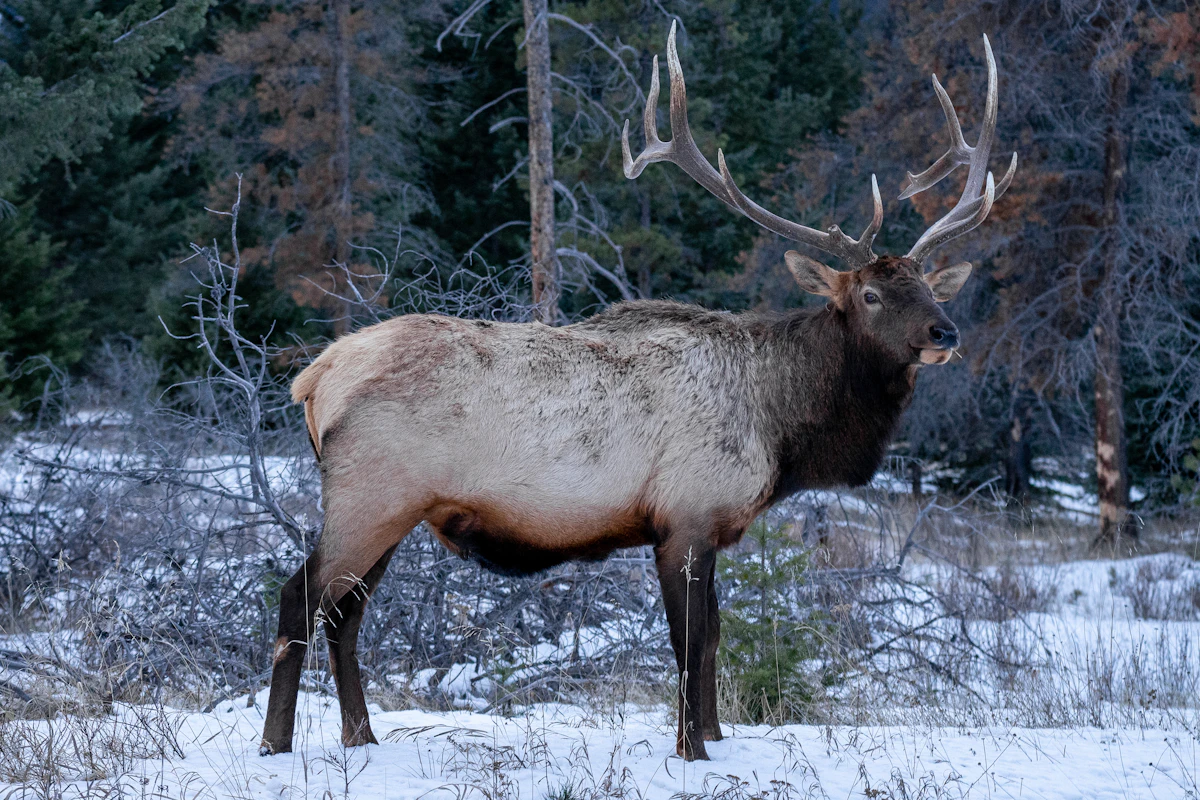
How to Choose an Elk Outfitter: 15 Questions to Ask
How to Choose an Elk Outfitter: 15 Questions to Ask Before Paying a Deposit
Booking an elk outfitter can be one of the biggest expenses associated with a Western hunt.
A fully guided hunt can cost thousands of dollars.
Add:
Tag
License
Travel
Lodging
Tips
Meat processing
Taxidermy
and the total investment can become substantial.
Yet hunters sometimes book after asking only a few questions:
How big are the bulls?
What's your success rate?
Do you have September dates available?
Those aren't enough.
Before sending a deposit, you should understand exactly what you're buying.
Here are 15 questions we'd ask before booking an elk outfitter.
1. What Exact Tag or License Do I Need?
Start here.
Don't start with trophy photos.
Ask:
What exact license or tag do I need to legally hunt with you?
You need to know whether the hunt requires:
General license
Limited-entry license
Controlled hunt
OTC license where available
Landowner authorization
Voucher
Outfitter allocation
Private-land license
Leftover license
Those aren't interchangeable.
Ask the outfitter to provide the exact hunt code, unit, zone or license type where applicable.
Then verify it yourself with the state wildlife agency.
2. Does Booking With You Help Me Obtain the Tag?
This is one of the most misunderstood parts of guided elk hunting.
The answer depends heavily on the state.
Hiring an outfitter doesn't universally mean you're guaranteed an elk tag.
Some states do have special mechanisms involving outfitters.
For example:
New Mexico has a special drawing pool for qualifying hunters contracted with eligible New Mexico outfitters.
Idaho has outfitter tag allocations within portions of its nonresident system.
Other states may have:
Landowner vouchers
Private-land authorizations
Ranch-specific opportunities
But in many public drawings, hiring a guide doesn't change your odds of drawing the same public license.
Ask:
"Exactly how am I getting the tag for this hunt?"
If the answer isn't clear, don't send money yet.
3. What Happens to My Deposit If I Don't Draw?
This question can save you thousands of dollars.
Some outfitters allow hunters to:
Roll the deposit to another year
Transfer to another hunt
Receive a refund
Apply the deposit to another species
Others may have nonrefundable deposits.
Ask specifically:
If I don't draw the required elk tag, what happens to every dollar I've paid you?
Get the answer in writing.
Don't rely on a phone conversation.
4. Are You Properly Licensed and Permitted?
Outfitter regulation differs by state.
Verify the business through the appropriate licensing authority when one exists.
For example, Colorado states that guides and outfitters must be registered, bonded and insured to operate in the state and need applicable permits to operate commercially on public land.
Idaho has a dedicated Outfitters and Guides Licensing Board.
Montana has a Board of Outfitters regulating outfitters and guides.
Other states have their own systems.
If the hunt occurs on federal land, ask whether the outfitter holds the applicable commercial-use authorization for that area.
Don't assume that having a website and posting elk photos means an outfitter is legally authorized to guide where they're advertising.
5. Where Exactly Will We Be Hunting?
Ask for more than the state.
You should understand:
Unit
Hunting district
Elk zone
General area
Public vs private land
Type of terrain
Elevation
Access method
An outfitter may not give you exact hunting coordinates before you book.
That's reasonable.
But you should understand the basic structure of the hunt.
If you're booking a Colorado elk hunt, for example, knowing only that you're hunting "Western Colorado" isn't enough.
6. Is the Hunt Public Land, Private Land or Both?
This can dramatically change the hunt.
Public-Land Guided Hunt
A public-land hunt may mean:
Other hunters
Shared trailheads
Hunting pressure
Competition
More variable elk movement
The outfitter's value may come from local knowledge, scouting and understanding where elk move under pressure.
Private-Land Guided Hunt
Private land may provide:
Controlled access
Reduced public pressure
Established lodging
Easier logistics
But don't assume private automatically means better.
Ask:
How many acres?
Is the property contiguous?
How many hunters will be there?
Are elk resident or migratory?
Can elk leave the property?
Understand what you're paying for.
7. What Does Your Advertised Success Rate Actually Mean?
Don't stop at:
"What's your success rate?"
Ask:
How do you calculate it?
An outfitter advertising 80% success might mean:
80% opportunity rate
80% harvest rate
80% over one season
80% over ten years
80% on private land
80% rifle only
Those are completely different statistics.
Ask for:
Number of hunters
Number of elk harvested
Years included
Weapon
Season
Public vs private
Bulls vs cows
Opportunity vs harvest
Context turns a marketing percentage into useful information.
8. How Many Hunters Will Each Guide Take?
Ask about the guide ratio.
Common arrangements can include:
1-on-1
or
2-on-1
but every operation is different.
Ask:
Will I have my own guide?
Will another hunter be with us?
Will we hunt together?
Are we pursuing separate elk?
Does the price change for 1-on-1 guiding?
Don't assume "fully guided" automatically means one guide dedicated exclusively to you.
9. Who Will Actually Be Guiding Me?
You may spend months talking with the owner.
That doesn't necessarily mean the owner will guide you.
Ask:
Who will actually be in the field with me?
Then ask about that guide's:
Elk hunting experience
Experience in the specific area
Years guiding
Familiarity with the season
Calling experience for archery
Glassing experience for rifle
First-aid training where relevant
Different states impose different licensing and training requirements, so don't assume there's one universal guide certification.
What's most important is whether the person guiding you is legally operating and knows the hunt.
10. How Difficult Is the Hunt Physically?
Be specific.
"Moderate" doesn't tell you much.
Ask:
How many miles do hunters typically walk each day?
What's the elevation?
How much vertical gain?
How steep is the terrain?
Are horses used?
Will I carry a pack?
How far could we be from the truck?
An outfitter should want you prepared.
A hunter who's physically incapable of reaching the elk isn't good for the hunter, guide or outfitter.
Be honest about your fitness level.
11. What's Included in the Hunt Price?
Ask for an itemized list.
The hunt price might include:
Guide
Camp
Lodging
Meals
Transportation during hunt
Horses
Pack animals
Preseason scouting
Meat packing
Trophy preparation
Or it might include only:
Guide services.
Don't assume.
Ask what isn't included too.
12. What Additional Costs Should I Expect?
Build the entire budget before booking.
Potential expenses include:
Hunting license
Elk tag
Application fees
Preference/bonus points
Landowner authorization
Private-land fee
Hotel
Airfare
Rental vehicle
Fuel
Guide gratuity
Meat processing
Taxidermy
Trophy shipping
Meat shipping
Also ask whether the outfitter charges:
Additional hunting-day fees
Airport pickup
Horse fees
Meat-packing fees
Trophy-care fees
If a hunt uses a trophy-fee structure, get the exact terms in writing.
Don't assume trophy fees are standard on all elk hunts—they aren't.
13. How Is Meat and Trophy Recovery Handled?
This question becomes extremely important after the shot.
Ask:
Who quarters the elk?
Who packs the meat?
How far will you pack it?
Are horses available?
Is packing included in the price?
Where does the meat go afterward?
Do you have a processor nearby?
Can you help arrange taxidermy?
A mature elk is a large animal.
If you shoot one several miles into the mountains, meat recovery can become a major operation.
Don't wait until there's an elk on the ground to figure this out.
14. What Is Your Wounded-Animal Policy?
This question doesn't get asked enough.
Ask:
What happens if I wound a bull?
Different outfitters can have different policies.
Some may treat a wounded animal as your animal and spend the remainder of the hunt attempting recovery.
Other policies may depend on the circumstances and applicable regulations.
Ask about:
Follow-up procedure
How long they'll search
Whether hunting continues
Whether additional charges apply
How state law affects the situation
Understand the policy before the hunt.
15. What Is Your Cancellation, Refund and Rescheduling Policy?
Read the contract.
Then read it again.
Understand what happens if:
You don't draw
You become sick
The outfitter cancels
Wildfire closes access
Weather disrupts the hunt
A family emergency occurs
The season changes
Regulations change
The hunt can't take place as planned
Ask whether your money is:
Refundable
Nonrefundable
Transferable
Eligible for rollover
Subject to a deadline
A verbal promise isn't enough.
Get important terms in writing.
Bonus Question: What Happens If the Elk Aren't There?
This question can tell you a lot about an outfitter.
Elk move.
A guide can't control that.
But ask:
What's Plan B?
Does the outfitter have:
Multiple drainages?
Multiple private properties?
Different elevations?
Backup public-land areas?
Scouting information from other guides?
You're not asking for a guarantee.
You're trying to understand how adaptable the operation is.
Bonus Question: How Many Hunters Are You Running at Once?
This matters especially with larger operations.
Ask:
How many elk hunters are in camp?
How many guides?
How many camps?
How many hunters use the same property?
Are multiple groups hunting the same drainage?
A great outfitter can still provide a poor experience if they're overbooked.
Bonus Question: Can I Speak With Recent Clients?
Ask for references.
But don't ask only for the outfitter's favorite client from ten years ago.
Ask for:
A successful client from the last season
and
An unsuccessful client from the last season.
The second conversation may tell you even more.
Ask unsuccessful hunters:
Did the outfitter work hard?
Did you see elk?
Was the hunt accurately described?
Were accommodations as promised?
Did your guide communicate well?
Would you book again?
A reputable outfitter should understand why those questions matter.
Verify the Outfitter Yourself
Don't rely entirely on reviews.
Reviews can be useful, but verify objective information independently.
Depending on the state, check:
Outfitter license
Guide license
Business registration where applicable
Public-land authorization
Disciplinary history where publicly available
For federal public land, commercial outfitters can also need authorization from agencies such as the Forest Service or Bureau of Land Management.
The exact requirements depend on the hunt location.
Red Flags When Choosing an Elk Outfitter
Be cautious when you encounter:
Pressure to immediately send a deposit
Vague answers about tags
No written contract
Unclear cancellation terms
Refusal to provide references
Claims of guaranteed public draw tags without explanation
Guaranteed trophy-size claims
Success percentages without supporting context
Unclear public/private access
Unclear meat-recovery arrangements
An outfitter you can't verify where licensing is required
Prices dramatically below comparable operations without explanation
One red flag doesn't automatically mean the operation is bad.
But several should make you investigate further.
Don't Choose an Outfitter Based Only on Giant Bulls
Social media can make every outfitter look incredible.
You're seeing:
The bull.
You're usually not seeing:
Hunters who didn't harvest
Bad-weather weeks
Missed shots
Difficult pack-outs
Average bulls
Camp conditions
Hunting pressure
Trophy photos tell you that someone killed that animal.
They don't tell you what your hunt will look like.
Don't Choose an Outfitter Based Only on Price
The cheapest hunt isn't automatically the best value.
Neither is the most expensive.
Compare:
Hunt structure
Tag pathway
Land access
Guide ratio
Services
Hunt length
Outfitter experience
Cancellation policy
A $7,000 hunt with everything included can potentially offer more value than a $5,000 hunt that requires thousands of dollars in additional services.
Compare total cost.
Start With the Tag Before Choosing the Outfitter
Before shopping for outfitters, understand where you can realistically obtain an elk tag.
That's where TAGZ can help.
TAGZ helps hunters research Western draw opportunities using factors such as:
State
Species
Residency
Season
Weapon
License type
Point level where applicable
Historical draw information
Unit information
Once you understand your realistic opportunities, you can search for outfitters operating in those areas.
Explore the platform through TAGZ Product.
Built by Hunters, Guides and Outfitters
TAGZ was started by hunters, guides and outfitters with firsthand Western hunting experience, including guiding and outfitting roots in Idaho.
That's relevant to this subject because choosing an outfitter isn't just about finding someone who can locate elk.
A professional outfitting operation has to manage:
Clients
Guides
Scouting
Camp
Equipment
Access
Regulations
Logistics
Meat recovery
Expectations
And every client is different.
A first-time elk hunter from the East may need something completely different from an experienced Western hunter who simply wants horseback access into remote country.
The right outfitter should understand that.
Learn more about the experience behind TAGZ through About TAGZ.
A Simple Elk Outfitter Checklist
Before sending your deposit, make sure you can answer:
What tag do I need?
How do I obtain it?
What happens if I don't draw?
Is the outfitter properly licensed where required?
Where am I hunting?
Public or private?
Who is guiding me?
What's the guide ratio?
How difficult is the hunt?
What's included?
What's not included?
How is meat recovered?
What happens if I wound an elk?
What's the cancellation policy?
Have I spoken with recent clients?
If you don't know the answers, you're probably not ready to send the deposit.
FAQ — How to Choose an Elk Outfitter
How do I know whether an elk outfitter is legitimate?
Verify the outfitter through the appropriate state licensing or registration authority where applicable. Also confirm any required public-land commercial permits and ask for recent client references.
Should I ask an outfitter for their success rate?
Yes, but ask how it's calculated. Find out the number of hunters, years included, weapon, season, land type and whether "success" means harvest or opportunity.
Does hiring an elk outfitter guarantee a tag?
No. Tag systems vary by state. Some states have outfitter allocations or outfitted-applicant systems, but hiring a guide doesn't universally guarantee a hunting license.
Does hiring an outfitter improve draw odds?
Usually not for the exact same public drawing, but some states have special outfitter systems. Research the state before assuming the outfitter changes your draw probability.
Should I pay an outfitter deposit before drawing?
That depends on the contract. If you do, make sure you understand exactly what happens to the deposit if you don't draw the required tag.
How much should I deposit for a guided elk hunt?
There's no universal amount. Deposit requirements vary by outfitter. Focus on the written payment, refund, cancellation and rollover terms rather than assuming a certain percentage is standard.
Should an elk outfitter provide a contract?
For a significant financial commitment, you should have written terms covering the hunt, price, services, dates, deposits and cancellation policies.
Should I verify public-land permits?
Yes. If an outfitter is commercially guiding on public land, ask what authorization allows them to operate there and verify it when appropriate.
Is a 90% success rate believable?
It could be, depending on the operation. But the percentage alone isn't enough. Ask how many hunters it represents, what years, what land, what season and whether it means harvest or opportunity.
Is private-land elk hunting better?
Not automatically. Private land can provide controlled access and potentially reduced pressure, but property size, habitat, elk movement and hunting management all matter.
What guide ratio should I look for?
There's no universal best ratio. One-on-one provides dedicated attention but typically costs more. Two-on-one can work well for hunting partners. Understand exactly what you're purchasing.
Should meat packing be included in a guided elk hunt?
It varies. Some outfitters include full meat recovery while others charge separately. Ask before booking.
What happens if I wound an elk?
Policies differ, and state regulations can matter. Ask the outfitter exactly how they handle wounded animals before the hunt.
How can I check an Idaho elk outfitter?
Idaho maintains an official Outfitters and Guides Licensing Board with a license-search system for outfitters and guides.
How can I check a Montana elk outfitter?
Montana's Board of Outfitters maintains licensing information and a license-lookup system for outfitters and guides.
Can TAGZ help me find an elk tag before booking an outfitter?
TAGZ helps hunters research Western draw opportunities, historical draw information and unit-level data so they can better understand where they may have realistic hunting opportunities.
Continue Planning Your Elk Hunt
Don't start by asking:
"Who's the best elk outfitter?"
Start by understanding:
Where can I realistically hunt?
Then identify outfitters who operate in those areas and compare them carefully.
Use TAGZ to research Western elk draw opportunities and historical information.
Explore additional Western hunting research through TAGZ Insights.
See how TAGZ works through TAGZ Product.
Learn more about the hunters, guides and outfitters behind the platform through About TAGZ.
And when you're evaluating an outfitter, verify licensing through the appropriate state authority. Examples include the Colorado Office of Outfitter Registration, Idaho Outfitters and Guides Licensing Board and Montana Board of Outfitters.
TAGZ uses historical draw information as a planning tool. Historical results don't guarantee future drawing success. Outfitter licensing, public-land permits, tag systems and hunting regulations vary by state and can change. Always verify current requirements with the applicable state wildlife, licensing and land-management agencies before booking or hunting.
Was this article helpful?
Previous
California Guided Tule Elk Hunts 2027: Tags & Odds
California is home to one of North America's most distinctive elk subspecies: the Tule elk. For hunters hoping to pursue Tule elk in 2027, the biggest challenge may be obtaining the tag. California's standard elk tags are distributed through the state's Big Game Drawing using a modified preference-point system. These are limited opportunities, and historical demand can greatly exceed available tags. Under the current system: Hunters must have a valid California annual hunting license to apply. Each hunter may submit only one elk drawing application per license year. California uses preference points for elk. Elk quotas are divided between preference-point and Draw-By-Choice portions according to the size of the hunt quota. Applicants who apply for elk and aren't drawn earn an elk preference point. A preference-point-only application is also available. California currently allows only one nonresident per license year to be drawn for elk statewide. The current Big Game Drawing deadline is June 2 at midnight. California also offers separate elk opportunities through the SHARE program on participating private properties. The final 2027 hunt quotas, dates, fees and regulations should be verified through the California Department of Fish and Wildlife when they're published. Historical draw information can also be researched through TAGZ when building a multi-state elk application strategy.
Next
DIY vs Guided Elk Hunting: Which Hunt Makes Sense?
Choosing between a DIY and guided elk hunt comes down to more than money. A DIY hunt gives you maximum independence and can dramatically reduce the cost of the hunt, but you're responsible for everything from finding elk to navigating access and packing out the animal. A guided hunt can provide: Local knowledge Preseason scouting Hunt planning Calling and glassing experience Camp logistics Access knowledge Meat recovery assistance But hiring a guide doesn't guarantee you'll harvest an elk. It also doesn't automatically improve your odds of drawing a public elk tag. For many hunters, there's a third option: Semi-guided or drop-camp hunts. These can provide some logistical support while allowing the hunter to make many of the hunting decisions independently. The right choice depends on your experience, available time, budget, physical ability and the specific elk hunt you're planning.