Best States for DIY Rocky Mountain Goat Hunting: What You Need to Know
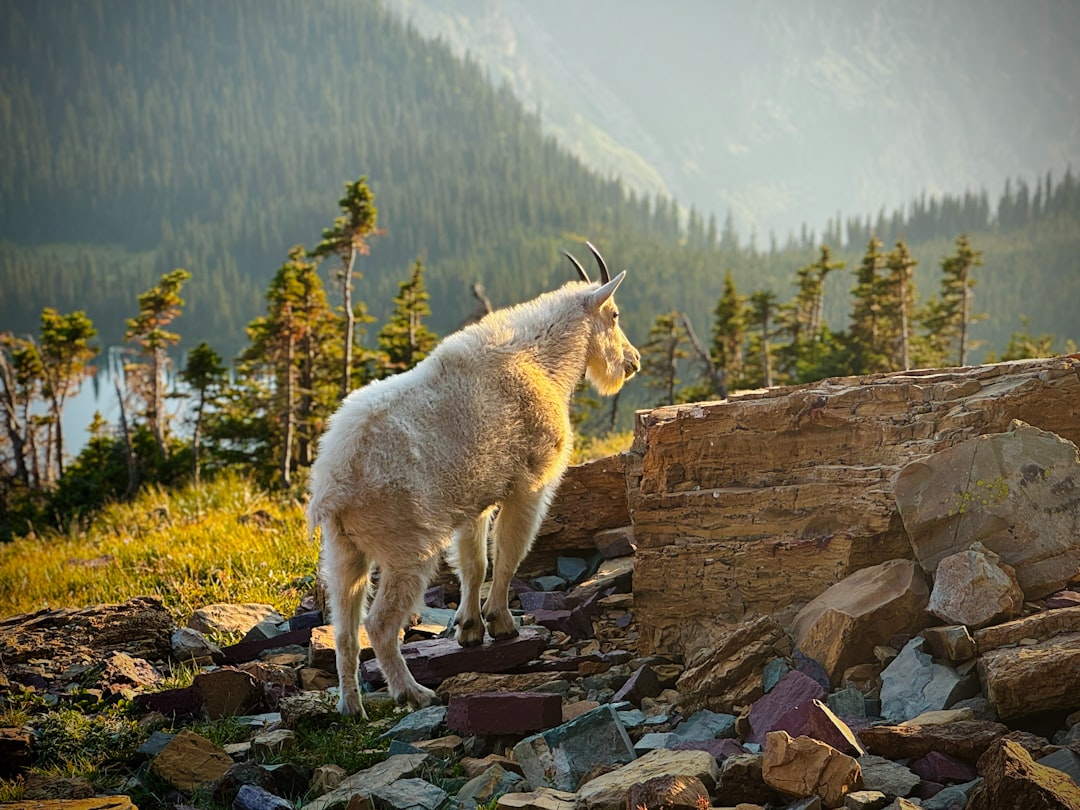
Rocky Mountain goat hunting is the pinnacle of DIY Western hunting, and most hunters will apply for decades before drawing a tag. Only a handful of states offer permits, herds are small, and the terrain is unforgiving. But if you're willing to put in the years and the legwork, a DIY goat hunt is absolutely achievable. Here's what you need to know about the best states for chasing billies on public land.
Why Goat Tags Are So Hard to Draw
Mountain goat populations across the West are small compared to elk or deer. Most states issue fewer than 300 tags annually, and some units have single-digit quotas. Combine limited permits with high demand and you get draw odds that often hover below 1% for nonresidents.
Unlike elk or mule deer, there's no "easy" goat unit. Every tag is a trophy opportunity, which drives application pressure across the board. If you're serious about drawing, you need to understand each state's point system, residency advantages, and the true odds of success over a 10 to 20-year timeline.
Montana: The Gold Standard for DIY Goat Hunters
Montana consistently ranks as the top state for DIY Rocky Mountain goat hunting. The state offers more permits than most others, with around 300 to 350 tags issued annually across dozens of units. More importantly, Montana's public land access is exceptional. Wilderness areas like the Bob Marshall, Absaroka-Beartooth, and Cabinet Mountains hold healthy goat populations on huntable terrain.
Montana uses a preference point system with a squared bonus structure for sheep, moose, and goat. Nonresidents can expect to wait 15 to 25 years for a high-demand unit, though some lower-profile units draw in fewer points. The key is identifying units where terrain difficulty suppresses demand without sacrificing goat numbers.
For a deeper look at how Montana's system works, check out How Montana's Preference & Bonus Point Systems Work | Complete Draw Guide | TAGZ Insights
Colorado: Steep Terrain, Strong Herds
Colorado offers around 100 to 125 goat tags per year across units in the Gore Range, Mount Evans, Collegiate Peaks, and other high-alpine zones. The terrain is brutal, often requiring technical scrambling above 12,000 feet. But Colorado goats are the real deal, with mature billies regularly scoring in the mid-40s.
Colorado uses a weighted preference point system, meaning max-point holders don't automatically draw. This gives mid-point applicants a realistic shot at drawing sooner than pure preference states. Nonresident draw odds still hover around 1 to 3% in most units, but the randomization factor keeps hope alive.
The challenge in Colorado is access. Many units require long pack-ins or technical approaches that deter casual applicants. If you're comfortable in exposed alpine terrain, Colorado rewards preparation.
Idaho: Overlooked and Underrated
Idaho flies under the radar for goat hunting, but it shouldn't. The state issues around 50 tags annually across the Sawtooths, Bitterroots, and central Idaho wilderness. Draw odds are comparable to Montana and Colorado, often in the 1 to 5% range for nonresidents depending on the unit.
Idaho doesn't use preference points for goat, making it a true random draw. This is good news for first-time applicants and hunters who refuse to play the decades-long point game. If you want a chance at drawing without building points for 20 years, Idaho deserves a spot in your application portfolio.
Public land access is strong, though some units require serious backcountry commitment. The Frank Church-River of No Return Wilderness holds goats in remote drainages where you may not see another hunter all season.
Free to join
Download mobile app
- Detailed draw odds
- Point tracking
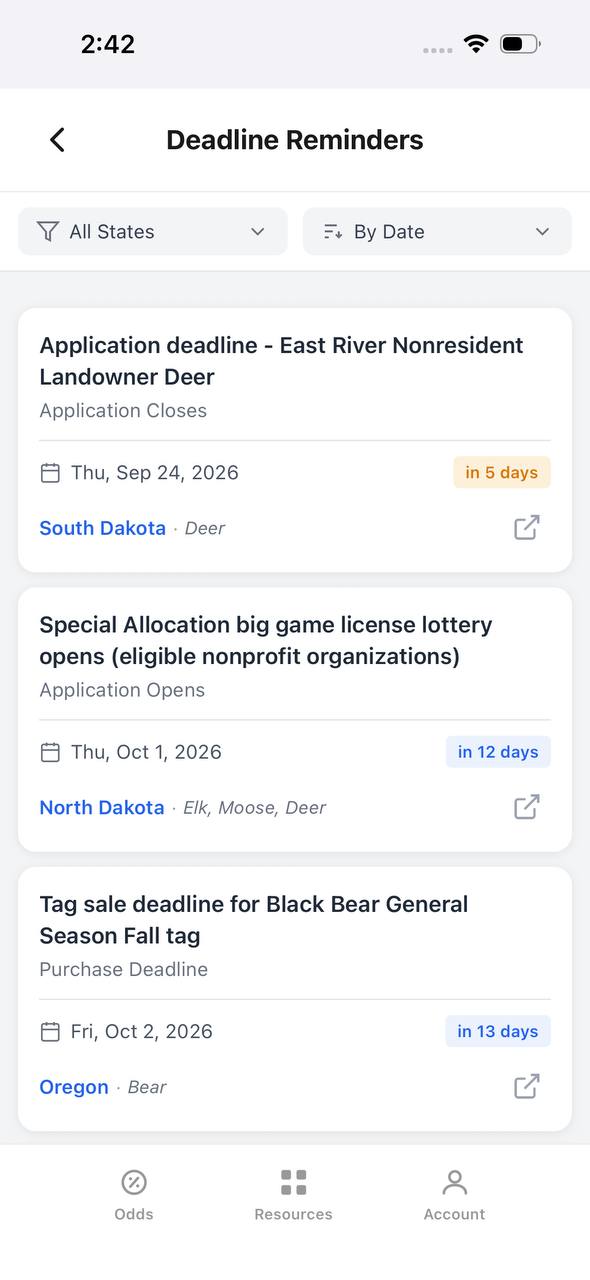
- Deadline reminders
- 18 states covered

Free to join
Download mobile app
- Detailed draw odds
- Point tracking
- Deadline reminders
- 18 states covered
Free to join
Download mobile app
- Detailed draw odds
- Point tracking
- Deadline reminders
- 18 states covered
Wyoming: Limited Tags, Exceptional Quality
Wyoming issues fewer than 50 goat tags per year, making it one of the hardest states to draw. The state uses a preference point system, and nonresidents typically need 15 to 25 points for popular units. Some units have seen max points climb above 25 in recent years.
The upside is quality. Wyoming goats live in spectacular country, including the Wind River Range and Absaroka Range. If you draw, you're hunting mature animals in true wilderness. The downside is the wait. For many hunters, Wyoming goat is a "lifetime tag" requiring decades of commitment.
If you're weighing whether to invest in Wyoming points, Product Preview | TAGZ breaks down the math.
Washington and Oregon: Regional Options
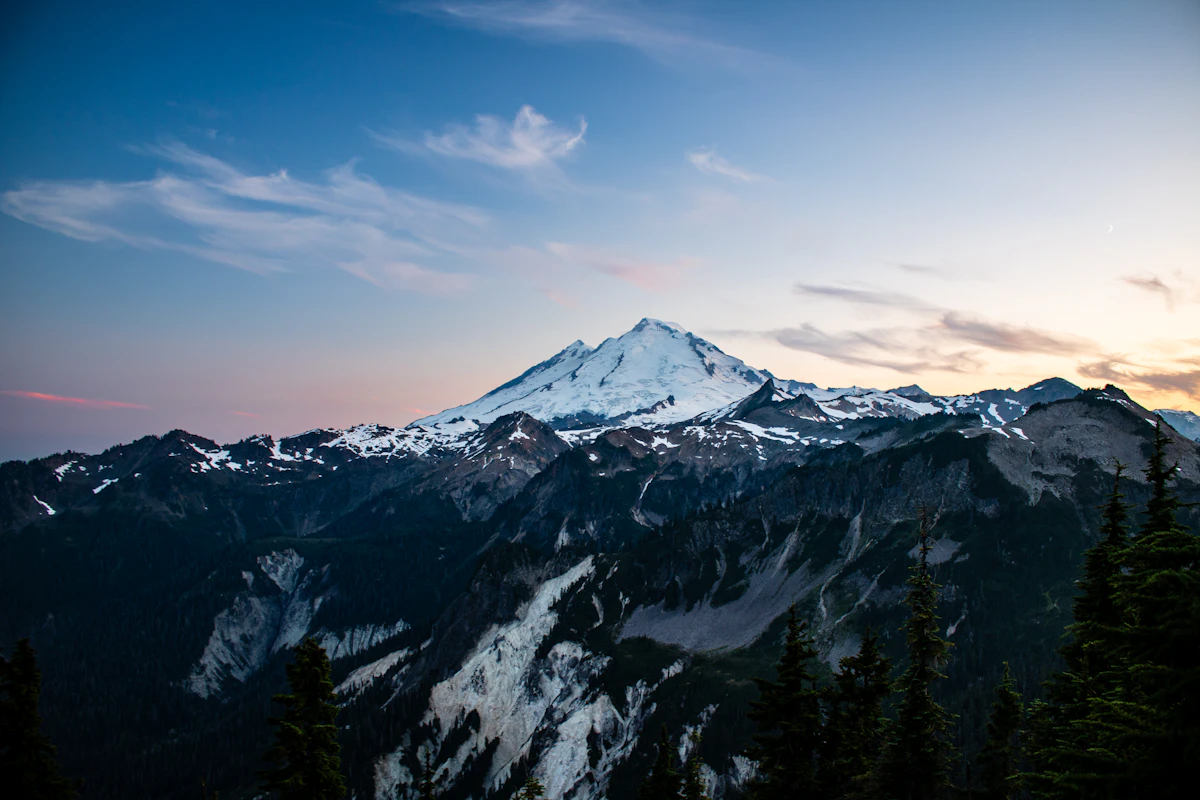
Washington offers around 70 to 100 goat tags annually, primarily in the Cascades and Olympics. Draw odds vary widely by unit, with some less-popular zones drawing in fewer points. Washington uses a point system, and nonresidents face stiff competition. The terrain is steep and often densely vegetated, making spot-and-stalk hunting a challenge.
Oregon has a tiny goat population concentrated in the Wallowas and Elkhorn Mountains. The state issues only a handful of tags per year, making it nearly impossible to draw. Unless you're an Oregon resident willing to commit decades to the lottery, it's not a practical option for most DIY hunters.
Free to join
Download mobile app
- Detailed draw odds
- Point tracking
- Deadline reminders
- 18 states covered
Free to join
Download mobile app
- Detailed draw odds
- Point tracking
- Deadline reminders
- 18 states covered
Free to join
Download mobile app
- Detailed draw odds
- Point tracking
- Deadline reminders
- 18 states covered
Alaska: The Ultimate DIY Destination
Alaska deserves special mention because it's the only state offering over-the-counter goat hunting in some units. Residents can hunt goats without a draw in registration or general season areas. Nonresidents face more restrictions but can still hunt goats without a guide in certain zones.
The catch is logistics. Alaska goat hunting is remote, expensive, and physically demanding. You'll need a bush plane, a packraft, or a boat to access most goat country. Weather can shut down hunts for days. But if you want a DIY goat without waiting 20 years to draw, Alaska is the only realistic option.
Comparing Draw Odds Across States
When building a multi-state goat application strategy, consider these factors:
- Montana offers the most tags and the best public land access, but wait times are long.
- Colorado has tough terrain that suppresses demand in some units and uses weighted points.
- Idaho is a random draw with no points, giving everyone a fair shot every year.
- Wyoming has exceptional quality but requires decades of patience.
- Alaska offers OTC opportunities but demands serious logistics.
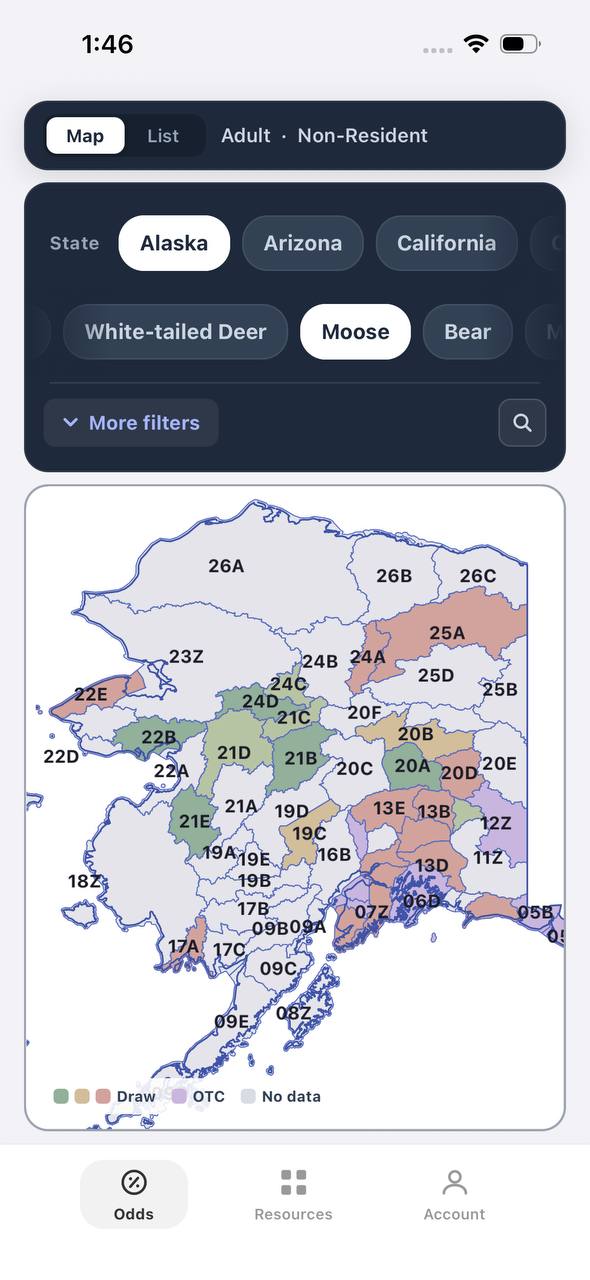
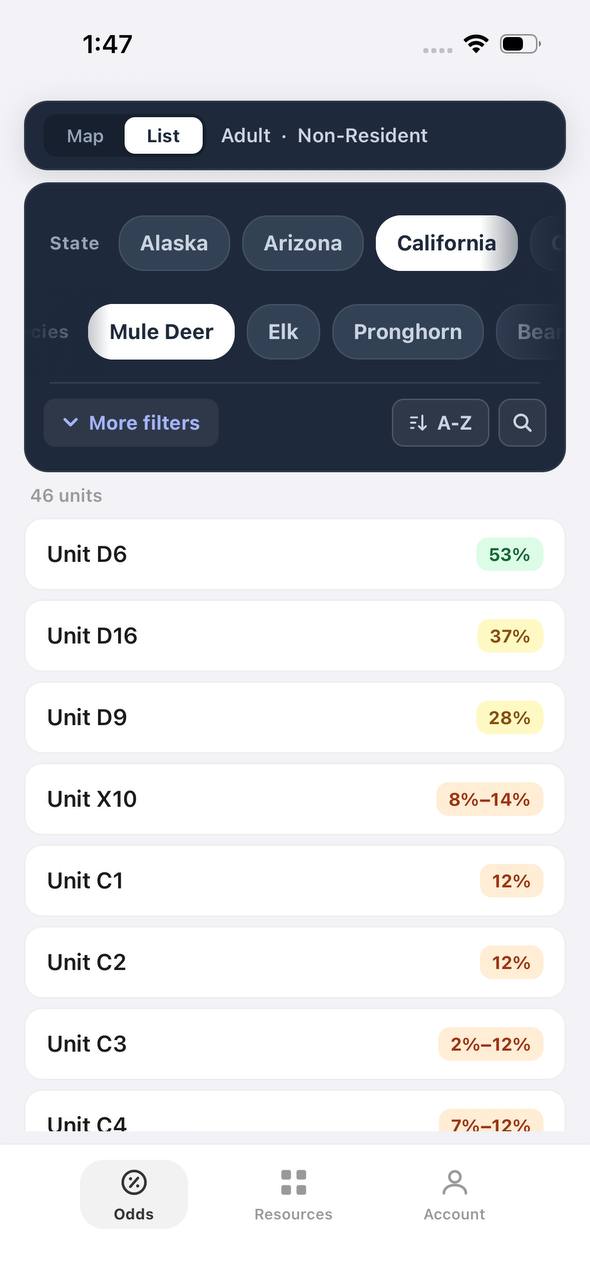
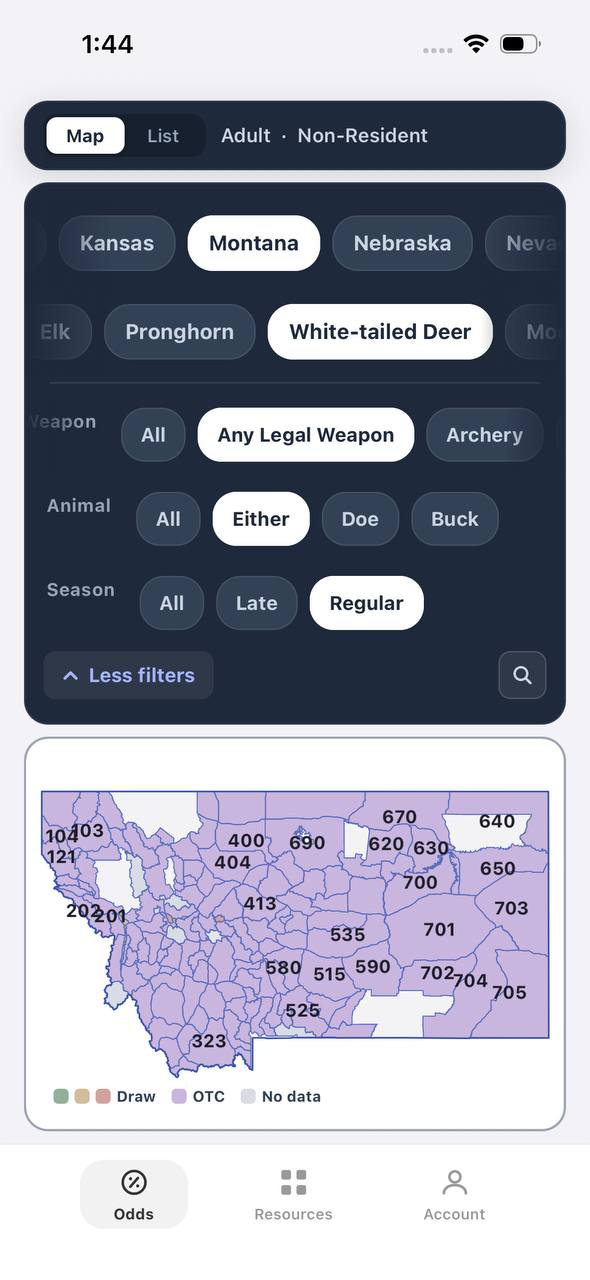
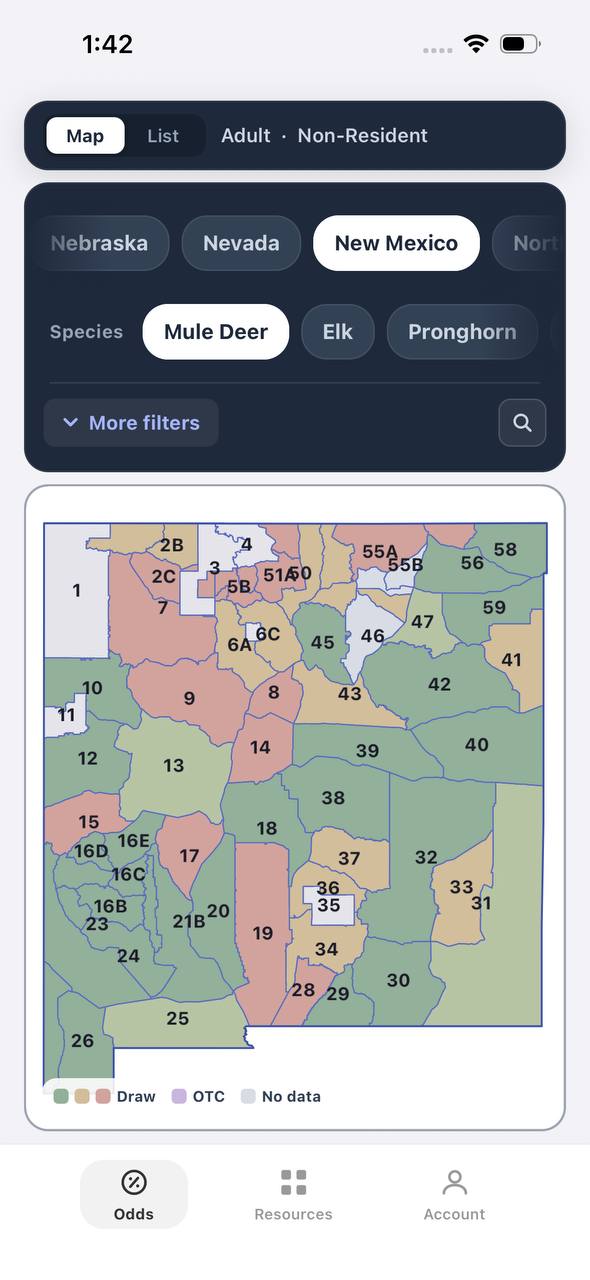
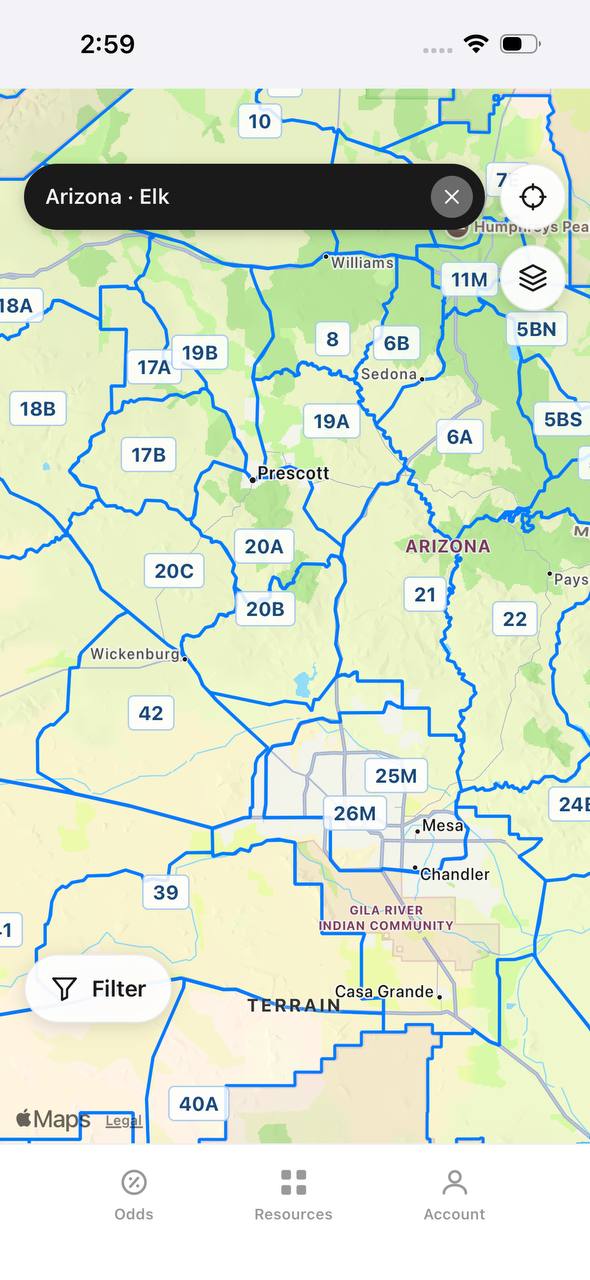
Applying in multiple states increases your odds of eventually drawing. Use TAGZ to compare draw odds across units and states so you're not wasting applications on impossible tags.
Physical and Gear Preparation
Goat hunting is the most physically demanding pursuit in Western hunting. You'll be climbing steep talus fields, crossing exposed ridges, and packing meat out of places where helicopters can't land. Start training at least a year before your hunt with loaded pack hikes, stair climbing, and altitude acclimatization if possible.
Gear matters too. Lightweight but durable footwear, trekking poles, and a solid pack system are non-negotiable. Many goat hunters carry a lightweight bivy and emergency shelter because weather changes fast in goat country.
For a checklist of what to bring for optics, see Best Optics for Elk Hunting — Binoculars, Spotting Scopes & Glassing Strategy | TAGZ Insights
Free to join
Download mobile app
- Detailed draw odds
- Point tracking
- Deadline reminders
- 18 states covered
Free to join
Download mobile app
- Detailed draw odds
- Point tracking
- Deadline reminders
- 18 states covered
Free to join
Download mobile app
- Detailed draw odds
- Point tracking
- Deadline reminders
- 18 states covered
Scouting and Unit Selection
Unit selection is everything in goat hunting. Some units have higher populations but brutal access. Others are more accessible but face heavier pressure. Use e-scouting tools to identify glassing points, escape terrain, and potential pack-out routes before you commit to an application.
Talk to biologists if possible. State wildlife agencies often share population survey data and historical harvest statistics. Look for units with consistent harvest success but lower application numbers. Those are the sweet spots where odds and opportunity align.
FAQ — Rocky Mountain Goat Hunting
What state has the best draw odds for mountain goat?
Idaho offers a true random draw with no points, giving every applicant an equal chance each year. Montana and Colorado have more tags but require points and longer wait times.
How long does it take to draw a goat tag in Montana?
Nonresidents typically wait 15 to 25 years for popular units. Some lower-demand units can draw in 8 to 12 points, especially in rugged wilderness zones.
Can you hunt mountain goat without a guide?
Yes. All Western states allow DIY goat hunting for residents and nonresidents. Alaska is the only state offering OTC opportunities in some areas.
Is mountain goat hunting harder than sheep hunting?
The terrain is similar, but goats often live in steeper, more technical country. Both require peak physical fitness and high-altitude comfort.
What's the best time of year to hunt mountain goat?
Most seasons run from September through November. Early season offers better weather but goats may be higher. Late season can push goats lower but weather becomes unpredictable.
Should I apply for goat in multiple states?
Absolutely. Spreading applications across Montana, Colorado, Idaho, and Wyoming maximizes your chances of drawing within a reasonable timeframe.
Start Building Your Goat Strategy Now
Rocky Mountain goat is a true once-in-a-lifetime hunt for most DIY hunters. The tag is rare, the terrain is unforgiving, and the preparation is real. But with a smart multi-state strategy and years of dedicated applications, you can make it happen.
Use TAGZ Draw Odds Tools to compare units across states, track your points, and build a realistic timeline for your goat tag. The sooner you start applying, the sooner you'll be glassing alpine basins for that white speck on the cliffs.
Was this article helpful?
Previous
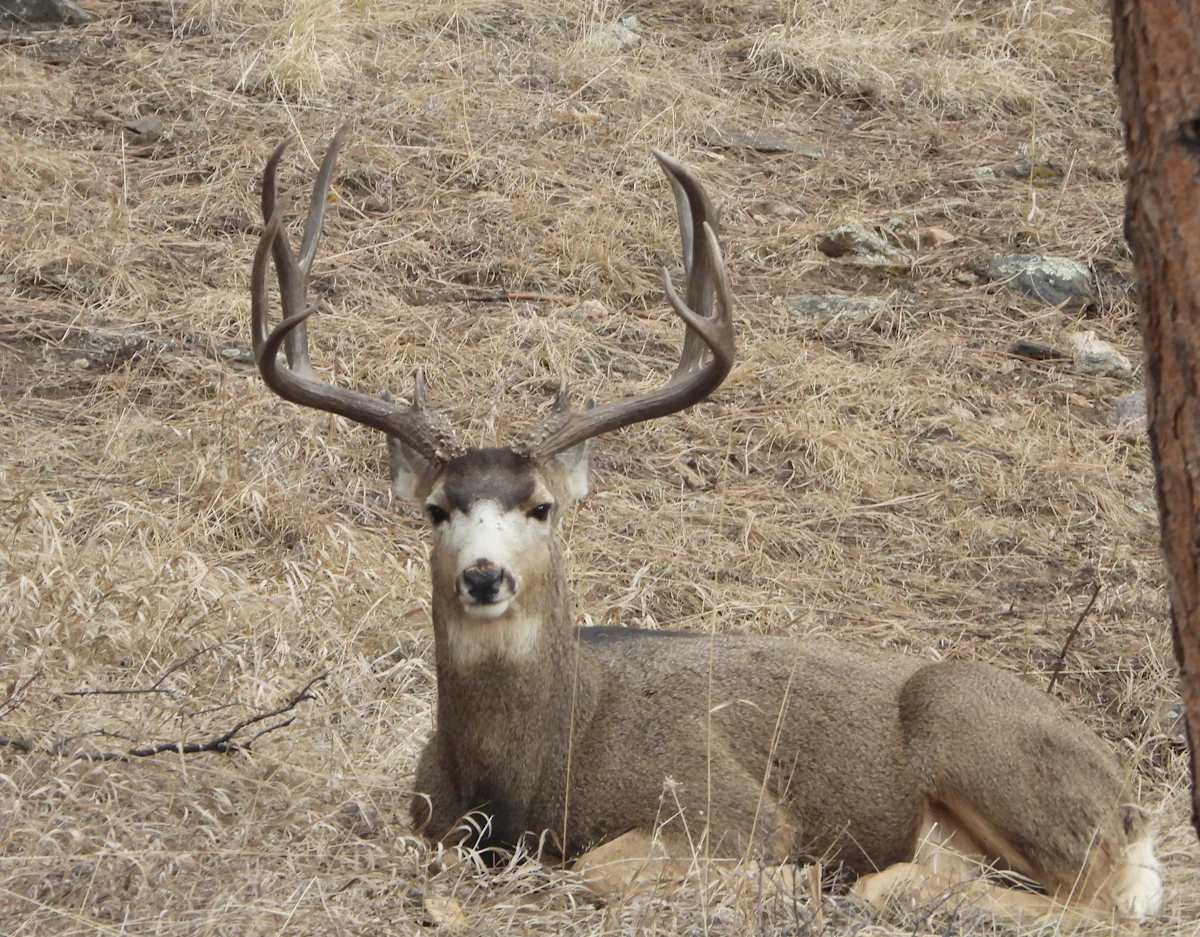
Best States for DIY Mule Deer Hunting | Public Land Buck Hunting Guide
The best DIY mule deer hunting state depends on your goals. Colorado and Wyoming offer incredible opportunity, Nevada and Utah are known for giant bucks, while Idaho and New Mexico provide excellent hunting without long-term point systems. TAGZ helps hunters compare draw odds, build application strategies, and choose the best mule deer hunt for their experience, budget, and goals.
Related
How Washington's Bonus Point System Works | Complete Hunting Draw Guide
Washington's bonus point system gives every hunter a chance to draw premium permits while rewarding long-term applicants with improved odds. From Roosevelt elk and mule deer to mountain goats and bighorn sheep, understanding Washington's application process can help hunters maximize opportunities and build a successful multi-state hunting strategy.
Next
Calling During the Peak Rut: When Elk Bulls Are Most Vulnerable
Peak rut calling requires reading bull behavior and matching your strategy to aggression levels. Learn when to bugle aggressively, when to switch to soft cow calls, and how to adapt as dominant bulls lock down cows.