Two preference points is enough to draw a Wyoming nonresident elk tag in a handful of low-demand units and one region general license if you pay the Special fee. In the 2026 draw, Areas 008, 084, 096, and 122 allowed two-point applicants to draw any-elk or antlered licenses in the Regular pool, though success rates varied widely at exactly two points. Region E General licenses drew at two points only in the Special draw ($1,965 license fee), while Regions S and W required five to six points even in the Special pool.
Which Wyoming Elk Hunts Drew at Two Points in 2026?
The 2026 completed draw results show four any-elk or antlered hunt areas where two nonresident preference points was the cutoff in the Regular preference-point draw. Area 008 Type 1 (any elk) drew all seven applicants at two points (100%), with zero applicants below two points also applying. Area 084 Type 1 drew one of three applicants at two points, with 37 applicants holding fewer than two points receiving zero tags. Area 096 Type 1 drew three of seven at two points, with 46 applicants below two points unsuccessful. Area 122 Type 2 (antlered elk, five-point or better antler restriction) drew four of eight at two points (50%), leaving 36 lower-point applicants with no tags.
These were the only any-elk or antlered areas in 2026 where two points was the exact cutoff. All other any-elk areas required three or more points in the Regular preference-point draw.
Antlerless and Special Draw Results
Antlerless areas (Type 4 or Type 5 licenses) also use preference points. Area 001 Type 4 drew five of seven applicants at two points, Area 030 Type 4 drew four of 12 applicants, and Area 051 Type 4 drew all three applicants at two points. A few antlerless areas drew at one point or even zero points, but these licenses do not satisfy hunters looking for a bull tag.
The Special preference-point draw (where you pay $1,965 instead of $707 for the license) had very low applicant counts in most areas. Area 093 Type 1 drew all three applicants at two points, and Area 084 Type 1 drew its single two-point applicant. Applicant pools in the Special draw are so small that these results are anecdotal rather than a reliable trend, but they show the Special fee does reduce competition.
How Wyoming's Preference-Point Draw Works for Nonresidents
Wyoming allocates 16% of full-price limited-quota elk licenses to nonresidents. Within that nonresident share, the system runs a Special draw (40% of licenses after landowner allocations) and a Regular draw (60% of licenses). Both the Special and Regular draws use a preference-point system for first-choice applicants: at least 75% of licenses go to the highest-point applicants first, and up to 25% go to a random draw among all unsuccessful applicants regardless of points.
A nonresident who draws a first-choice full-price elk license (including in the random draw) resets their points to zero. Second- or third-choice draws do not reset points. Type 4 or Type 5 full-price antlerless licenses use points and reset them when drawn. The reduced-price cow-calf draw does not use or affect points.
Every nonresident applicant, including those with zero points, is eligible for both the preference-point draw and the random draw. If you apply for Area 008 with two points and the cutoff is two points, you compete in the preference-point portion. If you are unsuccessful there, you also compete in the random draw along with everyone else who did not draw in the preference-point portion.
Region General Licenses at Two Points
The 2026 draw showed that two points was not enough for any region general license in the Regular preference-point draw. In the Special preference-point draw, two points drew Region E licenses at a 100% rate. All applicants at zero, one, and two points in the Special draw for Region E drew tags (zero points: 93 of 93; one point: 31 of 31; two points: 25 of 25). Region S needed three points in the Special draw, and Region W needed four points.
This means if you have two preference points and pay the $1,965 Special license fee, you are nearly certain to draw a Region E General elk tag. The Regular license fee is $707 (plus $15 application fee) in 2026. The Special fee is significantly higher, but it guarantees you a tag instead of gambling on three points in the Regular draw or the random draw. For comparison, see Wyoming Elk Draw Odds With Zero Points 2027 for options with no preference points.
Free to join
Download mobile app
- Detailed draw odds
- Point tracking
- Deadline reminders
- 19 states covered

Free to join
Download mobile app
- Detailed draw odds
- Point tracking
- Deadline reminders
- 19 states covered
Free to join
Download mobile app
- Detailed draw odds
- Point tracking
- Deadline reminders
- 19 states covered
What Happens When You Miss the Preference-Point Draw
If you apply for a two-point area as your first choice and do not draw in the preference-point portion, you enter the random draw. The random draw includes everyone who was unsuccessful in the preference-point draw, regardless of how many points they hold. For the four any-elk areas where two points was the cutoff in 2026, random-draw applicant counts were moderate. Area 008 Type 1 had three licenses in the random draw with 23 first-choice applicants. Area 084 Type 1 had two licenses with 39 applicants. Area 096 Type 1 had eight licenses with 50 applicants. Area 122 Type 2 had five licenses with 38 applicants.
Second-Choice Strategy
A common strategy is to list an easy second-choice area that draws well in the random portion. If you apply for a high-demand first-choice area where you have no realistic chance in the preference-point draw, you still enter the random draw for that first choice. If you are unsuccessful there, your second choice is processed in the random draw. The second-choice draw does not reset your points. The Wyoming preference-point page notes that a second-choice area with 100% random-draw odds is nearly certain to draw as a second choice without using points. For more detail on elk draw strategy across multiple western states, see Colorado Elk Draw Odds 2027 Units Points Nonresident Strategy.
2027 Draw Odds and Fee Changes
The 2027 draw has not yet run. The 2026 completed-draw results (demand reports dated May 19, 2026) are the latest official data. Draw odds shift every year as applicants move among areas, change their point totals, or drop out entirely. Wyoming increased the nonresident elk preference-point price from $52 to $75 effective January 1, 2027. The 2027 license fees (full-price elk, Special elk, and cow-calf licenses) are not yet confirmed. Check the official WGFD website for final 2027 fees before you apply. The 2026 application window ran January 2 through February 2, with a modify or withdraw period ending May 8 and results released around May 21. The 2027 application dates are not yet published.
Other Considerations for Two-Point Hunts
The four any-elk areas that drew at two points in 2026 (008, 084, 096, 122) are low-demand areas for a reason. They may have limited public access, rough terrain, low elk numbers, or heavy hunting pressure in accessible areas. Wyoming does not refund licenses for lack of access, so research public land maps and unit conditions before you apply. Nonresidents must hunt with a licensed resident guide in federally designated Wilderness areas. If your chosen unit includes Wilderness boundaries, confirm whether your hunt area lies inside or outside Wilderness and whether you need a guide. A preference-point advantage applies only to your first choice. If you list a competitive first choice where you have no realistic chance, your second choice is processed in the random draw. Drawing an easy second-choice area in the random portion does not reset your points. But drawing your first choice (even in the random portion) does reset your points to zero. Antlerless licenses (Type 4 or Type 5) use preference points and reset them when drawn. If you draw a Type 4 cow tag as your first choice, you lose your points just as you would for a Type 1 any-elk tag.
Plan Your Wyoming Elk 2027 Hunt With TAGZ
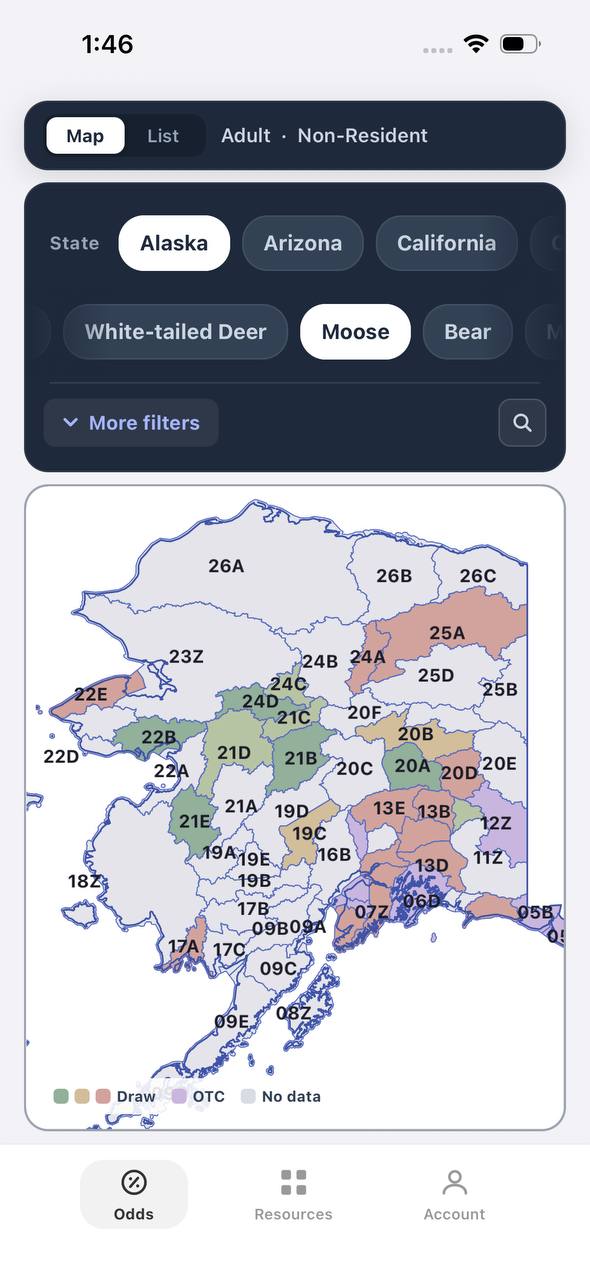
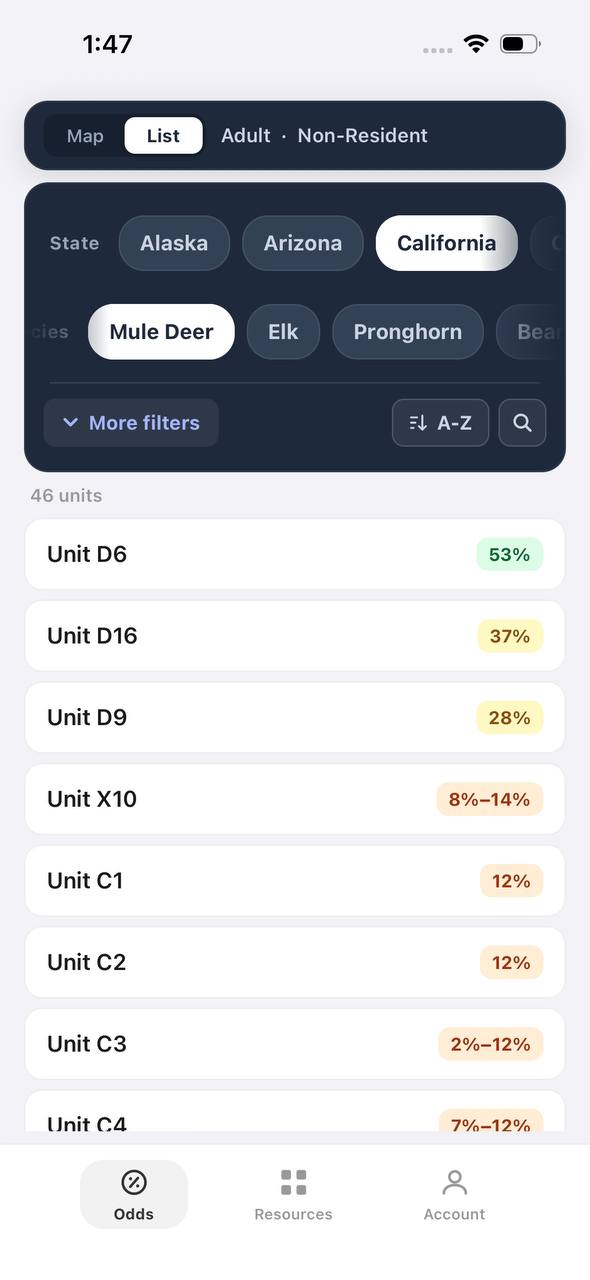
TAGZ lets you compare Wyoming elk draw odds across units and point levels, track your preference-point totals, and set up alerts for application deadlines. Filter by region, hunt type, and success rate to find areas that match your point total. TAGZ does not predict future draw results or guarantee you a tag, but it helps you research historical data and compare hunts side by side so you make an informed first-choice decision. Stop guessing. Start planning with TAGZ.
Official Wyoming Hunting Sources
- Draw Results and Odds
- Nonresident Elk Demand Reports (2026) (Regular PP), Special PP, Regular Random, Special Random
- Understanding the Draw
- Preference Points
- Application Dates and Deadlines
Last verified: October 22, 2026. Data comes from the completed 2026 draw (demand reports dated May 19, 2026). The 2027 draw has not yet run. Application dates, license fees, quotas, and final hunt-area regulations for 2027 are not confirmed. Verify all fees, dates, and requirements at wgfd.wyo.gov before you apply.
FAQ — Wyoming Elk Draw With Two Points
Can I draw a Wyoming elk tag with two preference points?
Yes. In the 2026 draw, Areas 008, 084, 096, and 122 drew nonresident applicants at two points in the Regular preference-point draw. Region E General licenses drew at two points in the Special draw ($1,965 fee) at a 100% rate.
Which Wyoming elk areas drew at two points in 2026?
Area 008 Type 1 (any elk) drew 100% at two points. Areas 084 Type 1, 096 Type 1, and 122 Type 2 (antlered five-point) drew at two points with varying success rates. These were the only any-elk or antlered areas in the 2026 Regular preference-point draw with a two-point cutoff.
Do two points draw a Wyoming Region General elk license?
Not in the Regular draw. In the Special draw, two points drew Region E at 100%, but Regions S and W still needed three to four points.
What happens if I miss the preference-point draw with two points?
You enter the random draw for your first choice along with all other unsuccessful applicants. If you list a second-choice area with low competition, you may draw that tag in the random portion without losing your points.
How much does a nonresident Wyoming elk license cost?
The 2026 Regular license fee was $707 (plus $15 application fee). The Special license fee was $1,965. Preference points increased from $52 to $75 on January 1, 2027. Final 2027 license fees are not yet confirmed; check wgfd.wyo.gov before applying.
Was this article helpful?
Previous
Colorado Mule Deer Draw Odds With One Point 2027
Colorado's 2026 draw gave nonresident mule deer hunters with one point dozens of rifle, muzzleloader and archery codes with draw-out levels at one point or zero, including second-rifle units 48, 51 and 41 and plains rifle unit 16.
Related
Colorado Nonresident Elk Draw Odds 2027: Tags, Points & Costs
2027 draw odds: Actual drawing results are not available yet. Use Colorado Parks and Wildlife’s 2026 Draw Recap and Drawn Out At reports as the latest historical baseline. Preference points: Colorado prioritizes applicants with more elk preference points for first-choice limited licenses under the rules applicable to 2027. Nonresident allocations: Up to 25% of eligible elk licenses may go to nonresidents for hunt codes historically requiring fewer than six resident points; up to 20% for hunt codes requiring six or more. Zero-point elk tags: Nonresidents can draw some limited elk licenses with zero points, depending on the hunt code and application demand. Archery elk: Nonresident archery elk licenses west of I-25 and in GMU 140 are generally limited under the 2025–2029 framework. OTC rifle elk: Some general-season rifle elk opportunities remain available without entering the primary drawing. Second-choice strategy: Drawing a second-, third-, or fourth-choice license does not use preference points. Hybrid drawing: Eligible applicants with at least five points may receive an additional chance at certain high-demand hunt codes. Secondary drawing: Preference points are not used or awarded, and youth applicants receive priority. Nonresident license cost: Colorado’s published 2026 adult elk/fishing combination price is $845.16. Application requirements: Hunters need a qualifying license to participate in the primary drawing and must meet applicable Habitat Stamp requirements. Best strategy: Compare exact hunt codes, nonresident quotas, historical point requirements, public-land access, and season timing.
Next
Utah General Deer Draw Odds 2027
Utah general-season buck deer operates on a first-choice preference point system with 86,625 permits in 2026, where nonresidents drew many units at zero points but popular zones needed 4-8 points.