Washington Archery Elk Hunting 2027: Complete Guide to Units, Draws, and OTC Options
ElkWashingtonArcheryDraw OddsOTC
10 min read·Nov 17, 2026·TAGZ
Washington Archery Elk Hunting 2027: Complete Guide to Units, Draws, and OTC Options

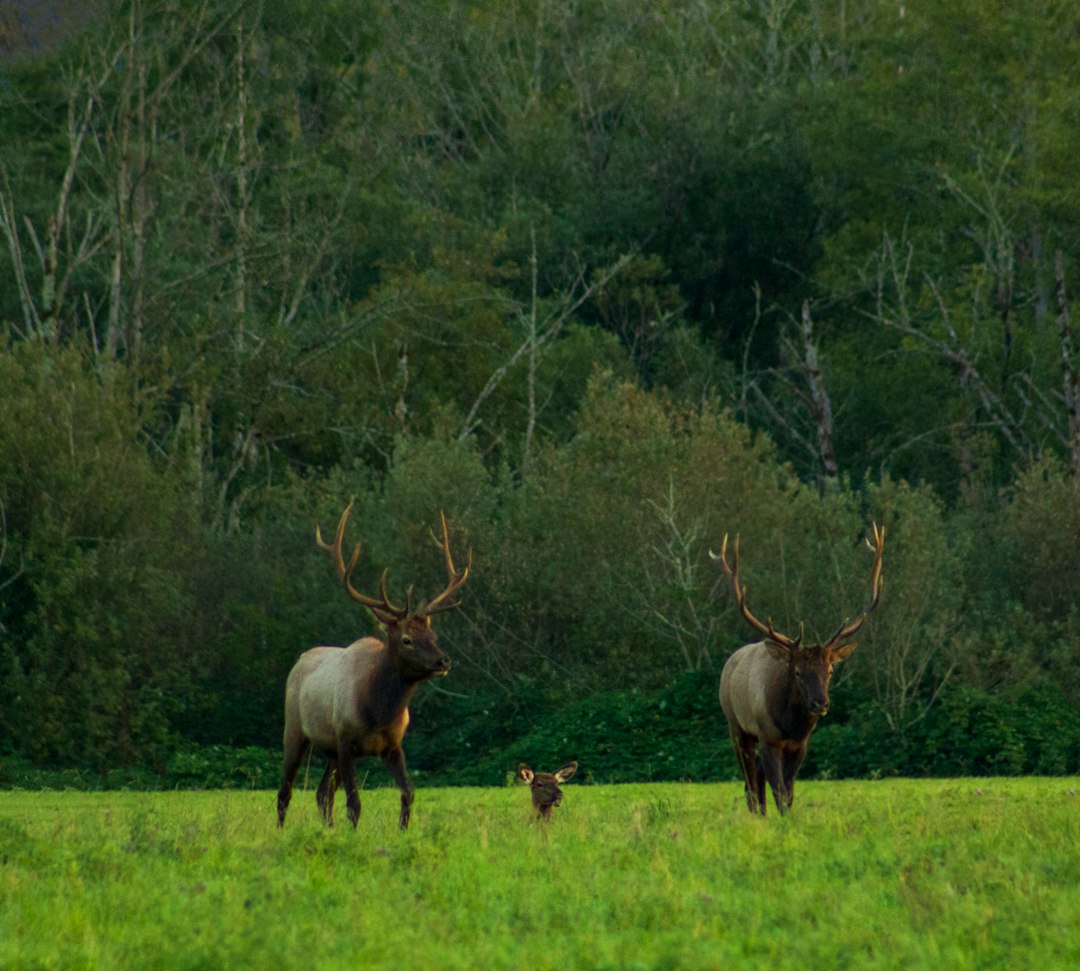
Washington archery elk hunters face a split system in 2027: some units require drawing a limited-entry permit while others remain open to over-the-counter general-season tags. The state's elk range spans coastal rainforests west of the Cascades, where Roosevelt elk thrive in dense timber, and drier pine forests east of the mountains, home to Rocky Mountain elk. Success depends on matching your hunting style to the terrain and understanding which tag type fits your target unit.

General Season vs. Limited Entry: Know the Difference

Washington divides archery elk hunting into general seasons and special permit hunts. General-season tags are available over the counter without a draw and grant access to most Game Management Units (GMUs) during the statewide archery season, typically running late August through late September. Limited-entry archery permits cover specific GMUs where elk populations or hunter crowding require quota management. These permits require entering the spring draw, usually opening in early May with results announced by late June.

Most western Washington units hosting Roosevelt elk operate under general seasons, allowing OTC access to productive rainforest elk country. Eastern Washington's Rocky Mountain elk zones split between general and limited entry. High-demand units like the Blues and Colockum often require permits, while others remain general. Check the current Washington Department of Fish and Wildlife (WDFW) hunting pamphlet to confirm whether your target GMU requires a permit for 2027.

Coastal Roosevelt Elk: Dense Timber and Wet Conditions

Roosevelt elk on the west side present a unique archery challenge. These massive animals move through thick salal, alder thickets, and second-growth Douglas fir where visibility rarely exceeds 30 yards. Calling can be effective during the rut, which peaks mid-September, but requires patience and the ability to close distance quickly when a bull responds. Logging roads provide access, but expect rain, mud, and steep terrain.

Top general-season Roosevelt units include GMUs in the Willapa Hills, the central Cascades foothills, and portions of the Olympic Peninsula. Pressure concentrates near accessible trailheads, so hiking beyond the first mile significantly improves encounter rates. Roosevelt bulls vocalize less frequently than Rocky Mountain elk, making spot-and-stalk or ambush setups near bedding areas equally viable. Wet conditions demand waterproof gear and backup bowstrings.

Eastern Washington Rocky Mountain Elk: Open Slopes and Vocal Bulls

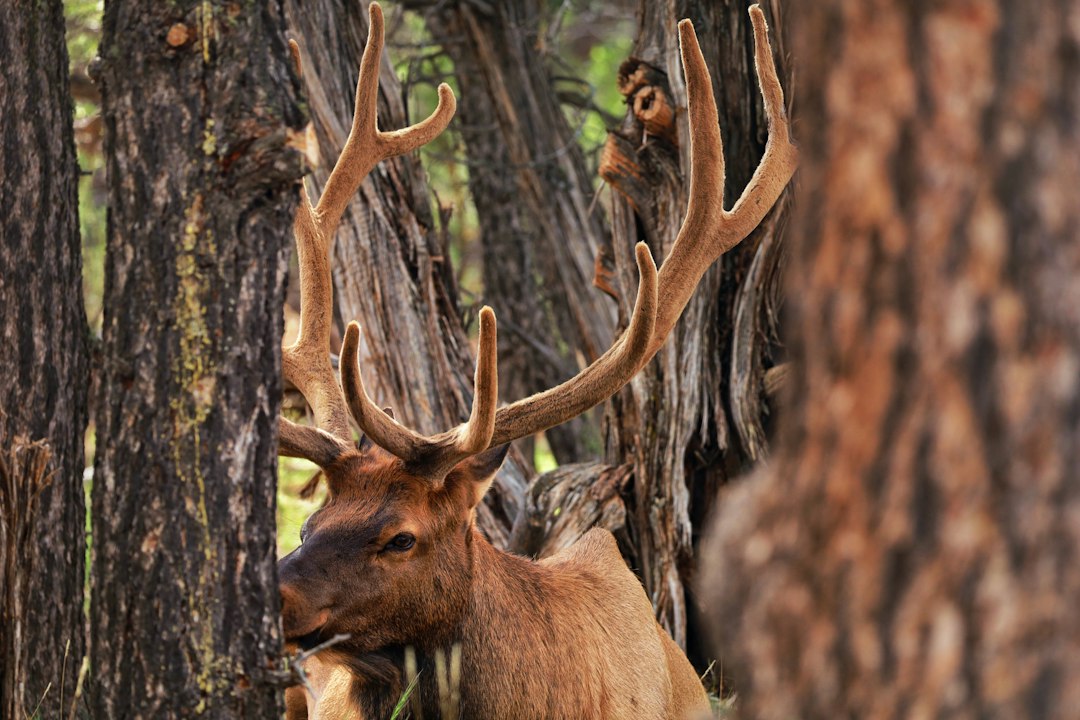
East of the Cascades, Rocky Mountain elk inhabit ponderosa pine forests, sagebrush ridges, and alpine basins. Visibility opens up compared to the west side, favoring glassing strategies and longer stalks. Bulls respond aggressively to calling during the rut, which also peaks mid-September. Morning bugles echo across canyons, allowing hunters to locate herds and plan approaches.

The Blue Mountains, particularly GMUs 154, 162, and 166, hold strong Rocky Mountain elk populations but often require limited-entry permits due to high demand. The Colockum Wildlife Area (GMU 329) likewise operates under permit-only archery seasons. Conversely, GMUs in the northeast—such as 121, 124, and 127—offer general-season archery access to decent elk numbers with less competition. Public land is abundant across eastern Washington, including national forests and Department of Natural Resources parcels.

How to Apply for Limited-Entry Archery Permits

Washington's special permit draw opens each spring, typically the first week of May, and closes around mid-May. Hunters apply online through WDFW's licensing portal or by mail. Applications require a valid Washington hunting license or conservation license purchased before applying. Nonresidents may apply but face lower draw odds in units with resident/nonresident allocation splits.

Washington uses a preference point system for some species but not for elk. Elk permit draws are random, meaning first-time applicants have the same statistical chance as veterans in the same applicant pool. Hunters may list up to four choices in order of preference on a single application. If unsuccessful in all choices, no preference point accrues. Draw results post online by late June, giving successful applicants time to scout before the season.


Draw odds
Alaska moose draw odds by unit, colored by draw, OTC, or no data
AdultNonresident

Alaska · Moose

Draw, OTC, and no-data units across the whole state.

Adult, Nonresident, Moose, no additional filters. Every unit is colored by its best matching draw odds; if nothing draws, it shows OTC; if neither, no data.

  • Alaska mixes draw and OTC moose hunts within the same region.
  • Green units are worth an application; purple units are OTC.
  • Filters stay applied when a unit is opened for hunt detail.
Draw odds
California mule deer draw odds ranked by unit in a list
AdultNonresident

California · Mule deer

Nonresident odds ranked unit by unit.

Adult, Nonresident, Mule deer, no weapon or season chip, so every matching hunt in a zone is combined into one badge and sorted by best projected odds.

  • D6 leads the list; a range like 8%–14% means more than one hunt code exists in that zone.
  • The list and the map read the same filtered hunt set.
  • 46 units are shown for this species and state alone.

Free to join

Download mobile app

  • Detailed draw odds
  • Point tracking
  • Deadline reminders
  • 19 states covered
Download on the App StoreGet it on Google Play
Unit detail
Wyoming elk unit detail, hunts tab, showing hunt windows on a timeline

Wyoming · Elk, Unit 3

Every hunt window inside one unit, laid out on a timeline.

Unit 3 has two hunt codes for elk. Each one shows its weapon, animal type, and season as a bar on a shared Aug–Jan timeline, plus a day-by-day moon phase strip.

  • Archery, then a long Any Legal Weapon window, then a late season — three opportunities in one unit.
  • The 100% badge at top means no real draw competition for the selected filters right now.
  • Weather & conditions expands below the hunt list without leaving the unit.
Terrain data
Colorado pronghorn unit detail, terrain tab, showing unit outline and key metrics

Colorado · Pronghorn, Unit 3

Unit boundaries and a complexity score at a glance.

The Terrain tab draws the unit outline against its neighbors and scores it for complexity, then breaks out area, public land, access, topography, forest, and water.

  • 849 sq mi, 55% public land, and flat topography make this a fairly approachable unit.
  • Each metric carries a short rating word — Vast, Some, Fair, Flat, Sparse, Moderate — with a tooltip.
  • The outline map shows adjacent units 2, 4, 13, and 301 for context.
State profiles
State Profiles screen listing states with wildlife agency and public land percentage

State Profiles

Each state's wildlife agency and public land share, at a glance.

State Profiles lists every covered state as a photo card naming its wildlife agency and, where available, its public land percentage.

  • Public land percentage shows right in the list, before opening the state.
  • Each card names the exact agency the regulations come from.
  • States without a public land figure yet, like Alabama here, are still listed.
Points wallet
Points Wallet screen with Colorado expanded, showing a point stepper per species

Points Wallet · Colorado

Every state and species point balance in one wallet.

Points Wallet lists each state with a species count; expanding a state, like Colorado here, shows a stepper for every species so a balance can be entered or adjusted directly.

  • Colorado alone tracks points across 10 species independently.
  • Species with no points, like Pronghorn here, still show a zero to stay visible.
  • Desert Bighorn Sheep is flagged as a random draw with no points system.

Free to join

Download mobile app

  • Detailed draw odds
  • Point tracking
  • Deadline reminders
  • 19 states covered
Download on the App StoreGet it on Google Play
Draw odds
Montana white-tailed deer draw odds filtered to any legal weapon, either sex, regular season
AdultNonresidentAny Legal WeaponEitherRegular

Montana · White-tailed deer

Nearly the whole state is OTC for this filter combination.

Adult, Nonresident, White-tailed deer, filtered to Any Legal Weapon, Either, Regular. Under this combination almost every unit turns purple — over the counter.

  • Switching weapon, sex, or season changes the picture completely.
  • Purple means the tag can be bought directly, no draw.
  • This is the tag-and-go read of Montana whitetail, not the point-based one.
Terrain data
New Mexico mule deer unit 5A terrain tab with boundary description and land cover breakdown

New Mexico · Mule deer, Unit 5A

A written boundary description, not just a shape.

Unit 5A's terrain tab opens with a plain-language paragraph about surrounding land, access towns, and ownership mix, then a land cover breakdown by percentage.

  • 72% open plains and 25% forested plains describe the terrain at a glance.
  • The boundary text calls out the exact reservation and forest lines that define the unit.
  • Access & pressure continues below the fold with mileage detail.
Draw odds
New Mexico mule deer draw odds by unit
AdultNonresident

New Mexico · Mule deer

Mule deer draw odds for every unit in the state.

Adult, Nonresident, Mule deer, all weapons and seasons. Each unit is colored by the same odds calculation used in the dashboard.

  • Green and tan together separate units worth applying to from units that are not.
  • Numbered units follow New Mexico's own game management unit boundaries.
  • Opening a unit shows the exact hunt behind the color.
Favorites
Favorite Units screen grouped by state and species

Favorite Units

Starred units from any state, grouped by species.

Favorite Units collects every starred unit across states and species into one list, grouped by state and species pair, so a saved unit is one tap away.

  • Arizona mule deer and Colorado pronghorn favorites sit side by side here.
  • Each row opens straight into that unit's detail view.
  • Unstarring from this screen removes it from the group instantly.
Deadlines
Deadline Reminders screen listing application and purchase deadlines by date

Deadline Reminders

Every application and purchase deadline, sorted by date.

Deadline Reminders filters by state and sorts by date, showing the deadline type, a countdown, and the state and species it applies to, with a link out to the source.

  • Countdown badges shift as a deadline gets close — "in 5 days" here, for example.
  • Application opens and closes are tracked as separate reminder types.
  • Each card links out to confirm the rule at the source.
Interactive map
Arizona elk unit boundaries overlaid on an interactive street map

Arizona · Elk

Unit boundaries laid directly over a real map.

This view overlays Arizona elk unit boundaries and labels on top of a street map, with a search bar pinned to state and species and a layer toggle in the corner.

  • Real towns like Prescott and Sedona sit inside their unit boundaries for context.
  • A location button and layer switch float over the map, clear of the unit labels.
  • A Filter button at the bottom opens the same filters used elsewhere in the app.

Free to join

Download mobile app

  • Detailed draw odds
  • Point tracking
  • Deadline reminders
  • 19 states covered
Download on the App StoreGet it on Google Play
Insights
Insights screen with a featured article and a latest articles list

Insights

Hunting articles, built into the app itself.

Insights opens to a featured article with a hero image, then a Latest list of recent posts, each with a thumbnail, read time, and publish date.

  • The featured slot rotates to the newest deep-dive article.
  • Read time and publish date show on every card, not just the featured one.
  • This mirrors the blog content already published on the marketing site.
Download on the App StoreGet it on Google Play

OTC Archery Elk Tags: Where and When to Buy

General-season archery elk tags are sold over the counter at WDFW licensing vendors, sporting goods stores, and online through the WDFW website. Tags typically go on sale in late spring and remain available through the season. No quota limits exist for general tags, so availability is not a concern. Resident elk tags cost around $55, while nonresident tags run approximately $515 as of recent years. Prices adjust periodically, so verify current fees on WDFW's website before purchasing.

A valid Washington hunting license is required before buying an elk tag. First-time hunters in Washington born after January 1, 1972, must complete a hunter education course. Out-of-state hunter education certifications are recognized. Once licensed, hunters select the appropriate elk tag for their target area—modern firearm, archery, or muzzleloader—and purchase accordingly. General archery tags are valid statewide in units open to general seasons.

Scouting and E-Scouting for Washington Archery Elk

Pre-season scouting separates successful archery elk hunts from frustrating ones. Washington's diverse terrain demands understanding local elk behavior. West-side Roosevelt elk often move between clearcuts and old-growth thermal cover. East-side Rocky Mountain elk transition from high-elevation summer range to mid-elevation basins as the rut intensifies. Identifying these patterns before opening day saves valuable hunting time.

E-scouting tools like TAGZ, OnX Hunt, and Google Earth allow hunters to locate public land, identify water sources, and analyze terrain from home. Focus on north-facing slopes and dense timber for bedding areas, then trace logical travel routes to feeding zones. Trail cameras placed on game trails or wallows in late July provide real-time data on bull presence. Physical scouting trips in August let you confirm sign—rubs, tracks, droppings—and test calling locations for echo and wind patterns.

Calling Strategies for September Rut

September archery seasons coincide with the elk rut, when bulls become vocal and aggressive. Cow calls and bugles both work, but timing and tone matter. Early season, before bulls are fully engaged, cow calls often draw curious satellite bulls or lead cows. As the rut peaks mid-September, aggressive bugles can pull herd bulls away from cows or trigger responses from nearby challengers.

Set up in terrain that funnels elk movement—saddles, benches, or canyon heads—and call sparingly at first. Listen for natural bugles to gauge bull activity and adjust volume accordingly. Overworking a setup spooks elk in pressured units. If a bull responds, resist calling too often; instead, let him close the distance while you prepare for the shot. Calm cow calls mixed with occasional bugles create a realistic scenario. Practice your calling before the season to build confidence and avoid unnatural sounds.

Draw odds
Alaska moose draw odds by unit, colored by draw, OTC, or no data
AdultNonresident

Alaska · Moose

Draw, OTC, and no-data units across the whole state.

Adult, Nonresident, Moose, no additional filters. Every unit is colored by its best matching draw odds; if nothing draws, it shows OTC; if neither, no data.

  • Alaska mixes draw and OTC moose hunts within the same region.
  • Green units are worth an application; purple units are OTC.
  • Filters stay applied when a unit is opened for hunt detail.
Draw odds
California mule deer draw odds ranked by unit in a list
AdultNonresident

California · Mule deer

Nonresident odds ranked unit by unit.

Adult, Nonresident, Mule deer, no weapon or season chip, so every matching hunt in a zone is combined into one badge and sorted by best projected odds.

  • D6 leads the list; a range like 8%–14% means more than one hunt code exists in that zone.
  • The list and the map read the same filtered hunt set.
  • 46 units are shown for this species and state alone.

Free to join

Download mobile app

  • Detailed draw odds
  • Point tracking
  • Deadline reminders
  • 19 states covered
Download on the App StoreGet it on Google Play
Unit detail
Wyoming elk unit detail, hunts tab, showing hunt windows on a timeline

Wyoming · Elk, Unit 3

Every hunt window inside one unit, laid out on a timeline.

Unit 3 has two hunt codes for elk. Each one shows its weapon, animal type, and season as a bar on a shared Aug–Jan timeline, plus a day-by-day moon phase strip.

  • Archery, then a long Any Legal Weapon window, then a late season — three opportunities in one unit.
  • The 100% badge at top means no real draw competition for the selected filters right now.
  • Weather & conditions expands below the hunt list without leaving the unit.
Terrain data
Colorado pronghorn unit detail, terrain tab, showing unit outline and key metrics

Colorado · Pronghorn, Unit 3

Unit boundaries and a complexity score at a glance.

The Terrain tab draws the unit outline against its neighbors and scores it for complexity, then breaks out area, public land, access, topography, forest, and water.

  • 849 sq mi, 55% public land, and flat topography make this a fairly approachable unit.
  • Each metric carries a short rating word — Vast, Some, Fair, Flat, Sparse, Moderate — with a tooltip.
  • The outline map shows adjacent units 2, 4, 13, and 301 for context.
State profiles
State Profiles screen listing states with wildlife agency and public land percentage

State Profiles

Each state's wildlife agency and public land share, at a glance.

State Profiles lists every covered state as a photo card naming its wildlife agency and, where available, its public land percentage.

  • Public land percentage shows right in the list, before opening the state.
  • Each card names the exact agency the regulations come from.
  • States without a public land figure yet, like Alabama here, are still listed.
Points wallet
Points Wallet screen with Colorado expanded, showing a point stepper per species

Points Wallet · Colorado

Every state and species point balance in one wallet.

Points Wallet lists each state with a species count; expanding a state, like Colorado here, shows a stepper for every species so a balance can be entered or adjusted directly.

  • Colorado alone tracks points across 10 species independently.
  • Species with no points, like Pronghorn here, still show a zero to stay visible.
  • Desert Bighorn Sheep is flagged as a random draw with no points system.

Free to join

Download mobile app

  • Detailed draw odds
  • Point tracking
  • Deadline reminders
  • 19 states covered
Download on the App StoreGet it on Google Play
Draw odds
Montana white-tailed deer draw odds filtered to any legal weapon, either sex, regular season
AdultNonresidentAny Legal WeaponEitherRegular

Montana · White-tailed deer

Nearly the whole state is OTC for this filter combination.

Adult, Nonresident, White-tailed deer, filtered to Any Legal Weapon, Either, Regular. Under this combination almost every unit turns purple — over the counter.

  • Switching weapon, sex, or season changes the picture completely.
  • Purple means the tag can be bought directly, no draw.
  • This is the tag-and-go read of Montana whitetail, not the point-based one.
Terrain data
New Mexico mule deer unit 5A terrain tab with boundary description and land cover breakdown

New Mexico · Mule deer, Unit 5A

A written boundary description, not just a shape.

Unit 5A's terrain tab opens with a plain-language paragraph about surrounding land, access towns, and ownership mix, then a land cover breakdown by percentage.

  • 72% open plains and 25% forested plains describe the terrain at a glance.
  • The boundary text calls out the exact reservation and forest lines that define the unit.
  • Access & pressure continues below the fold with mileage detail.
Draw odds
New Mexico mule deer draw odds by unit
AdultNonresident

New Mexico · Mule deer

Mule deer draw odds for every unit in the state.

Adult, Nonresident, Mule deer, all weapons and seasons. Each unit is colored by the same odds calculation used in the dashboard.

  • Green and tan together separate units worth applying to from units that are not.
  • Numbered units follow New Mexico's own game management unit boundaries.
  • Opening a unit shows the exact hunt behind the color.
Favorites
Favorite Units screen grouped by state and species

Favorite Units

Starred units from any state, grouped by species.

Favorite Units collects every starred unit across states and species into one list, grouped by state and species pair, so a saved unit is one tap away.

  • Arizona mule deer and Colorado pronghorn favorites sit side by side here.
  • Each row opens straight into that unit's detail view.
  • Unstarring from this screen removes it from the group instantly.
Deadlines
Deadline Reminders screen listing application and purchase deadlines by date

Deadline Reminders

Every application and purchase deadline, sorted by date.

Deadline Reminders filters by state and sorts by date, showing the deadline type, a countdown, and the state and species it applies to, with a link out to the source.

  • Countdown badges shift as a deadline gets close — "in 5 days" here, for example.
  • Application opens and closes are tracked as separate reminder types.
  • Each card links out to confirm the rule at the source.
Interactive map
Arizona elk unit boundaries overlaid on an interactive street map

Arizona · Elk

Unit boundaries laid directly over a real map.

This view overlays Arizona elk unit boundaries and labels on top of a street map, with a search bar pinned to state and species and a layer toggle in the corner.

  • Real towns like Prescott and Sedona sit inside their unit boundaries for context.
  • A location button and layer switch float over the map, clear of the unit labels.
  • A Filter button at the bottom opens the same filters used elsewhere in the app.

Free to join

Download mobile app

  • Detailed draw odds
  • Point tracking
  • Deadline reminders
  • 19 states covered
Download on the App StoreGet it on Google Play
Insights
Insights screen with a featured article and a latest articles list

Insights

Hunting articles, built into the app itself.

Insights opens to a featured article with a hero image, then a Latest list of recent posts, each with a thumbnail, read time, and publish date.

  • The featured slot rotates to the newest deep-dive article.
  • Read time and publish date show on every card, not just the featured one.
  • This mirrors the blog content already published on the marketing site.
Download on the App StoreGet it on Google Play

Public Land Access and Regulations

Washington provides extensive public land elk habitat across national forests, state trust lands, and wildlife areas. The Gifford Pinchot, Okanogan-Wenatchee, and Colville national forests cover millions of acres in elk country. DNR lands require a Discover Pass for vehicle access but offer fewer hunters than national forests. Wildlife areas often impose special restrictions—check area-specific rules for weapon limitations, boundary closures, or access dates.

Motorized vehicle use is restricted to designated roads and trails on most public lands. Hunters may hike or use non-motorized bikes to reach remote areas. Some GMUs close portions of roads seasonally to reduce disturbance during calving or migration periods. Review the WDFW regulations pamphlet for road closure maps and special area rules. Respect private land boundaries, which are common in eastern Washington agricultural zones.

Shot Placement and Tracking in Thick Cover

Archery elk demand precise shot placement and disciplined range discipline. Broadside or quartering-away angles target the vitals—heart and lungs—behind the shoulder. Avoid frontal or steep quartering-toward shots, which risk hitting heavy bone or guts. Effective range for most bowhunters tops out at 40 yards, though many successful kills occur inside 30 yards where aiming errors shrink and arrow energy peaks.

Western Washington's dense cover makes tracking challenging. Mark your shot location immediately with flagging or a GPS waypoint. Wait 30-60 minutes before trailing unless the hit looked marginal, in which case wait longer to avoid pushing a wounded elk. Blood trails can be sparse under thick canopy and wet conditions. Grid-search the area if blood sign disappears, focusing on logical escape routes downhill or toward thick cover. Bring a headlamp, extra flagging, and a friend to help track.

Gear Considerations for Washington Archery Elk

Washington's split geography demands flexible gear. West-side hunters prioritize waterproof layers, rubber boots, and durable raingear. Pack covers and dry bags protect electronics and calls. East-side hunters need lighter clothing for warm days but layers for cold mornings and evenings. Quality optics—8x or 10x binoculars and a spotting scope for eastern hunts—help locate distant elk.

Bow setups should deliver at least 50 pounds of draw weight for elk-sized game. Fixed-blade or mechanical broadheads both work; test your setup beforehand to ensure accuracy and penetration. Carry a rangefinder to avoid misjudging distances in timber or across canyons. Pack essentials include game bags, a sharp knife, bone saw, paracord, and a lightweight tarp. Plan for multi-day packs if targeting remote areas, and cache water or purification tools since eastern Washington sources are scarce.

Draw odds
Alaska moose draw odds by unit, colored by draw, OTC, or no data
AdultNonresident

Alaska · Moose

Draw, OTC, and no-data units across the whole state.

Adult, Nonresident, Moose, no additional filters. Every unit is colored by its best matching draw odds; if nothing draws, it shows OTC; if neither, no data.

  • Alaska mixes draw and OTC moose hunts within the same region.
  • Green units are worth an application; purple units are OTC.
  • Filters stay applied when a unit is opened for hunt detail.
Draw odds
California mule deer draw odds ranked by unit in a list
AdultNonresident

California · Mule deer

Nonresident odds ranked unit by unit.

Adult, Nonresident, Mule deer, no weapon or season chip, so every matching hunt in a zone is combined into one badge and sorted by best projected odds.

  • D6 leads the list; a range like 8%–14% means more than one hunt code exists in that zone.
  • The list and the map read the same filtered hunt set.
  • 46 units are shown for this species and state alone.

Free to join

Download mobile app

  • Detailed draw odds
  • Point tracking
  • Deadline reminders
  • 19 states covered
Download on the App StoreGet it on Google Play
Unit detail
Wyoming elk unit detail, hunts tab, showing hunt windows on a timeline

Wyoming · Elk, Unit 3

Every hunt window inside one unit, laid out on a timeline.

Unit 3 has two hunt codes for elk. Each one shows its weapon, animal type, and season as a bar on a shared Aug–Jan timeline, plus a day-by-day moon phase strip.

  • Archery, then a long Any Legal Weapon window, then a late season — three opportunities in one unit.
  • The 100% badge at top means no real draw competition for the selected filters right now.
  • Weather & conditions expands below the hunt list without leaving the unit.
Terrain data
Colorado pronghorn unit detail, terrain tab, showing unit outline and key metrics

Colorado · Pronghorn, Unit 3

Unit boundaries and a complexity score at a glance.

The Terrain tab draws the unit outline against its neighbors and scores it for complexity, then breaks out area, public land, access, topography, forest, and water.

  • 849 sq mi, 55% public land, and flat topography make this a fairly approachable unit.
  • Each metric carries a short rating word — Vast, Some, Fair, Flat, Sparse, Moderate — with a tooltip.
  • The outline map shows adjacent units 2, 4, 13, and 301 for context.
State profiles
State Profiles screen listing states with wildlife agency and public land percentage

State Profiles

Each state's wildlife agency and public land share, at a glance.

State Profiles lists every covered state as a photo card naming its wildlife agency and, where available, its public land percentage.

  • Public land percentage shows right in the list, before opening the state.
  • Each card names the exact agency the regulations come from.
  • States without a public land figure yet, like Alabama here, are still listed.
Points wallet
Points Wallet screen with Colorado expanded, showing a point stepper per species

Points Wallet · Colorado

Every state and species point balance in one wallet.

Points Wallet lists each state with a species count; expanding a state, like Colorado here, shows a stepper for every species so a balance can be entered or adjusted directly.

  • Colorado alone tracks points across 10 species independently.
  • Species with no points, like Pronghorn here, still show a zero to stay visible.
  • Desert Bighorn Sheep is flagged as a random draw with no points system.

Free to join

Download mobile app

  • Detailed draw odds
  • Point tracking
  • Deadline reminders
  • 19 states covered
Download on the App StoreGet it on Google Play
Draw odds
Montana white-tailed deer draw odds filtered to any legal weapon, either sex, regular season
AdultNonresidentAny Legal WeaponEitherRegular

Montana · White-tailed deer

Nearly the whole state is OTC for this filter combination.

Adult, Nonresident, White-tailed deer, filtered to Any Legal Weapon, Either, Regular. Under this combination almost every unit turns purple — over the counter.

  • Switching weapon, sex, or season changes the picture completely.
  • Purple means the tag can be bought directly, no draw.
  • This is the tag-and-go read of Montana whitetail, not the point-based one.
Terrain data
New Mexico mule deer unit 5A terrain tab with boundary description and land cover breakdown

New Mexico · Mule deer, Unit 5A

A written boundary description, not just a shape.

Unit 5A's terrain tab opens with a plain-language paragraph about surrounding land, access towns, and ownership mix, then a land cover breakdown by percentage.

  • 72% open plains and 25% forested plains describe the terrain at a glance.
  • The boundary text calls out the exact reservation and forest lines that define the unit.
  • Access & pressure continues below the fold with mileage detail.
Draw odds
New Mexico mule deer draw odds by unit
AdultNonresident

New Mexico · Mule deer

Mule deer draw odds for every unit in the state.

Adult, Nonresident, Mule deer, all weapons and seasons. Each unit is colored by the same odds calculation used in the dashboard.

  • Green and tan together separate units worth applying to from units that are not.
  • Numbered units follow New Mexico's own game management unit boundaries.
  • Opening a unit shows the exact hunt behind the color.
Favorites
Favorite Units screen grouped by state and species

Favorite Units

Starred units from any state, grouped by species.

Favorite Units collects every starred unit across states and species into one list, grouped by state and species pair, so a saved unit is one tap away.

  • Arizona mule deer and Colorado pronghorn favorites sit side by side here.
  • Each row opens straight into that unit's detail view.
  • Unstarring from this screen removes it from the group instantly.
Deadlines
Deadline Reminders screen listing application and purchase deadlines by date

Deadline Reminders

Every application and purchase deadline, sorted by date.

Deadline Reminders filters by state and sorts by date, showing the deadline type, a countdown, and the state and species it applies to, with a link out to the source.

  • Countdown badges shift as a deadline gets close — "in 5 days" here, for example.
  • Application opens and closes are tracked as separate reminder types.
  • Each card links out to confirm the rule at the source.
Interactive map
Arizona elk unit boundaries overlaid on an interactive street map

Arizona · Elk

Unit boundaries laid directly over a real map.

This view overlays Arizona elk unit boundaries and labels on top of a street map, with a search bar pinned to state and species and a layer toggle in the corner.

  • Real towns like Prescott and Sedona sit inside their unit boundaries for context.
  • A location button and layer switch float over the map, clear of the unit labels.
  • A Filter button at the bottom opens the same filters used elsewhere in the app.

Free to join

Download mobile app

  • Detailed draw odds
  • Point tracking
  • Deadline reminders
  • 19 states covered
Download on the App StoreGet it on Google Play
Insights
Insights screen with a featured article and a latest articles list

Insights

Hunting articles, built into the app itself.

Insights opens to a featured article with a hero image, then a Latest list of recent posts, each with a thumbnail, read time, and publish date.

  • The featured slot rotates to the newest deep-dive article.
  • Read time and publish date show on every card, not just the featured one.
  • This mirrors the blog content already published on the marketing site.
Download on the App StoreGet it on Google Play

Weather Patterns and Hunt Timing

Washington's archery elk season runs late August through late September, spanning both pre-rut and peak rut phases. Early-season hunts catch bulls in bachelor groups at higher elevations before they descend to rut zones. Calling is less effective, but hunting near water or wallows produces encounters. By mid-September, bulls enter full rut, bugling frequently and gathering cows. This window offers peak calling success but also attracts the most hunters.

Weather influences elk activity. Hot, dry conditions east of the Cascades push elk into shaded north-facing slopes and limit movement to dawn, dusk, and night. Cool, overcast days extend activity periods and increase calling responses. West-side weather is reliably wet, with rain starting in late September. Elk move regardless of precipitation, but human scent control becomes harder. Monitor forecasts and adjust hunt plans to capitalize on cold fronts or storm systems that increase elk movement.

Draw Odds and Application Strategy

Washington's random draw system means odds fluctuate annually based on applicant numbers and tag quotas. Popular limited-entry units like the Blues or Colockum may see draw odds below 10% for nonresidents and 20-30% for residents. Less-known units or cow elk permits often carry higher odds, sometimes exceeding 50%. WDFW publishes draw statistics after each season, breaking down odds by unit, hunt type, and residency.

Maximize draw odds by listing four choices on your application rather than banking on a single unit. Rank your top-choice trophy unit first, then fill remaining choices with high-odds or underrated units. Applying for shoulder seasons—early archery or late rifle—sometimes improves odds compared to peak rut dates. Cow elk permits are easier to draw and provide meat-hunting opportunities with less pressure. Building a backup plan around general-season units ensures you hunt elk even if draws fail.

Combining Archery Elk with Other Washington Hunts

Washington's fall hunting calendar overlaps archery elk with black bear, mountain goat, and early deer seasons. Hunters holding multiple tags can pursue bear opportunistically during elk hunts, as both species occupy similar habitat. Black-tailed deer archery season runs concurrently west of the Cascades, allowing combination hunts for deer and Roosevelt elk. Mule deer seasons east of the mountains open later, but scouting elk in August doubles as deer recon.

Mountain goat permits are highly limited and require separate applications, but successful goat hunters can stack an elk tag for a multi-species trip. Turkey hunters can scout elk sign in spring while chasing gobblers, banking knowledge for fall. Combining hunts saves scouting time and increases value from each trip. Just ensure you understand weapon restrictions and season dates for each species to stay legal.

FAQ — Washington Archery Elk Hunting

Does Washington require a draw for all archery elk tags?

No. Most units offer over-the-counter general-season archery elk tags, while specific high-demand units require limited-entry permits through the spring draw. Check the WDFW hunting pamphlet to confirm whether your target unit is general or permit-only.

Can nonresidents hunt archery elk in Washington?

Yes. Nonresidents may purchase general-season archery elk tags over the counter and apply for limited-entry permits. Draw odds are typically lower for nonresidents in quota units, and tag costs run around $515 compared to $55 for residents.

When is the Washington archery elk season?

Washington's archery elk season generally runs from late August through late September, covering both pre-rut and peak rut periods. Exact dates vary slightly by year and unit, so verify the current season dates on the WDFW website.

What's the difference between Roosevelt and Rocky Mountain elk hunting in Washington?

Roosevelt elk inhabit dense coastal rainforests west of the Cascades, requiring close-range tactics in thick cover. Rocky Mountain elk live in eastern Washington's ponderosa pine forests and open slopes, favoring glassing and longer stalks. Roosevelt bulls are larger but less vocal than Rocky Mountain bulls.

Do I need preference points to draw a Washington elk permit?

No. Washington uses a random draw system for elk permits, meaning applicants do not accumulate preference or bonus points. Every applicant in a given pool has equal statistical odds regardless of how many years they have applied.

Where can I scout for Washington archery elk on public land?

Washington offers millions of acres of public elk habitat across national forests (Gifford Pinchot, Okanogan-Wenatchee, Colville), DNR trust lands, and wildlife areas. E-scouting tools like TAGZ, OnX, and Google Earth help identify access points, water sources, and terrain features before physical scouting trips.


Looking for more archery elk strategies? Check out our guides on calling tactics for September elk hunts and how to choose between OTC and limited-entry units. For draw planning tools and odds analysis, explore TAGZ's hunt planner to compare Washington elk units and build your 2027 application strategy.