Ultimate Whitetail Hunting Guide: Strategies, Gear, and State-by-State Insights
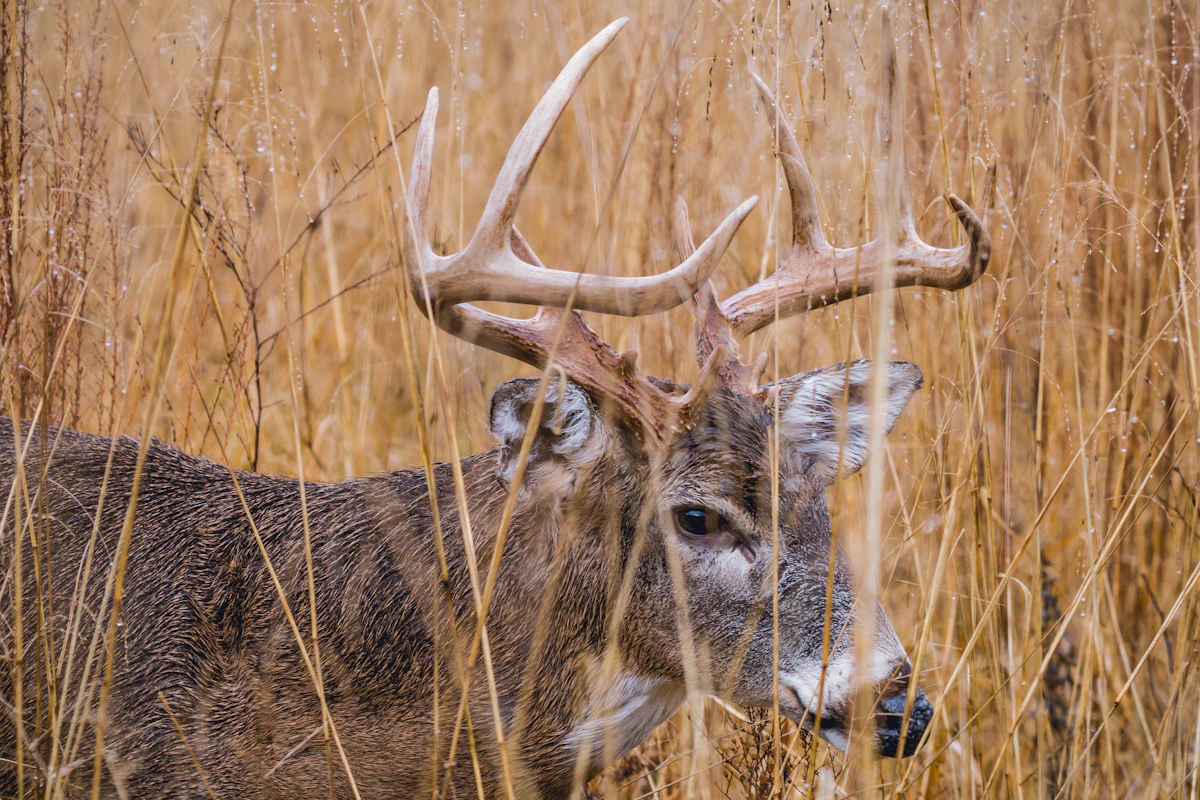
Whitetail deer are North America's most widely hunted big-game animal, found across 38 states and multiple Canadian provinces. Whether you are chasing mature bucks on Midwestern farmland, hunting mountain whitetails in the West, or navigating Southern timber, understanding whitetail behavior, biology, and habitat gives you the edge needed to consistently fill tags.
This guide breaks down everything from pre-season scouting and stand placement to shot selection and field care. You will learn how to read sign, time the rut phases, and adapt your tactics across different terrains and hunting pressures. For hunters targeting both public and private land, this framework applies from opening day through late season.
Understanding Whitetail Biology and Behavior
Whitetail deer are creatures of habit shaped by three primary drivers: food, security cover, and breeding. Adult bucks establish home ranges of 1 to 3 square miles, while does maintain smaller territories of roughly half a square mile. Recognizing how these ranges shift seasonally is fundamental to hunt planning.
During early season, whitetails follow predictable food-to-bed patterns. Bucks travel along edges and transition zones between bedding cover and food sources like agricultural fields, oak flats, or mast-producing hardwoods. As hunting pressure increases, mature bucks shift to nocturnal movement and tighter bedding areas.
The rut completely rewrites the playbook. Between late October and mid-November across most of the whitetail range, bucks abandon their home ranges to search for estrous does. This is when mature animals make mistakes, traveling in daylight and exposing themselves in terrain they typically avoid. Understanding the four rut phases—pre-rut, seeking, chasing, and lockdown—lets you adjust tactics daily.
Whitetails also have exceptional senses. Their vision detects movement at over 100 yards, their hearing pinpoints sound direction instantly, and their nose can detect human scent from several hundred yards downwind. Successful hunts hinge on managing wind direction, minimizing movement, and controlling scent.
Pre-Season Scouting: Reading Sign and Terrain
Effective scouting starts months before opening day. The best hunters use a combination of digital tools and boots-on-the-ground fieldwork to identify high-probability stand locations. Begin by studying satellite imagery and topographic maps to locate funnels, pinch points, ridge saddles, and creek crossings that naturally concentrate deer movement.
Once you have identified likely areas, walk the property during late summer or early fall. Look for trails, rubs, scrapes, and bedding areas. Fresh rubs on saplings and small trees indicate buck travel routes, while scrape lines along field edges or ridge tops signal active breeding areas. Cluster rubs in dense cover often mark buck bedding zones.
Bedding areas are typically found in thick cover with good visibility and wind advantage—ridge points, brushy draws, and standing cornfields all qualify. Does bed closer to food sources in flatter terrain, while mature bucks prefer elevation changes that let them monitor downwind approaches. Never walk directly through suspected bedding areas during scouting. Access these zones only after season or during late winter shed hunting.
Trail cameras provide critical intel. Place cameras on trails 50 to 100 yards off food sources to capture daylight movement. Monitor scrape lines and rub corridors during October and early November. Review images to identify shooter bucks, determine their travel patterns, and assess when they move. If a mature buck only appears after dark, adjust stand locations closer to bedding or shift to morning sits.
Public land hunters face additional challenges. Pressure concentrates near access points, so scout deep into properties where most hunters will not walk. Use terrain features like water barriers, steep terrain, or dense cover to identify sanctuaries where deer retreat after opening weekend. TAGZ helps hunters research public land boundaries, terrain features, and access points across multiple states, making it easier to locate overlooked areas with less competition.
Stand Placement and Access Strategies
Stand location determines success more than any other factor. The best stand sites are positioned along pinch points, funnels, or travel corridors between bedding and feeding areas with prevailing wind in your favor. Ideal setups let you access the stand without spooking deer and provide shooting lanes to multiple trails.
Hang stands 15 to 20 feet high for adequate scent dispersion and improved visibility. In open hardwoods, consider 25 feet if the tree allows safe climbing. Use climbing sticks or screw-in steps, and always wear a safety harness from the moment you leave the ground. Set up two or three stands per property so you can hunt different wind directions without bumping deer.
Access is as critical as stand location. Plan entry and exit routes that keep you downwind and out of sight from bedding areas and primary feeding zones. This often means longer walks, wading creeks, or using terrain features like ridges and ditches to mask your approach. If you bump deer on the way to your stand, you have already lost the sit.
Morning hunts require especially careful access. Enter under cover of darkness and move slowly to minimize noise. Afternoon setups are more forgiving since deer are typically bedded when you arrive, but exit routes matter just as much. Leaving at dark and walking through feeding areas can educate deer and ruin future sits.
For rifle hunters on open terrain or large properties, elevated box blinds provide comfort and concealment but require more infrastructure and limit mobility. Saddle hunting and lightweight hang-on stands offer flexibility for public land hunters who need to adapt quickly based on wind and deer movement.
Early Season Tactics: Food Sources and Patterns
Early season whitetails follow predictable patterns dictated by food availability. In agricultural regions, look for standing soybeans, alfalfa fields, and early-cut cornfields. Deer enter these fields 30 to 60 minutes before dark, often from the same trails every evening. Set up along these entry points with wind in your favor.
In forested terrain, focus on mast crops. White oak acorns are whitetail candy—deer will abandon other food sources when white oaks drop. Red oaks produce later and serve as backup food when white oak supplies run out. Locate producing trees and position stands downwind on trails leading to the acorn flat.
Water sources become critical in hot, dry early seasons. Small ponds, creek crossings, and natural seeps draw deer during midday when they leave bedding areas to drink. These spots work best during the first two weeks of archery season before temperatures cool and hunting pressure increases.
Velvet bucks are visible and predictable during late summer and early September, but once velvet sheds and bachelor groups break up, mature bucks become more cautious. By mid-September across much of the whitetail range, older-age-class animals shift to nocturnal patterns. This is when scouting intel and strategic stand placement pay off—you need to intercept bucks closer to bedding before they reach open feeding areas.
Trail camera data collected during summer scouting helps you pattern individual bucks. If a mature deer consistently shows on camera during legal light, hunt him early before pressure pushes him nocturnal. If he only appears after dark, adjust your setup closer to his suspected bedding area and hunt mornings when he returns from feeding.
Rut Hunting: Timing the Peak and Adjusting Tactics
The rut is the most dynamic and productive period of the whitetail season. Between late October and mid-November across most of the country, bucks throw caution aside to find receptive does. Understanding the four rut phases lets you adjust tactics and maximize your time in the stand.
Pre-rut starts in mid to late October as bucks begin scent-checking doe bedding areas and establishing scrape lines. Bucks are still somewhat cautious but increasingly active during daylight. Hunt transition zones between bedding and feeding areas, and focus on scrape lines along field edges and ridge tops. Rattling and calling can work but are hit-or-miss this early.
Seeking phase kicks in when the first does enter estrus. Bucks increase daytime movement, cruising doe bedding areas and trails in search of hot does. This phase typically lasts three to five days and is your first best chance at mature bucks in daylight. Hunt doe bedding areas, funnels, and ridgelines that overlook multiple doe home ranges. Aggressive rattling and doe bleats can pull bucks from hundreds of yards away.
Chasing phase is peak chaos. Bucks are running does in open terrain, pushing them through thick cover, and ignoring danger. This phase is visually exciting but often frustrating because deer move unpredictably and bucks locked on a single doe will not respond to calls. Stay in the stand all day. Movement can happen any time, and you never know when a cruising buck will appear. Focus on thick cover near doe bedding and along edges where bucks push does.
Lockdown phase is the toughest for hunters. Bucks pair with receptive does and bed with them in thick cover, often for 24 to 48 hours until the doe goes out of heat. Very few deer move, and mature bucks are essentially invisible. Your best bet is hunting transition zones where bucks travel between locked-down does or waiting it out until the phase ends and bucks resume cruising.
Post-rut extends from late November into December. Bucks are worn down, and most does have been bred, but a second wave of younger does enters estrus in mid to late December. Focus on food sources where bucks recover body condition. Late-season cold fronts push deer to feed heavily before storms, creating short windows of high activity.
Whitetail rut timing varies by latitude. Southern states like Texas and Louisiana see peak breeding in December and January, while Northern states like Montana and the Dakotas peak in November. Researching your specific hunt area's rut timing is critical to planning your vacation days and tag applications.
Calling, Rattling, and Decoying Strategies
Vocalizations, rattling, and decoys can turn an average sit into a memorable hunt, but they must be used correctly. Overcalling or using the wrong sounds at the wrong time educates deer and reduces effectiveness.
Grunts are the most versatile call. Use soft contact grunts to stop a walking buck for a shot or create the impression of a nearby deer. Aggressive trailing grunts work during the seeking and chasing phases when bucks are actively pursuing does. Avoid overcalling—two to three grunt sequences per hour is plenty.
Doe bleats work best during pre-rut and seeking phase. A doe bleat mimics a doe signaling to nearby bucks that she is approaching estrus. Use sparingly, two to four bleats per sequence, then wait 20 to 30 minutes before calling again. Estrous bleats are higher-pitched and more urgent, effective during peak chasing phase.
Rattling simulates two bucks fighting and can pull aggressive bucks from long distances during the seeking and chasing phases. Use real antlers or rattling bags and rattle aggressively for 30 to 60 seconds, then wait 10 to 15 minutes. Follow rattling sequences with soft grunts to simulate a buck circling downwind. Rattling works best in areas with balanced buck-to-doe ratios and moderate to low hunting pressure. Heavily pressured areas often see reduced rattling response.
Decoys add realism to calling setups. Buck decoys work during the rut when bucks are aggressive and willing to challenge intruders. Position the decoy 10 to 15 yards from your stand with a quartering-away angle so approaching bucks present broadside shots. Doe decoys are effective year-round but shine during the rut when bucks are searching for breeding opportunities. Always use decoys in open terrain where deer can see them from a distance.
Use scents carefully. Doe estrous scent works during the rut but should be applied to drag rags or scent wicks downwind of your stand, creating a scent trail. Avoid contaminating your clothing or gear. Buck urine and tarsal gland scent can create the impression of a rival buck but are less effective than vocalizations in most situations.
Shot Placement and Effective Range
Ethical shot placement ensures quick, clean kills and maximum meat recovery. For broadside shots, aim for the heart-lung area behind the shoulder, one-third up the body. This targets both lungs and often the heart, resulting in rapid blood loss and short tracking jobs. Most deer hit in this zone expire within 100 yards.
Quartering-away shots are equally effective. Aim for the opposite shoulder, driving the arrow or bullet through the vitals at an angle. For archery hunters, this shot opens the chest cavity and provides a large margin for error. Rifle hunters can confidently take this shot out to their effective range.
Avoid quartering-to shots. The shoulder blade protects the vitals, and even well-placed shots risk deflection or insufficient penetration. Wait for the deer to turn or offer a better angle. Frontal shots are extremely risky for bowhunters and should only be attempted by rifle hunters at close range with precise shot placement.
Neck shots are controversial. They offer instant kills when executed perfectly but provide a tiny target with little margin for error. Missed neck shots result in wounded animals that escape. Most experienced hunters avoid neck shots in favor of the larger, more forgiving vitals.
Know your effective range and practice from field positions. Bowhunters should limit shots to 30 to 40 yards in most situations, with 50 yards being the absolute maximum for highly skilled shooters with fast, accurate setups. Rifle hunters can extend effective range based on cartridge, optics, and shooting skill, but most should limit shots to 300 yards or less.
After the shot, wait before tracking. Bowhunters should wait 30 minutes for heart-lung hits and at least 4 to 6 hours for marginal hits. Pushing a wounded deer too soon can turn a recoverable animal into a lost one. Mark the shot location, note the deer's reaction, and use patience. Blood trails are easier to follow in daylight, and bumping a deer often means tracking into the next property or losing the animal entirely.
Field Care and Meat Processing
Proper field care starts immediately after recovery. Field dress the deer as soon as possible to cool the carcass and preserve meat quality. Make a shallow incision from the sternum to the pelvis, being careful not to puncture the stomach or intestines. Remove all internal organs and prop the chest cavity open with a stick to promote airflow.
If temperatures are above 50 degrees, prioritize cooling the meat. Skin the deer and quarter it in the field if you are far from a cooler. Use game bags to protect meat from insects and debris. In warm weather, pack the body cavity with ice or hang the carcass in the shade. Bacteria grow rapidly at temps above 40 degrees, and spoilage starts within hours.
For whole carcass transport, avoid placing the deer on a warm vehicle hood or truck bed. Use a tarp or game bag and get the animal to a cooler or processor within 2 to 4 hours. Aging venison in a cooler at 34 to 38 degrees for 7 to 10 days improves tenderness and flavor, but only if the carcass is kept clean and cool from the moment of recovery.
Processing venison yourself saves money and ensures you know exactly what you are eating. Break the carcass into primals—hindquarters, front shoulders, backstraps, and tenderloins. Debone the meat, remove silver skin and connective tissue, and portion into roasts, steaks, and trim for grinding. Vacuum-seal portions and freeze immediately.
Grinding trim into burger, sausage, and brats extends the versatility of your venison. Mix in pork or beef fat at a 10 to 20 percent ratio for moisture and flavor. Most processors offer custom sausage options like jalapeño cheddar, breakfast links, and summer sausage. If you process your own, invest in a quality grinder and sausage stuffer for consistent results.
Gear Essentials for Whitetail Hunters
Whitetail hunting does not require expensive gear, but a few quality items make a significant difference. Start with clothing that manages scent, moisture, and temperature. Merino wool base layers regulate body temperature and resist odor. Quiet outer layers in camo patterns matched to your terrain keep you concealed during shot opportunities.
Scent control starts with your clothing and body. Wash hunting clothes in scent-free detergent and store them in airtight containers. Shower with scent-free soap before every hunt and avoid contaminating your clothing with food, fuel, or other odors. Use a wind-checker to monitor wind direction throughout the sit and reposition if the wind shifts unfavorably.
For bowhunters, practice from elevated positions and wear a full-body safety harness every time you climb. Modern compound bows with 60 to 70-pound draw weights and carbon arrows tipped with fixed-blade or mechanical broadheads are the standard. Sight in at multiple distances and practice shooting from awkward angles, kneeling, and sitting.
Rifle hunters have more choices. Calibers from .243 Winchester to .30-06 Springfield are effective for whitetails, with .308 Winchester and 6.5 Creedmoor offering excellent ballistics and manageable recoil. Top rifles with quality optics—3x9 or 4x12 scopes cover most hunting situations. Sight in at 100 yards and confirm zero before the season. Practice shooting from field positions and use shooting sticks or a bipod for stability.
Range finders eliminate guesswork. For bowhunters, knowing exact distances ensures proper pin selection and shot placement. Rifle hunters benefit from range finders when shooting beyond 200 yards where bullet drop becomes significant. Laser range finders are compact, affordable, and essential.
Binoculars help you spot distant deer and evaluate antlers before committing to a stalk or shot. Eight-power or 10-power binoculars with 42mm objective lenses provide the best balance of magnification, low-light performance, and weight for treestand hunting. Use them to scan edges, watch trails, and monitor deer behavior from a distance.
State-by-State Regulations and Tag Opportunities
Whitetail hunting regulations vary significantly by state. Most states offer over-the-counter tags for residents, but nonresident hunters often face quotas, draw systems, or higher license fees. Understanding each state's structure helps you plan hunts and maximize your season.
Texas has more whitetails than any other state—over 4 million animals. Nearly all hunting occurs on private land, and leases range from a few hundred to several thousand dollars depending on location and quality. Some ranches offer management hunts for does and younger bucks at reduced rates, while trophy properties command premium prices. Public land is limited, but a few wildlife management areas offer quota hunts.
Wisconsin and Michigan are top Midwestern destinations with strong public land access. Both states offer generous seasons and high deer densities. Wisconsin's gun deer season is a cultural event, with hundreds of thousands of hunters in the woods during the nine-day season. Michigan's rifle season runs 16 days and provides excellent opportunities on state land and national forests.
Iowa consistently produces Boone and Crockett bucks, but nonresident archery and any-weapon tags are extremely limited and must be drawn. Preference points improve draw odds, and TAGZ helps hunters track Iowa points across multiple years to time their application when odds are best. Once drawn, Iowa's combination of agriculture, timber, and management practices create ideal trophy conditions.
Illinois is another top trophy state with a draw system for nonresidents. Apply for both archery and firearm tags to maximize opportunities. The state's shelterbelt habitat and intensive agriculture produce mature bucks, and public land options include state forests and federal areas.
Ohio, Pennsylvania, and New York offer accessible whitetail hunting with over-the-counter tags for residents and manageable draw systems for nonresidents. Pennsylvania's opening day of rifle season is legendary for participation and harvest numbers. Ohio's mature buck harvest has grown in recent years thanks to antler restrictions and improved management.
Montana, the Dakotas, and Wyoming have huntable whitetail populations, particularly in river bottoms and agricultural zones. Tags are generally available over-the-counter or through simplified draws. Public land access is strong, and these states offer the chance to hunt whitetails in more rugged terrain alongside mule deer and other big-game species.
Kansas, Nebraska, and Missouri all produce quality bucks. Kansas is a draw state with limited nonresident tags but exceptional trophy potential. Missouri offers generous seasons and good public land. Nebraska has underrated whitetail hunting with reasonable tag availability and vast tracts of public ground.
For hunters targeting multiple states, TAGZ tracks application deadlines, point totals, and unit-specific data across the West and Midwest. You can compare tag costs, draw odds, and season dates side by side to build a multi-state strategy that increases your chances of hunting every fall.
Public Land vs. Private Land Strategies
Public land whitetail hunting requires different tactics than private land hunts. Pressure concentrates near parking areas, trails, and obvious access points, pushing deer into sanctuaries where most hunters will not venture. Success on public land depends on scouting farther, hunting smarter, and adapting quickly.
Start by researching property boundaries and terrain using digital mapping tools. TAGZ provides unit boundaries, public land access points, and terrain overlays that help you locate overlooked areas. Look for landlocked parcels accessible only by foot, water barriers that limit hunter access, and dense cover that discourages casual hunters.
Plan your access carefully. Hike 1 to 2 miles from parking areas to escape the pressure zone. Use terrain features, creeks, and ridges to mask your approach and keep your wind advantage. Hunt midweek when pressure is lightest, and avoid weekends when hunter density spikes.
Mobile hunting strategies work best on public land. Carry a lightweight hang-on stand or saddle setup so you can adjust based on fresh sign and deer movement. Scout as you hunt, moving deeper into the property when you encounter other hunters or pressured deer. Be ready to relocate mid-morning or during midday if your initial setup proves unproductive.
Private land hunts offer more control. With permission to hunt a property, you can hang multiple stands, clear shooting lanes, and hunt without interference. Build trust with landowners by offering to help with property maintenance, controlling invasive species, or assisting with doe management. Long-term access depends on being respectful, ethical, and communicative.
Leasing private land has become common in states with limited public access. Hunting leases range from a few hundred dollars per year for small parcels to several thousand for premium properties with lodging and managed deer herds. Evaluate leases based on deer density, neighboring properties, and access restrictions.
Food plots improve private land hunting by concentrating deer and extending shooting light. Plant a mix of brassicas, clover, and cereal grains in late summer for fall and winter attraction. Position stands downwind of plots along entry trails to intercept deer before they reach the field. Even small plots of half an acre or less can dramatically improve your success if positioned correctly.
Late-Season Tactics: Cold Weather and Food Focus
Late-season whitetail hunting from late December through January is a grind, but it offers excellent opportunities for hunters willing to endure cold weather. Deer are focused on food and conserving energy, creating predictable patterns that reward persistence.
Focus on high-energy food sources. Standing cornfields, cut grain fields with waste grain, and brassica food plots draw deer during bitter cold. Deer feed heavily before and after cold fronts, moving during daylight when they can conserve energy. Monitor weather forecasts and plan hunts around incoming storms.
Bedding areas shift to thermal cover—south-facing slopes, dense conifer stands, and brushy draws that block wind and trap warmth. Deer bed close to food during late season, often within a few hundred yards. Position stands on travel corridors between bedding and feeding, and hunt afternoons when deer move to feed before dark.
Snow changes everything. Fresh snow makes tracking easier and reveals deer travel patterns. Hunt the first day after a snowstorm when deer are eager to feed after hunkering down. Later snows push deer into valleys and drainages where food is easier to reach, concentrating animals in smaller areas.
Late-season deer are spooky. They have survived months of hunting pressure and know what hunters look like, smell like, and sound like. Minimize movement in the stand, and use natural cover or layout blinds to break your outline. Access stands in darkness and exit long after deer leave feeding areas.
Does are the primary target for many late-season hunts, especially in states with bonus doe tags or extended seasons. Doe hunting helps control populations, provides excellent table fare, and builds skills that translate to buck hunting. Focus on doe bedding areas and family group travel routes for consistent action.
FAQ — Whitetail Hunting
What is the best time of year to hunt whitetails?
The rut, typically mid-October through mid-November depending on latitude, offers the best chance at mature bucks moving during daylight. Late season also produces results when cold weather pushes deer to predictable food sources.
How far can whitetails smell human scent?
Whitetails can detect human scent from several hundred yards downwind in ideal conditions. Wind direction, humidity, and terrain affect scent dispersion, but always assume deer can smell you if you are upwind.
What is the most effective whitetail call?
Grunts are the most versatile call, effective throughout the season for stopping bucks or simulating nearby deer. Doe bleats work best during pre-rut and seeking phases when bucks are searching for receptive does.
Do whitetails move in the rain?
Yes, especially during light to moderate rain. Rain suppresses scent and muffles sound, making deer feel secure. Heavy downpours reduce movement, but the hours immediately before and after storms are prime time.
What is a good public land whitetail strategy?
Scout deep into properties beyond where most hunters venture. Use terrain features to locate sanctuaries, hunt midweek when pressure is lowest, and stay mobile with lightweight stands so you can adjust based on deer movement and competition.
How long should you wait before tracking a shot deer?
Wait 30 minutes for solid heart-lung hits with archery or rifle. For marginal hits or suspected gut shots, wait at least 4 to 6 hours before tracking. Pushing a wounded deer too soon often results in losing the animal entirely.
What caliber is best for whitetail hunting?
Cartridges from .243 Winchester to .30-06 Springfield are effective. Popular choices include .308 Winchester, 6.5 Creedmoor, and .270 Winchester for their balance of power, accuracy, and manageable recoil.
Can you hunt whitetails successfully on small properties?
Absolutely. Small properties under 50 acres can produce mature bucks if you minimize pressure, manage access carefully, and focus on funnels, pinch points, and transition zones. Even 5 to 10 acres can work if positioned along a travel corridor.
How do you field judge antler score?
Estimate main beam length, tine length, and mass. Count points on both sides and assess symmetry. Bucks with 10-inch G2s (second tines), good mass, and long main beams typically score 130 to 150 inches. Experience and practice improve accuracy.
What is the most common mistake new whitetail hunters make?
Poor wind discipline. Hunting with the wind blowing toward where you expect deer to approach educates animals and ruins future sits. Always position yourself with the wind in your favor based on expected deer movement.
Do preference points guarantee a whitetail tag?
No. Preference points improve draw odds but do not guarantee tags, especially in high-demand states like Iowa. TAGZ helps you track points across states and compare draw odds so you can apply strategically and maximize your chances of drawing.
What is the best shot for bowhunters?
Broadside or quartering-away shots targeting the heart-lung area. These shots provide the largest vital zone, offer a clear path through the chest cavity, and result in short tracking jobs when executed correctly.
Continue Planning Your Hunt
Whitetail hunting is as much about preparation as it is about time in the stand. Understanding deer behavior, timing the rut, and mastering woodsmanship gives you the foundation to succeed across any terrain or hunting pressure. Whether you are chasing mature bucks on Iowa farmland or hunting public ground in the Rockies, the principles remain the same: scout thoroughly, hunt the wind, and stay patient.
For hunters targeting tags across multiple states, TAGZ simplifies the process by tracking draw odds, preference points, and application deadlines in one platform. Compare units side by side, analyze terrain with interactive maps, and filter hunts by species, weapon, and season dates. When you are ready to dive deeper into specific hunt planning strategies, explore the full TAGZ Insights blog for state-specific tactics, unit breakdowns, and draw strategy articles. Learn more about how TAGZ helps hunters make smarter decisions on the product page, or check out pricing options to start planning your next season. Every successful hunt starts with a plan, and the right tools make all the difference.
Was this article helpful?
Previous
How to Hunt Elk Near Roads Without Hunting the Crowd
Most hunters assume roadside elk hunting means competing with orange armies. The truth is smarter — targeting micro-terrain features, timing pressure waves, and using access points others ignore can put you on unpressured bulls within a quarter-mile of your truck.
Next
Spot-and-Stalk Elk Hunting vs. Elk Calling: When to Use Each Strategy
Spot-and-stalk and calling are the two foundational approaches to archery and rifle elk hunting. Each excels in specific terrain, weather conditions, and phases of the rut—understanding when to switch tactics separates successful hunts from frustrating ones.