Tikka T3x vs Bergara B-14: Which Rifle Delivers More Accuracy for Western Hunters?
Walk into any western hunting camp and you'll find rifles that cost three times what they should and rifles that punch way above their weight class. The Tikka T3x and Bergara B-14 both fall into that second category. Both deliver legitimate sub-MOA accuracy. Both come factory-ready for mountain hunting or long-range practice. And both hover around that $800–$1,000 sweet spot where you're getting professional-grade performance without the custom rifle price tag.
The choice between them isn't about one being better. It's about which one matches how you actually hunt.
Build Quality: European Precision vs Spanish Barrels
The Tikka T3x comes from Sako's Finnish factory, where they've been building hunting rifles since 1923. The action is machined from a single block of steel. The bolt runs on two locking lugs with a 70-degree throw. When you cycle a Tikka, it feels like skating on ice. There's no grittiness, no resistance, just smooth forward-and-back until the bolt locks. That buttery action is what Tikka fans talk about first.
Bergara builds the B-14 in Spain using barrel-making expertise from their match-rifle division. Every B-14 barrel starts as a Bergara match barrel blank before it's contoured for hunting. The action is a Remington 700 footprint, which means aftermarket stocks, triggers, and底座 all drop right in. The receiver is steel. The bolt is a two-lug design with a 90-degree throw. It's not as silky as the Tikka, but it's reliable and proven.
Both rifles sub-contract some components. Tikka uses synthetic stocks made in Italy. Bergara ships some models with Bergara-branded stocks, others with options from manufacturers like B&C. Neither rifle feels cheap. The Tikka has a more refined, almost European sporting rifle vibe. The Bergara feels more tactical, more American.
Weight and Carry: Mountain Guns vs All-Purpose Platforms
Tikka builds the T3x in multiple configurations, but the T3x Lite is the one most western hunters choose. In 6.5 Creedmoor with a 22.4-inch barrel, it weighs 6.2 pounds bare. Add a Leupold VX-5HD 3-15x44 scope and Talley rings, and you're at 8 pounds ready to hunt. That's light enough to carry all day in steep country without your shoulder screaming by noon.
The Bergara B-14 Ridge in 6.5 Creedmoor with a 22-inch barrel weighs 7.4 pounds bare. Scoped, you're looking at 9.2–9.5 pounds depending on glass. That extra pound and a quarter doesn't sound like much in the truck, but after five miles and 2,000 vertical feet, you feel it. The Bergara isn't a true mountain rifle. It's more of a western all-purpose rig where you might walk two miles, set up on a ridge, and glass until something shows.
If you're hunting elk in Colorado's high country on foot, the Tikka wins. If you're hunting mule deer in Wyoming where you drive to glassing points and only hike when you have an animal located, the Bergara's extra weight helps with stability.
Accuracy: Factory Loads and Handload Potential
Both rifles guarantee sub-MOA accuracy with quality ammo. Tikka's official guarantee is 1 MOA or better with Sako or Federal Premium loads. Bergara guarantees 1 MOA with factory match ammo or handloads.
In real-world testing, most Tikka T3x rifles shoot 0.5–0.75 MOA with good ammo. Federal Premium 140-grain Terminal Ascent, Hornady Precision Hunter 143-grain ELD-X, and handloads using Berger 140-grain Hybrids all group well. The Tikka's barrel is a cold-hammer-forged, button-rifled tube. It's not a match barrel, but it's consistent.
Bergara barrels routinely shoot 0.3–0.6 MOA with match loads. The barrel is hand-lapped, stress-relieved, and finished to match-grade standards. Hunters report 0.4 MOA groups with Hornady 147-grain ELD-M, Federal 130-grain OTM, and custom loads using Lapua brass. If you reload and chase tiny groups, the Bergara has a slight edge. If you shoot factory ammo and just want reliable 0.75 MOA performance on animals out to 500 yards, both rifles deliver.
Barrel life is comparable. Expect 2,500–3,500 rounds in 6.5 Creedmoor before accuracy degrades, depending on how hot you run the barrel during range sessions.
Triggers: Factory Performance Out of the Box
The Tikka T3x comes with an adjustable single-stage trigger. Factory setting is around 2.5–3 pounds. You can adjust it down to about 2 pounds using the hex screw under the stock. The break is clean. There's minimal creep. Some shooters feel a tiny bit of take-up, but once you're on the wall, it snaps like a glass rod. It's not a Timney or TriggerTech, but it's better than most factory triggers at this price.
The Bergara B-14 Ridge and HMR models ship with Bergara's Cone Breech System trigger. It's adjustable from 2.5 to 4 pounds. The break is crisp with almost no overtravel. It feels more like a target trigger than a hunting trigger. Some hunters find it too light for cold-weather gloves, but most adapt quickly.
If you're buying the rifle and shooting it stock, both triggers work well. If you want to upgrade later, the Tikka uses a proprietary trigger that limits aftermarket options. The Bergara uses a Remington 700 footprint, so you can drop in a TriggerTech Diamond or Timney Calvin Elite whenever you want.
Free to join
Download mobile app
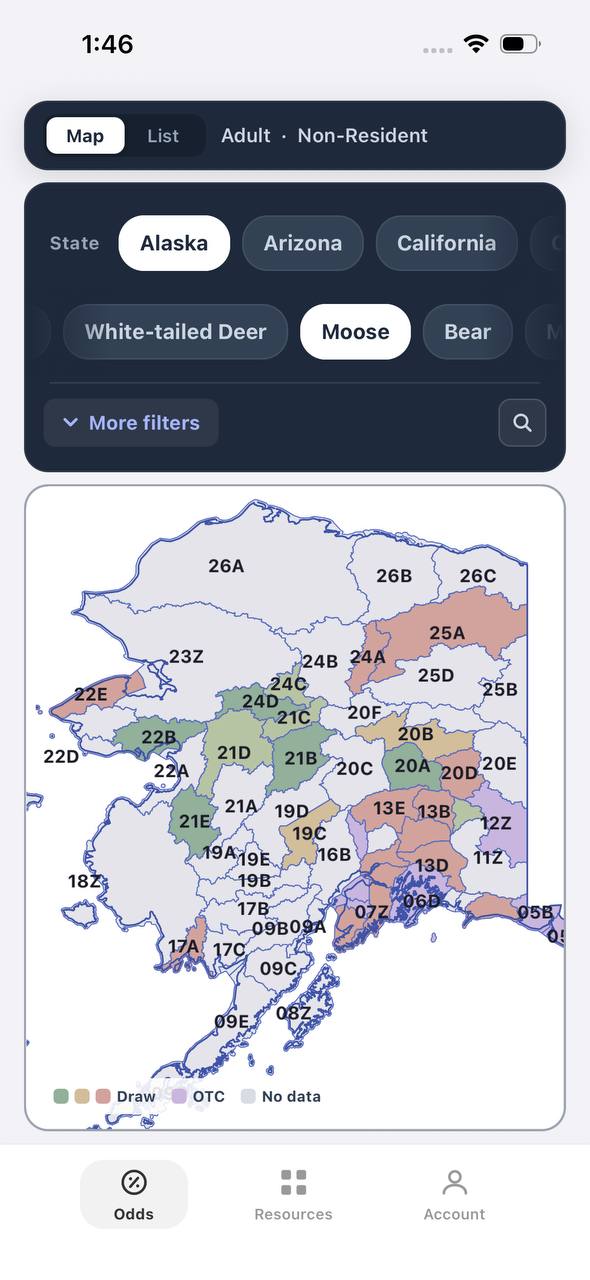
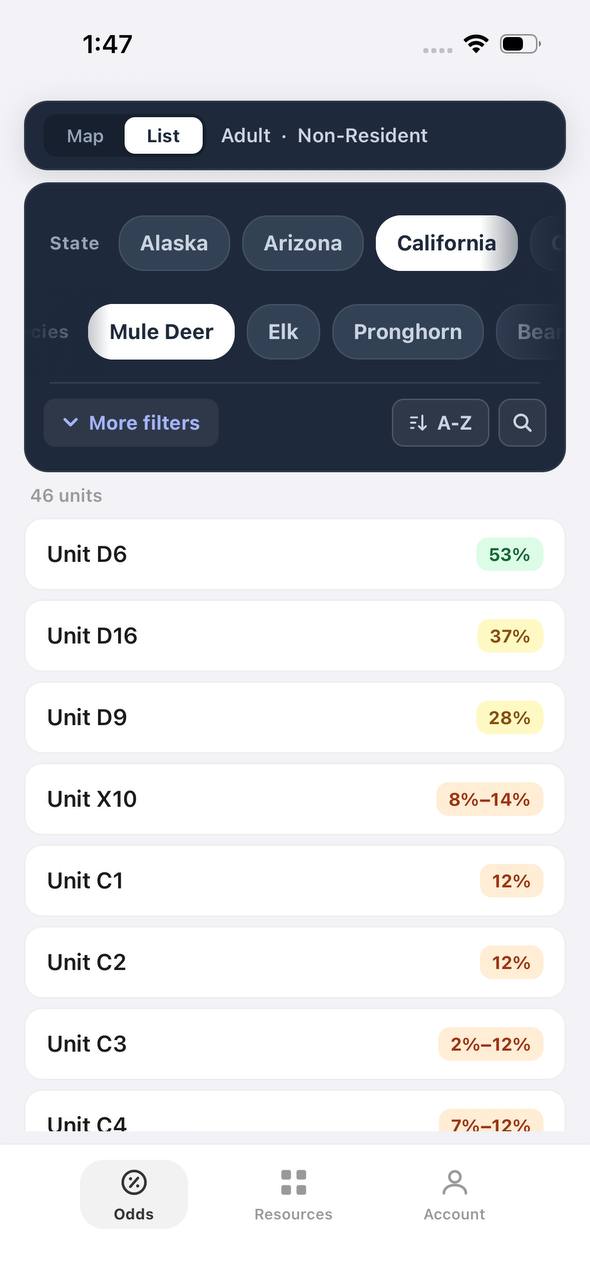
- Detailed draw odds
- Point tracking
- Deadline reminders
- 18 states covered


Free to join
Download mobile app
- Detailed draw odds
- Point tracking
- Deadline reminders
- 18 states covered

Free to join
Download mobile app
- Detailed draw odds
- Point tracking
- Deadline reminders
- 18 states covered

Stock Ergonomics and Shooter Fit
The Tikka T3x Lite comes with a black synthetic stock that's lightweight and weather-resistant. The grip is vertical. The forend is slim. The comb is low. For some shooters, the stock feels narrow and the length of pull runs short. If you're over six feet tall or have long arms, you might want spacers or a different stock. The Tikka action also sits in the stock with a single recoil lug, which some precision shooters don't love, though it hasn't caused accuracy issues in the field.
The Bergara B-14 Ridge stock has a Monte Carlo comb, a more aggressive pistol grip, and a wider forend. It's designed for prone shooting and bench work as much as offhand hunting shots. The cheek weld is higher, which works better with larger scopes. The stock also has molded-in texture and QD sling mounts. Some hunters find the Ridge stock blocky. The B-14 HMR takes this further with a full-on chassis-style stock, but that model is heavier and less practical for backcountry hunting.
If you like a traditional hunting rifle feel, the Tikka fits better. If you prefer a more modern, tactical ergonomic, the Bergara wins.
Magazines and Feeding Reliability
The Tikka T3x uses a single-stack detachable magazine that holds three rounds in standard calibers, four in short cartridges like 6.5 Creedmoor. The magazine is polymer, easy to load, and drops free when you hit the release. Some hunters wish for more capacity, but three-plus-one is enough for hunting. The magazine sits flush with the stock, so it doesn't snag on brush or your pack.
The Bergara B-14 uses AICS-pattern detachable magazines, the same standard as Remington 700 tactical rifles and custom builds. A 5-round magazine is standard. You can also run 10-round mags if you want, though they hang low and can interfere with prone shooting or bag rests. AICS mags are easy to find, durable, and widely supported.
Both rifles feed reliably. Neither has a reputation for jamming or failure to extract.
Caliber Options and Cartridge Fit
Tikka chambers the T3x in everything from .223 Remington to .300 Win Mag. Popular western hunting chamberings include 6.5 Creedmoor, 6.5 PRC, .270 Winchester, 7mm Remington Magnum, .308 Winchester, .30-06 Springfield, and .300 Win Mag. The T3x action is available in short and long variants, so you get the right action length for your cartridge.
Bergara offers the B-14 in 6.5 Creedmoor, 6.5 PRC, .270 Winchester, 7mm Remington Magnum, .308 Winchester, .30-06 Springfield, .300 Win Mag, and a few others. The chambering list is slightly shorter than Tikka's, but all the core western cartridges are covered.
For elk, both rifles handle 6.5 PRC, 7mm Rem Mag, and .300 Win Mag. For mule deer and pronghorn, 6.5 Creedmoor and .308 are common picks. Neither rifle is available in oddball wildcats or boutique cartridges, but if you shoot standard factory ammo, both companies have you covered.
Free to join
Download mobile app
- Detailed draw odds
- Point tracking
- Deadline reminders
- 18 states covered
Free to join
Download mobile app
- Detailed draw odds
- Point tracking
- Deadline reminders
- 18 states covered
Free to join
Download mobile app
- Detailed draw odds
- Point tracking
- Deadline reminders
- 18 states covered
Aftermarket Support and Customization
The Bergara B-14 wins this category decisively. Because it uses a Remington 700 footprint, you can swap in any Remington 700 trigger, stock, chassis, scope rail, or bottom metal. Companies like Manners, AG Composites, KRG, and MDT all make direct-fit upgrades. If you want to build the rifle into a custom precision rig over time, the Bergara gives you that path.
The Tikka T3x has a loyal following, but the aftermarket is smaller. A few companies make stocks (like the KRG Bravo for Tikka), and there are some aftermarket scope rails and bottom metal options, but you won't find the same breadth of parts. If you want to modify the rifle heavily, you'll hit limits faster with the Tikka.
Most hunters don't swap stocks or triggers. If you're buying a rifle to hunt with as-is, this doesn't matter. If you're a tinkerer or want to upgrade components over time, the Bergara is the safer bet.
Recoil Management and Shooter Comfort
The Tikka T3x Lite is light, which means it kicks harder in magnum chamberings. A 6.2-pound rifle in .300 Win Mag will punish you on the bench. In 6.5 Creedmoor, recoil is mild enough that most shooters can spot their own impacts through the scope. The synthetic stock doesn't have much padding. Adding a Limbsaver or Pachmayr recoil pad helps.
The Bergara B-14 Ridge weighs more, which soaks up recoil. The stock also has a thicker recoil pad and a Monte Carlo comb that helps keep your face in position during recoil. In 6.5 Creedmoor, the rifle barely moves. In .300 Win Mag, it's still manageable for extended shooting sessions.
If you're recoil-sensitive or plan to shoot a lot at the range, the Bergara's extra weight is an advantage. If you're hunting in the backcountry where every ounce counts and you only fire one or two shots per season, the Tikka's lighter weight is worth the trade-off.
Price and Value: What You Get for Your Money
The Tikka T3x Lite retails for $750–$900 depending on caliber and finish. The T3x Lite Stainless is slightly more. Street prices are often $50–$100 below MSRP. For that price, you get a smooth action, proven accuracy, and a lightweight hunting rifle that works out of the box.
The Bergara B-14 Ridge retails for $950–$1,100. The B-14 HMR is around $1,050–$1,200. Street prices run $900–$1,050 for the Ridge. You're paying more, but you're also getting a match-grade barrel and better modularity.
Both rifles deliver more accuracy than most hunters can use. If you're budget-conscious or want the lightest rifle possible, the Tikka is hard to beat. If you want the best possible barrel and plan to shoot long-range steel between hunting seasons, the Bergara justifies the extra cost.
Real-World Hunting Scenarios: Which Rifle Fits Your Hunt?
If you're hiking into Colorado wilderness areas for elk, packing a camp on your back, and covering 8–12 miles a day at 10,000 feet, take the Tikka. The weight savings matter. The rifle shoots accurately enough for any ethical shot you'll take on an elk, and the smooth bolt makes follow-up shots fast if you need them.
If you're hunting mule deer in Wyoming's Red Desert, driving to glassing knobs, and shooting across sagebrush basins at 300–500 yards, take the Bergara. The extra weight steadies your hold. The match barrel delivers confidence at distance. The stock ergonomics support prone or bipod shooting better than the Tikka's slim forend.
If you're a rifle range regular who also hunts, and you want one rifle that does both, the Bergara fits. It's accurate enough to shoot weekend PRS club matches and durable enough to carry through the mountains in November.
If you're a hunter first and only shoot enough to stay proficient, and you value light weight and smooth operation, the Tikka fits.
Free to join
Download mobile app
- Detailed draw odds
- Point tracking
- Deadline reminders
- 18 states covered
Free to join
Download mobile app
- Detailed draw odds
- Point tracking
- Deadline reminders
- 18 states covered
Free to join
Download mobile app
- Detailed draw odds
- Point tracking
- Deadline reminders
- 18 states covered
Reliability in Weather and Hard Use
Both rifles are built to handle weather. The Tikka's synthetic stock is impervious to moisture. The stainless models resist rust. The action is sealed well enough that snow and dirt don't jam the bolt. Finnish design philosophy emphasizes function over flash, and the T3x reflects that. It's not fragile.
The Bergara's steel receiver and barrel handle weather just as well. The stock sheds water. The Cerakote or blued finish options both hold up in rain and snow. The only weak point is the magazine, but AICS mags are proven in military and law enforcement use, so there's no real concern.
Neither rifle is delicate. Both will handle a fall off a four-wheeler or a tumble down a scree slope. Both will shoot after being covered in mud, dried out, and wiped down.
Final Verdict: The Right Rifle for Your Hunting Style
The Tikka T3x is the better choice if you prioritize light weight, smooth bolt operation, and a rifle that feels like a traditional hunting gun. It's ideal for backcountry elk and deer hunts where you walk long distances, shoot quickly when opportunities appear, and don't spend much time on the bench. The Tikka does one thing exceptionally well: it's a no-nonsense hunting rifle that shoots accurately and carries comfortably.
The Bergara B-14 is the better choice if you want match-grade accuracy, plan to shoot long-range, and value modularity. It's ideal for western hunts where you glass from a truck or ATV, set up on ridges, and take deliberate shots at distance. The Bergara also works better as a dual-purpose rifle if you shoot competitions or practice at the range regularly between hunting seasons.
Both rifles will kill elk and mule deer cleanly out to 600 yards with good bullets and solid fundamentals. The question isn't which rifle is more capable. The question is which one matches the hunting you actually do. If you walk more than you shoot, take the Tikka. If you shoot more than you walk, take the Bergara.
FAQ — Tikka T3x vs Bergara B-14
Which rifle is more accurate, the Tikka T3x or Bergara B-14?
The Bergara B-14 has a slight edge in pure accuracy due to its match-grade barrel, typically shooting 0.3–0.6 MOA groups. The Tikka T3x shoots 0.5–0.75 MOA with quality ammo, which is more than accurate enough for hunting.
Is the Tikka T3x worth the weight savings over the Bergara B-14?
Yes, if you hunt on foot in steep terrain. The Tikka T3x Lite weighs about 1.5 pounds less than the Bergara B-14 Ridge when scoped, which matters on long backcountry hunts. For truck-based hunting, the weight difference is less important.
Can I upgrade the Tikka T3x with aftermarket parts?
Aftermarket support for the Tikka is limited compared to the Bergara B-14. A few companies make stocks and triggers, but the Bergara's Remington 700 footprint gives you far more options for customization.
Which rifle has a better trigger out of the box?
Both triggers are excellent for hunting. The Tikka's trigger is slightly smoother with less take-up. The Bergara's trigger feels more like a target trigger with a crisper break. Personal preference determines which you'll like better.
Is the Bergara B-14 too heavy for mountain hunting?
The Bergara B-14 Ridge at 9+ pounds scoped is heavier than ideal for high-elevation backcountry hunting where you cover serious miles. It's better suited for western hunts with shorter approaches or glassing-based strategies where weight matters less than stability.
Do both rifles shoot factory ammo well, or do they require handloads?
Both rifles shoot factory premium ammo very well. Federal Premium, Hornady Precision Hunter, and Nosler Trophy Grade all produce excellent groups. Handloading can tighten groups further in the Bergara, but it's not necessary for hunting performance in either rifle.
Continue Planning Your Hunt
Once you've chosen the right rifle, the next step is choosing the right hunt. TAGZ helps western hunters compare draw odds, track preference points and bonus points across multiple states, and research units using terrain maps and historical data. Whether you're chasing Colorado OTC elk tags or planning a limited-entry mule deer hunt in Nevada, TAGZ gives you the tools to make smarter decisions before you ever apply.
Explore unit breakdowns, public land boundaries, and draw deadline tracking at TAGZ. Read more hunting strategy and gear articles on the TAGZ Insights blog. Ready to start planning your next hunt? Compare pricing options and get access to the platform that simplifies western big-game applications.
Was this article helpful?
Previous
How to Survive an Unexpected Night in the Mountains: A Hunter's Guide
Every western hunter should know how to survive an unplanned night in the backcountry. This guide covers shelter, fire, signaling, and the critical gear that keeps you alive when plans fall apart.

Related
Best Custom Rifle Actions for Western Big-Game Hunting in 2026
Custom rifle actions transform accuracy and reliability for western hunters pursuing elk, mule deer, and other big game at distance. We break down the top precision actions—Defiance, Curtis, Bighorn, Impact, and Lone Peak—and explain which builds match your hunting style and budget.
Next
Nosler Model 21 Review: Is This Premium Hunting Rifle Worth It?
The Nosler Model 21 combines custom-rifle accuracy with production-rifle availability, featuring hand-lapped barrels and premium components. We break down performance, specs, and whether the price tag delivers value for western big-game hunters.