The Ultimate Mountain Goat Hunting Guide: Everything You Need to Know
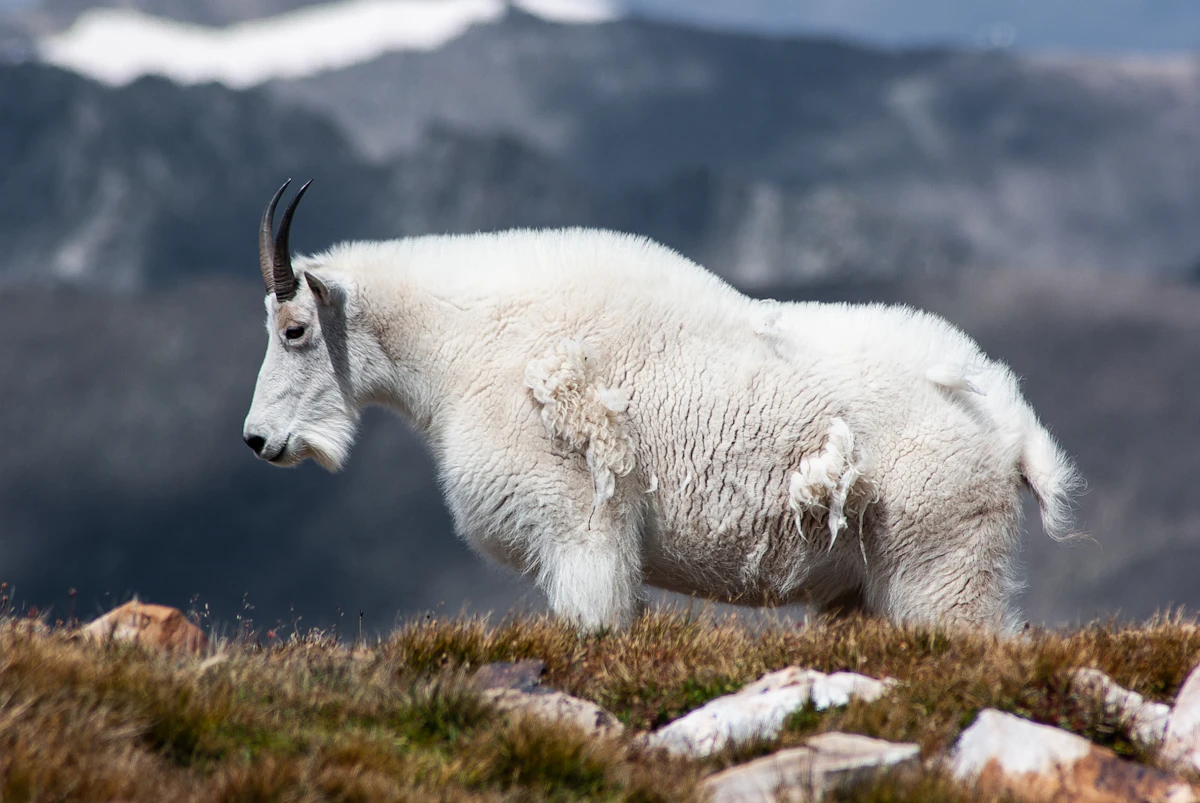
Mountain goat hunting represents the pinnacle of North American big-game pursuits. These white ghosts of the alpine inhabit terrain so rugged that reaching them often proves harder than the shot itself. Success requires months of preparation, premium gear, and mental toughness most hunters never develop. This guide breaks down everything from drawing your first tag to recovering your goat miles from the trailhead.
Understanding Mountain Goat Biology and Behavior
Mountain goats (Oreamnos americanus) are not true goats but members of the antelope family. Billies typically weigh 180-300 pounds, while nannies run 120-200 pounds. Both sexes carry black horns that curve slightly backward, making field identification challenging even for experienced hunters.
Goats occupy alpine and subalpine zones year-round, preferring cliffs and broken rock faces between 6,000 and 13,000 feet. Unlike elk or deer that migrate seasonally, goats stay high even through brutal winters. They feed primarily on grasses, sedges, lichens, and alpine forbs growing in rocky terrain that deters most predators.
Their legendary surefootedness comes from specialized hooves featuring hard outer shells and soft, textured pads that grip rock like climbing shoes. Goats can navigate near-vertical faces, cross knife-edge ridges, and traverse scree slopes that would kill a bighorn sheep.
Behaviorally, goats are less social than sheep. You will find them alone, in small groups of two to four animals, or occasionally in larger winter bands. They are not particularly skittish compared to elk, but their habitat provides natural security. A goat that spots you from across a canyon simply moves higher or around a cliff band you cannot follow.
Where to Hunt Mountain Goats: State-by-State Breakdown
Mountain goats inhabit seven western states plus Alaska, each offering distinct opportunities, draw odds, and trophy quality.
Alaska provides the most accessible goat hunting, with no draw required and abundant populations across coastal ranges and interior mountains. Expect DIY hunts to cost $5,000-$15,000 for bush flights and logistics, while guided hunts run $10,000-$20,000. Success rates hover around 80-90 percent with a guide.
Montana holds the Lower 48's largest goat population and issues the most permits. Nonresidents face 0-2 percent draw odds for most units, but resident odds reach 10-40 percent in certain districts. The Beartooth, Absaroka, and Cabinet Mountains produce consistent opportunities. Montana operates on a bonus point system, giving applicants squared bonus points that improve odds gradually.
Idaho offers roughly 100-150 nonresident permits annually across multiple units. Draw odds range from 0-8 percent depending on weapon choice and unit quality. The Selkirk, Bitterroot, and Sawtooth ranges hold huntable populations. Idaho uses a bonus point system similar to Montana's.
Wyoming issues extremely limited goat tags, with nonresident odds typically below 1 percent. The Bighorn and Absaroka ranges hold most permits. Wyoming's preference point system means you are competing against applicants with 10-20+ points for the few available tags.
Colorado recently expanded goat hunting opportunities but remains highly competitive. Nonresident draw odds rarely exceed 1-2 percent, with many units under 0.5 percent. The Collegiate Peaks, Gore Range, and San Juan Mountains offer the best populations. Colorado uses a weighted preference point system.
Washington provides decent resident opportunities but brutal nonresident odds, often below 0.5 percent. The North Cascades hold the strongest populations. Washington operates on a preference point system.
Oregon offers minimal goat hunting, with only a handful of tags available each year in the Wallowa Mountains. Draw odds are essentially lottery-level for both residents and nonresidents.
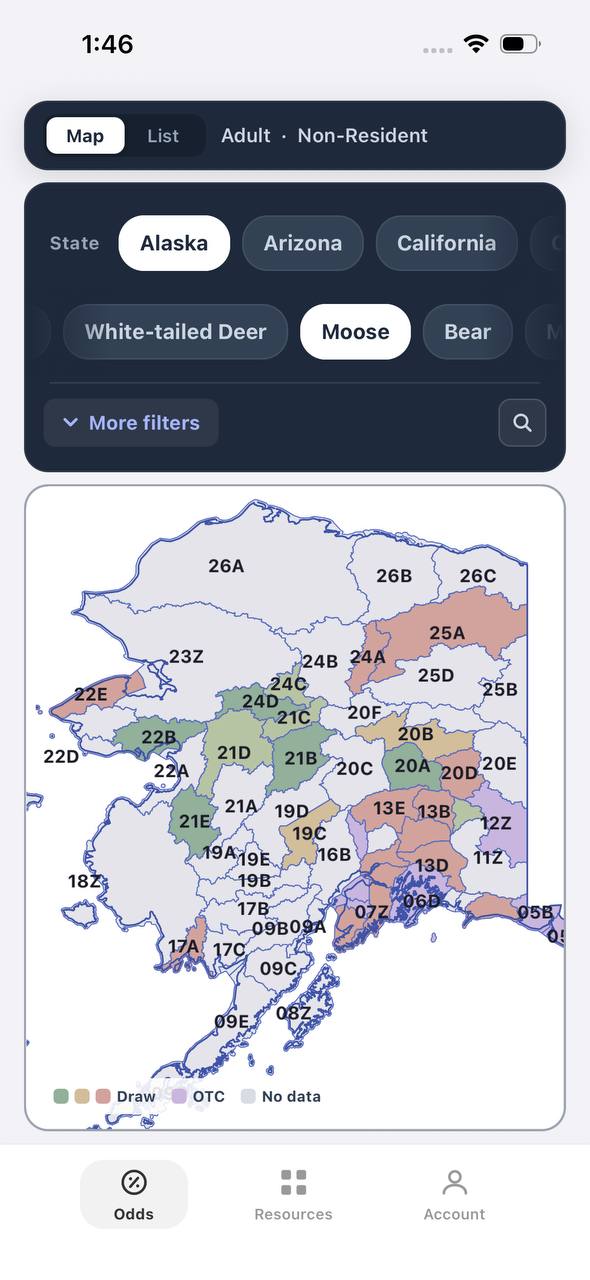
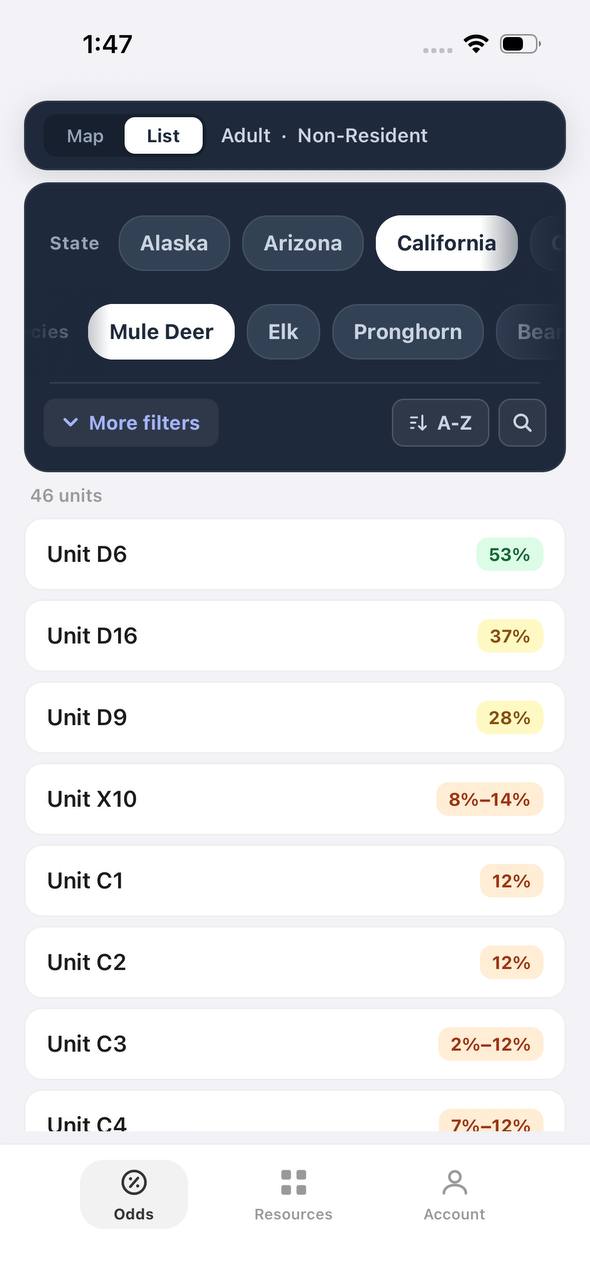
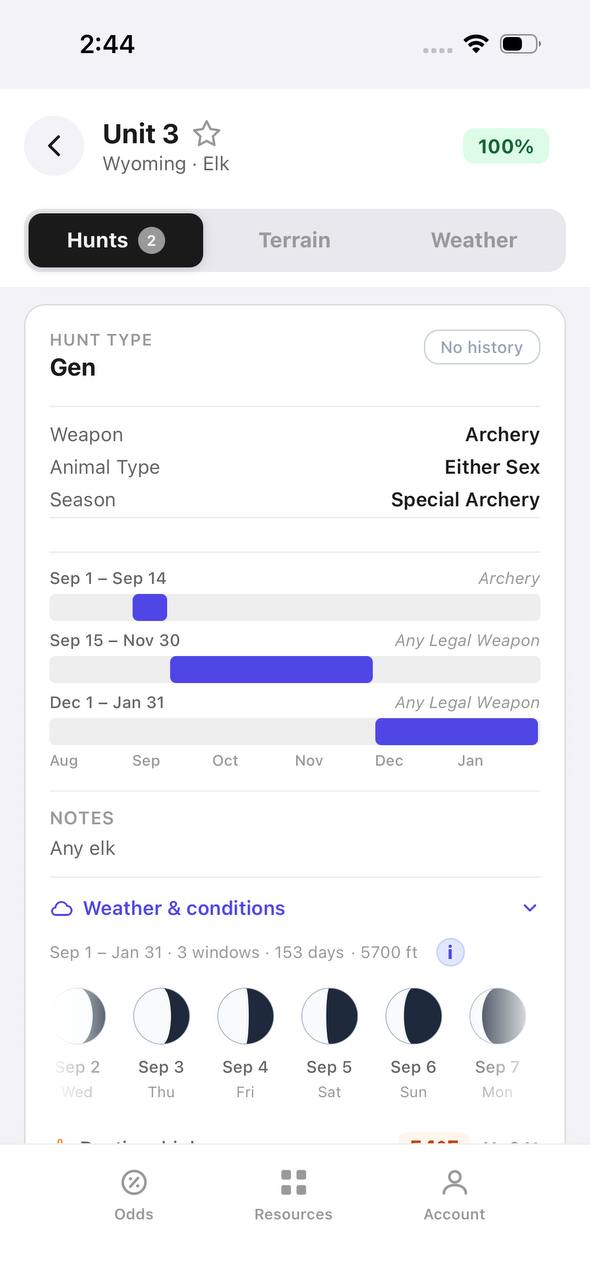
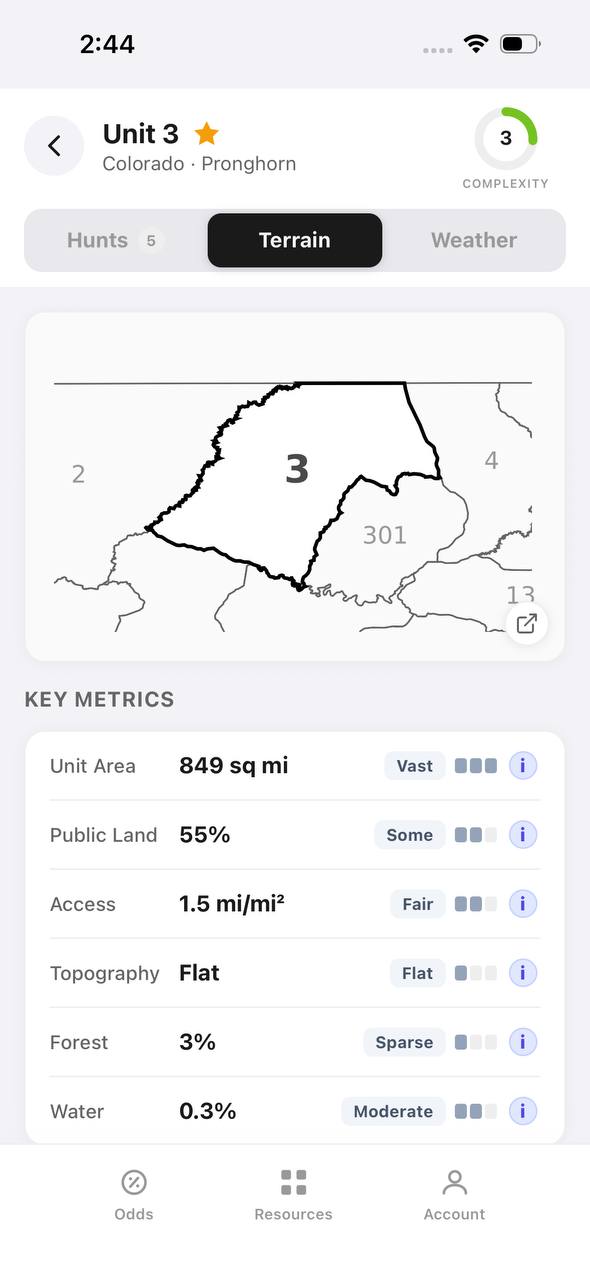
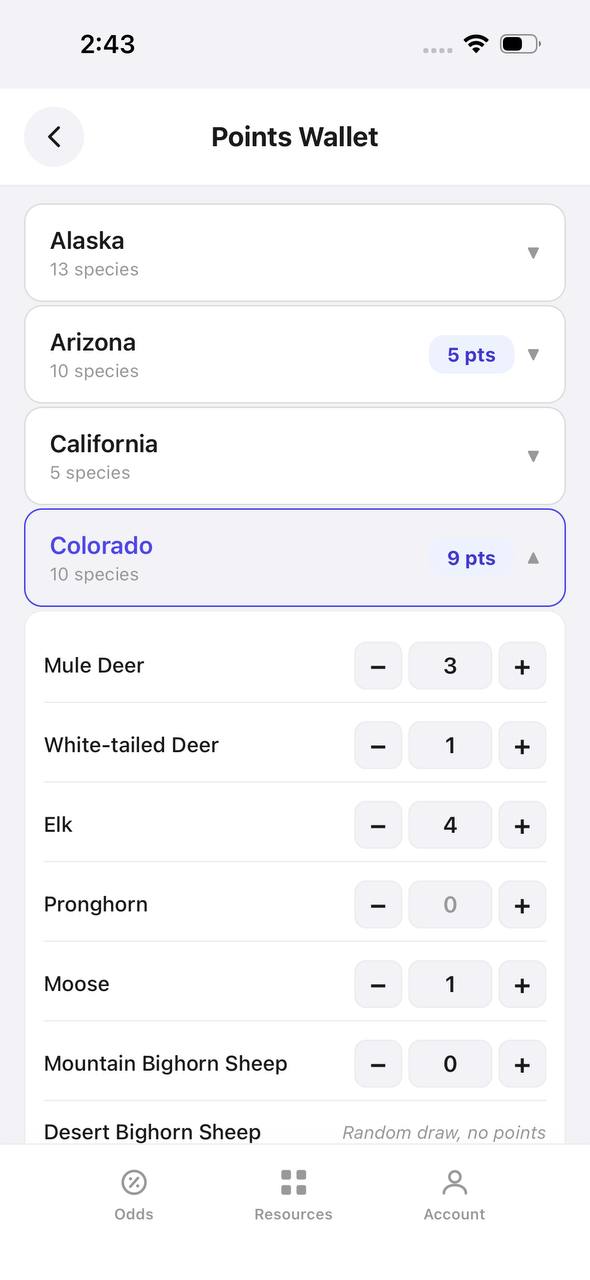
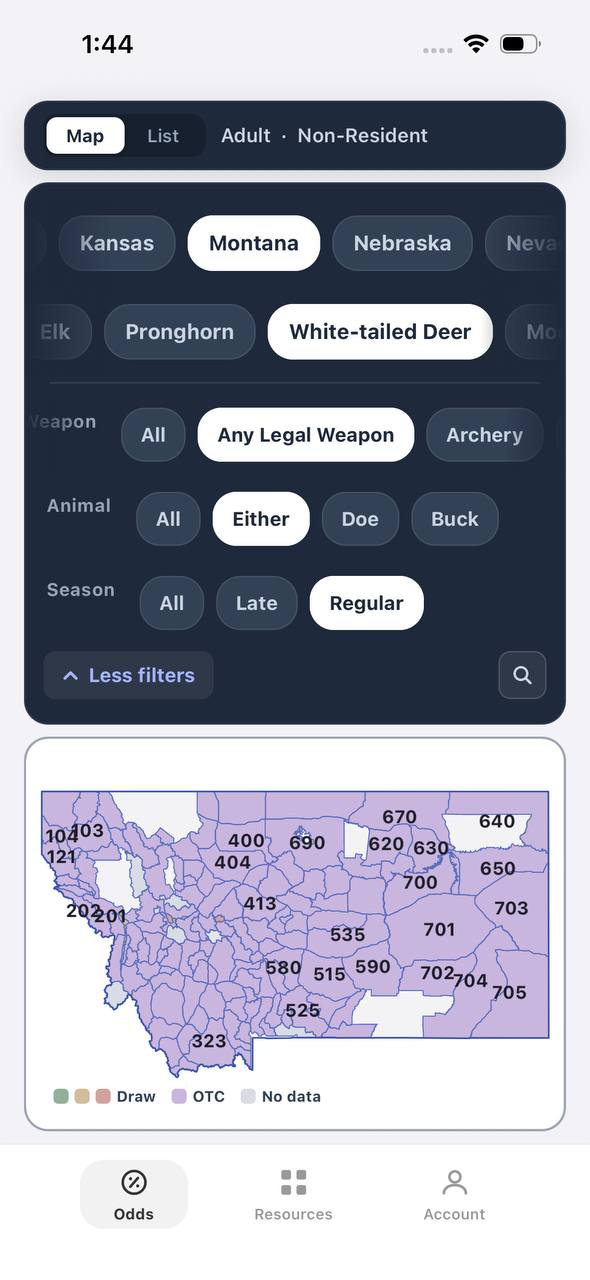
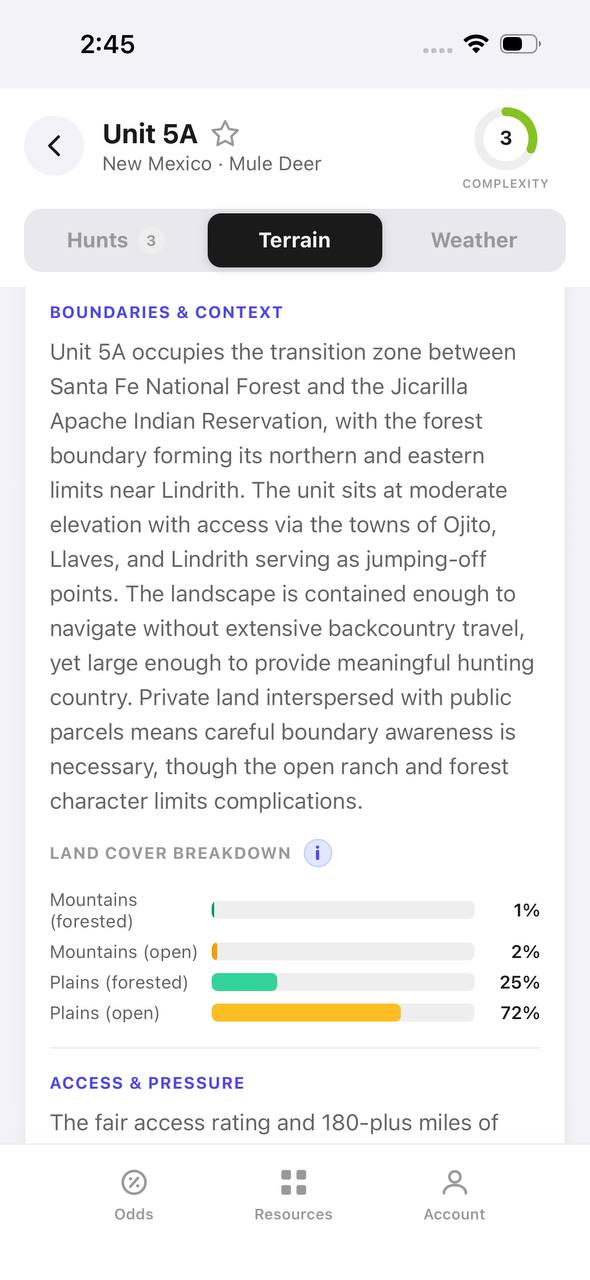
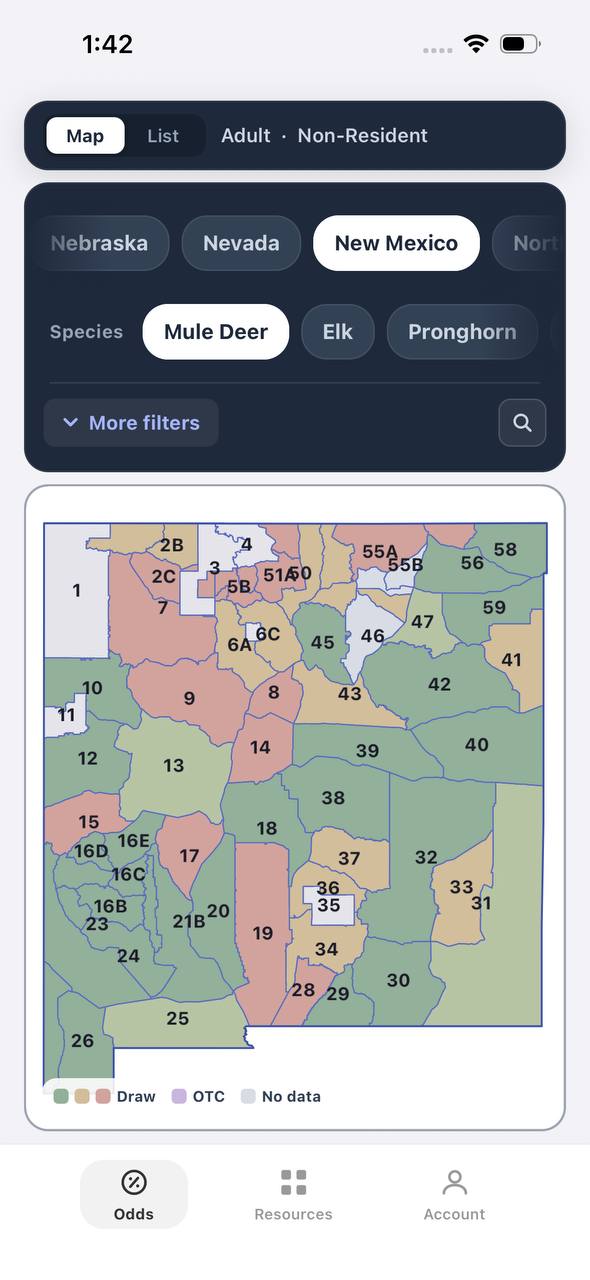
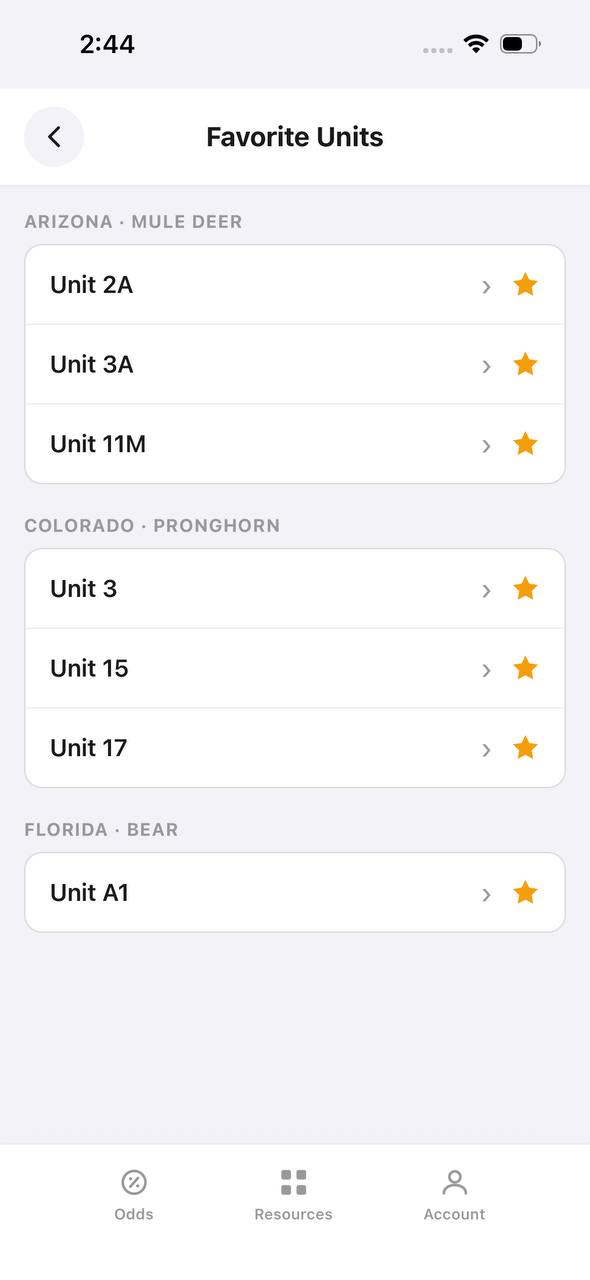
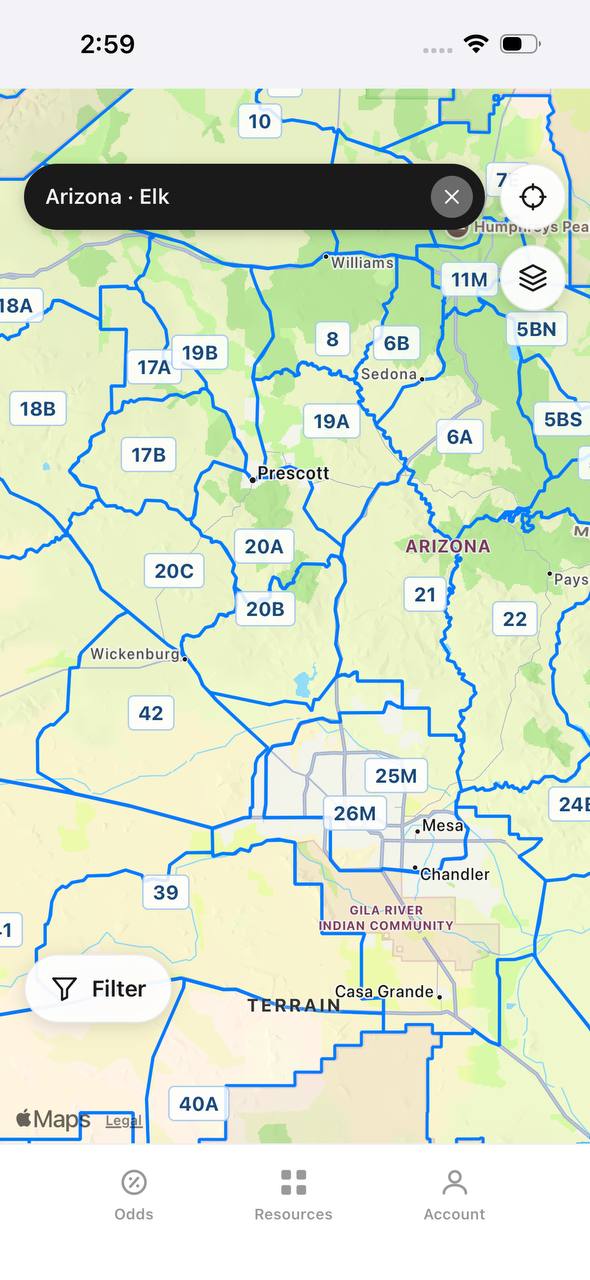
TAGZ helps you compare draw odds across all seven states, track your bonus points and preference points, and identify which units match your point totals and physical abilities. The platform's terrain maps show exact cliff bands, escape routes, and access points so you can evaluate whether a unit fits your capabilities before applying.
Draw Strategy: Maximizing Your Odds
Most hunters will spend 5-20 years building points before drawing a goat tag outside Alaska. Your strategy should balance point accumulation with realistic hunt planning.
Start applying immediately in Montana and Idaho, where bonus points give you incrementally better odds each year without locking you into decades-long point races. Even with zero points, you have a mathematical chance every year.
In Wyoming and Colorado, recognize that you are playing the long game. Apply annually to build points, but plan your actual hunt for Alaska or Montana when you want to hunt soon. Wyoming's preference point system means the waiting list is real and it grows longer every year.
Consider weapon choice carefully. Rifle seasons offer the longest hunting windows and highest success rates but also draw the most applicants. Muzzleloader and archery seasons in some states carry better draw odds because fewer hunters apply, though success rates drop significantly.
Pay attention to unit-specific point creep. A unit requiring five points this year might need seven points two years from now. TAGZ's historical draw data reveals which units are experiencing rapid point inflation versus which remain relatively stable.
Do not ignore resident opportunities if you can establish legal residency. Montana, Idaho, and Alaska residents enjoy dramatically better odds and lower tag costs. If you are considering relocating to the West anyway, residency requirements range from six months to one year depending on the state.
Physical Preparation: Getting Mountain-Ready
Mountain goat hunting demands the best physical condition of your life. The terrain sits somewhere between technical mountaineering and extreme hiking, with a rifle and 40-60 pound pack added to the equation.
Start training at least six months before your hunt, preferably longer. Focus on these key areas:
Cardiovascular endurance forms your foundation. You need the ability to hike 5-10 miles daily at 8,000-12,000 feet elevation while carrying weight. Incorporate long hikes with elevation gain, stair climbing with a weighted pack, and high-intensity interval training to build work capacity.
Leg strength prevents injury on steep descents and provides power for uphill climbs. Weighted step-ups, lunges, and single-leg squats build the eccentric strength that protects knees and ankles. Bulgarian split squats mimic the uneven terrain you will navigate.
Core stability keeps you balanced on loose rock and sidehills. Planks, dead bugs, Pallof presses, and single-leg exercises force your core to stabilize under load. A strong core reduces back fatigue during long days.
Ankle and foot conditioning often gets ignored until a rolled ankle ends your hunt. Walk on uneven surfaces, practice single-leg balance exercises, and hike technical trails to strengthen ankles and improve proprioception.
Weight-bearing capacity builds gradually. Start with a 20-pound pack and add five pounds weekly until you comfortably carry 50-60 pounds on steep terrain. Do not wait until two weeks before the hunt to test your pack weight.
If possible, train at elevation. Weekend trips to mountain trails acclimate your body to thinner air and reveal gear or fitness weaknesses before they matter. Even a few days at 8,000+ feet helps.
Consider hiring a mountain-focused personal trainer or joining a backcountry hunting fitness program. The investment pays dividends when you can keep hiking while your lungs and legs still function.
Free to join
Download mobile app
- Detailed draw odds
- Point tracking
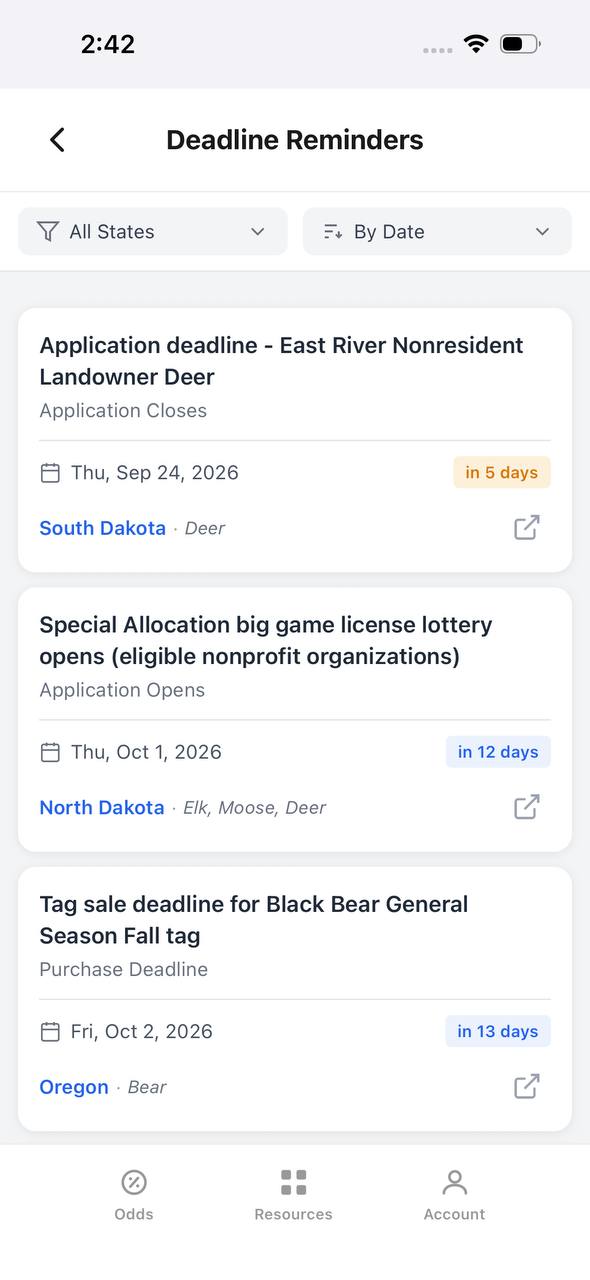
- Deadline reminders
- 18 states covered

Free to join
Download mobile app
- Detailed draw odds
- Point tracking
- Deadline reminders
- 18 states covered
Free to join
Download mobile app
- Detailed draw odds
- Point tracking
- Deadline reminders
- 18 states covered
Essential Gear for Mountain Goat Hunting
Goat hunting gear must balance three competing demands: durability for rocky terrain, light weight for long packs, and reliability in extreme weather.
Rifle and Optics
Choose a rifle you shoot accurately and can carry comfortably all day. Weight matters, but reliability matters more. A 7-8 pound scoped rifle in 6.5 Creedmoor, 7mm-08, .270 Winchester, .280 Ackley Improved, 7mm Remington Magnum, or .300 Winchester Magnum covers all realistic shot distances. Goats are not particularly tough, so controlled-expansion bullets in 140-180 grains work well.
Carbon fiber stocks, titanium actions, and fluted barrels cut weight without sacrificing accuracy. Avoid ultra-lightweight rifles under 6 pounds that magnify recoil and are harder to shoot precisely.
Your scope needs enough magnification for 300-400 yard shots in variable light. A 3-15x or 4-16x in a 30mm or 34mm tube with illuminated reticle provides versatility. Choose exposed turrets if you dial elevation, capped turrets if you hold over. Practice your system until it becomes automatic.
Binoculars rank equal to your rifle in importance. You will spend hours glassing cliff bands and distant basins. A quality 10x42 or 10x50 provides the magnification and light-gathering needed for alpine glassing. Spend money here. Cheap optics cause eye fatigue and missed opportunities.
A spotting scope helps judge horn length and confirm sex, especially since distinguishing billies from nannies at distance challenges even experienced hunters. A 60-65mm scope in the 15-45x range balances magnification and packability.
Clothing and Layering
Alpine weather changes fast. You might glass in a t-shirt at noon and face snow squalls by 3 PM. Your clothing system must handle 70-degree temperature swings, wind, rain, snow, and intense sun.
Base layers should be merino wool or high-quality synthetic. Bring two sets so you can wash one or have a dry option if one gets soaked. Mid-weight fabric works for early season; expedition-weight for late season.
Insulation layers include a lightweight puffy jacket (down or synthetic) for glassing and a heavier jacket for extreme cold. Synthetic insulation performs better in wet conditions, while down offers superior warmth-to-weight in dry cold.
Your outer shell must be waterproof, windproof, and breathable. Gore-Tex or similar fabrics handle mountain weather best. Choose a jacket with a hood that fits over a beanie, pit zips for ventilation, and pockets you can access with a pack on.
Pants should be durable enough for rock scrambling but light enough for long climbs. Many hunters prefer softshell pants with reinforced knees and seat. Bring rain pants or waterproof bibs for wet weather.
Do not forget a good hat, buff or neck gaiter, and quality gloves. You will use all three daily.
Pack and Camp Setup
Your backpack is your lifeline. For multi-day hunts, you need 4,000-6,000 cubic inches of capacity (65-90 liters) with a suspension system that carries 60+ pounds comfortably. Brands like Kifaru, Exo Mountain Gear, Mystery Ranch, and Stone Glacier specialize in hunting-specific packs built for heavy loads and rough terrain.
Test your loaded pack on steep terrain before the hunt. Adjust the hip belt, shoulder straps, and load lifters until the weight rides on your hips, not shoulders. A poorly fitted pack causes pain and fatigue within miles.
For shelters, most goat hunters choose lightweight backpacking tents in the 2-4 pound range for solo hunters or 3-6 pounds for two-person setups. Four-season tents handle wind and snow better than three-season, but weigh more. Tarps and floorless shelters cut weight significantly but require careful site selection.
Sleeping bags and pads must handle freezing temperatures. A 15-20 degree bag works for early season; 0-10 degree for late season. Down sleeping bags pack smaller and weigh less but become useless if wet. Synthetic bags retain warmth when damp. Bring a closed-cell foam pad plus an inflatable pad for warmth and comfort on rocky ground.
Footwear and Trekking Poles
Boots make or break goat hunts. You need ankle support for steep terrain, aggressive tread for loose rock, and waterproofing for snow and creek crossings. Full-grain leather boots with Vibram soles or modern composite hunting boots both work if properly fitted.
Break in new boots months before the hunt. Your feet should not touch the front of the boot on steep descents, and your heel should not slip on climbs. Blisters at 11,000 feet, miles from the truck, will end your hunt.
Bring multiple sock options: lightweight liners, medium-weight hiking socks, and heavy-weight for cold days. Change socks at lunch and again at camp to keep feet dry and prevent blisters.
Trekking poles are non-negotiable. They save your knees on descents, provide stability on loose rock, help pace your breathing on climbs, and assist with stream crossings. Adjustable poles let you customize length for uphill versus downhill. Most hunters prefer cork or foam grips over rubber.
Game Bags and Meat Care
Mountain goats have long, hollow hair that sheds constantly and sticks to meat. Quality game bags keep hair off the meat during the pack out. Bring enough bags for quarters, backstraps, tenderloins, neck, ribs, and loose meat. Synthetic bags dry faster than cotton and weigh less.
A lightweight tarp creates a clean workspace for butchering on rock or dirt. Add a compact bone saw or Havalon Piranta for field processing.
Salt or citric acid helps preserve the cape if you are doing a full-body mount. Plan for a 30-50 pound cape plus skull that must be packed with the meat.
TAGZ's unit maps show water sources, escape routes, and terrain features so you can plan where to process your goat and how to pack it out. Knowing where the nearest water sits, how far to the trailhead, and whether you can glass camp from a certain ridge all inform your post-shot decisions.
Scouting and E-Scouting Strategies
Most goat hunters cannot scout in person before the hunt, making digital scouting essential. Modern mapping tools let you identify high-probability areas from home.
Start with TAGZ's terrain maps to locate cliffs, basins, and escape terrain within your unit. Goats prefer north-facing slopes with broken cliffs, talus fields, and alpine meadows nearby. Look for areas between 7,000-11,000 feet with a mix of vertical relief and grassy benches.
Google Earth's historical imagery reveals snow-free periods, vegetation patterns, and access routes. Use the terrain view and 3D mode to understand ridge systems, drainages, and how basins connect. Drop pins on likely glassing locations, water sources, and campsites.
OnX Hunt, Gaia GPS, or similar apps overlay property boundaries, trail systems, and access points on topographic maps. Download offline maps before the hunt since cell service rarely exists in goat country.
Study aspect and sun position. Goats often bed on north or east faces during warm weather, moving to south-facing slopes as snow arrives. Knowing where the sun hits at different times helps you plan glassing schedules.
Contact the managing wildlife agency for recent goat sighting reports, population estimates, and any habitat changes. Biologists often share general information about where goats concentrate within a unit.
If possible, hike into your unit a few weeks before the season to verify access, locate water, and glass for goats. Even a quick overnight trip provides ground-truth data you cannot get from maps.
Hunting Tactics: Finding and Taking Your Goat
Goat hunting is 80 percent glassing, 10 percent climbing, and 10 percent shooting. Success depends on thorough optics work and patient stalking.
Glassing Techniques
Find a high vantage point that overlooks multiple basins, cliff systems, and benches. Set up your spotting scope and binoculars before first light. Goats move most actively in early morning and late evening but can be spotted any time if you glass methodically.
Glass slowly. Pick apart every cliff band, rock outcrop, and shadow. Goats blend into broken white rock and snow patches perfectly. You are often looking for a black nose, horns, or the horizontal line of a back against vertical cliffs.
Focus on transition zones where cliffs meet meadows, benches above or below cliff bands, and areas near water or mineral licks. Goats feed in meadows but retreat to cliffs when pressured.
Glass the same areas multiple times throughout the day. Goats bed in locations invisible from most angles, then stand or move to different micro-terrain that suddenly reveals them.
Use your spotting scope to confirm sex. Billies have blockier, more muscular builds, thicker necks, and longer, more curved horns. Nannies appear lighter and more refined with thinner horns. In August and September, nannies often have kids nearby. When uncertain, do not shoot. Mistakenly killing a nanny in most states results in tag loss, fines, and potential license suspension.
Stalk Execution
Once you locate a billy, plan your stalk carefully. Goats do not spook easily, but they will move into unrecoverable terrain if pressured.
Approach from above whenever possible. Goats instinctively flee uphill, so positioning above them blocks their escape route and may present a shot as they climb toward you.
Move during feeding periods when the goat's head is down. Freeze when it looks up. Use terrain and vegetation to break up your outline.
Stay off ridgelines and avoid skylining yourself. Move through timber or behind rock formations to conceal your approach.
Plan for multiple glassing stops during the stalk. Goats move unpredictably, and the animal you spotted an hour ago may have relocated to a different cliff band.
Never rush the final approach. The last 200 yards often take an hour or more as you navigate talus, cross gullies, and position for a clean shot.
Shot Placement and Recovery
Goats are not large animals, but they inhabit terrain where tracking wounded game is difficult or impossible. Your first shot must count.
Aim for the chest cavity just behind the shoulder, one-third up from the brisket. This shot hits both lungs and the heart, providing quick, humane kills. Goats often do not react dramatically to good hits. They may stand, walk a few steps, and tip over. Do not assume a miss if the goat does not run.
Avoid steep downhill or uphill shots that require holding over or under. Wait for the goat to move to flatter ground or cross a bench where your ballistics perform predictably.
High shoulder shots anchor goats immediately but destroy significant meat and risk the goat tumbling off a cliff. Use only when necessary to prevent escape into unrecoverable terrain.
After the shot, watch the goat through your scope until it expires or moves out of sight. Note landmarks and GPS coordinates immediately. Cliff bands and talus fields look identical once you start moving, and goats can roll or tumble hundreds of yards from where they fell.
Approach carefully. Wounded goats occasionally wedge into crevices or under boulders. A headlamp, rope, and knife often prove necessary for recovery.
Field Care and Pack Out
Goats must be caped carefully if you plan a mount. Their long hair and thin hide tear easily. Start with a Y-incision from between the shoulders down the back of each front leg, then peel the cape forward over the head. Leave extra hide around the eyes, nose, and mouth for the taxidermist.
Debone the meat completely unless you enjoy packing extra weight. Goat backstraps and tenderloins rival any wild game for tenderness and flavor. The rest of the meat benefits from slow cooking or grinding.
Hang or spread out meat and cape to cool as quickly as possible. Goat hair insulates meat, slowing cooling. Remove hair-covered sections from meat bags once back at camp.
Plan for multiple trips or recruit help if hunting solo. A mature billy with cape and meat yields 80-120 pounds of packable weight, which exceeds most hunters' comfortable single-load capacity at altitude.
Post-Hunt: Meat and Trophy Care
Goat meat tastes milder than deer or elk when properly cared for. Remove all fat, silver skin, and bloodshot areas before freezing. The fat carries a strong flavor most people dislike.
Grind shoulder and neck meat for sausage, tacos, or chili. Backstraps and tenderloins make excellent steaks, grilled medium-rare. Hindquarters work well as roasts or stew meat.
For taxidermy, salt or freeze the cape within 24 hours. Goat hair slips easily if the hide gets warm. Contact your taxidermist before the hunt to discuss field care requirements.
Full-body mounts run $3,000-$6,000 depending on pose and taxidermist. Shoulder mounts cost $1,200-$2,500. European skull mounts start around $200-$400.
Horns grow throughout the goat's life, with growth rings indicating age. Trophy billies typically have 9-10 inch horns with thick bases. Boone and Crockett minimum for goats is 50 inches (combined horn length, circumferences, and spread), which represents a truly exceptional animal. Most mature billies score 42-48 inches.
Common Mistakes and How to Avoid Them
New goat hunters make predictable errors that reduce success or create dangerous situations.
Underestimating physical demands ranks as the top mistake. If you cannot comfortably hike 10 miles with a 50-pound pack at 10,000 feet, you are not ready. Train harder or hire a guide.
Inadequate gear testing surfaces when boots cause blisters, packs do not fit, or rifles shoot differently at altitude. Test everything on training hikes before the hunt.
Poor shot discipline results in wounded, unrecovered goats. If the shot is not perfect—clear vitals, solid rest, confirmed range—do not pull the trigger. Another opportunity will come.
Ignoring weather kills hunters. September can bring snow squalls, lightning, and freezing rain. Have backup plans, extra layers, and the judgment to turn back when conditions deteriorate.
Mistaking nannies for billies causes legal and ethical violations. When unsure, watch longer. Use your spotting scope. Ask yourself if you would bet $10,000 that the animal is a billy. If not, do not shoot.
Inadequate recovery equipment leaves meat or capes to waste. Bring enough game bags, rope, a tarp, knives, and a headlamp to recover your goat in any conditions.
Solo hunting without communication means no one knows where you are if something goes wrong. Carry a satellite communicator, file a trip plan with someone responsible, and check in daily.
FAQ — Mountain Goat Hunting
How hard is it to draw a mountain goat tag?
Extremely hard outside Alaska. Nonresident draw odds in Montana, Idaho, Wyoming, and Colorado typically run 0-2 percent, with most units under 1 percent. Expect to build points for 5-20 years before drawing in the Lower 48. Resident odds improve significantly but still require patience.
Can you hunt mountain goats without a guide?
Yes in all states except Alaska, where nonresidents must use a licensed guide. DIY goat hunting requires advanced backcountry skills, exceptional physical fitness, and willingness to handle emergencies alone. Most first-time goat hunters benefit from hiring a guide or hunting with an experienced mentor.
What is the best state for mountain goat hunting?
Alaska for immediate opportunity and high success rates. Montana for the best Lower 48 odds combined with quality populations. Idaho offers a middle ground with better draw odds than Wyoming or Colorado but still competitive. Your best state depends on whether you prioritize hunting soon versus building points for premium units.
How much does a mountain goat hunt cost?
Alaska DIY hunts run $5,000-$15,000 including flights, gear, and logistics. Guided Alaska hunts cost $10,000-$20,000. Lower 48 DIY hunts cost $1,500-$4,000 for tags, licenses, travel, and gear. Guided Lower 48 hunts range from $6,000-$15,000. Trophy fees, taxidermy, and meat processing add $2,000-$7,000 depending on mount choice.
What time of year is best for mountain goat hunting?
Most seasons run August through October. Early September provides warm weather, less snow, and goats in summer patterns. Late September and October offer cooler temperatures, fewer bugs, and goats developing winter coats. November hunts face snow and extreme cold but produce prime winter capes. Choose based on your fitness level and weather tolerance.
How do you tell a billy from a nanny mountain goat?
Billies have blockier bodies, thicker necks, more muscular shoulders, and longer, thicker-based horns with more pronounced curves. Nannies appear lighter, more refined, with thinner horns. In late summer and fall, nannies often accompany kids. When glassing, look for urination posture: billies urinate rearward, nannies squat and urinate forward. Use a spotting scope and observe behavior before shooting.
Is mountain goat meat good to eat?
Yes, when properly cared for. Remove all fat immediately, as it carries strong flavors. The meat tastes milder than venison, similar to mild lamb. Backstraps and tenderloins rival the best wild game. Trim silver skin thoroughly and cook low and slow for tougher cuts. Ground goat makes excellent sausage and tacos.
What rifle caliber is best for mountain goats?
Any centerfire caliber you shoot accurately works. Popular choices include 6.5 Creedmoor, 7mm-08, .270 Winchester, .280 Ackley Improved, and 7mm Remington Magnum. Goats are not particularly tough, so controlled-expansion bullets in 140-180 grains handle all shot distances. Prioritize accuracy and low recoil over raw power since most shots occur after long climbs at altitude.
Continue Planning Your Hunt
Mountain goat hunting represents a lifetime achievement for most hunters. The combination of limited tags, extreme terrain, and physical demands makes every goat hunt memorable.
TAGZ helps you navigate the entire process from application through tag soup or tag success. Compare draw odds across all goat states, track your bonus points and preference points automatically, and explore unit-specific terrain maps showing cliff bands, access points, and glassing locations. Whether you are building points for a dream hunt or planning next season's Alaska trip, TAGZ gives you the data to make confident decisions.
Ready to start planning your goat hunt? Explore the TAGZ platform to filter hunts by species, weapon, and season, analyze historical draw trends, and map your hunt before you ever leave home. Create an account at getmytagz.com to track applications across multiple states and never miss another draw deadline.
For more western hunting strategy, gear reviews, and unit breakdowns, visit the TAGZ Insights blog. If you are ready to commit to serious hunt planning, check out TAGZ pricing to see which subscription level fits your hunting goals.
Was this article helpful?
Previous
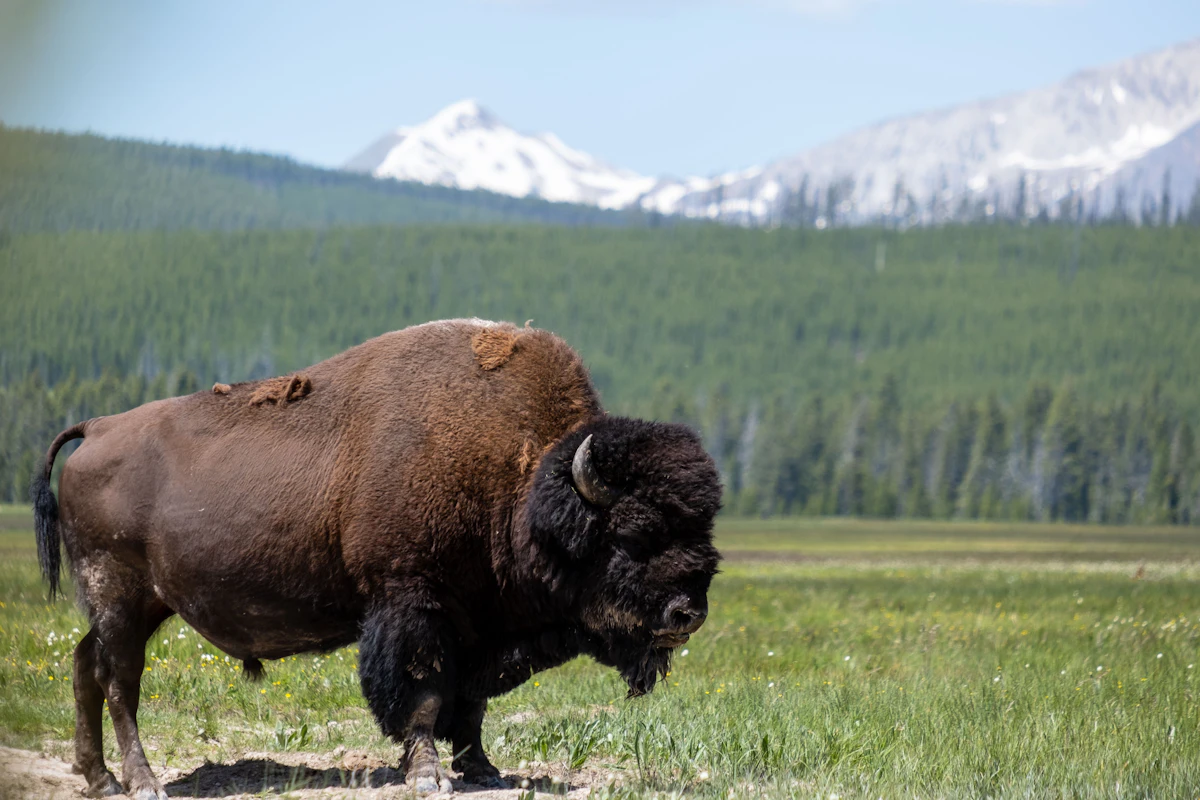
Best Bison Ammunition 2026: Cartridges and Bullets That Actually Work
Choosing the right bison ammunition means balancing penetration, energy retention, and bullet construction for animals that can weigh 2,000 pounds. This guide breaks down the cartridges, bullet weights, and loadings that consistently anchor bison on public hunts across the West.
Related
Best Hunting Gloves for 2026: Field-Tested Gear That Actually Works
After years of frozen fingers and blown stalks, we've tested dozens of hunting gloves across every season and condition. Here's what actually works in 2026, from early-season bow hunts to late-season rifle sits in single-digit temps.
Next
Best Hunting Rifles Under $750 in 2026: Proven Budget Choices That Perform
Quality hunting rifles under $750 deliver accuracy and reliability without breaking the bank. We compare proven models from Ruger, Savage, Tikka, and others that western hunters trust for elk, deer, and antelope.