Sierra GameChanger Review: Performance on Western Big Game

Sierra's GameChanger line entered the hunting bullet market with bold claims about blending match-grade accuracy with reliable terminal performance on big game. After running these bullets through five western hunting seasons on elk, mule deer, and pronghorn in Colorado and Wyoming, here's what actually matters in the field.
The GameChanger uses a polymer tip and boat-tail design optimized for high ballistic coefficients. Sierra markets them as bridge bullets — accurate enough for long-range precision shooters but engineered to expand consistently on game. That dual-purpose promise is what drew me to test them extensively, and the results have been revealing.
Ballistic Performance and Long-Range Accuracy
The GameChanger's most immediate advantage shows up at the bench. The .30-caliber 165-grain TGK (Tipped GameKing) carries a G1 BC of .527, and the numbers hold true downrange. In my Tikka T3x chambered in .300 Win Mag, five-shot groups at 100 yards consistently printed under 0.75 MOA with Reloder 23. At 400 yards, groups opened only slightly to 1.25 MOA, which is better than I can shoot from field positions.
Wind deflection stays minimal out to 600 yards compared to traditional cup-and-core hunting bullets. During a Wyoming pronghorn hunt with gusty 15 mph crosswinds, the 165-grain GameChanger drifted 8 inches less at 450 yards than the Hornady InterLock 165s I'd used the prior season. That difference matters when you're holding on vitals with limited time.
Velocity retention also stands out. The 165-grain TGK launched at 3,050 fps from my rifle still carries 2,100 fps at 500 yards, keeping energy above 1,600 ft-lbs. For western hunters stretching shots across canyons, that sustained velocity translates to flatter trajectories and more forgiving range estimation.
Terminal Performance on Elk
Elk are the proving ground for any hunting bullet. Over three seasons, I've taken four bulls with the 165-grain GameChanger in .300 Win Mag, with shot distances ranging from 180 to 420 yards. All four were clean kills, but expansion characteristics varied more than I'd prefer.
The closest shot — a 180-yard broadside on a 5x5 bull — produced a golf-ball-sized exit wound and complete pass-through. The bull ran 40 yards and piled up. Autopsy showed the bullet had shed its copper jacket and the lead core fragmented through both lungs, creating significant tissue damage.
At 420 yards on a quartering-away 6x6, the bullet entered behind the ribs, angled forward through the diaphragm into the far-side shoulder, and stopped just under the hide. Retained weight was 62% of original — lower than advertised but still adequate. The elk dropped within sight after a 60-yard stagger.
The inconsistency appears at moderate distances. A 280-yard shot on a bedded bull produced minimal expansion. The bullet penciled through, missing major bones, and required a follow-up shot. Sierra's GameChanger relies on impact velocity to initiate expansion, and at that range the bullet was right at the threshold where the polymer tip may not have fully engaged.
For elk hunters, I'd recommend keeping shots above 2,200 fps impact velocity — roughly inside 400 yards for most .30-caliber magnum loads. Beyond that, you risk inconsistent expansion on quartering shots that don't encounter heavy bone.
Performance on Mule Deer and Pronghorn
Mule deer and pronghorn tell a different story. The GameChanger excels on lighter-bodied animals where over-expansion isn't a concern. I've taken six mule deer bucks between 220 and 510 yards, and every shot produced rapid kills with dramatic wound channels.
A 510-yard shot on a Colorado buck quartering away showed the bullet's best traits. Impact velocity was approximately 2,000 fps, the bullet expanded to roughly twice its diameter, penetrated through the near-side shoulder blade, destroyed both lungs, and exited cleanly. The buck collapsed within 20 yards.
Pronghorn results mirror mule deer performance. Three animals between 320 and 460 yards all died quickly with full pass-throughs. Meat damage was moderate — expect to lose the off-side shoulder on broadside shots, but backstraps and hindquarters remain clean.
The GameChanger's accuracy advantage shines brightest on pronghorn. These hunts often demand precise first-round hits across open basins with unpredictable winds. Knowing my rifle will print under MOA at distance builds confidence for those one-chance shots.
Comparison to Competitors
The GameChanger sits in crowded company. Here's how it stacks up against other premium hunting bullets I've used extensively:
Nosler AccuBond: More consistent expansion across velocity ranges, especially on elk. Slightly lower BC means more wind drift past 400 yards. Comparable accuracy. AccuBonds retain more weight (70-80%) and penetrate deeper on heavy bone.
Hornady ELD-X: Nearly identical BC and long-range accuracy. ELD-X expands more aggressively at lower velocities, which helps on longer shots but increases meat damage on closer deer. Both bullets fragment cores; neither is bonded.
Barnes TTSX: Superior weight retention (95%+) and deeper penetration. Lower BC hurts at distance. Barnes requires higher impact velocities to expand reliably, making them less forgiving past 500 yards.
Berger VLD Hunting: Higher BC, better external ballistics. Bergers fragment violently and rarely exit, creating massive wound channels but destroying more meat. GameChangers offer a middle ground between Berger lethality and traditional controlled-expansion bullets.
The GameChanger's sweet spot is the hunter who prioritizes long-range accuracy but wants more expansion than a Barnes and less bloodshot than a Berger. You sacrifice some penetration certainty on elk compared to bonded bullets, but gain ballistic performance that matters when shots extend past 400 yards.
Free to join
Download mobile app
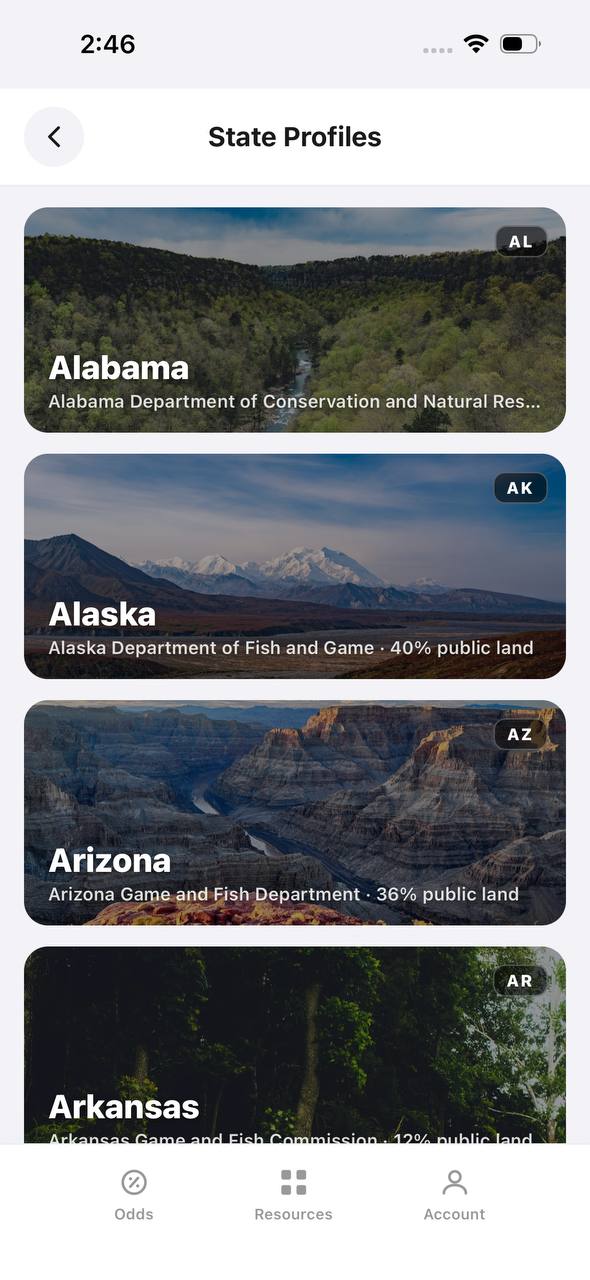
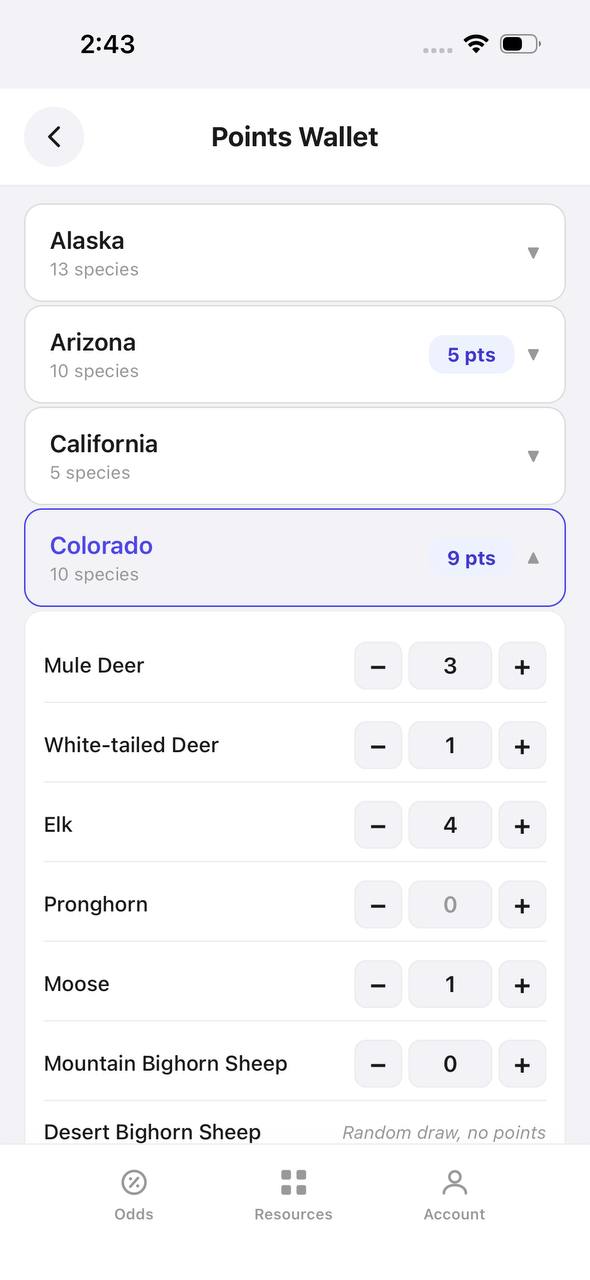
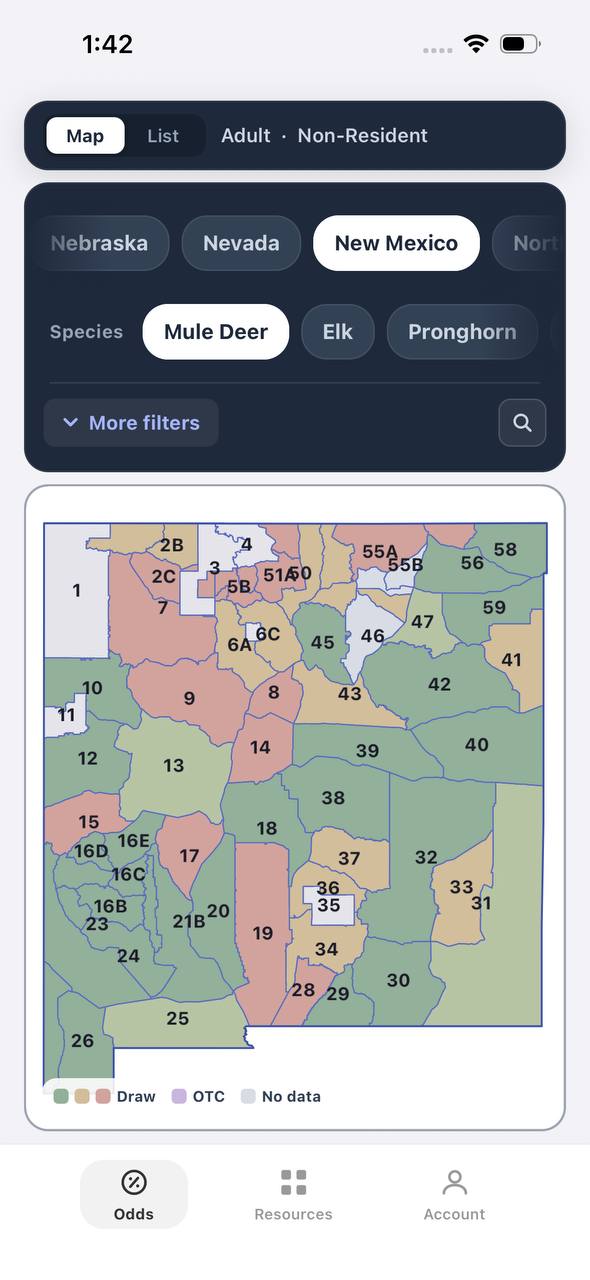
- Detailed draw odds
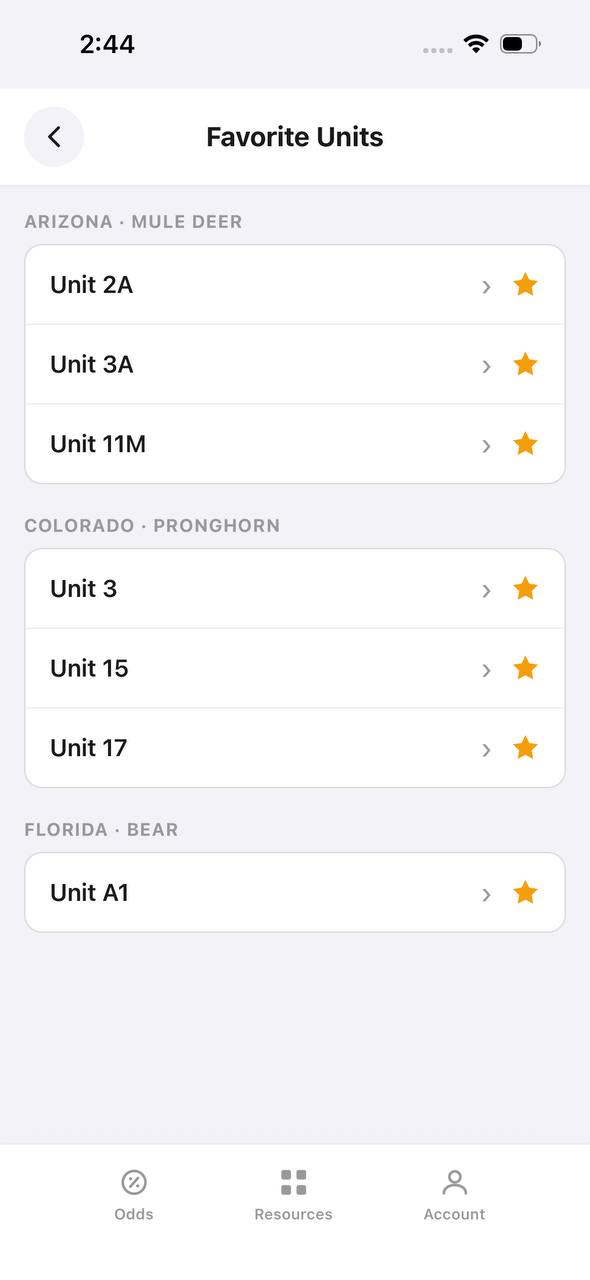
- Point tracking
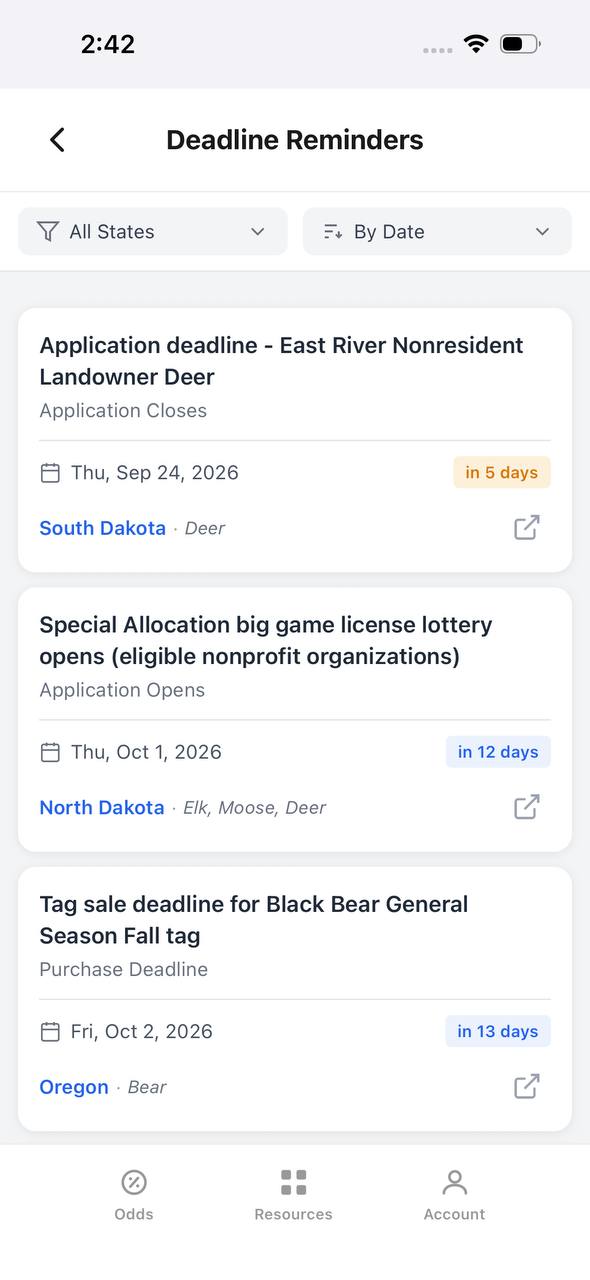
- Deadline reminders
- 18 states covered

Free to join
Download mobile app
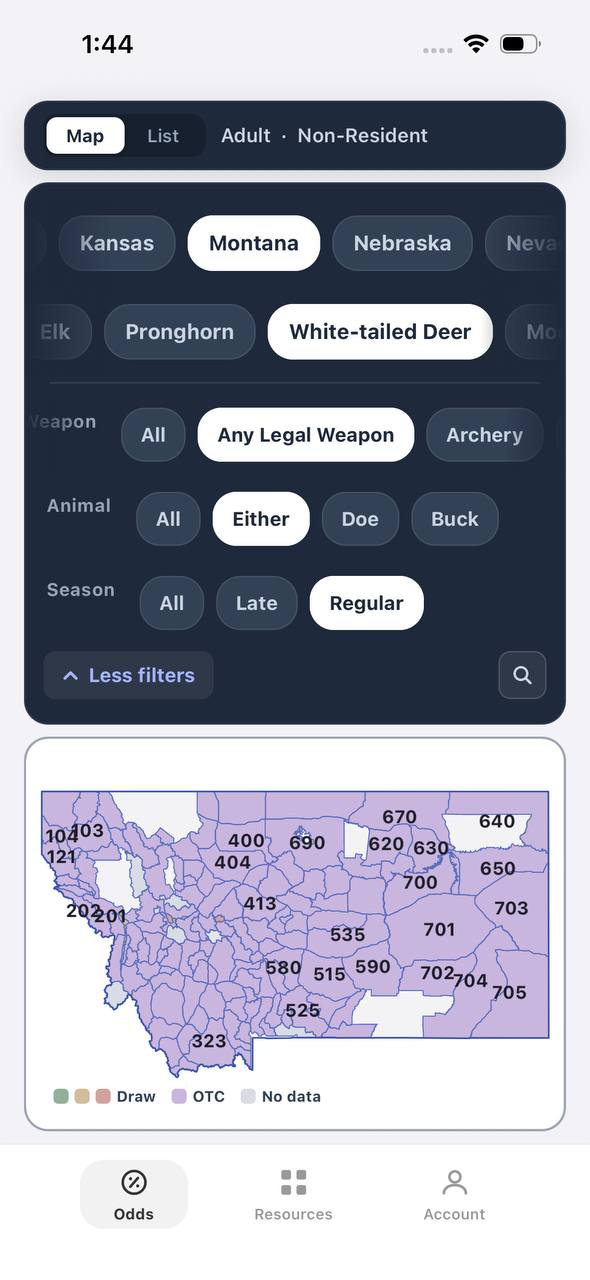
- Detailed draw odds
- Point tracking
- Deadline reminders
- 18 states covered
Free to join
Download mobile app
- Detailed draw odds
- Point tracking
- Deadline reminders
- 18 states covered

Cost and Availability
Sierra GameChangers run $40-50 per box of 100 bullets, positioning them between budget cup-and-core options and premium bonded bullets. That's reasonable given their match-grade consistency, but reloaders should factor in additional costs if you're not already set up.
Availability has improved since the initial release. Most major retailers stock common weights in .277, .284, and .308. Oddball calibers like 6.5 PRC and .28 Nosler sometimes require online orders, and selection fluctuates during fall hunting season.
Factory-loaded ammunition using GameChangers exists but remains limited. Federal Premium offers a few chamberings under their Gold Medal line, but most hunters will need to handload to access these bullets. If you're not reloading, you're better served by factory ammunition using proven bullets like the AccuBond or ELD-X.
Recommended Loads and Applications
Based on field results across multiple calibers, here's where the GameChanger works best:
Ideal Applications:
- Mule deer and pronghorn at any ethical distance
- Elk inside 400 yards with cartridges pushing 2,800+ fps
- Long-range rifle hunts where first-round accuracy matters most
- Hunters who handload and want to reduce load development time
Poor Fit:
- Close-range timber elk hunting (use a bonded bullet for deep penetration)
- Shooters who don't reload and prefer factory ammunition
- Budget-conscious hunters (cup-and-core bullets kill just fine for half the price)
- Dangerous game or animals requiring guaranteed deep penetration
For elk hunters specifically, I'd pair the GameChanger with cartridges that maintain high impact velocities. The .300 Win Mag, .300 WSM, .300 PRC, and 7mm Rem Mag all keep bullets above 2,200 fps out to ranges where most shooters lose accuracy anyway. Lighter cartridges like the .308 Win or 6.5 Creedmoor lack the velocity window needed for reliable expansion on heavy-bodied animals.
Real-World Hunt Application: Unit Planning and TAGZ
Bullet selection ties directly to hunt planning. Understanding your likely shot distances before you apply for tags helps you choose the right cartridge and bullet combination. A limited-entry Colorado elk tag in open alpine basins demands different terminal performance than an OTC archery hunt in dark timber.
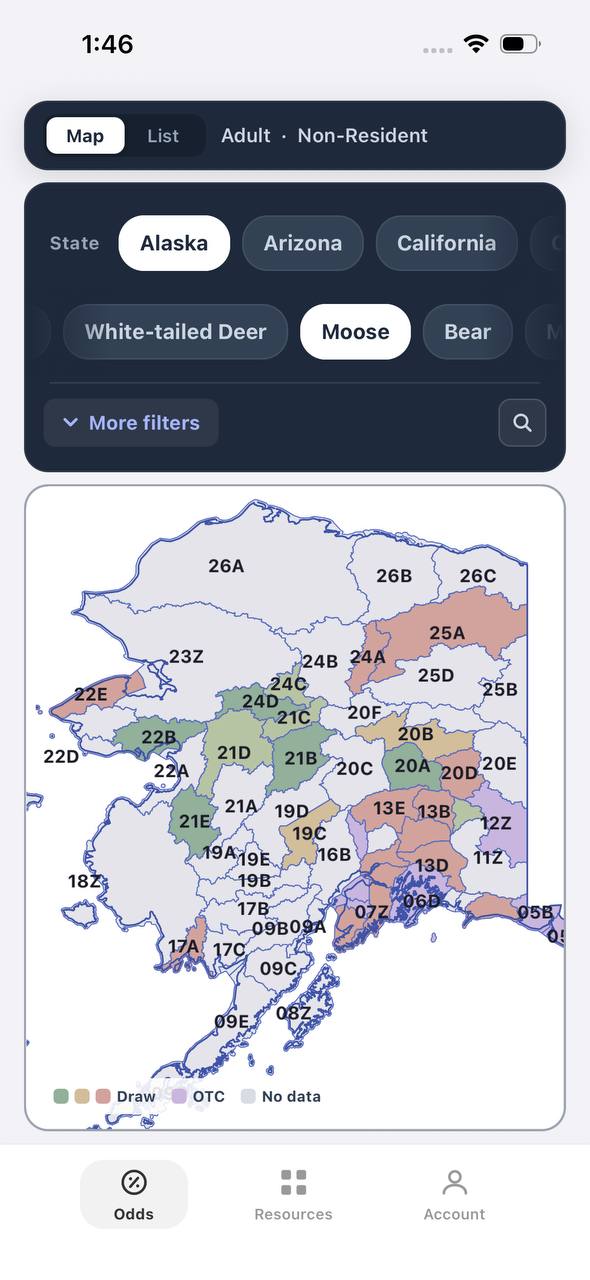
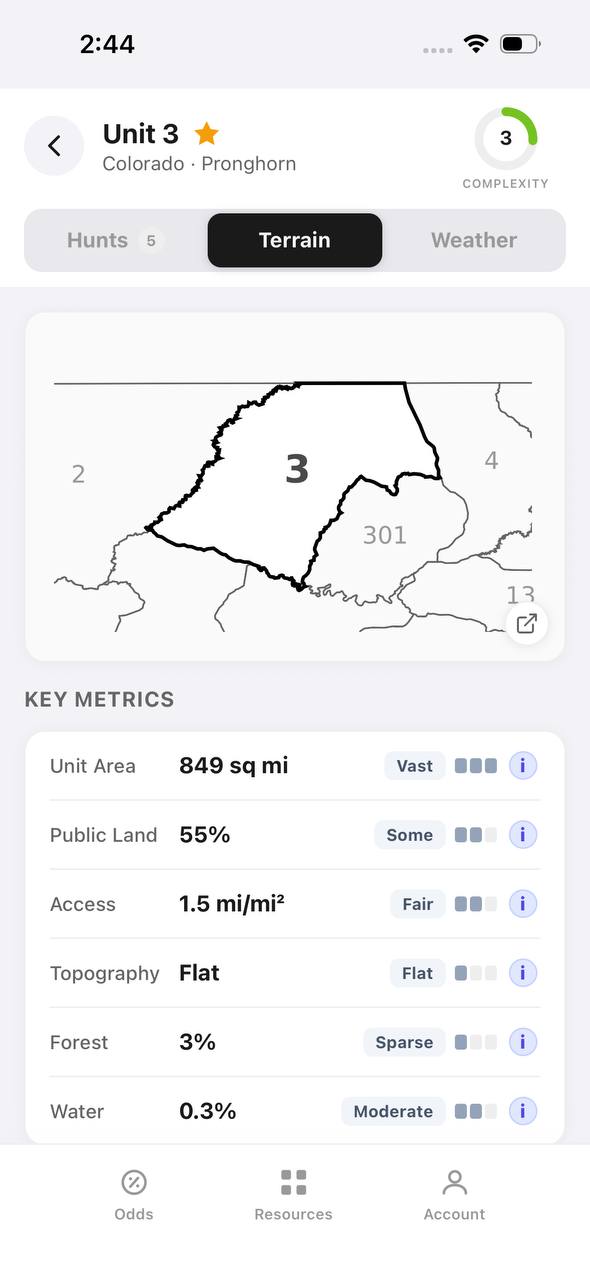
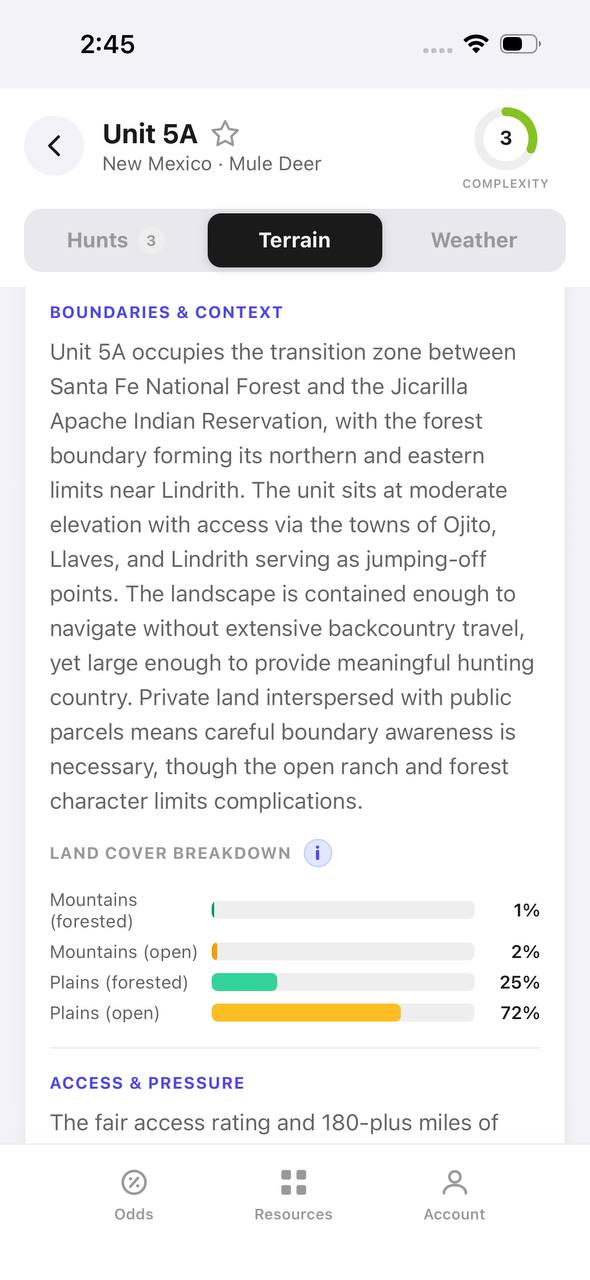
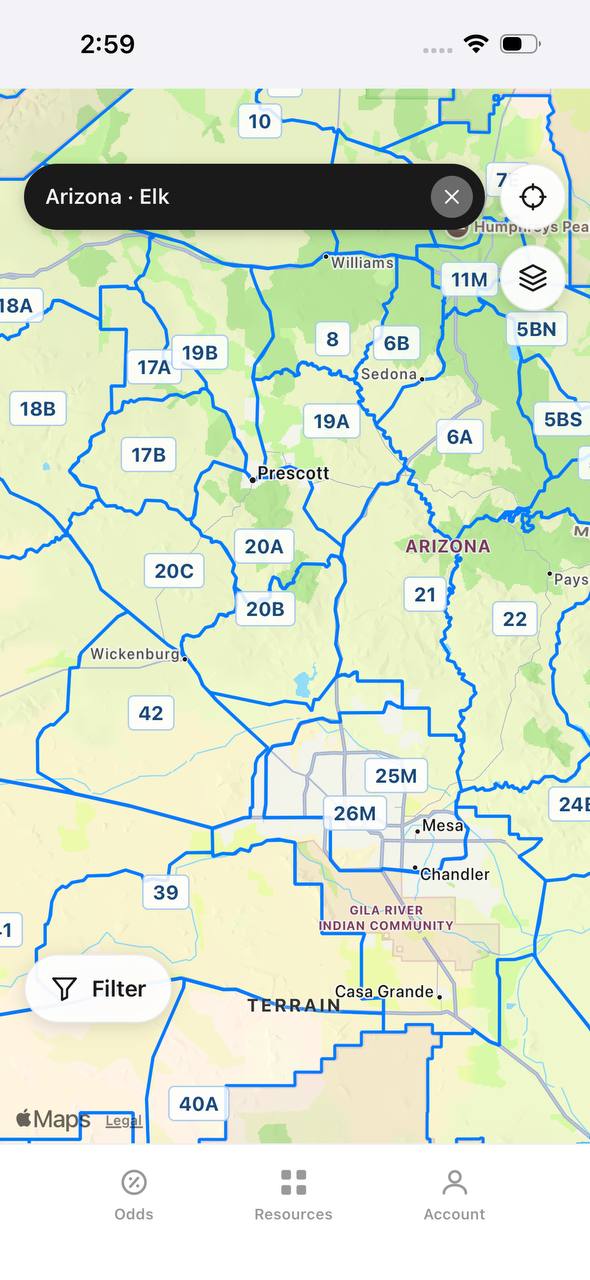
TAGZ helps you evaluate units before you commit preference points or burn bonus points on tags. When you filter units by terrain using TAGZ's map overlays, you can see whether you're hunting open sage flats where 400-yard shots are common, or thick lodgepole forests where 150 yards is a long poke. That terrain analysis informs whether a high-BC bullet like the GameChanger matches your hunt profile.
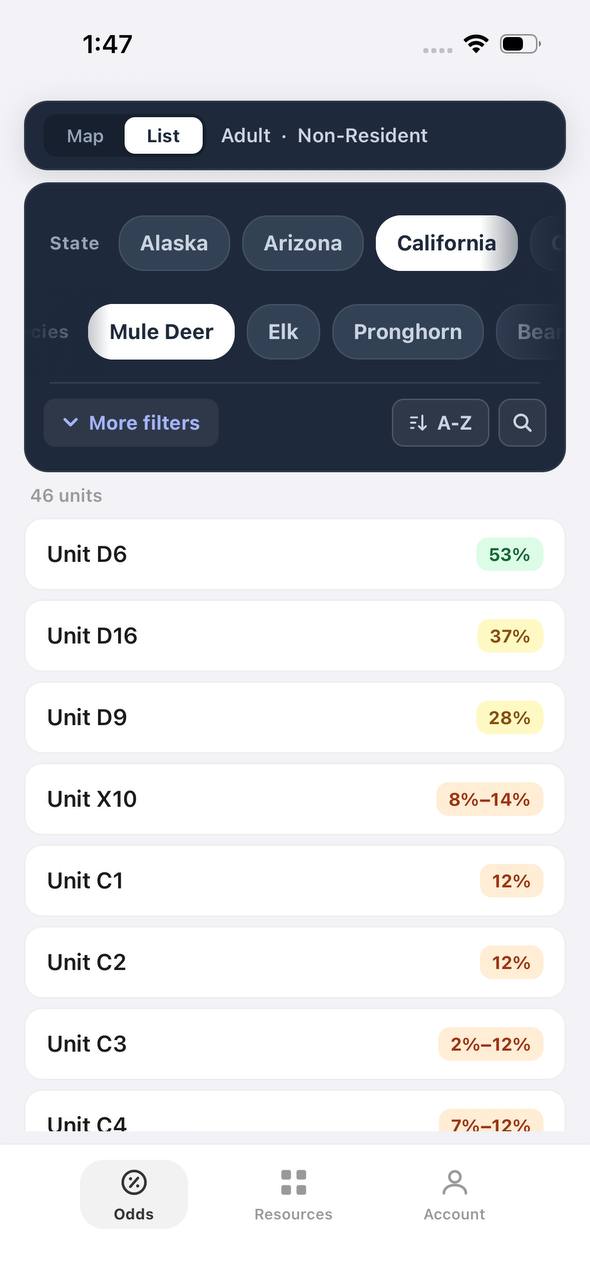
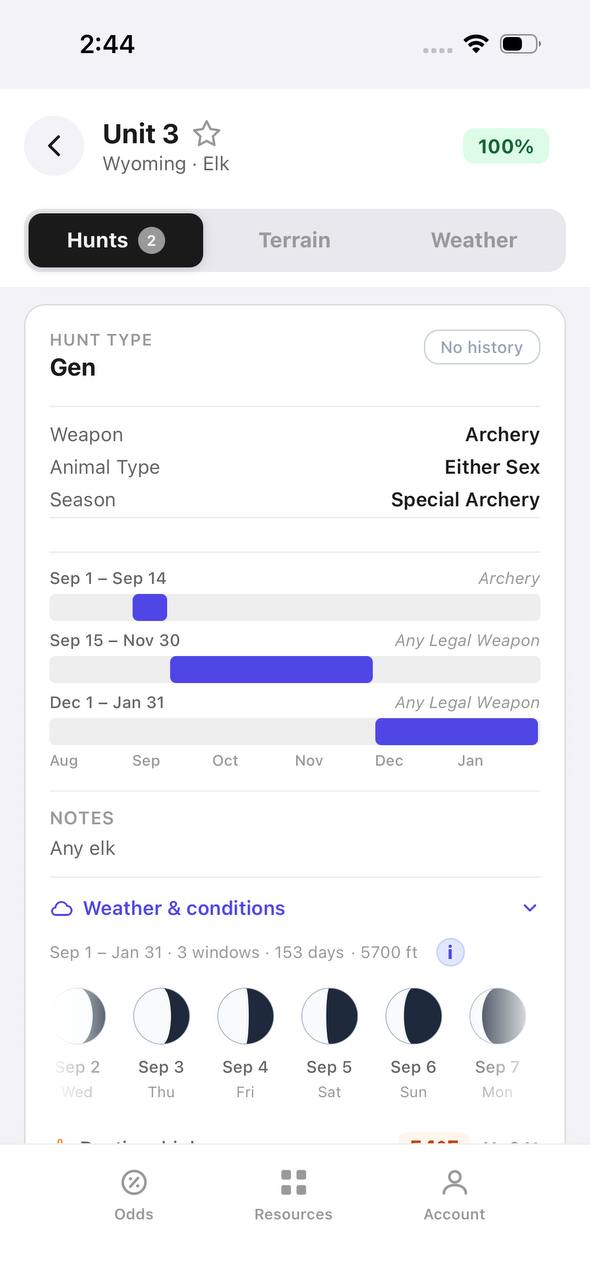
Tracking your points across multiple states through TAGZ also helps you plan equipment purchases strategically. If you're three years away from drawing a premium Wyoming mule deer tag, you have time to develop a GameChanger load and verify accuracy before the hunt matters. If you're hunting OTC Colorado elk this fall, you might prioritize proven factory ammunition over experimenting with new bullets.
The hunt planning decisions you make during application season — which units to apply for, how many points to burn, whether to chase limited-entry or stick with general tags — all cascade into equipment choices that affect your success rate in the field. TAGZ gives you the draw data and unit research to make smarter decisions months before opening day.
Practical Limitations and Honest Assessment
The GameChanger isn't perfect. Expansion inconsistency at moderate distances on elk remains my biggest concern. When a bullet performs beautifully at 180 yards and 420 yards but pencils through at 280 yards, there's a reliability problem. Sierra's advertised expansion threshold of 1,800 fps may be optimistic — I'd personally set the floor at 2,000 fps for elk.
Meat damage on deer-sized game is moderate to high. If you're a meat hunter who prioritizes filling the freezer over long-range precision, traditional bullets like the Hornady InterLock or Sierra GameKing (non-tipped) waste less edible tissue. The GameChanger fragments aggressively, and you'll lose more shoulder meat than with controlled-expansion designs.
Handloading requirements limit accessibility. If you're not already reloading, adding that cost and learning curve just to shoot GameChangers doesn't make sense. Factory ammunition options are too limited, and good factory-loaded alternatives exist.
Accuracy variations between rifles matter. Some shooters report MOA-or-better groups immediately; others struggle to find a load these bullets like. My Tikka loved them from the start, but a friend's Remington 700 in the same caliber never broke 1.5 MOA despite trying four powder combinations. If your rifle doesn't shoot them well in initial testing, don't force it.
FAQ — Sierra GameChanger Bullets
Are Sierra GameChanger bullets good for elk hunting?
Yes, with caveats. They perform reliably on elk inside 400 yards when impact velocities stay above 2,200 fps. At moderate distances (250-350 yards) where velocity drops near the expansion threshold, they can pencil through without encountering bone. For elk, bonded bullets like the AccuBond offer more consistent expansion across all ranges.
What is the ballistic coefficient of the 165-grain GameChanger?
The Sierra GameChanger 165-grain TGK in .30 caliber has a G1 BC of .527. This high BC reduces wind drift and maintains velocity better than traditional cup-and-core bullets, making it well-suited for long-range hunting applications beyond 400 yards.
Do GameChanger bullets require handloading?
Mostly. While Federal offers limited factory loads under their Gold Medal line, most hunters will need to handload to access GameChanger bullets. They're sold primarily as component bullets for reloaders. If you don't reload, consider factory ammunition using Hornady ELD-X or Nosler AccuBond instead.
How does the GameChanger compare to Hornady ELD-X?
Both share similar ballistic coefficients and long-range accuracy. The ELD-X expands more reliably at lower impact velocities, making it more forgiving on longer shots. GameChangers tend to fragment slightly less and produce marginally less meat damage on deer. Neither is bonded, so deep penetration on heavy bone isn't guaranteed with either bullet.
What's the minimum impact velocity for GameChanger expansion on big game?
Sierra advertises 1,800 fps, but field experience suggests 2,000 fps is more reliable, especially on elk-sized animals. Below that threshold, the polymer tip may not initiate expansion consistently unless the bullet strikes heavy bone. Plan shot distances to keep impact velocities above 2,000 fps for predictable terminal performance.
Are GameChangers worth the cost compared to standard hunting bullets?
If long-range accuracy matters and you already reload, yes. The high BC and match-grade consistency justify the premium for hunters taking shots beyond 400 yards where wind drift and trajectory errors compound. For closer-range hunting inside 300 yards, standard cup-and-core bullets like Hornady InterLock or Sierra GameKing perform just as well on game and cost half as much.
Continue Planning Your Hunt
Choosing the right bullet is one piece of a successful hunt. Understanding where to apply your points, which units match your weapon choice, and when to burn points versus build — these decisions happen months before you ever chamber a round.
TAGZ helps western hunters make smarter draw decisions by comparing units side by side using terrain maps, unit boundaries, and historical draw data. Track your preference points and bonus points across multiple states so you never miss a draw deadline. Whether you're chasing OTC tags or planning a trophy limited-entry hunt, TAGZ gives you the tools to research units, analyze draw odds, and make confident decisions before you ever step into the field.
Explore the full TAGZ platform and start planning your next hunt at getmytagz.com. Read more western hunting strategy and gear reviews on the TAGZ Insights blog, or see how TAGZ simplifies draw odds and unit research on the product page.
Was this article helpful?
Previous
Bergara vs Howa: Which Rifle Wins for Western Hunting?
Bergara and Howa both deliver sub-MOA accuracy at accessible price points, but they take different approaches. This head-to-head comparison breaks down barrel quality, stock design, trigger performance, and real-world field reliability to help you choose the right platform for your next elk or mule deer hunt.
Related
Weatherby Vanguard vs Tikka T3x: Which Rifle Wins for Western Hunting?
The Weatherby Vanguard and Tikka T3x dominate the mid-tier hunting rifle market, but they take different approaches to accuracy, ergonomics, and value. Here's how they stack up for western big-game hunters.
Next
Best Sheep Bows: Ultralight Setups for Alpine Hunts
Sheep hunting demands ultralight gear that performs at elevation. The best sheep bows balance packability, accuracy at steep angles, and reliability in harsh alpine conditions—discover which models guide outfitters trust most.