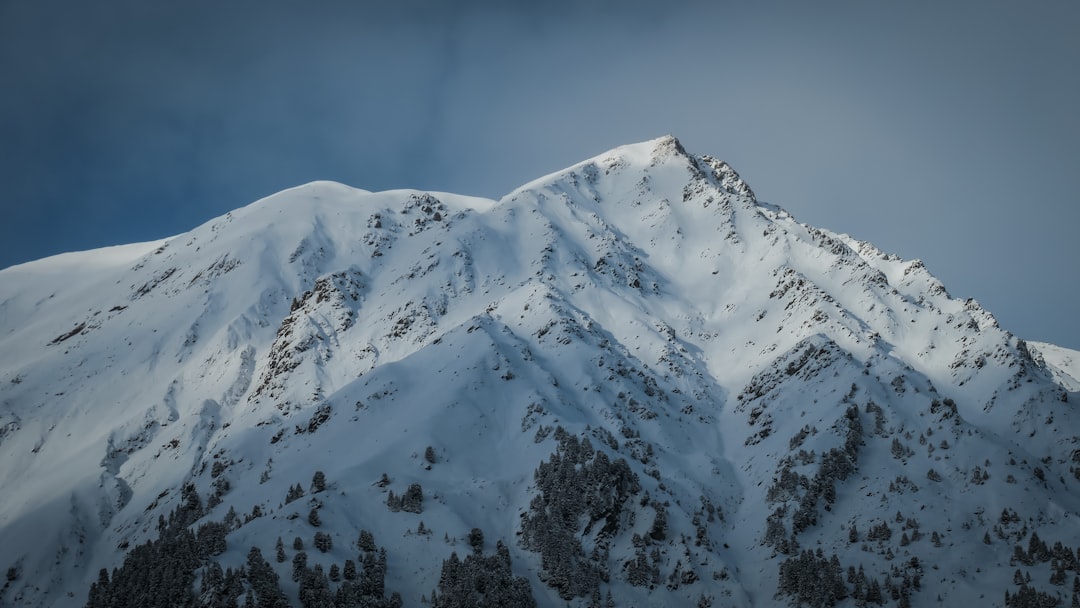
Best Sheep Bows: Ultralight Setups for Alpine Hunts
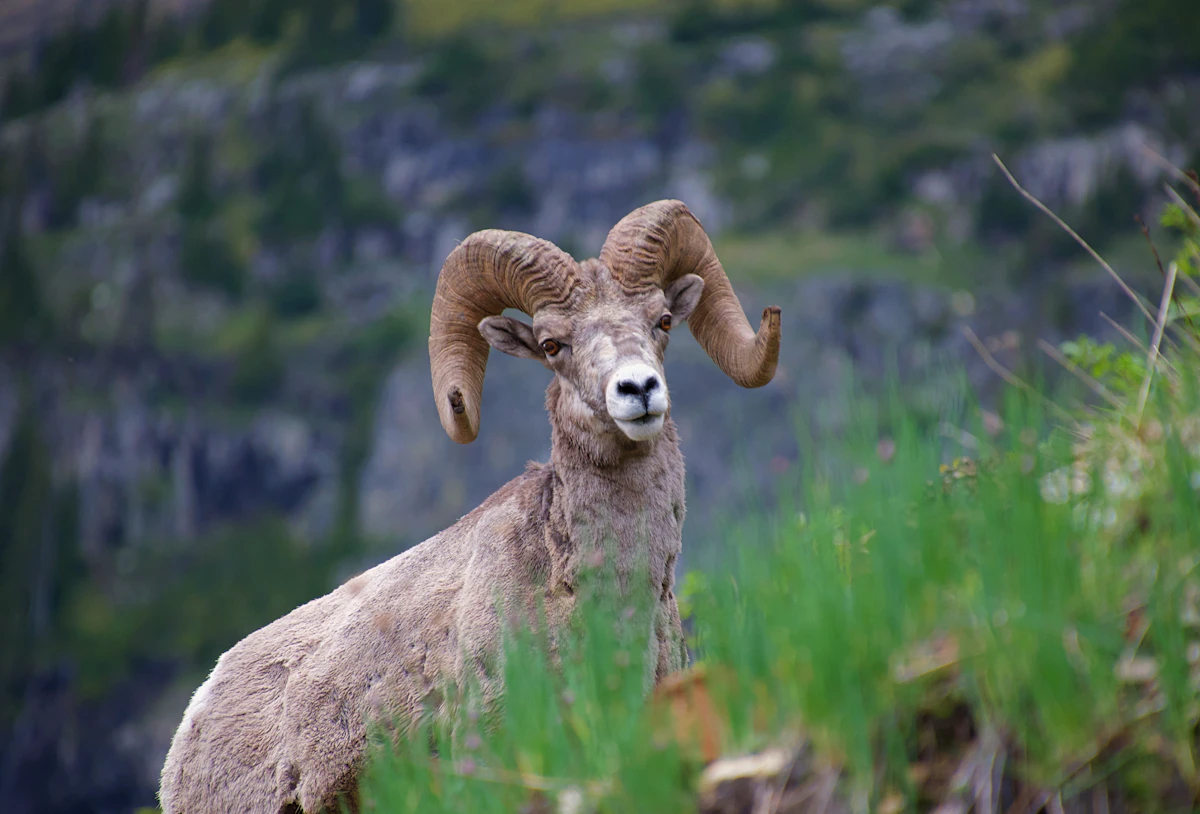
Sheep hunting is the most physically demanding pursuit in North American big-game hunting. Whether you are chasing Dall sheep in Alaska's Brooks Range, Stone sheep in British Columbia, or desert bighorns in Nevada, your bow must perform flawlessly at elevation while adding minimal weight to an already brutal pack. The best sheep bows weigh under four pounds, tune easily for steep-angle shots, and remain reliable when temperatures swing 40 degrees between dawn and midday.
Unlike whitetail or elk setups where a few extra ounces do not matter, every gram counts when you are glassing at 8,000 feet and climbing to 10,000. The right bow disappears on your pack frame during 10-mile approach days, then shoots confidently when a ram steps into range on a 45-degree slope. This guide covers what separates a true sheep bow from general mountain hunting rigs, which models consistently perform in the alpine, and how to configure your setup for the steep, windy, oxygen-thin reality of sheep country.
Why sheep hunting demands specialized bows
Sheep hunts average 7–14 days of backpacking at altitudes where normal exertion leaves you gasping. Your total pack weight—bow, camp, optics, food—determines whether you can climb another ridge or turn back. A five-pound bow feels manageable in the truck. At 9,000 feet on day six, that same bow feels like an anchor.
Steep-angle shooting is the second non-negotiable. Rams bed on cliffs and talus slopes where flat-ground trajectories fail. A bow that does not tune for 30- to 50-degree uphill or downhill shots costs you the only opportunity you may get after a week of climbing. Wind compounds the challenge—alpine bowls funnel gusts that drift arrows unpredictably, rewarding shorter axle-to-axle platforms with faster stabilization.
Reliability trumps adjustability. You cannot paper-tune mid-hunt when your strings stretch in dry air or your rest freezes after a sleet squall. The best sheep bows use proven cam systems, simple rest designs, and cable guards that function in dirt, rain, and temperature swings without babysitting.
Top sheep bow picks: ultralight platforms under 4 pounds
Three models dominate sheep camps and guide services across North America. Each approaches the ultralight challenge differently, but all deliver sub-4-pound bare weights, forgiveness on steep angles, and field-tested durability.
Hoyt Carbon RX-8 Ultra
The Carbon RX-8 Ultra remains the gold standard for sheep hunters prioritizing extreme weight savings. At 3.4 pounds bare bow, it is the lightest production compound Hoyt manufactures. The carbon riser sheds ounces without sacrificing stiffness, and the cam system tunes quickly across draw lengths without press work. Guides running multi-week hunts report zero delamination or joint failures after seasons of hard use.
The 30-inch axle-to-axle length offers enough stability for windy ridge shots while remaining maneuverable in tight timber or rock scrambles. The integrated Picatinny sight mount and quiver attachment points streamline your setup—fewer bolts and accessories mean fewer failure points at elevation. Expect to pay $1,800–$2,000 depending on accessories.
Bowtech SR350
Bowtech's SR350 sacrifices half a pound compared to the RX-8 (3.9 pounds bare) but compensates with a smoother draw cycle and wider tuning window. The DeadLock cam system allows cam timing adjustments without a bow press, a real advantage when you need to re-tune after flying into a remote spike camp and your strings settle differently at altitude.
The 33-inch axle-to-axle provides extra forgiveness on steep quartering shots where torque amplifies mistakes. Hunters running fixed-blade broadheads appreciate the wider stance for arrow flight consistency. The SR350 handles crosswinds better than shorter platforms, and the limb dampening keeps it quiet enough for close-range stalks on nervous rams. Retail sits around $1,400–$1,600.
Mathews Phase4 29
The Phase4 29 bridges ultralight performance (3.6 pounds) with Mathews' signature shootability. The Switchweight technology lets you adjust draw weight without a press, useful for tuning arrow speed against wind drift or adjusting for fatigue late in a grueling hunt. The 29-inch axle-to-axle splits the difference between packability and stability.
Guides praise the Phase4's vibration dampening—critical when rams are hyper-alert and a noisy shot spooks them off cliffs. The integrated harmonic stabilizer and string stop work together to eliminate post-shot noise that carries across alpine bowls. Mathews' build quality shows in finish durability; scratches and dings from rock scrambles do not compromise function. Pricing mirrors the RX-8 at $1,700–$1,900.
Critical setup considerations for alpine conditions
Weight savings extend beyond the bow itself. Your accessories and tuning choices determine whether your rig stays under four pounds total or creeps toward five.
Stabilizers should be ultralight carbon, 6–8 inches maximum. Longer stabilizers improve accuracy on flat ground but snag brush and add pack weight you cannot justify. A quality 6-inch bar from Bee Stinger or Trophy Ridge adds 3–4 ounces while providing enough front-of-center balance for clean arrow flight.
Sights need micro-adjustability for steep angles without bulk. Single-pin sliders like the Spot Hogg Fast Eddie XL or Black Gold Ascent Verdict eliminate extra pins you will not use (most sheep shots happen inside 50 yards) and simplify ranging on extreme slopes. Use a bubble level—shooting 40-degree angles without one guarantees high or low misses.
Rests must be bombproof. Whisker biscuits add weight but never fail. Drop-away rests like the QAD Ultra Rest HDX save ounces and improve broadhead flight, but carry spare launcher arms and cords—plastic parts crack in cold, dry air. Pack a multi-tool with Allen keys matching every bolt on your bow.
Arrows should be light enough to maintain speed in thin air but heavy enough to penetrate quartering shots. A 400-grain setup with a 100-grain fixed-blade broadhead balances kinetic energy and trajectory. Mechanical broadheads struggle in crosswinds; stick with cut-on-contact fixed designs like Magnus Black Hornets or Grizzly Sticks.
Tuning for steep-angle accuracy
Most archers practice on flat ranges and miss high when they finally shoot uphill at a bedded ram. Steep angles reduce effective distance—a 50-yard shot at a 45-degree angle has the same drop as a 35-yard flat shot. Rangefinders with angle compensation help, but only if your bow is tuned correctly.
Paper-tune at home, then verify at an incline range or hill. Shoot from kneeling and sitting positions—you will rarely draw standing in sheep country. Walk your bow up and down a slope while holding full draw to check whether your peep rotates or your D-loop shifts. Any inconsistency now becomes a miss later.
Practice shooting in wind using a fan or during breezy afternoons. Learn how your arrow drifts at 20, 30, and 40 yards so you can compensate instinctively when a ram presents himself in a swirling alpine bowl. The best sheep bows minimize drift, but no bow eliminates it.
Free to join
Download mobile app
- Detailed draw odds
- Point tracking
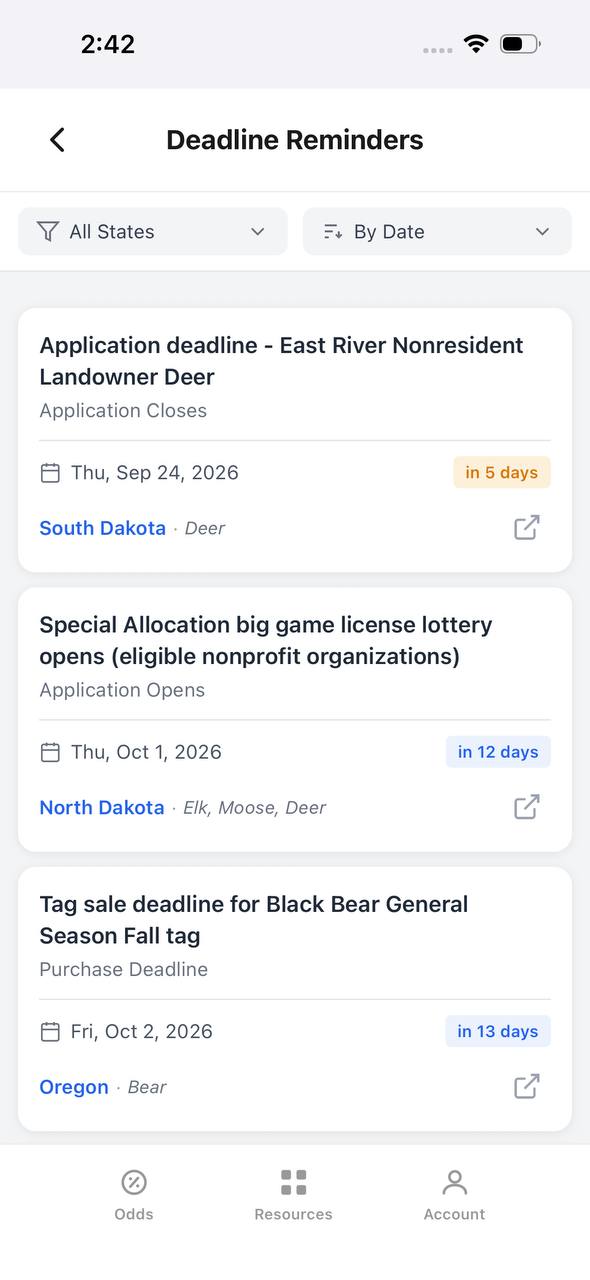
- Deadline reminders
- 18 states covered

Free to join
Download mobile app
- Detailed draw odds
- Point tracking
- Deadline reminders
- 18 states covered
Free to join
Download mobile app
- Detailed draw odds
- Point tracking
- Deadline reminders
- 18 states covered
How TAGZ helps you draw a sheep tag
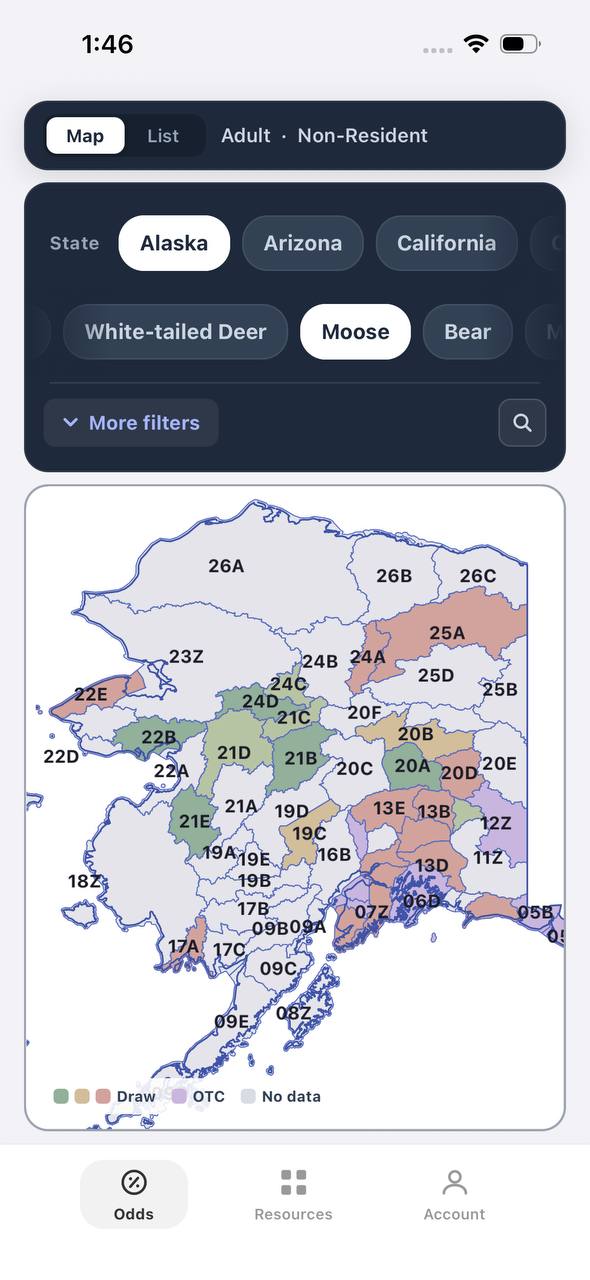
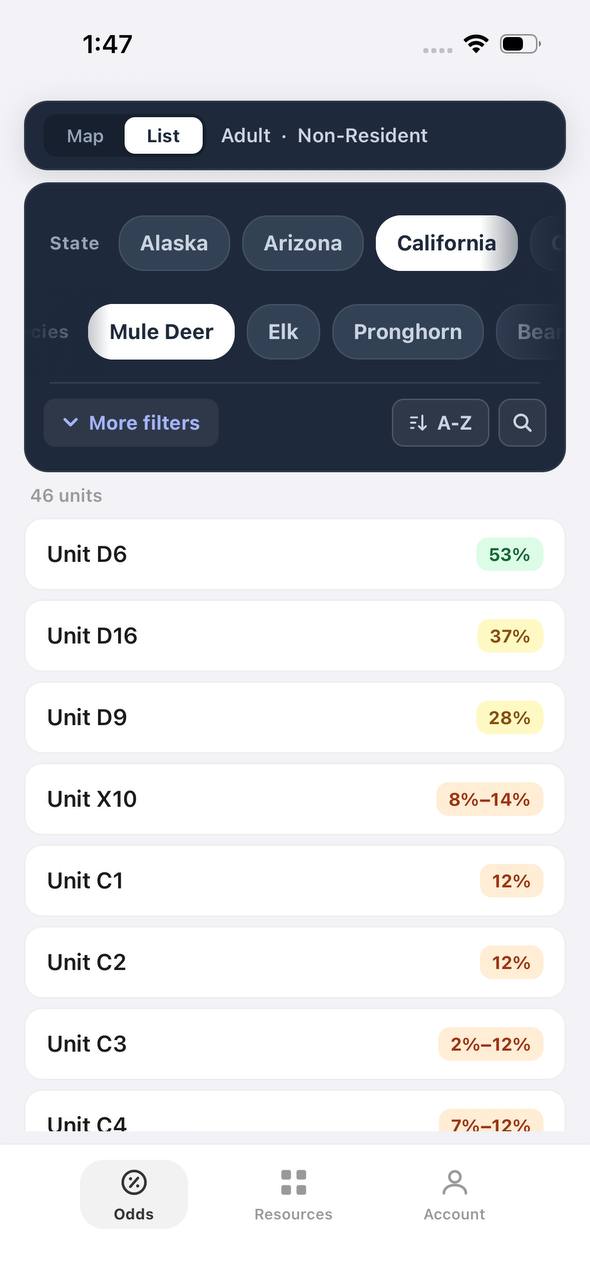
Sheep tags are the hardest draws in North America. Desert bighorns in Nevada and Arizona require 15–25 preference points for nonresidents. Dall sheep in Alaska offer over-the-counter opportunities, but most hunters apply for limited-entry sheep units in Montana, Wyoming, or British Columbia where draw odds sit below 1 percent.
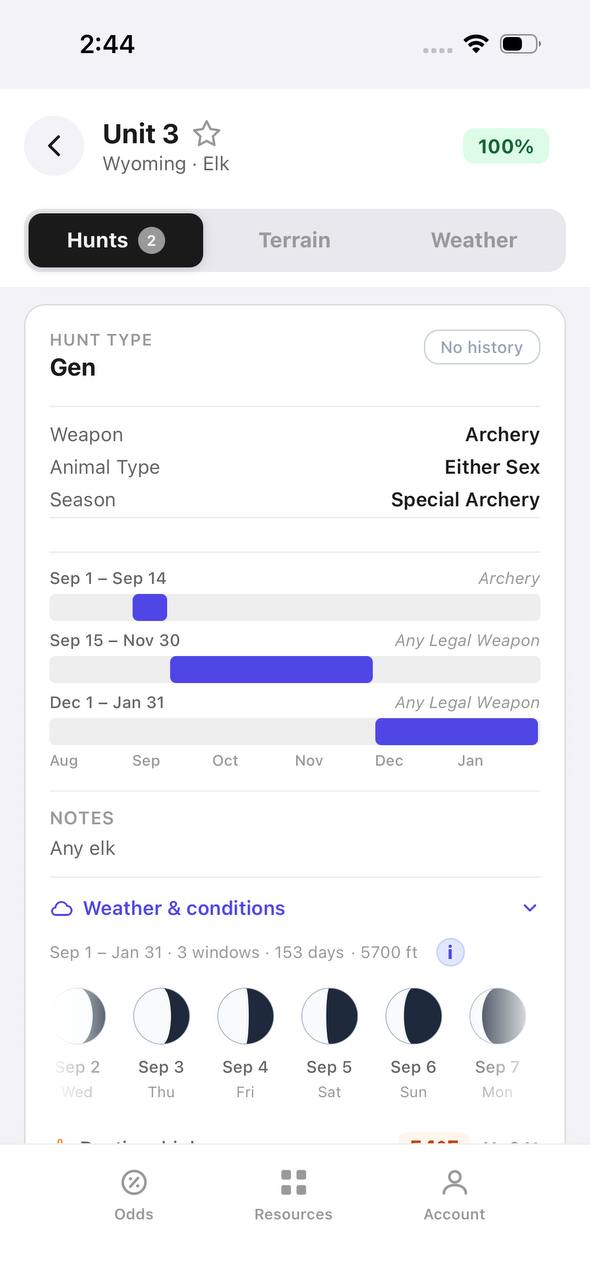
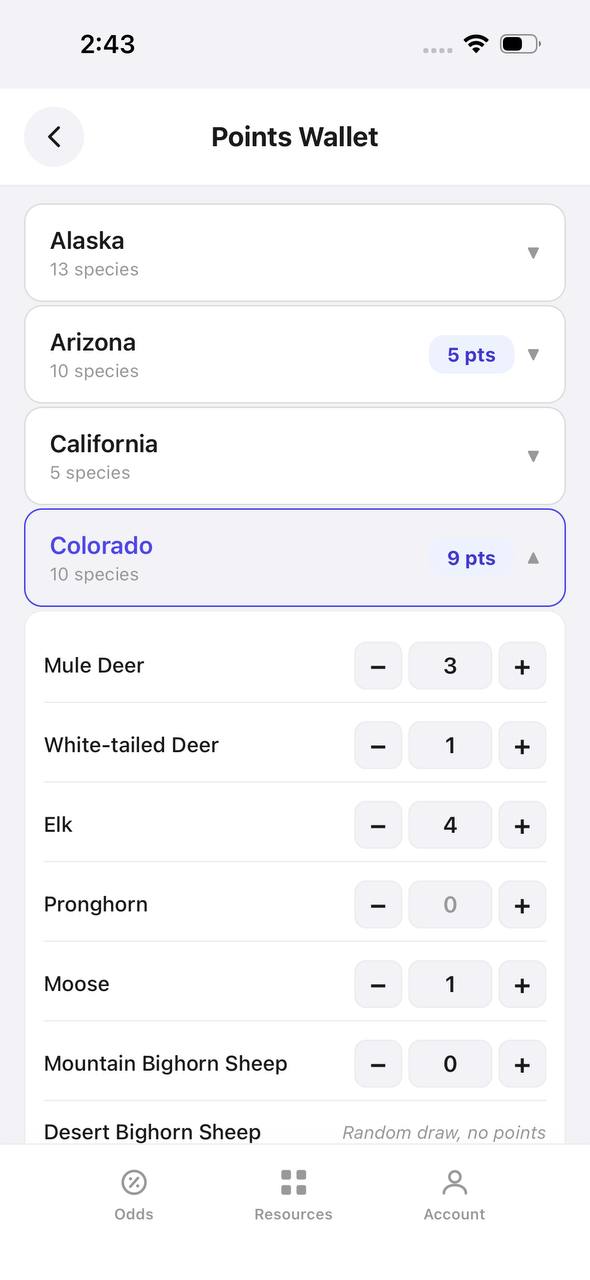
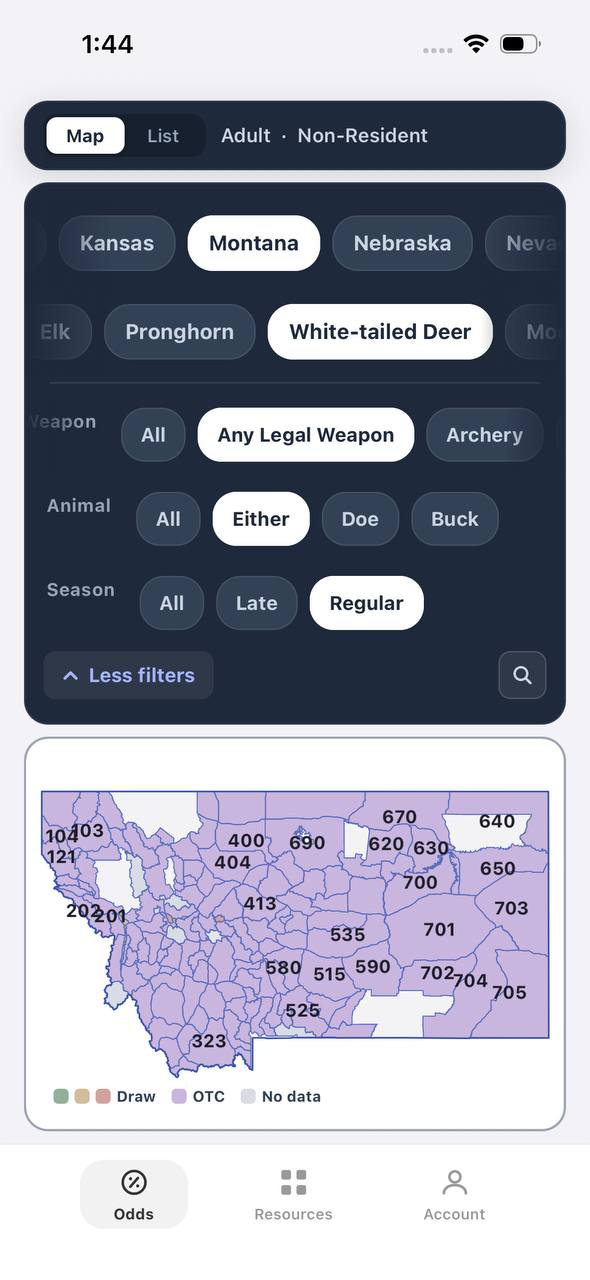
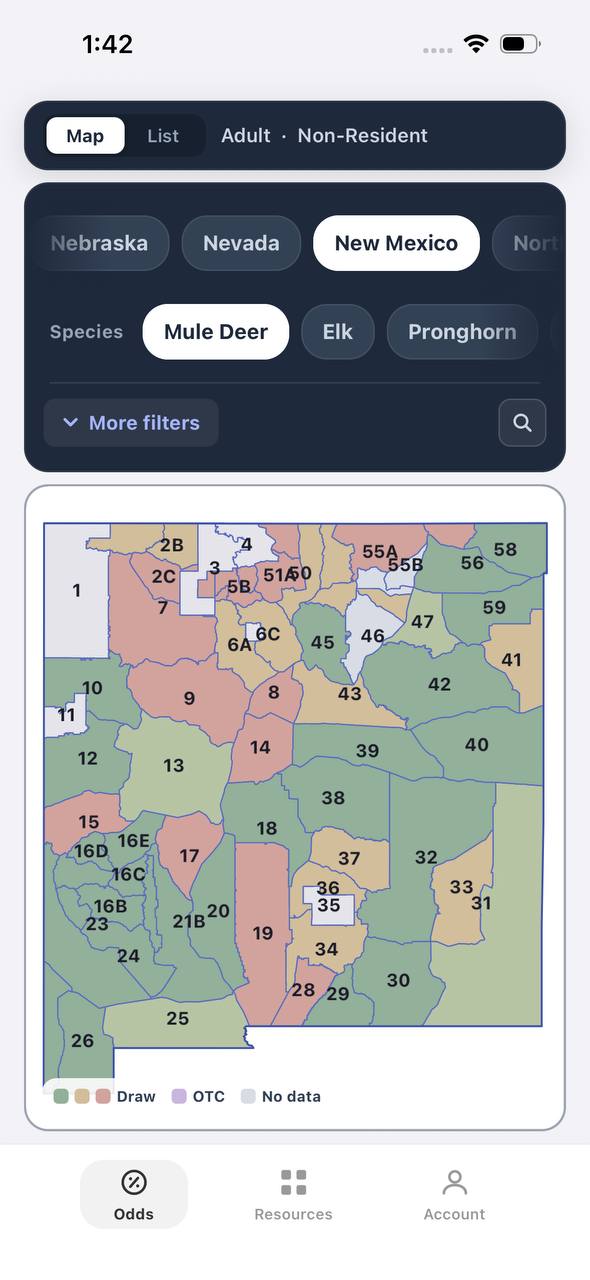
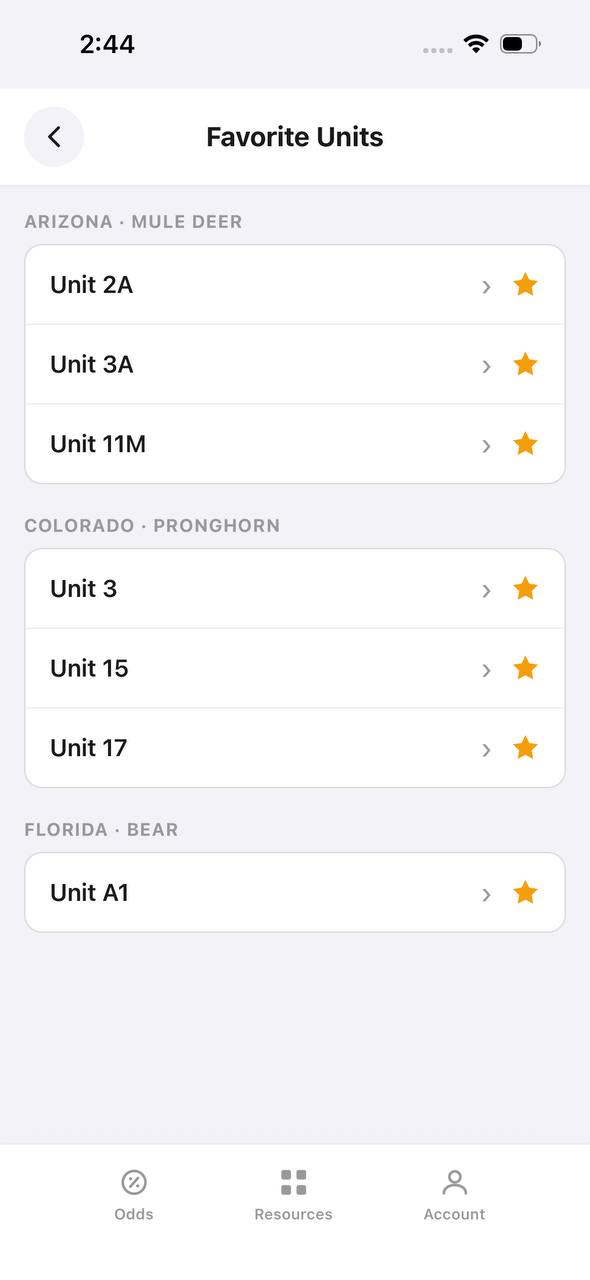
TAGZ helps you track preference points and bonus points across multiple states so you never miss a draw deadline. Compare unit-level draw odds side by side using historical data, and identify underrated units where applicant pools are smaller. Filter hunts by weapon type, season dates, and species to find sheep opportunities that match your points and timeline. Whether you are building points for a once-in-a-lifetime bighorn hunt or planning an Alaska fly-in Dall hunt, TAGZ gives you the tools to make smarter application decisions before you ever strap on a pack.
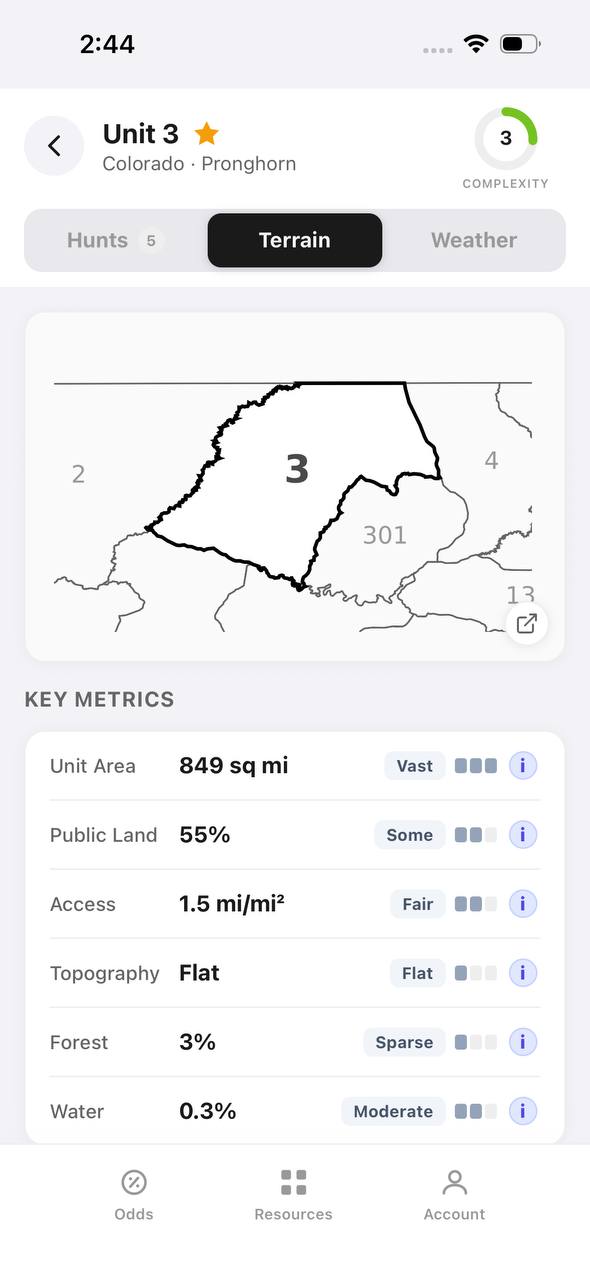
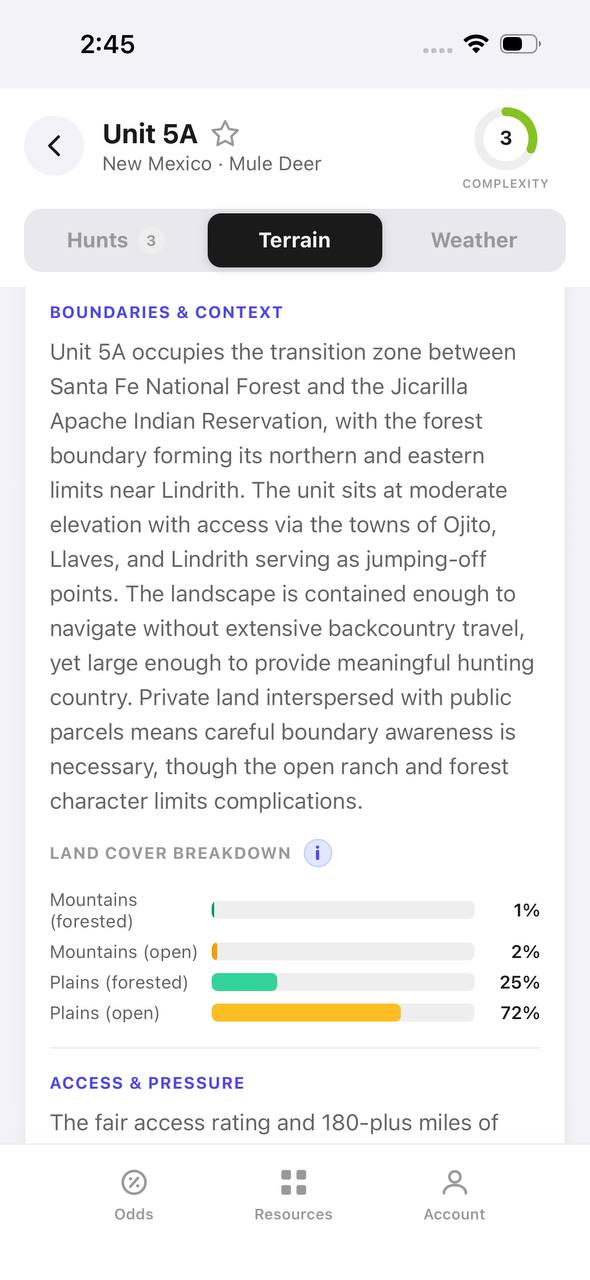
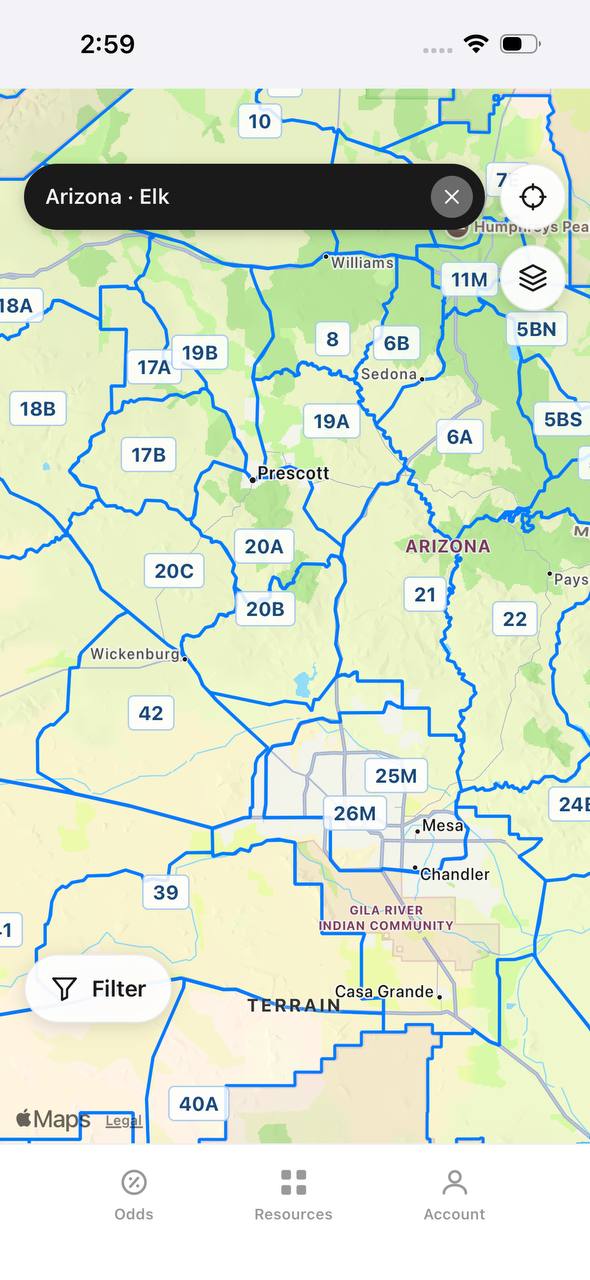
Use TAGZ's terrain maps and unit boundaries to pre-scout sheep country during the application season. Study elevation profiles, identify glassing points, and locate public land access so you know exactly where to hunt if your tag comes through. Track multi-state application deadlines in one dashboard instead of juggling state wildlife agency websites.
Packing and protecting your bow in the backcountry
Even the toughest bow suffers when strapped to a pack frame and dragged through scree fields for two weeks. A quality bow case protects your investment during commercial flights, but once you are in the field, a padded bow sling is lighter and more practical.
Strap your bow to the side of your pack frame using paracord or cam straps, positioning it so the limbs do not contact rocks when you navigate talus. Remove your stabilizer and store it inside your pack to prevent bending. Check your string and cables daily for fraying—high-UV alpine sun degrades synthetic fibers faster than lowland conditions.
Carry a spare string, D-loop material, serving thread, and nock pliers. A broken string five miles from camp ends your hunt unless you can field-repair it. Practice replacing a string at home so you can do it in the dark with cold hands if necessary.
Optics and rest days: when to leave the bow at camp
Sheep hunting is 90 percent glassing and 10 percent stalking. Some days you will not carry your bow at all. Use rest days and scouting days to locate rams without the extra weight, then return with your bow once you have a stalk plan. Ultralight bows make this strategy viable—four pounds is manageable even when you are not certain you will shoot.
When you do carry your bow, keep it accessible. Murphy's Law applies in sheep country—rams appear when you least expect them, often during long spot-and-stalk approaches when your bow is buried under your pack lid. A side-mounted bow sling keeps your rig within reach for sudden opportunities.
Final shot: choosing the right bow for your next sheep hunt
The best sheep bow is the one you will carry every day without resenting the weight. For most hunters, that means a sub-4-pound carbon platform with a 29–33 inch axle-to-axle, a simple drop-away rest, and a single-pin sight. The Hoyt Carbon RX-8 Ultra wins on pure weight savings. The Bowtech SR350 offers the most tuning flexibility. The Mathews Phase4 29 delivers the quietest, smoothest shot cycle.
All three handle steep angles, wind, and altitude better than heavier hunting bows. Your choice depends on whether you prioritize packability, adjustability, or refinement. Test each model at full draw while wearing a loaded pack to see which balances best for your build and shooting style.
Pair your bow with ultralight accessories, practice steep-angle shots, and carry field-repair supplies. The mountain does not care how expensive your bow is—it only cares whether you can climb another thousand feet and make the shot when a ram finally stands up.
FAQ — Sheep Bows
What is the ideal draw weight for sheep hunting?
Most sheep hunters shoot 60–65 pounds. This weight generates enough kinetic energy for complete pass-throughs on quartering shots without requiring so much strength that fatigue affects accuracy at elevation. Adjust down if you struggle to hold full draw after a hard climb.
Should I use a mechanical or fixed-blade broadhead for sheep?
Fixed-blade broadheads. Alpine winds drift mechanical broadheads unpredictably, and their deployment mechanisms can freeze or fail in cold, dry air. A 100-grain cut-on-contact fixed blade flies true and penetrates reliably on steep-angle, quartering shots.
How do I practice for steep-angle sheep shots?
Shoot from elevated positions or on hillsides at targets below and above you. Use an angle-compensating rangefinder and verify your impacts match the compensated distance, not the line-of-sight distance. Practice from kneeling and sitting positions since you will rarely draw standing in sheep country.
Can I use my elk bow for sheep hunting?
Yes, but you will suffer. Elk bows typically weigh 5–6 pounds and prioritize speed and energy over packability. That extra 1–2 pounds becomes painful after 10 miles at altitude. If you already own a capable hunting bow under 4.5 pounds, it will work—but a dedicated ultralight sheep bow is worth the investment for serious sheep hunters.
What accessories should I remove to save weight?
Remove or downsize your stabilizer to 6–8 inches, use a lightweight quiver, and eliminate unnecessary sight pins. A single-pin slider saves weight and clutter. Skip the wrist sling and use a minimalist D-loop. Every ounce you shave from accessories makes the final thousand feet of climbing easier.
Do carbon bows hold up better than aluminum in the alpine?
Carbon risers shed weight without sacrificing stiffness, and they do not dent as easily as aluminum when dropped on rocks. However, carbon can delaminate if struck hard or exposed to extreme temperature swings repeatedly. Both materials work; carbon wins on weight, aluminum wins on impact resistance. Most serious sheep hunters accept the delamination risk for the weight savings.
Was this article helpful?
Previous
Bergara vs Howa: Which Rifle Wins for Western Hunting?
Bergara and Howa both deliver sub-MOA accuracy at accessible price points, but they take different approaches. This head-to-head comparison breaks down barrel quality, stock design, trigger performance, and real-world field reliability to help you choose the right platform for your next elk or mule deer hunt.
Related
Complete Western Hunting Clothing Guide: Layering, Materials & Strategies for Mountain Hunts
Master western hunting clothing systems with proven layering strategies, material choices, and gear recommendations for alpine conditions. Learn how to stay comfortable from September archery hunts through late-season rifle seasons.
Next
Mountain Weather for Western Hunters: Reading Conditions, Staying Safe, and Timing Your Hunt
Mountain weather shapes every western hunt — from elk movement to your safety margin. Learn how to read rapid shifts, time your hunt around fronts, and prepare gear for alpine conditions that can swing 50 degrees in hours.