Savage 110 Bear Hunter for Elk: Is This Budget Rifle Worth It?
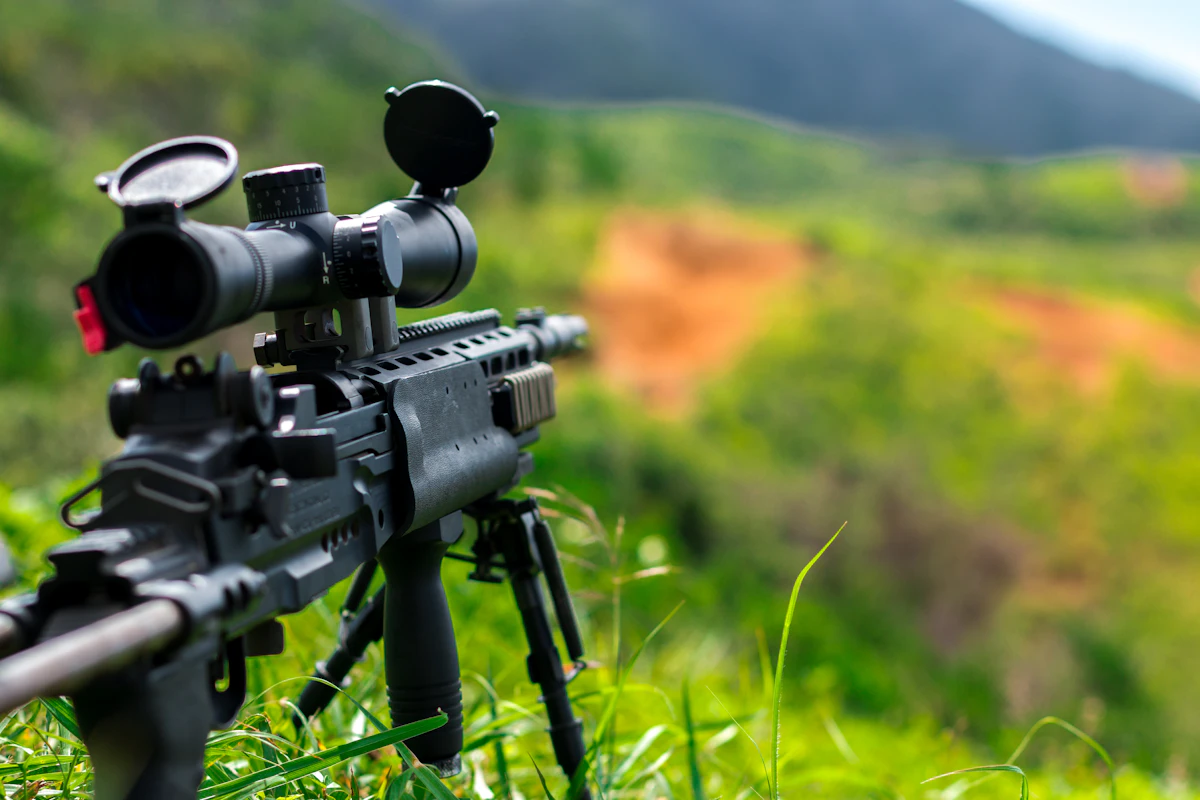
The Savage 110 Bear Hunter sits in an interesting spot for elk hunters. It promises high-caliber performance at a fraction of what you'd pay for custom or premium factory rifles. For western hunters budgeting for tags, gear, and travel, that price point matters. The question is whether this rifle holds up on steep ridge hikes, extended shooting sessions, and the moment you finally get a bull in the crosshairs.
What Makes the Savage 110 Bear Hunter Different
The Bear Hunter variant of Savage's 110 platform was designed specifically for heavy-bodied game in tough country. It ships with a 23-inch fluted carbon steel barrel, which shaves weight without sacrificing the barrel length needed for magnum velocities. The stock is synthetic with a raised comb and AccuFit adjustability, letting you dial in length of pull and cheek height. That matters when you're wearing layers in September or glassing from awkward positions.
The action is Savage's AccuTrigger system, which breaks cleanly between 1.5 and 6 pounds depending on how you set it. Out of the box, most ship around 2.5 pounds. The rifle feeds from a detachable box magazine — a feature some hunters prefer for quick unloading at the truck or during a stalk.
Caliber Options That Actually Matter for Elk
The Bear Hunter comes in several chamberings, but only a few make sense for elk in western mountains. The .300 Winchester Magnum is the most popular choice and for good reason. It delivers 3,000+ fps with 180-grain bullets, giving you flat trajectory and reliable expansion at extended range. If you hunt timber or shorter-range units, the .30-06 Springfield provides plenty of punch with less recoil and cheaper ammunition.
The .338 Winchester Magnum is also available and represents overkill for most elk hunts unless you're hunting big Alaska bulls or want one rifle for elk, moose, and brown bear. The 6.5 Creedmoor and 6.5 PRC variants exist, but both sit on the light side for elk. Plenty of hunters kill elk with 6.5mm cartridges, but margin for error shrinks when shot angles go bad or bulls don't cooperate.
For serious elk work, stick with .300 Win Mag or .30-06. Both have decades of proven terminal performance on heavy game, and you'll find ammunition in every sporting goods store between Idaho and New Mexico.
Accuracy and Real-World Performance
Savage built its reputation on accuracy, and the 110 Bear Hunter delivers. Most shooters report 1-inch or better groups at 100 yards with quality factory ammunition. That's more than enough precision for elk, where vitals span roughly 18 inches on a broadside bull. At 400 yards, a rifle shooting 1 MOA keeps you inside a 4-inch circle — well within ethical shooting limits if you've practiced.
The fluted barrel heats up faster than a heavy sporter profile, which means groups can open slightly after four or five rapid shots. That rarely matters in hunting situations where you get one or two opportunities, but it's worth noting if you plan to use this rifle for high-volume practice without letting the barrel cool.
The synthetic stock is stiff enough to avoid point-of-impact shifts, but some hunters report the barrel channel is cut close. If you're not careful during installation of a sling swivel or bipod, you can create pressure points that affect accuracy. Check barrel-to-stock clearance with a dollar bill before your first range session.
Weight and Handling in Elk Country
At 7.7 to 8.2 pounds depending on caliber, the Bear Hunter sits in the middle of the pack for hunting rifles. It's not a true mountain rifle, but it won't punish you on long ridge hikes either. Add a scope, rings, sling, and loaded magazine, and you're looking at 9 to 10 pounds ready to hunt.
The balance point falls slightly forward of the magazine well, which helps steady the rifle during offhand shots. The raised comb supports good cheek weld, even with larger objective scopes. The AccuFit system lets you add or remove spacers to match your build and clothing layers. If you hunt early rifle in September wearing a light shirt, you'll want a different length of pull than late October in puffy layers.
Recoil is manageable in .30-06, stout but tolerable in .300 Win Mag. The synthetic stock doesn't absorb recoil as well as wood or laminate, and the relatively light weight means more felt kick. If you're recoil-sensitive, consider adding a slip-on recoil pad or muzzle brake. Savage offers threaded-barrel versions if you want to run a brake without gunsmithing.
Free to join
Download mobile app
- Detailed draw odds
- Point tracking
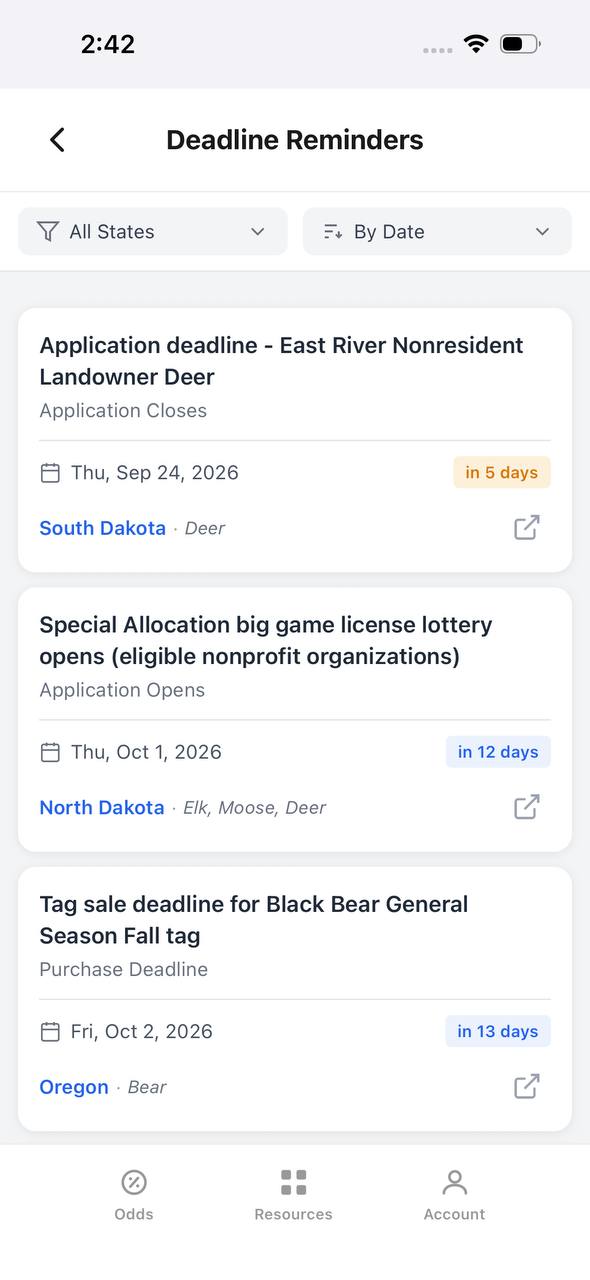
- Deadline reminders
- 18 states covered

Free to join
Download mobile app
- Detailed draw odds
- Point tracking
- Deadline reminders
- 18 states covered
Free to join
Download mobile app
- Detailed draw odds
- Point tracking
- Deadline reminders
- 18 states covered
Comparing the Bear Hunter to Higher-Priced Options
The Bear Hunter typically retails between $700 and $900, depending on caliber and current market conditions. That puts it well below premium factory rifles like the Weatherby Mark V, Browning X-Bolt Pro, or Christensen Arms Mesa, all of which start around $1,500 or higher. The accuracy gap between these rifles and the Bear Hunter is minimal. The differences show up in weight, barrel quality, and fit and finish.
Higher-priced rifles often use carbon fiber stocks, stainless or cerakoted metal, and hand-lapped barrels. Those features reduce weight, increase weather resistance, and sometimes improve precision by a fraction of an MOA. For most elk hunters, those marginal gains don't justify doubling or tripling the cost. The Savage 110 Bear Hunter shoots accurately, feeds reliably, and holds zero through normal hunting abuse. That's what matters when a bull steps into a clearing at last light.
Where the Bear Hunter shows its budget roots is in the plastic trigger guard, the slightly rougher machining on the bolt, and the basic synthetic stock. None of those affect terminal performance, but they're noticeable if you handle premium rifles side by side.
What TAGZ Hunters Should Consider Before Buying
Before you commit to the Savage 110 Bear Hunter, think about how and where you hunt. If you chase OTC elk in Colorado's high country or limited-entry tags in steep Montana wilderness, weight matters. The Bear Hunter is carryable but not ultralight. If your hunts involve multi-day backcountry packs or covering serious elevation, you might want a dedicated mountain rifle.
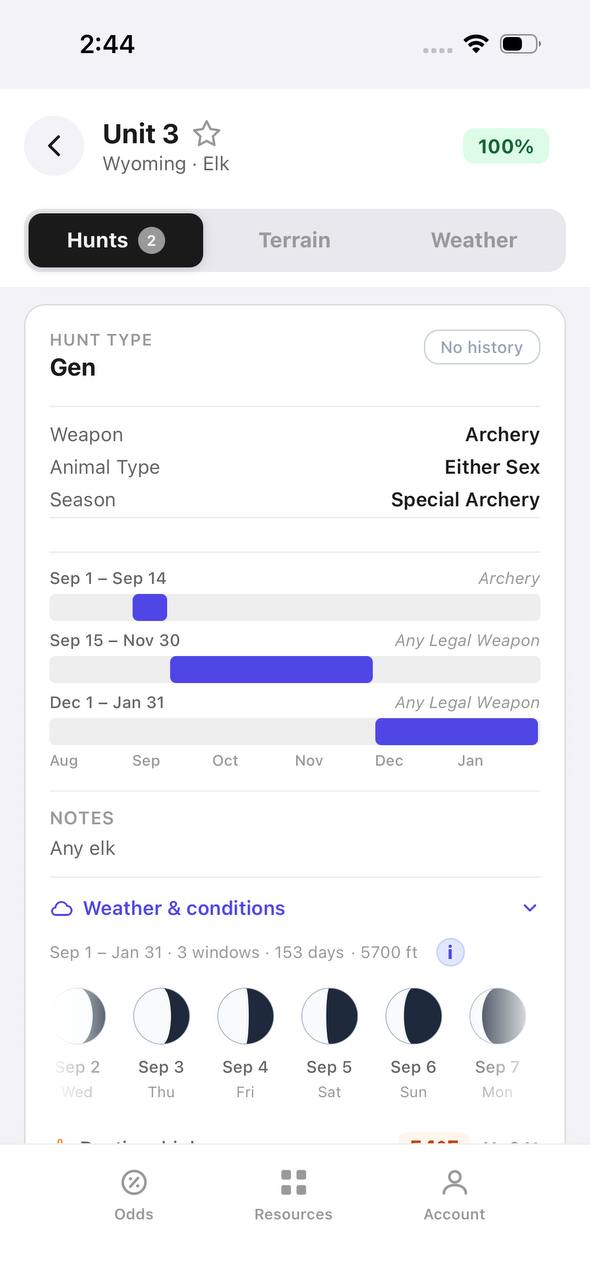
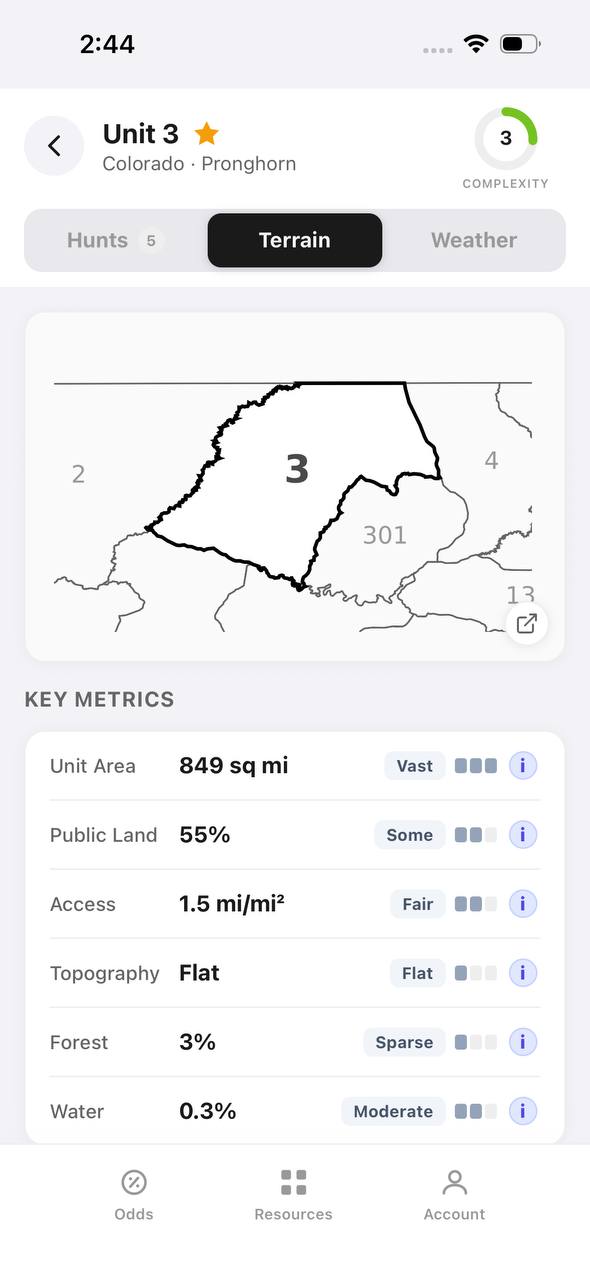
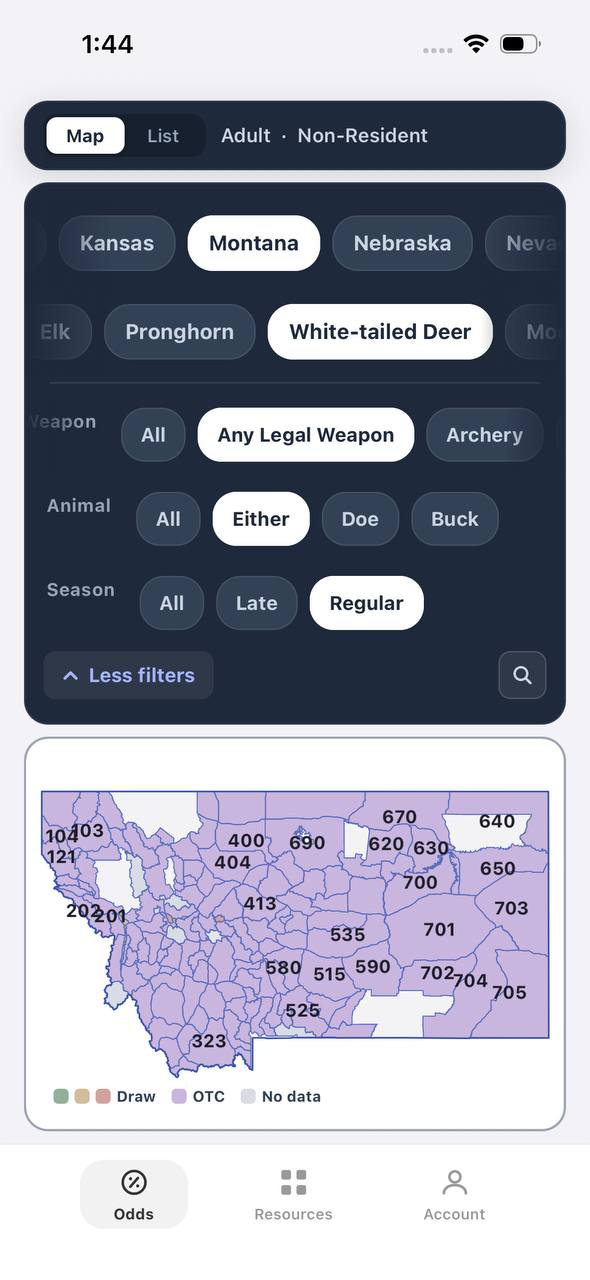
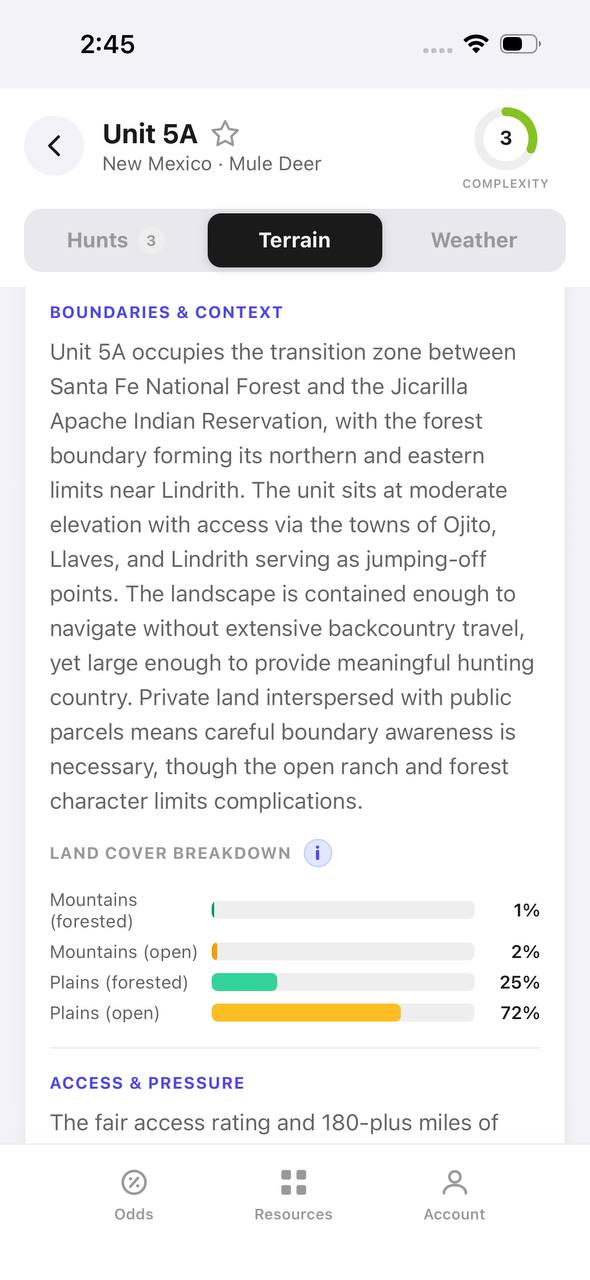
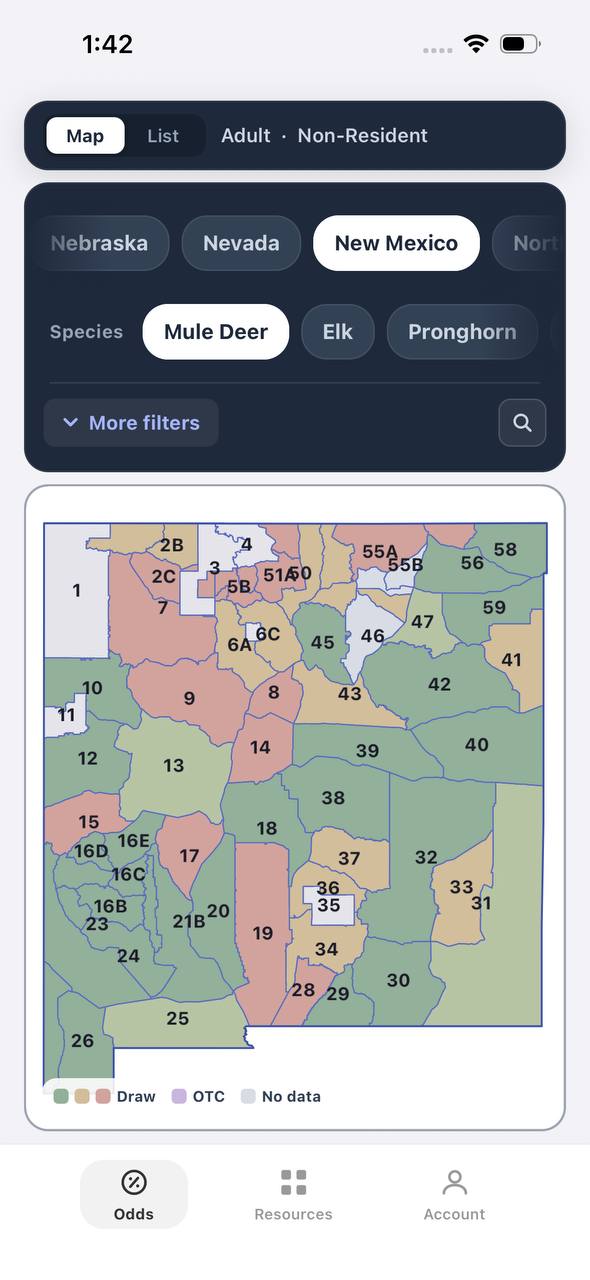
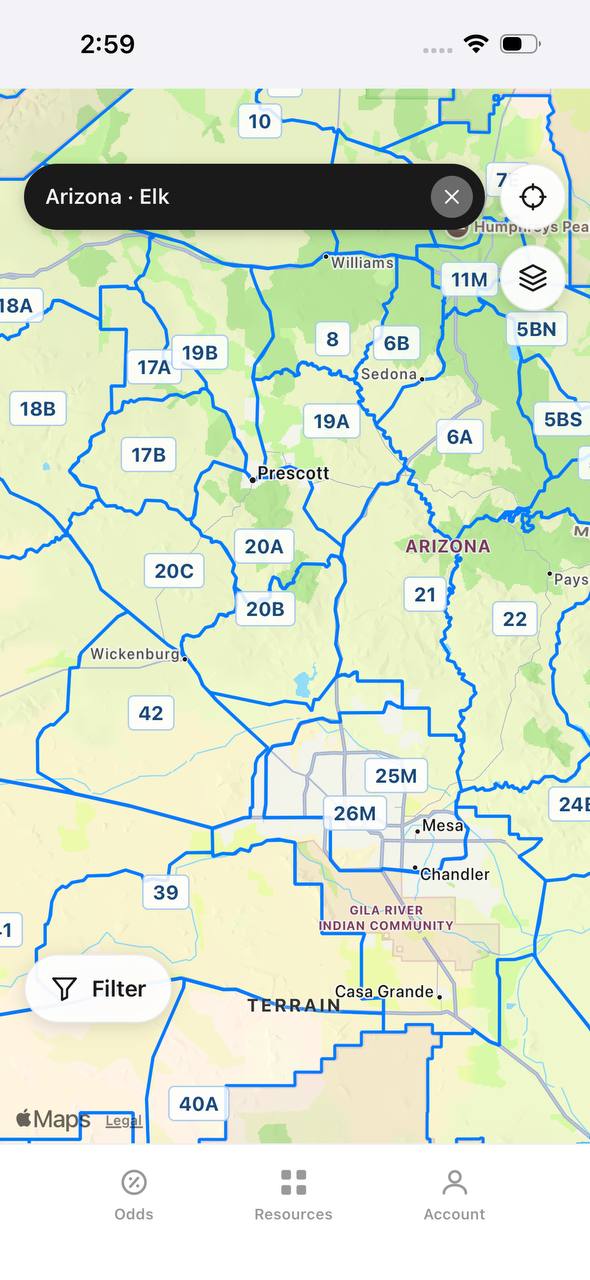
If you hunt accessible units, private land, or shorter-range timber, the Bear Hunter makes excellent sense. Pair it with a reliable 3-9x or 4-12x scope, practice from field positions, and spend the money you saved on better optics, better boots, or more tags. TAGZ helps you compare units side by side using terrain maps, unit boundaries, and historical draw data, so you can plan hunts around the rifle you own rather than buying gear for hunts you might not draw.
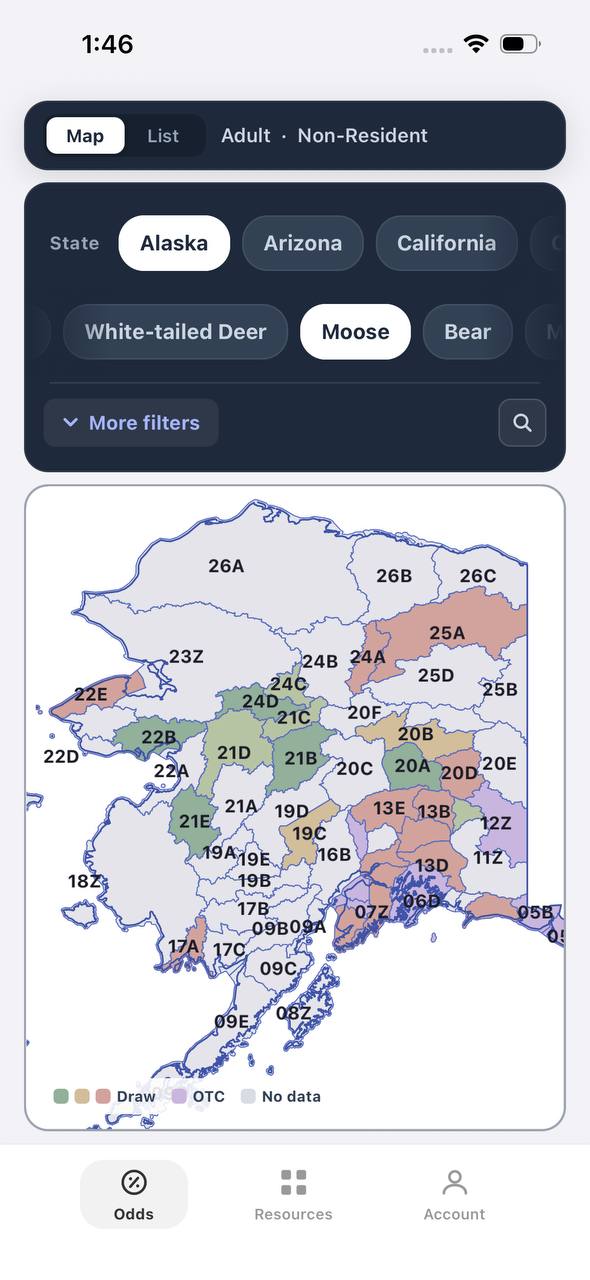
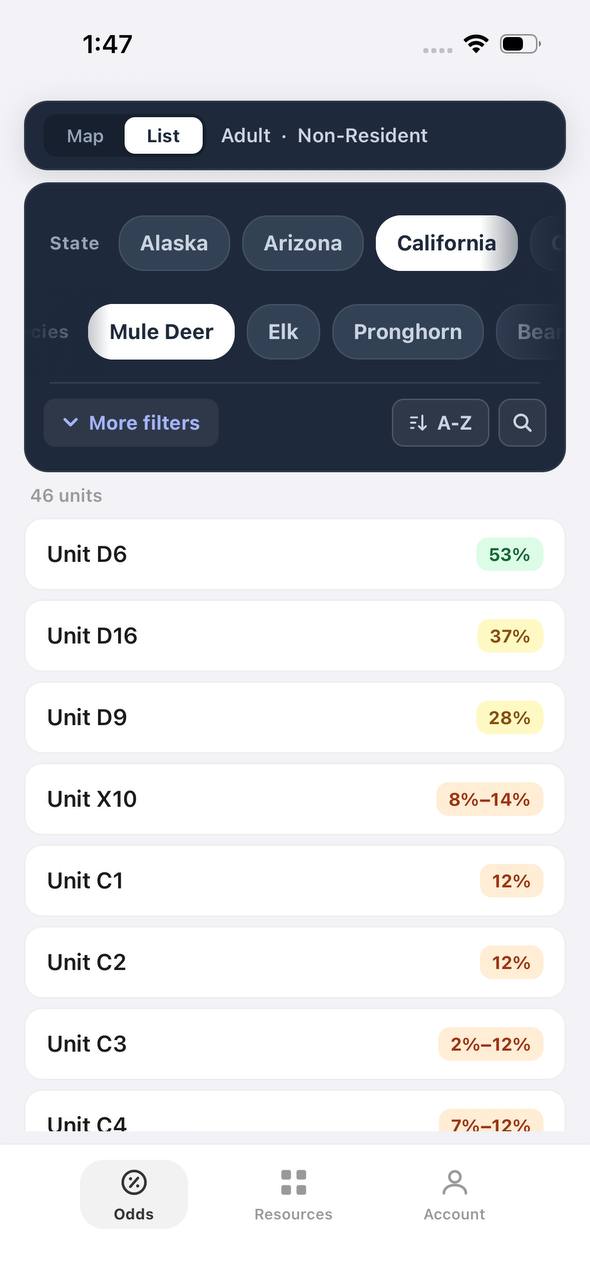
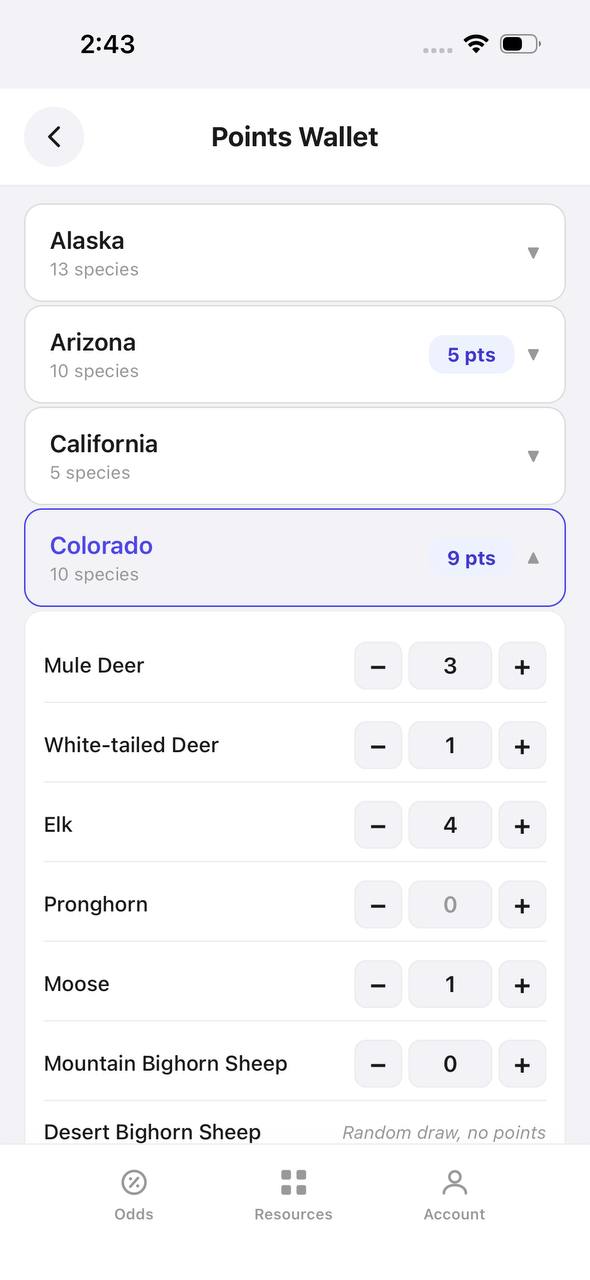
Tracking your preference points and bonus points across multiple states means you know exactly which units are realistic targets this season. Whether you're chasing OTC tags or planning a trophy limited-entry hunt, TAGZ gives you the tools to make smarter decisions before you ever step into the field. The platform includes unit maps, public land information, and draw deadline tracking so you never miss an application window.
Free to join
Download mobile app
- Detailed draw odds
- Point tracking
- Deadline reminders
- 18 states covered
Free to join
Download mobile app
- Detailed draw odds
- Point tracking
- Deadline reminders
- 18 states covered
Free to join
Download mobile app
- Detailed draw odds
- Point tracking
- Deadline reminders
- 18 states covered
Ammunition Selection for Elk
The Savage 110 Bear Hunter performs best with premium hunting ammunition. In .300 Win Mag, the Federal Terminal Ascent 200-grain, Nosler AccuBond 180-grain, and Barnes TTSX 165-grain all deliver consistent accuracy and reliable expansion. Avoid cheap bulk ammunition for hunting — the money you save isn't worth a wounded bull or lost opportunity.
For .30-06, the Hornady ELD-X 178-grain and Federal Fusion 180-grain both punch well above their price point. The .30-06 doesn't need premium brass or exotic bullets to kill elk effectively. Its moderate velocity means standard cup-and-core bullets hold together at typical impact ranges.
Once you find ammunition your rifle likes, buy several boxes from the same lot number. Factory ammunition can vary slightly between production runs. Zero your rifle, confirm your drops at 200, 300, and 400 yards, and keep detailed notes. The Bear Hunter's accuracy is consistent enough that once you establish a load, you can trust it season after season.
Scope Mounting and Zero
The Savage 110 Bear Hunter ships with a Picatinny rail, which simplifies scope mounting and provides more flexibility than traditional two-piece bases. Use quality rings from brands like Leupold, Vortex, or Warne. Cheap rings can slip under recoil, especially with magnum cartridges.
A 3-9x40mm or 4-12x44mm scope covers most elk hunting scenarios. Higher magnification helps with long-range precision, but it also adds weight and reduces field of view at close range. In timber, you want lower magnification and a wide field of view for fast target acquisition.
Zero at 200 yards for most western elk hunts. With a .300 Win Mag shooting 180-grain bullets, you'll hit roughly 2 inches high at 100 yards, dead-on at 200, and 7 to 8 inches low at 300. That gives you a point-blank range out to 275 yards without holdover. For shots beyond 300 yards, use a rangefinder, know your drops, and practice from realistic field positions.
Maintenance and Longevity
The Savage 110 Bear Hunter requires minimal maintenance beyond standard cleaning. The synthetic stock won't crack or swell in wet weather, and the matte-finish barrel resists surface rust better than polished bluing. Clean the bore after every range session and before long-term storage. Magnum cartridges generate significant throat erosion over time, so inspect the bore every few hundred rounds.
The AccuTrigger system is sealed and requires no routine maintenance. If the trigger feel changes or becomes gritty, contact Savage rather than attempting home repairs. The AccuFit stock system occasionally needs re-tightening after hard use. Check the action screws and stock spacers before every hunting season.
Expect 2,000 to 3,000 accurate rounds from a .300 Win Mag barrel before precision degrades noticeably. That's more than most hunters will fire in a lifetime of elk seasons. The .30-06 barrel lasts longer, often 4,000+ rounds before accuracy falls off.
Free to join
Download mobile app
- Detailed draw odds
- Point tracking
- Deadline reminders
- 18 states covered
Free to join
Download mobile app
- Detailed draw odds
- Point tracking
- Deadline reminders
- 18 states covered
Free to join
Download mobile app
- Detailed draw odds
- Point tracking
- Deadline reminders
- 18 states covered
Final Verdict for Elk Hunters
The Savage 110 Bear Hunter delivers where it counts: accuracy, reliability, and stopping power. It's not the lightest rifle, the prettiest rifle, or the smoothest rifle. It's a working tool that puts bullets where you aim them and handles the recoil of serious elk cartridges without complaint. For hunters who prioritize performance over prestige, the Bear Hunter makes excellent sense.
If you're budget-conscious or building your first western hunting rifle, this is a smart choice. Spend the money you save on quality optics, better ammunition, and hunt planning tools like TAGZ. A $700 rifle with a $600 scope will outperform a $2,000 rifle with a $200 scope every single time. The Savage 110 Bear Hunter won't limit your success in the field. Practice, physical conditioning, and smart unit selection matter far more than the last half-pound of rifle weight or the final tenth of an MOA.
FAQ — Savage 110 Bear Hunter for Elk
Is the Savage 110 Bear Hunter accurate enough for 400-yard elk shots?
Yes. Most Bear Hunters shoot 1 MOA or better with quality ammunition, which keeps you inside a 4-inch circle at 400 yards. That's well within ethical limits if you've practiced at that distance and know your drops.
What caliber should I choose for elk hunting?
The .300 Winchester Magnum is the most versatile choice for western elk. It delivers flat trajectory and reliable expansion at extended range. The .30-06 works well for timber hunting or shorter-range units with less recoil and cheaper ammunition.
How does the Savage 110 Bear Hunter compare to rifles twice the price?
The accuracy gap is minimal. Higher-priced rifles offer lighter weight, better weather resistance, and improved fit and finish, but those features don't significantly affect terminal performance on elk. The Bear Hunter shoots accurately and holds zero through normal hunting abuse.
Is the Bear Hunter too heavy for backcountry elk hunts?
At 7.7 to 8.2 pounds bare, it's carryable but not ultralight. With scope and sling, expect 9 to 10 pounds ready to hunt. If you're covering serious elevation or doing multi-day backcountry packs, a dedicated mountain rifle under 8 pounds total might serve you better.
Does the Savage 110 Bear Hunter handle magnum recoil well?
The .300 Win Mag generates stout but tolerable recoil in this rifle. The synthetic stock doesn't absorb recoil as effectively as wood or laminate, and the moderate weight means more felt kick. Consider adding a slip-on recoil pad or muzzle brake if you're recoil-sensitive.
What scope should I mount on the Bear Hunter for elk?
A 3-9x40mm or 4-12x44mm scope covers most elk hunting scenarios. Higher magnification helps with long-range precision but adds weight and reduces field of view at close range. Use quality rings from Leupold, Vortex, or Warne to handle magnum recoil.
Continue Planning Your Hunt
Choosing the right rifle is just one part of a successful elk hunt. TAGZ helps you compare units side by side using terrain maps, unit boundaries, and historical draw data. Track your preference points and bonus points across multiple states so you never miss a draw deadline. Whether you're chasing OTC tags or planning a trophy limited-entry hunt, TAGZ gives you the tools to make smarter decisions before you ever step into the field. The platform includes unit maps, public land information, and hunt filtering by weapon, season, and species so you can build a realistic hunt plan around the gear you already own.
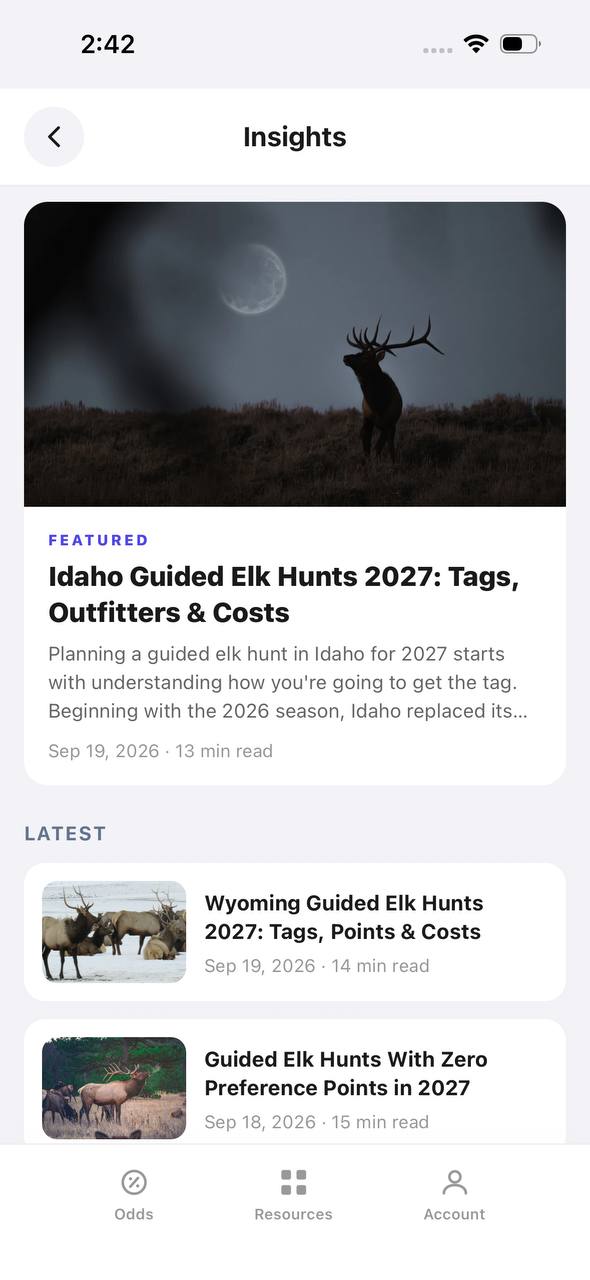
Explore more hunting strategies and unit breakdowns on the TAGZ Insights page, or create an account to start tracking your points and planning your next application season.
Was this article helpful?
Previous
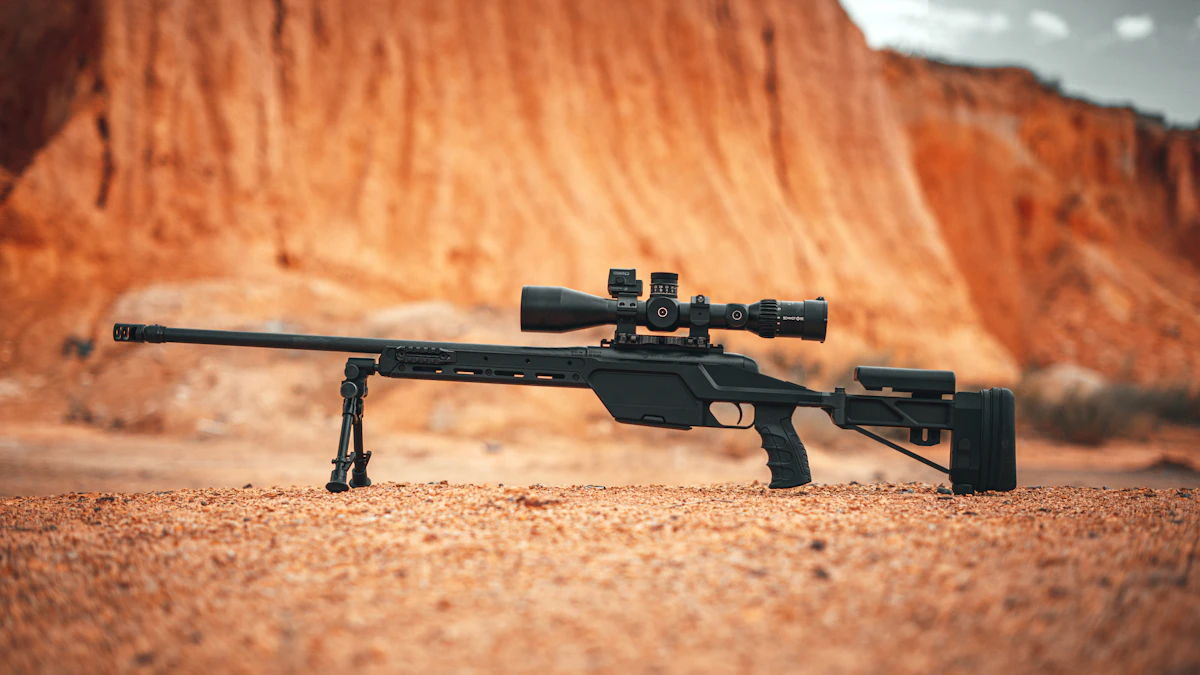
Browning Hells Canyon Rifle for Elk Hunting: Field-Tested Review
The Browning Hells Canyon Speed combines lightweight carbon fiber construction with proven accuracy for western elk hunting. Here's how it performs in the backcountry and whether it's worth the investment for serious elk hunters.
Related
DIY Sheep Hunting: A Complete Guide to Planning Your First Backcountry Ram Hunt
DIY sheep hunting requires years of planning, serious physical conditioning, and mastery of backcountry skills. This guide breaks down everything from draw strategy and gear selection to glassing techniques and shot preparation for hunting North America's most challenging big-game species.
Next
Must-Have Truck Accessories for Hunters: Essential Gear for Western Hunts
From tire repair kits to recovery gear, the right truck accessories can make or break a backcountry hunt. Here's what experienced hunters keep in their rigs for remote western terrain.