Ruger American Gen II Review — Worth the Upgrade for Western Hunters?
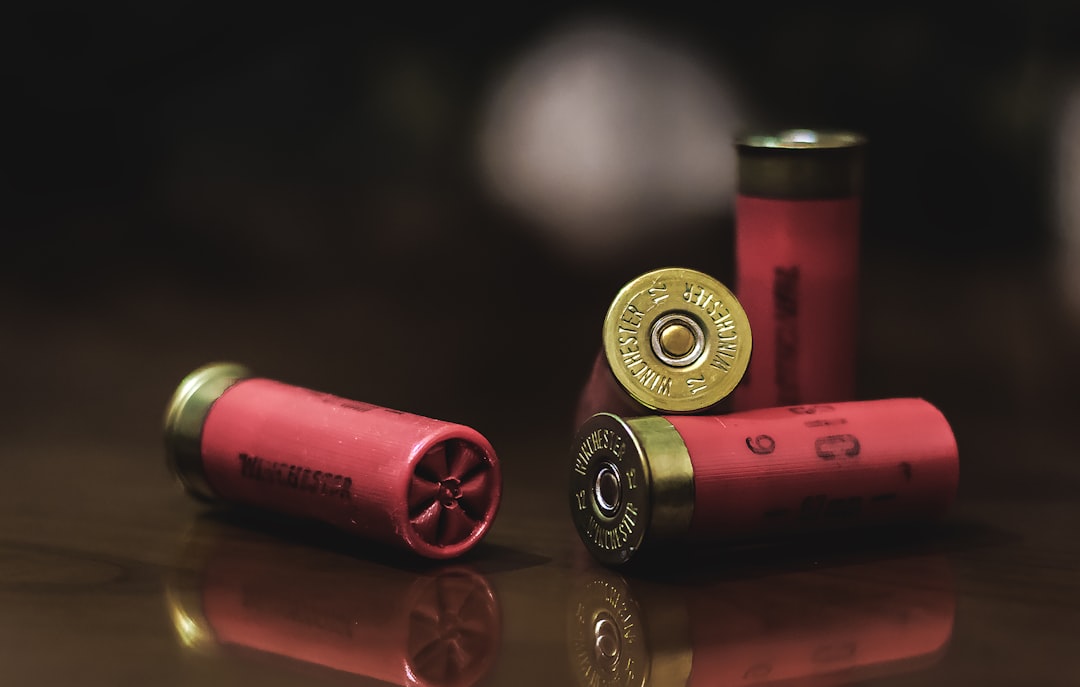
The Ruger American Gen II arrived in 2024 as a comprehensive update to one of the most popular budget rifles in North America. After running the Gen II on range sessions and a fall elk hunt in Colorado, the upgrades prove substantial enough to matter in the field. The short version: improved ergonomics, better trigger control, and enhanced accuracy make this a genuine step forward, not just cosmetic tweaks.
Ruger kept what worked on the original American — cold-hammer-forged barrels, free-floating design, and sub-MOA accuracy potential — while addressing the platform's weak points. The result is a rifle that feels more deliberate in the hand and delivers tighter groups without jumping into custom-rifle price territory.
What Changed from Gen I to Gen II
The Gen II is not a minor refresh. Ruger redesigned the stock, trigger, safety, and feeding system while retaining the proven barrel and action.
The stock now features an adjustable length of pull via spacers, a more vertical grip angle, and improved cheek weld. The forearm is stiffer with M-LOK slots for bipod mounting. These changes address the Gen I's biggest complaint — a stock that felt cheap and flexed under pressure.
The trigger is a new design Ruger calls the LC6. It breaks crisper than the Marksman Adjustable trigger on the Gen I, with less creep and a more predictable wall. Out of the box, the LC6 on the test rifle broke consistently at 3.2 pounds with minimal overtravel. The safety is now a three-position design that allows bolt cycling with the rifle on safe — a small but meaningful improvement for unloading in the field.
The magazine system uses a flush-fit rotary design that feeds more reliably than the Gen I detachable box. Cartridges chamber smoothly, and there is no rattle or play when the magazine is seated. The bolt lift is 70 degrees instead of 90, which provides more clearance for low-mounted scopes and faster follow-up shots.
Accuracy and Field Performance
Ruger guarantees sub-MOA accuracy with the Gen II when using quality ammunition. The test rifle in 6.5 Creedmoor delivered on that promise.
Five three-shot groups at 100 yards using Hornady Precision Hunter 143-grain ELD-X averaged 0.82 inches. Federal Premium Terminal Ascent 130-grain grouped slightly tighter at 0.76 inches. The best single group measured 0.51 inches with the Federal load. These results came from a cold bore — no break-in process beyond a basic cleaning before the first range session.
Cold-bore accuracy matters more than warm-barrel groups for hunters. The first shot from a cold barrel on each range trip landed within half an inch of point of aim across four sessions. That consistency translates directly to confidence on opening morning.
In the field during a Colorado second-rifle elk season, the Gen II handled well in steep terrain and heavy timber. The adjustable length of pull allowed for a proper fit over heavy layers. The M-LOK forearm made tripod mounting quick when glassing from ridges. A cow elk at 312 yards went down cleanly with a single 143-grain ELD-X through the shoulder — the rifle tracked true and the trigger broke exactly where expected under field conditions.
Ergonomics and Handling
The stock redesign makes a noticeable difference in shooting position and recoil management. The more vertical grip angle keeps the wrist in a natural position, which improves trigger control and reduces fatigue during extended glassing sessions on a tripod.
The adjustable length of pull uses three spacers that add up to 1.5 inches of adjustment. This allows hunters to set the rifle up for summer range work in a t-shirt and extend it for late-season hunts in heavy clothing. The cheek riser is fixed but sits at a height that works well with most modern low-profile scope mounts.
Recoil in 6.5 Creedmoor is mild and the stock design keeps muzzle rise minimal. Follow-up shots are fast and sight picture recovery is quick. The bolt throw is smooth with minimal resistance, though it does require a firm push to fully seat a round — not a flaw, just an observation that matters when running the action quickly.
The rifle balances well for offhand shooting despite being slightly muzzle-heavy. That weight helps steady the rifle during unsupported shots but may feel cumbersome for hunters who prefer ultra-light mountain rifles. At 6.6 pounds bare, the Gen II sits in the middle ground between featherweight and target rifle.
Caliber Options and Versatility
The Gen II is available in fourteen calibers ranging from .223 Remington to .450 Bushmaster. For western big game, the most relevant options are 6.5 Creedmoor, .308 Winchester, .30-06 Springfield, 7mm Remington Magnum, and .300 Winchester Magnum.
The 6.5 Creedmoor remains the most versatile choice for hunters targeting mule deer, pronghorn, and elk inside 500 yards. It delivers sufficient energy for elk-sized game while keeping recoil manageable and offering excellent long-range ballistics. The .308 Winchester is a solid option for hunters who prefer a shorter action and more readily available ammunition.
For hunters planning elk-focused hunts or shots beyond 400 yards, the 7mm Remington Magnum and .300 Winchester Magnum provide additional energy and wind-bucking capability. Both calibers are available in the Gen II's magnum action, which features a longer magazine to accommodate longer cartridges.
Ruger also offers the Gen II in a compact configuration with a 16.5-inch barrel in select calibers. This version is optimized for tight timber and suppressor use, though the shorter barrel sacrifices some velocity compared to standard 22-inch offerings.
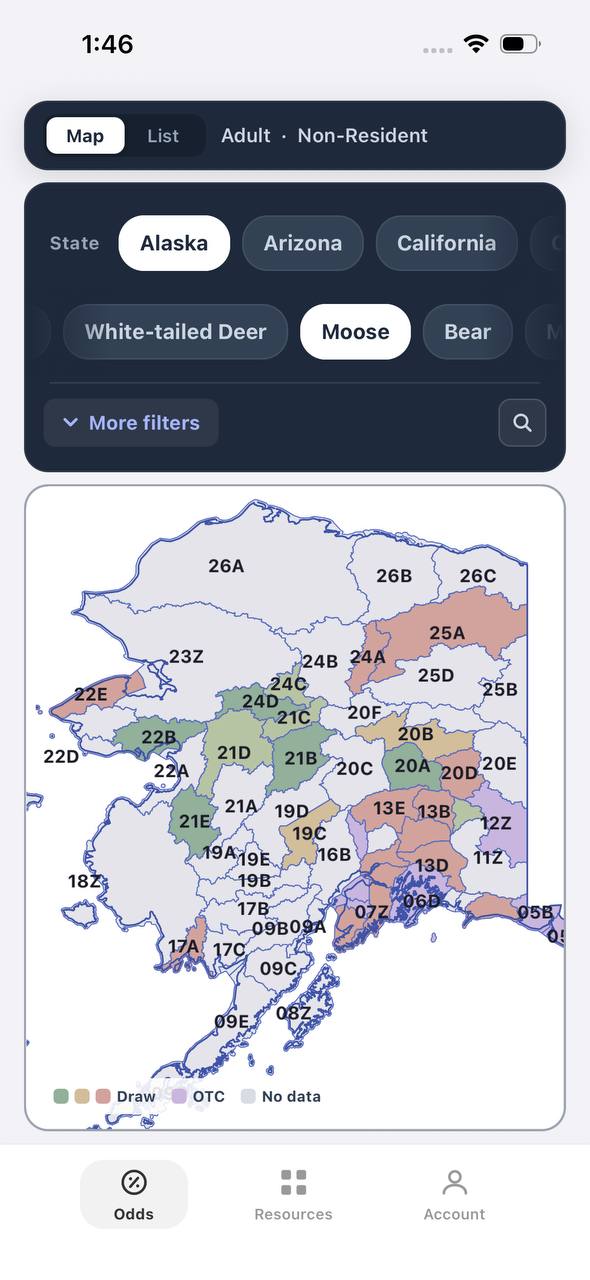
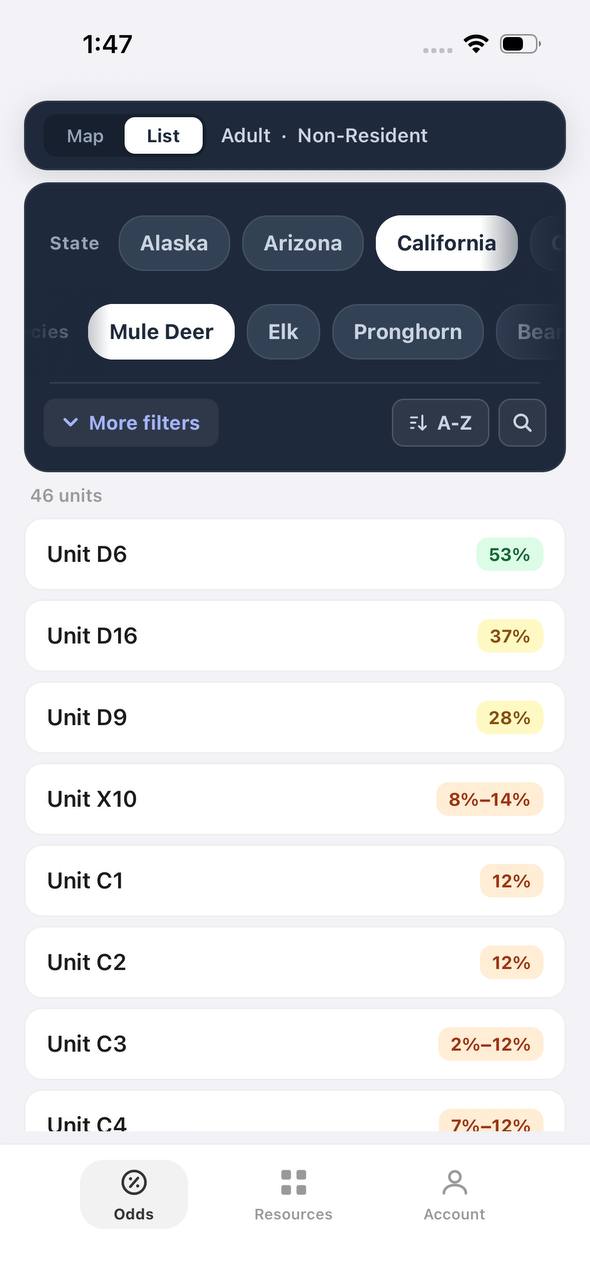
Free to join
Download mobile app
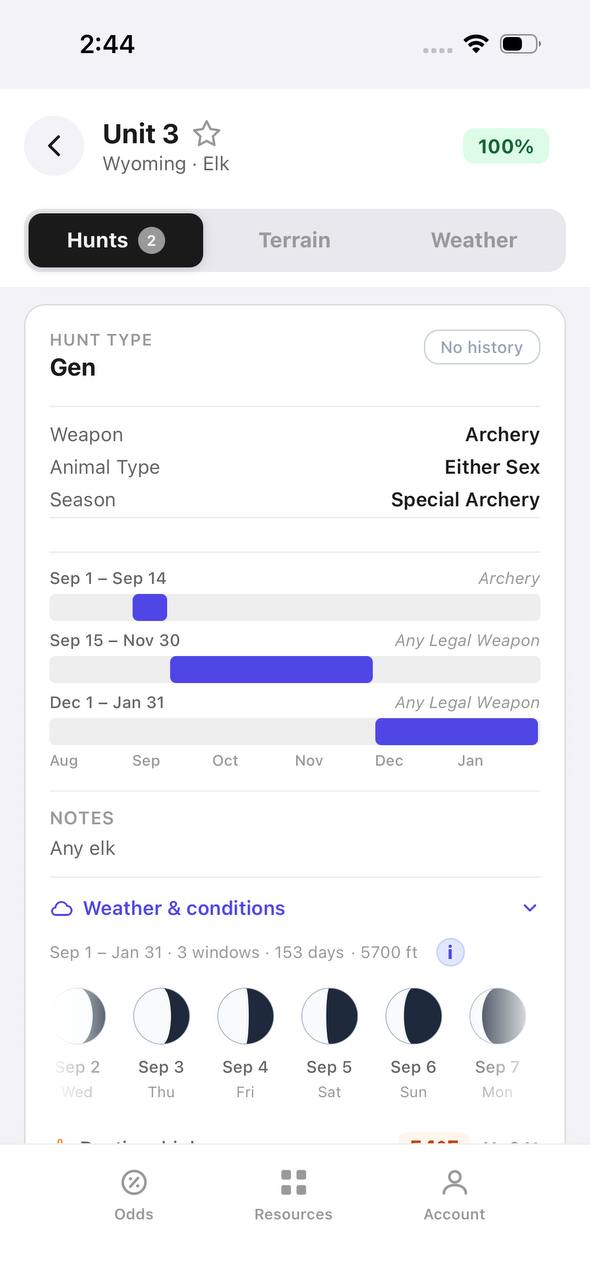
- Detailed draw odds
- Point tracking
- Deadline reminders
- 18 states covered


Free to join
Download mobile app
- Detailed draw odds
- Point tracking
- Deadline reminders
- 18 states covered
Free to join
Download mobile app
- Detailed draw odds
- Point tracking
- Deadline reminders
- 18 states covered

Value Comparison — Gen II vs Competitors
The Ruger American Gen II typically retails between $650 and $750 depending on caliber and configuration. That price point puts it in direct competition with the Savage Axis II, Tikka T3x Lite, and Weatherby Vanguard.
The Gen II offers better ergonomics and a superior trigger compared to the Savage Axis II while maintaining similar accuracy. The Tikka T3x Lite remains the smoothest-running rifle in this price range with a butter-smooth bolt and excellent build quality, but it costs $100 to $200 more and lacks the Gen II's adjustable stock features.
The Weatherby Vanguard delivers similar accuracy and a sub-MOA guarantee but features a heavier profile and less modern stock design. The Gen II's M-LOK integration and adjustable length of pull give it an edge for hunters who plan to mount accessories or share the rifle between family members.
For hunters stepping up from entry-level rifles or replacing an older platform, the Gen II delivers genuine performance improvements without requiring a jump to $1,200-plus custom builds. The accuracy potential is there, the ergonomics are solid, and the reliability is proven.
Drawbacks and Limitations
The Gen II is not perfect. The stock, while improved, is still polymer and flexes slightly under heavy pressure on the forearm. This does not affect accuracy in field positions but may bother shooters accustomed to rigid composite or wood stocks.
The rotary magazine, though reliable, limits capacity to four rounds in standard calibers and three in magnums. That is sufficient for hunting but may frustrate shooters who prefer higher-capacity detachable boxes. The magazine release is flush with the stock and requires deliberate pressure to activate — secure, but slower than extended paddles.
The finish on the barrel and action is a matte black that shows wear quickly in hard use. After a week in the Colorado backcountry, the rifle showed minor scuffing on the barrel and bolt handle. This is cosmetic and does not affect function, but hunters who want a rifle that maintains a showroom appearance will be disappointed.
The safety, while improved with the three-position design, is still a traditional tang-mounted unit that requires removing the shooting hand from the firing position. Shooters accustomed to two-position thumb safeties may find the transition awkward.
Scope Mounting and Optics Pairing
The Gen II ships with a Picatinny rail installed, which simplifies scope mounting and ensures proper alignment. The rail is steel and provides a solid mounting surface for rings or quick-detach mounts.
For western hunting, pairing the Gen II with a quality variable scope in the 3-15x or 4-16x range makes sense. The rifle's accuracy potential justifies good glass, and the platform is stable enough to take advantage of magnification at distance.
During testing, the rifle wore a Vortex Diamondback Tactical 4-16x44 in Vortex Pro rings. This combination balanced cost and capability well — the scope's exposed turrets allowed for precise adjustments during load development, and the magnification range covered both close timber shots and longer ridge-to-ridge opportunities.
Budget-conscious hunters can pair the Gen II with optics in the $300 to $500 range without handicapping the rifle's performance. The platform delivers enough accuracy to justify quality glass but does not demand top-tier optics to perform.
Ammunition Recommendations
The Gen II prefers quality hunting ammunition over bargain-bin bulk loads. During testing, premium loads consistently outperformed budget options by 30 to 40 percent in group size.
For 6.5 Creedmoor, Federal Premium Terminal Ascent 130-grain and Hornady Precision Hunter 143-grain ELD-X both delivered sub-MOA accuracy and reliable expansion on game. Barnes VOR-TX 127-grain LRX grouped well and provides a solid mono-metal option for hunters in California or those preferring lead-free bullets.
In .308 Winchester, Federal Premium Trophy Copper 165-grain and Hornady American Whitetail 150-grain InterLock both proved accurate and effective. The rifle showed no preference between 150-grain and 165-grain bullets — group size remained consistent across bullet weights.
For magnum calibers, Nosler AccuBond and Swift Scirocco loads delivered the best combination of accuracy and terminal performance. The rifle handled magnum recoil well and showed no signs of loosening screws or shifting zero after 60 rounds of 7mm Remington Magnum.
Who Should Buy the Gen II
The Ruger American Gen II fits best for hunters who want a reliable, accurate rifle without spending four figures. It works for first-time western hunters building their first big-game setup and for experienced hunters who need a dedicated backcountry rifle they can beat up without guilt.
The rifle makes sense for hunters who prioritize accuracy and ergonomics over prestige. It will not turn heads at camp, but it will put meat in the freezer. The adjustable stock and M-LOK integration give it versatility that outlasts single-purpose rifles.
Hunters stepping up from the Gen I should consider the upgrade if stock ergonomics or trigger feel were pain points. The improvements are real and noticeable in field use. Hunters satisfied with the Gen I's performance can stay put — the Gen II is better, but the Gen I remains capable.
For hunters comparing the Gen II to rifles in the $1,000 to $1,500 range, the decision depends on priorities. The Gen II delivers 90 percent of the performance at 50 percent of the cost. Hunters who shoot hundreds of rounds per year and demand the absolute smoothest action should look at the Tikka T3x or Bergara B-14. Hunters who shoot a box or two before season and prioritize field reliability over refinement will find the Gen II more than sufficient.
FAQ — Ruger American Gen II
Is the Ruger American Gen II worth upgrading from Gen I? Yes, if stock ergonomics or trigger feel were issues with the Gen I. The Gen II offers meaningful improvements in both areas, plus better feeding reliability and an upgraded safety. If you were satisfied with the Gen I's performance, the upgrade is not essential.
What caliber is best for elk hunting with the Gen II? 6.5 Creedmoor works well for elk inside 400 yards with proper shot placement. For more energy or longer shots, the 7mm Remington Magnum or .300 Winchester Magnum are better choices. The .30-06 Springfield splits the difference and handles most western elk hunting situations.
Does the Ruger American Gen II really shoot sub-MOA? Yes, with quality ammunition. Testing showed consistent sub-MOA groups with Federal Premium and Hornady loads. Bargain ammunition opened groups to 1.25 to 1.5 MOA, so bullet quality matters.
How does the Gen II compare to the Tikka T3x Lite? The Tikka has a smoother bolt and better factory finish, but costs $100 to $200 more. The Gen II offers better stock adjustability and similar accuracy at a lower price point. The Tikka is the nicer rifle; the Gen II is the better value.
Can the Gen II stock be upgraded to aftermarket options? Yes. The Gen II uses the same action footprint as the Gen I, so most aftermarket stocks designed for the original American will fit. Boyd's, Magpul, and MDT all offer compatible stock options.
Is the rotary magazine reliable with different ammunition? Yes. Testing included five different loads across 200 rounds with zero feeding issues. The rotary design is more reliable than the Gen I detachable box, though capacity is limited to four rounds in standard calibers.
Was this article helpful?
Previous
Spot and Stalk Bear Hunting: Complete 2026 Guide for Western Hunters
Spot and stalk bear hunting demands glassing skills, patience, and smart unit selection. This guide covers terrain tactics, gear essentials, and draw strategies across the West for spring and fall 2026 bear seasons.

Related
How to Choose the Right Compound Bow for Hunting in 2026
Selecting the right compound bow means matching draw weight, draw length, and axle-to-axle measurements to your hunting style and physical build. This guide breaks down specs, performance features, and what matters most when shopping for a hunting bow in 2026.

Next
Elk Hunting Backpack Checklist 2026 — Essential Gear for Backcountry Success
A complete elk hunting backpack checklist covering the essentials for multi-day backcountry hunts, from survival gear to meat-care systems. Organized by category so you pack smart and hunt confident.