Oregon Elk Draw Odds With Five Points: 2027 Application Strategy
Five preference points in Oregon puts you in the middle tier of elk applicants — past the entry-level hunts but still years away from premium limited-entry tags. The good news: dozens of quality controlled hunts become realistic at this point level, particularly for archery hunters willing to target Cascade units or rifle hunters focusing on northeastern Oregon's backcountry zones.
Oregon uses a preference point system where points guarantee your position in line. Applicants are sorted by point total, then tags are awarded top-down until the quota fills. The published "points to draw" statistic shows how many points the last successful applicant held. With five points, you're competitive for any hunt requiring four points or fewer in the current data, and you're one year away from six-point hunts.
Where Five Points Work Best for Archery Hunters
Cascade archery elk hunts offer the strongest opportunity at five points. Units like Santiam (Wenaha), Sled Springs, and Mount Emily archery seasons historically require three to five points, putting you in immediate contention. These hunts run during September, covering the bugling season when bulls are most vocal and vulnerable to calling.
The terrain in these units is steep and timbered, favoring hunters comfortable with aggressive calling setups and physical conditioning. Success rates typically range from 15-25% depending on the unit and weather patterns. Public land access is abundant through national forest lands, though pressure concentrates near roads during opening weekend.
Archery hunts in the Coast Range and southern Cascades occasionally drop to five points during years when nonresident quotas aren't fully subscribed. Monitoring the previous year's draw statistics in late spring helps identify these opportunities before the application deadline.
Rifle Hunt Options in Northeastern Oregon
Five points opens access to several rifle controlled hunts in the Blue Mountains and Wallowa zones. Units such as Starkey, Desolation, and parts of the Imnaha system require four to six points depending on season timing and weapon type. Early rifle seasons (late October) generally demand fewer points than November rut hunts.
These northeastern units produce consistent bull opportunities, particularly for hunters willing to pack into roadless areas beyond the first drainage. Elk populations in this region are stable, and the habitat mosaic of timber, meadows, and burns creates excellent hunting conditions once snow begins pushing herds to lower elevations.
Rifle hunters should focus on mid-November hunts when possible. Bulls are still responding to bugles early in the month, and the migration pattern concentrates elk in predictable basins. Five points frequently clears the threshold for these prime-timing tags.
Controlled Hunt vs General Season Trade-Offs
Oregon offers general rifle elk tags valid in many eastern Oregon units without a draw. The controlled hunt advantage at five points is season timing, reduced hunter density, and access to units closed to general tags. General season runs late November through early December, after the rut and often after migration has scattered herds.
Controlled archery hunts provide access during the September rut when bulls are most responsive to calling — a season unavailable to general tag holders in most premium units. For archery hunters, burning points on a controlled hunt delivers a fundamentally different experience than fall general seasons.
Rifle hunters face a closer decision. General season offers flexibility and the ability to hunt multiple units, while controlled hunts provide better timing and lower pressure. At five points, you can draw mid-tier controlled hunts that consistently outperform general season statistics.
Point Creep and the 2027 Outlook
Oregon elk point creep is moderate compared to states like Colorado or Nevada, but it exists. Hunts requiring five points in 2024 may require six points by 2027 as the applicant pool ages and more hunters accumulate maximum points. The system caps at a maximum of 20 points, which slows long-term creep but doesn't eliminate annual fluctuations.
Monitor the annual draw odds publication released each spring. Oregon publishes detailed statistics showing points required for every hunt code, broken down by resident and nonresident. Hunts with five-point requirements that drew at 4.9 points (meaning some five-point holders drew, some didn't) are your best targets — you're at the cutoff line.
Nonresident applicants should note that Oregon allocates elk tags up to 15% nonresident in most units. Nonresident point requirements often run one to two points higher than resident requirements for the same hunt. A hunt requiring five resident points may require six or seven nonresident points.
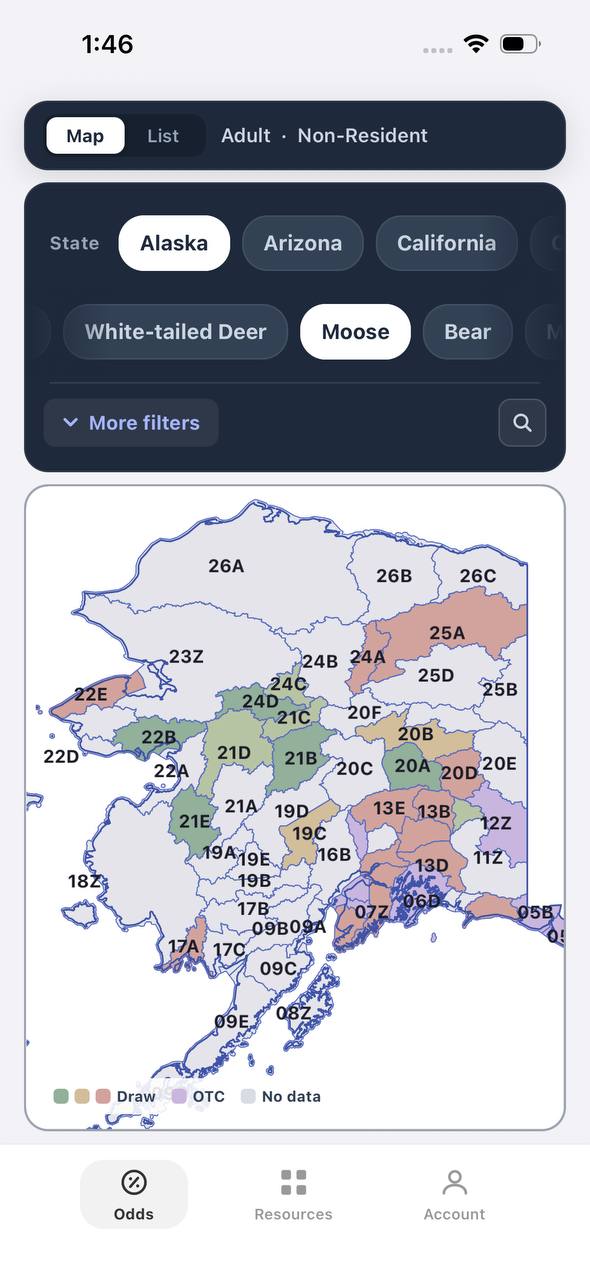
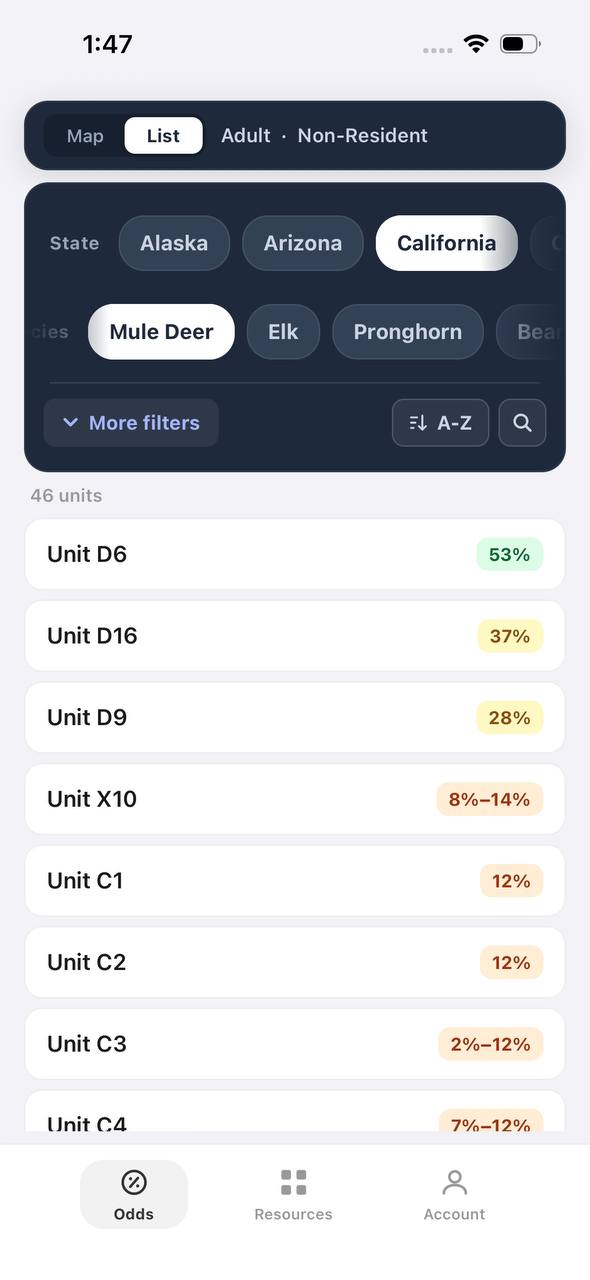
Free to join
Download mobile app
- Detailed draw odds
- Point tracking
- Deadline reminders
- 19 states covered

Free to join
Download mobile app
- Detailed draw odds
- Point tracking
- Deadline reminders
- 19 states covered
Free to join
Download mobile app
- Detailed draw odds
- Point tracking
- Deadline reminders
- 19 states covered
Application Strategy for Maximum Success
Apply for your first-choice hunt based on last year's actual points-to-draw statistic, not your aspirational dream tag. If a hunt required six points last year and you have five, you will not draw. Oregon does not have a bonus or random draw component — it's pure preference.
Your second and third choices should drop one to two points below your total. If a hunt required three points last year and you have five, it's a safe backup choice. The system processes choices in order, so structure your application as a ladder: reach on first choice, realistic on second choice, guaranteed on third choice.
Do not waste points on hunts requiring two or fewer points if you already hold five. Those hunts remain available to lower-point applicants, and you've invested too many years to settle for entry-level opportunity. Either target a hunt that uses your points or skip the draw and hunt general season while continuing to accumulate points.
FAQ — Oregon Elk Draw With Five Points
What are the best Oregon elk units to apply for with 5 preference points?
Cascade archery units like Santiam, Sled Springs, and Mount Emily archery seasons, plus northeastern rifle hunts in Starkey and Desolation, historically fall within the four- to six-point range. Focus on hunts that required four to five points in the most recent draw statistics.
Does Oregon have a bonus draw or is it pure preference?
Oregon uses pure preference points with no random or bonus component. Tags are awarded in strict point-order, so if a hunt required six points last year and you have five, you will not draw.
Can nonresidents draw Oregon elk tags with 5 points?
Yes, but nonresident applicants typically need one to two more points than residents for the same hunt due to the 15% nonresident quota. Check the nonresident-specific draw statistics when planning your application.
Should I apply for a controlled hunt or just buy a general elk tag?
If you have five points, apply for a controlled hunt that uses those points. General rifle tags are available over-the-counter and don't require points, so burning five accumulated points on a general-season experience wastes years of investment. Target a mid-tier controlled hunt with better timing and lower pressure.
How much does point creep affect Oregon elk draws?
Oregon experiences moderate point creep — hunts may gain 0.5 to 1 point in requirements every few years, depending on applicant pool growth. The 20-point cap limits long-term inflation, but high-demand hunts in the four- to eight-point range see the most creep pressure.
When is the Oregon elk draw application deadline?
The Oregon controlled hunt application deadline is typically mid-May. Exact dates are published on the ODFW website each winter when the season regulations and hunt table are finalized.
For draw odds tools, unit research, and application tracking, explore the TAGZ Hunt Planner to compare Oregon elk hunts side-by-side. If you're weighing Oregon against other Western states, check out the Colorado vs Oregon Elk Hunting comparison. Once you've drawn your tag, the Best Time to Hunt Elk guide covers seasonal tactics for September archery and November rifle seasons.
Was this article helpful?
Previous
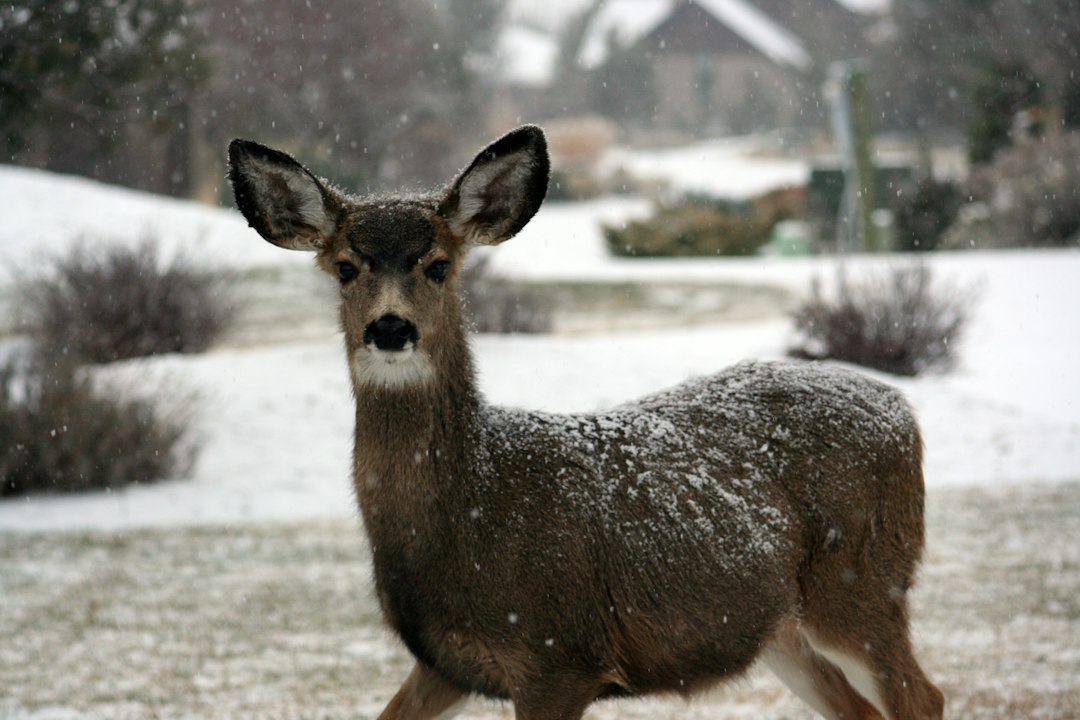
Oregon Mule Deer Draw Odds With Zero Points — 2027 Hunt Outlook
Zero-point applicants can draw quality Oregon mule deer tags in 2027, especially in northeast and southeast units where nonresident odds run 10-50% and rifle hunts offer solid buck potential without years of waiting.
Related
How Much Does a Mule Deer Hunt Cost in 2027?
Mule deer hunting costs range from $50 to $15,000+ depending on whether you hunt OTC public land, draw a trophy unit, or book a guided hunt. Most DIY Western hunts cost $300-800 for tags and licenses.
Next
New Mexico Mule Deer Draw Odds and Tag Guide 2027
New Mexico's 2027 mule deer draw offers both quality limited-entry hunts and accessible general-season opportunities across varied terrain. Understanding the two-tier system and unit-specific draw odds is essential for building a strategic application.