How Much Does a Mule Deer Hunt Cost in 2027?
A DIY public-land mule deer hunt typically costs $300 to $800 for tags and licenses when you draw or buy over-the-counter, while guided hunts start around $3,500 and can exceed $15,000 for premium trophy units. Resident hunters pay significantly less — often $50 to $150 for a tag — but nonresidents fund most Western wildlife agencies and face much higher fees. The final cost depends on whether you hunt general/OTC units or apply for limited-entry controlled hunts, whether you need preference or bonus points, and whether you hire an outfitter.
Resident vs. Nonresident Tag Costs
Resident mule deer tags across the West cost $30 to $150 in most states. Colorado residents pay around $49 for a deer tag, Wyoming residents pay $42, and Montana residents pay $16 for the base deer license. These prices reflect the wildlife trust doctrine — residents own the wildlife and pay taxes that support habitat and management.
Nonresident tags cost far more because states use hunting fees to fund conservation budgets. Colorado nonresident mule deer tags run $421 for limited rifle and $366 for archery. Wyoming charges nonresidents $372 for a deer tag. Arizona nonresident deer tags cost $320 to $375 depending on weapon. New Mexico nonresident deer licenses run $361. Idaho charges nonresidents $336 for a deer tag, and Montana charges $343 for the nonresident deer combination license. Utah nonresident general-season any-legal-weapon deer permits cost $314, while limited-entry tags cost $363.
The pricing gap exists because nonresidents do not pay state taxes that support wildlife programs. Tag revenue from out-of-state hunters covers biologists, law enforcement, habitat projects, and game damage programs. States also limit nonresident tags to protect opportunity for residents — typically 10% to 20% of available permits go to nonresidents in controlled-hunt units.
OTC vs. Draw Tag Pricing
Over-the-counter tags let you buy a deer permit without applying in a draw, and they typically cost the same as a general-season draw tag. Colorado sells OTC archery deer tags to nonresidents for $366 and second- and third-rifle-season tags in some units for $421. Idaho offers nonresident OTC deer tags in many zones for $336. Montana's deer combination license ($343 nonresident) functions as a general tag after you draw it, but the application itself is a draw.
Draw tags require entering a lottery. The tag price is the same whether the unit takes one point or 20 points to draw, but you pay application fees and point fees along the way. Colorado charges $3 per species application plus $40 per point if you want to buy a point. Wyoming charges $15 per species application. Arizona charges $13 for a hunting license and $160 for a nonresident deer application. New Mexico charges $56 to $65 depending on weapon. These fees add up over multiple years if you are building points for a trophy unit.
Some states charge the full tag price up front when you apply. If you do not draw, they refund the tag cost but keep the application fee. Other states charge only a small application fee and bill you for the tag after you draw. Know the refund policy before you apply so you do not tie up thousands of dollars across multiple states during application season.
Application Fees and Point Costs
Application fees and preference points add $50 to $500 per year depending on how many states you apply in and whether you are buying points. Colorado charges $3 per species application and $40 per preference point. If you apply for deer every year and do not draw, you spend $43 annually. Wyoming charges $15 per species application and $31 for a nonresident deer preference point. Arizona charges $160 per application and does not sell deer preference points outright — you accumulate a bonus point by applying or buying the $13 hunting license and a $14 bonus point.
New Mexico does not use points. Every applicant has an equal chance regardless of history. If you apply for multiple hunts in the same draw, you pay $56 to $65 per hunt code entry. Utah uses bonus points for deer. The hunting license costs $65, the application costs $10, and a bonus point costs $15. Nevada uses bonus points as well. The hunting license costs $142, the application costs $12, and a bonus point costs $23.
If you apply in five states every year and buy points in the states that sell them, expect to spend $200 to $400 annually even if you never draw. That cost is cumulative. If you build points for 10 years before drawing a premium tag, the total points and application fees alone can exceed $2,000 before you ever hunt.
Guided Hunt Costs
Guided mule deer hunts cost $3,500 to $15,000 depending on location, success rates, lodging quality, and trophy potential. A fully outfitted hunt in a mid-tier unit with lodging and meals typically runs $4,500 to $7,500. Premium hunts in top-tier Nevada, Utah, or Arizona units with high draw odds for 180-inch-plus bucks often exceed $10,000 and can reach $15,000 or more.
Landowner tags add another cost layer. New Mexico and Utah allow landowners to sell a limited number of tags privately without requiring the hunter to enter the public draw. New Mexico landowner mule deer tags sell for $3,000 to $12,000 depending on the unit and weapon. Utah conservation and expo permits sell at auction or raffle for $5,000 to $50,000 for the most coveted tags, though raffle entries cost only $5 to $25. These tags let you hunt immediately rather than waiting years in the draw.
Guided hunts include meals, lodging, transportation during the hunt, field care, and sometimes meat processing. You still pay for your own tag, license, and travel to the hunt location. If you book a $6,000 hunt in Colorado, you also pay $421 for the tag and $366 or more for the hunting license and application fees.
Free to join
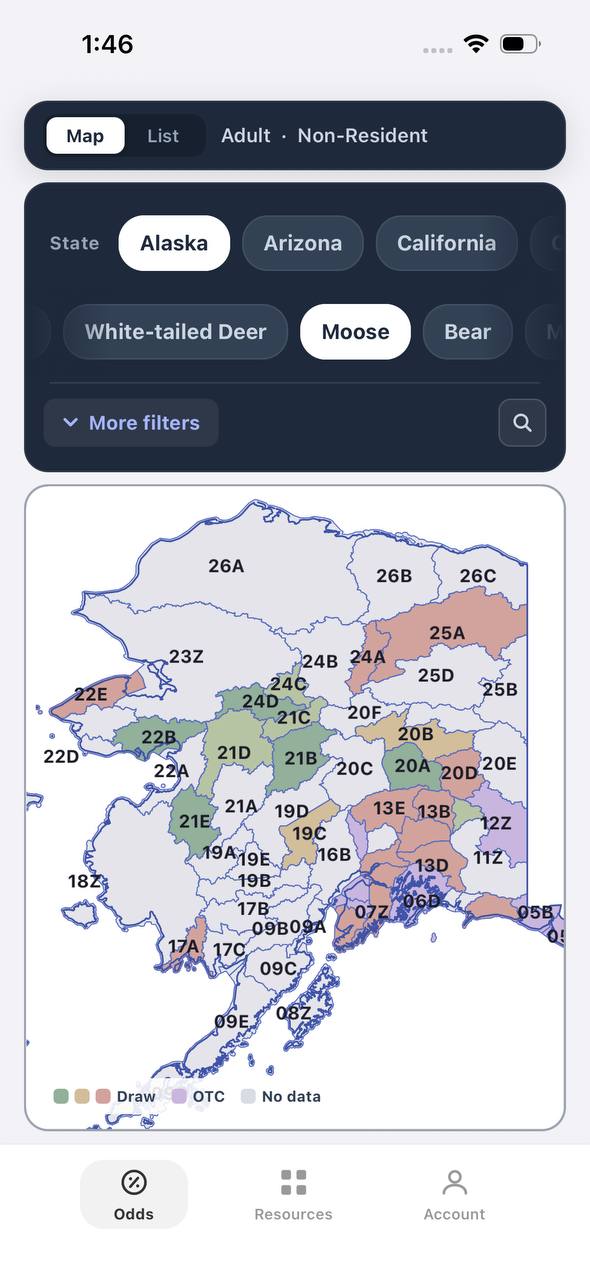
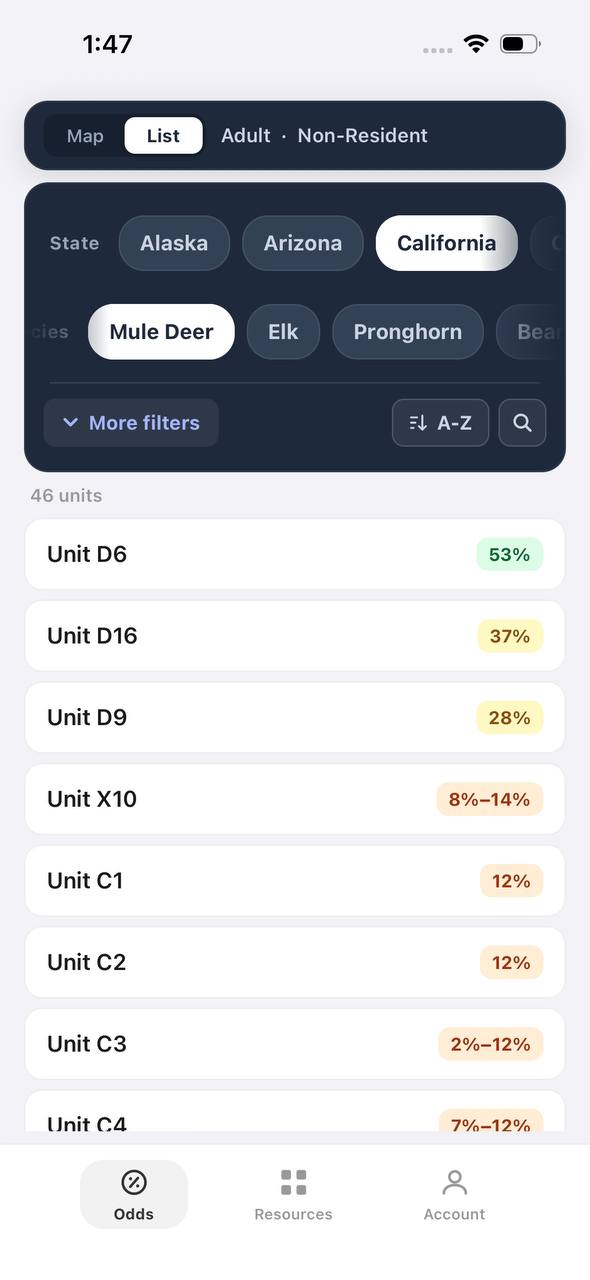
Download mobile app
- Detailed draw odds
- Point tracking
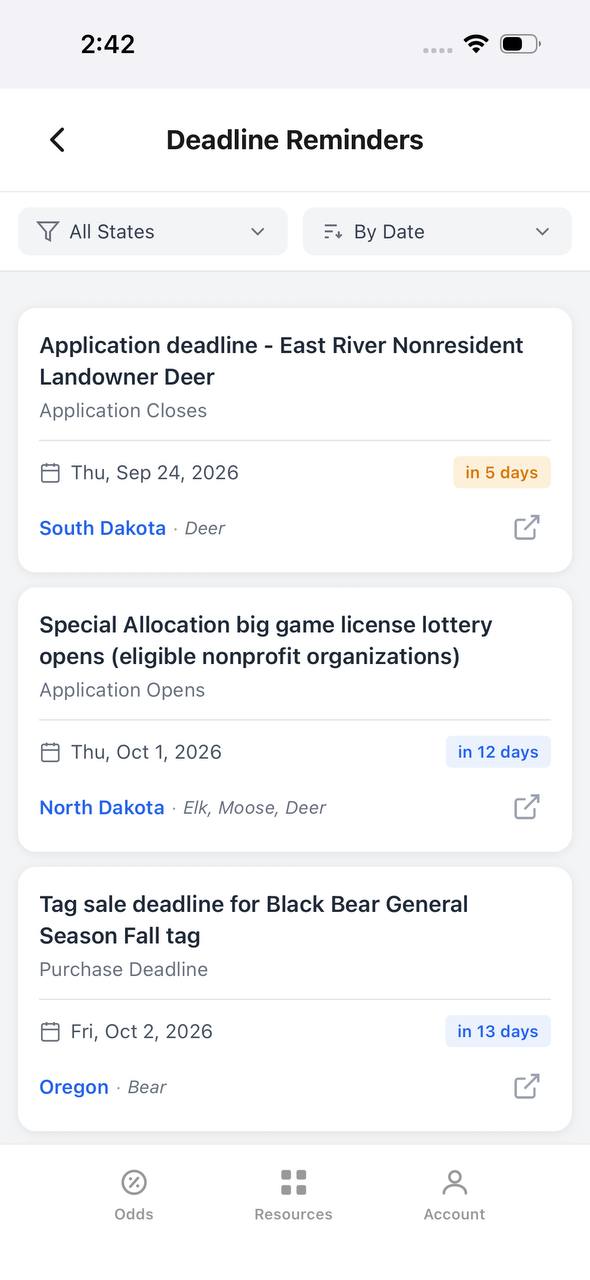
- Deadline reminders
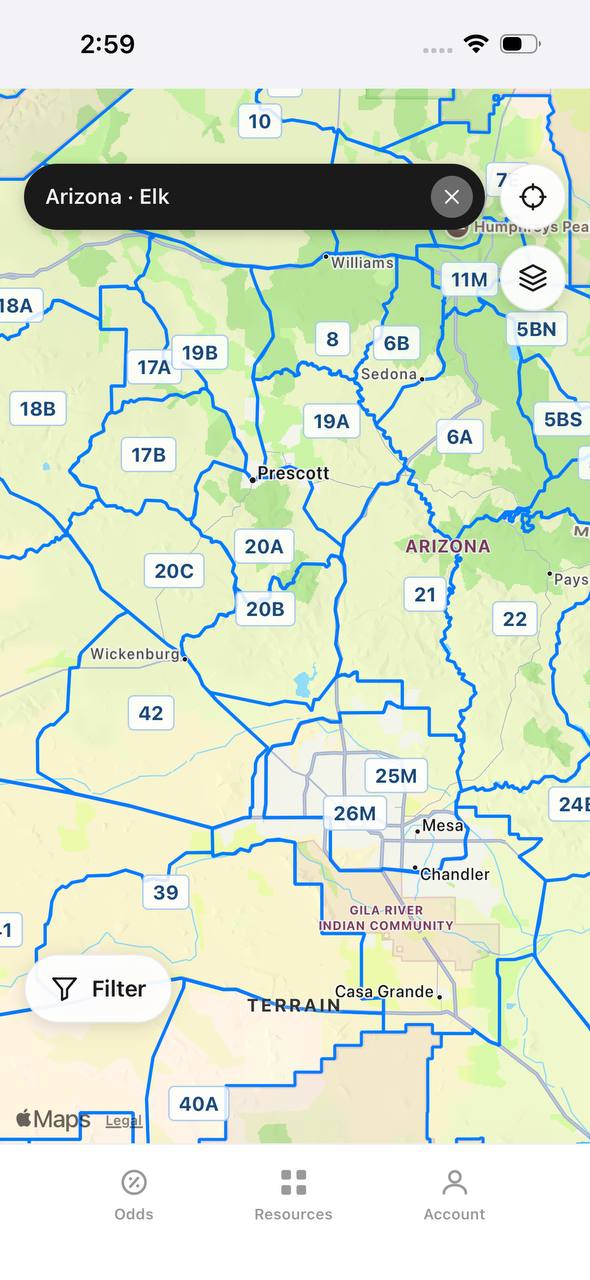
- 19 states covered

Free to join
Download mobile app
- Detailed draw odds
- Point tracking
- Deadline reminders
- 19 states covered
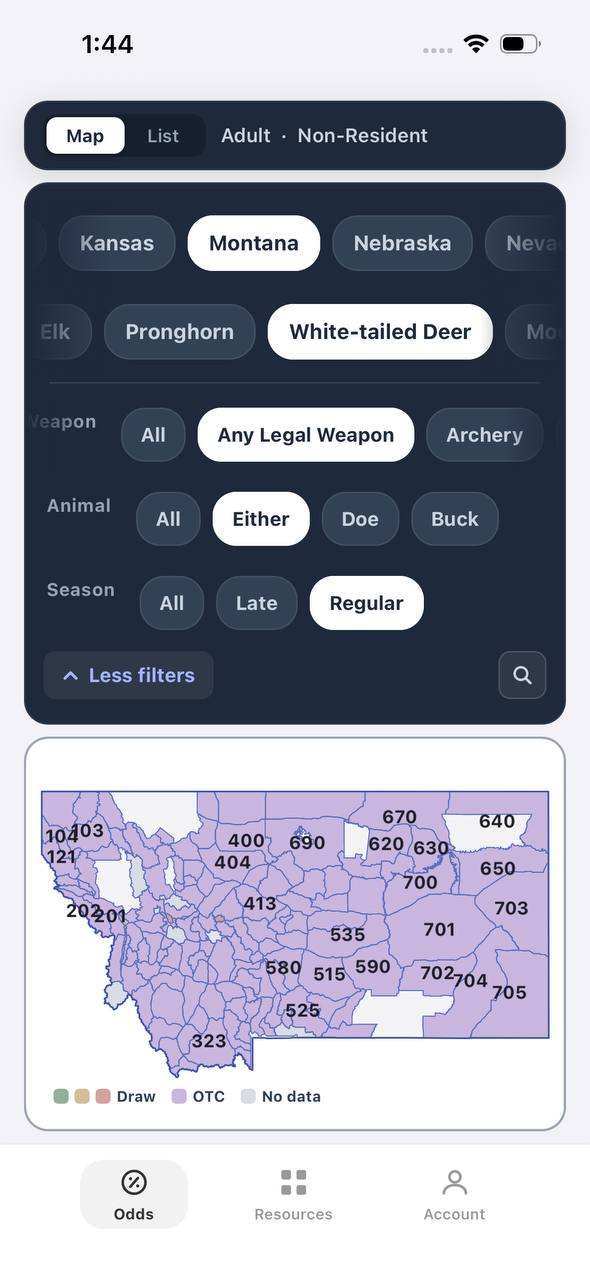
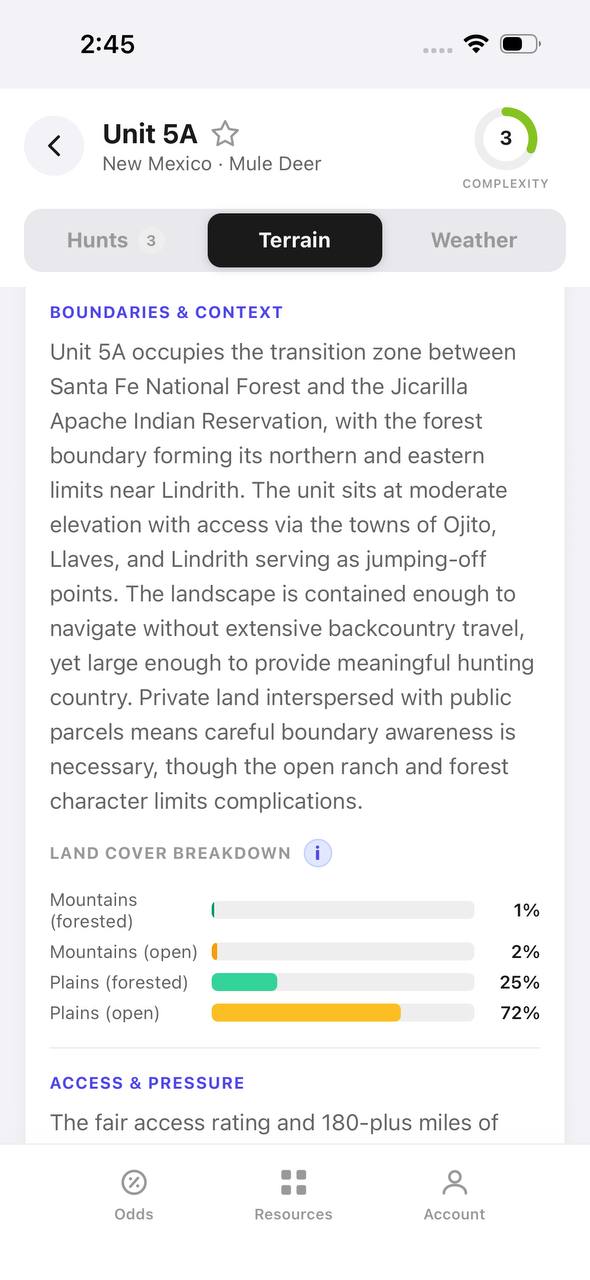
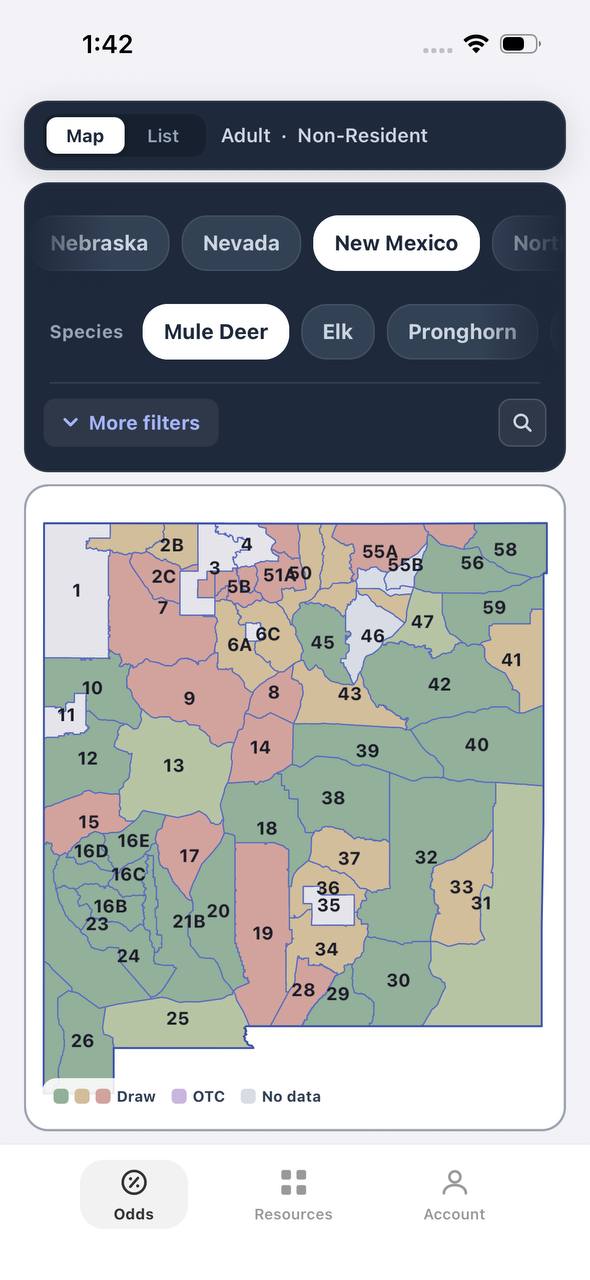
Free to join
Download mobile app
- Detailed draw odds
- Point tracking
- Deadline reminders
- 19 states covered

DIY Public-Land Hunt Costs
A self-guided public-land mule deer hunt is the most affordable option. If you draw a Colorado nonresident third-season rifle tag, you pay $421 for the tag, $3 for the application, and $10 for the habitat stamp. Total: $434. Add $100 to $200 for fuel, $50 to $150 for camping or cheap lodging, and $50 for groceries if you cook your own food. A weeklong Colorado DIY rifle hunt costs $700 to $900 for a nonresident, less if you carpool and camp.
Wyoming nonreidents pay $372 for a deer tag, $15 for the application, $31 for a preference point if you buy one, and $12.50 for the conservation stamp. If you draw a general tag in a decent region, your tag cost is around $400. Montana's deer combination license costs $343 and grants access to general deer units after you draw it. The application fee is $16.
Residents hunting their home state spend far less. A Colorado resident pays $49 for a deer tag and hunts OTC archery or applies for rifle seasons. A Wyoming resident pays $42 for a deer tag and $12.50 for the conservation stamp — total $54.50. Montana residents pay $16 for the base license and $10 for the deer tag — total $26. Residents in most Western states can hunt mule deer for under $100 when they stick to general or OTC seasons.
Gear is a one-time or infrequent cost. A rifle, optics, boots, pack, and clothing can run $1,500 to $5,000 for quality equipment, but those items last many seasons. Dedicated mule deer hunters who already own gear spend almost nothing beyond tags and fuel for a DIY hunt.
Hidden Costs and Unexpected Expenses
Meat processing costs $100 to $200 if you use a processor rather than doing it yourself. Taxidermy for a shoulder mount costs $600 to $1,200 depending on the taxidermist and options. European skull mounts cost $75 to $150. If you shoot a trophy buck, add those costs to your total.
Travel adds up quickly for nonresidents. A round-trip flight to Denver, Boise, or Salt Lake City costs $200 to $600 depending on your origin and how far in advance you book. Rental trucks cost $400 to $800 per week if you need a 4WD vehicle for backcountry access. Fuel for a 1,500-mile road trip costs $200 to $300 at current prices.
Point creep increases the true cost of trophy tags over time. If a unit that once took five points now takes 10 points, you spend five more years buying points and applying. Colorado preference points cost $40 per year. Five extra years cost $200 in points alone, plus five more application fees. If you apply in multiple states while waiting, the cumulative cost of chasing one tag can exceed $1,000 in fees before you ever hunt.
Nonresident hunting licenses expire annually. If you apply in five states and do not draw in any of them, you spend $200 to $400 on applications and licenses that year. If you do that for a decade, you spend $2,000 to $4,000 in application costs before drawing a single tag. That is the reality of applying for limited-entry trophy units with low draw odds.
What You Actually Spend for a Season
Most nonresident DIY mule deer hunters spend $700 to $1,500 for a season when they draw a decent general or limited-entry tag. That includes the tag, application fees, fuel, food, and basic lodging. Residents spend $200 to $500 including fuel and food when they hunt general or OTC seasons close to home.
Hunters who apply in multiple states every year and build points spend $200 to $400 annually in application fees and point costs even in years they do not draw. Over 10 years, that totals $2,000 to $4,000 in sunk costs before hunting.
Guided hunters spend $4,500 to $15,000+ depending on the outfitter and unit. Premium landowner tags in top units cost $5,000 to $12,000, and the hunt itself costs another $5,000 to $10,000 on top of that. A fully outfitted hunt in a Nevada or Utah trophy unit with a landowner tag can total $20,000 or more.
The most cost-effective strategy for nonresidents is hunting OTC or general-season units in Colorado, Idaho, or Montana, where you can hunt quality public land every year or every other year for $400 to $800 per hunt. Residents hunting their home state should take advantage of general tags and OTC opportunities rather than chasing low-odds trophy units unless they are willing to wait a decade and pay thousands in point costs.
FAQ — Mule Deer Hunt Costs
How much does a nonresident mule deer tag cost?
Nonresident mule deer tags cost $314 to $421 in most Western states. Colorado charges $421 for rifle and $366 for archery, Wyoming charges $372, and Utah charges $314 for general season.
Are resident mule deer tags cheaper?
Yes. Resident tags cost $30 to $150 in most states. Colorado residents pay $49, Wyoming residents pay $42, and Montana residents pay $16 for the base deer license.
Do you pay the full tag price when you apply?
It depends on the state. Colorado, Utah, and Nevada charge the full tag cost up front and refund it if you do not draw. Wyoming, Montana, and Arizona charge a small application fee and bill you for the tag only if you draw.
How much do preference points cost?
Preference points cost $15 to $40 per year depending on the state. Colorado charges $40, Wyoming charges $31, and Utah charges $15. New Mexico does not use points.
What is the cheapest way to hunt mule deer as a nonresident?
Buy an OTC tag or apply for general-season tags in Colorado, Idaho, or Montana. You can hunt quality public land for $300 to $400 in tags and licenses, and you hunt every year or every other year rather than waiting in the draw.
How much does a guided mule deer hunt cost?
Guided mule deer hunts cost $3,500 to $15,000. Mid-tier fully outfitted hunts run $4,500 to $7,500, while premium hunts in trophy units cost $10,000 to $15,000 or more. Landowner tags add another $3,000 to $12,000 on top of the hunt cost.
Was this article helpful?
Previous
Oregon Elk Draw Odds With Five Points: 2027 Application Strategy
Five preference points unlock several quality Oregon elk units with draw odds between 20-60%, including premium archery hunts in the Cascades and rifle hunts in northeastern Oregon.
Related
Oregon Guided Mule Deer Hunts 2027: Points, Tags & Costs
Oregon's controlled mule deer hunts offer premium rifle opportunities in eastern units, but nonresidents face tough odds and mandatory guide requirements in wilderness areas. Understanding the preference point system and tag costs is essential for planning a successful 2027 application.

Next
Oregon Mule Deer Draw Odds With Zero Points — 2027 Hunt Outlook
Zero-point applicants can draw quality Oregon mule deer tags in 2027, especially in northeast and southeast units where nonresident odds run 10-50% and rifle hunts offer solid buck potential without years of waiting.