Nonresident Hunting License Requirements in Every Western State (2025 Guide)

Planning a Western big-game hunt as a nonresident means navigating eleven different licensing systems, each with its own application deadlines, point structures, and fee schedules. Some states require you to buy a base hunting license before applying for limited-entry tags, while others bundle everything into a single application. Some award tags through pure preference points, others use bonus points or random draws, and a few offer a mix of all three. Understanding these differences before you apply can save you hundreds of dollars in unnecessary fees and prevent application mistakes that cost you an entire season. This guide breaks down the nonresident license requirements for every Western state so you can plan your applications with confidence.
Arizona Nonresident License Requirements
Arizona uses a bonus-point system where accumulated points increase your odds but never guarantee a tag. Nonresidents must purchase a hunting license ($160) and a nonresident hunting license application before applying for big-game tags. The standard draw application period runs from early February through early June for most species, with spring turkey applications opening in January.
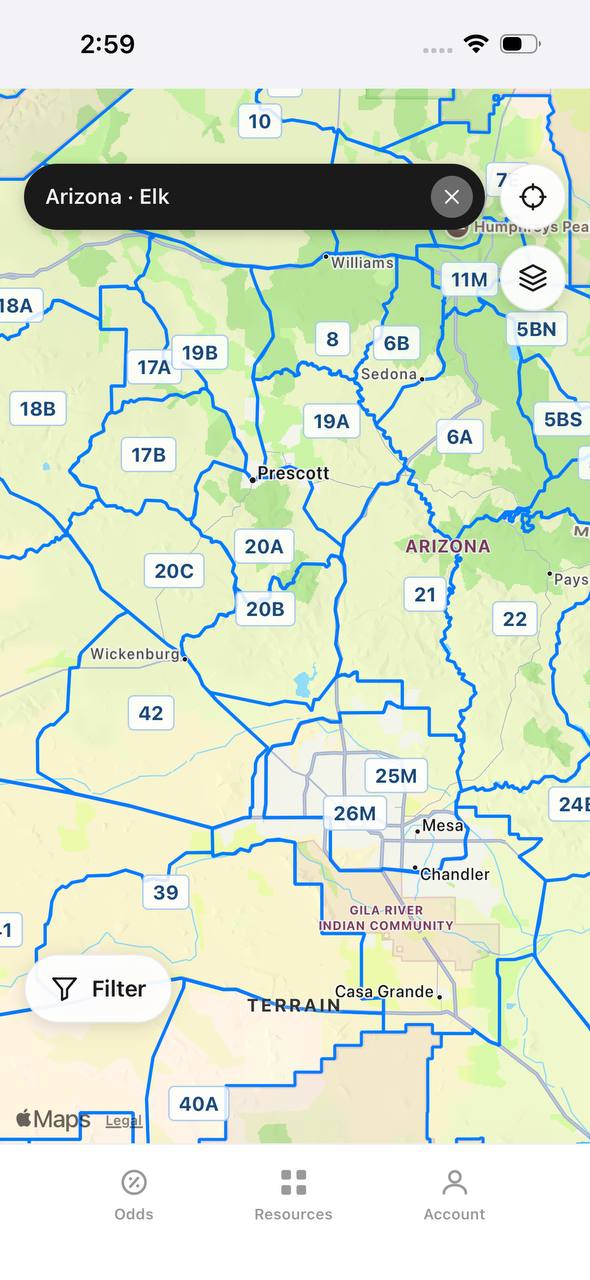
Bonus points cost $15 per species and can be purchased separately if you don't apply for a tag that year. Nonresident elk tag fees range from $642 for a bull tag to $522 for a cow tag. Deer tags cost $352 for nonresidents. Arizona does not offer over-the-counter elk tags for nonresidents but does provide leftover and over-the-counter opportunities for some deer and javelina units.
The Arizona Game and Fish Department manages all applications through its online portal, and all fees are charged upfront when you submit your application. If you don't draw, your tag fees are refunded minus the license and application costs.
Colorado Nonresident License Requirements
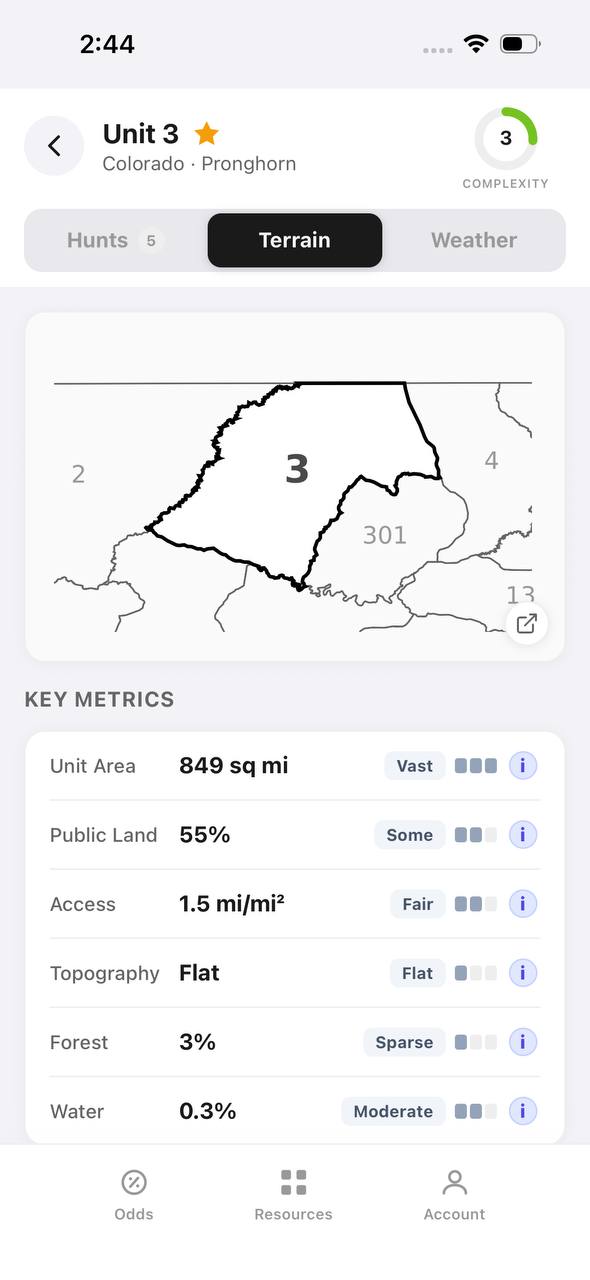
Colorado offers the most accessible nonresident elk hunting in the West through its over-the-counter archery and limited rifle opportunities. Nonresidents must purchase a qualifying license ($10.14 small-game or habitat stamp) to apply for limited big-game draws, but OTC elk buyers can skip this step and purchase tags directly starting in early July.
The Colorado Parks and Wildlife preference-point system awards tags to applicants with the most points first within each preference-point pool. Preference points cost $10 per species. Limited elk tags for nonresidents cost $709.56 for bull tags and $483.63 for cow tags. Deer tags cost $436.15 for nonresidents. Application deadlines typically fall in early April, with leftover licenses available starting in August.
Colorado caps nonresident licenses at 35% for most limited-entry hunts but allocates separate nonresident quotas for OTC archery elk. Nonresident hunters can purchase up to two elk licenses per year, allowing you to combine an OTC tag with a limited leftover tag if available.
Idaho Nonresident License Requirements
Idaho offers general-season elk and deer tags available as controlled hunts or over-the-counter options depending on the zone. Nonresidents must purchase a hunting license ($154.75) before applying for controlled hunts or buying general tags. The Idaho Department of Fish and Game opens controlled-hunt applications in December and closes them in early May.
Idaho does not use preference or bonus points. All controlled hunts are drawn randomly, meaning first-time applicants have the same odds as repeat applicants within each pool. Nonresident elk tags cost $586.75 for general tags and $642.75 for controlled-hunt tags. Deer A-tags cost $336.75 for nonresidents. Nonresident caps limit elk tags to 12% and deer tags to 14% of available permits.
Leftover controlled-hunt tags and additional general-season tags become available in June and July. Idaho allows one elk tag and two deer tags per hunter per year, making it one of the more generous Western states for multi-tag opportunities.
Montana Nonresident License Requirements
Montana's nonresident licensing system is the most restrictive in the West. Nonresidents must first draw a Big Game Combo license ($1,153 for deer and elk, $884 for deer or elk only) before accessing general hunting districts. The Montana Fish, Wildlife & Parks combo draw operates on a preference-point system, with one point added automatically for each unsuccessful application year.
The combo license includes base hunting privileges and either one elk and one deer B-tag (Combo), one elk tag only (Elk Combo), or one deer tag only (Deer Combo). Once you draw a combo, you can apply for limited-entry permits in a separate special draw. Special permits for trophy units operate on bonus points, increasing your odds but never guaranteeing selection.
Montana caps nonresident combo licenses at 17,000 total. Applications open in January and close in April. With first-time applicants now facing multi-year waits in some pools, Montana requires the most advance planning of any Western state for nonresident hunters.
Free to join
Download mobile app
- Detailed draw odds
- Point tracking
- Deadline reminders
- 19 states covered

Free to join
Download mobile app
- Detailed draw odds
- Point tracking
- Deadline reminders
- 19 states covered
Free to join
Download mobile app
- Detailed draw odds
- Point tracking
- Deadline reminders
- 19 states covered
Nevada Nonresident License Requirements
Nevada uses a bonus-point system for most big game and allocates only 10% of tags to nonresidents, making it one of the hardest states to draw premium tags. Nonresidents must purchase a hunting license ($142) before applying for any big-game tags. The Nevada Department of Wildlife opens applications in late February and closes them in mid-May.
Bonus points cost $10 per species and accumulate each year you apply without drawing a tag. Each point functions as an additional entry in the draw, so an applicant with five points receives six total entries. Nonresident elk tags cost $1,200. Deer tags cost $300 for nonresidents. Nevada does not offer over-the-counter big-game tags.
Second and third hunts for leftover tags open later in the year for unsuccessful applicants, often providing opportunities in units with low hunter density or challenging terrain.
New Mexico Nonresident License Requirements
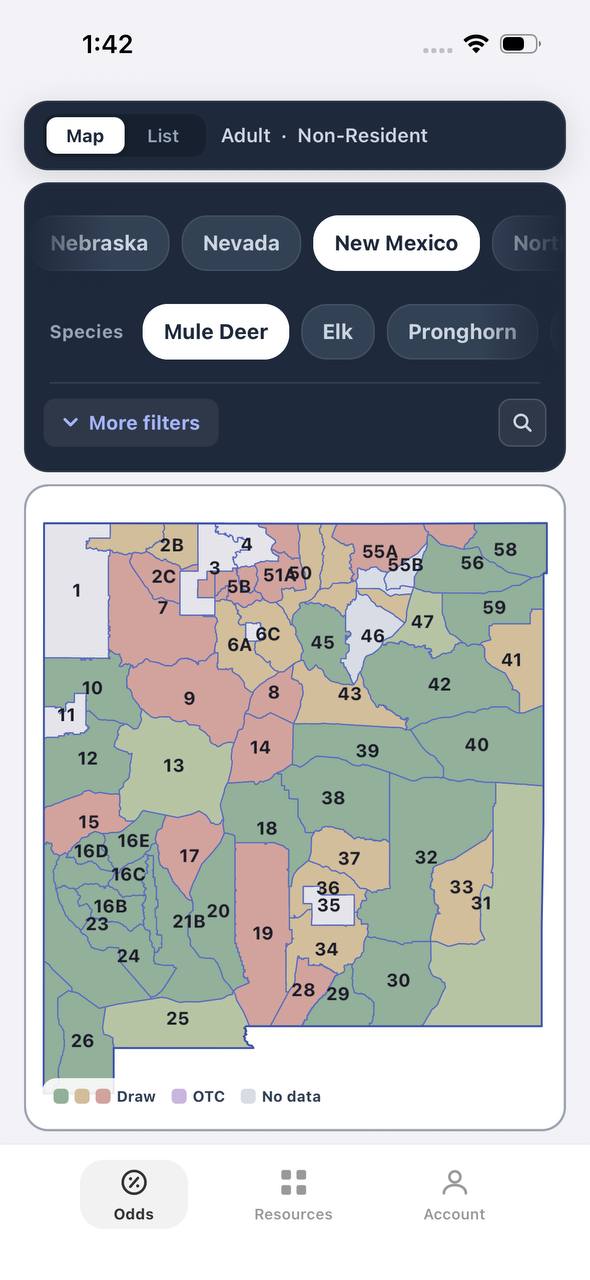
New Mexico operates on a pure random draw with no preference or bonus points. Every applicant, whether first-time or repeat, has equal odds within each pool. Nonresidents must purchase a game-hunting license ($65) before applying for big-game tags. The New Mexico Department of Game and Fish draw application period opens in mid-February and closes in mid-March.
New Mexico allocates up to 12% of tags to nonresidents for most species, with 6% awarded in the outfitter pool and 6% in the public draw. Nonresident elk tags cost $656. Deer tags cost $328 for nonresidents. All applicants must pay application fees upfront, and unsuccessful applicants receive refunds minus a small processing charge.
Leftover licenses for some units become available in August through a secondary draw and over-the-counter sales, often providing last-minute hunting opportunities.
Oregon Nonresident License Requirements
Oregon uses a preference-point system for controlled hunts and offers general-season rifle tags over-the-counter in some eastern Oregon units. Nonresidents must purchase a hunting license ($179.50) before applying for controlled hunts or buying general tags. The Oregon Department of Fish and Wildlife controlled-hunt application period runs from mid-April through late May.
Preference points cost $5 per species. Nonresident elk tags cost $565.50 for controlled-hunt rifle tags and $334.50 for general archery tags. Deer tags cost $334.50 for nonresidents. Oregon caps nonresident tags at 10% for most controlled hunts but allows unlimited nonresident general archery elk tags and limited general rifle tags in eastern Oregon units.
Second-choice controlled hunts and leftover sales begin in June for unsuccessful applicants, often filling quickly for desirable units.
Utah Nonresident License Requirements
Utah uses a bonus-point system where points increase draw odds but do not guarantee tags. Nonresidents must purchase a hunting license ($65) before applying for limited-entry or general-season big-game tags. The Utah Division of Wildlife Resources opens the main big-game application in January and closes it in March.
Bonus points cost $10 per species and function as squared bonus chances in the draw. An applicant with five points receives 36 total chances (6 × 6), dramatically improving odds over zero-point applicants. Nonresident elk tags cost $556 for limited-entry bull tags and $389 for general any-bull tags. Deer tags cost $389 for nonresidents. Utah caps nonresident limited-entry tags at 10% but allocates higher percentages for general-season and over-the-counter opportunities.
Utah's general any-bull archery elk tags are available over-the-counter for nonresidents, providing accessible hunting opportunities without the draw.
Free to join
Download mobile app
- Detailed draw odds
- Point tracking
- Deadline reminders
- 19 states covered
Free to join
Download mobile app
- Detailed draw odds
- Point tracking
- Deadline reminders
- 19 states covered
Free to join
Download mobile app
- Detailed draw odds
- Point tracking
- Deadline reminders
- 19 states covered
Washington Nonresident License Requirements
Washington offers general-season elk and deer tags over-the-counter in many units, with limited special-permit hunts awarded through a preference-point system. Nonresidents must purchase a hunting license ($220) before buying general tags or applying for special permits. The Washington Department of Fish and Wildlife opens special-permit applications in May.
Preference points cost $7.50 per species. Nonresident elk tags cost $520 for general any-bull tags and $506 for spike-only or antlerless tags. Deer tags cost $492 for nonresidents. Washington does not cap nonresident tags for general-season opportunities, making it one of the most accessible Western states for nonresident hunters.
Special permits for quality units or trophy hunts require accumulated preference points, with top-tier tags requiring a decade or more of point building.
Wyoming Nonresident License Requirements
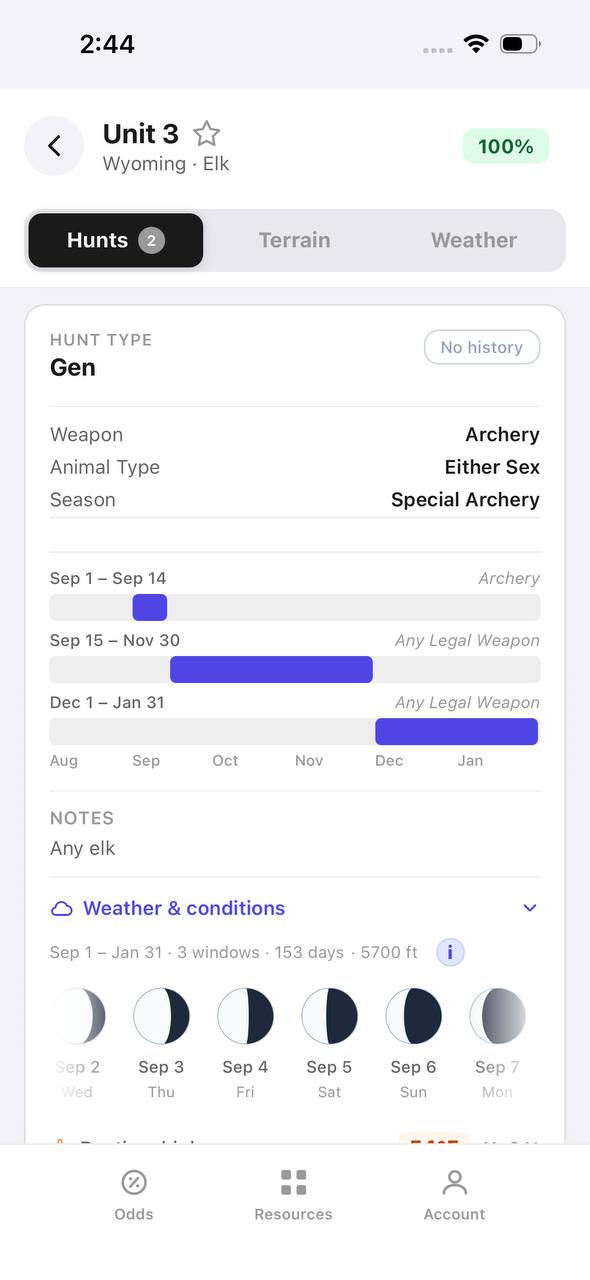
Wyoming allocates most limited-quota licenses through a preference-point system, with up to 25% of permits going to nonresidents in the random draw. Nonresidents must purchase a conservation stamp ($12.50) and fishing or small-game license ($15) to apply for big-game licenses. The Wyoming Game and Fish Department opens applications in January and closes them in late May.
Preference points cost $15 per species and guarantee tags once you reach the maximum-point threshold for a unit. Nonresident elk tags cost $1,016 for general or limited full-price licenses. Deer tags cost $516 for nonresidents. Wyoming allocates 7,250 full-price nonresident elk licenses and separate reduced-price licenses for regions with surplus tags.
Wyoming's random draw pool offers opportunities for first-time applicants willing to try lower-demand units, while preference-point pools require long-term commitment for premium units.
Alaska Nonresident License Requirements
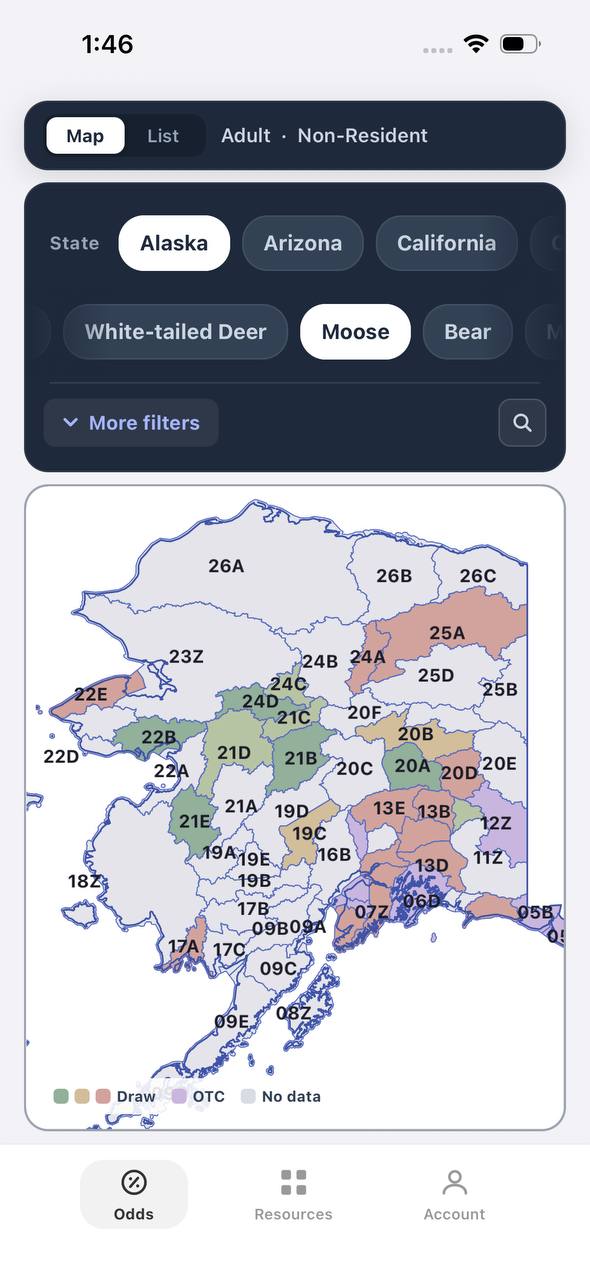
Alaska does not use preference points, bonus points, or limited-entry draws for most big-game species. Nonresidents must purchase a hunting license ($160) and species-specific tags before hunting. The Alaska Department of Fish and Game manages harvest through season structures and registration hunts rather than tag quotas.
Nonresident moose tags cost $800. Caribou tags cost $650 for nonresidents. Dall sheep tags cost $850. Most species are available over-the-counter, but some high-demand areas operate on registration-hunt systems where hunters register in person or online before hunting begins.
Alaska requires nonresident hunters to hire a registered guide for brown bear, Dall sheep, and mountain goat hunts. Moose, caribou, black bear, and other species can be hunted by nonresidents without a guide if hunting with a resident relative within the second degree of kindred.
Free to join
Download mobile app
- Detailed draw odds
- Point tracking
- Deadline reminders
- 19 states covered
Free to join
Download mobile app
- Detailed draw odds
- Point tracking
- Deadline reminders
- 19 states covered
Free to join
Download mobile app
- Detailed draw odds
- Point tracking
- Deadline reminders
- 19 states covered
Application Strategy Across Multiple States
Nonresident hunters serious about filling tags every year should diversify applications across multiple states. Colorado's OTC elk tags provide guaranteed opportunities while you build points for limited-entry hunts in Wyoming, Utah, or Arizona. Idaho and New Mexico's random draws offer realistic odds for first-time applicants willing to target less-pressured units.
Building points in Montana's combo draw and Wyoming's preference-point system positions you for future premium hunts while maintaining annual hunting access through general-season opportunities in Colorado, Washington, or Oregon. TAGZ members can compare draw odds across all eleven Western states and plan multi-state application strategies to maximize hunting opportunities without wasting money on low-odds applications.
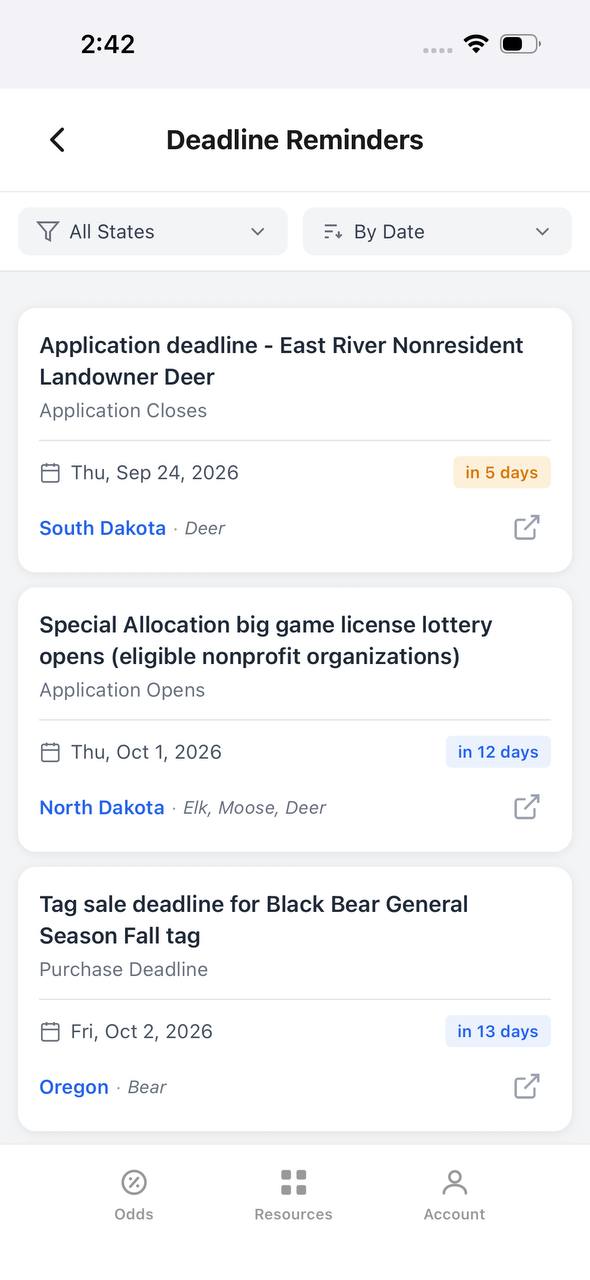
Tracking application deadlines, point costs, and tag fees across multiple states requires careful calendar management. Missing a March deadline in New Mexico or forgetting to apply before Wyoming's late-May cutoff costs you an entire year of potential hunting and point building. Setting reminders in December to research regulations and again in January through May to submit applications prevents missed opportunities.
Understanding Nonresident Caps and Quotas
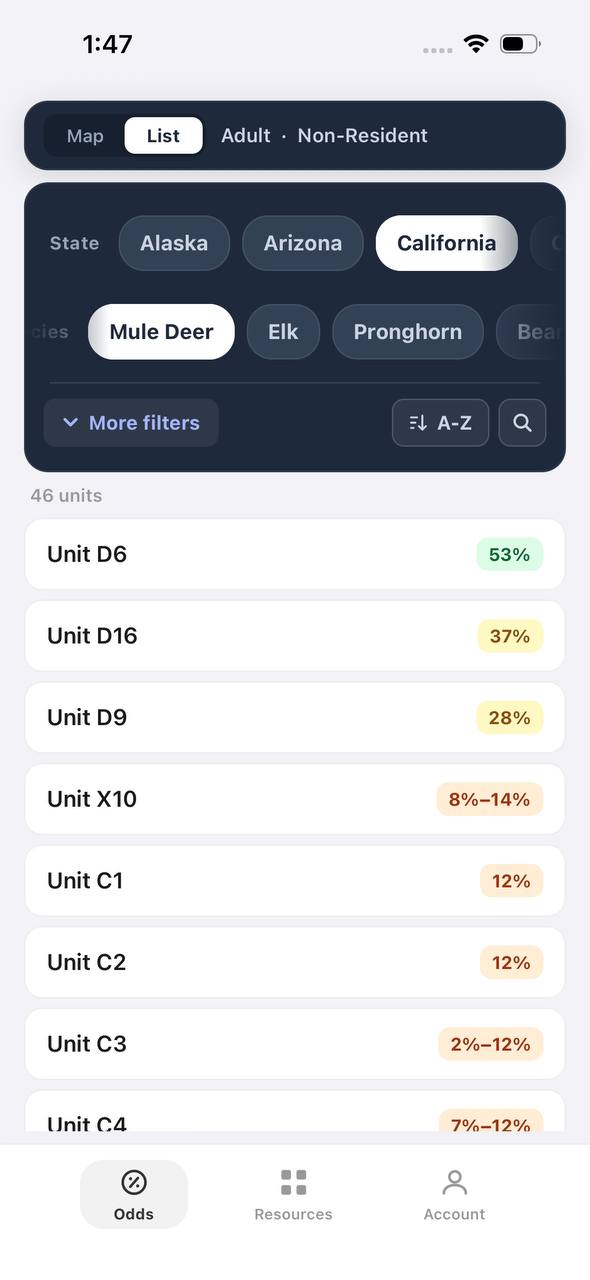
Every Western state except Washington and Colorado (for OTC tags) caps nonresident licenses at percentages ranging from 10% to 35% of available permits. These caps apply differently depending on the state and license type. Montana's 17,000-combo-license hard cap creates years-long waits regardless of unit choice, while Wyoming's 25% random allocation provides opportunities even for zero-point applicants in some units.
Understanding how nonresident caps interact with point systems determines realistic expectations for drawing tags. Arizona's 10% nonresident cap combined with bonus points means premium elk units require both high point totals and luck, while Colorado's 35% limited-entry cap and preference-point guarantee eventually awards tags to persistent applicants.
States with no point systems, such as New Mexico and Idaho, offer the most egalitarian odds for nonresidents willing to accept random outcomes. First-time applicants drawing premium tags remain possible, though unlikely in high-demand units. Nonresident hunters frustrated by point creep in preference-point states often shift focus toward random-draw states for annual hunting access.
Managing Nonresident Application Costs
Applying for big-game tags in multiple Western states costs thousands of dollars annually even before drawing a single tag. Nonresident hunting licenses, application fees, and point fees compound quickly when targeting elk, deer, pronghorn, and other species across five or six states. Wyoming and Montana require full payment upfront, locking your money into the system until refunds arrive months later if you don't draw.
Colorado and Arizona charge upfront but refund unsuccessful applicants within weeks. New Mexico and Idaho charge only application fees upfront, billing tag costs after the draw. Understanding payment structures and refund timelines helps manage cash flow during application season.
Budgeting point purchases separately from tag applications allows long-term planning without annual financial strain. Buying a preference point in Wyoming or Colorado for $10 to $15 preserves your place in line without committing to the full tag cost that year. This strategy works best for units requiring more points than you currently hold, letting you build points while applying elsewhere for realistic draws.
Combining Nonresident and Resident Opportunities
Some nonresident hunters relocate seasonally or establish residency in Western states to access resident license benefits. Residency requirements vary by state, typically requiring six months to one year of continuous residency and surrendering out-of-state licenses and vehicle registrations. Montana, Wyoming, and Colorado enforce residency rules strictly, auditing applications and revoking tags from hunters who falsely claim residency.
Legitimate seasonal residents working in Western states can qualify for resident licenses by meeting state-specific residency definitions. Verifying residency requirements with the state wildlife agency before applying prevents license revocation and potential criminal charges for fraudulent applications.
Nonresidents married to residents or hunting with resident family members may qualify for reduced fees or access to resident-only hunts in some states. Alaska's second-degree-kindred provision allows nonresidents to hunt without a guide when accompanied by qualifying relatives. Checking family-member provisions saves money and expands hunting access.
FAQ — Nonresident Hunting Licenses
Can I apply for big-game tags in multiple Western states the same year? Yes. No state restricts nonresident hunters from applying elsewhere, and diversifying applications across multiple states maximizes your odds of drawing at least one tag annually.
Do I lose my preference points if I draw a tag? It depends on the state. Colorado, Montana, Oregon, and Wyoming reset your points to zero after drawing most limited-entry tags. Utah and Arizona use bonus points that never expire, so you keep your points even after drawing.
Which Western state is easiest for nonresident elk hunters to draw tags? Colorado offers the easiest access through over-the-counter archery tags and limited second and third rifle season leftovers. Idaho's general-season controlled hunts and New Mexico's random draw provide realistic opportunities for first-time applicants in many units.
Are nonresident hunting licenses refundable if I don't draw a tag? Base hunting licenses are nonrefundable in all states. Tag fees are refunded in most states if you don't draw, minus application or processing charges. Wyoming and Montana hold your full payment until after the draw, then refund unsuccessful applicants.
How much should I budget for nonresident big-game applications across multiple states? Budget $3,000 to $5,000 to apply seriously in five to six Western states for elk and deer, including base licenses, application fees, point purchases, and upfront tag costs where required. Add $1,500 to $2,500 for annual point-only purchases in states where you're building points but not applying for tags.
Can I buy preference points without applying for a tag? Yes in most states. Colorado, Wyoming, Utah, Montana, and Oregon allow point-only purchases. Arizona and Nevada require you to apply for a tag or purchase points separately within the same application year. Idaho and New Mexico do not use points.
Was this article helpful?
Previous
Best Western States for Trophy Pronghorn Hunting Applications
Wyoming, Arizona, and New Mexico offer the best trophy pronghorn opportunities, with Montana and Nevada providing strong value for hunters willing to research units strategically.

Related
Youth Hunting Applications: Best States for Building Preference Points
Smart parents start their kids in preference point programs early. Colorado, Wyoming, Utah, Nevada, and Arizona offer youth applicants the best opportunities to bank points while young, setting them up for premium tags as adults.
Next
How to Manage Hunting Preference Points Across Multiple States
Western hunters juggling preference points in multiple states need a system to track deadlines, evaluate point values, and decide when to burn versus build. Here's how to manage a multi-state point portfolio without missing critical application windows.