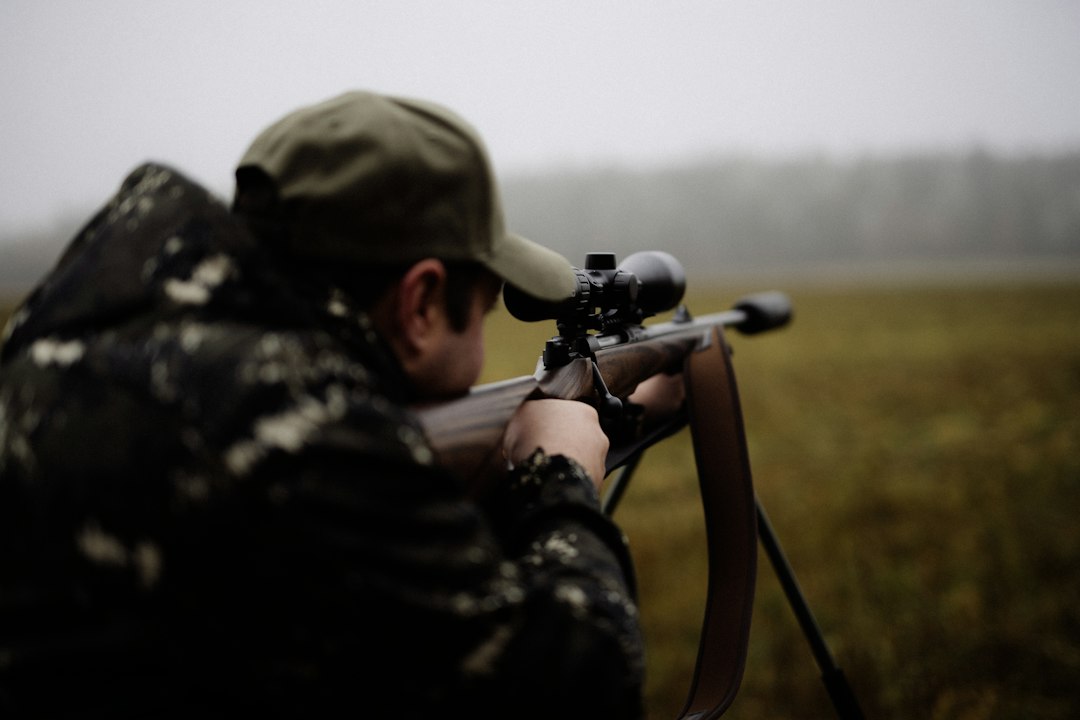
Best Western States for Trophy Pronghorn Hunting Applications

Wyoming dominates trophy pronghorn hunting with more Boone and Crockett entries than any other state, followed closely by Arizona and New Mexico for truly exceptional bucks. Montana and Nevada offer underrated opportunities for hunters willing to dig into unit-specific data, while Colorado provides accessible entry points for first-time applicants. Each state's draw system, point requirements, and unit quality create distinct paths to trophy-class animals in the 80-inch-plus range.
Wyoming: The Trophy Pronghorn Capital
Wyoming produces more record-book pronghorn than the rest of the West combined, with units in the Red Desert and Powder River Basin consistently yielding bucks over 82 inches. The state's Type 1 tags allow hunting anywhere within a region, while Type 2 tags target specific trophy units with extremely limited quotas. Nonresidents face meaningful point creep in top areas, with units like 100 (Red Desert) requiring 8-12 preference points depending on the season. Resident hunters draw far more easily, often securing quality tags with 2-4 points. The Wyoming Game and Fish Department publishes detailed draw odds each spring, allowing applicants to compare units and seasons strategically. Hunters should focus on early rifle seasons in September when bucks are still on summer range and more visible. Wyoming's vast public land access and abundant pronghorn populations make it the benchmark for Western pronghorn hunting.
Arizona: Desert Giants and Bonus Point Strategy
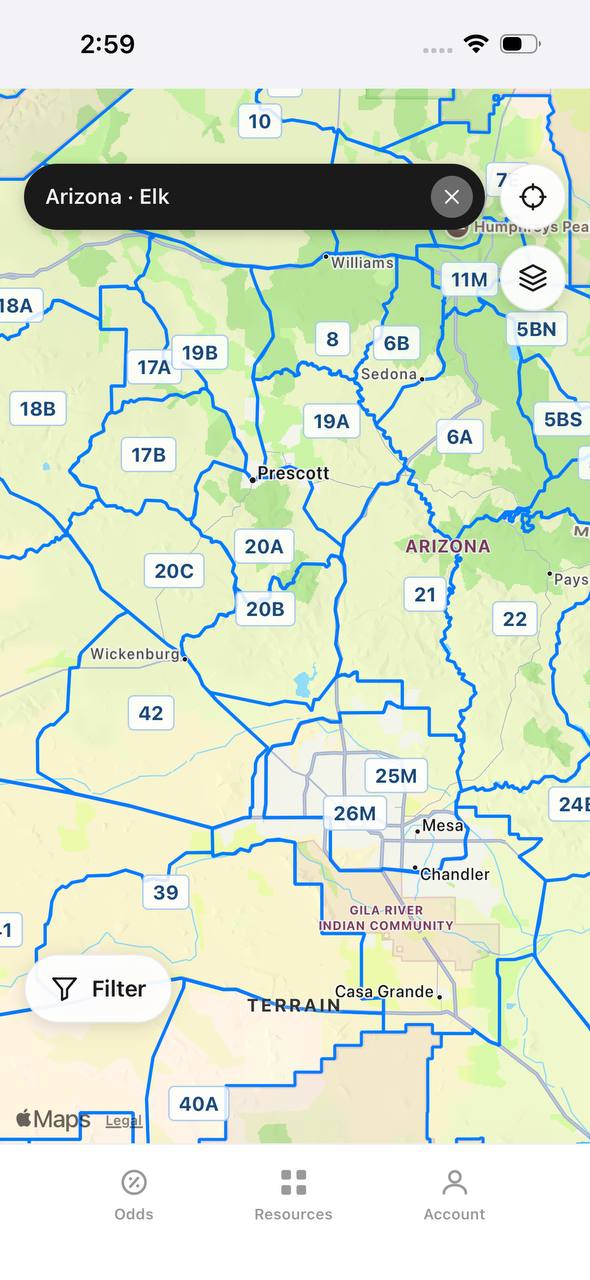
Arizona's desert pronghorn produce oversized horns with heavy mass and dramatic cutouts, regularly scoring in the mid-80s. Units 19A and 19B north of Flagstaff are legendary for trophy genetics, but nonresident odds hover below 1% even with maximum bonus points. Arizona uses a true bonus-point system rather than preference points, meaning every point increases draw probability but never guarantees a tag. The Arizona Game and Fish Department offers three annual hunt periods (September archery, October early rifle, November late rifle), with October hunts drawing the most competition. Serious applicants should accumulate 15-20 bonus points before applying for premium units, though point creep advances 1-2 points annually in the best areas. Mid-tier units like 10 and 18B offer reasonable draw odds at 5-10 points while still producing bucks over 78 inches. Arizona's small pronghorn range and limited tag quotas create intense competition, but the trophy potential justifies long-term point investment for patient hunters.
New Mexico: Draw-Every-Year Trophy Potential
New Mexico's pure lottery system gives every applicant an equal chance regardless of past applications, making it the only Western state where a first-time hunter can draw a world-class pronghorn tag. Units in the northeastern plains near Clayton and in the Bootheel produce bucks routinely scoring 80-82 inches, with the occasional giant topping 85. The state issues only 10-15% of tags to nonresidents, creating long odds in trophy units (typically 2-5% draw rates), but the lack of point systems means every year brings genuine opportunity. The New Mexico Department of Game and Fish conducts a single spring draw covering all species, with pronghorn applications due in mid-March. Rifle hunts occur in September and October, with September generally producing better trophy quality as bucks are still in bachelor groups. Hunters should apply for 2-3 unit choices ranked by preference, mixing one trophy unit with two backup units that offer better draw odds. New Mexico rewards persistence and luck equally, making it essential for any serious trophy pronghorn strategy.
Montana: Underrated Quality in Eastern Units
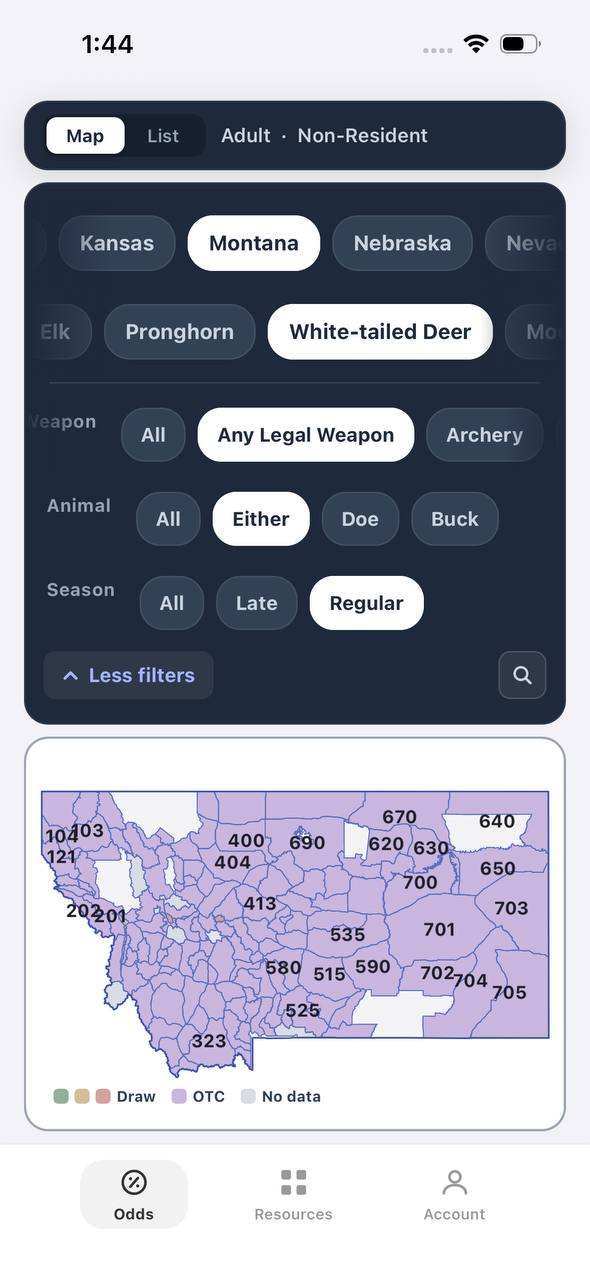
Montana flies under the radar for trophy pronghorn, but units in the southeast corner and central prairie regions produce bucks over 80 inches more frequently than draw statistics suggest. The state uses a bonus-point system for nonresident combination licenses (required before applying for pronghorn), then allocates pronghorn permits through a separate limited-entry draw. Eastern units like 620, 630, and 652 offer the best trophy potential, with some areas requiring 3-5 bonus points for nonresidents. The Montana Fish, Wildlife & Parks draw occurs in late spring, with results posted by June. Montana's generous public land access through Block Management Areas provides huntable ground in units that look intimidating on paper. Hunters should focus on units with low tag numbers (under 50 permits) and significant BLM holdings, then scout thoroughly before the September rifle opener. Montana pronghorn hunting offers strong value for hunters willing to invest time in research rather than waiting decades for points.
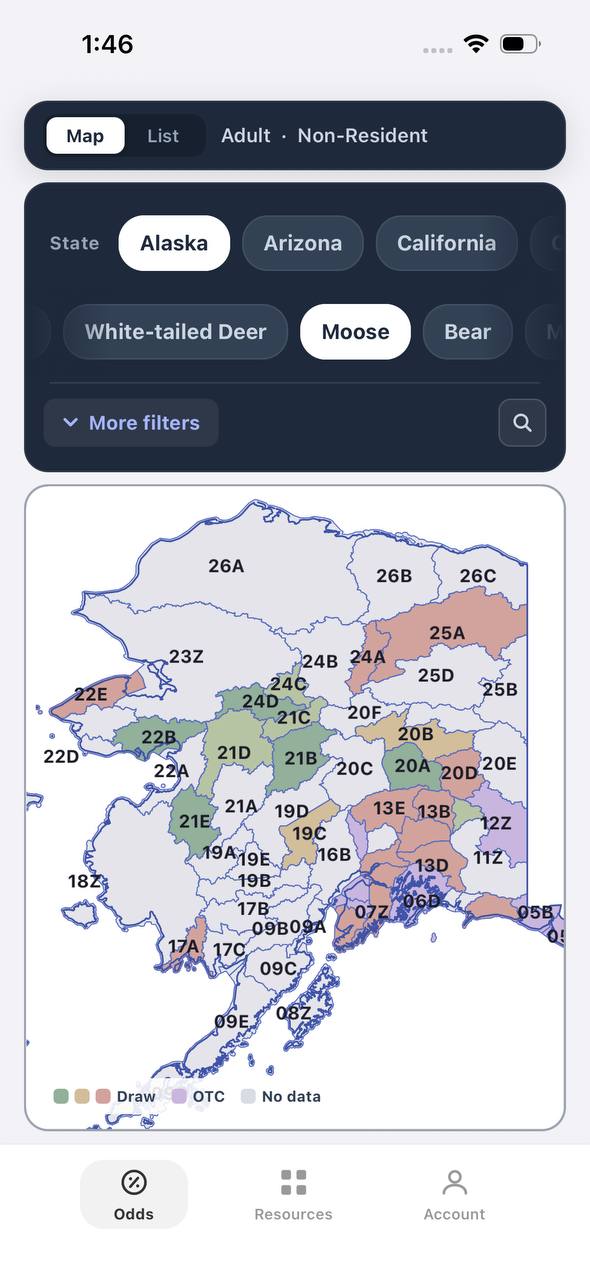
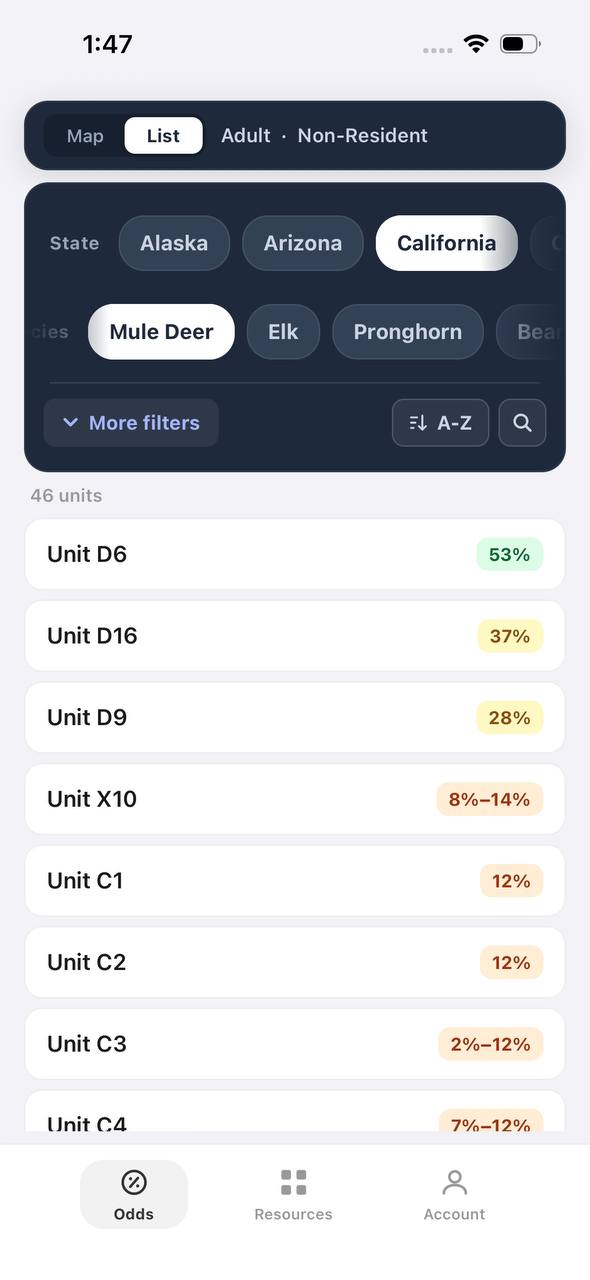
Free to join
Download mobile app
- Detailed draw odds
- Point tracking
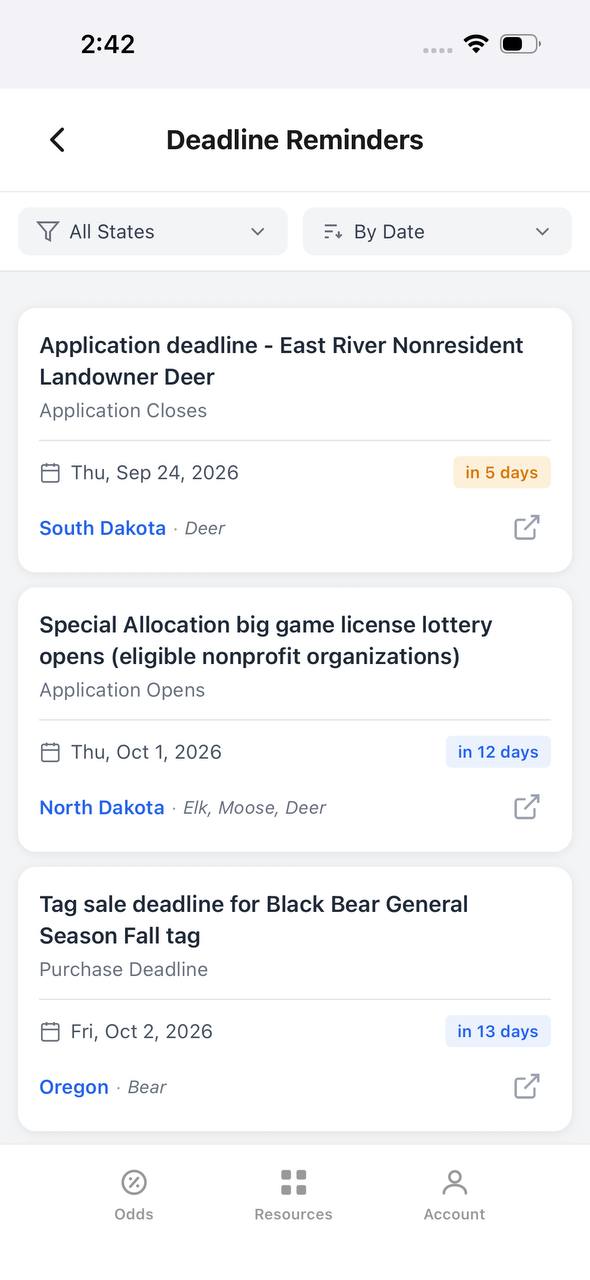
- Deadline reminders
- 19 states covered

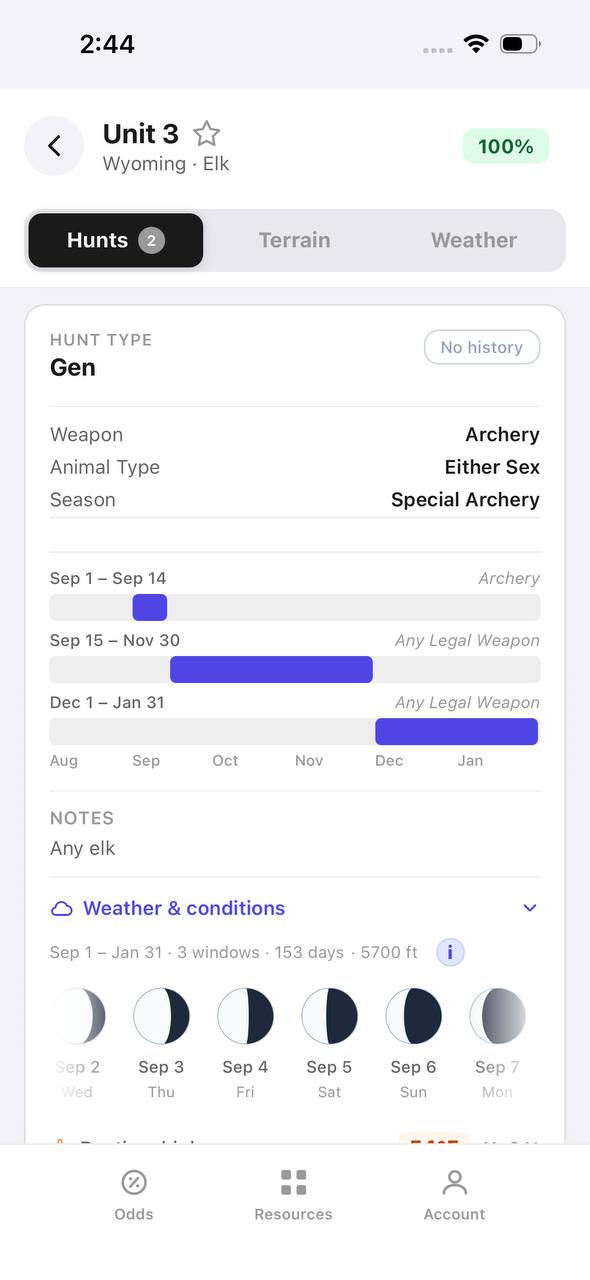
Free to join
Download mobile app
- Detailed draw odds
- Point tracking
- Deadline reminders
- 19 states covered
Free to join
Download mobile app
- Detailed draw odds
- Point tracking
- Deadline reminders
- 19 states covered
Nevada: Sleeper Units and Late-Season Opportunity
Nevada issues fewer pronghorn tags than any Western state, but several units in the northeast and northwest corners hold legitimate 80-inch bucks. The state uses a bonus-point system weighted heavily toward applicants with more points, though true trophy units like 033 and 035 still require 10-15 points for realistic draw odds. Nevada's October and November rifle hunts coincide with the rut, offering unique opportunities to spot bucks actively chasing does. The Nevada Department of Wildlife conducts its draw in May, with pronghorn applications typically due in early April. Resident hunters enjoy dramatically better odds, often drawing quality units with 2-4 points. Nevada's sparse pronghorn distribution means hunters must commit to serious scouting, but the lack of hunting pressure in drawn units creates exceptional hunting conditions. Combining a Nevada pronghorn application with other species (elk, deer, sheep) maximizes point-building efficiency in this underappreciated state.
Colorado: Accessible Entry Points for New Hunters
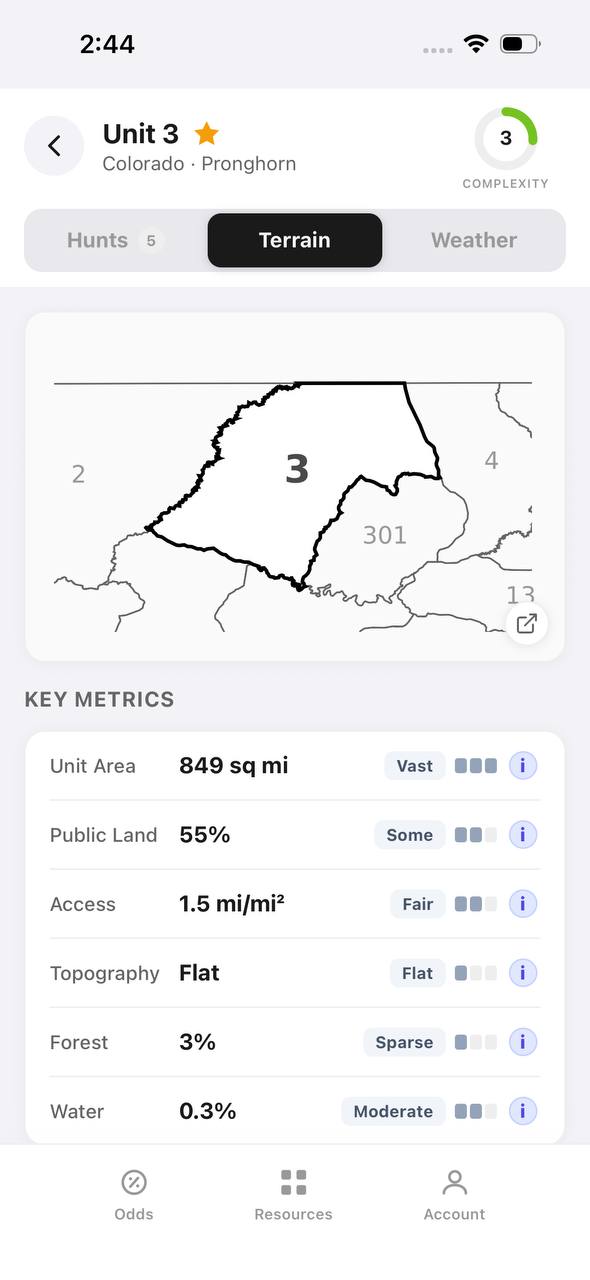
Colorado offers the most accessible trophy pronghorn hunting for hunters building points in other states, with several units producing 78-80 inch bucks at 0-3 preference points. Northeast plains units like 2, 7, and 10 provide quality hunting with minimal point investment, while trophy units like 4 and 134 require 8-12 points depending on season and weapon choice. The Colorado Parks and Wildlife preference-point system guarantees tags for applicants with enough points, eliminating draw uncertainty once you reach the threshold. Colorado's late August and early September seasons allow hunting during the peak of the rut, when bucks are most visible and responsive to decoying tactics. Nonresidents receive 20% of limited tags (35% for youth), creating reasonable draw odds in mid-tier units. Colorado serves as an excellent testing ground for hunters learning pronghorn tactics while accumulating points in other states, and several units offer legitimate trophy potential without decade-long waits.
Application Strategy Across Multiple States
Successful trophy pronghorn hunters apply in 4-6 states annually, balancing long-term point investments with realistic near-term draw opportunities. Wyoming and Arizona demand sustained point accumulation over 10-15 years for top units, while New Mexico offers annual lottery chances regardless of history. Montana and Nevada provide mid-tier timelines in the 5-8 year range, and Colorado allows hunters to punch tags while building points elsewhere. The TAGZ draw odds tool helps compare point requirements and draw statistics across states, identifying units where trophy quality and draw probability align. Serious applicants should front-load point purchases in bonus-point states (Arizona, Montana, Nevada) since each additional point provides compounding value. Preference-point states (Wyoming, Colorado) allow more precise timeline planning since point thresholds are predictable. Applying for youth tags where eligible can reduce point requirements by 50% or more in several states. Coordinating applications across multiple states requires tracking deadlines from February through April, but the investment pays dividends over a 20-year hunting career.
Unit Research and Public Land Access
Trophy pronghorn units share common characteristics: low hunter density, abundant forage, limited water sources that concentrate animals, and minimal predation pressure. The best units typically hold 20-30 bucks per 100 does, with mature animals aged 5-7 years comprising 10-15% of the buck population. Hunters should study unit-specific draw odds, harvest statistics, and Boone and Crockett entries before committing points. OnX Hunt and similar mapping tools identify public land parcels, landlocked BLM sections, and walk-in areas that provide huntable ground. Many trophy pronghorn units are dominated by private ranches, requiring outfitter relationships or access fees to hunt effectively. The TAGZ hunt planning tools help hunters identify units where public land provides genuine opportunity rather than theoretical access. Summer scouting trips in June and July allow glassing bachelor groups and identifying target bucks before applications are due the following spring. Hunters should prioritize units where they can realistically access 10,000+ acres of public or permitted ground, as trophy bucks range across vast territories and rarely concentrate in small parcels.
Weather, Timing, and Trophy Buck Behavior
Trophy pronghorn hunts succeed or fail based on seasonal timing and weather patterns. Early September hunts in Wyoming and Montana catch bucks on predictable summer range before the rut triggers movement. Arizona's October seasons coincide with the rut but face extreme heat that limits daytime activity. New Mexico's mid-September rifle hunts offer ideal conditions as bucks begin responding to does but haven't yet scattered across winter range. Nevada's late hunts present cold weather and unpredictable snow that can concentrate or disperse herds dramatically. Successful hunters monitor 10-day weather forecasts before tags are issued, then adjust tactics based on wind, temperature, and precipitation. Trophy bucks use terrain differently than younger animals, bedding in low spots with 360-degree visibility rather than on skyline ridges. The TAGZ scouting guide for pronghorn explains how to identify subtle terrain features that hold mature bucks. Morning and evening glassing sessions from elevated vantage points remain the most effective tactic, with midday spot-and-stalk approaches working during cool, overcast conditions. Decoying works exceptionally well on rutting bucks, particularly in New Mexico and Wyoming where animals are habituated to other pronghorn.
Long-Term Point Strategy and Application Discipline
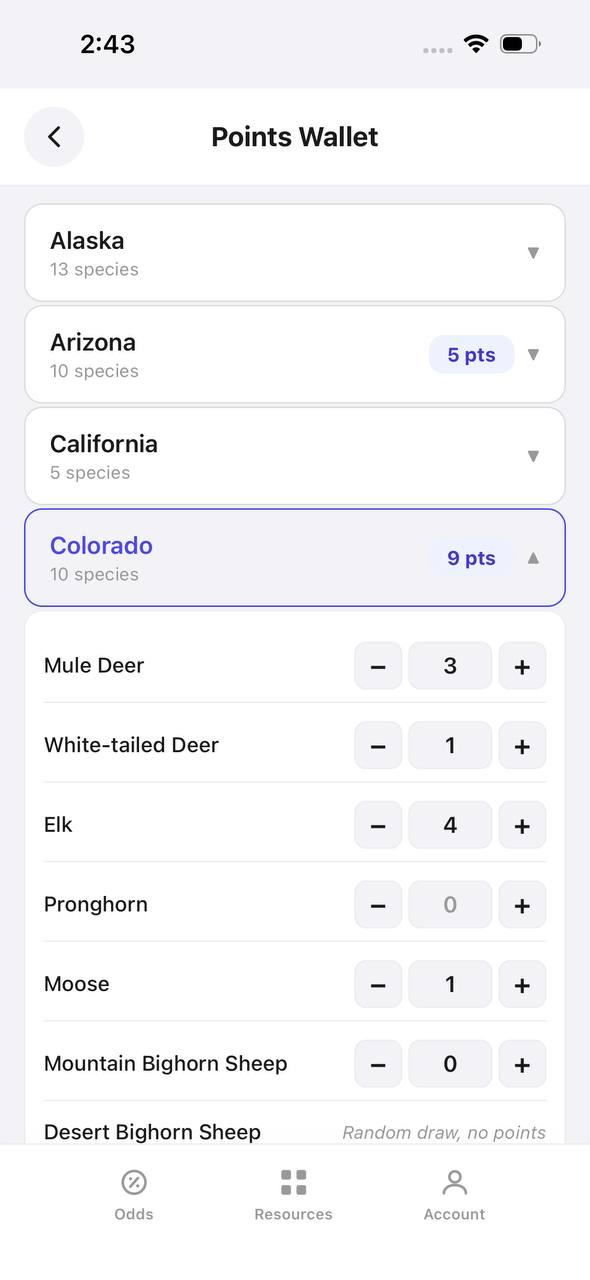
Building points for trophy pronghorn units requires consistent applications over 10-20 years without burning points on lesser tags. Many hunters fall into the trap of applying for mid-tier units at 60% draw odds, then failing to draw and losing point-building momentum. The disciplined approach involves applying for trophy units at 0-5% odds annually while accumulating points, then switching to realistic units only when point totals reach competitive thresholds. Wyoming and Colorado preference-point systems make this strategy straightforward, while Arizona and Montana bonus-point systems require statistical modeling to identify optimal application years. The TAGZ point-tracking dashboard helps hunters project future draw odds based on current point totals and historical creep rates. Hunters should establish point-building timelines for each state, identifying target units and estimated draw years, then revisiting projections annually as point creep advances. Some hunters use the "every other year" strategy in bonus-point states, applying for trophy units in odd years and skipping even years to bank points, though this approach only works in states where points can be purchased without applying. The key discipline is resisting the temptation to burn 8-10 points on marginal units when waiting 2-3 more years unlocks genuinely elite opportunities.
FAQ — Trophy Pronghorn Applications
Which state produces the most Boone and Crockett pronghorn? Wyoming produces more than 60% of all Boone and Crockett pronghorn entries, with units in the Red Desert and Powder River Basin leading the record book. Arizona and New Mexico follow for exceptional trophy quality in limited units.
Can a first-time applicant draw a trophy pronghorn tag? Yes in New Mexico, which uses a pure lottery system giving everyone equal odds. First-time applicants have drawn tags in units 2-2, 5-1, and 17 that produce 80-inch bucks, though odds remain below 5% in top units.
How many preference points does it take to draw Wyoming's best pronghorn units? Wyoming's top units like 100 (Red Desert) require 8-12 preference points for nonresident rifle tags, while unit 65 and 87 require 6-9 points. Resident hunters draw the same units with 2-5 points depending on season choice.
Are bonus points or preference points better for pronghorn hunting? Preference points (Wyoming, Colorado) provide certainty once you reach the point threshold, while bonus points (Arizona, Montana, Nevada) offer annual draw chances at any point level. Preference points work better for planned hunts; bonus points reward persistence and luck.
What units offer trophy pronghorn at low point levels? Colorado units 2, 7, and 10 produce 78-80 inch bucks at 0-3 points. Montana unit 652 and Nevada unit 142 offer similar quality at 2-4 points. These units lack the extreme trophy potential of premium areas but provide legitimate quality.
Should I hire an outfitter for trophy pronghorn hunting? Outfitters significantly increase success rates in privateland-dominated units like Wyoming 100, Arizona 19A, and New Mexico 2-2. Public-land hunters can succeed in Montana, Nevada, and Colorado units with thorough scouting, but private land access opens additional trophy opportunities in every state.
Was this article helpful?
Previous
How to Manage Hunting Preference Points Across Multiple States
Western hunters juggling preference points in multiple states need a system to track deadlines, evaluate point values, and decide when to burn versus build. Here's how to manage a multi-state point portfolio without missing critical application windows.
Related
Nonresident Hunting License Requirements in Every Western State (2025 Guide)
A complete breakdown of nonresident hunting license requirements across all eleven Western states, including application deadlines, point systems, and costs for elk, deer, and other big game species.

Next
5 Draw Application Mistakes That Cost Hunters Tags Every Year
Thousands of hunters lose tags to preventable application errors — from missed deadlines to incorrect preference point strategies. Here's how to avoid the most common and costly mistakes.