Mountain Weather for Western Hunters: Reading Conditions, Staying Safe, and Timing Your Hunt
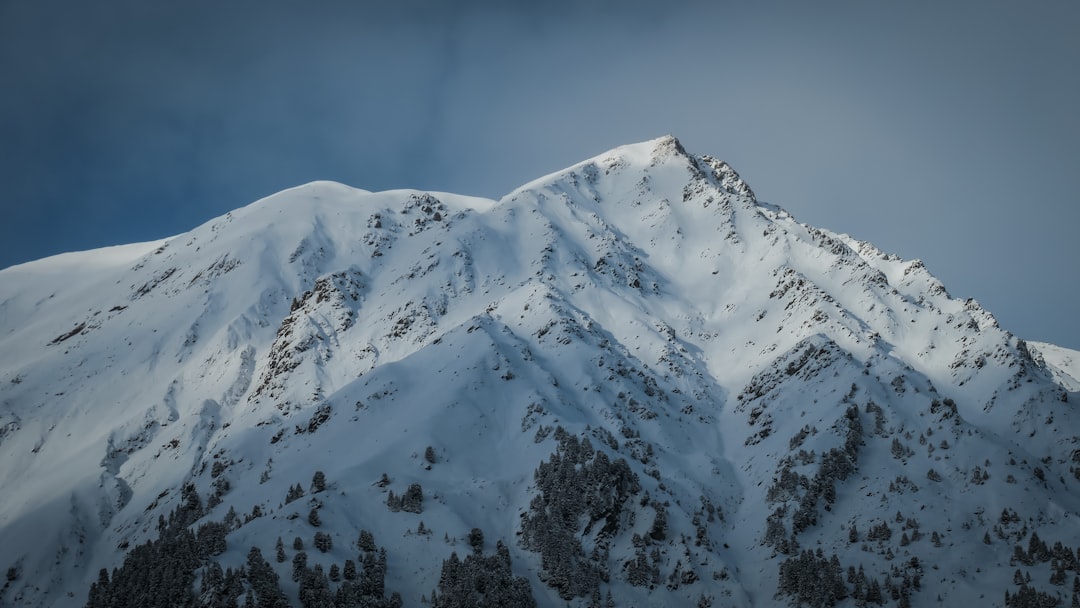
Mountain weather dictates elk movement, glassing windows, and whether you walk out safely or fight hypothermia at timberline. Western ranges see temperature swings of 50 degrees in a single day, afternoon thunderstorms that roll in without warning, and snow squalls in September that bury trails under six inches before dinner. You cannot control alpine weather, but you can read it, prepare for it, and time your hunt around it. Understanding how fronts push game, how terrain funnels wind, and how to layer for rapid shifts turns weather from a hazard into a tactical advantage.
How Mountain Weather Differs from Valley Conditions
Mountain weather operates on different rules than the flatlands or foothills you drive through to reach the trailhead. Elevation compresses atmospheric pressure, cooling air roughly 3.5 degrees for every 1,000 feet you climb. A 70-degree morning at the truck becomes 50 degrees at 10,000 feet — before wind or precipitation. Terrain creates microclimates: shaded north slopes hold morning frost while south-facing ridges bake by noon. Ridgelines funnel wind into sustained 30-mph gusts that drop windchill below freezing even when the thermometer reads 40. Valleys trap cold air overnight, pushing elk and deer upslope at dawn, then reverse the flow as thermals rise midday. Weather apps show conditions at the nearest airport, often 5,000 feet lower and twenty miles away. Forecasts give you the trend — cold front, high pressure, scattered storms — but boots-on-the-ground observation tells you what is happening right now on your ridge.
Air at altitude holds less moisture, so humidity swings wildly. Morning dew soaks your pack, then by 10 a.m. your lips crack and your mouth feels like sandpaper. Thunderstorms build faster because peaks force moisture upward, condensing clouds in minutes. You glass a clear sky at lunch, then hear thunder by 2 p.m. Lightning becomes the immediate danger — ridgelines and isolated trees turn deadly, and getting below treeline is not optional. Snow arrives earlier and lingers longer than lowland forecasts suggest. A forecast calling for rain at 8,000 feet often means snow above 9,500, and October powder that seems light can dump eight inches overnight, stranding you or forcing a whiteout descent.
Reading Weather Signs in the Field
You do not need a meteorology degree to read mountain weather — you need to watch the sky, feel the wind, and trust patterns that repeat across every range from the Rockies to the Cascades. Clouds tell the story hours before rain or snow hits. High, wispy cirrus clouds signal a warm front 12 to 24 hours out, often bringing steady precipitation. When those clouds thicken into a gray overcast and the wind shifts, the front is close. Puffy cumulus clouds that build vertically by midday warn of afternoon thunderstorms — if the tops flatten into anvil shapes, lightning is minutes away. Dark, low-hanging clouds moving fast mean the front is here, and you should already be retreating to cover or lower elevation.
Wind direction and speed reveal pressure changes and animal movement. A steady wind from the west or southwest often precedes a storm as low pressure moves in. When the wind dies completely after blowing all morning, the calm signals the front's arrival — expect precipitation within an hour. A sharp wind shift, especially from south to north or northwest, marks a cold front passing through, dropping temperatures fast and often pushing elk downhill toward thermal cover. Animals bed into the wind to scent danger, so a stable wind direction improves your odds of closing distance. Swirling, gusty wind in steep terrain makes stalking impossible and tells you thermals are chaotic — better to glass from a distance than push in close.
Temperature and barometric pressure shifts move game. Elk and deer feed heavily before a storm, sensing the pressure drop hours in advance. If you watch a herd that bedded mid-morning suddenly stand and start feeding at 2 p.m. under gray skies, they are loading calories before weather shuts them down. After a cold front passes and pressure rebounds, game often moves again, especially if the storm cleared overnight and left crisp, calm morning air. Rapid temperature drops — like a 30-degree plunge in two hours — push animals into sheltered timber or south-facing bowls where sunlight and wind protection offer warmth. Morning frost that melts fast signals a warm, dry day ahead. Frost that lingers past 9 a.m. under heavy overcast warns that temperatures will stay cold, and you will need every layer you packed.
Timing Your Hunt Around Weather Fronts
Cold fronts create the best elk and deer hunting windows in the West. Animals sense barometric pressure dropping 12 to 24 hours before a storm and respond by feeding aggressively. Plan to hunt hard the day before and morning of a front's arrival — elk bugle more, deer move earlier, and game that held tight to thick timber suddenly appears in meadows and parks. The front itself often shuts down movement as wind, rain, or snow pushes animals into heavy cover to wait it out. Once the front passes and skies clear, pressure rebounds and game resumes normal patterns, often moving into open terrain to feed and dry off. The 24 hours after a storm clears can rival the pre-storm window, especially if temperatures dropped and animals need calories.
High-pressure systems bring bluebird skies, light wind, and stable weather — conditions that look perfect but can slow hunting. Elk and deer feel no urgency, bedding early and moving little during midday heat. Focus your effort on first light and last light, and hunt transition zones where animals move between bedding and feeding areas. High pressure also amplifies scent and sound, making stalking harder. Glass more, push less, and use the clear conditions to locate animals you will hunt when weather changes.
Thunderstorms require immediate tactical decisions. If you are above treeline when towering cumulus clouds build anvil tops, descend fast — lightning kills hunters every season in the Rockies. Avoid ridgelines, isolated trees, and open meadows. Drop into timber or a low saddle, ditch metal-frame packs and trekking poles, and wait it out. Storms typically roll through in 20 to 45 minutes, often leaving calm, cool air and active game. Afternoon thunderstorms form on a predictable schedule in many ranges during August and September, usually between 1 p.m. and 4 p.m. Plan your day around this: hunt hard until noon, find a safe glassing position by 1 p.m., wait out the storm, then hunt the evening as animals emerge.
Layering and Gear for Rapid Mountain Weather Shifts
Mountain weather swings from hot sun to freezing rain in the same afternoon, and your layering system must handle both extremes without forcing you back to the truck. The foundation is a moisture-wicking base layer — merino wool or synthetic — that pulls sweat off your skin during the climb and insulates when you glass in the wind. Never wear cotton. A midweight fleece or puffy insulated jacket goes on the moment you stop moving. Body heat drops fast at altitude, and the 20 minutes you spend glassing a basin can chill you into poor decisions or hypothermia if you are not layered up.
A waterproof, windproof shell is non-negotiable. Rain jackets keep you dry during storms, but a true hardshell also blocks wind that accelerates heat loss. Pair it with rain pants — wet legs and core hypothermia go hand in hand. Pack both even if the forecast shows zero precipitation. Weather changes faster than forecasts update, and a shell weighs one pound. Add a lightweight beanie and gloves. Cold fingers cannot pull a trigger or focus binoculars, and frostbite starts faster than most hunters expect once windchill and elevation combine.
Boots and socks determine whether you walk out or crawl. Waterproof boots keep feet dry during stream crossings, morning dew, and rain, but they also trap moisture if you sweat hard. Bring extra merino or synthetic socks and change them at lunch — dry socks prevent blisters and cold feet. Gaiters keep snow, scree, and mud out of your boots, a small addition that becomes critical when you are post-holing through October snow. A pack cover or waterproof stuff sacks protect gear, food, and electronics from rain. Wet down insulation is useless, and a soaked sleeping bag turns a cold night dangerous.
Free to join
Download mobile app
- Detailed draw odds
- Point tracking
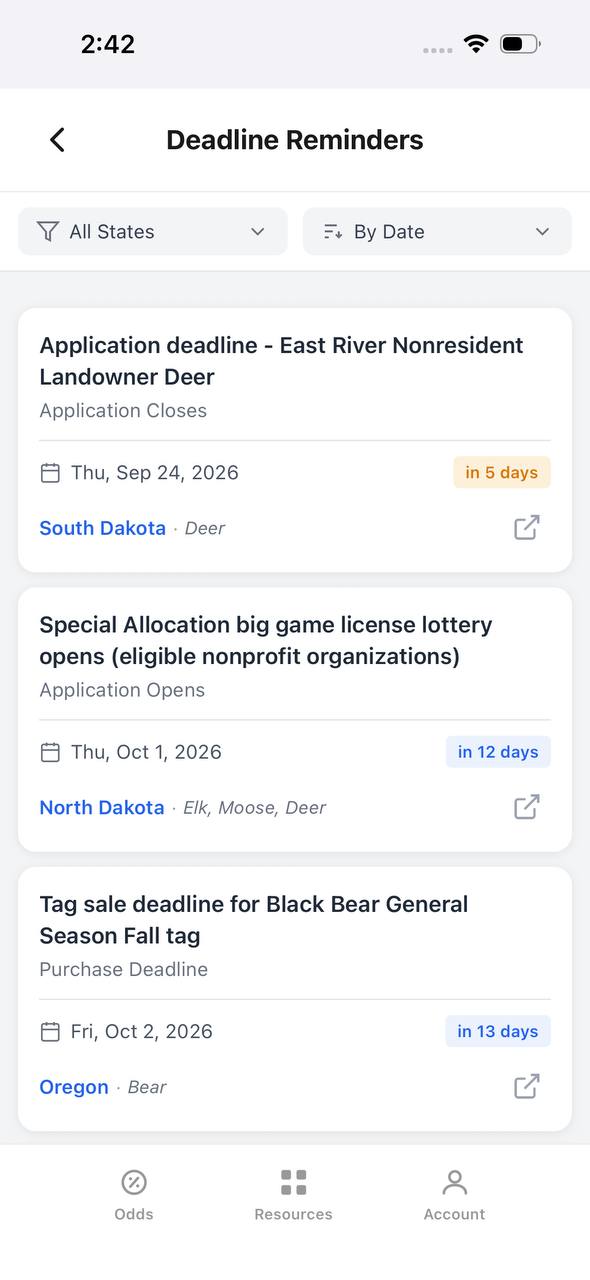
- Deadline reminders
- 18 states covered

Free to join
Download mobile app
- Detailed draw odds
- Point tracking
- Deadline reminders
- 18 states covered
Free to join
Download mobile app
- Detailed draw odds
- Point tracking
- Deadline reminders
- 18 states covered
Using TAGZ to Plan Hunts Around Mountain Weather Patterns
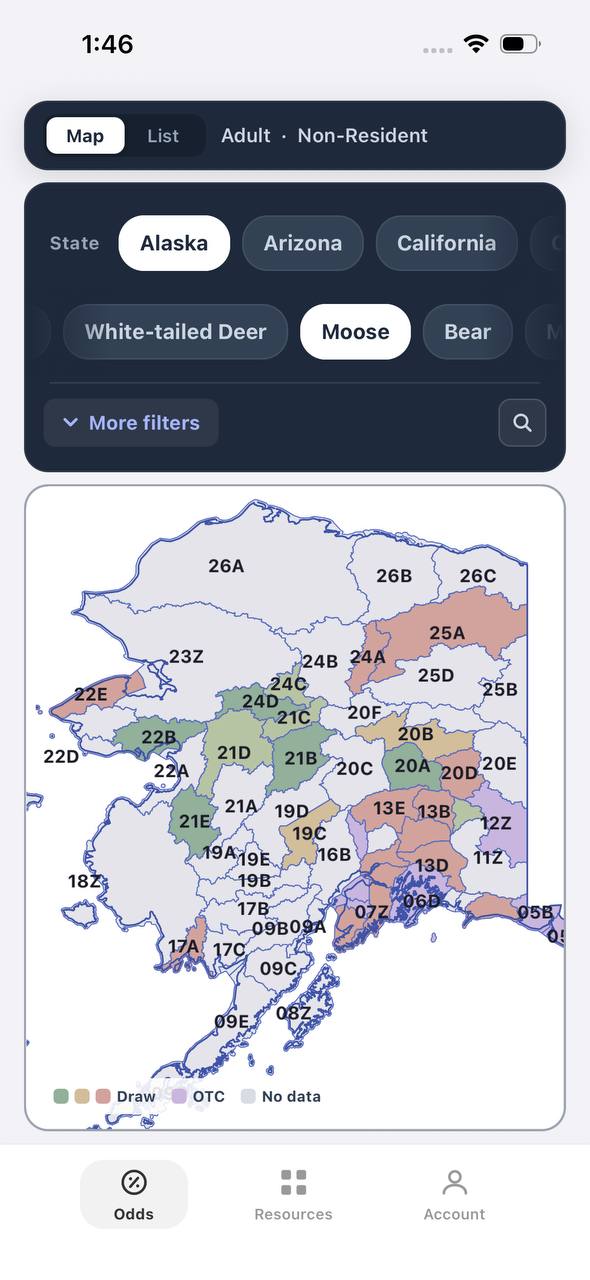
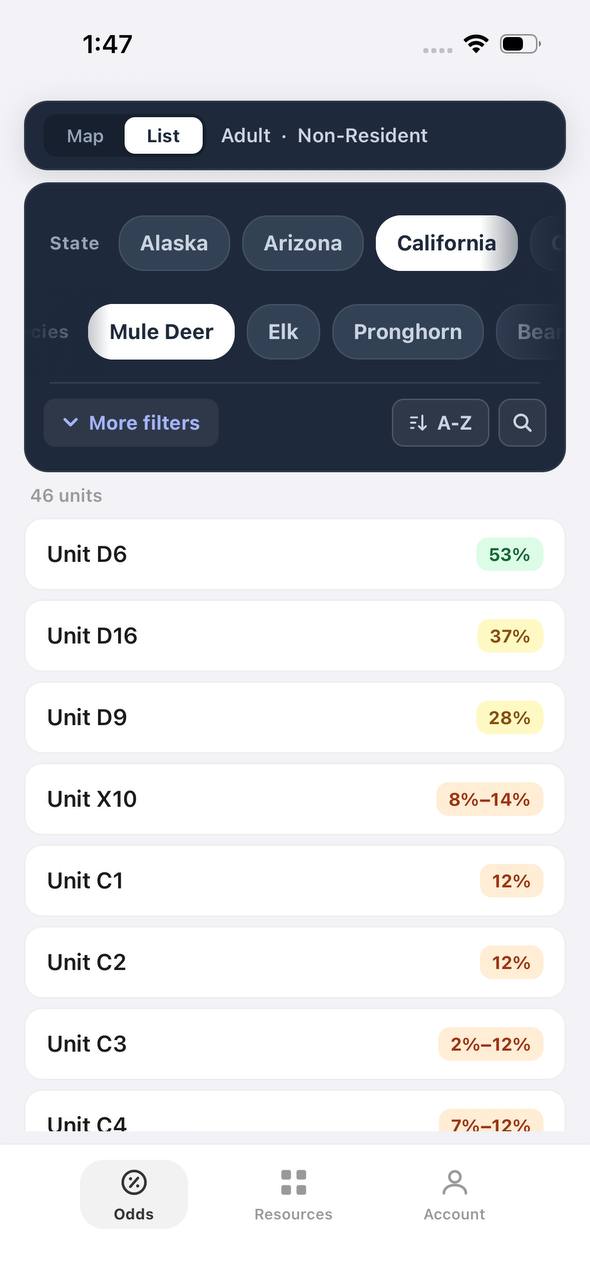
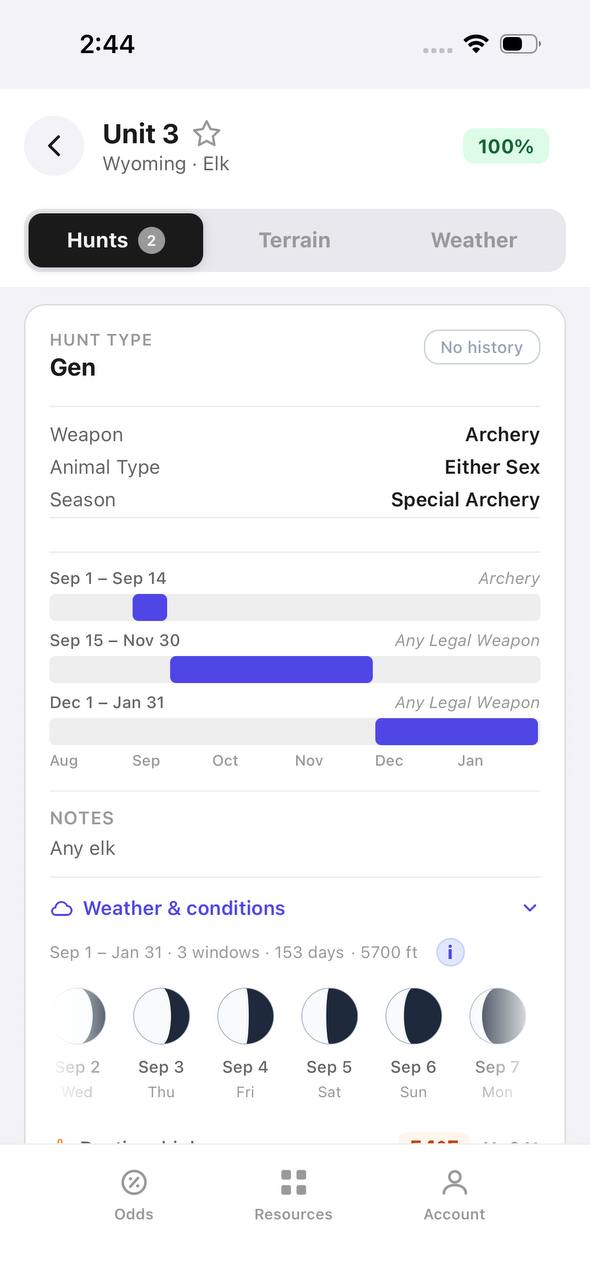
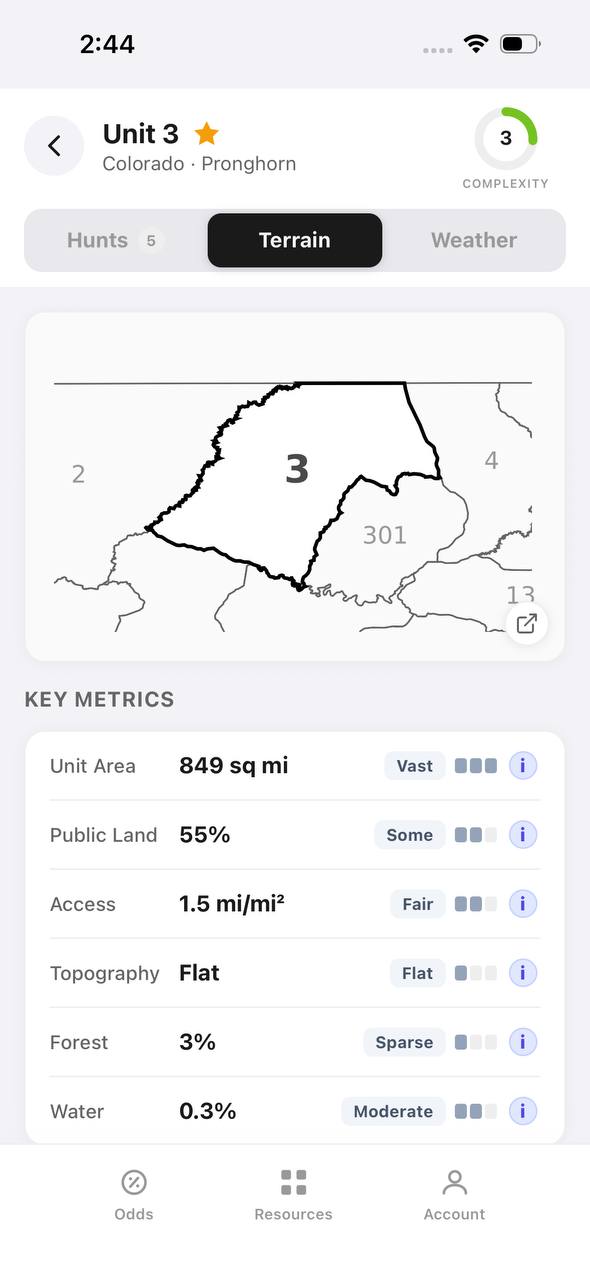
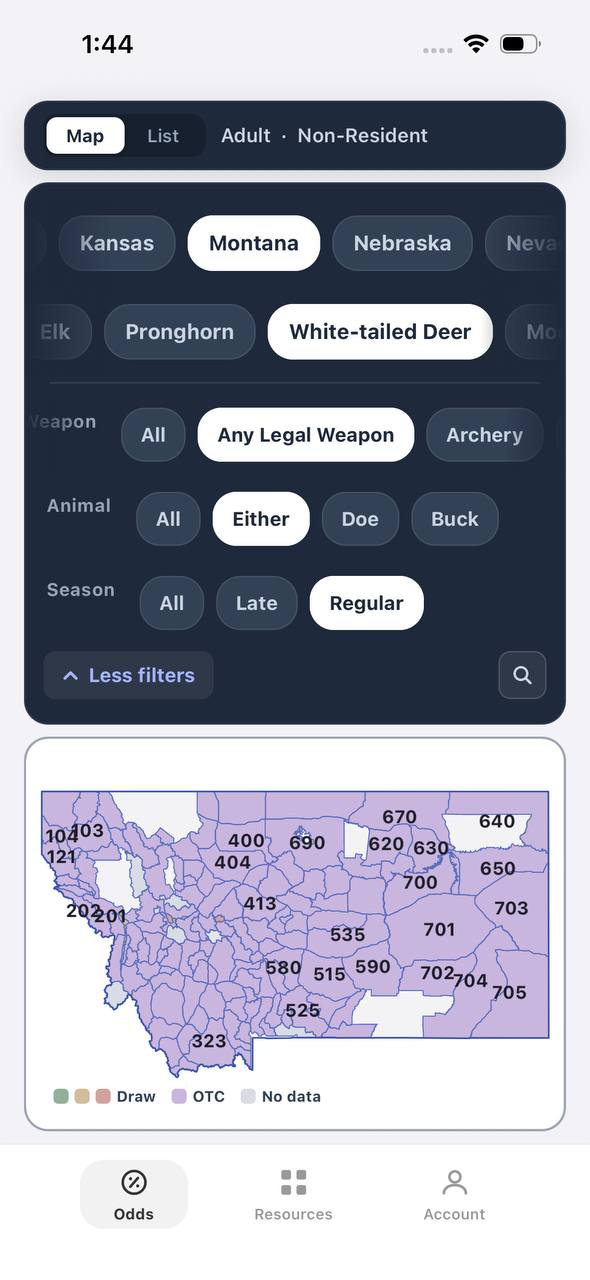
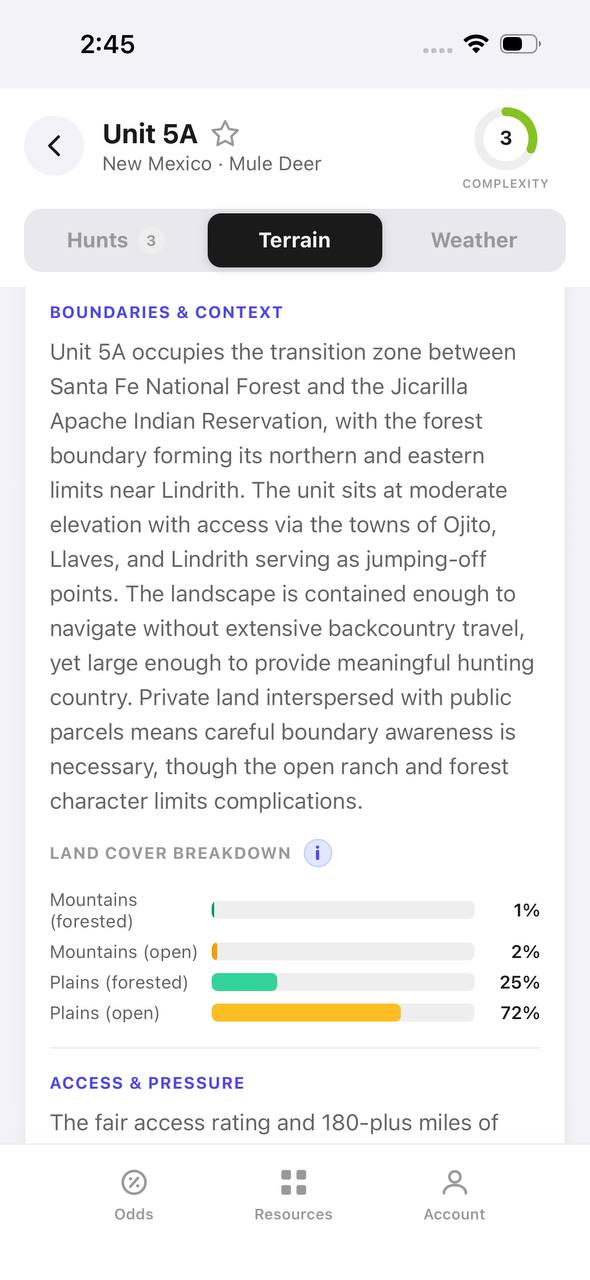
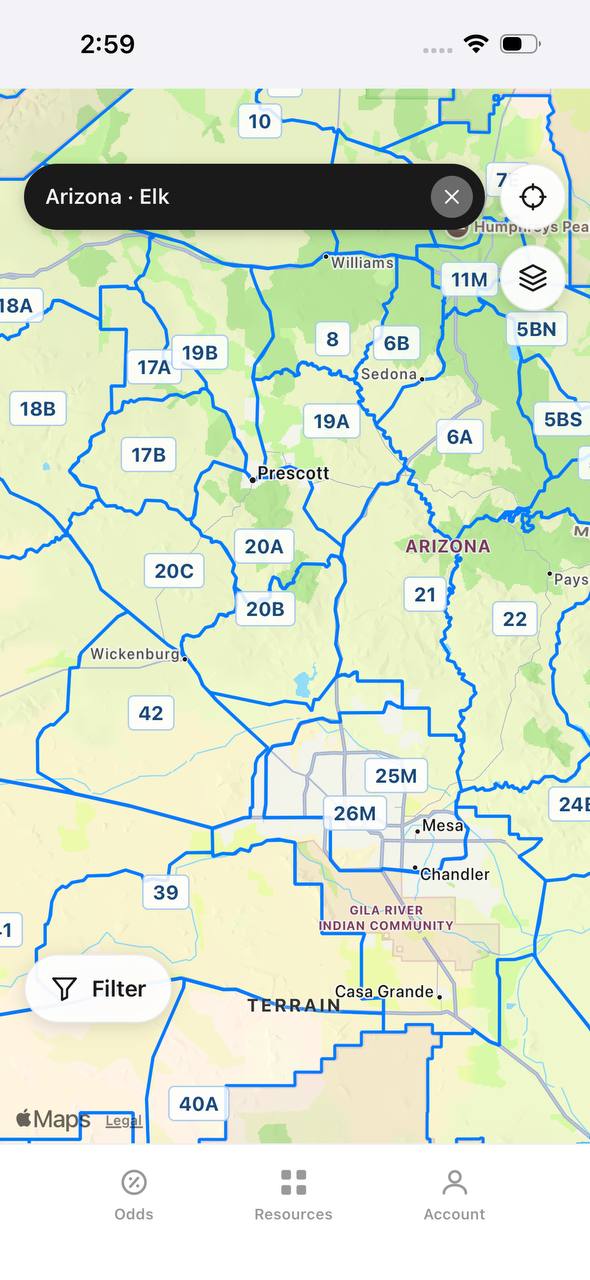
TAGZ gives you the terrain and unit data to understand how weather will affect your hunt before you leave home. Compare unit maps to identify elevation ranges, ridgeline exposure, and timbered escape terrain where elk and deer retreat during storms. Units with large roadless areas and high-elevation basins see more dramatic weather swings than lower, accessible units. Terrain breakdowns show you where south-facing slopes offer warmth after cold fronts and where north-facing timber holds game during midday heat. Historical draw data helps you target hunts during optimal weather windows — late September elk tags in Colorado often coincide with the tail end of monsoon season and the arrival of early cold fronts that fire up the rut.
Public land information layers show trailheads, forest roads, and access points so you can plan escape routes when weather turns. Knowing where the nearest road or lower-elevation trail sits can save your life if a storm dumps snow and temperatures plunge. Multi-state application strategy tools let you chase units in different regions with different weather patterns — if drought hits the Southwest, pivot applications toward the Northwest where snowpack and moisture create better conditions. Track preference points and draw deadlines so you never miss a chance to hunt units known for stable weather during your target season.
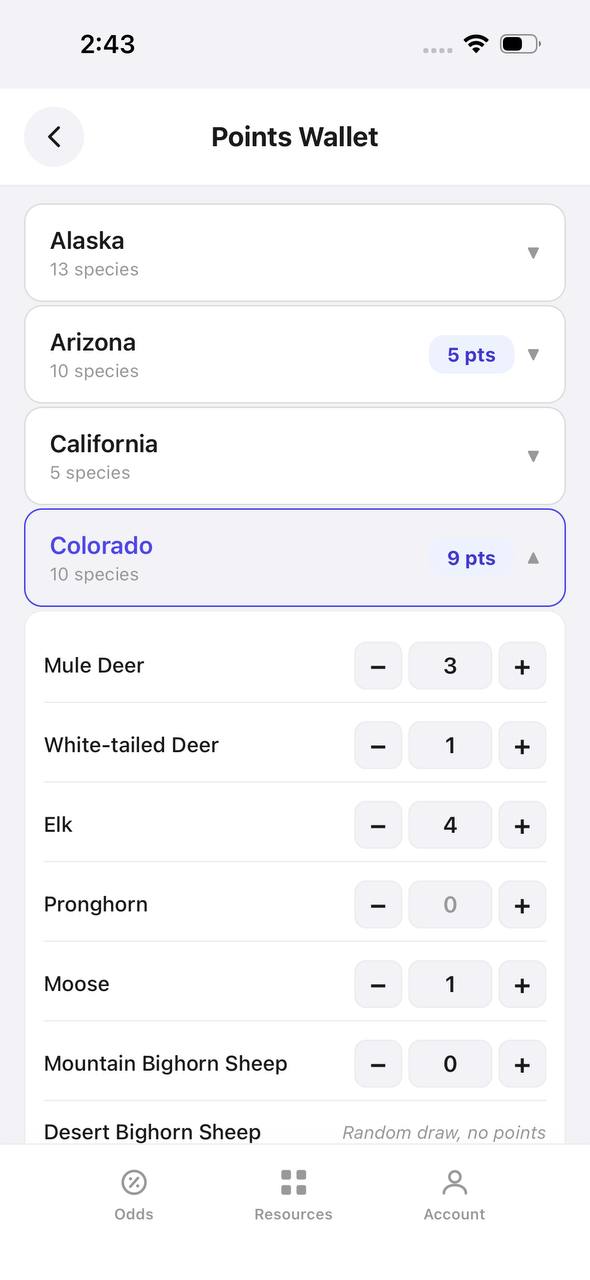
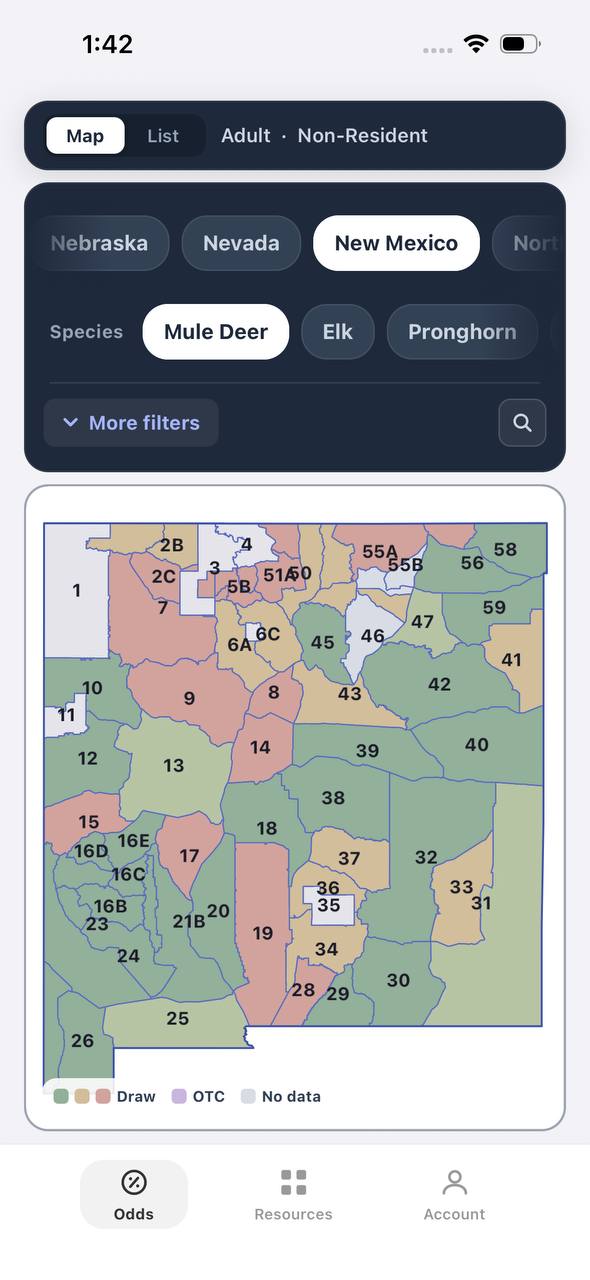
TAGZ helps you compare units side by side using terrain maps, unit boundaries, and historical draw data. Track your preference points and bonus points across multiple states so you never miss a draw deadline. Whether you are chasing OTC tags or planning a trophy limited-entry hunt, TAGZ gives you the tools to make smarter decisions before you ever step into the field.
Common Mountain Weather Mistakes and How to Avoid Them
Underestimating how fast weather changes kills more hunts — and more hunters — than any other mistake. You cannot outrun a thunderstorm once it forms, and you cannot warm up wet gear in a pack. The fix is simple: watch the sky constantly, start your descent early, and layer up the moment you stop moving. Hunters who wait until they feel cold to add a layer are already losing body heat faster than they can replace it. Put the puffy on during the glassing session, not after your teeth start chattering.
Ignoring weather forecasts before the hunt leads to poor unit selection and bad timing. A unit that looks perfect on paper turns miserable if a heat wave shuts down elk movement or a blizzard buries trails under three feet of snow. Check 10-day forecasts for your hunt unit before you leave, and understand the seasonal norms — Colorado high country in September sees afternoon storms almost daily, while Wyoming high desert stays dry but swings 40 degrees between day and night. Build your packing list and hunt strategy around what the weather will actually do, not what you hope it will do.
Overpacking for perfect weather and underpacking for survival wastes energy and creates risk. Carrying a 70-pound pack because you brought extra clothes for every scenario slows you down and exhausts you before the hunt starts. Carrying no rain gear or insulation because the forecast shows sun leaves you hypothermic when clouds roll in. The balance is a layering system that handles the range of conditions your unit will see, plus a small emergency kit — fire starter, space blanket, headlamp, first aid. Pack light but capable, and test your system on a day hike before the hunt.
FAQ — Mountain Weather for Hunters
How quickly can mountain weather change during a hunt?
Mountain weather can shift from clear skies to thunderstorms or snow squalls in under an hour. Afternoon storms typically build between 1 p.m. and 3 p.m. in late summer and early fall, while cold fronts can drop temperatures 30 degrees in two hours.
What weather conditions make elk and deer most active?
Elk and deer move most aggressively 12 to 24 hours before a storm as barometric pressure drops, and again after a cold front passes and pressure rebounds. Calm, cool mornings after a storm often produce the best hunting windows.
Do I need rain gear even if the forecast shows no rain?
Yes. Mountain forecasts cover large areas and miss localized storms. A waterproof shell and rain pants weigh about a pound combined and prevent hypothermia if you get caught in unexpected rain, sleet, or snow.
How do I know when a thunderstorm is too dangerous to stay above treeline?
If you see towering cumulus clouds developing anvil-shaped tops or hear thunder, descend immediately. Lightning travels miles ahead of visible rain, and ridgelines, isolated trees, and open meadows turn deadly. Drop into timber or a low saddle and wait out the storm.
What temperature range should I prepare for on a September elk hunt?
Plan for 20 to 70 degrees Fahrenheit. Mornings at 9,000 feet often start in the 30s, midday sun can push temperatures into the 60s or 70s, and overnight lows drop back to freezing. Thunderstorms and cold fronts can bring snow and sub-freezing windchill even in early fall.
How does wind affect stalking and shot placement in the mountains?
Steady wind improves stalking by masking sound and carrying your scent away from game, but gusty, swirling wind makes closing distance nearly impossible and pushes bullets off target at long range. Hunt into the wind when possible, and avoid shooting across canyons when gusts exceed 15 mph.
Continue Planning Your Hunt
Mountain weather challenges every western hunter, but the tools to prepare and adapt are within reach. TAGZ helps you compare units using terrain maps, elevation data, and public land boundaries so you understand where weather will hit hardest and where game retreats when conditions turn. Track your preference points and bonus points across multiple states, filter hunts by weapon and season, and plan applications around weather windows that match your target species and terrain. Whether you are chasing OTC elk in Colorado timber or planning a limited-entry mule deer hunt in Nevada high desert, TAGZ gives you the research platform to make smarter decisions before the hunt begins.
Explore more hunt planning strategies, unit breakdowns, and application guides on the TAGZ Insights page. Compare draw odds, study unit maps, and track deadlines using the TAGZ platform. If you are ready to simplify your draw strategy and maximize your odds across the West, check out TAGZ pricing and start planning your next hunt with the tools serious hunters rely on. Every season brings new weather challenges — make sure you are ready before you step into the mountains.
Was this article helpful?
Previous
Elk Hunting 101: A Complete Guide for New and Experienced Hunters
Master the fundamentals of elk hunting with proven strategies for scouting, calling, shot placement, and public land success across the West.
Related
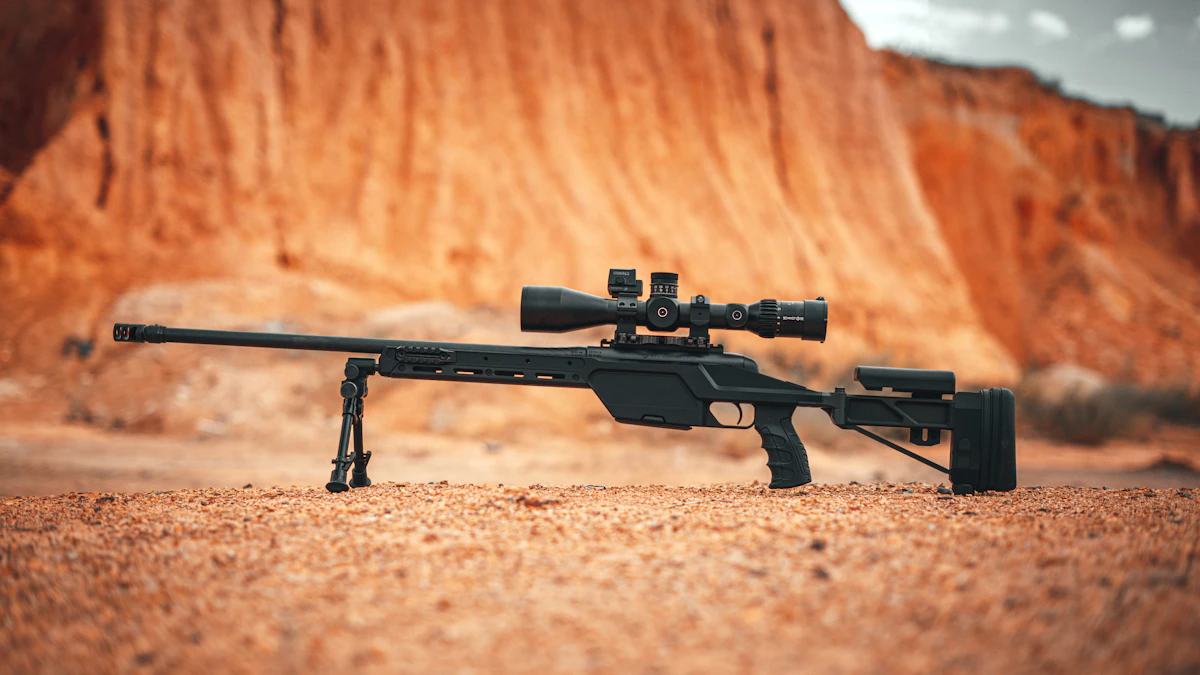
Bergara vs Howa: Which Rifle Wins for Western Hunting?
Bergara and Howa both deliver sub-MOA accuracy at accessible price points, but they take different approaches. This head-to-head comparison breaks down barrel quality, stock design, trigger performance, and real-world field reliability to help you choose the right platform for your next elk or mule deer hunt.
Next
Elk Hunting Guide: A Complete Strategy for Planning Your Hunt
From understanding draw systems and scouting tactics to calling strategies and public land access, this complete elk hunting guide covers everything you need to plan and execute a successful western elk hunt.