Elk Hunting 101: A Complete Guide for New and Experienced Hunters
Elk hunting represents one of the most physically demanding and rewarding pursuits in North American big game hunting. Whether you are chasing bulls during the September rut or cow tags in late season, success requires understanding elk behavior, mastering specific skills, and making smart decisions long before opening day.
This guide covers everything from draw strategy and scouting to calling tactics and gear selection. The goal is simple: give you the tools to hunt elk confidently on public land across the West.
Understanding Elk Behavior and Habitat
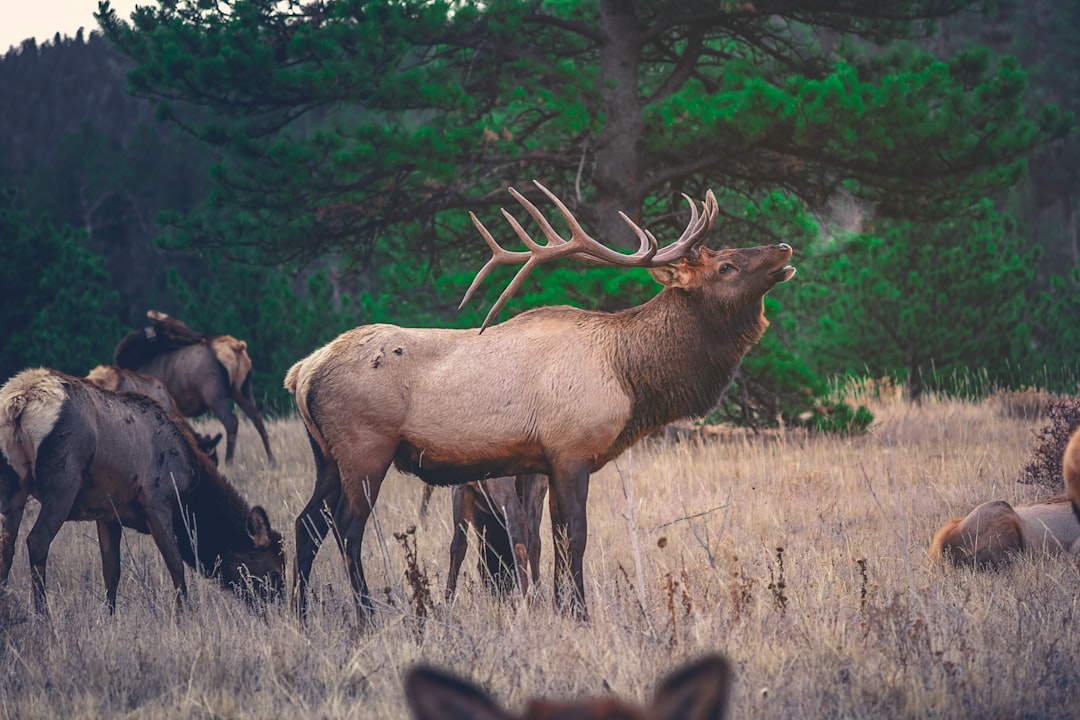
Elk are creatures of pattern and pressure. During summer, bulls and cows group separately in high-country feeding areas—alpine meadows, north-facing slopes, and creek drainages above 9,000 feet. As September arrives, bulls descend into transition zones where dark timber meets open parks. They are looking for cows and checking wallows.
Pressure changes everything. Opening weekend pushes elk off ridgetops and into heavy cover. By mid-September in popular units, mature bulls go nocturnal. They feed in thick timber at first light, bed in dark pockets during midday, and only bugle when they feel secure. Late-season elk drop to lower elevations as snow piles up, often wintering on private land or designated refuges.
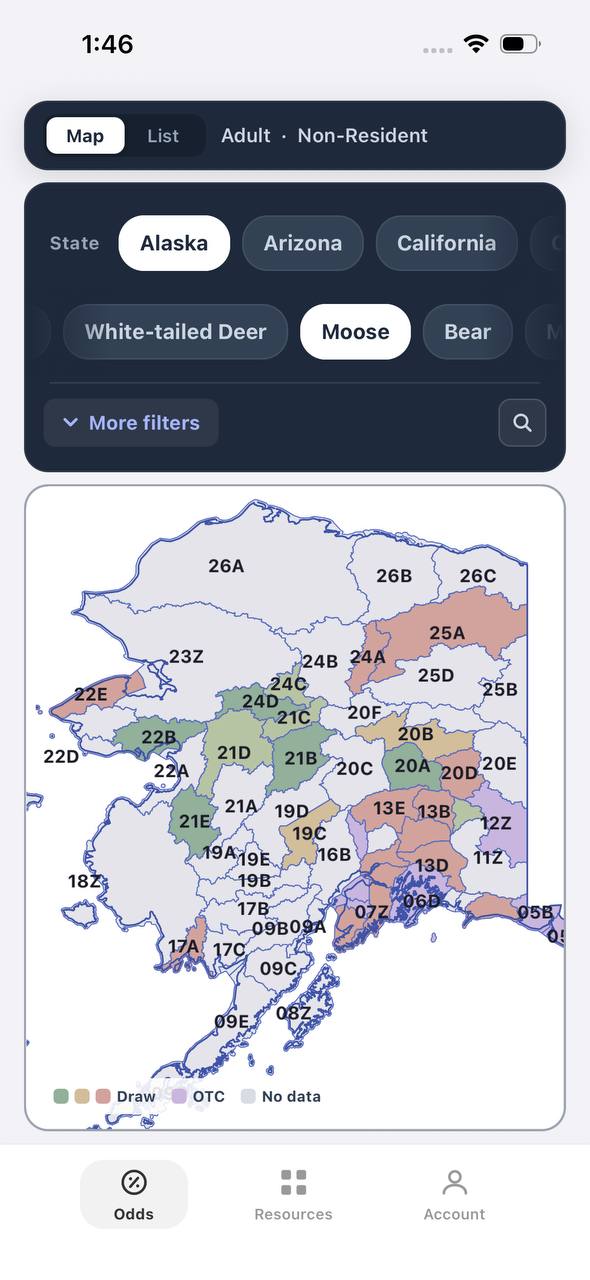
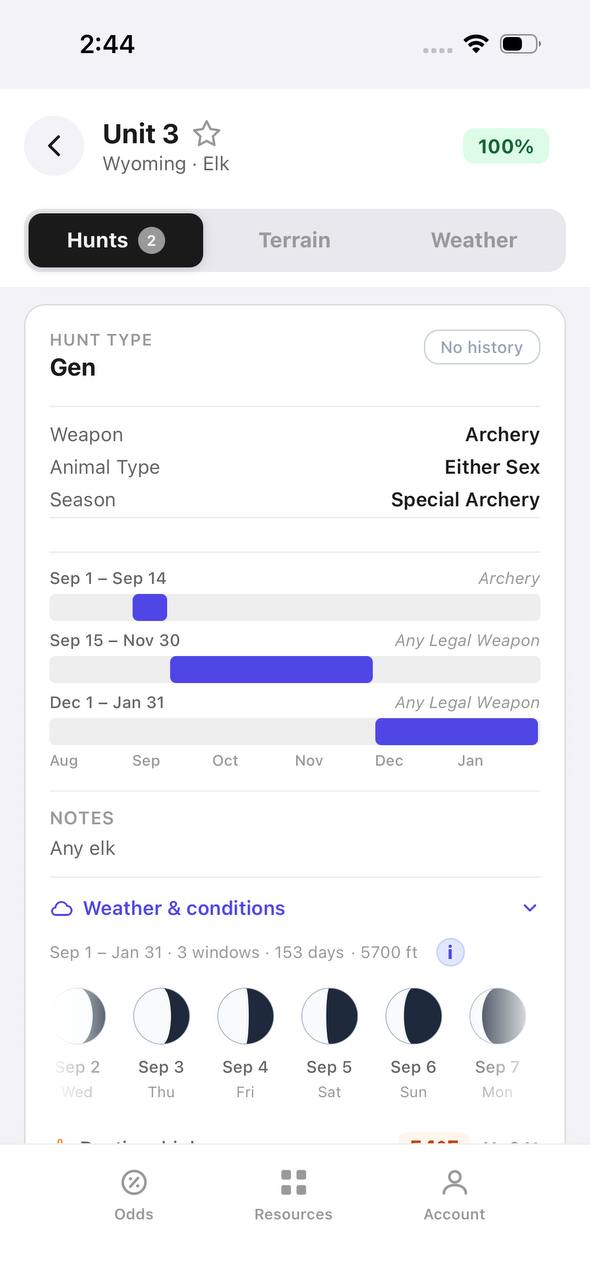
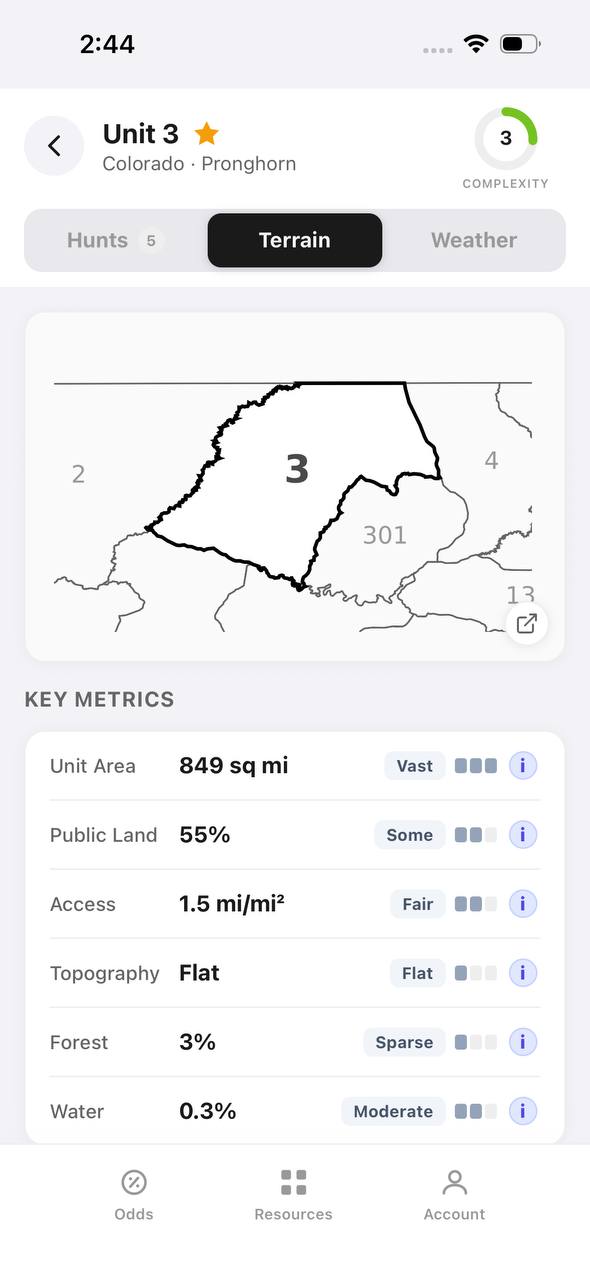
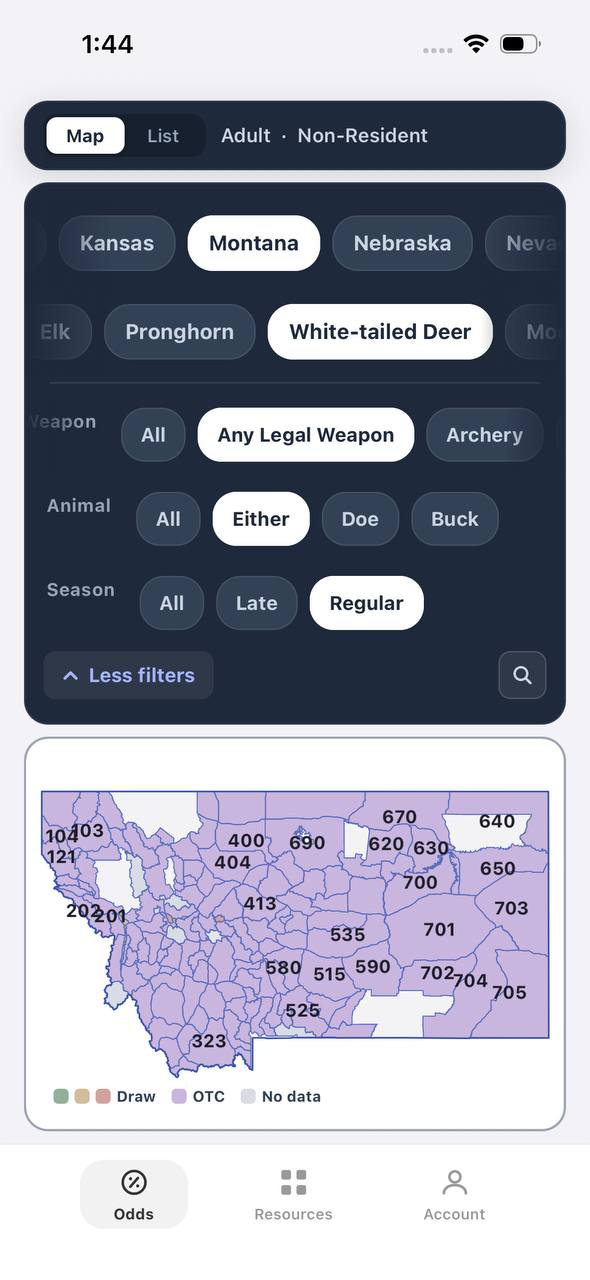
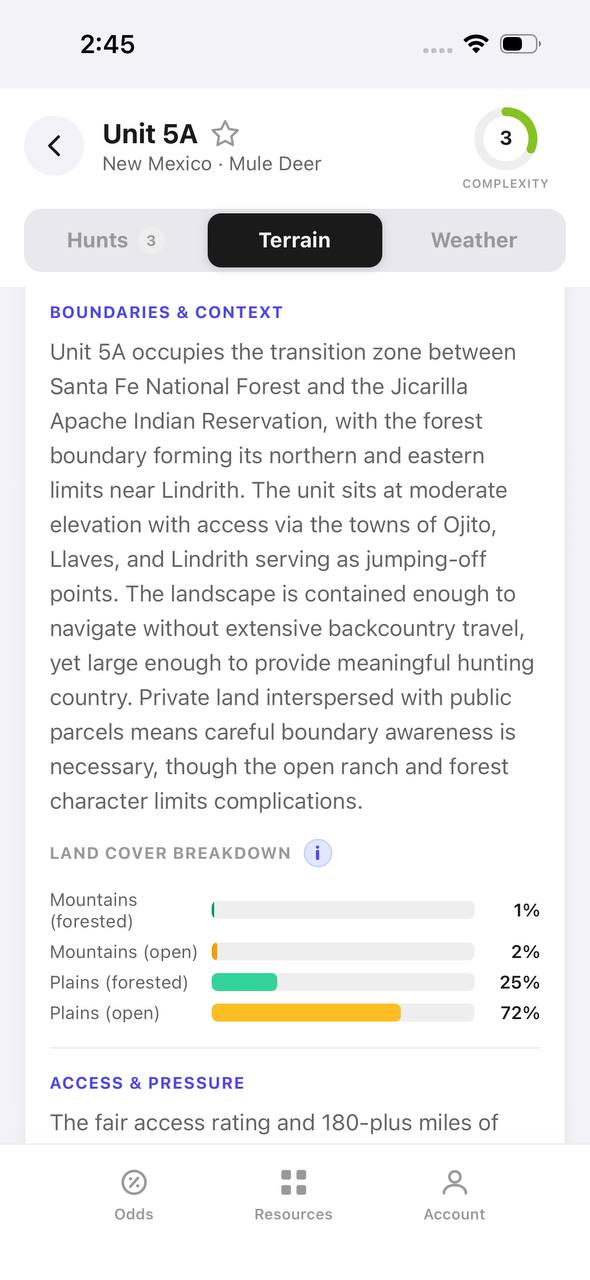
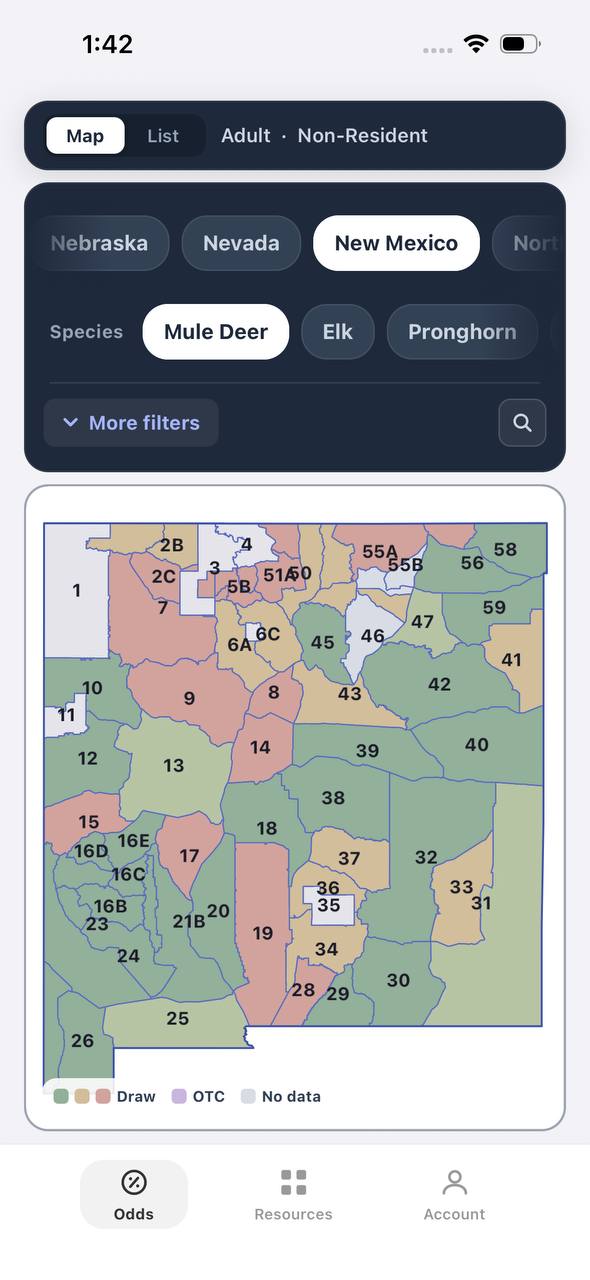
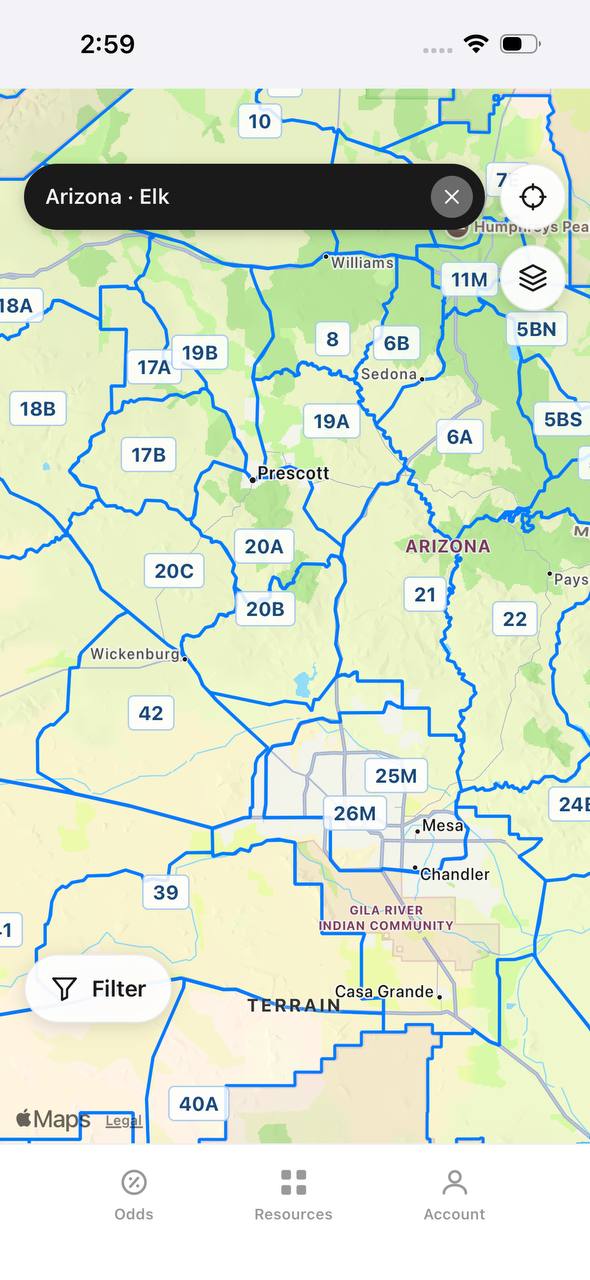
Understanding these patterns helps you predict where elk will be based on hunting pressure, weather, and time of season. The units that look perfect on a map might already be overrun by other hunters. TAGZ helps you compare units side by side using terrain maps, unit boundaries, and historical draw data so you can avoid crowded zones and focus on areas with better bull-to-hunter ratios.
Draw Strategy: OTC vs. Limited Entry
Your first decision is whether to hunt over-the-counter tags or apply for limited-entry permits. OTC tags offer guaranteed opportunity but often come with crowds. Colorado, Idaho, and Montana offer various OTC elk options, though Colorado has recently eliminated some Gunnison Basin OTC units and shifted them to draw-only.
Limited-entry tags provide better bull quality and less pressure but require planning. States like Wyoming, Utah, and New Mexico run true preference point or bonus point systems. Nevada and Arizona operate on bonus point models where max-point holders still face lottery odds. Drawing a premium tag in these states can take five to ten years depending on the unit.
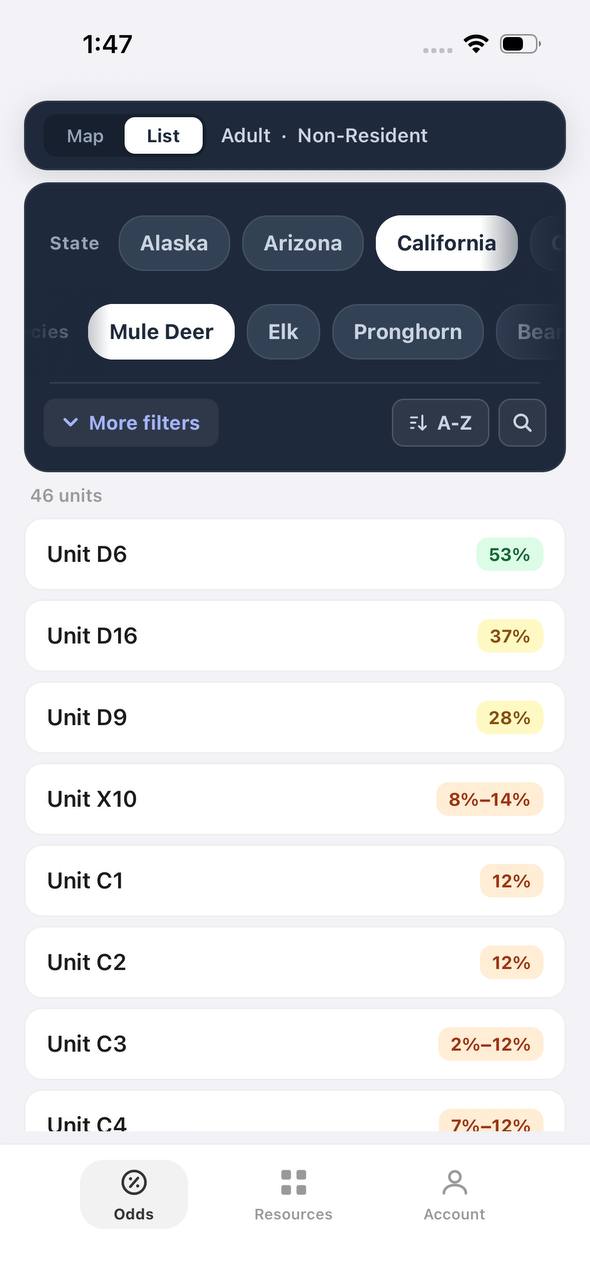
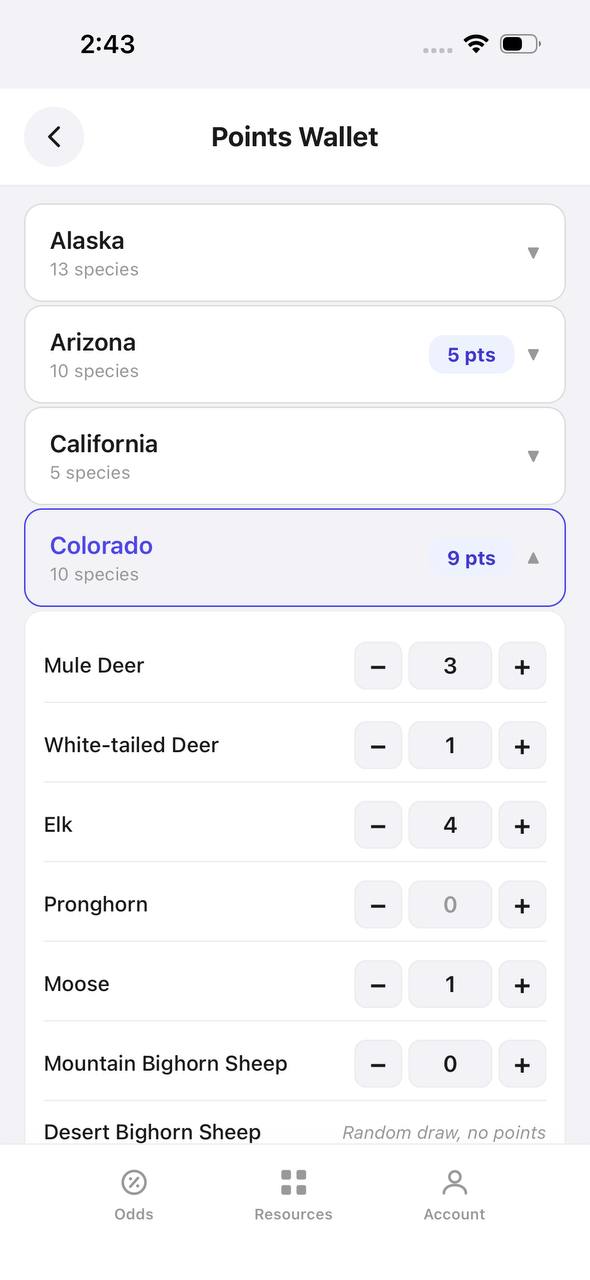
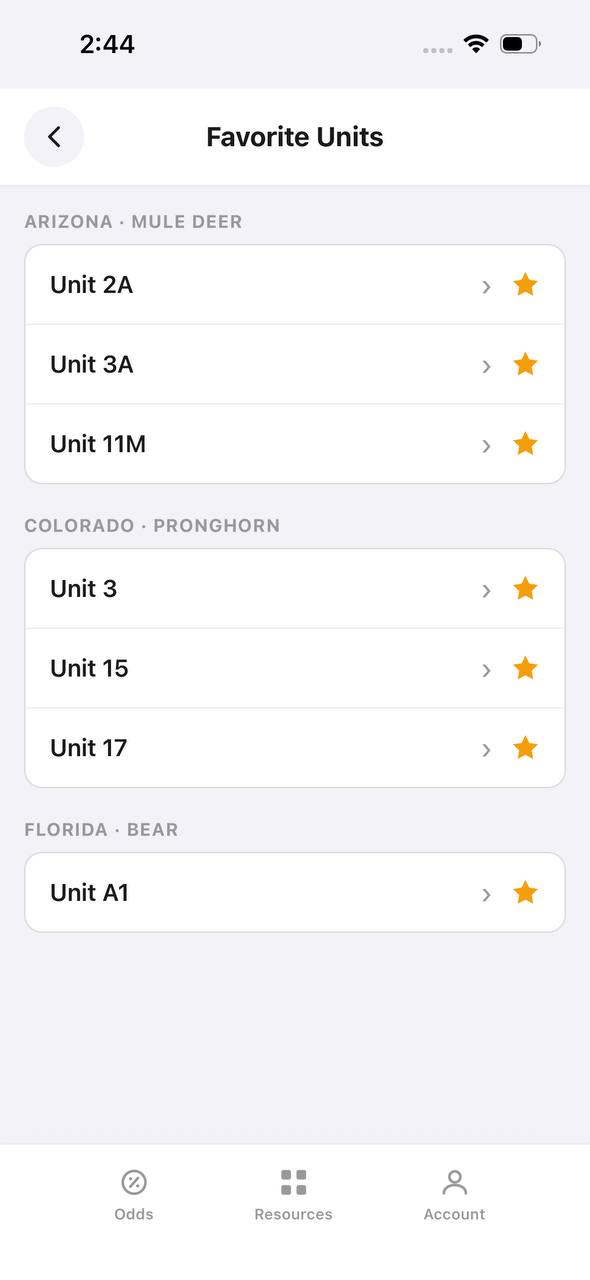
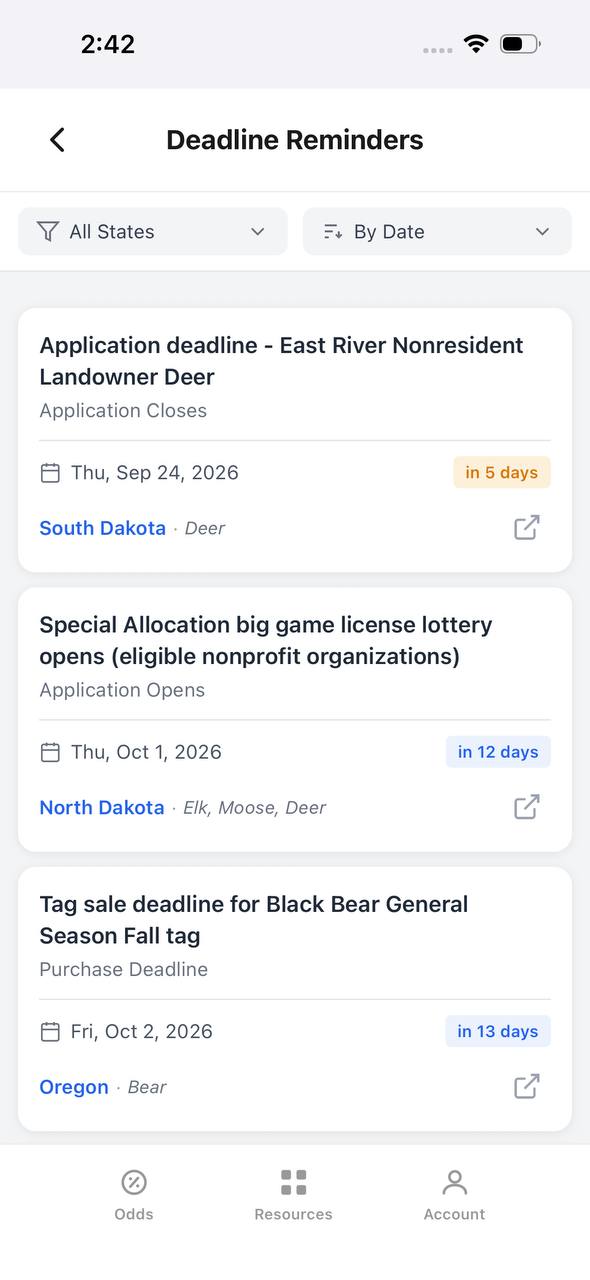
TAGZ tracks your preference points and bonus points across multiple states so you never miss a draw deadline. You can filter hunts by weapon type, season dates, and your current point totals to build a multi-state application strategy. Whether you are banking points for a trophy unit or applying for mid-tier tags you can draw in two to three years, TAGZ gives you the data to make smarter decisions before you ever step into the field.
Scouting: E-Scouting and Boots-on-the-Ground
Scouting separates successful hunts from wasted tags. Start with e-scouting using onX Hunt, Google Earth, and TAGZ unit maps. Look for transition zones where dark timber meets meadows or burn scars. Identify water sources, wallows, and saddles that funnel movement between feeding and bedding areas.
Pay attention to access points and roads. The first drainage off the trailhead will be hammered. The second drainage gets moderate pressure. The third drainage—two to three miles in—often holds unpressured elk. Focus on terrain features that make access difficult: steep ridges, blowdown thickets, and north-facing slopes with no trails.
Boots-on-the-ground scouting confirms what the map suggests. Pre-season trips in July and August let you glass feeding elk, find fresh rubs and wallows, and verify that access routes are passable. Trail cameras work in some states but are illegal in others. Check regulations before you deploy them.
Look for sign: torn-up wallows, fresh rubs on aspen or pine, tracks in soft dirt, and droppings. Elk pellets change from hard summer pellets to soft clumps as they transition to fall forage. Large rubs on six-inch trees indicate mature bulls. Small rubs on two-inch saplings mean raghorns and spikes.
Calling Tactics During the Rut
Calling is the most exciting and effective way to kill a rutting bull. Bugling locates bulls and triggers aggressive responses from herd bulls defending cows. Cow calls pull bulls into range when they are henned up or hesitant to charge in.
Start mornings by bugling from a high point to locate bulls. Listen for responses, then close the distance to 200 yards before setting up. Use a diaphragm call for hands-free bugles and cow chirps. Carry a handheld bugle tube for louder location bugles and aggressive challenges.
When a bull responds, gauge his mood. If he bugles back immediately and crashes toward you, set up fast and stay quiet. Let him come. If he bugles but stays put, he is likely with cows. Use soft cow calls to sound like a single cow wandering away from the herd. Patience wins here—it might take 20 minutes for him to commit.
Aggressive calling works on lonely satellite bulls and young raghorns. Throw aggressive bugles, break branches, rake trees, and sound like a fight. These bulls want conflict and will charge in looking for competition. Herd bulls are warier. They have cows and do not want to leave them. Subtle calling and positioning downwind of the herd increases your odds.
Mid-September pressure shifts behavior. Bulls stop bugling during daylight and only respond in thick cover. Switch to soft cow calls and mews. Set up in dark timber near bedding areas and call sparingly. Overcalling educates bulls and shuts them down.
Free to join
Download mobile app
- Detailed draw odds
- Point tracking
- Deadline reminders
- 18 states covered

Free to join
Download mobile app
- Detailed draw odds
- Point tracking
- Deadline reminders
- 18 states covered
Free to join
Download mobile app
- Detailed draw odds
- Point tracking
- Deadline reminders
- 18 states covered
Rifle Hunting: Shot Placement and Range
Rifle elk hunting offers longer effective range but requires different tactics than archery. Elk are tough animals. A poorly placed bullet can result in a wounded bull that travels miles before expiring. Aim for the boiler room: tight behind the shoulder, one-third up from the brisket. This hits both lungs and often clips the top of the heart.
Avoid shoulder shots unless you are shooting a magnum cartridge with premium bullets. Elk shoulders are massive, and a marginal hit can result in a lost animal. Quartering-to shots require patience—wait for the bull to turn broadside or take a high-shoulder shot that breaks him down immediately. Quartering-away shots are ideal. Aim for the offside shoulder to ensure the bullet travels through vitals.
Most rifle elk kills happen between 100 and 300 yards. Practice at these ranges before the season. Confirm your zero at 200 yards, then practice field positions: sitting, kneeling, and prone off a pack. Use a bipod or trekking poles for stability. Elk rarely give you a perfect bench-rest shot in the field.
In thick timber, shots come fast at close range. A 2-7x or 3-9x scope offers enough magnification for 300-yard shots while staying usable at 50 yards. In open country, a 4-12x or 5-15x scope extends your effective range to 400 yards if you have practiced and verified drops.
Archery Elk Hunting: Getting Close
Archery elk hunting is the ultimate test of woodsmanship. Your effective range is 40 yards or less, meaning you must call bulls into bow range or ambush them on trails and wallows. The rut is your best window—bulls are vocal, mobile, and distracted.
Set up in funnels between bedding and feeding areas. Elk follow terrain: saddles, benches, and ridge fingers. Find fresh sign and set up 20 yards downwind of the trail. Use a ghillie suit or natural cover to break your outline. Stay motionless when elk approach.
Calling strategies are the same as rifle, but you need a partner for maximum effectiveness. The shooter sets up 30 yards downwind of the caller. When a bull charges in, he focuses on the caller and walks past the shooter. Solo bowhunters must call, then draw when the bull commits and his vision is blocked by terrain or trees.
Shot placement is critical. Aim for the crease tight behind the shoulder, halfway up the body. A double-lung hit drops elk within 100 yards. Avoid the shoulder blade—broadheads deflect off bone. Quartering-away shots are ideal. Wait for quartering-to bulls to turn, or take a high-shoulder shot only if you are confident in your setup and shooting heavy arrows with high kinetic energy.
Practice shooting from your knees and awkward angles. Elk rarely give you a flat, 20-yard broadside shot. You might draw at full draw for 30 seconds waiting for a shooting lane. Build endurance and practice holding at full draw for 60 seconds.
Public Land Strategy: Finding Unpressured Elk
Public land elk hunting requires creative thinking and physical effort. The best units see heavy pressure on opening weekend. Trailhead lots fill by 5 a.m. Camps crowd every flat spot within a mile of the road. Elk get pushed into nasty country fast.
Your advantage is time and sweat equity. Hike past the crowds. The majority of hunters stay within one mile of the truck. At two miles, pressure drops. At three miles, you might have entire drainages to yourself. Backpack hunts put you in elk country for multiple days, eliminating the daily hike and letting you hunt mornings and evenings when elk are most active.
Look for landlocked public land—BLM or Forest Service parcels surrounded by private land with one ugly access route. These spots see zero pressure because most hunters do not study maps closely enough to find them. Corner-crossing is illegal in most western states, but legal access through adjacent public land or old mining roads can unlock hidden gems.
Glass from high points at first light. Look for elk feeding in meadows or moving between timber and open slopes. Once you locate them, plan a stalk that keeps you downwind and uses terrain to stay hidden. Elk have exceptional eyesight and will spook at movement 800 yards away if they are looking your direction.
TAGZ provides public land information and unit boundaries so you can identify access points and compare hunting pressure across multiple units. Track your preference points and bonus points so you can plan a rotation: hunt OTC tags while building points for premium limited-entry units.
Free to join
Download mobile app
- Detailed draw odds
- Point tracking
- Deadline reminders
- 18 states covered
Free to join
Download mobile app
- Detailed draw odds
- Point tracking
- Deadline reminders
- 18 states covered
Free to join
Download mobile app
- Detailed draw odds
- Point tracking
- Deadline reminders
- 18 states covered
Gear Essentials: What You Really Need
Elk country is brutal on gear. You need equipment that handles steep terrain, temperature swings from 20°F mornings to 70°F afternoons, and sudden weather changes. Pack light but do not cut corners on essentials.
For clothing, use a layering system: merino wool base layer, insulating mid-layer (fleece or puffy), and a waterproof shell. Avoid cotton. Bring extra socks and gloves—wet feet and hands ruin hunts. A quality pair of boots with ankle support and aggressive tread is non-negotiable. Break them in before the season or risk blisters that end your hunt early.
Optics matter. A 10x42 or 12x50 binocular lets you glass distant drainages and evaluate bulls before committing to a stalk. A compact spotting scope helps judge antler size at 1,000-plus yards. For rifle hunters, a rangefinder is essential. For bowhunters, a rangefinder is mandatory—guessing yardage costs you animals.
Pack weight is critical. A quality backpack with a meat shelf and load-bearing hip belt makes packouts manageable. You will carry 80 to 100 pounds of meat, cape, and antlers if you kill a bull three miles from the truck. Practice rucking with a weighted pack before the season so your body is ready.
Do not forget game bags, paracord, a sharp knife, and a bone saw for field dressing. Elk are massive animals. Quartering and deboning takes two to three hours. A headlamp with spare batteries is essential if you shoot an elk late in the day.
Shot Placement and Field Dressing
Elk are incredibly tough animals. A poorly placed shot can result in a long tracking job or a lost animal. For rifle hunters, aim tight behind the shoulder, one-third up from the bottom of the chest. This destroys both lungs and often clips the top of the heart. Elk shot through both lungs typically run 50 to 100 yards before piling up.
For bowhunters, the double-lung shot is your only ethical option. Aim for the crease directly behind the shoulder, halfway up the body. Avoid the shoulder blade—it will deflect arrows. Quartering-away shots are ideal because the arrow angles forward into the vitals. Pass on quartering-to shots unless you have a clear lane to the far shoulder.
After the shot, wait. Rifle hunters can approach immediately if the elk dropped in sight. Bowhunters should wait 30 minutes for a double-lung hit, 6 to 12 hours for a liver or gut shot. Pushing a wounded elk too soon sends him into the next drainage and complicates recovery.
Field dressing an elk is hard work. Start by skinning one side, removing the quarters, backstraps, and tenderloins. Roll the carcass over and repeat. Bone out the meat in the field to reduce weight. Hang game bags in shade if possible and cover with cheesecloth to keep flies off. Pack meat out in loads: 60 to 80 pounds per trip depending on distance and terrain.
Free to join
Download mobile app
- Detailed draw odds
- Point tracking
- Deadline reminders
- 18 states covered
Free to join
Download mobile app
- Detailed draw odds
- Point tracking
- Deadline reminders
- 18 states covered
Free to join
Download mobile app
- Detailed draw odds
- Point tracking
- Deadline reminders
- 18 states covered
Late-Season Elk Hunting
Late-season hunts target cow elk in November and December after rifle seasons close. Snow pushes elk to lower elevations where they concentrate on feed. These hunts are less glamorous than September rut hunts but offer high success rates and freezer-filling opportunities.
Late-season tactics focus on glassing and spot-and-stalk. Elk feed heavily in the mornings to build fat reserves before winter. Glass south-facing slopes, meadows, and creek bottoms at first light. Plan a stalk that keeps you downwind and uses terrain to stay hidden. Snow makes stalking easier—you move quietly and tracks reveal travel routes.
Cow elk are warier than rutting bulls. They rely on numbers and vigilance to avoid predators. One spooked cow alerts the entire herd. Move slowly, glass often, and use terrain to stay out of sight until you are within range.
Late-season weather is unpredictable. Temperatures can swing from 10°F at dawn to 40°F by midday. Pack insulated layers, waterproof gloves, and a down puffy for glassing sessions. Snow depth varies year to year—some seasons are mild, others dump three feet by Thanksgiving. Check local reports and adjust your expectations accordingly.
Multi-State Application Strategy
Building a multi-state application strategy maximizes your opportunities to hunt elk every year. Some hunters only apply in their home state and miss out on better odds elsewhere. TAGZ helps you compare draw odds across multiple states so you can build a rotation.
For example, you might apply for a premium Colorado limited-entry tag that requires five points, a mid-tier Wyoming tag that draws in two to three years, and an Idaho OTC tag as a backup. You hunt Idaho this year while building points in Colorado and Wyoming. Next year, you might draw Wyoming and bank another point in Colorado.
This rotation ensures you hunt elk annually while working toward a trophy tag. TAGZ tracks your preference points and bonus points so you never miss a deadline. You can filter units by draw odds, weapon type, season dates, and public land access to find hunts that match your point totals and skill level.
Some states like Nevada and Arizona operate on bonus point systems. Max-point holders still face lottery odds, but each point increases your chances slightly. These states reward long-term planning. Others like New Mexico and Idaho are random draw or OTC, offering immediate opportunities without waiting.
Continue Planning Your Hunt
Whether you are chasing OTC opportunities or building points for a limited-entry tag, TAGZ gives you the tools to make smarter decisions. Compare units side by side using terrain maps and historical draw data. Track deadlines so you never miss an application window. Filter hunts by weapon, season, and your current points to build a strategy that fits your goals.
Ready to start planning? Explore more hunting insights and draw strategies on the TAGZ Insights page. Compare draw odds and build your application plan at TAGZ Product. Check out pricing options at TAGZ Pricing to unlock full access to every tool you need.
FAQ — Elk Hunting
What is the best state for first-time elk hunters?
Colorado and Idaho offer the most OTC and easy-to-draw opportunities. Colorado has more public land access, while Idaho offers fewer hunters per square mile in backcountry units.
How many preference points does it take to draw a good elk tag?
It depends on the state and unit. Mid-tier Wyoming and Colorado units draw in two to four points. Premium units in Utah, Nevada, and Arizona can take eight to twelve points or more.
Is elk hunting harder than deer hunting?
Yes. Elk live in steeper, more remote terrain, require more physical endurance, and are harder to recover after the shot. A mature bull weighs 700 pounds and requires multiple packout trips.
Can I hunt elk solo on public land?
Absolutely. Most DIY elk hunters hunt solo or with one partner. Success requires good scouting, patience, and a willingness to hike past the crowds into less-pressured areas.
What rifle caliber is best for elk?
.308 Winchester, .30-06 Springfield, 7mm Remington Magnum, and .300 Winchester Magnum are all excellent choices. Use quality bullets designed for controlled expansion on large game.
Should I hunt the rut or late season?
Rut hunts offer bugling, calling, and higher bull activity but come with more hunting pressure. Late-season cow hunts have less pressure, easier spot-and-stalk opportunities, and fill the freezer. Choose based on your goals.
Was this article helpful?
Previous
Elk Hunting Guide: A Complete Strategy for Planning Your Hunt
From understanding draw systems and scouting tactics to calling strategies and public land access, this complete elk hunting guide covers everything you need to plan and execute a successful western elk hunt.
Related
Mountain Weather for Western Hunters: Reading Conditions, Staying Safe, and Timing Your Hunt
Mountain weather shapes every western hunt — from elk movement to your safety margin. Learn how to read rapid shifts, time your hunt around fronts, and prepare gear for alpine conditions that can swing 50 degrees in hours.
Next
Essential Elk Hunting Tips — Proven Strategies for Success
Master the fundamentals of elk hunting with proven strategies for scouting, calling, positioning, and shot placement. From pre-season preparation to the final moments of truth, these tips help hunters of all experience levels fill their tags.