Monolithic vs Bonded Bullets: Which Performs Better for Big-Game Hunting?

The bullet you chamber matters as much as the rifle you carry. Two designs dominate serious big-game loads today: monolithic copper bullets and bonded lead-core projectiles. Both solve the problem of controlled expansion and deep penetration, but they do it differently. Your choice depends on the game you hunt, the ranges you shoot, and whether bone-breaking penetration or rapid expansion matters more for your setup.
How monolithic bullets work
Monolithic bullets are machined from a single piece of copper or copper alloy. No lead core, no jacket to separate. When they hit tissue, copper petals peel back in a controlled pattern while the bullet shank stays intact. Weight retention typically runs 95–100% because there is no core to shed. This construction creates deep, straight wound channels even through heavy bone.
The downside shows up at lower impact velocities. Copper needs speed to initiate expansion. Drop below 1,800 fps at impact and some monolithics pencil through without opening fully. That limits effective range with slower cartridges or light-for-caliber bullets. They also cost more per round than comparable bonded loads.
How bonded bullets work
Bonded bullets fuse a lead core to a copper jacket using heat, pressure, or chemical bonding. The core and jacket stay locked together during expansion instead of separating like traditional cup-and-core designs. This creates reliable mushrooming with 70–90% weight retention, broader wound channels than monolithics, and more trauma through softer tissue.
Bonded bullets expand reliably at lower velocities than monolithics, often down to 1,600 fps or less. That extends effective range and makes them more forgiving in moderate cartridges. The trade-off is less linear penetration when heavy bone gets in the way. The mushroomed front end creates more resistance than a monolithic's retained shank.
Penetration differences that matter
Monolithics win the penetration test every time. Their solid copper shanks punch through bone, gristle, and muscle with minimal deflection. On quartering shots where you need to reach the vitals through shoulder blade or heavy rib, monolithics keep driving. Elk hunters working timber at close range or shooting through brush favor this trait.
Bonded bullets penetrate deeply on broadside shots but lose some momentum when mushrooming against heavy structure. They work best when you can pick your angle and avoid steep quartering presentations. For deer-sized game or longer shots where rapid expansion matters more than maximum penetration, bonded designs often outperform monolithics in terminal effect.
Weight retention and what it means for blood trails
Monolithics retain nearly all their weight, but that does not always mean better blood trails. The narrow wound channel from a non-expanding or minimally expanded copper bullet can seal behind the projectile in dense tissue. You get an exit hole, but less visible blood than a bonded bullet that sheds some mass while creating a wider path.
Bonded bullets that retain 75–85% of their weight still hold together well enough for pass-throughs on most shots, but they transfer more energy through tissue disruption. That often means shorter tracking jobs on heart and lung hits. The lost lead creates secondary wound channels as petals or small fragments spread. For hunters who glass shot animals or track in thick cover, this matters more than the ballistic gelatin numbers suggest.
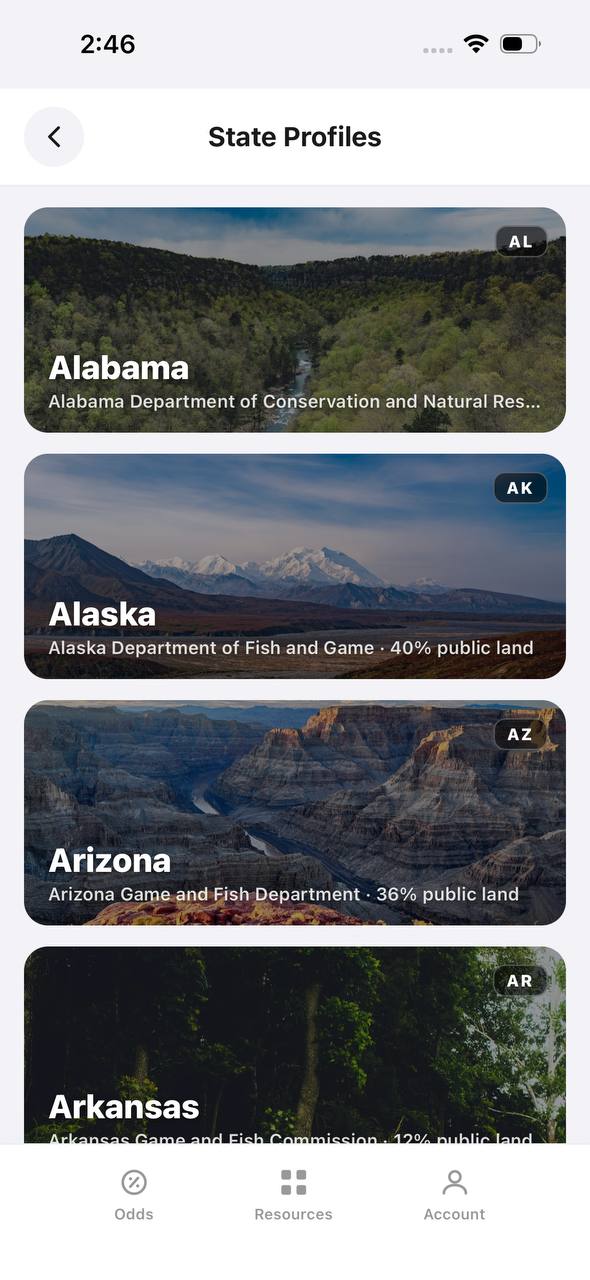
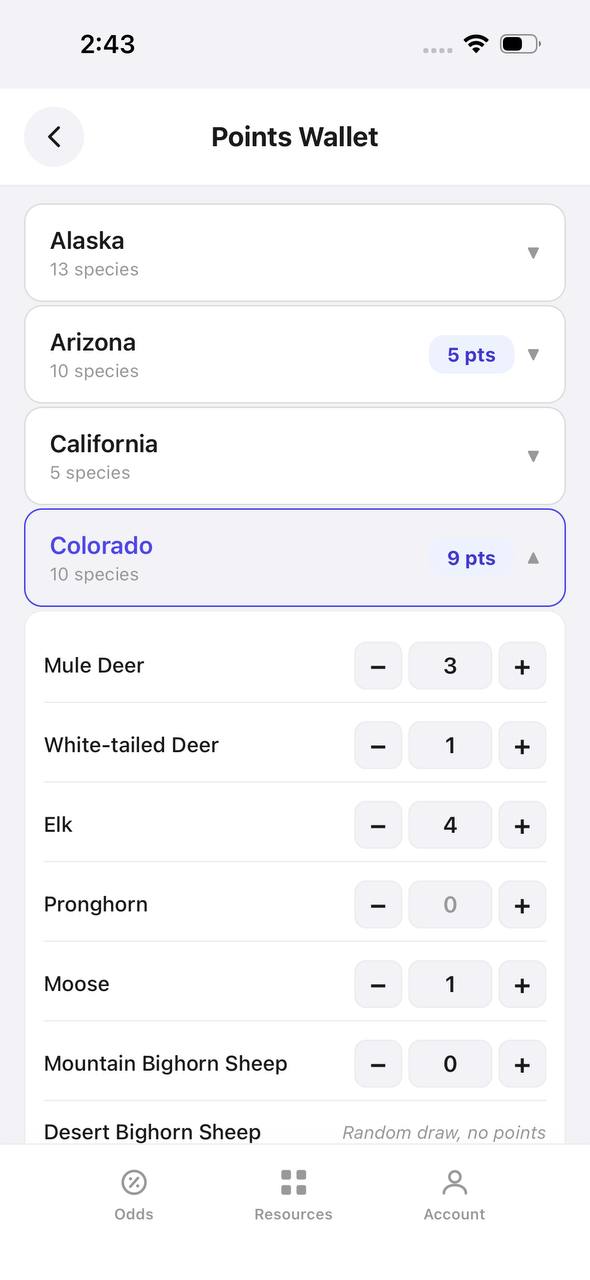
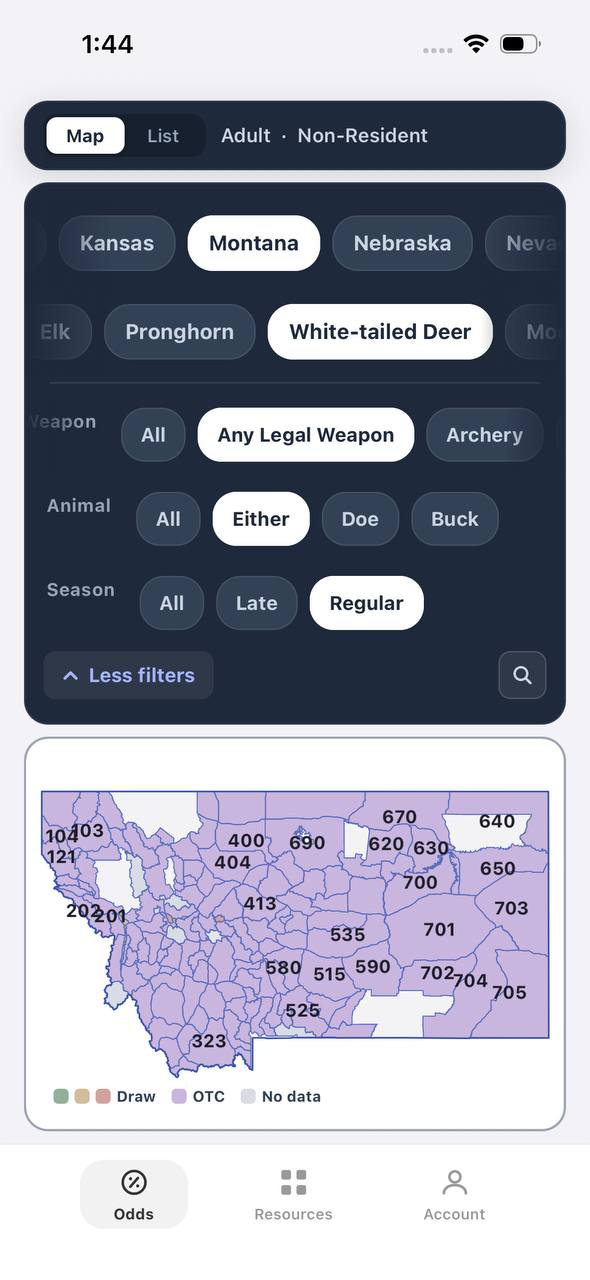
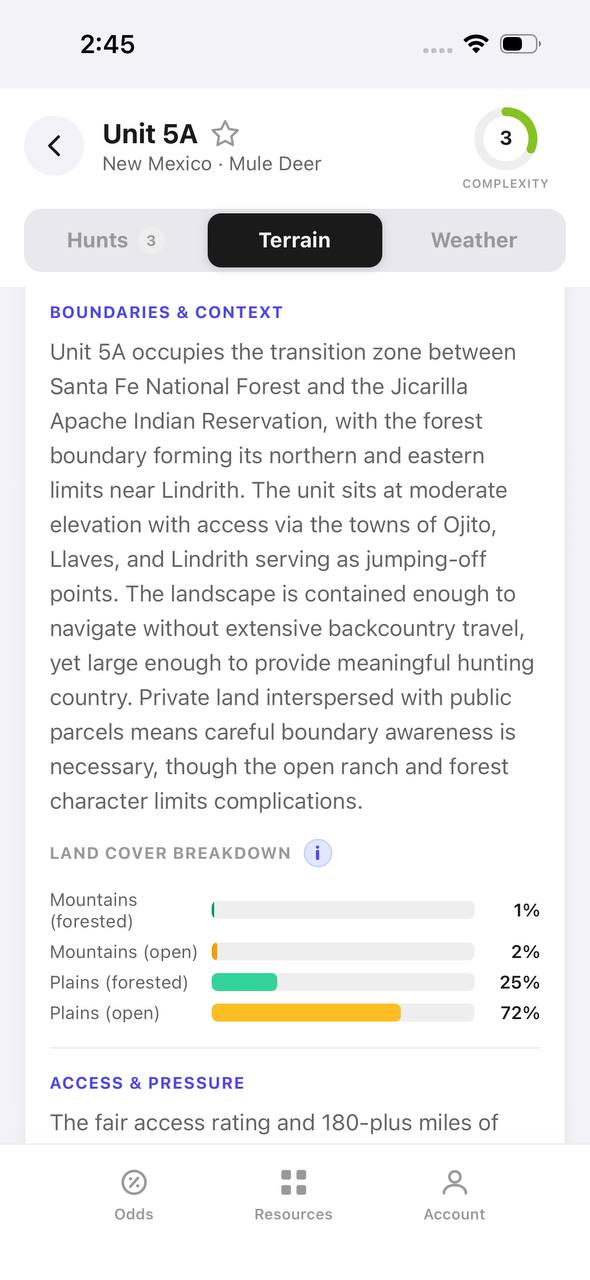
Free to join
Download mobile app
- Detailed draw odds
- Point tracking
- Deadline reminders
- 18 states covered

Free to join
Download mobile app
- Detailed draw odds
- Point tracking
- Deadline reminders
- 18 states covered
Free to join
Download mobile app
- Detailed draw odds
- Point tracking
- Deadline reminders
- 18 states covered
Cartridge and velocity considerations
Fast magnums push monolithics into their expansion sweet spot even at extended ranges. A 180-grain Barnes TTSX from a 300 Win Mag still carries 2,000+ fps at 400 yards and expands predictably. Slower cartridges like the 308 Winchester or 30-06 work better with bonded bullets that open reliably as velocity drops. If your typical shot is inside 300 yards and you are not running a high-velocity magnum, bonded construction gives you more margin for error.
Light-for-caliber monolithics bridge the gap. A 150-grain copper bullet often matches the length and penetration of a 180-grain lead-core, but at higher velocity. This shifts the expansion window back in your favor with standard cartridges. Just verify minimum impact velocity for the specific bullet — not all monolithics expand the same.
Barrel fouling and maintenance
Copper fouling increases with monolithic bullets. Copper sheds directly into rifling instead of a thin jacket wiping over a lead core. This builds up faster and requires more frequent cleaning to maintain accuracy. If you shoot a stainless barrel and clean after every range session, this is a non-issue. For hunters who put 30 rounds through a rifle each season and clean twice, bonded bullets foul less and shift point of impact less between cleanings.
Some monolithics foul worse than others depending on the copper alloy and driving band design. Barnes, Hammer, and Cutting Edge all use different approaches to reduce bearing surface and manage fouling. If copper buildup concerns you, research specific bullet lines and read other hunters' cleaning experiences before committing to a monolithic load.
Cost per round and practice implications
Monolithic bullets cost $1.50–$3.00 per round in factory loads. Bonded bullets run $1.00–$2.00. That difference compounds if you shoot 40 rounds confirming zero and practicing field positions before your hunt. Budget-conscious hunters often zero with cheaper practice ammo and confirm point of impact with premium hunting loads, but that introduces variables. If you can afford it, practicing with the same bullet you hunt with eliminates one question when you shoulder the rifle on a bull at 350 yards.
Handloaders can reduce monolithic costs slightly, but copper bullets still cost more than bonded projectiles as components. The performance gap matters most when it matters, though. Spending an extra $20 on a box of premium monolithics is cheap insurance when you have invested a week of your life and thousands of dollars in a hunt.
Which bullet for which hunt
Use monolithics when:
- Hunting elk, moose, or large bears where bone-breaking penetration is the priority
- Taking quartering or raking shots where bullet deflection risks a gut shot
- Shooting a fast magnum that keeps impact velocity high past 400 yards
- Hunting in California or other areas that mandate lead-free ammunition
Use bonded bullets when:
- Hunting deer or pronghorn where rapid expansion matters more than extreme penetration
- Shooting moderate cartridges like the 308, 270, or 6.5 Creedmoor at typical hunting ranges
- Prioritizing visible blood trails and quick recoveries in thick cover
- Working with a limited budget and needing practice ammo to match hunting loads closely
Real-world performance in elk country
Elk guide experience shows both bullets work when placed correctly. The failures come from poor shot placement or pushing bullets beyond their design window. A monolithic that pencils through because it hit at 1,600 fps is a bullet problem. A bonded bullet that blows up on a shoulder because the hunter used a varmint-grade projectile is also a bullet problem. Match construction to your cartridge's velocity curve and the game you are hunting.
Hunters who chase elk in heavy timber or dark timber often prefer monolithics for the insurance policy. One more inch of penetration can mean the difference between a recovered bull and a long night with headlamps. Hunters working open country where shots lean toward broadside presentations at 200–400 yards often favor bonded bullets for the shock factor and faster kills that keep animals from covering ground.
FAQ — Monolithic vs Bonded Bullets
Do monolithic bullets expand at long range?
Yes, if impact velocity stays above the manufacturer's minimum expansion threshold, usually 1,800–2,000 fps. Fast magnums maintain this velocity past 500 yards. Slower cartridges may drop below the expansion window beyond 300 yards.
Are bonded bullets better for deer than monolithics?
Bonded bullets often produce more dramatic terminal effects on deer because they expand more aggressively and transfer energy through wider wound channels. Monolithics work fine but may exit with less visible blood on smaller-bodied game.
Will monolithic bullets damage my barrel faster?
No. Copper fouling builds up faster, but it does not harm the barrel. Clean more frequently to maintain accuracy. The barrel itself wears at the same rate as with jacketed lead-core bullets.
Can you use bonded bullets on elk?
Yes. Bonded bullets like the Nosler AccuBond, Federal Trophy Bonded Tip, and Swift A-Frame have killed thousands of elk. Pick a bullet weight that provides adequate penetration for quartering shots, typically 180 grains or heavier in 30-caliber.
Do monolithic bullets cost more because they perform better?
They cost more because solid copper costs more than lead and machining processes are more expensive than swaging lead cores into jackets. Performance differences depend on the shot scenario, not price.
Which bullet is better for shoulder shots on elk?
Monolithics penetrate through shoulder bone more reliably and maintain straighter wound channels. Bonded bullets can work but may deflect slightly or stop short on heavy bone if impact velocity is marginal or bullet weight is light.
Continue planning your hunt
Bullet selection is one piece of the hunt-planning puzzle. TAGZ helps you compare draw odds, preference points, and unit terrain across multiple western states so you can focus your applications where you have the best chance of drawing. Whether you are chasing OTC elk tags in Colorado or planning a limited-entry mule deer hunt in Nevada, TAGZ gives you the tools to make smarter decisions before you ever step into the field. Track your bonus points and preference points across states, compare units side by side using terrain maps and historical draw data, and never miss a draw deadline. Learn more about how TAGZ simplifies western hunting applications at getmytagz.com.
For more hunt-planning strategies and gear insights, explore the full TAGZ Insights library. If you are ready to start building your multi-state application strategy, check out TAGZ pricing options or see the product features that help hunters draw better tags and plan better hunts.
Was this article helpful?
Previous
Bergara B-14 vs Christensen Mesa: Which Rifle Wins for Western Hunters?
The Bergara B-14 and Christensen Mesa dominate the sub-$1,500 hunting rifle market. This head-to-head comparison breaks down accuracy, weight, features, and value to help you choose the right rifle for backcountry hunts.
Related
Emergency Communications in the Backcountry: Satellite Messengers, PLBs, and When to Use Them
Backcountry emergencies happen fast. Learn which satellite communication devices work best for western hunters, how to use them effectively, and why having a backup plan can save your life when cell service disappears.

Next
November Mule Deer Hunt 2026: Rut Tactics, Best Units, and Late-Season Strategy
November mule deer hunts offer prime opportunities during the rut across multiple Western states. Learn which units shine in late season, how to adapt tactics for colder weather, and what draw strategies maximize your 2026 tag odds.