Migration Hunts Explained: Timing, Tactics, and Why They Matter
1. SEO Meta Title
Migration Hunts Explained: Elk & Mule Deer Strategy
2. Meta Description
Learn how elk and mule deer migration hunts work, when animals move, and how weather, snow, terrain, and season dates can shape your hunt.
3. Quick Summary
Migration hunts can create excellent opportunities for elk, mule deer, pronghorn, and other western big game, but migration doesn't happen on one predictable date. Snow, forage, seasonal habitat, herd behavior, weather, and disturbance can all influence when and where animals move.
The key to hunting migration is combining season timing, herd-specific migration information, current conditions, legal access, and fresh sign rather than assuming one storm will send animals toward winter range.
Migration Hunts Explained: Timing, Tactics, and Why They Matter
Migration hunts can offer some of the most interesting opportunities in western big-game hunting.
Elk, mule deer, pronghorn, and other big-game species may move between seasonal ranges as snow, forage, habitat conditions, weather, disturbance, and biological needs change throughout the year.
For hunters, one of the biggest challenges is timing.
The same unit can hunt completely differently before, during, and after seasonal movement.
Understanding migration behavior, season dates, terrain, access, and current conditions can help you build a much better late-season hunting strategy.
How Big-Game Migration Works
Migration isn't controlled by one date or a single snowstorm.
Seasonal movement can be influenced by:
Snow depth
Temperature
Forage availability
Elevation
Habitat conditions
Hunting pressure and human disturbance
Seasonal biological needs
Individual herd behavior
Geographic location
Some herds make substantial seasonal migrations between summer and winter ranges.
Others make shorter movements or remain relatively close to the same general area when suitable habitat and conditions allow.
That's why hunters shouldn't assume the first October or November snowstorm automatically sends every elk or mule deer herd toward winter range.
Instead, learn the seasonal behavior of the herd you're hunting and monitor current conditions as your season approaches.
Hunt Timing Matters
Season dates can dramatically affect a migration hunt.
An earlier hunt may occur while animals are still primarily using summer or early-fall habitat.
A later season could overlap transitional movement or the arrival of animals on winter range.
Think about your hunt as potentially occurring during three general periods.
Pre-Migration
Animals are still primarily using summer or early-fall seasonal habitat.
Active Seasonal Movement
Animals are transitioning between seasonal ranges.
Winter-Range Arrival
Animals have reached or are approaching habitat they use during winter.
These aren't fixed calendar periods.
Timing varies by species, herd, location, weather, habitat, and year.
Your job is to determine which situation you're actually hunting.
Finding Potential Migration Terrain
Migrating animals need to move between seasonal habitats.
Terrain can help you identify possible routes.
Depending on the landscape, investigate:
Saddles
Mountain passes
Creek drainages
River valleys
Timbered ridges
Canyon systems
Benches
Transition zones
Lower-elevation habitat
The key is understanding how seasonal ranges connect.
But there's an important distinction.
A saddle that looks perfect on a topographic map isn't automatically a migration corridor.
Topography shows you where animals could move.
Documented migration data can help show where animals have moved.
Whenever possible, combine terrain research with seasonal-range and migration information published by state wildlife agencies or credible wildlife research programs.
Migration Data Can Be Extremely Valuable
GPS-collar research has significantly improved our understanding of western big-game movement.
Researchers and wildlife agencies have documented seasonal movements for populations of:
Mule deer
Elk
Pronghorn
Other western ungulates
These datasets can identify broader seasonal ranges and movement corridors that would be difficult to determine from topography alone.
But even documented migration data has limitations.
A mapped corridor doesn't guarantee animals will pass through one exact location during your hunt.
Individual animals may also use somewhat different routes or timing.
Think of migration data as another layer of information—not a live elk or deer tracker.
Use TAGZ to Compare Hunts and Season Timing
TAGZ can help with one of the most important parts of migration-hunt planning:
Choosing the hunt itself.
Use TAGZ to research factors such as:
Draw odds
Hunt units
Season dates
Weapon types
Point requirements
Resident and nonresident opportunities
Historical draw information
Application deadlines
Season dates become particularly important when you're interested in a potential migration hunt.
Once you've identified hunts that fit your points and application strategy, research the specific herd using wildlife-agency information, migration studies, mapping resources, weather, access information, and scouting.
Think about it this way:
TAGZ helps answer: Which hunt can I realistically draw, and when does that hunt occur?
Migration research helps answer: Where might the animals be during those dates?
Elk Migration
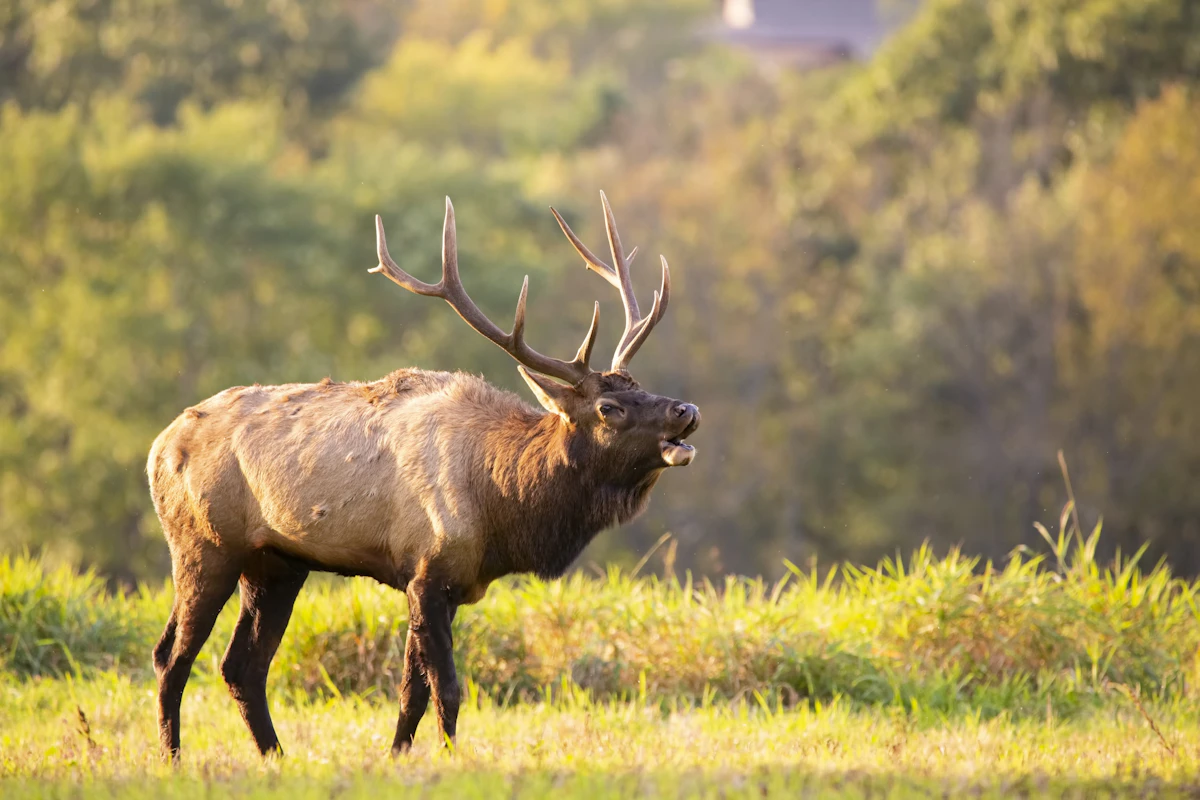
Elk movement varies considerably across the West.
Some herds make substantial seasonal movements between summer and winter ranges.
Other elk may remain more localized when habitat, food, security, and weather allow.
Late-season elk hunters should pay attention to:
Snow accumulation
Elevation
Seasonal habitat
Food availability
Hunting pressure
Human disturbance
Public/private land patterns
Current elk sign
Don't assume elk will automatically move downhill because a certain date arrives.
And don't assume one snowfall means migration has started.
Hunt current conditions.
Mule Deer Migration
Mule deer provide some of the best-documented examples of long-distance big-game migration in the West.
GPS-collar studies have documented substantial seasonal movements by some mule deer populations.
For hunters, that means season timing can have a major effect on where deer are located.
An earlier hunt might find bucks closer to summer or transitional habitat.
A later hunt could encounter deer moving toward or occupying lower-elevation seasonal ranges.
But migration timing and routes are herd-specific.
Don't assume every mule deer population in a state—or every deer within a population—moves at exactly the same time.
Use herd-specific migration and seasonal-range information whenever it's available.
Pronghorn Migration
Some pronghorn populations also make significant seasonal movements.
Snow, forage, habitat conditions, fences, roads, development, and other landscape features can influence those movements.
When researching a later-season pronghorn hunt, study how seasonal habitat connects across the landscape.
Barriers can also influence pronghorn movement, making documented migration information especially valuable where it's available.
Does Snow Trigger Big-Game Migration?
Snow matters.
But there's no universal rule like:
"Six inches of snow means the deer will migrate tomorrow."
Snow accumulation and prolonged winter conditions can change access to forage and contribute to seasonal movement.
Different populations respond differently.
Instead of looking for one magic snow-depth number, monitor:
Snow accumulation
Temperature trends
Upcoming storms
Elevation-specific forecasts
Current road conditions
Recent wildlife observations
Changes in animal activity
Reliable field reports
Also remember that conditions at hunting elevation can be dramatically different from conditions in the nearest town.
Check forecasts for the elevations and terrain you'll actually be hunting.
Hunting Before Migration
What happens if your late-season hunt arrives and the animals haven't migrated?
Don't hunt where you expected them to be.
Hunt where they are.
Depending on the species and season, that could mean continuing to focus on:
Higher-elevation habitat
Timber
Aspen
Feeding areas
Water
Bedding cover
Early-fall transition habitat
Fresh sign becomes extremely important.
If you're finding current tracks, droppings, beds, feeding activity, or sightings, don't abandon productive country simply because the calendar told you animals "should" have migrated.
Hunting During Active Migration
When animals begin moving between seasonal ranges, start looking at the terrain connecting those habitats.
Potential travel features can include:
Saddles
Passes
Drainages
Benches
Canyon systems
River corridors
Transition habitat
Documented migration information can be particularly useful here.
But don't treat a migration corridor like a whitetail trail where every animal walks through one exact opening.
Migration maps generally represent broader patterns of movement.
Animals can use different routes within those areas depending on weather, disturbance, habitat, and other conditions.
Hunting Near Winter Range
Late-season hunts can become especially interesting as animals approach winter habitat.
They can also become more complicated.
One of the biggest issues is private land.
Animals don't care about property boundaries.
A herd can move from accessible public land onto private property as seasonal movement occurs.
That means late-season hunters need to research:
Public/private boundaries
Legal access
Seasonal road closures
Wildlife management areas
Walk-in access programs
State-specific regulations
Never assume migrating animals will remain on public land simply because they started there.
During some migration hunts, access research becomes just as important as migration research.
Public Land and Migration
Migration routes can cross multiple landownership types.
Animals may move between:
BLM land
National Forest
State land
Wildlife management areas
Private property
Other restricted or managed lands
For public-land hunters, the goal is to identify legal access near habitat animals are currently using or may move through.
Use a reliable land-ownership mapping source and verify current access regulations.
Then compare that information with available seasonal-range and migration data.
A documented migration corridor doesn't give you permission to cross private property.
Migration research and access research need to work together.
Draw Data Still Matters
You can spend months researching the perfect migration hunt.
It doesn't matter much if you can't obtain the tag.
That's why draw strategy should come first.
A well-known late-season hunt may require substantial points or have extremely low draw odds.
Another hunt with similar dates or nearby seasonal habitat might offer a more realistic opportunity.
Use TAGZ to compare:
Draw odds
Point requirements
Season dates
Units
Weapon options
Resident and nonresident opportunities
Then ask:
Could these season dates overlap meaningful seasonal movement for this herd?
If the answer is yes, that's when deeper migration research becomes valuable.
Build a Multi-State Migration Hunt Strategy
Migration opportunities aren't limited to one state.
Big-game populations throughout the West make seasonal movements, but every state has different:
Application deadlines
Draw systems
Point systems
Season structures
Nonresident rules
Tag allocations
TAGZ can help organize the application side of a multi-state strategy.
Instead of researching migration first and discovering later that you have almost no realistic chance of drawing the hunt, start with your application options.
Identify hunts that fit your:
Points
Budget
Weapon preference
Schedule
Draw strategy
Then research the migration potential of those specific hunts.
Don't Chase a Weather Forecast Alone
A big storm in the forecast can make any late-season hunter excited.
But weather forecasts aren't migration guarantees.
Instead of betting your entire hunt on one storm, build multiple plans.
Plan A — Animals Haven't Moved
Focus on current seasonal habitat and areas where fresh sign indicates animals are still holding.
Plan B — Animals Are Transitioning
Focus on habitat connecting seasonal ranges, potential travel terrain, and documented movement areas.
Plan C — Animals Have Reached Lower Seasonal Range
Shift attention toward accessible winter habitat while carefully monitoring public/private boundaries and legal access.
This gives you options regardless of what the weather actually does.
Fresh Sign Beats Migration Predictions
Migration research helps you predict.
Fresh sign helps you confirm.
Once you're hunting, look for:
Fresh tracks
Droppings
Beds
Feeding activity
Freshly used trails
Recent sightings
Snow can make this particularly useful because new tracks may reveal recent movement that was difficult to detect before the storm.
If your migration prediction says animals should be somewhere but there's no current sign, don't blindly trust the prediction.
Keep searching.
FAQ — Migration Hunts
What is a migration hunt?
A migration hunt targets big game during or around seasonal movement between different ranges or habitats. The timing and distance of those movements vary by species, herd, weather, habitat, and location.
When do elk migrate?
There is no universal elk migration date. Seasonal movements vary by herd and can be influenced by snow, forage, habitat, elevation, weather, disturbance, and other conditions.
When do mule deer migrate?
Migration timing varies by herd and location. Some populations make substantial seasonal movements, but timing can vary between years and among individual animals.
Can you hunt mule deer migration on public land?
Yes, when migrating deer are using land legally accessible to hunters. Migration routes can cross both public and private property, making access research especially important.
Do migration hunts work during archery season?
It depends on the herd and season dates. Many early archery hunts occur before major fall migration, but seasonal movement varies by species, herd, and location.
How do you predict big-game migration timing?
You can't predict it perfectly. Combine historical migration information with current snow, weather, habitat, elevation, agency information, scouting, and field observations.
Does snow cause elk and deer to migrate?
Snow can contribute to seasonal movement by affecting forage availability and habitat conditions, but there isn't a universal snow-depth threshold that automatically causes animals to migrate.
Does one major snowstorm trigger migration?
It can influence movement, but not every herd responds the same way to a single storm. Look at cumulative conditions and actual animal behavior instead of relying on one weather event.
Where can I find migration corridor information?
State wildlife agencies, wildlife research programs, and regional migration studies can provide seasonal-range and migration information. Availability varies by state, species, and herd.
Does TAGZ show exact migration corridors?
TAGZ is designed primarily to help hunters research hunting opportunities, draw odds, season dates, units, points, and application strategy.
For detailed migration-route research, combine TAGZ hunt-selection information with wildlife-agency migration datasets and dedicated mapping resources.
Why are season dates important for migration hunts?
The same unit can hunt very differently depending on when the season occurs. Comparing season timing with documented seasonal movement can help determine whether a hunt could overlap migration.
Is a later season always better for migration hunting?
No. Later dates may increase the possibility of overlapping seasonal movement for some herds, but weather, herd behavior, access, private land, and season structure all matter.
Continue Planning Your Hunt
Migration hunting starts with choosing an opportunity that fits your application strategy.
Use TAGZ to compare western hunting opportunities, draw odds, season dates, units, and point requirements.
Once you've narrowed down your hunt, research seasonal movement using wildlife-agency migration data, reliable mapping resources, weather information, access research, and scouting.
The strongest strategy combines the two:
TAGZ helps you identify the hunt. Migration research helps you understand how that hunt could unfold.
For more western draw strategy, elk hunting, mule deer hunting, and application information, visit the TAGZ Insights library.
Was this article helpful?
Previous
Best Camp Pillows for Western Hunters — Field-Tested Picks for Backcountry & Truck Camping
A good camp pillow makes the difference between restless nights and waking up ready to hunt. We break down the best options for weight-conscious backpackers and truck campers who refuse to sacrifice sleep quality in the field.
Related
How to Stay Warm During Late-Season Hunts Without Overheating
Late-season hunts demand a layering system that keeps you warm on stand and cool while hiking. Learn how to build the right kit and avoid sweat-induced hypothermia when temperatures drop below freezing.
Next
Best Custom Hunting Rifles for Western Big Game in 2025
Custom hunting rifles deliver precision, reliability, and personalization that factory guns cannot match. For serious western hunters pursuing elk, mule deer, and other big game across varied terrain, the right custom build transforms field performance.