How to Judge Animals Through Binoculars — Field Techniques for Trophy Assessment

Glassing animals from a distance is one thing. Accurately judging whether that bull, buck, or ram meets your standards is another skill entirely. The ability to assess trophy quality through binoculars determines whether you spend the next six hours on a grueling stalk or keep searching for a better animal. This guide breaks down the systematic approach guides and serious hunters use to judge big game in the field.
Start With Body Size and Proportions
Before you ever look at antlers or horns, evaluate the animal's body. A mature bull elk carries himself differently than a raghorn. His chest is deeper, his neck thicker during the rut, and his body looks blocky rather than lean. Trophy-class animals almost always have the body mass to match their headgear.
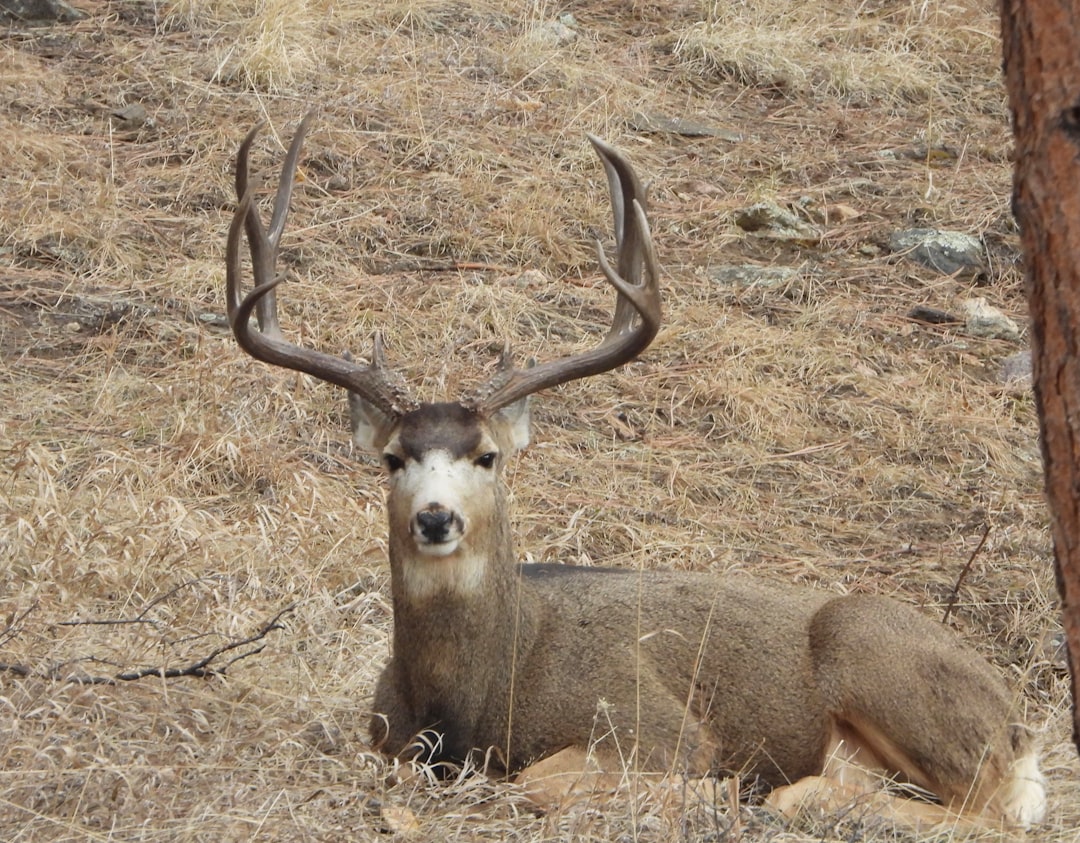
For mule deer, a mature buck's body appears front-heavy with a thick neck that blends into his shoulders. His belly sags slightly, and his legs look short relative to his body depth. Young bucks, even those with decent antlers, show more defined waistlines and appear longer-legged. Pronghorn bucks display the same pattern — a mature boomer has a barrel chest and thick neck that smaller bucks lack.
Reference Points for Antler Measurements
Your binoculars cannot measure inches, but they can compare proportions. Use the animal's body as your ruler. An elk's ear tip to tip spans roughly 16 inches when he faces you. From ear base to nose tip runs about 18 inches. His eye-to-nose measurement sits around 10 inches. These reference points let you estimate main beam length, tine length, and spread.
For a 6x6 bull elk, compare his third tine (G3) to his ear length. If that tine matches or exceeds his ear, you are looking at solid length. Check whether his main beams extend past his nose when he lifts his head — that signals good beam length. His inside spread should reach or exceed his ear-tip width if he scores well.
Mule deer ears measure about 20 inches tip to tip. A buck with forks extending beyond his ears has good width. Compare his G2 length to his ear height — if the G2 matches his ear, that fork is pushing 10 inches. A mature 4x4 should show mass throughout, with main beams that stay thick all the way to the G4.
Mass Separates Good From Great
Antler mass is where average animals separate from trophies, and it is the hardest element to judge through glass. Mass counts for a significant portion of official scores, yet hunters often focus solely on point count and spread. Train yourself to evaluate the circumference of bases, main beams, and points.
On elk, look at the base circumference where the antler meets the skull. A bull with bases that appear as thick as your wrist when viewed head-on carries serious mass. His beams should maintain thickness throughout rather than tapering quickly. Even his tine bases should show substantial diameter where they leave the main beam.
For mule deer, check the main beam thickness where it curves upward from the burr. Compare beam diameter to the buck's eye width — heavy-beamed deer show beams nearly as thick as their eyes appear through your glass. Deep forks with minimal taper indicate a mature, high-scoring buck.
Age Class Indicators
Age determines both body development and antler potential. Younger animals may show promise but rarely achieve their genetic peak. Learning to separate age classes keeps you from burning a tag on potential rather than reality.
Elk bulls show age through body proportions and behavior. Two- and three-year-old raghorns appear lanky with minimal neck swelling even during the rut. Four- and five-year-old bulls develop thicker bodies but still show some refinement in their build. Mature six-plus-year-old bulls appear blocky, move deliberately, and dominate other bulls through presence rather than aggression.
Mule deer bucks betray their age through antler characteristics and behavior. Young bucks grow tall, narrow racks with minimal mass. Their foreheads appear flat rather than dished. Five- to seven-year-old bucks develop the dished face, heavy mass, and behavioral dominance that marks them as fully mature. They feed calmly while younger bucks act nervous and subordinate.
Free to join
Download mobile app
- Detailed draw odds
- Point tracking
- Deadline reminders
- 18 states covered


Free to join
Download mobile app
- Detailed draw odds
- Point tracking
- Deadline reminders
- 18 states covered
Free to join
Download mobile app
- Detailed draw odds
- Point tracking
- Deadline reminders
- 18 states covered

Species-Specific Judging Strategies
Each western big-game species requires adjusted techniques. Pronghorn bucks demand focus on prong length and mass rather than just horn height. A mature buck shows prongs (cutters) that extend at least halfway up his main horn. His horn bases appear thick, and his main horns show minimal taper until the top third. Mass separates book bucks from average ones — look for bases that appear as thick as your thumb through 10x glass at 400 yards.
Bighorn sheep judging combines horn curl, mass, and brooming. A full-curl ram's horns circle until the tips align with or pass his eye when viewed from the side. Three-quarter-curl rams often score higher due to less brooming and better mass. Focus on the first and second quarter measurements where mass counts most. Brooming reduces length but can indicate age and survival — decide whether you value score or character.
Mountain goat assessment differs entirely because you are judging mass and length rather than spreads or points. A mature billy carries thick, black horns with minimal curve until the last few inches. His body appears blocky and larger than a nanny. Look for worn horn tips and a deeper chest. Billies often travel alone or in bachelor groups during summer and fall.
The Systematic Glassing Process
Develop a repeatable mental checklist when you spot an animal. First, confirm species and sex. Second, assess body size and proportions to determine maturity. Third, compare antler dimensions to body reference points. Fourth, evaluate mass throughout the rack. Fifth, count points and check for symmetry. Sixth, consider the animal's behavior and dominance within any visible group.
This sequence prevents fixation on a single impressive feature like spread or point count while missing weak mass or immature body development. A systematic approach also helps you articulate to hunting partners why you judge an animal as shooter quality or not.
Practice Makes Permanent
Field judging improves through repetition and calibration. Glass every animal you encounter, make your assessment, then compare notes with experienced hunters or validate your judgment if you harvest the animal. Photograph animals through your spotter and study those images later. Many serious hunters keep a notebook with sketches and estimates compared to actual measurements.
Attend shed hunting in spring to handle real antlers and internalize what 5-inch mass or 14-inch main beams actually feel like. Visit taxidermists to see mounted animals with known scores. The more reference points you build, the faster and more accurate your field assessments become.
When Snap Decisions Matter
Some hunting situations demand instant judgment. A bull steps into a clearing for 10 seconds before disappearing into dark timber. A buck crests a ridge at last light. You cannot always run through a complete mental checklist. This is where pattern recognition developed through hours of glassing pays off.
Train yourself to assess the overall package instantly. Does the animal look heavy and mature, or tall and lean? Are the antlers thick or spindly? Does his body language suggest dominance? These gestalt impressions, built through experience, often prove as reliable as detailed point-by-point analysis.
TAGZ Tools for Pre-Hunt Research
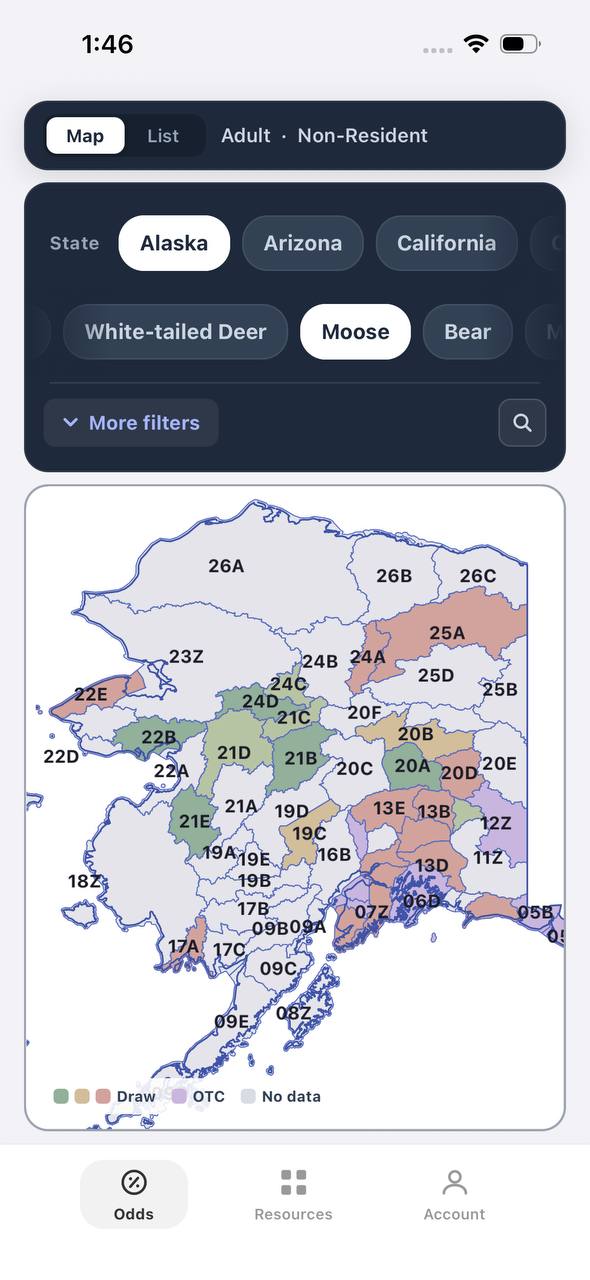
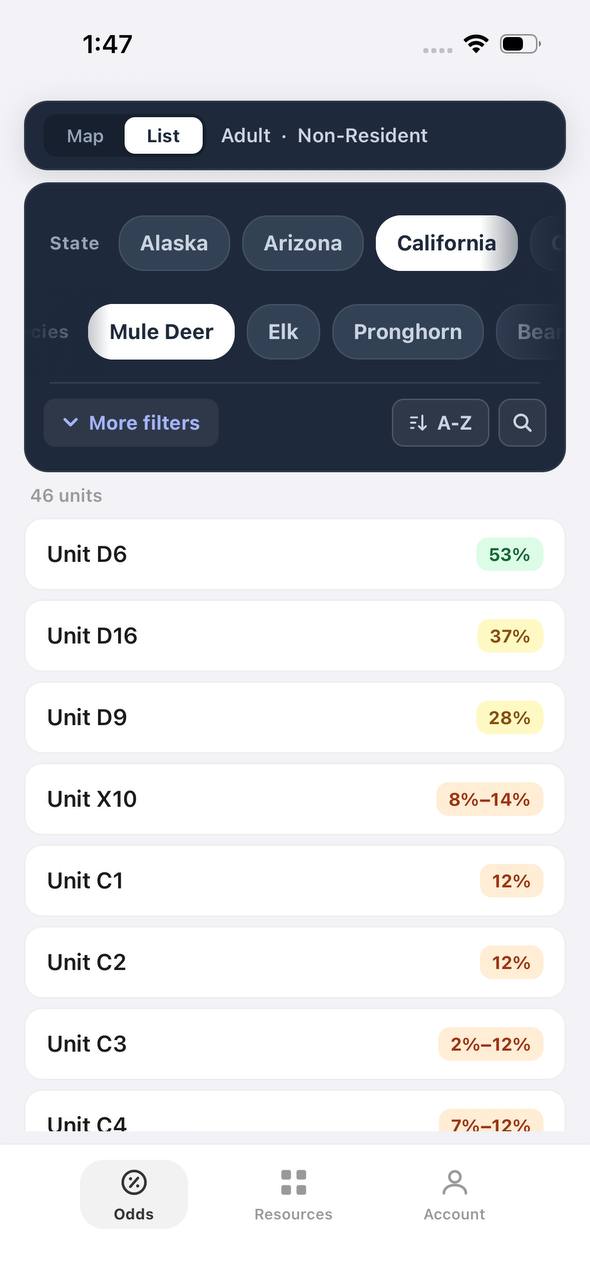
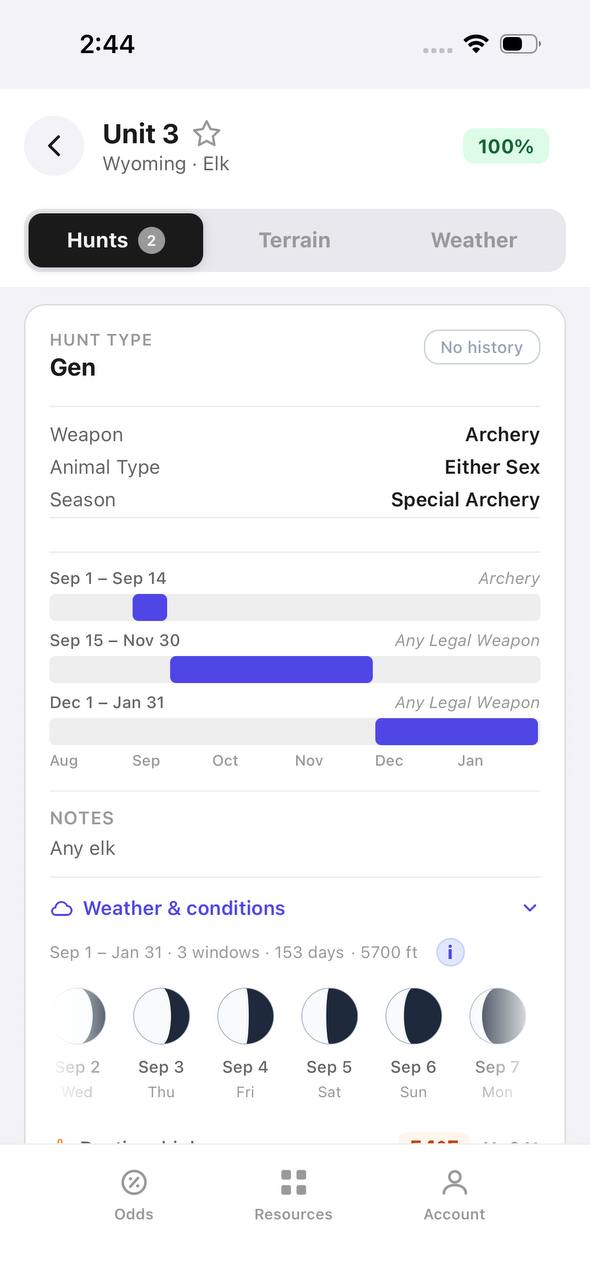
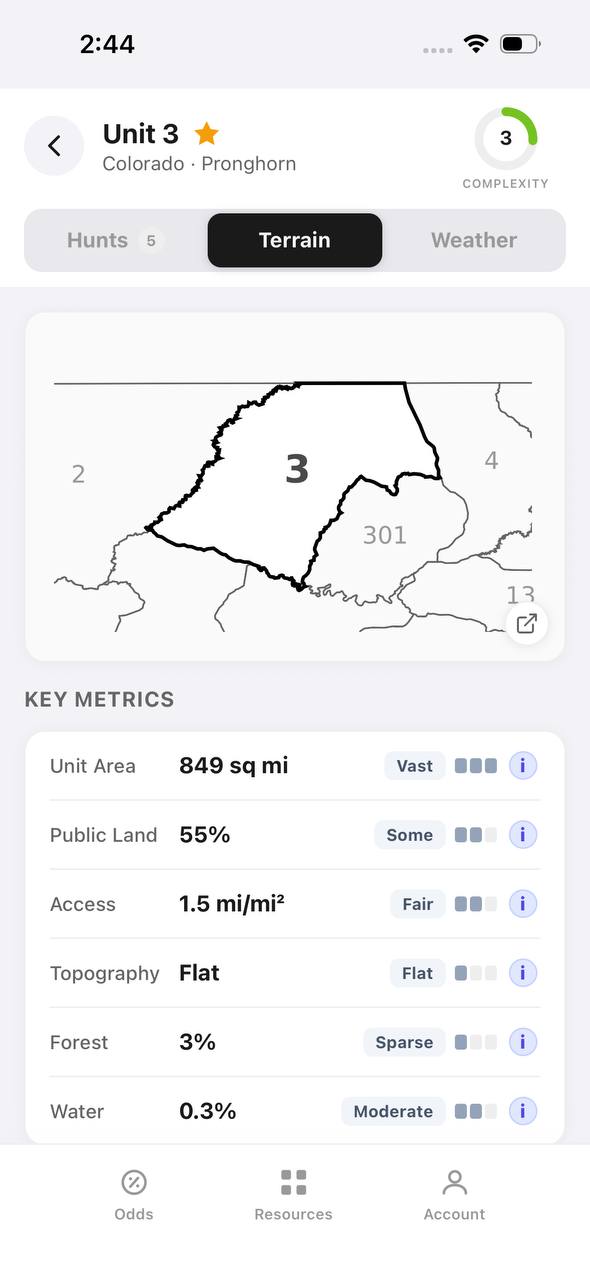
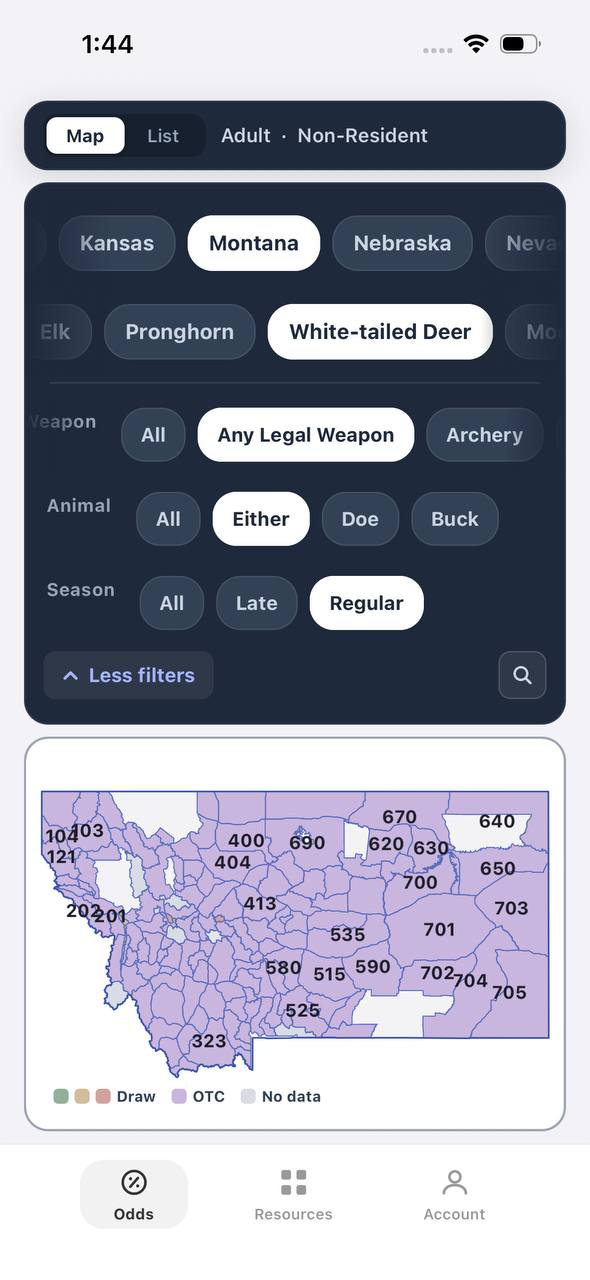
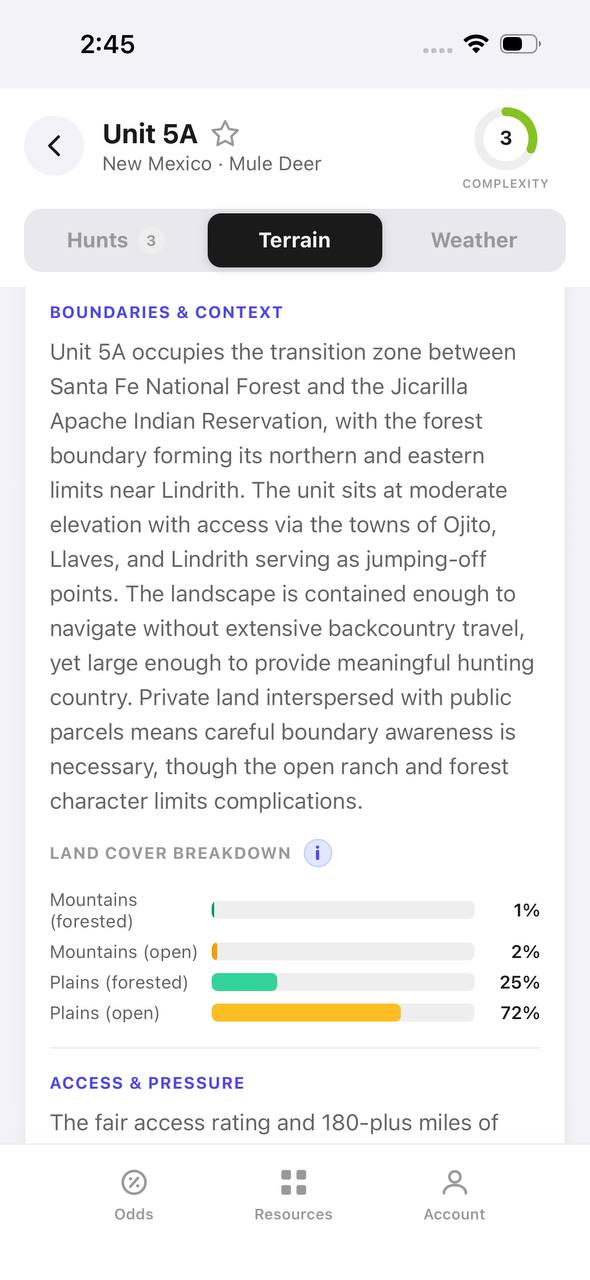
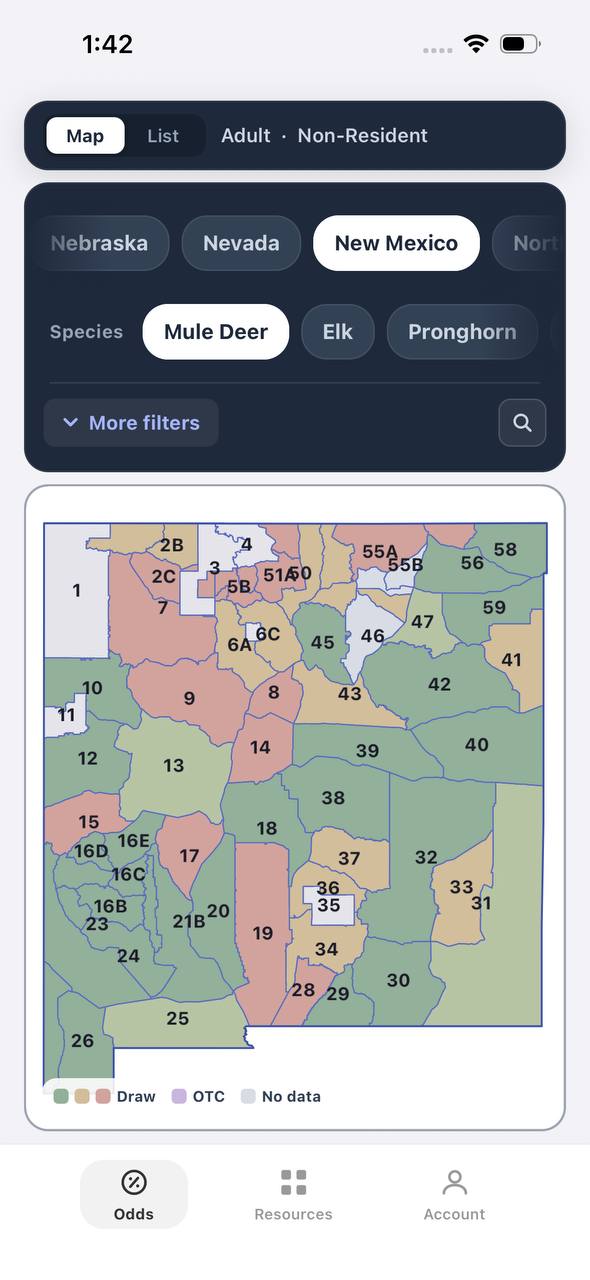
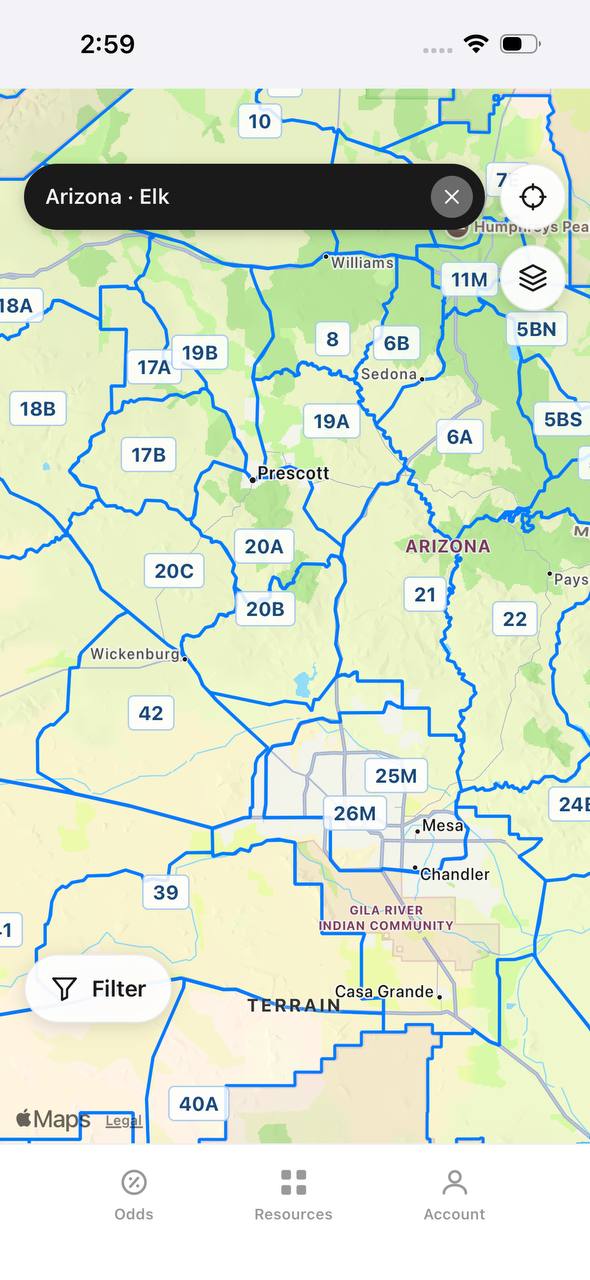
Understanding what constitutes a good animal in your chosen unit starts before you leave home. TAGZ provides unit-specific data including terrain maps and public land boundaries so you know where trophy-class animals winter, summer, and rut. Compare units side by side to identify areas producing mature age-class animals rather than units with high hunter densities and younger harvests. Historical draw data helps you target units where your points give you realistic odds at hunting areas known for quality rather than just opportunity.
Study unit harvest statistics to understand realistic expectations. If a unit's average bull scores 310, then a 340 bull represents an exceptional animal worth a hard stalk. If the average runs 280, your standards adjust accordingly. TAGZ helps you set realistic trophy goals based on actual unit production rather than Instagram fantasies.
Common Judging Mistakes to Avoid
New hunters consistently overestimate antler size because they lack calibrated reference points. A mule deer buck with 22-inch-wide ears looks massive through binoculars if you think his ears span 16 inches. Verify your reference measurements before opening day.
Spread creates visual impact but contributes less to official scores than mass and point length. A 40-inch-wide bull with weak mass often scores lower than a 38-inch bull carrying heavy antlers throughout. Train yourself to see mass rather than fixating on width.
Confirmation bias causes hunters to see what they want rather than what exists. Once you mentally label an animal as shooter quality, you stop critically evaluating weak points. Force yourself to identify the animal's worst feature before committing to a stalk.
FAQ — Judging Animals Through Binoculars
What magnification binoculars work best for judging animals?
10x42 binoculars provide the best balance of magnification, field of view, and light gathering for field judging at typical glassing distances of 400-800 yards. 12x50 or 15x56 binoculars offer more detail but require steadier hands or a tripod.
How do you estimate antler mass through binoculars?
Compare beam and base circumference to reference points like the animal's eye width or your own thumb width at arm's length through the glass. Heavy mass appears nearly as thick as the animal's eye, while light mass looks pencil-thin even at the bases.
Can you accurately judge a bull elk without seeing him broadside?
You can assess body maturity and mass from any angle, but accurately estimating beam length, fourth and fifth point length, and overall symmetry requires at least a quartering view. Wait for the animal to turn if time allows.
What is the biggest mistake when field judging big game?
Overestimating size due to uncalibrated reference points. Hunters who do not know that elk ears span 16 inches or mule deer ears measure 20 inches consistently misjudge antler dimensions by significant margins.
Should you judge animals in early morning low light?
Low light exaggerates antler size because dark antlers silhouette against lighter backgrounds. Whenever possible, reconfirm your assessment in better light before committing to a stalk. Animals often look smaller in full daylight.
How long should you glass an animal before deciding to stalk?
Glass until you confidently confirm he meets your standards or until circumstances force a decision. For a relaxed feeding animal, take 5-10 minutes to evaluate all criteria. For an alert or moving animal, make the best assessment possible within the time available.
Was this article helpful?
Previous
Best Mule Deer Broadheads for Western Bowhunters in 2025
Choosing the right broadhead can make or break your mule deer hunt. This guide breaks down the top fixed-blade and mechanical broadheads for western terrain, plus how to match your setup to shot distances and conditions.
Related
Best 7mm-08 Mule Deer Ammo: Top Loads for Western Hunts
The 7mm-08 Remington delivers excellent performance on mule deer with the right ammunition. This guide covers the best factory loads and bullet weights for western hunting situations, from open sagebrush to timber.

Next
Best Triggers for Hunting Rifles: Drop-In Upgrades That Matter in the Field
A quality aftermarket trigger transforms accuracy and confidence on hunting rifles. We break down the best drop-in triggers for Remington 700, Savage, Ruger American, and Tikka platforms, explain adjustable vs. fixed weight, and show why trigger control matters more than most hunters realize.