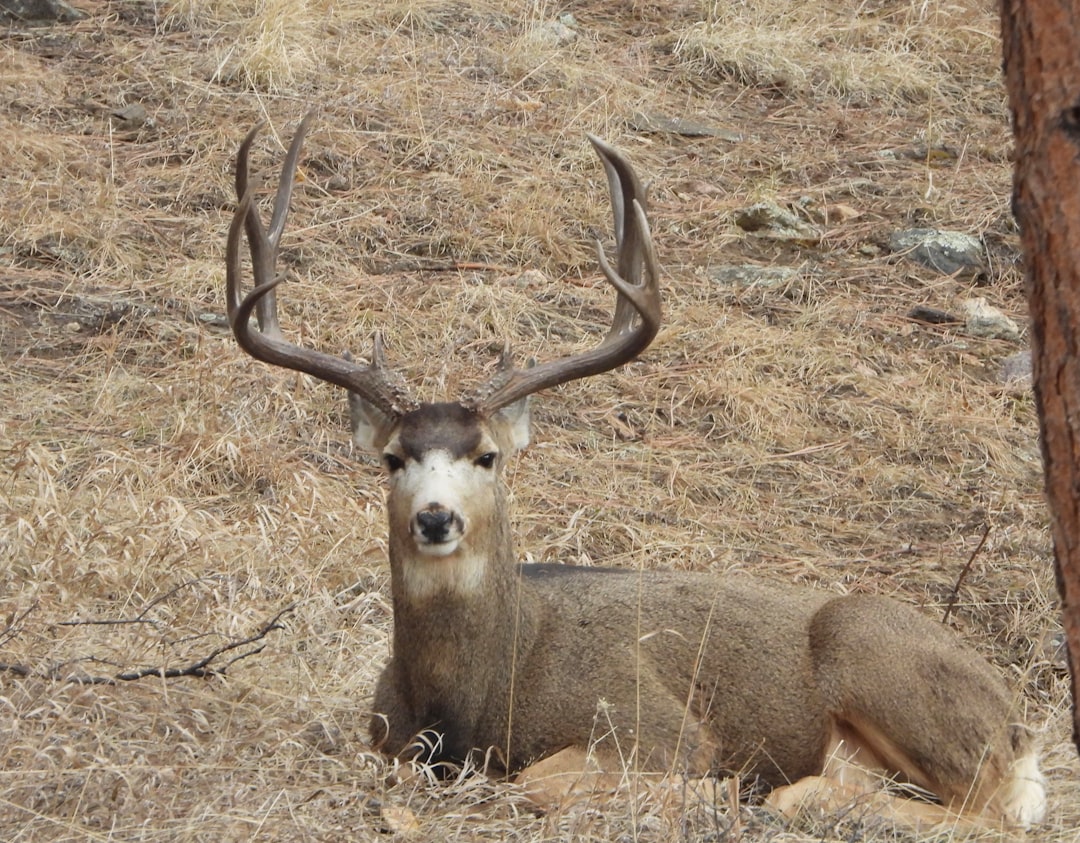
Best 7mm-08 Mule Deer Ammo: Top Loads for Western Hunts
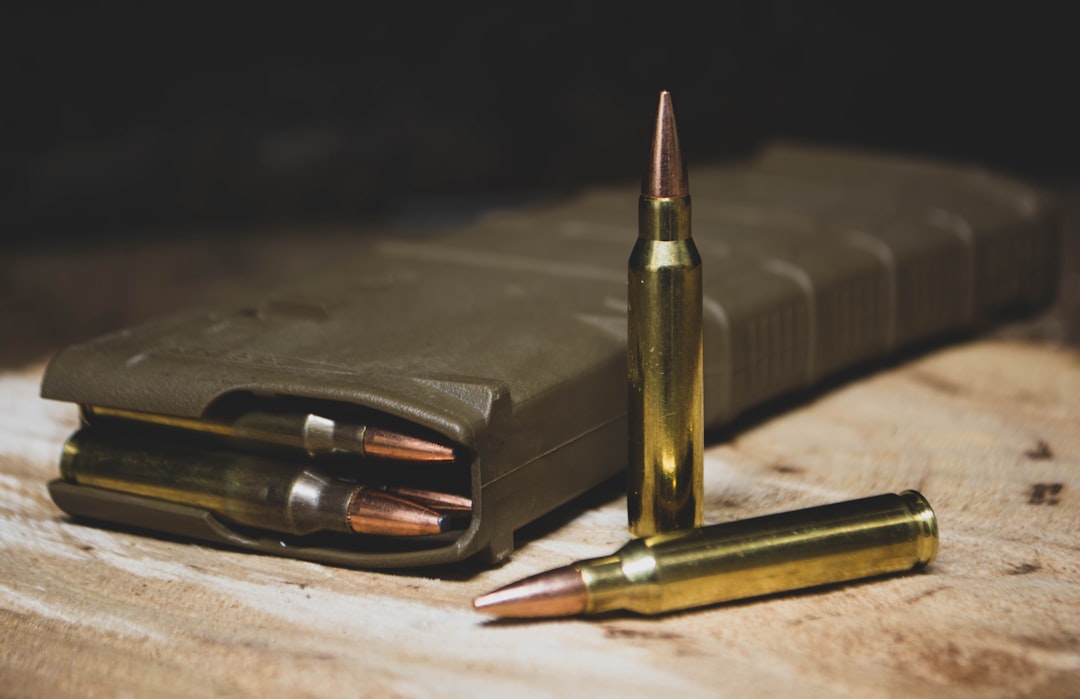
The 7mm-08 Remington has earned a loyal following among western mule deer hunters who value moderate recoil, flat trajectory, and lethal performance on medium game. Choosing the right ammunition transforms this efficient cartridge into a dependable mule deer round from 50 to 400 yards. This guide breaks down the best factory loads, optimal bullet weights, and real-world performance considerations for hunting muleys across the West.
Why the 7mm-08 Works for Mule Deer
The 7mm-08 launches 120- to 160-grain bullets at velocities that balance energy retention with shooter comfort. A 140-grain bullet typically leaves the muzzle around 2,800 fps, delivering over 1,500 foot-pounds of energy at 300 yards — more than enough for clean kills on mule deer. The cartridge's moderate recoil allows most hunters to shoot accurately without flinching, which matters more than raw power when you are settling the crosshairs on a buck at 350 yards.
Mule deer anatomy demands controlled expansion and deep penetration. A mature muley buck can weigh 200 to 300 pounds, with heavy bone structure through the shoulders. Bullets that expand too rapidly risk shallow wounds, while tough monolithics may pencil through without creating adequate wound channels. The 7mm-08's velocity window pairs well with premium hunting bullets designed to expand reliably at moderate impact speeds.
Top 7mm-08 Factory Loads for Mule Deer
Federal Premium 140-Grain Nosler Partition
The Nosler Partition has anchored game across North America for decades. Its dual-core design ensures the front half mushrooms aggressively while the rear core drives deep, even through heavy shoulder bone. Federal's 140-grain load runs around 2,800 fps and delivers consistent 1.5-inch groups in most rifles. This is the choice when you need absolute reliability on quartering shots or when a buck presents only a hard-angle opportunity.
Hornady Precision Hunter 150-Grain ELD-X
Hornady's 150-grain ELD-X offers exceptional long-range performance with a high ballistic coefficient (BC of .574) that resists wind drift. The Heat Shield tip prevents in-flight deformation, maintaining accuracy past 400 yards. The InterLock ring and thick jacket control expansion at 7mm-08 velocities, producing wide wound channels without excessive meat damage. Expect sub-MOA accuracy and devastating terminal performance on broadside and quartering-away shots.
Barnes VOR-TX 120-Grain TTSX
For hunters who prioritize deep penetration and maximum weight retention, the all-copper 120-grain TTSX is hard to beat. This lighter bullet achieves higher velocities (around 3,000 fps) while the monolithic construction ensures near 100-percent weight retention. Four razor-sharp petals expand reliably even at extended ranges where impact velocity drops below 2,000 fps. The TTSX excels in timber where close shots through brush are common, and when hunting areas with lead-free ammunition requirements like California.
Winchester Deer Season XP 140-Grain Extreme Point
Budget-conscious hunters should not overlook Winchester's Deer Season XP line. The 140-grain Extreme Point features an oversized polymer tip that initiates rapid expansion, paired with a tapered jacket that controls penetration. At roughly half the price of premium loads, this ammunition delivers consistent accuracy and clean kills inside 300 yards. It is an excellent choice for hunters who practice extensively and need affordable ammo that still performs when it counts.
Federal Premium 140-Grain AccuBond
The Nosler AccuBond bonded-core bullet combines the best traits of cup-and-core and monolithic designs. The lead core is chemically bonded to the gilding metal jacket, preventing separation on impact while maintaining 60- to 70-percent weight retention. Federal's 140-grain load delivers match-grade accuracy with hunting-bullet lethality. This is the do-everything load for hunters who chase muleys in varied terrain, from alpine basins to oak brush hillsides.
Bullet Weight Selection Strategy
Choosing between 120-, 140-, and 150-grain bullets depends on your hunting style and typical shot distances. Lighter 120-grain bullets shoot flatter and carry more velocity at extended range, making them ideal for open-country hunts where shots past 300 yards are likely. The reduced recoil also benefits newer shooters or those using lightweight mountain rifles.
Mid-weight 140-grain bullets represent the sweet spot for most mule deer hunting. They balance trajectory, energy retention, and terminal performance across the widest range of scenarios. A 140-grain bullet maintains over 1,800 fps impact velocity past 400 yards in most loads, ensuring reliable expansion.
Heavier 150- to 160-grain bullets excel when penetration is paramount. If you hunt thick timber where close shots through brush are common, or if you are planning a combination hunt that might include elk, the extra sectional density drives bullets deeper. The tradeoff is a more arched trajectory that requires precise range estimation beyond 250 yards.
Ballistic Performance Comparison
At 300 yards, a 140-grain bullet with a BC around .500 launched at 2,800 fps drops approximately 18 inches and retains 1,650 foot-pounds of energy with a 200-yard zero. Wind drift in a 10-mph crosswind runs about 8 inches. A 150-grain high-BC bullet (BC .574) drops closer to 16 inches with similar energy but better wind performance — roughly 6.5 inches of drift.
The 120-grain TTSX, despite its lighter weight, maintains competitive performance due to superior aerodynamics. With a BC around .412 and muzzle velocity near 3,000 fps, it drops 19 inches at 300 yards but still carries 1,500 foot-pounds of energy. The flatter trajectory inside 250 yards makes holdover simpler on steep mountain shots.
These numbers assume standard atmospheric conditions at moderate western elevations (5,000 to 7,000 feet). Higher elevations reduce air density, flattening trajectories slightly. Always verify your specific load's performance with a ballistic calculator or actual range time before the season.
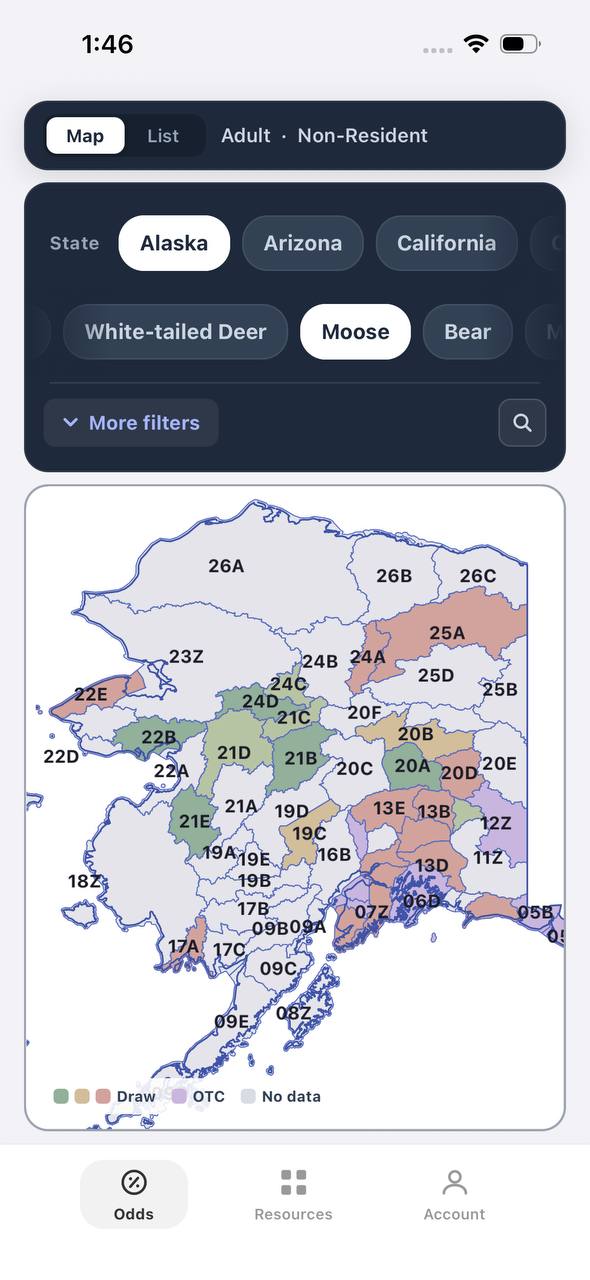
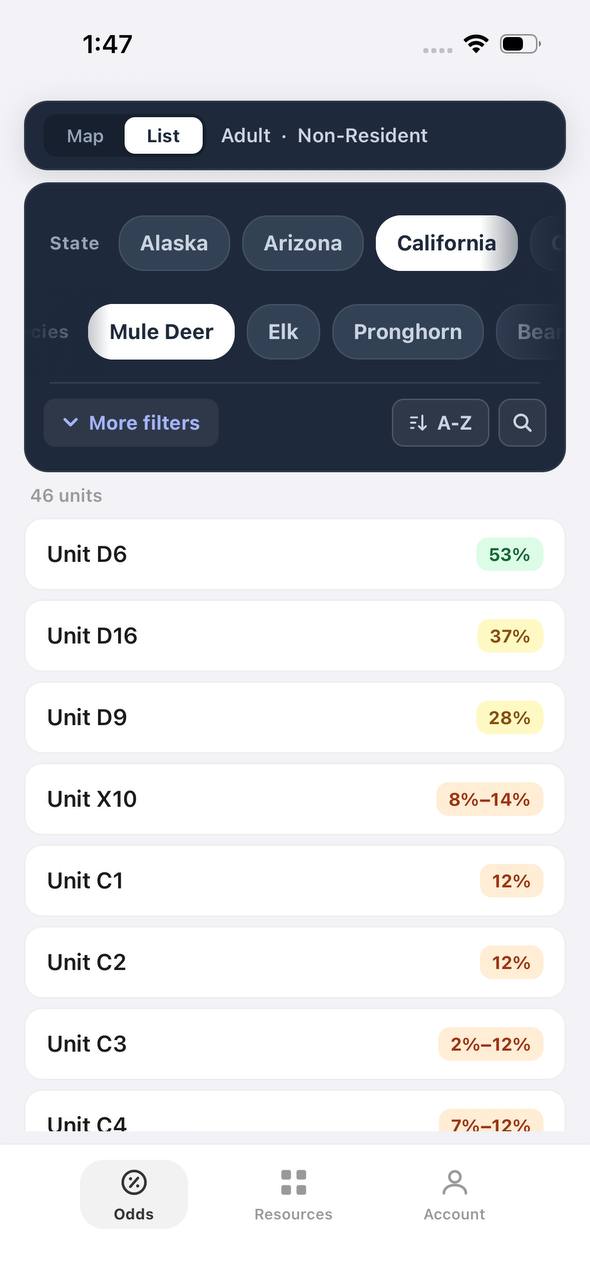
Free to join
Download mobile app
- Detailed draw odds
- Point tracking
- Deadline reminders
- 18 states covered


Free to join
Download mobile app
- Detailed draw odds
- Point tracking
- Deadline reminders
- 18 states covered
Free to join
Download mobile app
- Detailed draw odds
- Point tracking
- Deadline reminders
- 18 states covered

Terminal Performance Considerations
Mule deer present diverse shot angles and ranges. A buck bedded in sagebrush at 400 yards demands precise bullet placement and adequate expansion at lower impact velocities. Conversely, a deer jumped in oak brush at 75 yards requires a bullet that will not fragment on impact or over-expand, destroying meat.
Bonded-core bullets like the AccuBond and Partition handle this range best, expanding predictably from 1,800 fps to over 3,000 fps impact velocity. Monolithic bullets like the TTSX need slightly higher impact speeds (2,000 fps minimum) to expand reliably, but they penetrate deeper when they do.
Cup-and-core bullets (non-bonded) work well inside 250 yards but risk jacket separation on heavy bone at close range or insufficient expansion at extended distances. Save traditional cup-and-core loads for situations where you control shot distance and can avoid hard-quartering angles.
Accuracy and Rifle Compatibility
Every rifle has ammunition preferences. The 7mm-08 typically favors 140-grain bullets due to its 1:9.5-inch twist rate, though modern rifles with 1:9 or faster twists stabilize 150-grain and heavier bullets with ease. Lighter 120-grain bullets usually shoot well in any 7mm-08.
Start load testing with three-shot groups at 100 yards. Most quality factory ammunition should produce 1.5-inch groups or better. Premium loads often deliver sub-MOA accuracy. If a specific load groups poorly, try a different bullet weight or manufacturer before assuming your rifle is the problem.
Pay attention to point of impact shifts between loads. A rifle zeroed for 140-grain Partitions may shoot 3 inches high or low with 150-grain ELD-X at 100 yards due to velocity and ballistic coefficient differences. Verify zero with your chosen hunting load before the season, and resist the temptation to practice with cheaper ammo that shoots to a different point of impact.
Hunting Application Recommendations
For open-country hunts where shots average 200 to 400 yards, prioritize high-BC bullets like the 150-grain ELD-X or 140-grain AccuBond. The flatter trajectory and reduced wind drift give you more margin for error on range estimation and wind calls. Practice from field positions and verify drops at extended ranges during pre-season scouting trips.
Timber and brush hunting demands bullets that penetrate reliably and perform at close range. The 140-grain Partition or 120-grain TTSX excel here. Both bullets drive through bone and light brush without deflecting significantly, and they create wide wound channels that anchor deer quickly. Zero at 100 yards for simplified holdovers inside 200 yards.
Combination hunters planning to pursue both mule deer and elk benefit from heavier, tougher bullets. The 150-grain ELD-X or 140-grain Partition provide enough penetration for frontal or steep-angle elk shots while remaining effective on deer. The 7mm-08 sits at the minimum for elk, so bullet selection becomes critical — prioritize controlled expansion and weight retention over velocity.
California and lead-free zones require monolithic or lead-free bullets. The Barnes 120-grain TTSX is the proven choice, but Federal's 140-grain copper bullet and Hornady's GMX also perform well. Monolithics shoot clean and penetrate deep, though they may require adjusting to slightly different point-of-impact and trajectory compared to lead-core bullets.
Practical Field Tips
Verify your rifle's zero at the elevation you will hunt. Atmospheric pressure changes between sea level practice ranges and 8,000-foot mule deer country affect trajectory enough to shift point of impact 2 to 3 inches at 300 yards. If possible, confirm zero after arriving at your hunting location.
Carry a ballistic drop chart or use a rangefinder with angle compensation. Even the flattest-shooting 7mm-08 load drops significantly past 300 yards, and steep mountain angles complicate holdover. Knowing your exact drop at 50-yard increments prevents wounding shots caused by trajectory misjudgment.
Practice from realistic field positions. Bench rest accuracy rarely translates directly to kneeling, sitting, or prone shots on uneven ground. Spend range time shooting from these positions with your hunting load to understand your effective range under field conditions. Most hunters' practical limit is closer than their equipment's theoretical capability.
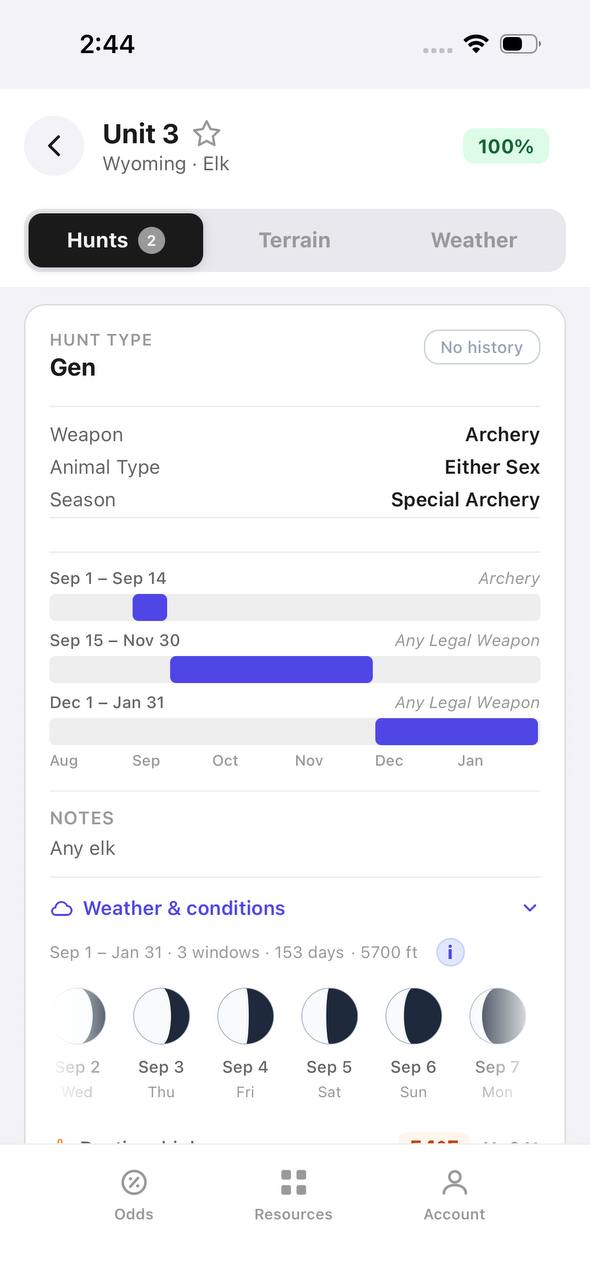
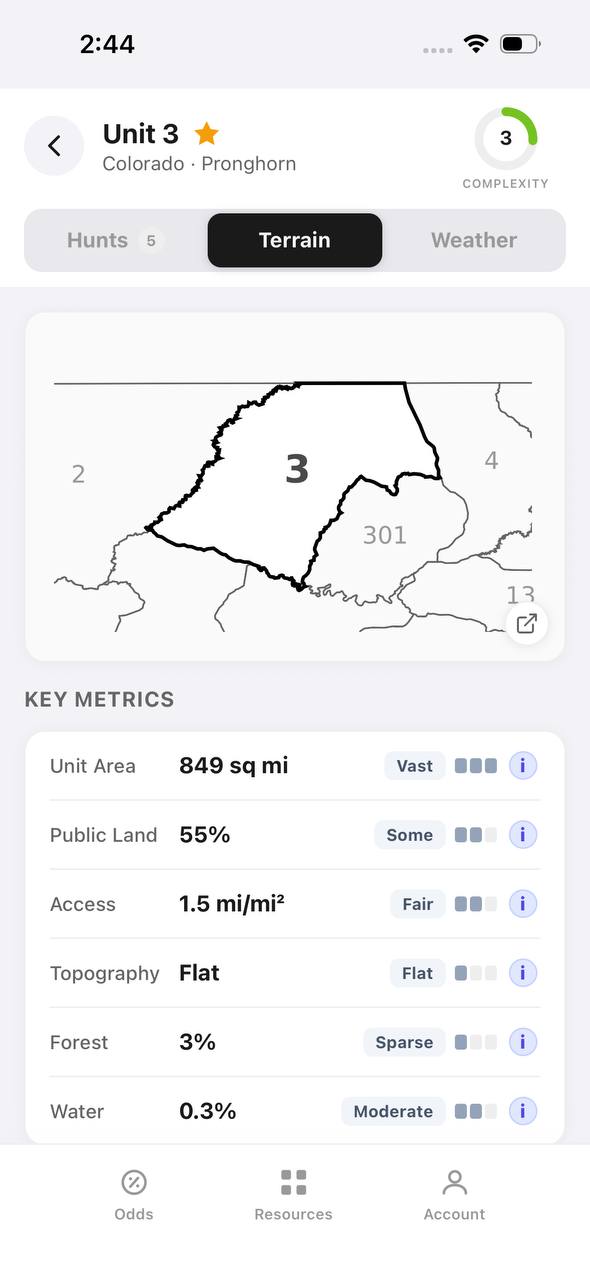
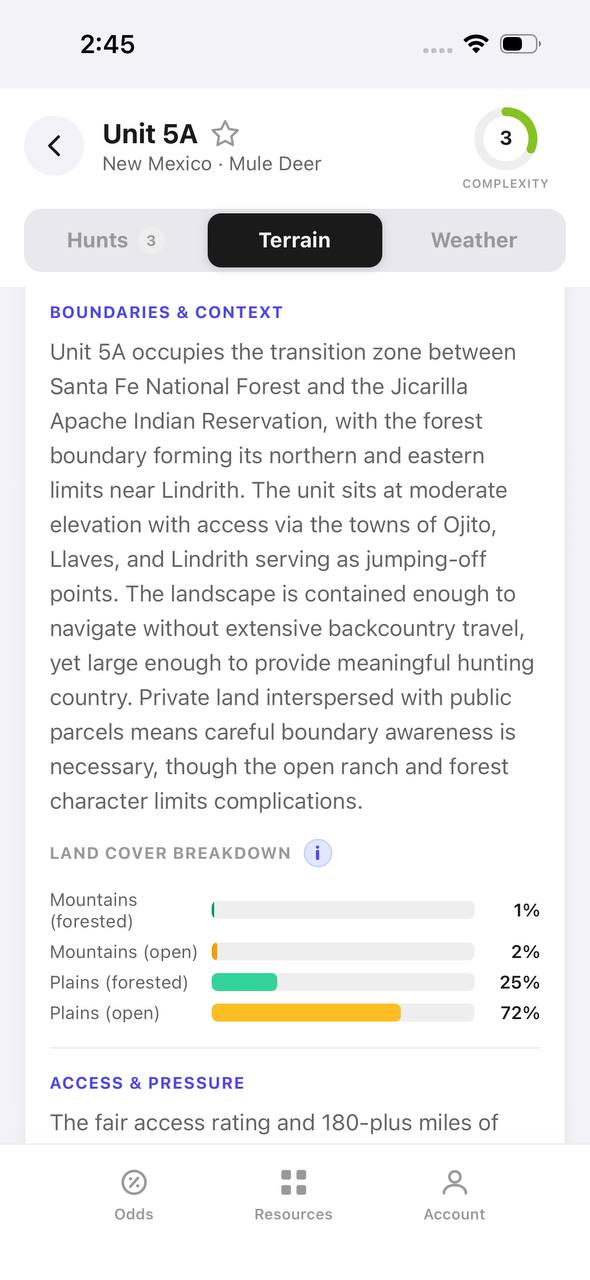
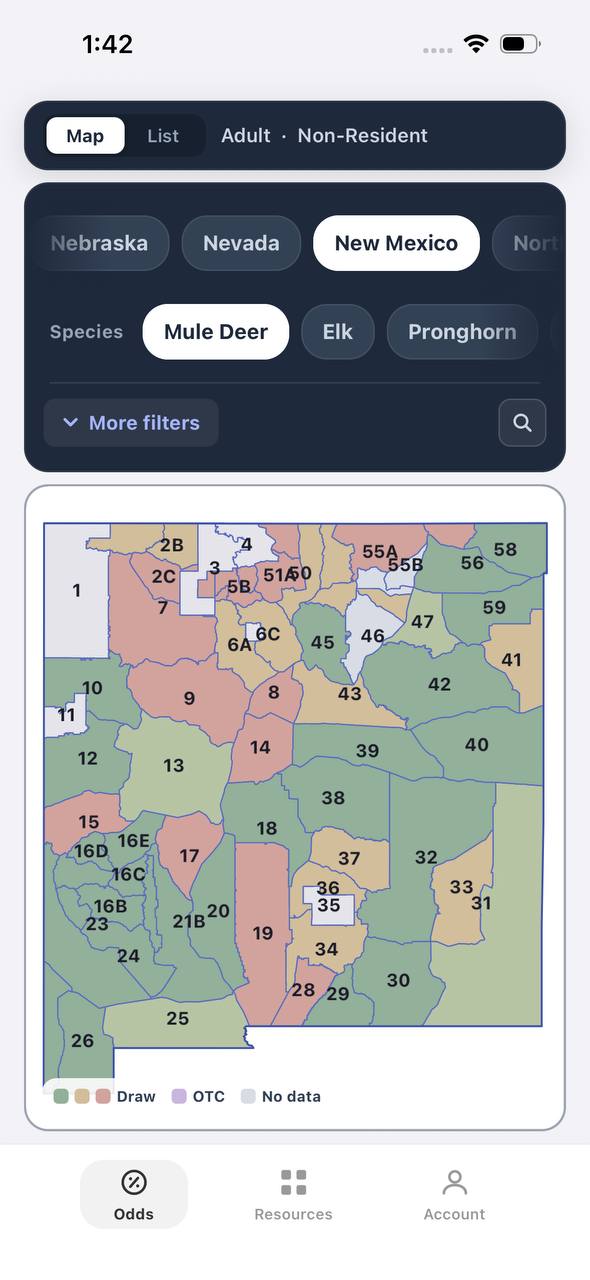
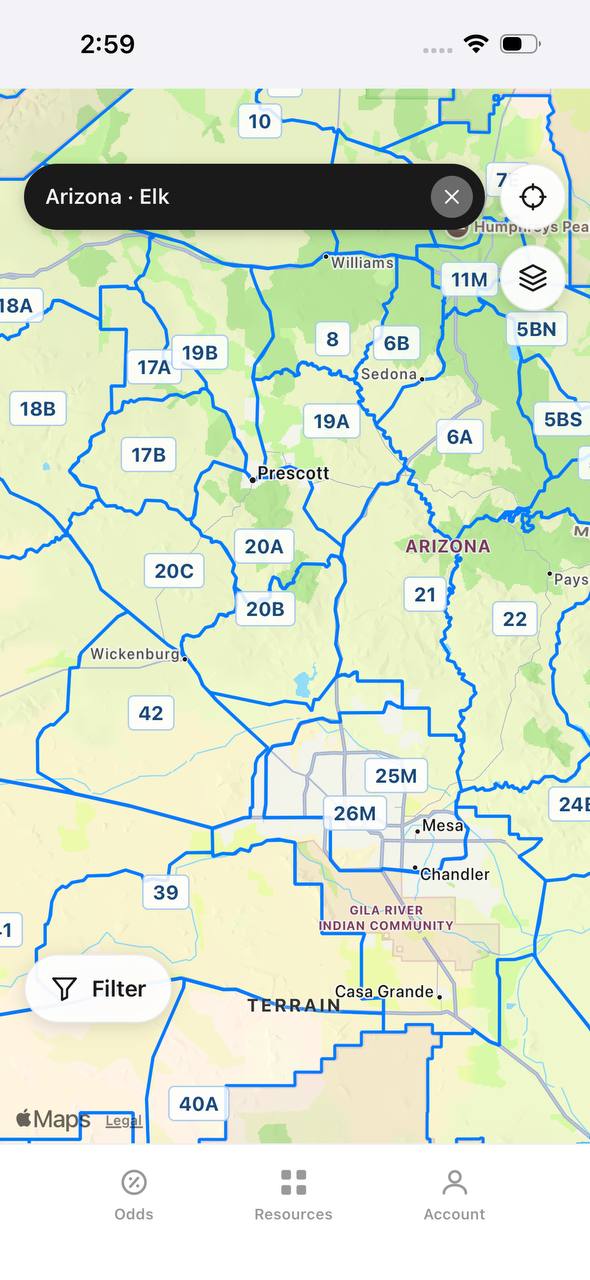
TRAGZ helps hunters identify units with terrain that matches their shooting skills and equipment. Whether you prefer open basins where the 7mm-08's flat trajectory shines, or timbered hillsides where close shots are the norm, TAGZ filters units by weapon type, season, and terrain characteristics. Track draw odds, research unit boundaries, and plan hunts where your rifle and ammunition combination gives you the best advantage.
Ammunition Availability and Cost
Premium 7mm-08 hunting ammunition typically costs $35 to $55 per 20-round box. Barnes VOR-TX and Federal Premium Terminal Ascent sit at the higher end, while Winchester Deer Season XP and Hornady American Whitetail offer good performance around $25 to $30 per box. Budget for at least three boxes — one for zero confirmation, one for practice, and one for the hunt.
Availability varies by region and season. Coastal states with larger hunter populations often see quicker sellouts of premium loads during summer and early fall. Order online 3 to 4 months before your hunt to ensure you get your first-choice load. Buying early also allows time for load testing and practice.
If your preferred load is unavailable, choose a similar bullet weight and construction. A 140-grain AccuBond can substitute for a 140-grain Partition in most hunting scenarios, though you should verify point of impact and adjust your zero accordingly. Avoid switching between drastically different bullet weights (120 to 150 grains) without re-zeroing.
FAQ — 7mm-08 Mule Deer Ammo
What is the best bullet weight for 7mm-08 mule deer hunting?
140-grain bullets offer the best all-around performance for most western mule deer hunts. They balance flat trajectory, energy retention past 300 yards, and reliable expansion on medium game. Lighter 120-grain bullets work well for long-range open-country hunts, while 150-grain bullets excel in timber or when maximum penetration is needed.
Is the 7mm-08 powerful enough for mule deer at 400 yards?
Yes, with the right ammunition. Premium loads like the 150-grain ELD-X or 140-grain AccuBond retain over 1,500 foot-pounds of energy and maintain sufficient velocity for reliable expansion at 400 yards. Accurate shooting and proper range estimation become more critical than raw power at this distance.
Do I need premium ammunition for mule deer, or will budget loads work?
Budget loads like Winchester Deer Season XP perform well inside 250 yards on broadside shots. Premium ammunition earns its cost when you need consistent long-range accuracy, deep penetration on quartering angles, or maximum weight retention. For hunters who take one or two shots per season, the extra $20 per box is worth the confidence.
Should I use bonded or monolithic bullets for mule deer?
Bonded bullets like the AccuBond or Partition offer more versatile performance across varied shot distances and angles. Monolithic bullets like the Barnes TTSX penetrate deeper and retain nearly 100 percent of their weight, but they require higher impact velocities to expand reliably. Choose monolithics for close timber shots or lead-free zones, bonded bullets for mixed-range hunting.
How much does rifle twist rate affect 7mm-08 bullet selection?
Most 7mm-08 rifles have 1:9.5-inch twist rates that stabilize bullets up to 160 grains. Lighter 120-grain bullets work in any twist. If your rifle has a slower 1:10-inch twist, stick with 140-grain and lighter bullets. Faster 1:9 or 1:8 twists stabilize long, heavy bullets better but rarely appear in 7mm-08 factory rifles.
Can I use the same 7mm-08 load for mule deer and elk?
You can, but choose carefully. The 7mm-08 sits at the minimum for elk, so use tough, heavy bullets like the 150-grain Partition, 150-grain ELD-X, or 140-grain TTSX. Avoid rapid-expanding deer bullets that may not penetrate adequately on elk. Prioritize shot placement and limit shots to broadside or quartering-away presentations on elk.
Continue Planning Your Hunt
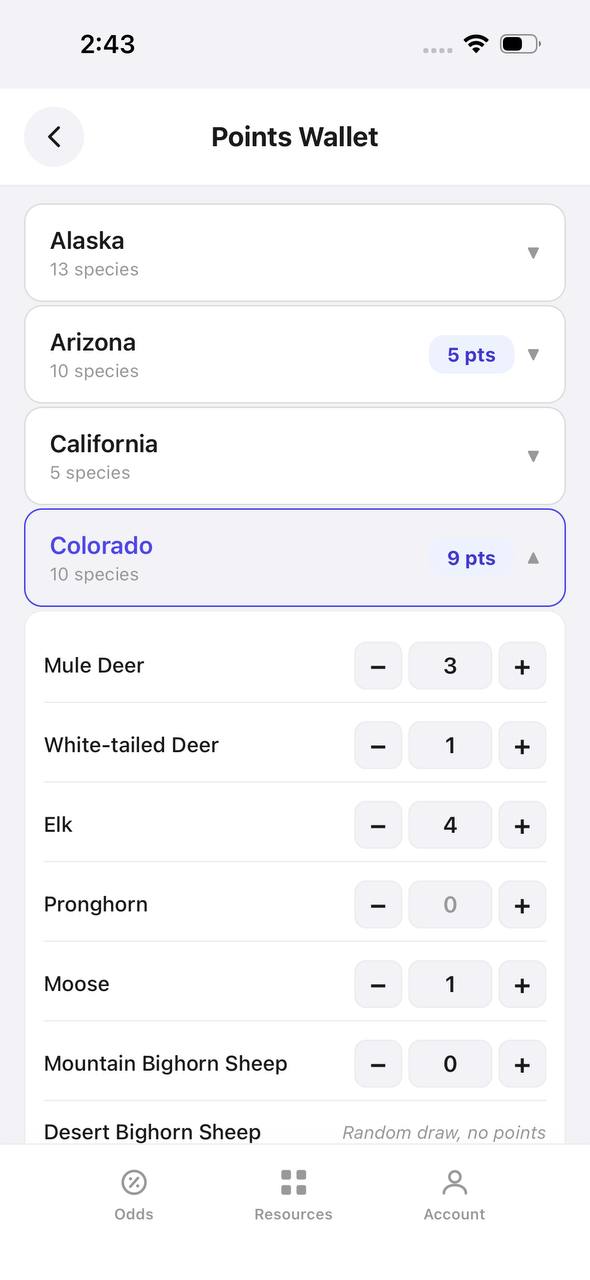
Selecting the right ammunition is just one piece of successful mule deer hunting. TAGZ simplifies western hunt planning by helping you compare draw odds across states, track preference points and bonus points, and research units using terrain maps and historical data. Whether you are chasing OTC tags in Colorado's high country or planning a limited-entry hunt in Nevada, TAGZ gives you the tools to make smarter application decisions.
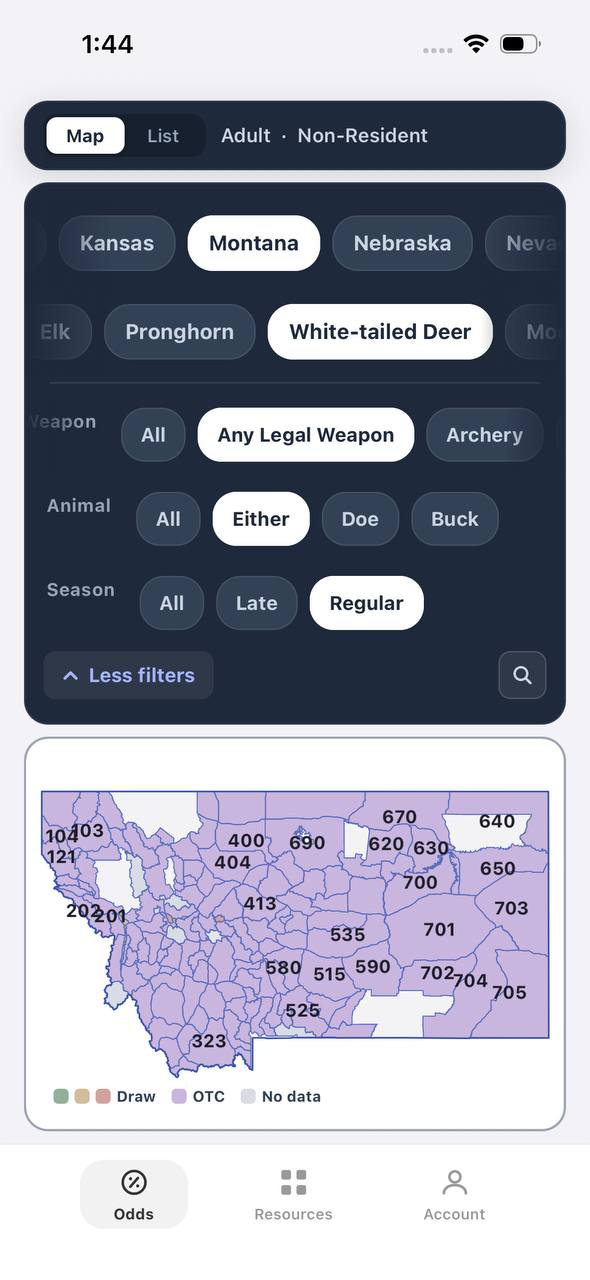
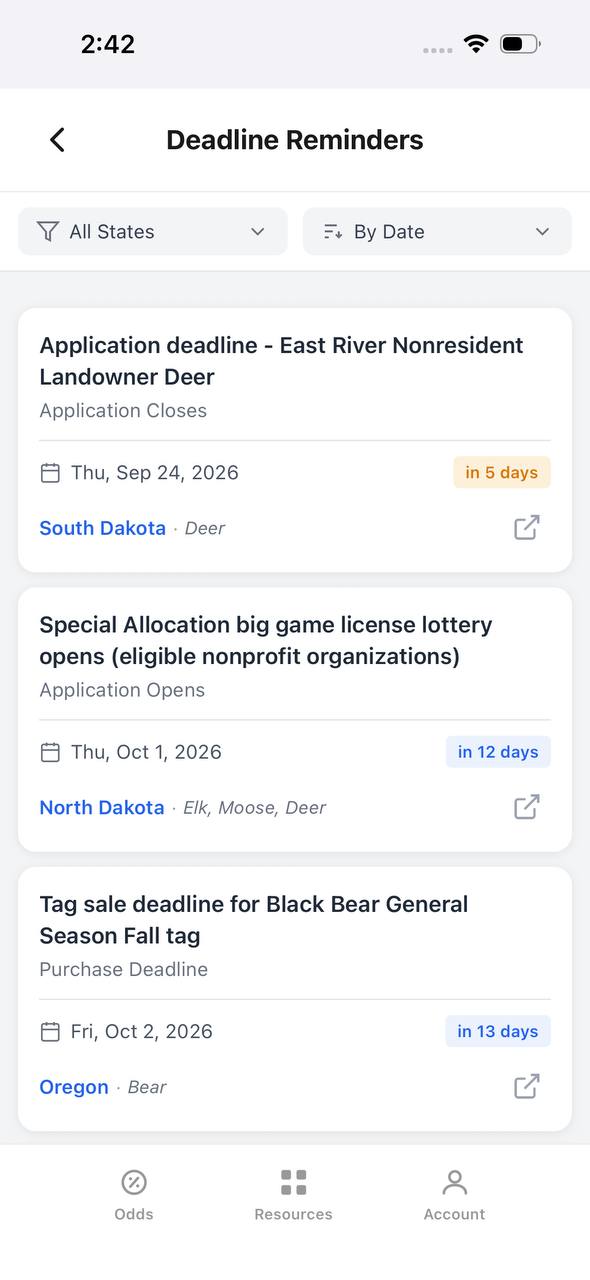
Filter units by weapon type, season dates, and success rates to find hunts that match your shooting ability and the effective range of your 7mm-08 setup. Track draw deadlines across multiple states so you never miss an application window. Explore unit boundaries and public land access to identify areas where open shots favor the 7mm-08's flat trajectory, or timbered pockets where close-range performance matters most.
Create your free account at TAGZ and start building your western hunting strategy. Compare units side by side, analyze terrain that fits your rifle and ammunition combination, and confidently plan hunts where you have the tools and knowledge to succeed. Visit the TAGZ Insights page for more hunting strategy articles, or explore our product features to see how draw odds tracking and unit research streamline your application season.
Was this article helpful?
Previous
How to Judge Animals Through Binoculars — Field Techniques for Trophy Assessment
Master the art of field judging big game through binoculars with proven techniques for estimating antler mass, body size, and age class. Learn what to look for when glassing elk, mule deer, pronghorn, and other western species before you commit to a stalk.

Related
Essential Gear Guide for Western Big-Game Hunters — What You Actually Need
From layering systems to optics and packs, this gear guide breaks down what serious western hunters need in the field. Focus on proven equipment that performs when it matters most.
Next
Best Mule Deer Broadheads for Western Bowhunters in 2025
Choosing the right broadhead can make or break your mule deer hunt. This guide breaks down the top fixed-blade and mechanical broadheads for western terrain, plus how to match your setup to shot distances and conditions.