How to Age a Bighorn Sheep Ram in the Field — Horn Growth, Brooming, and Quarter Curls Explained
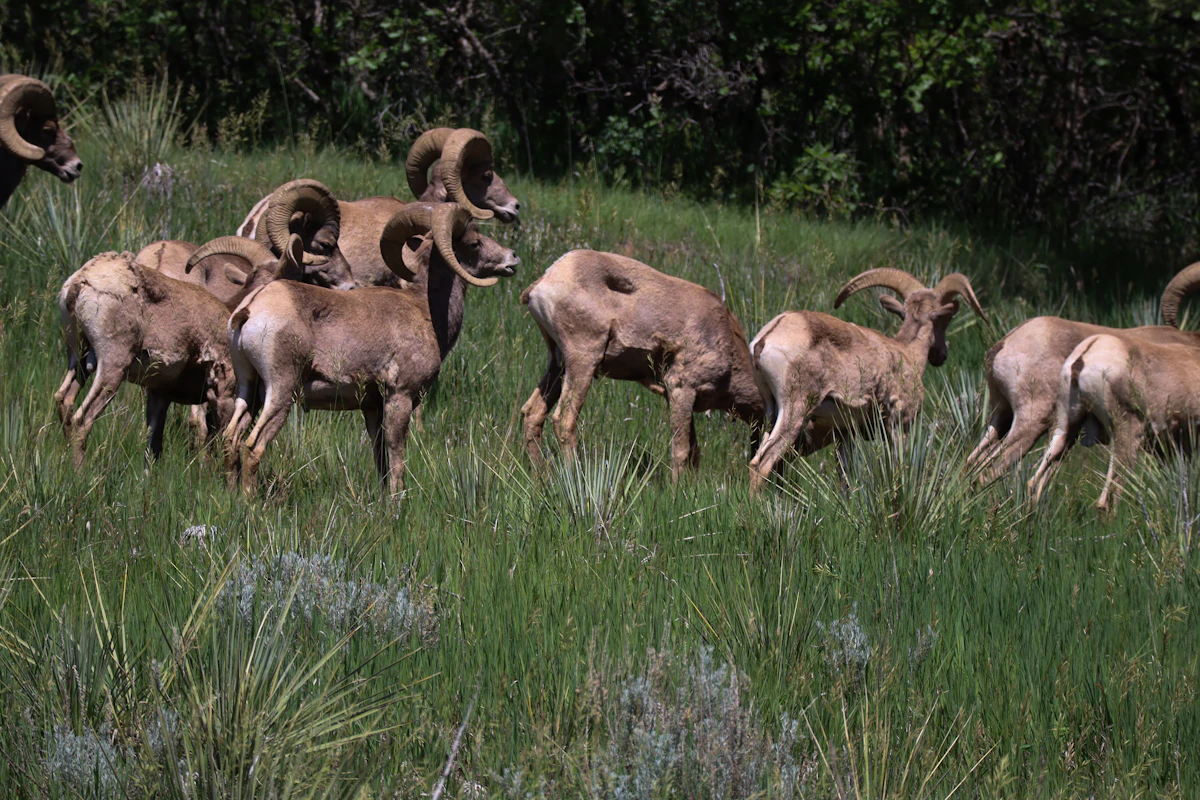
Aging a bighorn sheep ram in the field is one of the most critical skills a sheep hunter can develop. Whether you are hunting Rocky Mountain bighorns in Montana or desert bighorns in Nevada, the ability to quickly and accurately assess a ram's age determines legal compliance, hunt success, and ethical decision-making. Most western states require rams to meet minimum age or horn-size thresholds, and misidentifying a young ram can result in tag violations, wasted hunts, and conservation setbacks.
Ram aging relies on three primary indicators: annuli (horn growth rings), brooming (horn-tip wear), and curl measurement. Unlike antlered species that shed and regrow headgear annually, bighorn rams grow horns continuously throughout their lives. This permanent growth creates a readable history etched into the horn itself. Hunters who understand this structure can make field judgments in seconds, even at long distances through a spotting scope.
Horn growth rings — the foundation of ram aging
Bighorn rams add a new growth segment to their horns each year. During spring and summer, when forage is abundant, horn growth is rapid and creates a wide, smooth band. In fall and winter, growth slows or stops entirely, forming a distinct narrow ridge called an annulus. These alternating bands and ridges function like tree rings, with each annulus representing one year of life.
To age a ram by annuli, start at the horn base where it meets the skull and count outward toward the tip. The first annulus appears after the ram's first year, so a ram with four visible annuli is five years old. Growth rings are most visible on the front and back surfaces of the horn, where light and shadow create contrast. Early-morning or late-afternoon light enhances this contrast, making annuli easier to count through a spotting scope.
Younger rams (ages two to four) display widely spaced, clearly defined annuli because horn growth is aggressive during these peak years. As rams age beyond six or seven years, growth slows, and annuli compress near the horn tips. This compression, combined with brooming and weathering, can obscure the outermost rings. In these cases, focus on the first three to four annuli closest to the base, which remain visible even on old rams, and estimate the remaining years based on horn mass, curl, and tip wear.
Brooming — the mark of maturity
Brooming refers to the blunted, worn appearance of a ram's horn tips. As rams age, they spend more time feeding on rocky terrain, rubbing against cliffs, and engaging in dominance displays. This constant abrasion wears down the horn tips, removing the pointed ends and creating flat, rounded surfaces. Heavily broomed rams often lose several inches of horn length, which can mislead hunters relying solely on curl measurements.
Brooming begins around age five or six but becomes pronounced on rams seven years and older. A lightly broomed ram may show slight flattening on the horn tips, while a heavily broomed ram displays wide, blunt ends that resemble sawed-off points. Some old rams lose so much horn that their curl appears to recede, even though the base and middle sections remain massive.
Brooming is a strong indicator of maturity, but it does not provide an exact age. A six-year-old ram living in rugged, rocky terrain may show more brooming than an eight-year-old ram from gentler country. Use brooming in combination with annuli and overall horn mass to build a complete age profile. A ram with heavy brooming but only three visible annuli is likely older than initial counts suggest, with the missing rings worn away at the tips.
Measuring curl — quarter turns and legal thresholds
Many states define legal rams by horn curl rather than age. The standard measurement is the quarter curl, which divides the horn's curl into four equal sections from base to tip. A full curl (4/4) means the horn tip extends back to the level of the eye or beyond when viewed from the side. A three-quarter curl (3/4) reaches roughly to the ear, and a half curl (2/4) stops short of the ear.
Most western states require rams to reach at least three-quarter curl or full curl to be legal. Montana, for example, mandates full curl or a horn base circumference of 15 inches. Wyoming and Idaho also enforce full-curl minimums. Hunters must practice estimating curl in the field because spotting-scope perspectives can distort measurements. A ram quartering away may appear to have more curl than a ram facing directly toward you, even if their horns are identical.
To estimate curl accurately, study the ram from a broadside angle if possible. Align the horn tip mentally with anatomical landmarks like the eye, ear, and jawline. If the tip extends past the front edge of the eye, the ram is full curl. If it stops at the ear or slightly forward, it is three-quarter curl. Carry a reference photo or draw a mental template based on rams you have studied in photos and videos before the hunt.
Brooming complicates curl measurement because worn tips reduce apparent length. A ram that would measure full curl with intact tips may fall short of full curl after years of wear. In these cases, horn mass becomes the deciding factor. Rams with bases exceeding 14 or 15 inches in circumference are almost always mature, regardless of tip length. Use base thickness, the horn's overall arc, and annuli count to confirm maturity when brooming has reduced curl.
Body size and behavior — supporting clues
Physical characteristics beyond the horns provide additional aging context. Mature rams (ages six and older) develop thick, blocky bodies with heavily muscled necks and shoulders. Their coats often show graying around the face, neck, and hindquarters, similar to graying hair in older humans. Young rams (ages two to four) appear leaner, with slimmer necks and more uniform coat coloring.
Behavior also signals maturity. Mature rams move deliberately, often trailing behind younger rams during feeding or bedding shifts. During the rut, which peaks in late November and December, dominant older rams spend more energy tending ewes and sparring with rivals. Younger rams remain on the periphery, avoiding confrontation with larger, more aggressive animals.
Group dynamics offer clues as well. Bachelor bands of young rams may include animals with similar horn sizes but varying ages. Isolate individual rams and assess each one independently rather than assuming all animals in a group are the same age. A single mature ram may accompany younger animals without being challenged, especially outside the rut.


Free to join
Download mobile app
- Detailed draw odds
- Point tracking
- Deadline reminders
- 18 states covered





Free to join
Download mobile app
- Detailed draw odds
- Point tracking
- Deadline reminders
- 18 states covered




Free to join
Download mobile app
- Detailed draw odds
- Point tracking
- Deadline reminders
- 18 states covered

Common aging mistakes and how to avoid them
The most frequent aging error is confusing horn length with age. A fast-growing four-year-old ram can display impressive curl but still show only three annuli and minimal brooming. Conversely, a slow-growing eight-year-old may have less curl due to genetics or habitat but will show heavy brooming and compressed annuli near the tips.
Another mistake is over-relying on curl in heavily broomed rams. If a ram displays thick, massive bases, deep annuli compression, and blunted tips but falls slightly short of full curl, age assessment should favor annuli and mass over tip position. Legal thresholds exist to protect young rams, but mature rams with heavy wear may technically fail curl tests despite being well past breeding prime.
Glassing conditions also affect accuracy. Early-morning and late-afternoon light enhances annuli visibility, while midday glare washes out detail. Practice counting rings on photos and videos before your hunt, and spend time glassing rams from multiple angles to train your eye for quick assessments. If uncertain, wait for better light or a clearer view rather than rushing a judgment.
Field techniques for ram assessment
When you locate a ram, begin with a systematic approach. First, count annuli from the base outward, noting where growth rings become compressed or obscured. Second, evaluate brooming by studying the horn tips for blunting and wear. Third, estimate curl by comparing tip position to anatomical landmarks. Fourth, assess body size, coat color, and behavior to confirm your age estimate.
Record your observations in a notebook or phone app, especially during scouting trips. Note the number of annuli, degree of brooming, estimated curl, and any distinguishing features like scars or asymmetrical horns. Over time, these records build a reference library that sharpens your field-judging skills.
If hunting with a guide or experienced partner, compare assessments before making a final decision. Guides who hunt the same units year after year often recognize individual rams and can provide historical context. A ram you judge as six years old may be a known seven-year-old the guide has tracked for multiple seasons.
Why accurate aging matters
Bighorn sheep populations remain limited across the West, with most states issuing fewer than 100 tags annually. Drawing a sheep tag represents a once-in-a-lifetime opportunity for many hunters, and harvest regulations exist to protect recruitment and maintain age-class diversity. Taking an underage or sub-legal ram violates these protections and can result in tag forfeiture, fines, and loss of hunting privileges.
Beyond legality, accurate aging ensures ethical hunting. Sheep hunters invest years accumulating preference points, thousands of dollars in gear and logistics, and often decades of preparation. Harvesting a mature ram that meets personal and regulatory standards reflects respect for the species and the hunt itself. Passing on young rams sustains future hunting opportunities and allows those animals to reach their genetic potential.
How TAGZ helps you prepare for sheep hunts
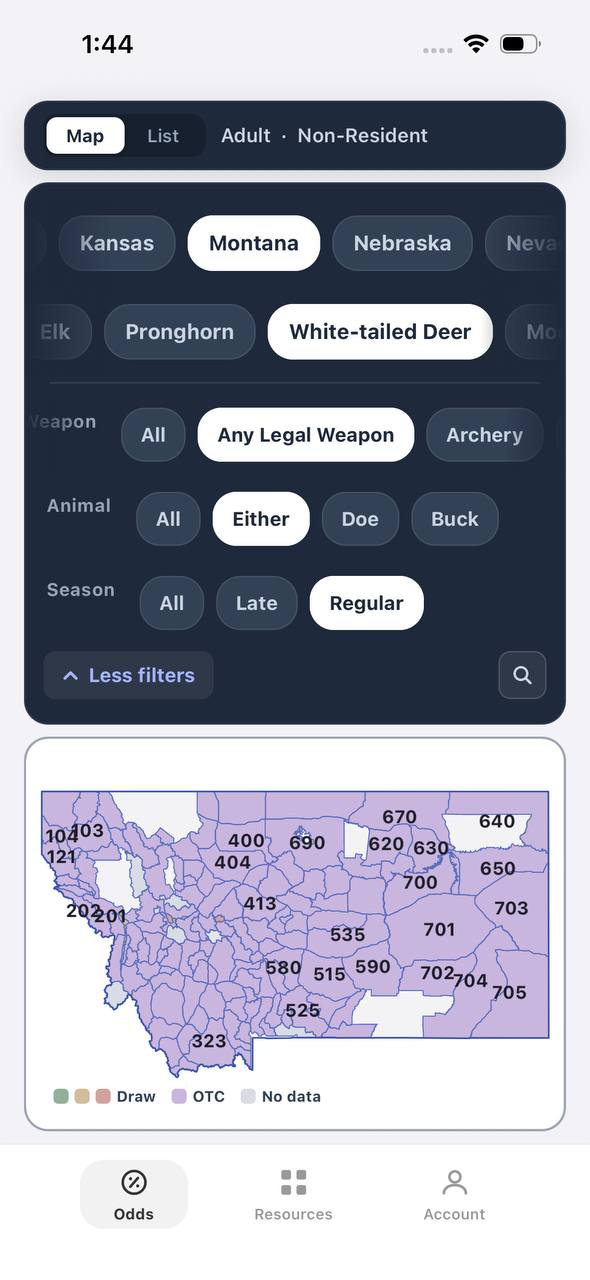
Planning a bighorn sheep hunt requires more than field skills. TAGZ helps hunters navigate the complex draw systems for limited-entry sheep tags across the West. The platform tracks your preference points in states like Montana, Wyoming, and Nevada, compares historical draw odds unit by unit, and sends reminders before application deadlines. Whether you are building points for a Rocky Mountain ram in Colorado or targeting a desert ram in Arizona, TAGZ organizes your multi-state strategy so you can focus on scouting and skill development instead of spreadsheets.
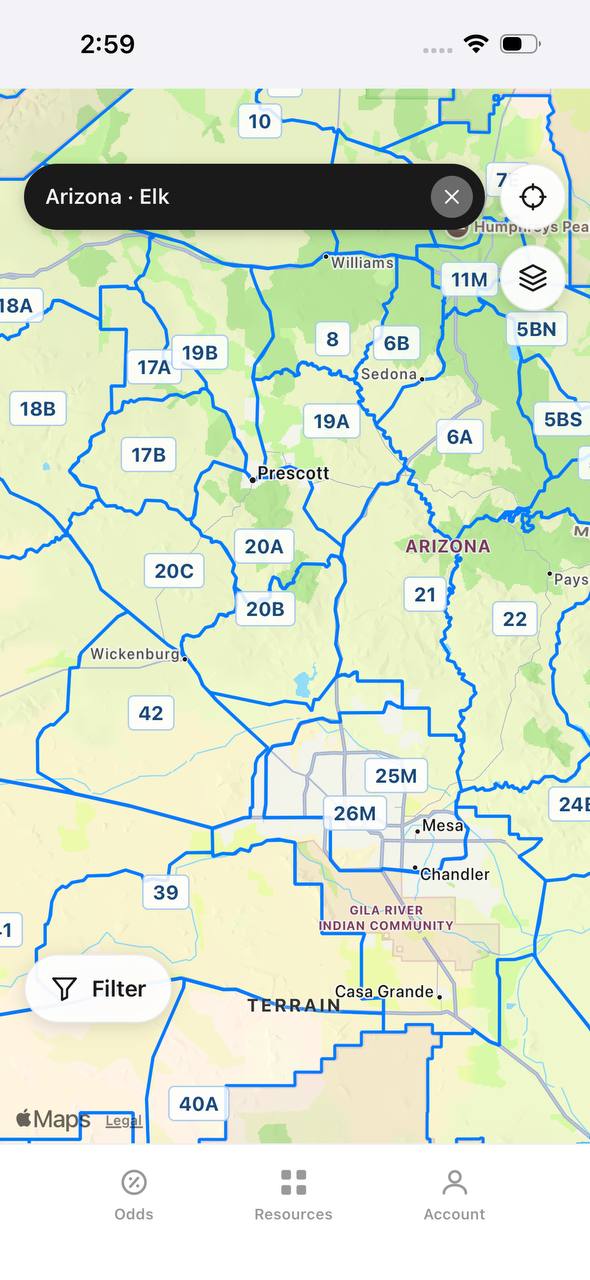
TAGZ also provides unit maps, terrain breakdowns, and public-land boundaries, helping you identify where mature rams are most likely to be found. Combine these tools with field-judging practice, and you enter your once-in-a-lifetime sheep hunt confident in both your draw strategy and your ability to make quick, accurate aging decisions in the field.
FAQ — Aging Bighorn Sheep Rams
How many annuli should a legal ram have?
Most states require rams to be at least full curl or meet a minimum base circumference rather than a specific annuli count. Full-curl rams are typically five to seven years old, but age varies by genetics and habitat. Count annuli to confirm maturity, but check your state's legal definition before the hunt.
Can you age a ram accurately without counting annuli?
Yes, if the ram shows heavy brooming and massive horn bases. Heavily broomed rams with thick bases are almost always mature, even if annuli are obscured. However, counting annuli remains the most reliable aging method when rings are visible.
What does heavy brooming tell you about a ram's age?
Heavy brooming indicates a ram is likely seven years or older. Brooming results from years of wear on rocky terrain and during dominance displays. Light brooming may appear on younger rams in rugged country, so combine brooming with annuli and mass for accurate aging.
Is a three-quarter curl ram always too young to harvest?
Not always. Some states allow three-quarter curl rams if they meet base-circumference minimums. Additionally, heavily broomed rams may fall short of full curl due to tip wear but still qualify as mature. Verify your state's regulations and use annuli and mass to assess maturity.
How does desert bighorn aging differ from Rocky Mountain bighorn aging?
Desert rams often grow slightly thinner horns with more gradual curl compared to Rocky Mountain rams, but the aging principles remain identical. Count annuli, evaluate brooming, and measure curl using the same techniques. Desert rams may also show more weathering due to harsh, rocky habitat.
What tools should you bring to age rams in the field?
A high-quality spotting scope (60x to 80x magnification) is essential for counting annuli at long distances. Bring a notebook or phone app to record observations, reference photos of aged rams, and a rangefinder to confirm distances. Early-morning or late-afternoon light improves annuli visibility.
Continue planning your hunt
Aging rams accurately is only part of a successful sheep hunt. Before you glass your first band of rams, you need a solid draw strategy and the right tools to track your applications. TAGZ simplifies the entire process, from preference-point tracking to unit research to deadline reminders. Whether you are chasing your first sheep tag or managing points across multiple states, TAGZ gives you the confidence to make smarter decisions before you ever step into the field.
Explore more western hunting strategies and unit breakdowns on the TAGZ Insights page. Compare draw odds, study terrain maps, and track your points across every western state at getmytagz.com. Ready to take control of your draw strategy? See how TAGZ works on the product page or review pricing options to get started today.
Was this article helpful?
Previous
Best Sheep Hunting Ammunition: Cartridges and Bullets for Rocky Mountain Bighorns
Sheep hunting demands precision at extreme distances and minimal pack weight. This guide breaks down proven cartridge and bullet combinations that match the realities of alpine hunting—from long-range ballistics to terminal performance on thin-skinned game.

Related
Best Survival Kits for Western Big-Game Hunters in 2025
Backcountry hunts demand reliable survival gear. From ultralight day-hunt kits to multi-day emergency setups, we break down the essential components and top pre-built options that keep Western hunters safe when plans fall apart.

Next
Paper Tuning vs Bare Shaft Tuning: Which Method Works Best for Bowhunters in 2026
Paper tuning and bare shaft tuning are the two most reliable methods for dialing in arrow flight before hunting season. Understanding when to use each technique—and how they reveal different tuning issues—helps bowhunters achieve field-ready accuracy.