Best Survival Kits for Western Big-Game Hunters in 2025
Every Western hunter who ventures beyond cell service needs a survival kit. Not because you plan to use it, but because mountain weather, injuries, and navigation failures happen fast. The best survival kit is the one you actually carry — compact enough to stay in your pack every trip, complete enough to get you through an unplanned night or three.
What Makes a Good Hunting Survival Kit
A proper survival kit addresses the core threats in big-game country: exposure, hydration failure, injury, and getting turned around. Weight matters because you are already hauling optics, water, and meat bags. The kit needs to fit in a cargo pocket or small pouch so it rides with you on glassing missions, not back at camp.
Prioritize multi-use items. A quality knife handles food prep, first aid, and shelter building. Duct tape repairs gear, secures splints, and patches tarps. Fire starter works in wet conditions. Skip redundant gadgets — a compass and paper map beat three GPS units that all die in the cold.
Core Components Every Kit Must Include
Fire starting capability — at minimum, a ferro rod and waterproof matches. Throw in petroleum jelly cotton balls as tinder. Practice starting fires in rain before you need the skill.
Emergency shelter — a lightweight emergency bivy or space blanket. The reflective versions trap body heat. Paracord lets you rig a tarp shelter if you are carrying one.
Water purification — tablets or a compact filter. Assume your hunt area has giardia. Dehydration kills faster than hunger.
Navigation tools — a button compass at minimum. Paper maps of your unit downloaded from onX or GAIA and laminated. Phone batteries die; compasses do not.
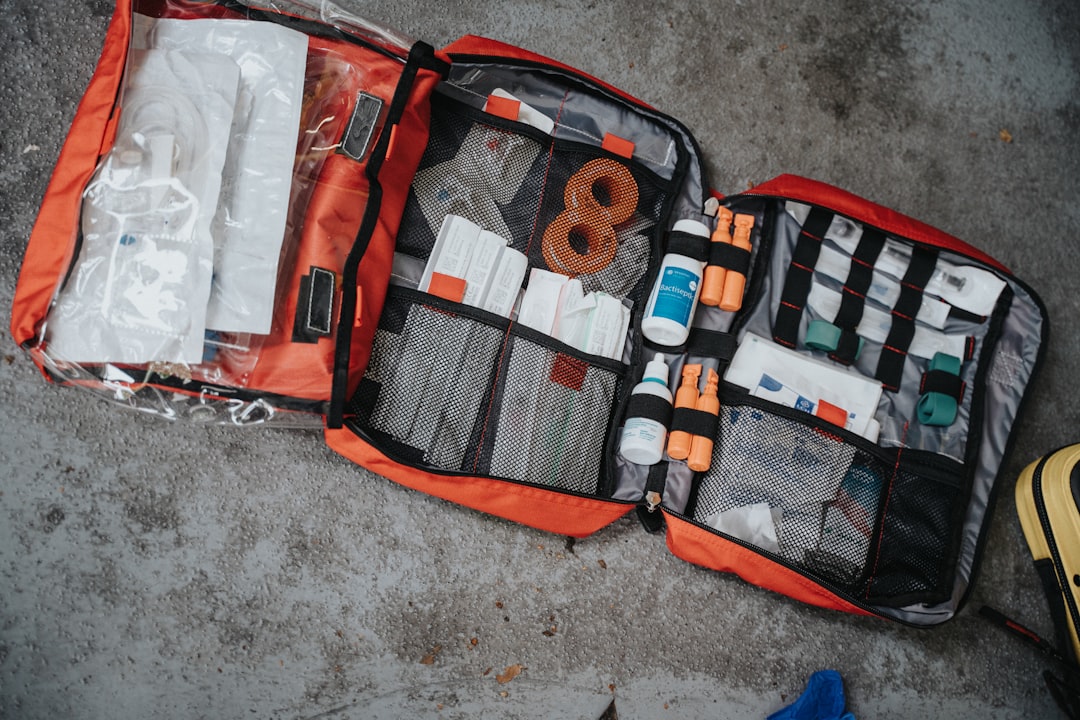
First aid basics — trauma gauze, QuikClot, medical tape, ibuprofen, blister treatment. Tourniquets if you hunt solo. A whistle for signaling.
Cutting tool — a fixed-blade knife you trust. Folders jam with blood and dirt. Your knife processes game and builds shelter.
Cordage — 50 feet of paracord or bankline. Lash shelters, hang game bags, improvise gear repairs.
Light source — a headlamp with lithium batteries (they handle cold) plus a backup penlight. Red light preserves night vision.
Signal devices — whistle and signal mirror. Three blasts or flashes is the universal distress call.
Best Pre-Built Survival Kits for Hunters
Adventure Medical Kits Mountain Series — Built for backcountry users. The Mountain Fundamentals kit includes fire starter, emergency bivy, whistle, and a solid first-aid loadout. Weighs under a pound. Fits in a cargo pocket. Around 40 dollars.
SOL Traverse Survival Kit — Ultralight at 8 ounces. Includes fire striker, emergency blanket, wire saw, compass, signal mirror, and fishing line. The tin container doubles as a cooking vessel. Good for day hunts where ounce counting matters. 30 dollars.
Uncharted Supply Co. Seventy2 Survival System — Overkill for day hunts but ideal for extended backcountry trips. Three-day water supply, shelter, first aid, multi-tool, and more. Comes in a backpack. Premium option at 350 dollars if you want a grab-and-go setup for truck or base camp.
DIY Kit Built Around a Metal Container — Many hunters build custom kits using an Altoids tin or small Nalgene bottle. Ferro rod, Bic lighter, waterproof matches, fishing line, hooks, wire saw, button compass, duct tape wrapped around the container, and a small first-aid pouch. Total cost under 25 dollars. Customize based on your terrain and skills.
Building Your Own Custom Survival Kit
Start with a waterproof container that fits your pack. A small dry bag or hard-shell case works. List the threats specific to your hunt area — cold at altitude, water scarcity in desert units, dense timber navigation, grizzly country trauma.
Add items that counter those threats. Colorado high-country elk hunts need robust fire starting and insulation. Arizona Coues deer hunts need extra water purification capacity. Montana backcountry hunts need bear spray and trauma supplies.
Test every component. Can you start a fire with wet wood using your ferro rod? Does your emergency bivy actually keep you warm overnight? Run a simulated emergency overnight near your truck to identify gaps.
Replace consumables annually. Batteries corrode. Water purification tablets expire. Medical supplies degrade. Mark an annual gear check on your calendar before archery season.
Free to join
Download mobile app
- Detailed draw odds
- Point tracking
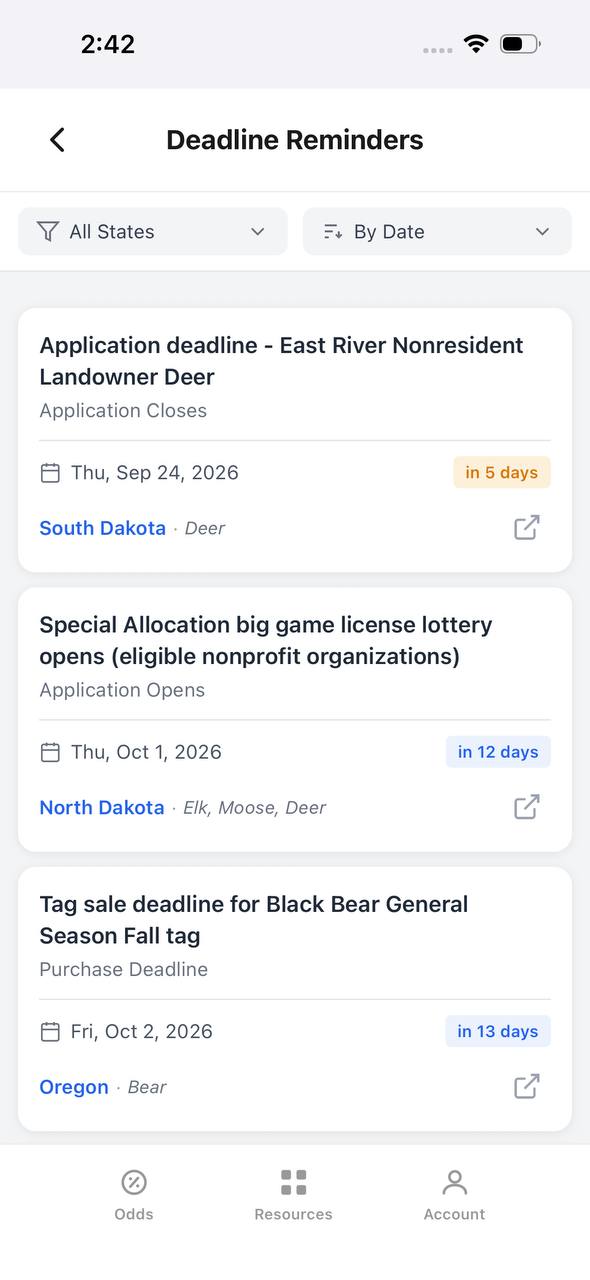
- Deadline reminders
- 18 states covered

Free to join
Download mobile app
- Detailed draw odds
- Point tracking
- Deadline reminders
- 18 states covered
Free to join
Download mobile app
- Detailed draw odds
- Point tracking
- Deadline reminders
- 18 states covered
Weight and Packing Strategy
The survival kit lives in your pack every trip — not in the truck. Aim for 1–2 pounds max for day hunts. Multi-day trips can justify a slightly heavier setup.
Split critical items across locations. Keep a basic kit on your person (fire starter, knife, compass, emergency blanket in a cargo pocket). Store the expanded kit (full first aid, extra cordage, shelter) in your pack. If you get separated from your pack, you still have essentials.
Integrate survival tools with your hunting gear. Your hunting knife doubles as a survival blade. Your onX downloaded maps serve navigation. Your Jetboil boils water for purification tablets. Avoid packing duplicate items.
Training Matters More Than Gear
The fanciest survival kit fails if you lack skills. Practice fire starting in wind and rain. Learn basic first aid for bleeding, fractures, and hypothermia. Take a map and compass course beyond phone apps.
Run scenarios. How would you handle a broken ankle at 11,000 feet with a storm moving in? What if your pack slides 200 yards downslope and you cannot retrieve it? Mental rehearsal builds problem-solving speed when stress hits.
Join a wilderness first aid course. Two-day WFA or longer WFR certifications teach you to stabilize injuries and make evacuation decisions. That training applies to hunting partners, not just yourself.
Free to join
Download mobile app
- Detailed draw odds
- Point tracking
- Deadline reminders
- 18 states covered
Free to join
Download mobile app
- Detailed draw odds
- Point tracking
- Deadline reminders
- 18 states covered
Free to join
Download mobile app
- Detailed draw odds
- Point tracking
- Deadline reminders
- 18 states covered
Common Mistakes to Avoid
Packing a kit and never inspecting it. Batteries corrode. Matches get damp. Verify contents before each season.
Trusting gadgets over fundamentals. A 200-dollar GPS rescue beacon is worthless if your phone dies and you cannot navigate out. Master map and compass.
Building a kit for your home region but hunting elsewhere. Desert survival differs from alpine. Update your kit when you chase tags across state lines.
Leaving the kit at camp or in the truck. The survival kit must ride with you during glassing sessions and stalks. That 400-yard stalk to close distance on a bull can become a long night if weather rolls in and you cannot relocate camp.
Overpacking comfort items at the expense of survival essentials. A camp pillow is nice. Fire starter and water purification are mandatory.
Survival Kit Maintenance Schedule
Inspect your kit before opening day of each season. Replace expired medical supplies and batteries. Check that ferro rods have not corroded and emergency blankets remain sealed.
After any trip where you dip into the kit, restock immediately. Used QuikClot gauze, consumed purification tablets, and blown headlamp batteries need replacement before the next hunt.
Store the kit in a cool, dry location. Heat degrades adhesives and batteries. Moisture ruins matches and tinder.
Regional Considerations
Rocky Mountain elk and mule deer hunts demand cold-weather fire starting, insulation, and altitude-ready medical supplies (altitude sickness medication, extra oxygen absorption capacity for injuries).
Southwest desert hunts for Coues deer and javelina require extra water purification capacity, sun protection, and snake bite protocols.
Pacific Northwest blacktail and Roosevelt elk hunts need waterproof fire starters, shelter that handles constant rain, and navigation tools for dense timber.
Alaska moose, caribou, and bear hunts justify satellite communication devices, advanced first aid for remote trauma, and bear deterrents.
Free to join
Download mobile app
- Detailed draw odds
- Point tracking
- Deadline reminders
- 18 states covered
Free to join
Download mobile app
- Detailed draw odds
- Point tracking
- Deadline reminders
- 18 states covered
Free to join
Download mobile app
- Detailed draw odds
- Point tracking
- Deadline reminders
- 18 states covered
How TAGZ Helps You Prepare
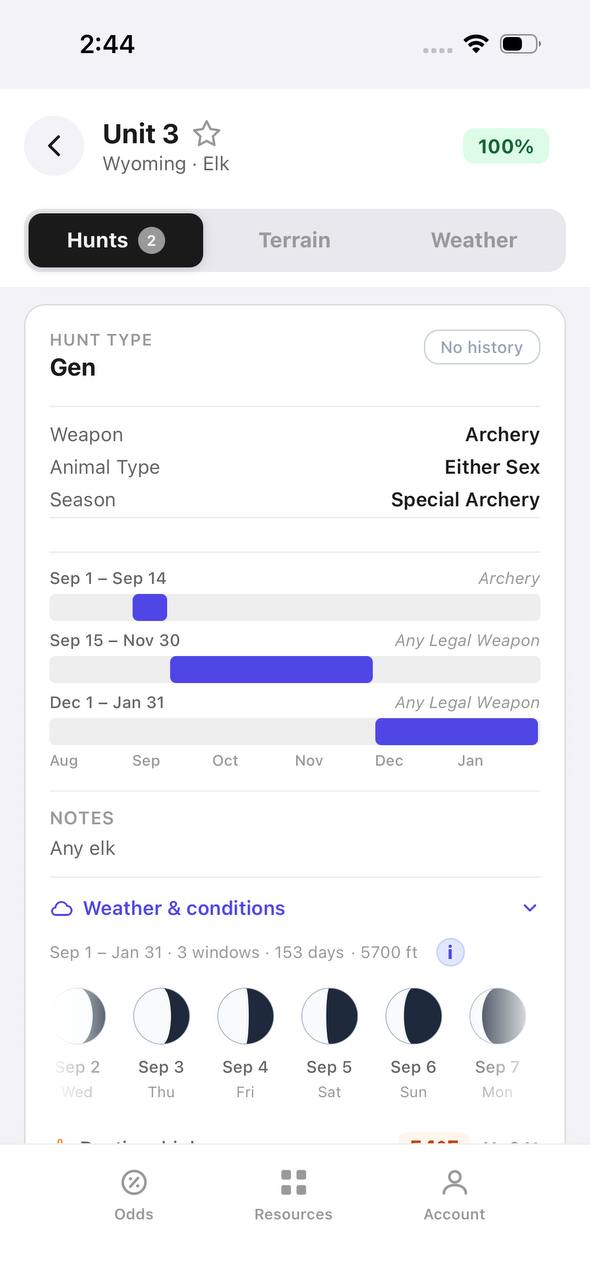
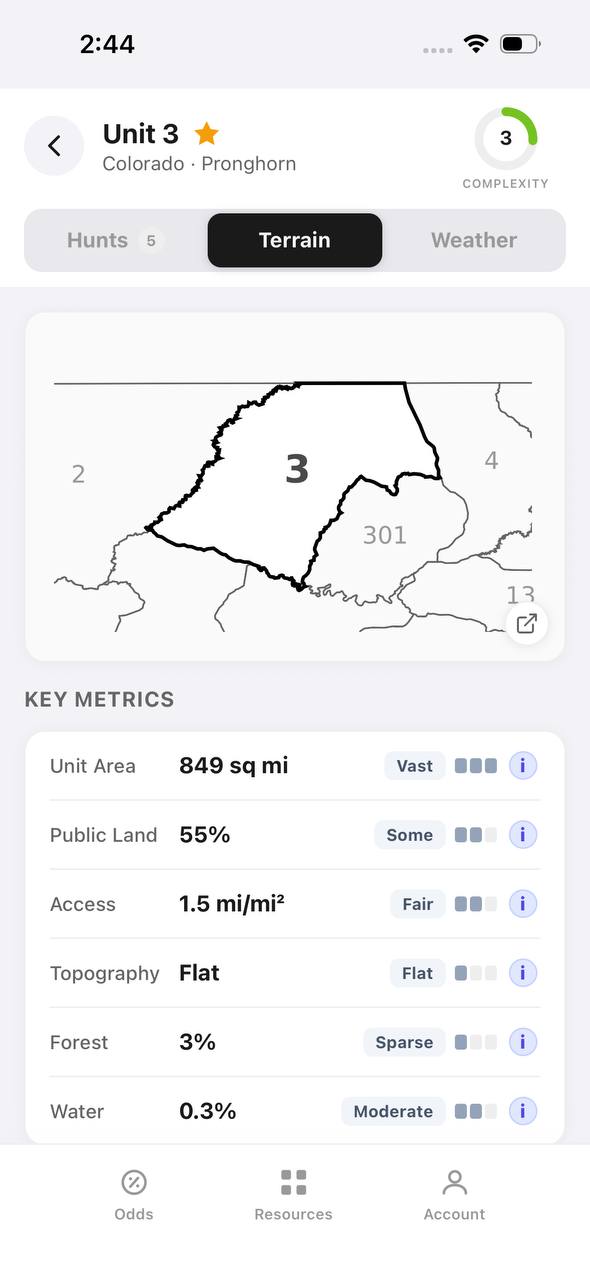
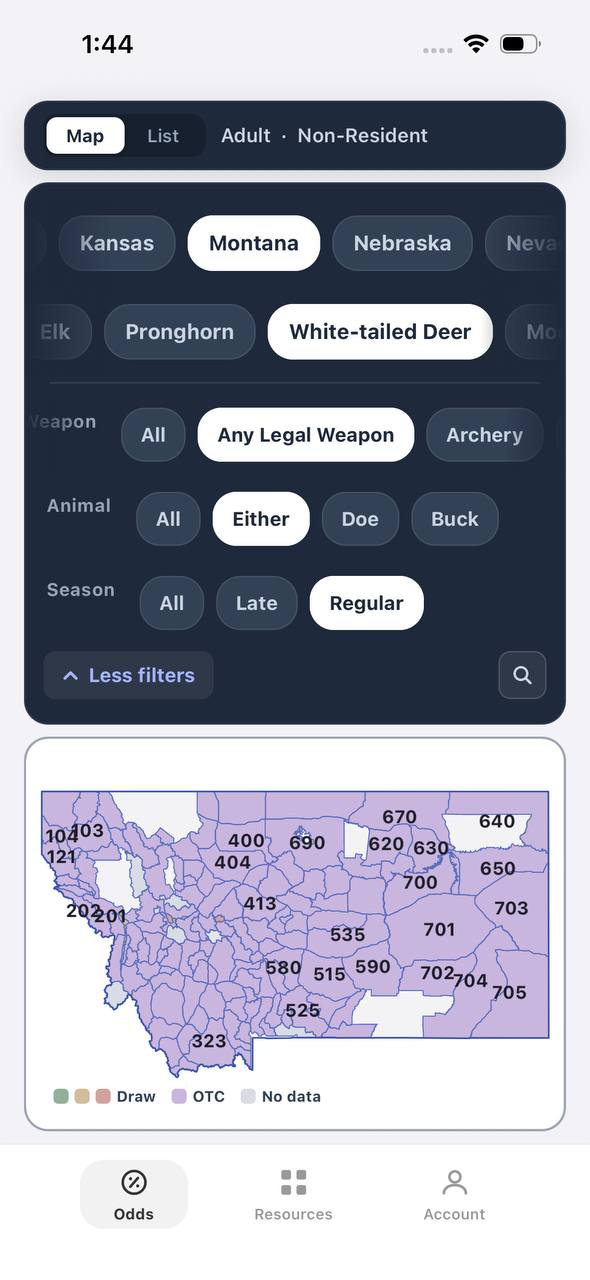
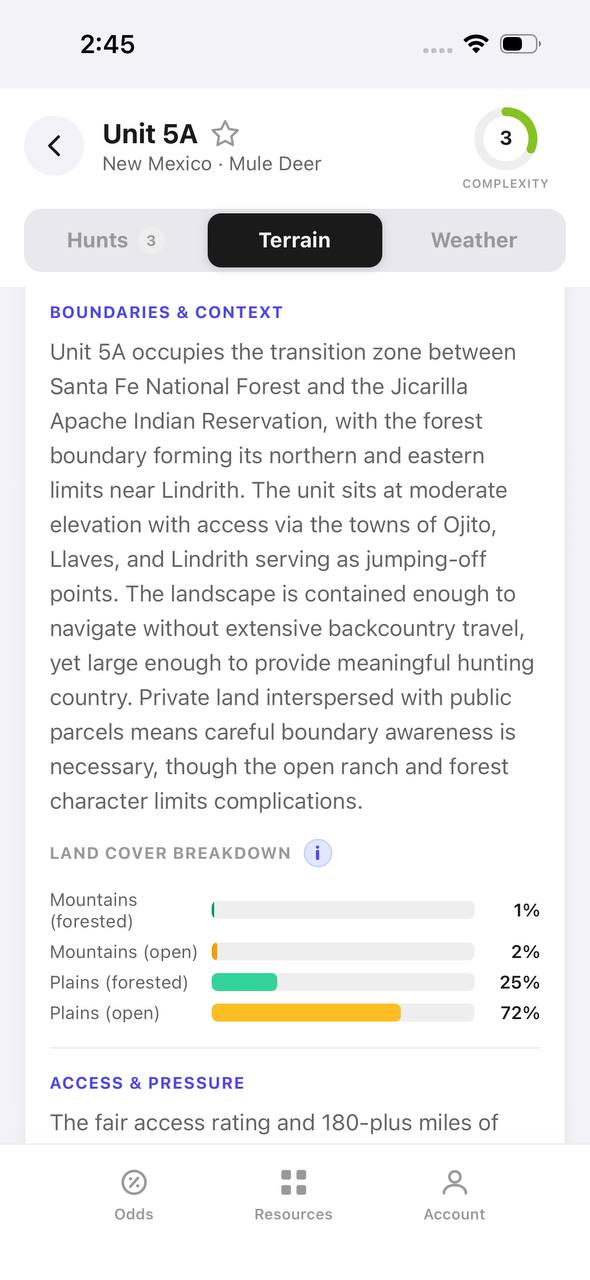
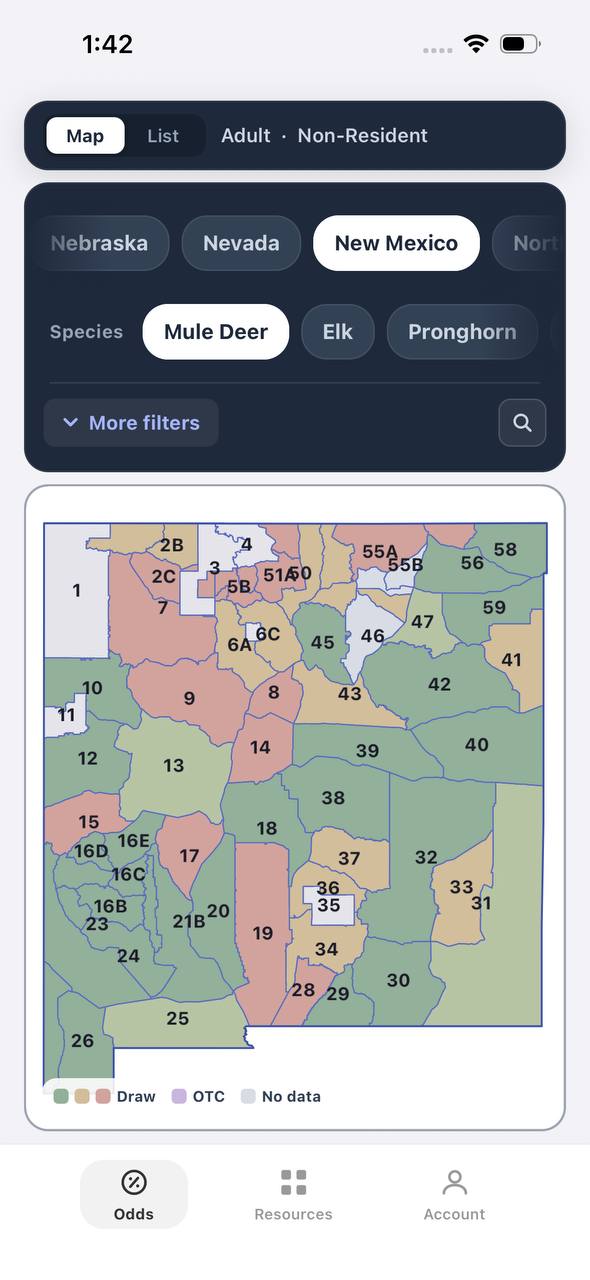
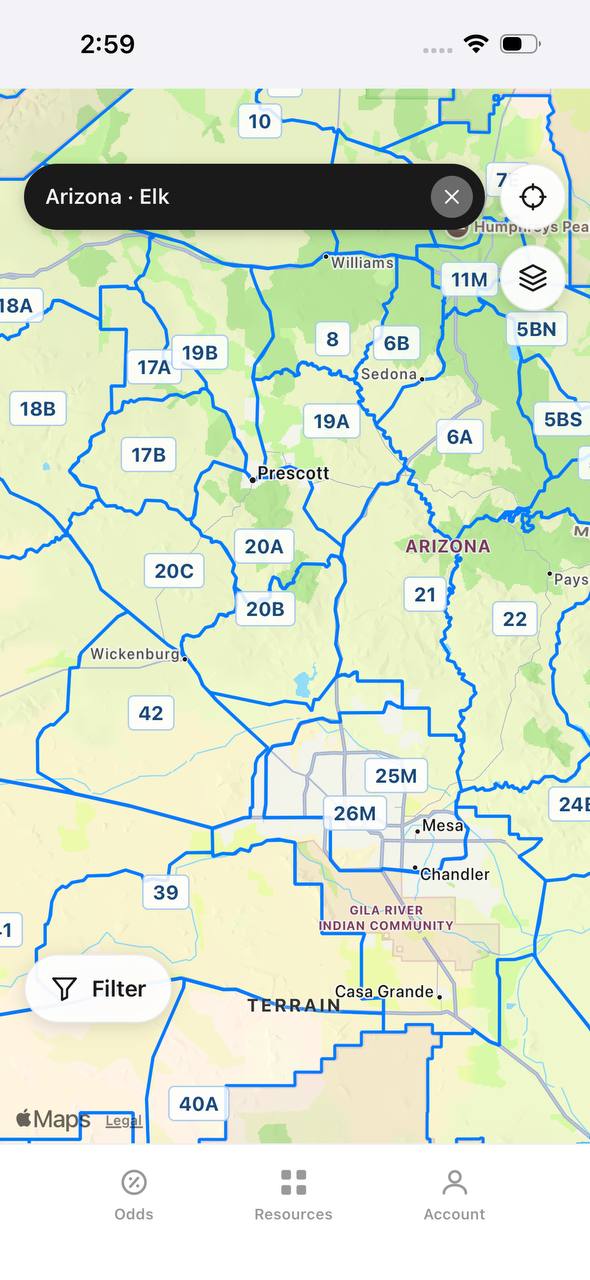
TAGZ provides terrain maps and unit boundaries so you can scout remotely and understand your hunt area before arrival. Knowing the topography, water sources, and access points lets you pack a survival kit tailored to the specific unit. Review public land boundaries to identify escape routes and potential shelter locations if weather turns. Track draw deadlines and plan hunts using historical draw data so you hunt units you have researched, not last-minute scrambles into unfamiliar terrain. TAGZ gives you the tools to make smarter decisions before you step into the backcountry.
FAQ — Survival Kits for Hunters
What is the most important item in a hunting survival kit? Fire starter. The ability to generate heat prevents hypothermia, purifies water, signals rescuers, and boosts morale. Pack multiple ignition methods — ferro rod, waterproof matches, and a Bic lighter.
How much should a survival kit weigh for a day hunt? One to two pounds maximum. It must stay with you on glassing trips and stalks. Prioritize multi-use items and avoid redundant gear to keep weight manageable.
Should I buy a pre-built kit or build my own? Pre-built kits from reputable brands like Adventure Medical Kits or SOL offer good value and completeness. Custom kits let you tailor contents to your terrain and skills. Either works if it covers fire, shelter, water, navigation, first aid, and signaling.
Do I need a survival kit if I carry a satellite communicator? Yes. A satellite SOS device summons help but does not keep you alive during the wait. Rescue can take 12 to 24 hours in remote areas. Your survival kit bridges that gap.
How often should I replace survival kit components? Inspect annually before hunting season. Replace batteries, expired medical supplies, and degraded items. Consumables like water purification tablets typically last 3 to 5 years sealed.
What survival skills should I practice before hunting season? Fire starting in wet conditions, basic first aid for bleeding and fractures, map and compass navigation without electronics, and building emergency shelters. Take a wilderness first aid course if you hunt solo or in remote areas.
Continue Planning Your Hunt
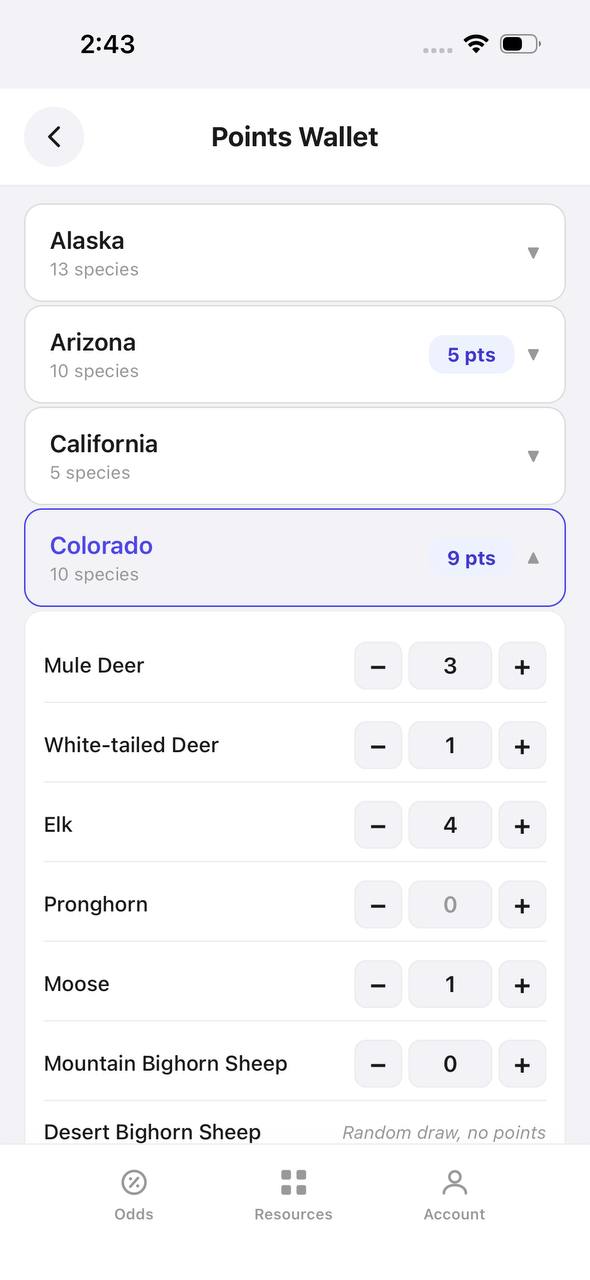
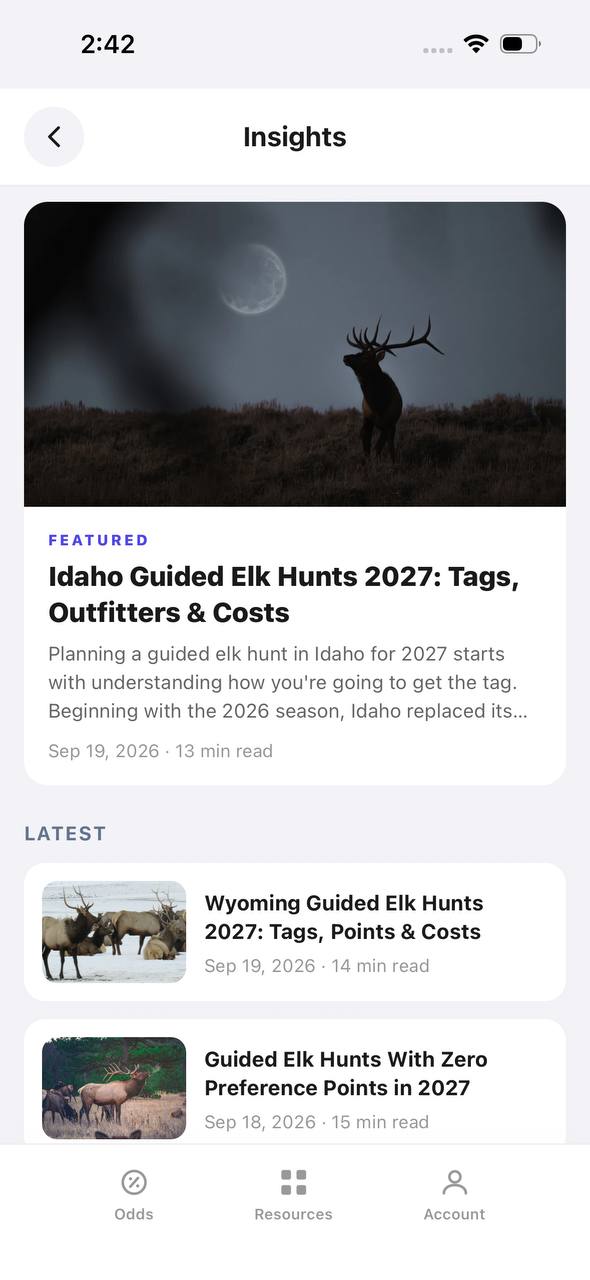
Survival preparation is one piece of a successful Western hunt. TAGZ helps you research units using terrain maps, track preference points and bonus points across multiple states, and compare draw odds so you apply strategically. Use the unit filtering tools to find hunts that match your weapon, season preference, and experience level. Check the Insights blog for unit breakdowns and application strategies. When you are ready to dive deeper into hunt planning tools, explore TAGZ pricing options that fit your application strategy. The platform gives you the research tools to hunt units you understand, so your survival kit stays in your pack as backup, not a lifeline.
Was this article helpful?
Previous
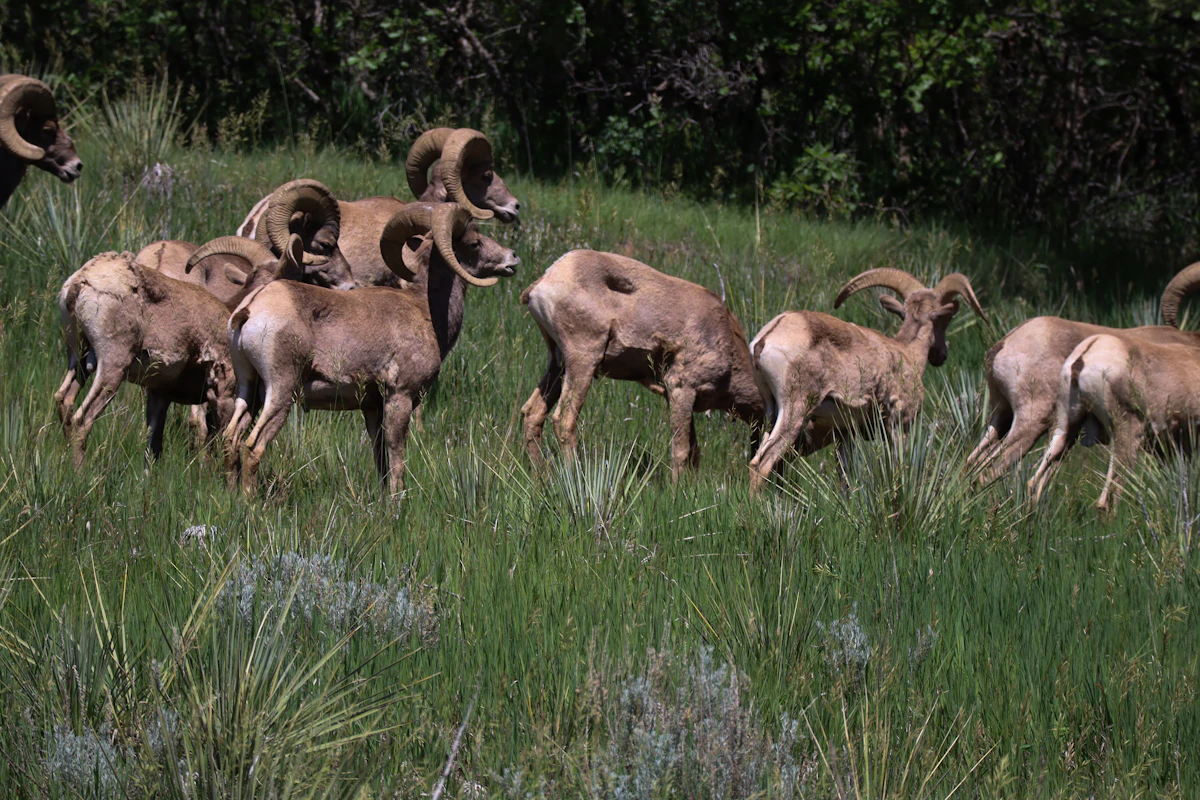
How to Age a Bighorn Sheep Ram in the Field — Horn Growth, Brooming, and Quarter Curls Explained
Learning to age rams by horn structure, brooming patterns, and quarter-curl measurements helps hunters identify legal and mature sheep. Field judging takes practice, but understanding growth rings, mass, and tip wear makes quick, ethical assessments possible.
Related
Best Moose Rifles: Calibers, Actions, and Setups That Anchor Bulls
Moose hunting demands rifles capable of delivering heavy bullets with deep penetration through dense muscle and bone. This guide covers proven calibers, optimal bullet weights, and rifle configurations that reliably drop bulls in thick timber and open tundra.
Next
Best Sheep Hunting Ammunition: Cartridges and Bullets for Rocky Mountain Bighorns
Sheep hunting demands precision at extreme distances and minimal pack weight. This guide breaks down proven cartridge and bullet combinations that match the realities of alpine hunting—from long-range ballistics to terminal performance on thin-skinned game.