How Much Does It Cost to Apply for Elk Tags in Every Western State?

Planning a western elk hunt means budgeting not just for gear and travel, but for the application process itself. Costs vary dramatically between states, with some charging under $20 for residents while others require nonresidents to invest over $2,000 just to enter the draw. Understanding these fees helps hunters prioritize which states fit their budget and build a realistic multi-state application strategy.
Application Fee Structures Across Western States
Eleven western states offer elk hunting opportunities through various draw systems, over-the-counter sales, or hybrid approaches. Each state structures its fees differently based on residency, draw type, point systems, and license requirements. Some states charge only when you draw, while others collect application fees and point fees upfront regardless of draw success. For detailed elk draw statistics and unit-level success rates, review the elk draw odds analysis tools on TAGZ.
The total cost to apply includes base hunting or conservation licenses, application fees, preference or bonus point fees, and tag costs if drawn. States like Colorado and Montana require purchasing an annual license before applying, adding $50 to $100 to your upfront costs. Others, like Wyoming and Arizona, charge point fees annually whether you apply or not.
Resident Elk Application Costs by State
Resident hunters enjoy substantial discounts compared to nonresidents. Here's what residents pay in each state:
Alaska operates on a registration permit system for most elk hunts, with no application fees. The base hunting license costs $45, and successful registration hunters pay tag fees ranging from $400 to $1,100 depending on the hunt area. Consult the Alaska Department of Fish and Game for current resident license fees.
Arizona charges residents $160.25 for the hunting license and $13 per elk draw application. Residents can purchase bonus points for $7.50 each. If drawn, general bull tags cost $203.25 and premium tags range up to $352.25. The Arizona Game and Fish Department draw system page provides official application details.
California resident elk tags cost $498.72 if drawn, with an $8.37 application fee and $53.68 hunting license requirement. California does not use preference points. Official information is available through California Department of Fish and Wildlife.
Colorado requires a $41 annual habitat stamp plus $10.14 application fee per choice. Residents pay $65.07 for cow elk tags and $110.14 for bull tags if drawn. Colorado operates on a weighted preference point system where points cost $3.37 annually. The Colorado Parks and Wildlife draw system details all draw hunts.
Idaho residents pay $154.75 for a general elk tag good for OTC units, or $24.75 to apply for controlled hunts with an additional $154.75 tag fee if successful. Idaho uses a bonus point system where points accumulate automatically. Check the Idaho Department of Fish and Game controlled hunt information for specific hunt details.
Montana residents buy a general elk license for $20 that includes an elk B tag for cows. Special elk permit applications cost $2 per choice. Montana preference points cost $2 annually for the bonus point system. The Montana Fish, Wildlife & Parks drawinfo page explains all draw hunts.
Nevada charges residents $142 for a hunting license and $10 per elk application. Bonus points cost $7.50 each if purchased, and successful applicants pay the tag fee. The Nevada Department of Wildlife draw hunts page provides comprehensive draw information.
New Mexico residents pay $77 for the game hunting license and $12 per elk draw application. New Mexico does not use preference or bonus points. The New Mexico Department of Game and Fish draw system offers official regulations.
Oregon resident elk tag fees range from $74.50 to $170.50 depending on hunt type. Oregon uses preference points that cost $5 per species annually. The base hunting license costs $43.50. See the Oregon Department of Fish and Wildlife controlled hunt information for details.
Utah residents pay $20 per elk application plus a $65 hunting license. Preference points cost $10 per species group. If drawn, bull elk tags cost $275 and cow tags $117. Visit Utah Division of Wildlife Resources big game hunting page for official details.
Washington resident elk tags cost between $55 and $500 depending on hunt type and weapon. Special permit applications cost $7.70 per choice. Washington uses preference points that accumulate automatically. Check the Washington Department of Fish and Wildlife big game hunting page for current regulations.
Wyoming residents pay $62.50 for the conservation stamp, $6 per species application fee, plus $33 for cow tags or $43 for bull tags if drawn. Preference points cost $7 annually. The Wyoming Game and Fish Department licensing page details all license requirements.
Nonresident Elk Application Costs by State
Nonresidents face significantly higher fees, often requiring substantial upfront investment before knowing draw results. For hunters building a multi-state strategy, these costs compound quickly.
Alaska nonresidents pay $160 for the hunting license and elk tags ranging from $1,350 to $2,500 depending on hunt area. Because Alaska uses registration permits rather than limited draws for most elk hunts, successful registrants pay these fees upon securing their permit. See the Alaska Department of Fish and Game nonresident license fees for official pricing.
Arizona charges nonresidents $160 for the hunting license and $160 per elk draw application. Bonus points cost $160 annually. If drawn, nonresident bull tags cost $690 and premium tags reach $1,065. The Arizona Game and Fish draw page provides complete fee schedules.
California nonresident elk tags cost $1,837.95 if drawn, with a $51.02 application fee and $188.84 hunting license. California's draw is competitive for nonresidents even without preference points. Official details are on the California Department of Fish and Wildlife elk tag page.
Colorado requires nonresidents to pay $89.99 for the habitat stamp plus $10.14 per application choice. Nonresident cow tags cost $511.47 and bull tags $678.90 if drawn. Preference points cost $103.26 annually. Colorado allows up to four choices per application. The Colorado Parks and Wildlife big game draw page details all requirements.
Idaho nonresidents pay $635.75 for general elk tags valid in OTC units, or $24.75 to apply for controlled hunts with an additional $635.75 tag fee if successful. Idaho caps nonresident general elk tags at 14,850 annually, and these often sell out within hours of going on sale in December. Check the Idaho Department of Fish and Game nonresident license information for current availability.
Montana nonresidents purchasing the Big Game Combo license pay $1,275, which includes one elk tag usable in general units or as a permit for special draws. This combination license is the primary path for nonresident elk hunters in Montana and requires preference points to draw reliably. The Montana Fish, Wildlife & Parks combination license page explains all options.
Nevada charges nonresidents $142 for the hunting license and $240 per elk application. Bonus points cost $240 each if purchased. If drawn, elk tags cost additional fees based on hunt type. The Nevada Department of Wildlife draw system provides official application information.
New Mexico nonresidents pay $77 for the game hunting license and $72 per elk draw application. New Mexico allocates only 12 percent of tags to nonresidents but does not use preference points, giving all applicants random draw odds each year. See the New Mexico Department of Game and Fish draw hunts page for details.
Oregon nonresident elk tag fees range from $324.50 to $717.50 depending on hunt type. Preference points cost $5 annually per species. The nonresident hunting license costs $174.50. Official information is on the Oregon Department of Fish and Wildlife controlled hunt page.
Utah nonresidents pay $20 per elk application plus a $154 hunting license. Preference points cost $10 per species group. If drawn, nonresident bull elk tags cost $650 and cow tags $277. Visit the Utah Division of Wildlife Resources big game page for current fees.
Washington nonresident elk tags cost between $530 and $1,206 depending on hunt type and weapon. Special permit applications cost $7.70 per choice. Washington's preference point system applies equally to residents and nonresidents. Check the Washington Department of Fish and Wildlife big game hunting page for regulations.
Wyoming nonresidents pay $102 for the conservation stamp, $15.50 per species application fee, plus $303 for cow tags or $579 for general bull tags if drawn. Special permit areas cost more. Preference points cost $52 annually. The Wyoming Game and Fish Department application page details the full fee structure.
Hidden Costs and Budget Considerations
Beyond base application fees, hunters must account for recurring point purchases, leftover tag opportunities, and licensing requirements that extend beyond a single year. States with preference point systems like Colorado and Wyoming encourage hunters to build points annually even when not seriously applying, creating long-term financial commitments. For example, a nonresident applying for premium Colorado bull elk tags while building points might invest $700 to $900 annually for five to ten years before drawing.
Some states require purchasing base hunting licenses before applying, which nonrefundable costs add $50 to $200 per state depending on residency. Arizona and Nevada charge full point fees regardless of whether you apply for a tag, turning point-building into a separate annual expense. Montana's Big Game Combo license structure means nonresidents must commit over $1,200 upfront to access elk hunting, even in general units.
Leftover and second-draw opportunities can offer cost-effective paths to tags without competing in the main draw. Idaho, Montana, and New Mexico occasionally release unsold tags or permits returned by successful applicants. These tags often cost less than main draw applications and may not require preference points, though availability varies dramatically by year and unit quality.
Free to join
Download mobile app
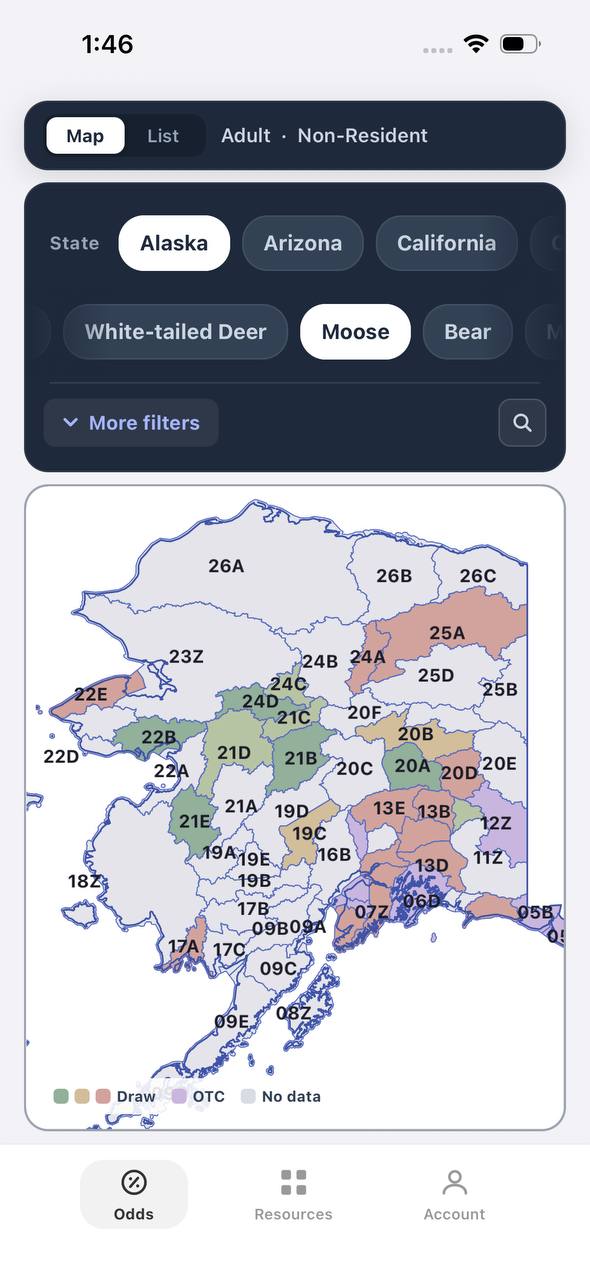
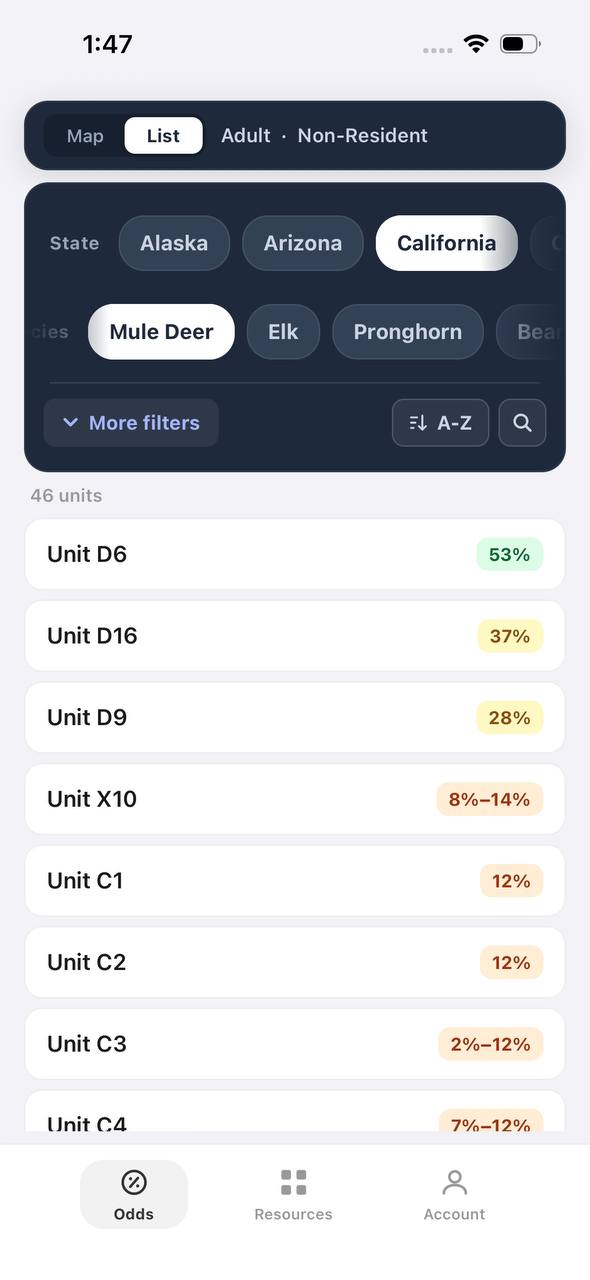
- Detailed draw odds
- Point tracking
- Deadline reminders
- 19 states covered

Free to join
Download mobile app
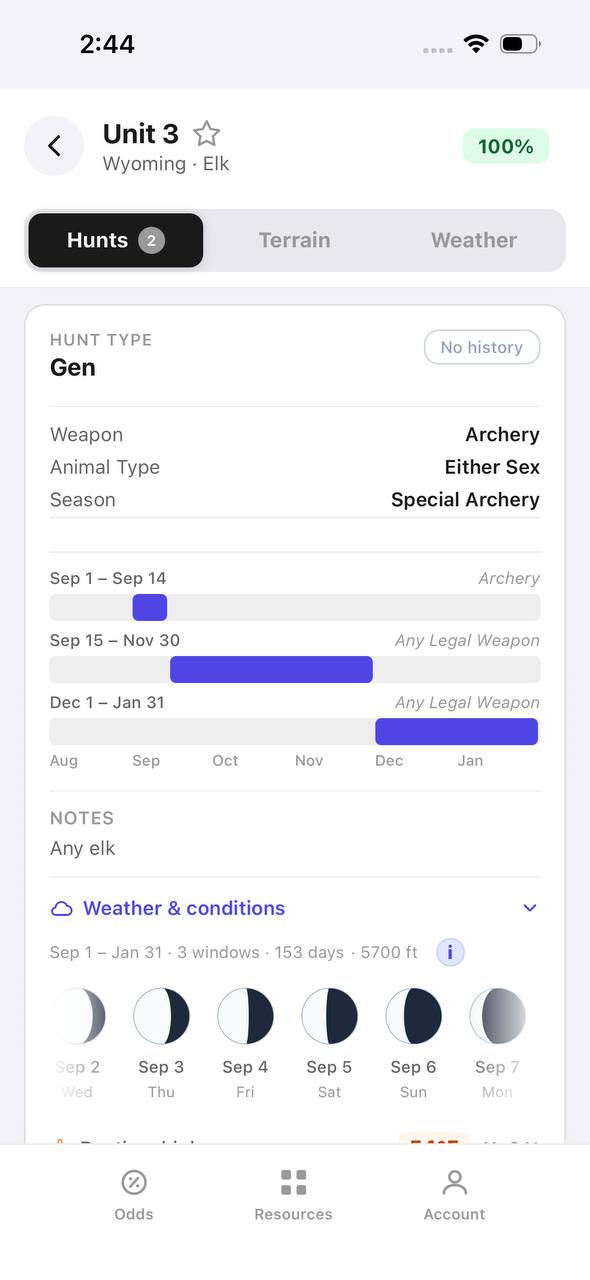
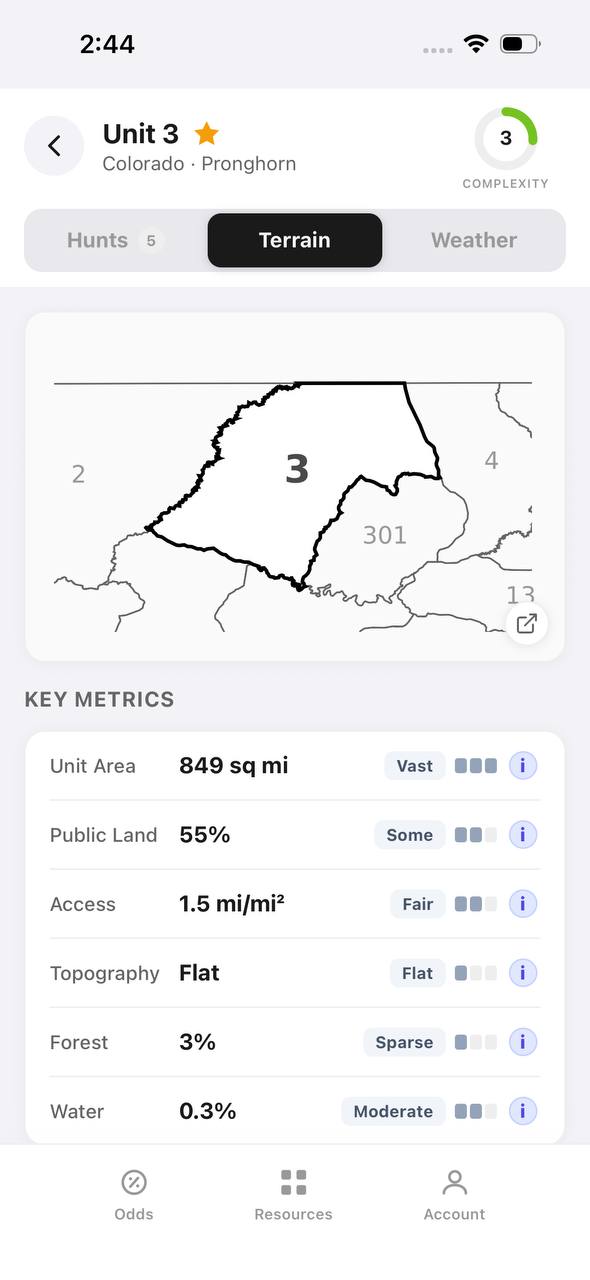
- Detailed draw odds
- Point tracking
- Deadline reminders
- 19 states covered
Free to join
Download mobile app
- Detailed draw odds
- Point tracking
- Deadline reminders
- 19 states covered
State-by-State Cost Comparison
Comparing total investment helps prioritize which states align with your budget and hunting goals. For nonresidents, Idaho, Montana, and Wyoming offer over-the-counter or general-license elk hunting with relatively straightforward purchase processes, though Montana requires drawing the Big Game Combo license through a preference point system.
Arizona, Nevada, and Colorado demand higher upfront investments through expensive point fees and application costs but offer some of the highest-quality controlled hunts in the West. New Mexico provides random-draw opportunities without point systems, keeping annual costs low if you're willing to accept longer odds without accumulated investment.
For resident hunters, Montana and Wyoming deliver the best value with general elk licenses under $50 that grant broad hunting access. Colorado and Idaho offer strong resident opportunity through both OTC and controlled hunt options with modest application fees. Arizona and Utah residents enjoy significant discounts on tags that can cost nonresidents five to ten times more.
Comprehensive draw odds data and unit success rates available through TAGZ research tools help quantify whether a state's application costs align with realistic draw probabilities and expected hunt quality.
Strategies to Minimize Application Costs
Focusing on states without expensive point systems can reduce annual expenses while building hunting opportunities. New Mexico, California, and Alaska (for registration hunts) offer legitimate chances each year without requiring multi-year point accumulation. For nonresidents, Idaho's general elk tag and Montana's leftover licenses provide alternatives to controlled hunts when draw odds or point requirements become prohibitive.
Building points strategically means committing to states where you realistically plan to hunt within five years rather than accumulating points in every available state. Analyze unit draw odds against point costs to determine whether continued investment makes sense. If a unit requires twelve points for decent odds and you currently hold three, calculate whether spending $500 to $900 annually for nine more years justifies the eventual hunt compared to hunting an OTC unit sooner.
Residents should take full advantage of their status by applying in home states first, where application costs and tag fees remain lowest and draw odds often dramatically exceed nonresident odds. Nonresidents might consider establishing residency in target states if planning long-term commitments to western hunting, though residency requirements typically demand twelve consecutive months of physical presence and severing ties with previous states.
Free to join
Download mobile app
- Detailed draw odds
- Point tracking
- Deadline reminders
- 19 states covered
Free to join
Download mobile app
- Detailed draw odds
- Point tracking
- Deadline reminders
- 19 states covered
Free to join
Download mobile app
- Detailed draw odds
- Point tracking
- Deadline reminders
- 19 states covered
Planning a Multi-State Application Strategy
Serious elk hunters often apply in three to six states annually to maximize tag opportunities across varying draw odds and hunt quality. Budgeting for multi-state applications requires calculating not just application fees but also point purchases, base licenses, and contingency funds for drawing multiple tags simultaneously.
A typical nonresident multi-state strategy might include Montana for preference point building toward the combo license ($1,275), Colorado for mid-tier bull elk hunts ($900 annually with applications and points), and New Mexico for random-draw opportunities ($150 to $200). This baseline investment totals $2,300 to $2,500 per year before considering resident state applications or additional states.
Residents can spread applications across more states cost-effectively. A resident of Colorado might add Wyoming preference points ($9), New Mexico draw applications ($90), and Idaho controlled hunt applications ($50) to their home-state draw for under $200 in out-of-state investment while maintaining Colorado point accumulation.
Tracking draw odds year-over-year helps optimize which hunts justify continued investment versus shifting applications to units with better cost-to-odds ratios. The elk draw data on TAGZ provides multi-year draw trends to identify whether specific hunts are becoming more competitive or if better opportunities exist at similar point levels.
Understanding Refund Policies and Payment Timing
States differ significantly in when they charge fees and whether unsuccessful applicants receive refunds. Colorado and Montana charge application fees upfront but refund tag costs if you don't draw. Wyoming and Arizona charge full tag fees upon drawing, not during application. New Mexico charges application fees upfront with no refunds, while California charges the full tag cost only if drawn.
These timing differences impact cash flow for hunters applying to multiple states. If you apply to five states that all charge upfront tag fees, you might need $3,000 to $5,000 available during application season before receiving refunds for unsuccessful draws in June or July. Payment methods matter too, as some states accept only credit cards while others allow electronic checks or money orders.
Understanding refund timelines helps plan follow-up applications for second draws, leftover tags, or OTC purchases that occur after main draw results. Montana's leftover license sale in late summer requires budgeting additional funds if you drew tags elsewhere but still want to add a Montana hunt.
Long-Term Investment in Premium Tag Draws
Some western elk hunts require ten to twenty years of preference point accumulation for nonresidents, turning tag applications into decade-long financial commitments. Units in Colorado's high country, Arizona's premium limited-entry areas, and Nevada's quality bull hunts fall into this category. Before committing to these long-term point strategies, calculate total investment over the realistic timeline to draw.
A nonresident targeting a Colorado unit requiring twelve preference points will invest approximately $1,200 per year for twelve years ($14,400 total) before drawing, assuming consistent application fees and point costs. If that hunt delivers a true trophy-quality bull and exceptional wilderness experience, the investment may justify the cost. For hunters prioritizing more frequent hunting opportunities over trophy potential, shifting strategy toward mid-tier units or general hunts offers better returns on investment.
Age, hunting longevity, and physical capability should factor into these long-term decisions. Committing to a fifteen-year point strategy in your forties means hunting in your sixties, potentially with reduced physical capacity for backcountry hunts. Balancing long-term trophy pursuits with near-term hunting opportunities prevents missing prime hunting years while chasing distant goals.
Free to join
Download mobile app
- Detailed draw odds
- Point tracking
- Deadline reminders
- 19 states covered
Free to join
Download mobile app
- Detailed draw odds
- Point tracking
- Deadline reminders
- 19 states covered
Free to join
Download mobile app
- Detailed draw odds
- Point tracking
- Deadline reminders
- 19 states covered
Budgeting Beyond Application Fees
Application costs represent only the first financial layer of western elk hunting. Successful applicants must budget for transportation, lodging, food, meat processing, taxidermy (if keeping a mount), and potential guide or pack-out services. An out-of-state DIY public land elk hunt realistically costs $2,000 to $4,000 beyond the tag itself when accounting for travel, accommodations, and logistics.
Guided hunts range from $5,000 for cow elk drop camps to $15,000 or more for fully outfitted premium bull hunts. When adding a $1,500 nonresident tag and $500 in application costs across multiple years, total investment for a single guided elk hunt can exceed $20,000. For hunters pursuing multiple hunts per season or building points in several states simultaneously, annual elk-related expenses might reach $5,000 to $10,000.
Comprehensive budgeting prevents financial surprises and ensures that drawing a tag doesn't create impossible choices between hunting the opportunity and affording the trip. Hunters should maintain separate hunting funds that accumulate year-round, covering both application costs during draw season and hunt expenses upon drawing tags.
State-Specific Application Deadlines and Key Dates
Application deadlines directly impact when hunters must commit funds and finalize hunt plans. Missing deadlines means forfeiting an entire year of opportunity in that state, making deadline tracking critical for multi-state applicants.
Colorado's application period runs in early April, requiring commitment before most other states. Arizona and Nevada applications typically occur in June. New Mexico follows in March or April depending on species and hunt type. Montana's combination license draw deadline falls in late March, with special permit applications in May. Wyoming applications occur in late January for residents and early March for nonresidents.
Idaho sells general elk tags starting December 1, often selling out by January for prime units. These tags don't require applications but demand immediate purchase upon release. Montana leftover licenses go on sale in late August. These varying timelines mean hunters must track six to ten deadlines across different months if pursuing comprehensive multi-state strategies.
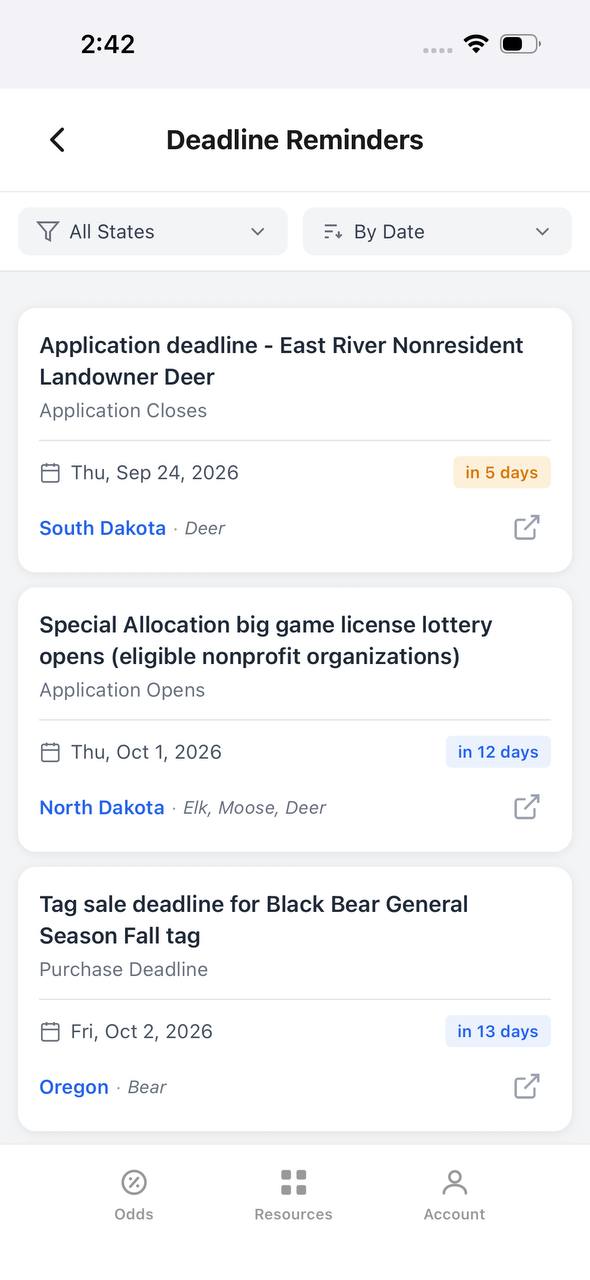
Oversight or confusion about application windows costs opportunities and wastes point investments. Using calendar reminders, deadline tracking spreadsheets, or hunting application services helps ensure no deadlines slip past. The TAGZ hunt planning tools provide deadline tracking and application reminders across all western states.
FAQ — Western Elk Tag Application Costs
What is the cheapest western state for nonresidents to apply for elk tags?
New Mexico offers the lowest nonresident application investment at around $150 total, including license and application fee. While draw odds are low due to the 12 percent nonresident allocation, the lack of preference points means equal odds every year without long-term point investments.
Do I have to pay for preference points every year even if I don't apply?
It depends on the state. Wyoming and Arizona allow purchasing points without applying, charging full point fees annually. Colorado requires submitting an application to earn points but offers a point-only option at reduced cost. Montana assigns preference points automatically with applications. Check each state's specific point rules at their official wildlife agency websites.
Which state offers the best resident elk hunting value?
Montana and Wyoming deliver exceptional resident value, with general elk licenses costing $20 to $43 and granting access to extensive public land and multiple hunt districts. Idaho offers strong value too, with $155 general tags valid across numerous OTC units.
Can I apply for elk tags in multiple states in the same year?
Yes, most western states allow simultaneous applications. However, you must have sufficient funds available during application season because several states charge upfront fees, and you risk drawing tags in multiple states simultaneously. Plan travel and time off accordingly if you apply to numerous states.
What happens if I draw multiple elk tags in different states?
You must honor all successfully drawn tags and pay associated fees, though you can only hunt one animal per tag. Some hunters draw multiple cow elk tags or combine a bull tag in one state with a cow tag elsewhere. Check each state's regulations about hunting multiple states in the same year — most allow it, but season dates may overlap.
Are point fees refundable if I stop applying in a state?
No, preference and bonus point fees are nonrefundable. Points typically remain valid indefinitely as long as you maintain them according to state rules, but money spent purchasing points cannot be recovered. This makes long-term point strategies significant financial commitments that should align with realistic hunting plans.
Was this article helpful?
Previous
How to Build a Five-Year Western Hunting Application Strategy
A systematic approach to planning Western big-game applications across multiple states, balancing point accumulation with hunt opportunities to maximize your chances over five years.

Related
Best Mule Deer Tags You Can Draw With Zero Points in 2027
Zero-point mule deer hunts exist across the West, from Colorado's high-country OTC archery to Wyoming's Region G general licenses. Here are the tags worth applying for without years of waiting.
Next
Point-Only Applications: Which States Let You Buy Hunting Points?
Several Western states allow hunters to purchase preference or bonus points without applying for a tag, banking points for future hunts while keeping current-year options open.