Point-Only Applications: Which States Let You Buy Hunting Points?

Point-only applications let hunters buy preference or bonus points without entering a tag draw that year. This strategy protects your points while you hunt elsewhere, wait for better odds, or build toward a dream unit. Five Western states offer point-only options, but the rules, costs, and species covered vary significantly. Understanding which states allow point banking and how each system works helps you build points strategically without accidentally burning them on a hunt you don't want.
Colorado Preference Points: Pay to Bank Points for Deer, Elk, and Pronghorn
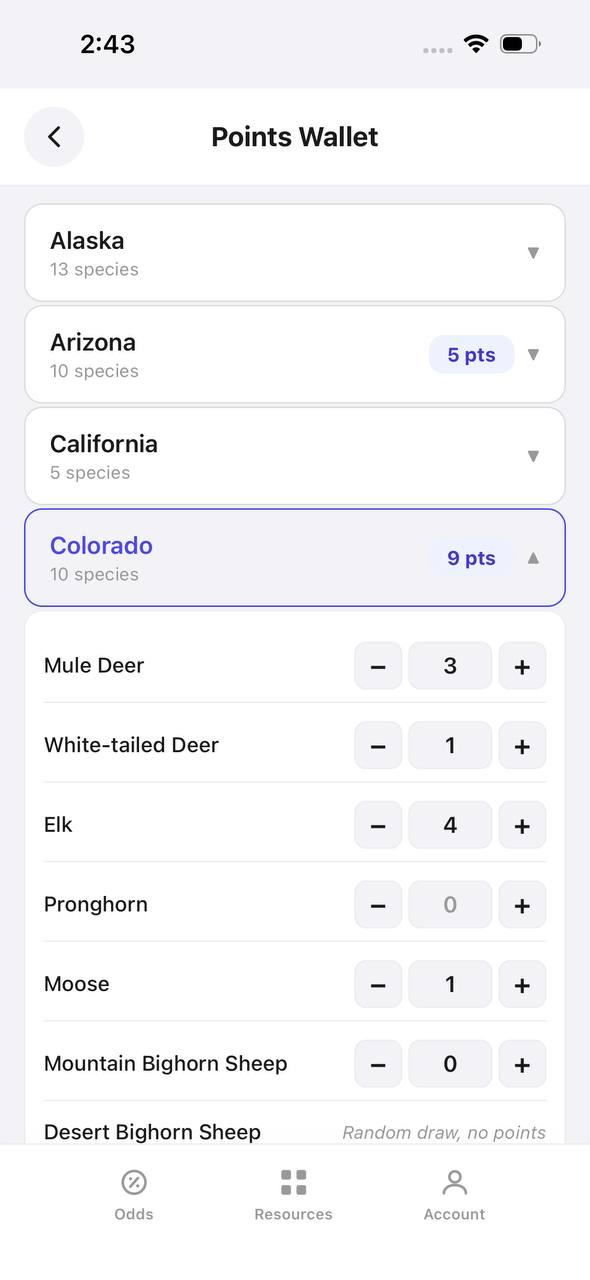
Colorado operates a pure preference-point system where applicants with the most points draw first. The state allows point-only purchases for elk, mule deer, pronghorn, bear, and moose through its annual application periods. Hunters can buy a preference point without applying for a limited tag, keeping accumulated points intact while hunting over-the-counter elk units or sitting out a season. Point-only applications cost significantly less than full license fees. For 2025, nonresident elk preference points cost $50, deer points cost $40, and pronghorn points cost $30. Residents pay roughly half those amounts. Applications open in early April and close in early July. Colorado does not cap the number of preference points you can accumulate, making it the most popular state for long-term point banking. Official application details and current fees are available through Colorado Parks and Wildlife.
Wyoming Preference Points: Build Points While Hunting General-Season Tags
Wyoming uses preference points for limited-quota (LQ) elk, deer, and pronghorn units but allows hunters to buy points without entering the limited-quota draw. This matters because Wyoming also offers general-season licenses for deer and elk in certain areas, letting you hunt every year while banking points for premium limited units. Nonresident hunters must first draw a nonresident elk or deer license through the preference-point draw (which requires points), but after that they can buy preference points separately for future hunts. For pronghorn, nonresident hunters can purchase a point-only application directly without drawing a license first. Wyoming preference points cost $50 for elk, $40 for deer, and $30 for pronghorn in 2025 for nonresidents. The point-only application deadline falls in mid-January for elk and deer and in late May for pronghorn. Hunters serious about Wyoming trophy units often buy points annually while hunting general units or other states. Full details on Wyoming's preference-point system are posted by the Wyoming Game and Fish Department.
Nevada Bonus Points: Every Point Improves Your Odds Without Forcing an Application
Nevada uses a bonus-point system where each point equals one additional entry in the random draw. More points mean better odds, but even first-time applicants can draw coveted tags. Nevada allows hunters to buy bonus points without applying for a tag, making it easy to bank points while hunting other states or waiting for better conditions. Point-only applications are available for elk, mule deer, pronghorn, bighorn sheep, mountain goat, and California bighorn sheep. Nonresident bonus points cost $20 for deer and elk and $30 for sheep, goat, and bison. Points must be purchased before the summer application deadline, usually in early June. Nevada does not issue points automatically with unsuccessful applications, so buying points separately is the only way to build points when you skip the draw. This flexibility makes Nevada attractive for hunters who want to stay in the bonus-point pool without committing to a hunt every year. Official bonus-point rules and application timelines are maintained by Nevada Department of Wildlife.
Utah Bonus Points: Cheap Points for Long-Term Trophy Strategies
Utah operates a 50/50 bonus-point system where half the tags go to max-point holders and half go into a true bonus draw. Bonus points increase your entries in the random half, improving odds without guaranteeing anything. Utah allows point-only purchases for elk, deer, pronghorn, moose, bison, Rocky Mountain bighorn sheep, desert bighorn sheep, Rocky Mountain goat, and black bear. Nonresident bonus points cost just $10 per species, the cheapest of any Western state. This low cost makes Utah attractive for banking points across multiple species simultaneously. The point-only application period opens in January and runs through early March. Points purchased through the point-only application count toward future draws but do not enter you in the current year's draw. Utah applies bonus points differently than Nevada, so understanding the system improves your long-term draw strategy. The state's application processes and bonus-point rules are explained in detail by Utah Division of Wildlife Resources.
Free to join
Download mobile app
- Detailed draw odds
- Point tracking
- Deadline reminders
- 19 states covered

Free to join
Download mobile app
- Detailed draw odds
- Point tracking
- Deadline reminders
- 19 states covered
Free to join
Download mobile app
- Detailed draw odds
- Point tracking
- Deadline reminders
- 19 states covered
Arizona Bonus Points: Weighted Random Draw for Premium Elk and Deer Units
Arizona uses a weighted bonus-point system where points dramatically improve your draw odds but do not guarantee tags. Each bonus point squares your number of entries in the random draw. Five points equals 25 entries, while ten points equals 100 entries, making point accumulation valuable over time. Arizona allows hunters to purchase a bonus point without applying for a tag during the main draw. Nonresident bonus points cost $15 for elk, deer, pronghorn, and other big-game species. The point-only application period runs from roughly mid-June through early July, after the main draw closes. Arizona does not automatically award points for unsuccessful applications, so purchasing points separately is the only way to build them without applying. This system works well for hunters targeting Arizona's premium units while hunting easier draws elsewhere. Arizona's bonus-point structure and application timelines are managed by Arizona Game and Fish Department.
States That Do NOT Offer Point-Only Applications
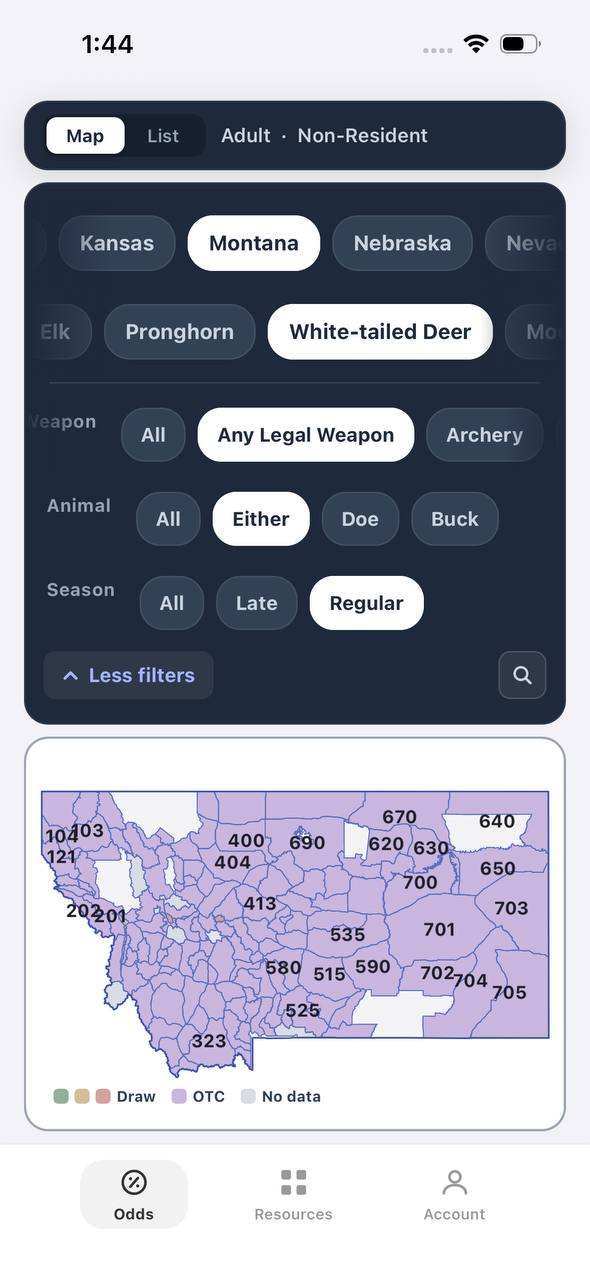
Several Western states automatically award points after unsuccessful applications but do not sell points separately. Montana, Idaho, New Mexico, Oregon, and Washington do not offer point-only purchases. In Montana, bonus points are issued only after you apply and fail to draw. Idaho awards preference points automatically after unsuccessful controlled-hunt applications. New Mexico does not use a point system at all, treating every applicant equally regardless of history. Oregon awards preference points after unsuccessful draw applications but does not sell points separately. Washington issues preference points after unsuccessful special-permit applications but does not allow advance point purchases. If you want to build points in these states, you must apply for a tag and accept the possibility of drawing. Skipping the application means losing a year of point accumulation.
Strategic Considerations: When to Buy Points vs. Apply for Tags
Point-only applications work best when you are hunting other states, saving money, waiting for better weather conditions, or targeting a unit that requires more points than you currently have. Buying a point without applying keeps your points intact while maintaining flexibility. However, sitting out too many years delays your eventual hunt, and point creep in popular units may outpace your accumulation rate. For high-demand elk and deer units in Colorado and Wyoming, applying with fewer points than the current draw threshold wastes your points. In bonus-point states like Nevada, Utah, and Arizona, entering the draw with moderate points often makes sense because you have a real chance even without max points. Balance point banking against realistic draw odds and your actual hunting timeline.
Free to join
Download mobile app
- Detailed draw odds
- Point tracking
- Deadline reminders
- 19 states covered
Free to join
Download mobile app
- Detailed draw odds
- Point tracking
- Deadline reminders
- 19 states covered
Free to join
Download mobile app
- Detailed draw odds
- Point tracking
- Deadline reminders
- 19 states covered
Cost Comparison: Building Points Across Multiple States
Building points in multiple states requires planning and budgeting. A hunter buying elk points in Colorado ($50), Wyoming ($50), Nevada ($20), Utah ($10), and Arizona ($15) spends $145 annually to maintain a presence in five Western states. Add deer and pronghorn points, and annual costs climb to $400 or more. Point-only applications cost far less than full licenses, but buying points for species you will never seriously hunt wastes money. Prioritize states and species where you will realistically apply within the next five to ten years. If you hunt Colorado OTC elk annually, buying Colorado deer and pronghorn points makes sense because you are already familiar with the state. If you have no plan to hunt Nevada, skipping those points saves $20 per year.
Application Deadlines and Timing Across Point-Only States
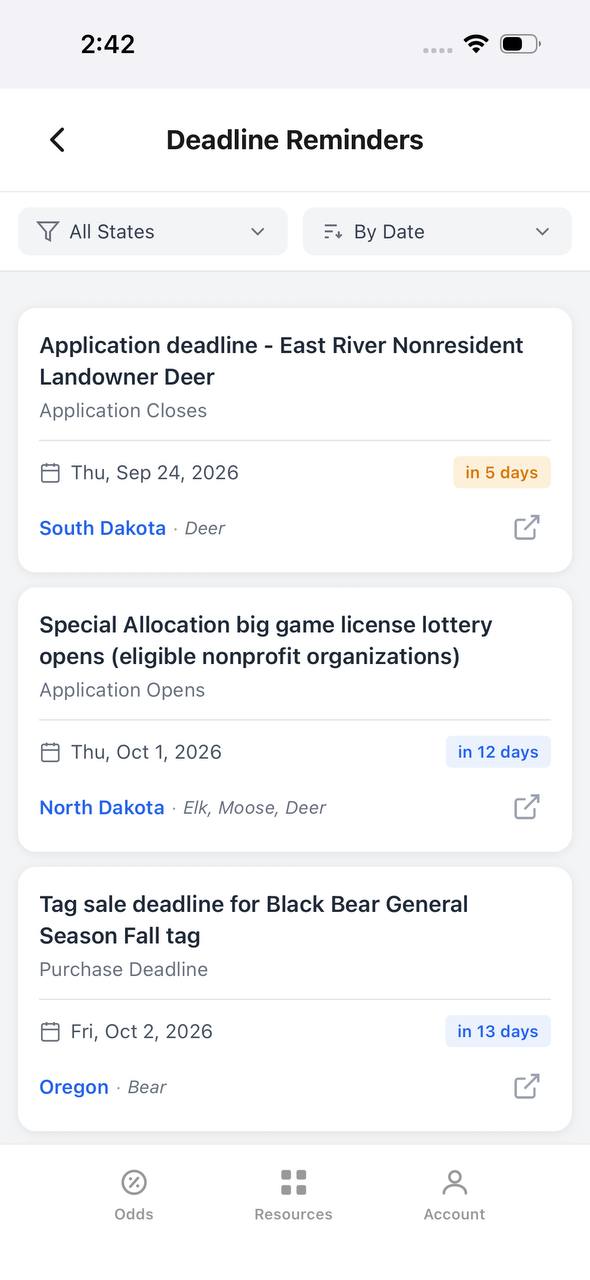
Point-only application deadlines vary significantly. Colorado closes point purchases in early July. Wyoming's elk and deer point deadline falls in mid-January, while pronghorn points close in late May. Nevada bonus points must be purchased before the early June tag application deadline. Utah's point-only period runs from January through early March. Arizona's point-only window opens in mid-June after the main draw closes. Tracking five different deadlines across multiple states requires a calendar or reminder system. Missing a deadline costs you a year of point accumulation. Some hunters set annual reminders in December to review upcoming Western deadlines and decide which points to buy that year.
Preference Points vs. Bonus Points: Understanding the Difference
Preference points and bonus points function differently, affecting your point-buying strategy. Preference points (Colorado, Wyoming) guarantee that applicants with the most points draw first. These systems reward patience but create point creep, where the required points for top units increase every year. Bonus points (Nevada, Utah, Arizona) increase your odds in a random draw but never guarantee a tag. Even max-point holders can go years without drawing. Point-only applications work in both systems, but the long-term value differs. In preference-point states, buying points steadily moves you toward certainty. In bonus-point states, buying points improves your odds but never eliminates randomness. Adjust your expectations and strategy accordingly.
How Point-Only Applications Affect Your Overall Draw Strategy
Point-only applications let you hunt strategically without burning points prematurely. For example, a hunter with seven Colorado elk points might buy an eighth point instead of applying for a 10-point unit where drawing is impossible. That same hunter could apply in Utah with moderate bonus points, hunt Wyoming general elk on a leftover license, and buy a Nevada elk point for future consideration. This approach maximizes hunting opportunities while protecting high-value points for dream units. Point-only purchases also help hunters manage family or work schedules by deferring hunts to better years without losing progress. The flexibility makes multi-state point strategies more practical.
Free to join
Download mobile app
- Detailed draw odds
- Point tracking
- Deadline reminders
- 19 states covered
Free to join
Download mobile app
- Detailed draw odds
- Point tracking
- Deadline reminders
- 19 states covered
Free to join
Download mobile app
- Detailed draw odds
- Point tracking
- Deadline reminders
- 19 states covered
Common Mistakes: Accidentally Applying Instead of Buying Points
Mistakenly applying for a tag when you intended to buy a point happens more often than hunters expect. Application portals in Colorado, Wyoming, and other states include separate sections for point-only purchases, but the navigation can be confusing. Accidentally selecting a low-odds unit with accumulated points burns your points on a tag you did not want. Double-check your selections before submitting any application. If you want a point without entering the draw, confirm you are in the point-only section, not the tag-application section. Some states send confirmation emails showing whether you applied for a tag or purchased a point. Review these emails immediately after submission to catch errors while customer service may still fix them.
Leftover Licenses and Point Protection
Some hunters worry that purchasing a leftover license after the main draw will cost them their points. In most states, buying a leftover or second-choice license does not affect your existing preference or bonus points because those points were already applied (and either used or retained) during the initial draw. However, purchasing a point-only application and then later buying a leftover license in the same state and year does not conflict. For example, buying a Colorado elk preference point in June and then purchasing a leftover Colorado elk license in August keeps your point intact because you never entered the controlled-hunt draw. Confirm the rules for each state, but generally leftover licenses do not interact with point-only purchases.
Multi-Year Planning: How Many Points Do You Really Need?
Point-only applications make sense only if you know how many points you need for your target units. Research draw odds, historical point requirements, and tag quotas before committing to a multi-year point-buying strategy. Colorado publishes detailed draw statistics showing the minimum points required for each unit. Wyoming lists leftover licenses and general-season options that do not require points. Arizona's draw odds tool shows how bonus-point totals affect your chances. If a unit consistently requires 15 preference points and you have five, buying points annually makes sense only if you are willing to wait a decade. If point creep increases requirements by one point per year, you may never catch up. Evaluate whether the juice is worth the squeeze.
FAQ — Point-Only Applications
Which Western states allow you to buy hunting points without applying for a tag?
Colorado, Wyoming, Nevada, Utah, and Arizona offer point-only applications for elk, deer, pronghorn, and other species. Montana, Idaho, New Mexico, Oregon, and Washington do not sell points separately.
How much does it cost to buy a preference point in Colorado?
Nonresident elk preference points cost $50, deer points cost $40, and pronghorn points cost $30 in 2025. Residents pay roughly half those amounts.
Can I hunt in a state the same year I buy a preference point?
Yes. Buying a preference or bonus point without applying for a limited tag keeps your points intact while you hunt over-the-counter units, general-season licenses, or leftover tags in the same state.
Do bonus points in Nevada and Arizona guarantee you will draw a tag?
No. Bonus points increase your odds in a random draw by adding more entries, but even max-point holders can fail to draw. Preference points in Colorado and Wyoming guarantee tags once you reach the required threshold.
What happens if I miss the deadline to buy a point in one state?
You lose a year of point accumulation in that state. Deadlines vary significantly, from mid-January in Wyoming to early July in Colorado, so tracking multiple states requires careful planning.
Is it worth buying points in multiple states simultaneously?
It depends on your budget and realistic hunting plans. Buying points in five states for species you will never hunt wastes money, but banking points in two or three states where you will realistically apply within a decade makes sense for serious Western hunters.
Was this article helpful?
Previous
Hunting Party Applications: Which States Allow Group Applications?
Nine Western states allow party applications for big-game draws, but each sets different rules for group size, point averaging, and species. Here's how party apps work and where to use them strategically.

Related
How to Build a Five-Year Western Hunting Application Strategy
A systematic approach to planning Western big-game applications across multiple states, balancing point accumulation with hunt opportunities to maximize your chances over five years.

Next
Best States for First-Time Nonresident Elk Hunters in 2025
Colorado, Idaho, and Montana offer the most accessible elk hunting for first-time nonresident hunters through OTC tags, affordable combination licenses, and huntable public land that doesn't require years of preference points.