How to Build a Five-Year Western Hunting Application Strategy

Most Western hunters approach the draw system one year at a time, reacting to current odds rather than executing a deliberate plan. This reactive approach leaves money on the table and misses opportunities to hunt premium units while simultaneously building toward once-in-a-lifetime tags. A five-year strategy lets you balance immediate hunting with long-term point accumulation, spreading costs across multiple states while positioning yourself for the tags that matter most.
The five-year window is long enough to reach meaningful point totals in bonus systems and qualify for mid-tier preference-point units, but short enough to maintain focus and adjust as regulations change. By the end of year five, you should have burned at least two quality tags, built meaningful point portfolios in three to four states, and positioned yourself to draw elite units in year six or seven.
Define Your Five-Year Hunting Goals
Before selecting states or species, identify what success looks like at the end of five years. Write down three to five specific hunt experiences you want to achieve. These should include at least one tag you plan to burn in years one or two, one mid-tier tag requiring two to four points, and one long-term goal requiring sustained point building.
Your immediate-opportunity tag keeps you hunting while points accumulate elsewhere. This might be an over-the-counter Colorado elk tag, a Montana general combination license, or a low-point Wyoming antelope unit. The mid-tier target should be realistic within your timeline—a Colorado second or third rifle bull elk tag, an Idaho controlled elk hunt, or a Nevada rifle mule deer unit that draws with two to three bonus points.
The long-term goal anchors your point-building discipline. This could be a Wyoming Region G elk tag, an Arizona early rifle bull hunt, or a Utah limited-entry deer unit. Even if you do not draw this tag within five years, the accumulated points create options and trade-offs you can evaluate in year four or five. Resist the temptation to chase points in every state. Three to four well-chosen states generate better results than spreading yourself across eight or nine.
Select States Based on Point Systems and Budget
Western states use three primary draw systems: preference points (guaranteed advancement), bonus points (squared probability), and random draws. Your state selection should include at least one preference-point state, one or two bonus-point states, and one random-draw state to diversify your odds profile.
Preference-point states like Colorado, Wyoming (for most species), and Utah offer predictable advancement toward specific units. If you apply consistently, you will eventually draw. This makes them ideal for mid-tier goals where you can project exactly when you will reach competitive point levels. Check official draw statistics on Colorado Parks and Wildlife, Wyoming Game and Fish Department, and Utah Division of Wildlife Resources to identify realistic targets.
Bonus-point states like Nevada, Idaho (for controlled hunts), and Arizona square your points, giving long-time applicants better odds without guaranteeing advancement. These systems reward persistence but require patience. Nevada and Arizona also include random-draw pools, giving first-year applicants a small but real chance at any tag. Official draw results are published by the Nevada Department of Wildlife and Arizona Game and Fish Department.
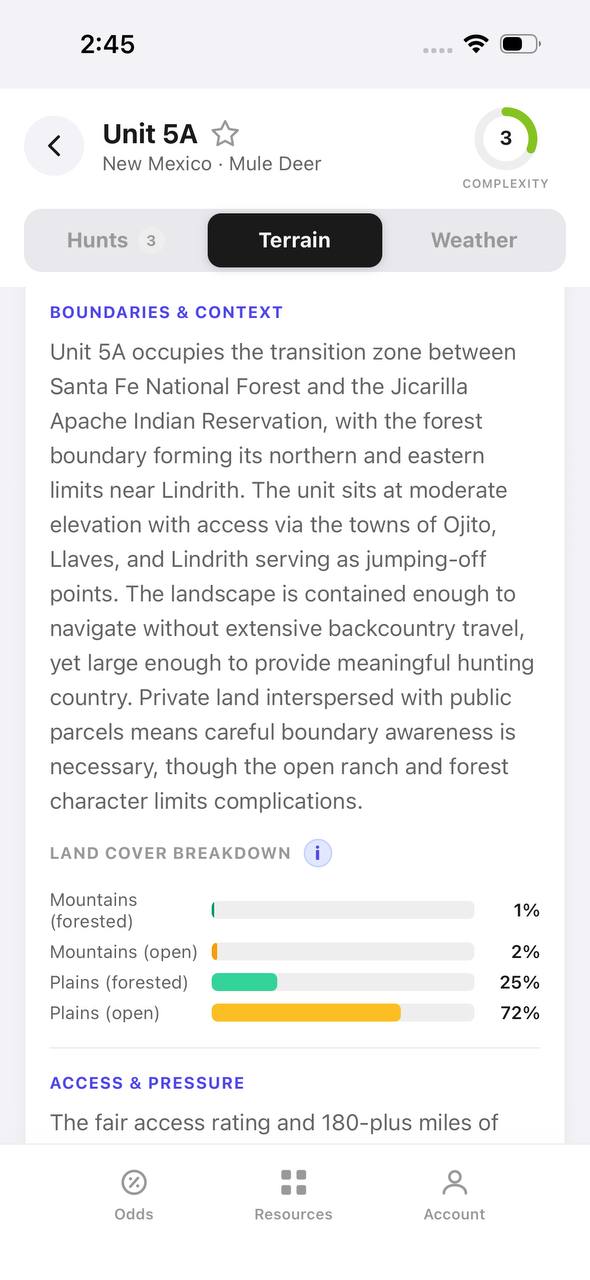
Random-draw states like New Mexico and Idaho (for many general tags) offer equal odds regardless of points. New Mexico's pure random system means you could draw a premium elk unit in year one or never draw after twenty applications. This unpredictability makes random states ideal for low-cost supplementary applications where an unexpected tag would be a bonus rather than a plan. The New Mexico Department of Game and Fish provides official draw odds and application information.
Budget directly limits how many states you can include. Application fees, point fees, license costs, and nonresident tag prices add up quickly. A realistic annual application budget for a serious nonresident hunter ranges from $1,500 to $3,000. Itemize every cost: application fees, point fees, hunting license requirements, and the tag price if you draw. Some states like Wyoming and Montana require an expensive nonresident conservation license before you can even apply.
Build a Year-by-Year Application Calendar
Once you have selected target states and species, map out every application deadline for five years. Deadlines range from January (Idaho controlled hunts) through June (some Montana permits), and missing a single deadline costs you a year of point accumulation and opportunity.
Create a spreadsheet or calendar with every state's application window, required documents, point purchase deadlines, and tag costs. Include secondary draws and leftover-license sales, which often offer overlooked opportunities. For example, Wyoming's leftover-license list frequently includes quality antelope and deer tags that did not fill in the initial draw. The Wyoming Game and Fish Department posts leftover licenses annually, and savvy hunters monitor this list as closely as the main draw.
Front-load point building in states where you need three or more years to become competitive. If your five-year goal includes a Nevada mule deer tag in a unit requiring two or three squared bonus points, start applying immediately. Waiting until year three to begin accumulating points means you will not be competitive until year six or seven.
Schedule your mid-tier tag burn for year three or four. By then, you will have accumulated enough points to be competitive in second- and third-choice units, and burning a tag midway through your strategy lets you hunt a quality area while continuing to build points elsewhere. If you save every tag for year five, you will end up sitting on points and potentially missing opportunities due to regulation changes or unit closures.
Balance Point Building with Hunting Opportunities
The biggest mistake in multi-year planning is accumulating points without hunting. Points are tools, not trophies. If you spend five years buying points without burning a tag, you have failed the strategy. The goal is to hunt consistently while positioning yourself for premium opportunities.
Apply for point-only or low-odds units in states where you are building long-term points, but simultaneously apply for realistic tags in states where you have enough points to draw. For example, in year one you might apply for a Wyoming Region G elk tag as your long-term goal (knowing you will not draw), apply for a Colorado second rifle unit as your mid-tier target (knowing you need two more points), and hunt an over-the-counter Idaho general elk unit as your guaranteed opportunity.
By year three, your Colorado points make you competitive for a solid unit, and you burn that tag. Meanwhile, you continue building Wyoming points and apply for a realistic Idaho controlled hunt. This approach keeps you in the field every year while advancing toward your top-tier goals.
Do not fall into the points-creep trap. Some units increase in competitiveness faster than you can accumulate points, meaning you will never catch up. If a unit required three points two years ago and now requires five, it may require seven by the time you have six. Monitor draw statistics annually and adjust your targets if point creep is outpacing your accumulation. The Colorado Parks and Wildlife and Wyoming Game and Fish Department publish historical draw data that reveals these trends.
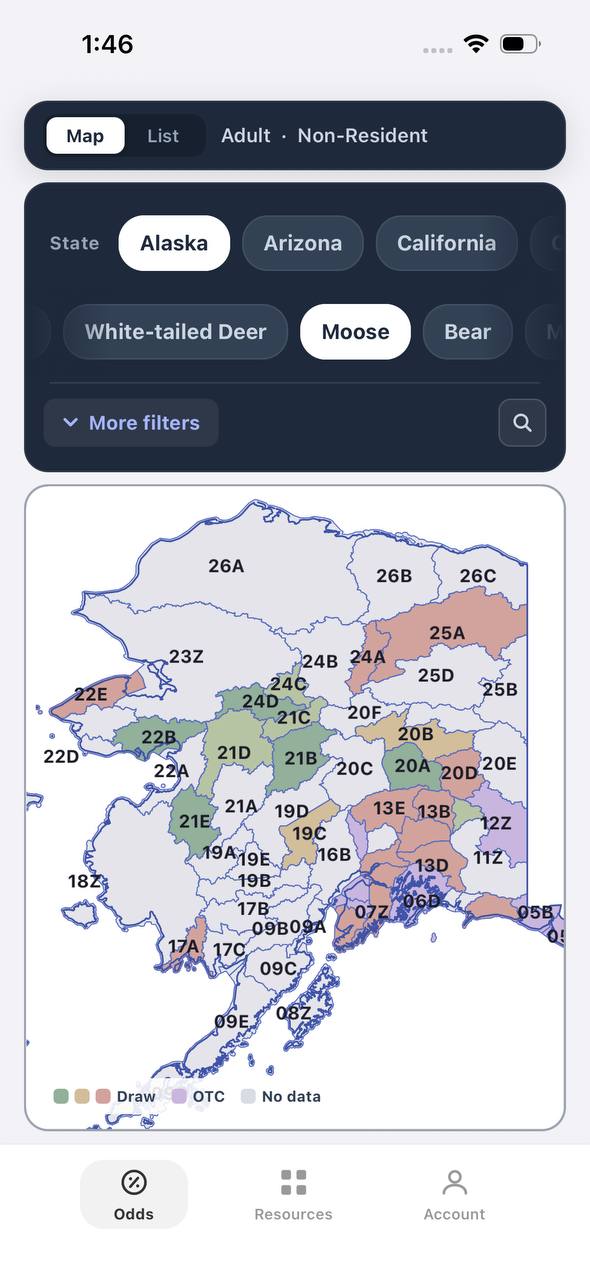
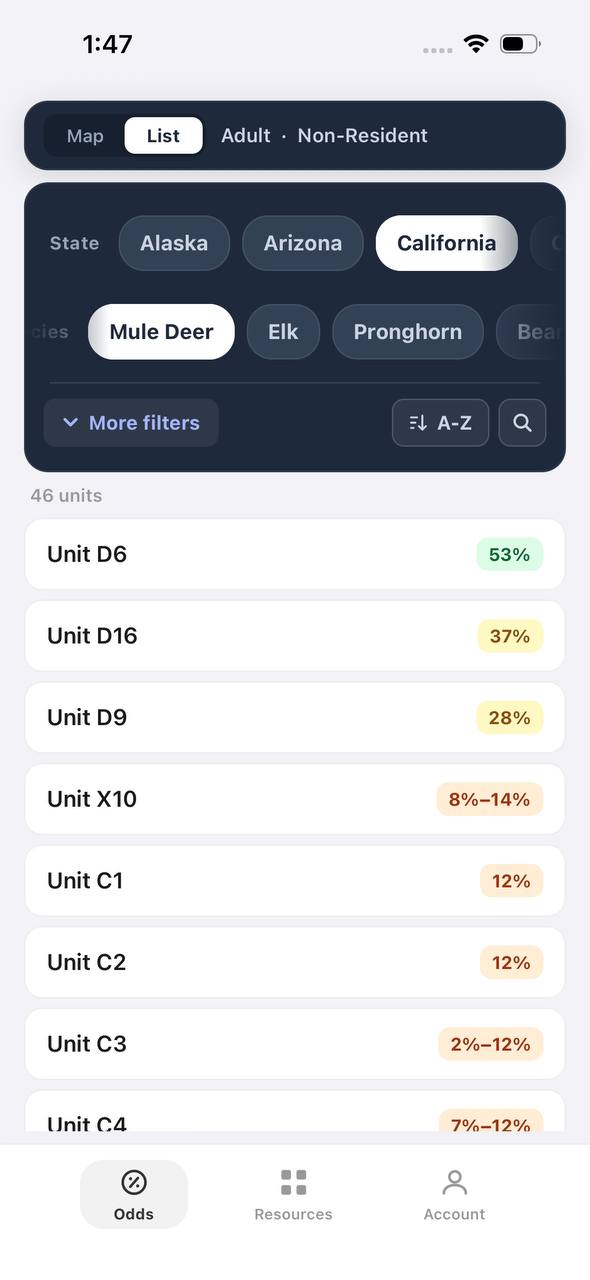
Free to join
Download mobile app
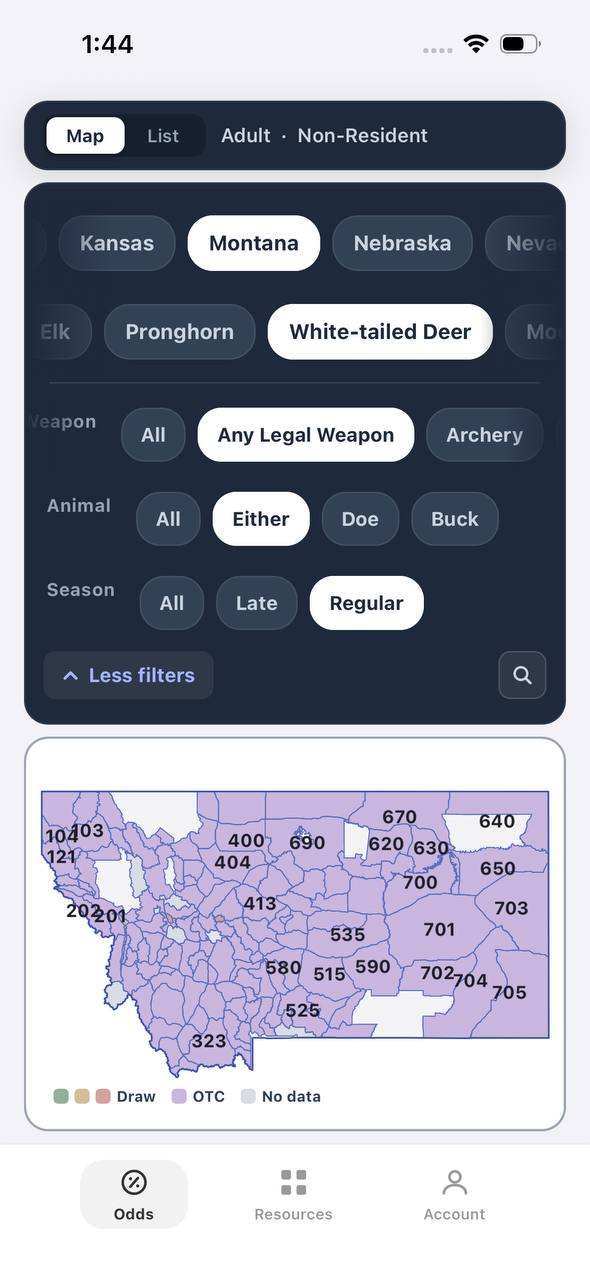
- Detailed draw odds
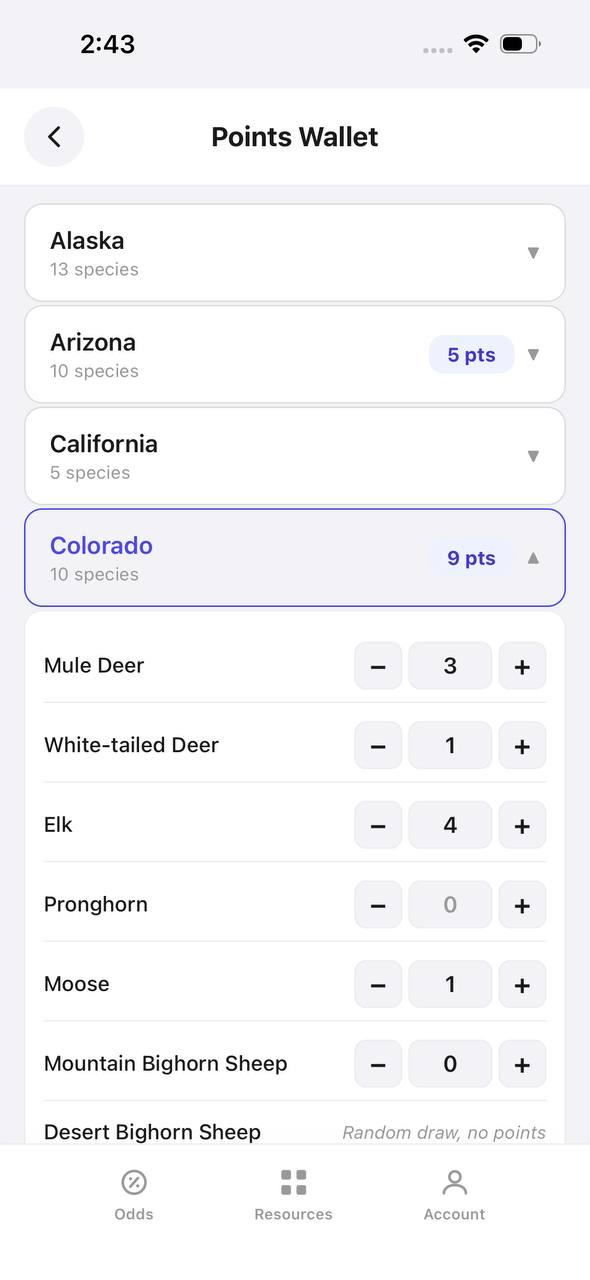
- Point tracking
- Deadline reminders
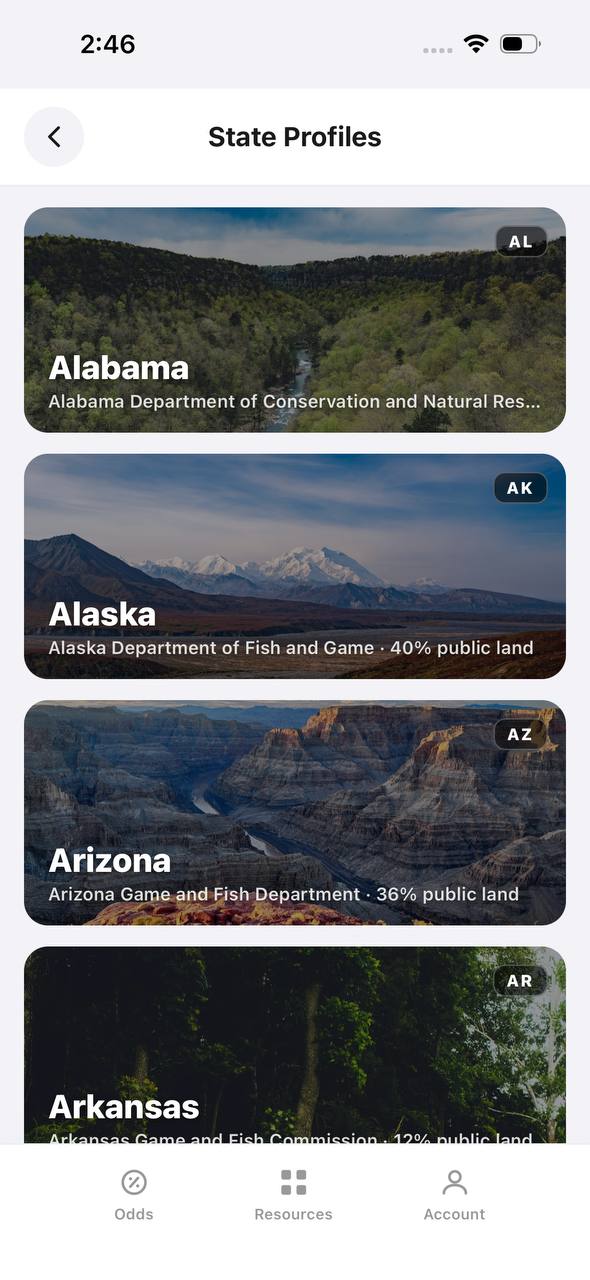
- 19 states covered

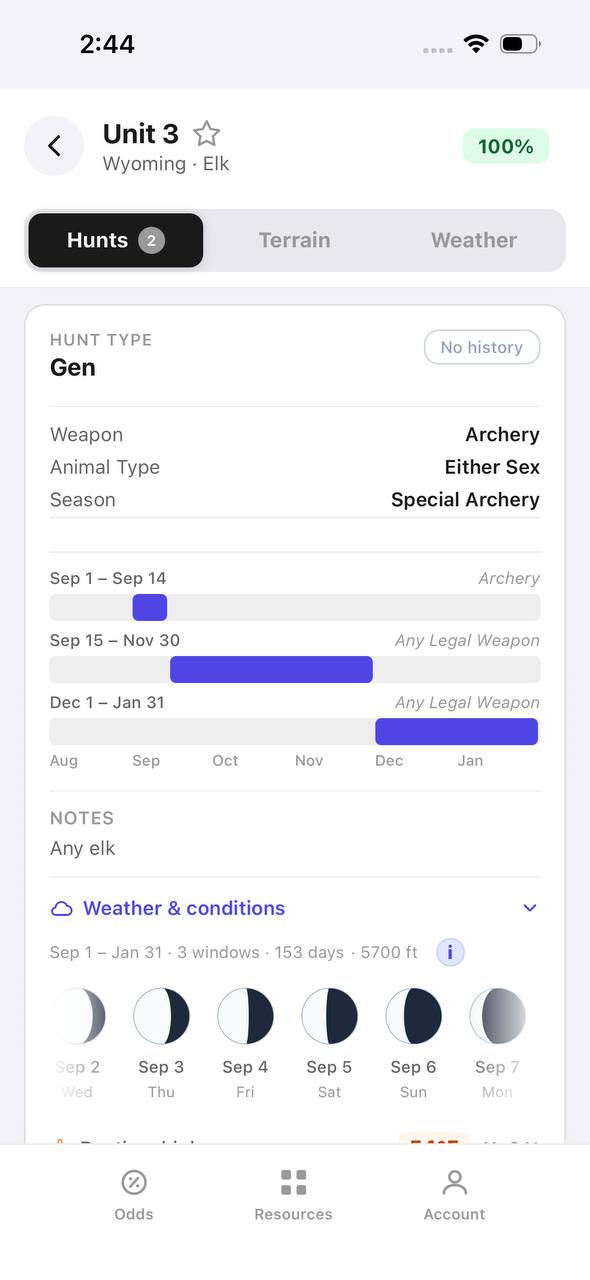
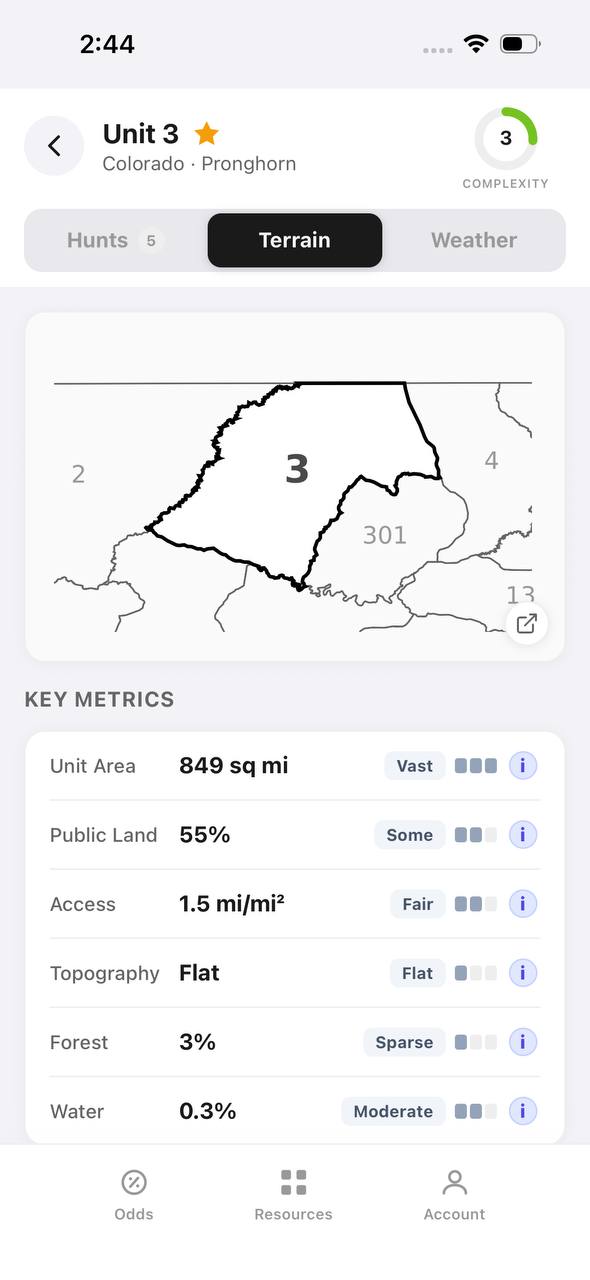
Free to join
Download mobile app
- Detailed draw odds
- Point tracking
- Deadline reminders
- 19 states covered
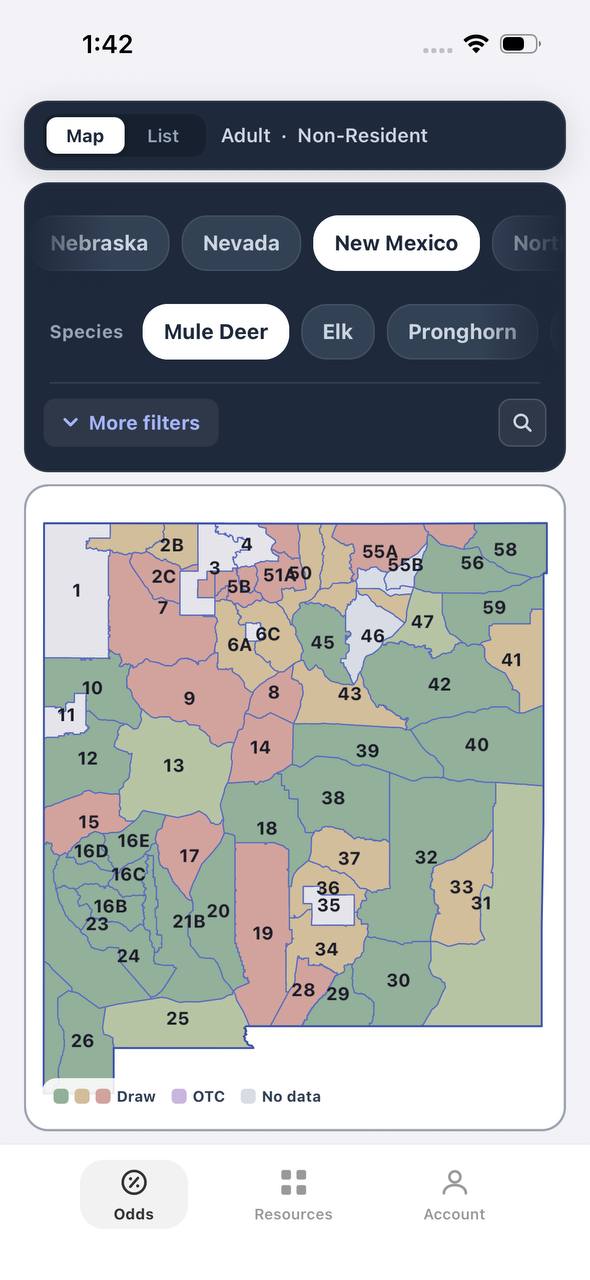
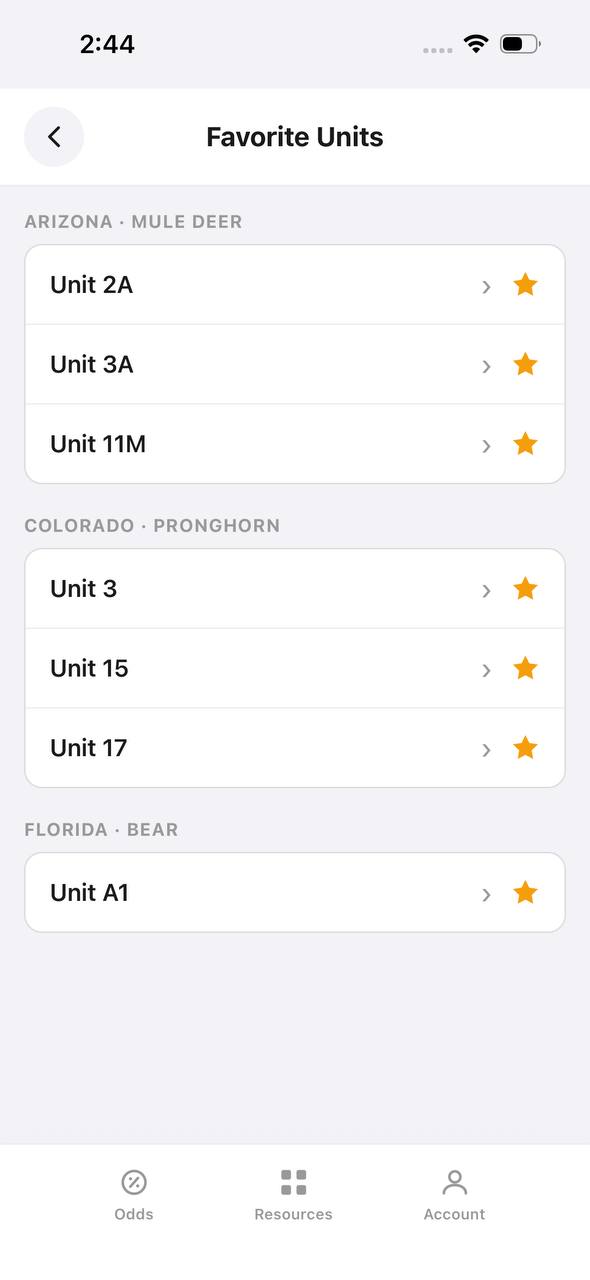
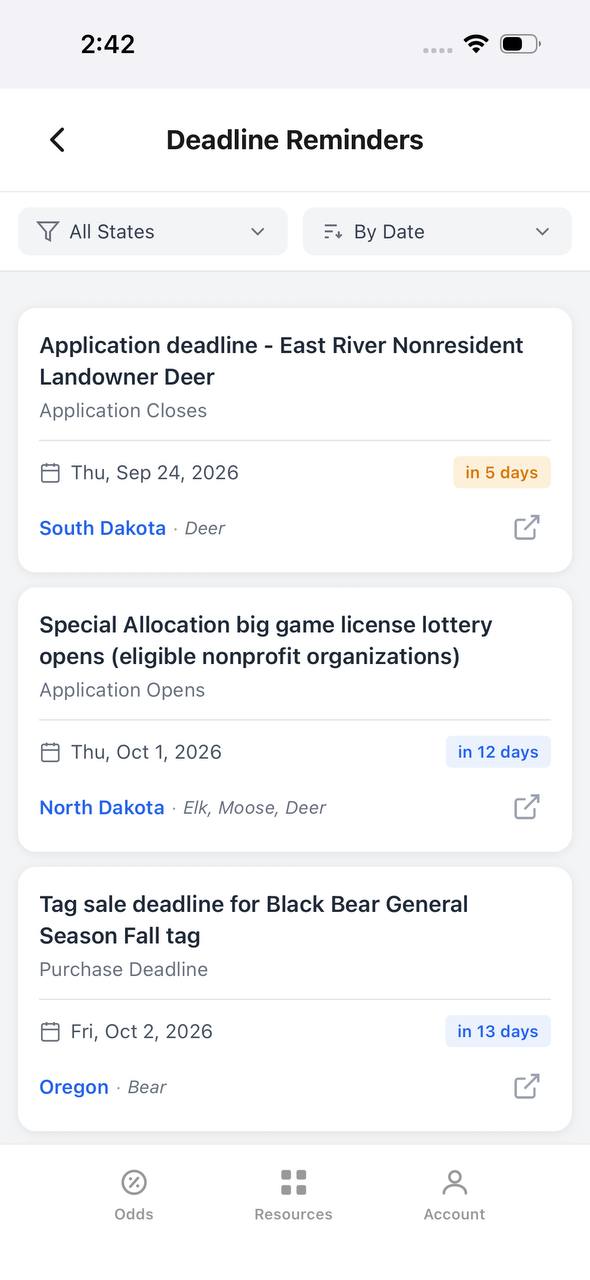
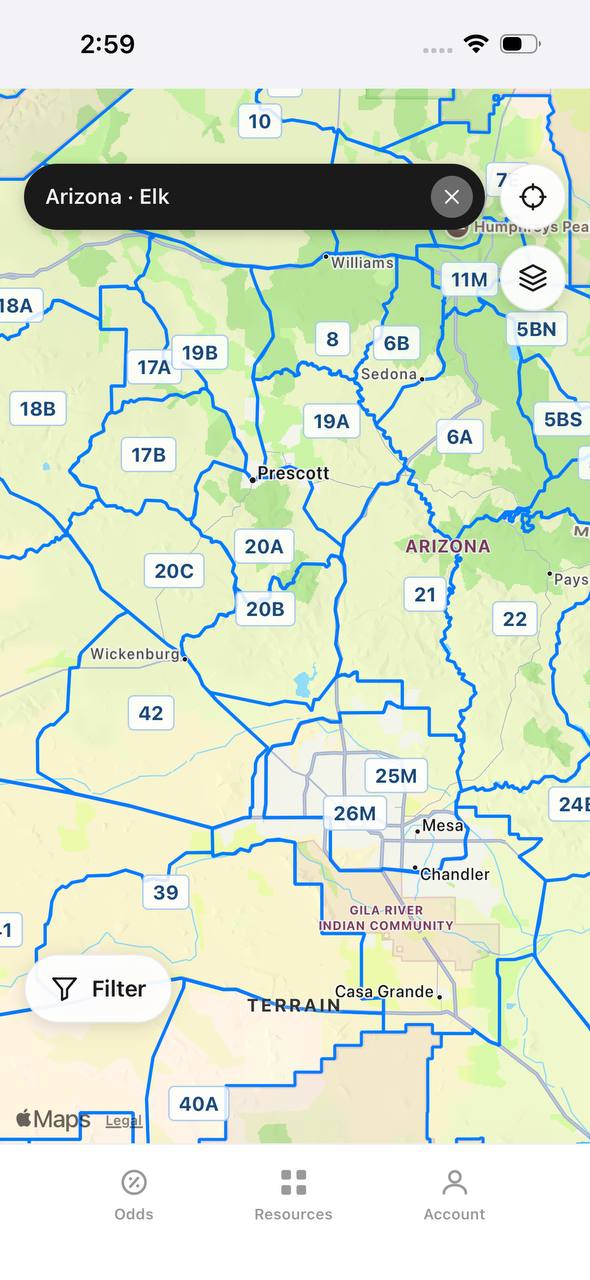
Free to join
Download mobile app
- Detailed draw odds
- Point tracking
- Deadline reminders
- 19 states covered
Allocate Budget Across Species and States
Within your total annual budget, prioritize spending based on point cost, draw odds, and tag value. Nonresident elk tags in premium units cost $600 to $1,200, while antelope and deer tags range from $300 to $600. Application fees and point fees add another $50 to $150 per state per species.
If elk is your primary focus, allocate 60 to 70 percent of your budget to elk applications across three states. Use the remaining budget for secondary species like mule deer or antelope, which often provide better draw odds and affordable hunt opportunities. Many hunters overlook antelope because the animals are smaller, but Wyoming and Montana offer exceptional antelope hunting with reasonable draw odds, and the meat is excellent.
Front-load spending in year one and year two to establish your point base across multiple states, then shift spending toward states where you have enough points to draw quality tags. For example, if you are building points in four states in year one, you might spend $2,000 on applications and points. By year three, you have enough points in one or two states to focus applications there, reducing total spending to $1,500 while increasing your odds of drawing.
Consider group applications where allowed. Some states let you apply with a partner, pooling your points or averaging them depending on the system. This can accelerate your timeline in preference-point states if your partner has more points, or give you more entries in bonus-point states. Review each state's group application rules carefully—some states like Colorado pool points, meaning the entire group advances at the rate of the person with the fewest points, while other states like Nevada average points, which can hurt a high-point applicant.
Monitor Regulation Changes and Adjust Annually
Western hunting regulations change frequently. Tag allocations shift, draw systems are modified, season structures change, and units open or close. A five-year strategy must include annual reviews and adjustments.
Every January, review the previous year's draw statistics for every state in your plan. Identify units where odds improved or worsened, and adjust your application targets accordingly. If a unit you planned to apply for in year three now requires an additional point due to increased demand, shift to a comparable unit with better odds or extend your timeline by one year.
Watch for regulation proposals that affect nonresident allocations. Some states have reduced nonresident tag quotas in recent years, while others have increased opportunity. The Montana Fish, Wildlife and Parks and Idaho Department of Fish and Game announce proposed regulation changes months before they take effect, giving you time to adjust your strategy.
If a state changes from a preference-point system to a bonus-point system, your accumulated points may lose value or function differently. Wyoming made this change for some species in recent years, and other states have discussed similar reforms. When a major system change occurs, recalculate your odds and decide whether to continue investing in that state or redirect your budget elsewhere.
Execute Leftover and Supplementary Strategies
Leftover licenses and supplementary draws add low-cost opportunities without disrupting your main plan. After primary draws close, most states offer unsold tags on a first-come, first-served basis or through a secondary lottery.
Wyoming, Montana, and Idaho post leftover-license lists in summer, and quality tags occasionally appear. Set calendar reminders for the exact release time and be ready to purchase online the moment tags go on sale. Competition is intense for the best leftover tags, and they sell out in minutes. The Wyoming Game and Fish Department and Montana Fish, Wildlife and Parks publish annual leftover-license sale dates and remaining tag inventories.
Secondary draws occur in states like Nevada and Arizona after the initial draw. These draws include returned tags, canceled hunts, and tags that went unfilled in the first round. Odds are often better in secondary draws because fewer people apply, and there is no cost to enter beyond the application fee. If you did not draw in the main lottery, secondary draws are a low-risk way to pick up an unexpected tag.
Over-the-counter tags in Colorado, Idaho, and Montana provide guaranteed hunting opportunities without burning points. OTC tags are ideal for year one and year two while you build points, and they let you scout units you might apply for in later years. Even if you are accumulating points in Colorado, you can still buy an OTC archery or second or third rifle tag and hunt every year. Colorado OTC regulations and unit lists are available on Colorado Parks and Wildlife.
Example Five-Year Strategy
A realistic five-year plan for a nonresident elk hunter with a $2,000 annual budget might look like this:
Year One: Apply for Wyoming Region G elk (long-term goal, low odds, start building points). Apply for Colorado second rifle elk in a unit requiring two points (will not draw, building points). Hunt an over-the-counter Idaho general elk unit (guaranteed tag). Total cost: $1,800.
Year Two: Reapply Wyoming Region G. Reapply Colorado second rifle with one point. Apply for Nevada rifle elk in a mid-tier unit (bonus point system, low odds but possible). Hunt Montana general elk with a purchased combination license. Total cost: $2,100.
Year Three: Reapply Wyoming Region G. Apply for Colorado second rifle elk with two points in a realistic unit and draw. Hunt Colorado. Continue building Nevada points. Total cost: $1,900.
Year Four: Reapply Wyoming Region G. Apply for Idaho controlled elk hunt in a unit requiring two to three bonus points and draw. Hunt Idaho. Continue building Nevada points. Total cost: $1,700.
Year Five: Reapply Wyoming Region G (now have four points, nearing competitive range). Apply for Nevada rifle elk with three squared bonus points (nine entries). Apply for leftover Montana or Wyoming tags if available. Hunt OTC Colorado archery while waiting for a draw. Total cost: $1,600.
By the end of year five, this hunter has burned two quality controlled tags (Colorado and Idaho), hunted every year, built four Wyoming preference points, and accumulated three Nevada bonus points with strong odds of drawing in years six or seven. This balance of immediate opportunity and long-term positioning defines a successful multi-year strategy.
FAQ — Five-Year Western Hunting Strategy
Should I apply in every Western state to maximize my odds?
No. Spreading your budget across too many states dilutes your point-building effectiveness and wastes money on low-probability applications. Focus on three to four states where you can build meaningful point totals and afford the tags if you draw. Quality over quantity always wins in draw planning.
What if I draw my long-term goal tag in year two?
Burn the tag and adjust your plan. Drawing early is a good problem. Use the remaining three years to build points in a new state or shift your focus to a different species. Flexibility is essential when unexpected draws or regulation changes disrupt your original timeline.
How do I know which units to apply for in preference-point states?
Study official draw statistics to identify units where your current points make you competitive or will within two years. Look for units where 50 to 80 percent of applicants drew with your point total last year. Avoid units with severe point creep where the required points increase by one annually—you will never catch up. The Utah Division of Wildlife Resources and Colorado Parks and Wildlife publish draw odds that show exactly how many points were required for each unit.
Is it worth applying in New Mexico with no points system?
Yes, if you have room in your budget. New Mexico's random draw means first-time applicants have the same odds as 20-year veterans. Application fees are reasonable, and draw odds for nonresidents are published by the New Mexico Department of Game and Fish. Treat New Mexico as a supplementary state where an unexpected draw is a bonus, not the foundation of your plan.
Should I buy points in a state where I'm not applying for a tag?
Only if the point cost is low and you plan to apply for a tag within the next three years. Some states let you buy points without applying, which saves application fees but still costs $50 to $150 annually. If you are unlikely to apply for a tag in that state within your five-year window, skip the point purchase and allocate the money to states where you are actively pursuing tags.
How often should I review and adjust my strategy?
Annually, every January after draw statistics are published. Compare last year's odds to your projections, check for regulation changes, and adjust your unit selections and state priorities. A five-year plan is a living document, not a static commitment. Expect to modify your targets at least once or twice as conditions change.
Was this article helpful?
Previous
Point-Only Applications: Which States Let You Buy Hunting Points?
Several Western states allow hunters to purchase preference or bonus points without applying for a tag, banking points for future hunts while keeping current-year options open.

Related
How Much Does It Cost to Apply for Elk Tags in Every Western State?
Western elk tag application fees range from $10 to over $2,000 depending on residency status and state requirements. This complete breakdown covers license costs, point fees, and application charges across all 11 western states.

Next
Hunting Party Applications: Which States Allow Group Applications?
Nine Western states allow party applications for big-game draws, but each sets different rules for group size, point averaging, and species. Here's how party apps work and where to use them strategically.