How Florida Wildlife Draws Compare to Western Big Game Draws
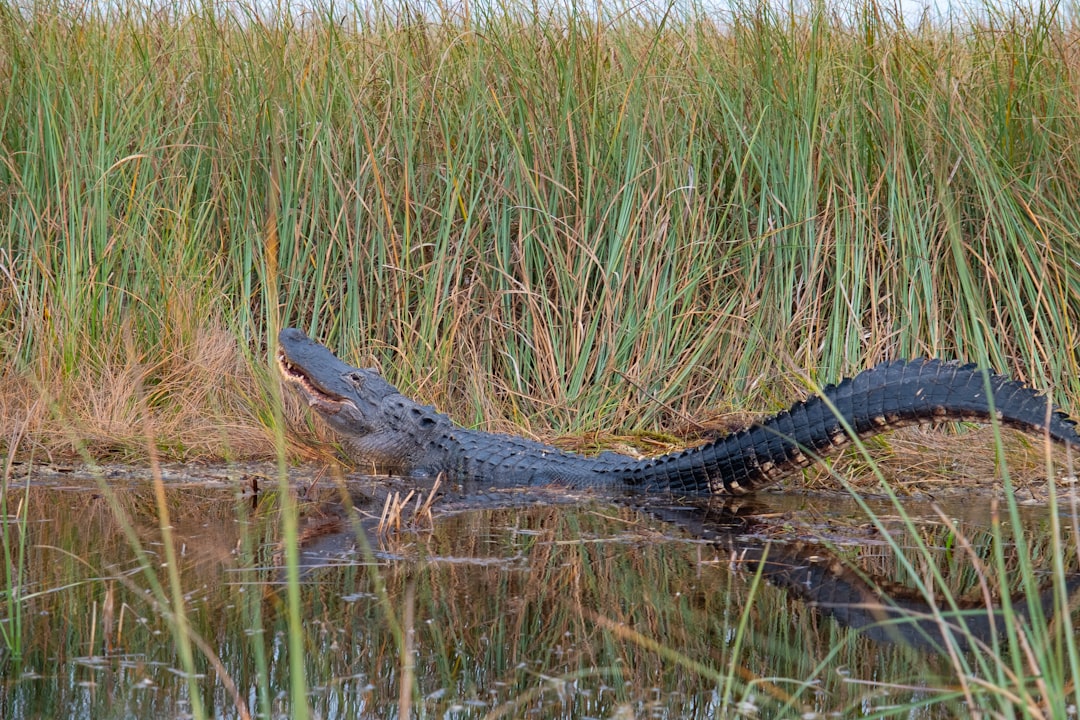
Florida's wildlife draw system shares the same basic goal as Western big-game draws — distributing limited hunting opportunities fairly among applicants. But the mechanics, costs, and strategies differ dramatically. Where Western states use preference points, multi-year planning, and steep license fees, Florida runs straightforward lottery draws with no point accumulation and significantly lower barriers to entry.
Understanding these differences matters if you hunt both regions or are considering adding Florida tags to your annual application strategy. The systems reward different approaches, and what works for building Colorado elk points over a decade does not apply to Florida's alligator permits.
The Core Difference: Points vs. Pure Lottery
Western states overwhelmingly use preference point or bonus point systems. Colorado, Wyoming, and Utah award points to unsuccessful applicants, increasing their odds or priority in future draws. Montana and Nevada use bonus points, where each point equals an additional entry in the random draw. Hunters build points over years to eventually draw premium tags.
Florida uses no points. Every alligator and spring turkey lottery operates as a pure random draw. A first-time applicant has the same statistical chance as someone who has applied for a decade. You either draw or you do not, and next year resets to zero.
This removes the long-term planning Western hunters rely on. You cannot strategically build equity toward a Florida gator tag the way you accumulate preference points for an Arizona elk tag. The upside is immediate opportunity — new hunters are not locked out by applicants holding 15+ points.
Application Windows and Deadlines
Western draw deadlines span months. Colorado's first rifle elk deadline typically falls in early April. Wyoming's antelope applications open in late January and close in late May. Montana runs separate draws for deer, elk, and antelope across different deadlines from February through April.
Florida compresses its timelines. The alligator harvest permit application period runs 10 days in early July. Spring turkey quota hunt applications open in mid-December and close in early January. You apply, wait a few weeks for results, and the season starts shortly after.
This shorter cycle means Florida draws demand less advance planning but tighter execution. Missing the 10-day alligator window costs you the entire year. Western hunters can plan applications months ahead and adjust strategies based on point totals and unit changes.
Tag Costs and Resident vs. Nonresident Gaps
Western nonresident elk tags often exceed $600 for general units and climb past $1,200 for limited-entry permits. Wyoming charges nonresidents $576 for a general elk license, $326 for deer, and $51 for antelope. Add application fees, preference point fees, and potential guide requirements in wilderness areas, and costs escalate quickly.
Florida's pricing structure is far less punitive to nonresidents. The alligator trapping license costs $272 for nonresidents and $63 for residents. A spring turkey permit runs $125 for nonresidents and $10 for residents. While the resident-to-nonresident ratio still exists, the absolute dollar amounts remain accessible.
Application fees are also minimal. Florida charges $5 per alligator permit application. Western states charge $3 to $15 per species application, but many require purchasing a hunting license first — which can add $160+ for nonresidents before you even enter a draw.
Draw Odds and Tag Availability
Western draw odds vary wildly by species, unit, and residency. Premium Colorado elk units see nonresident odds below 1%. General Wyoming elk tags draw at 30-50% for nonresidents. Montana's general elk combo licenses require 1-3 preference points for nonresidents in recent years.
Florida publishes draw results but does not release detailed odds data the way Western states do. Anecdotal evidence suggests alligator permit odds range from 10-30% depending on the lake or area, with some zones drawing consistently while others see high demand. Spring turkey quota hunts vary by Wildlife Management Area, with popular zones drawing tighter and remote areas offering better chances.
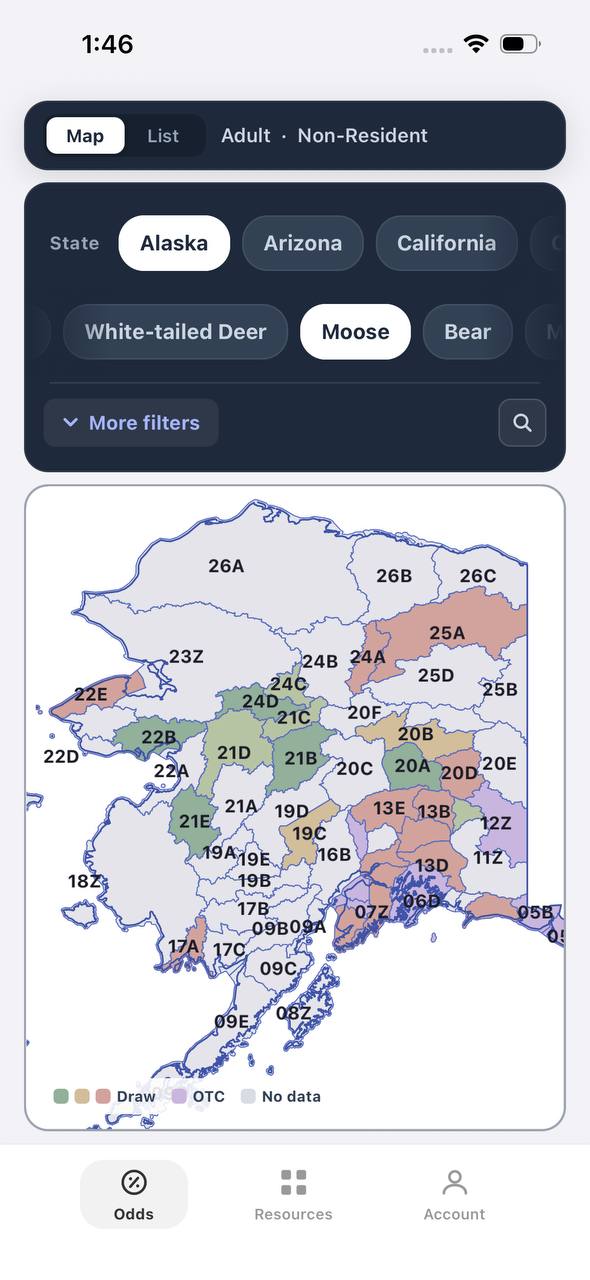
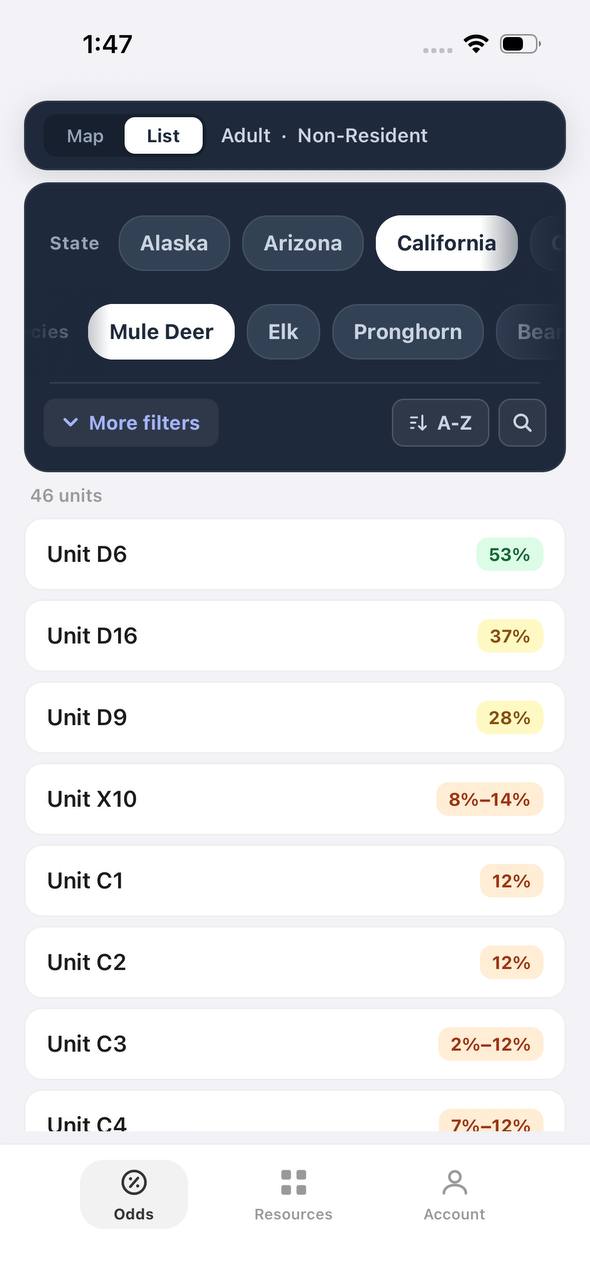
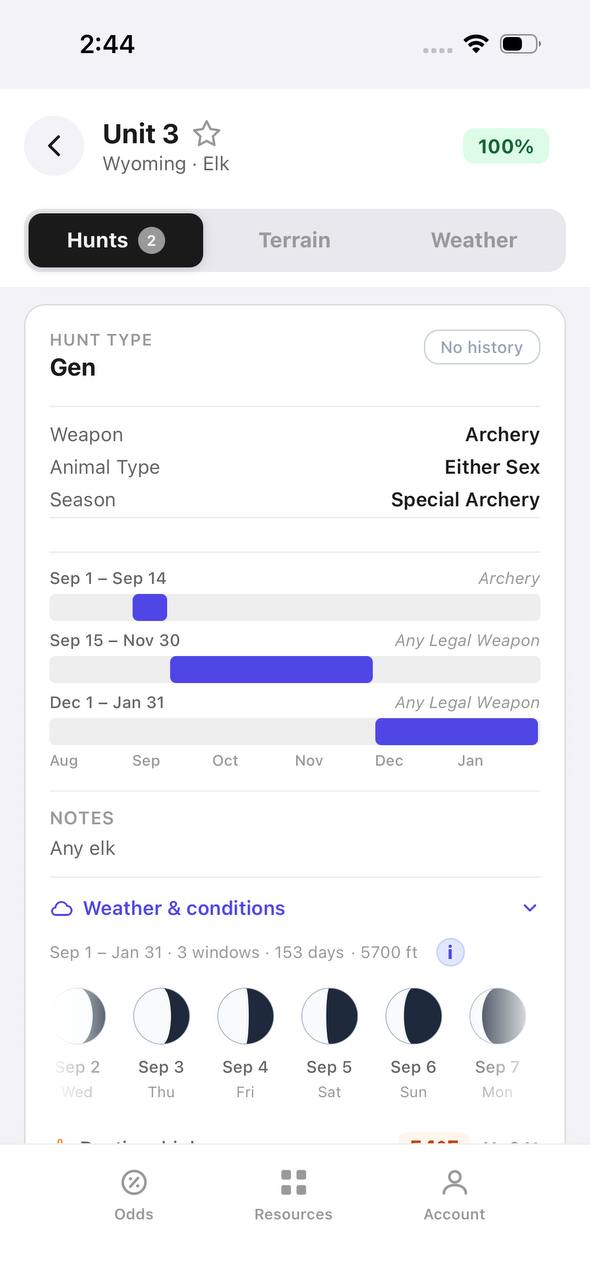
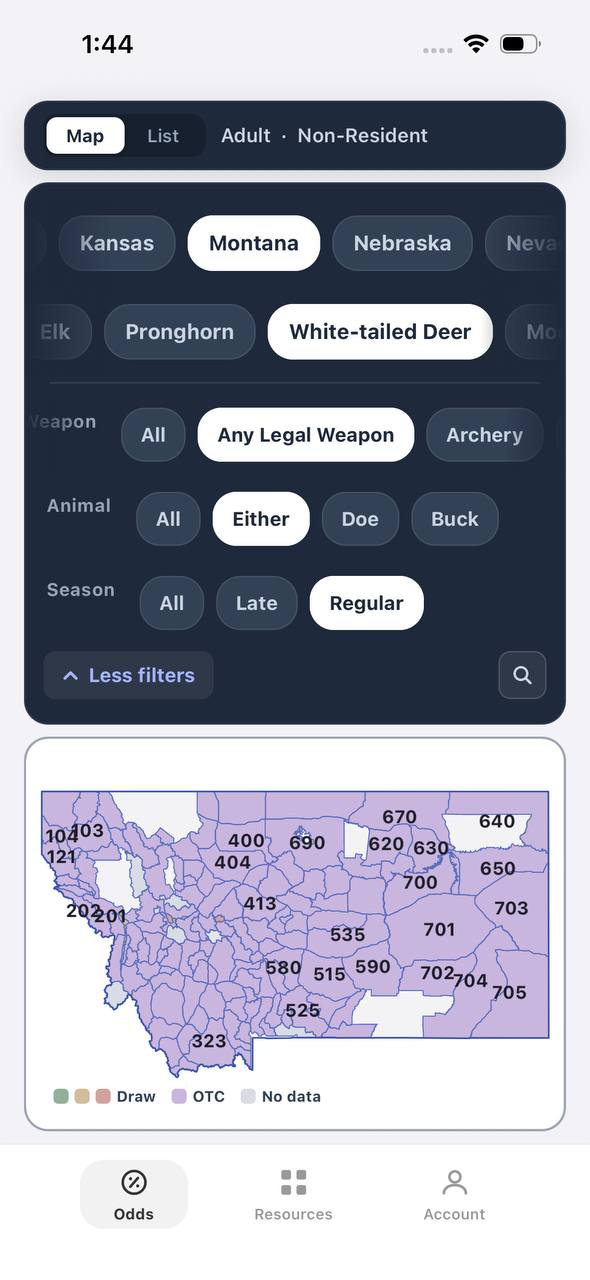
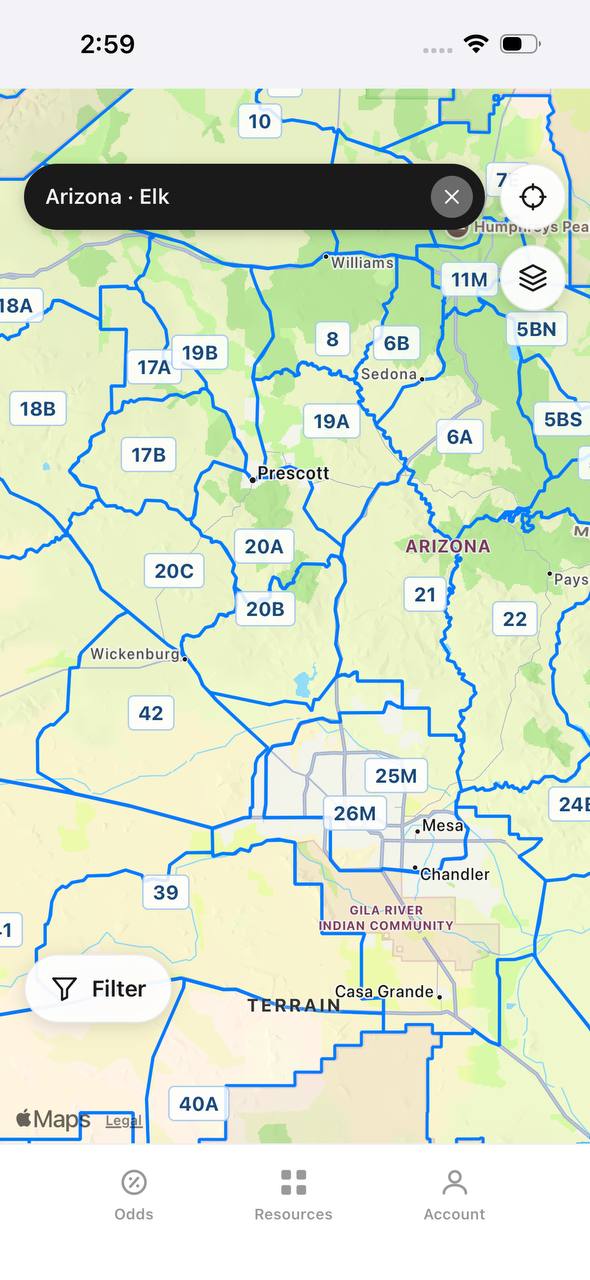
The lack of transparent historical odds makes Florida applications more of a blind gamble. Western hunters using TAGZ can analyze years of draw data, filter by weapon and season, and calculate realistic odds before applying. Florida hunters rely more on local knowledge and trial and error.
Free to join
Download mobile app
- Detailed draw odds
- Point tracking
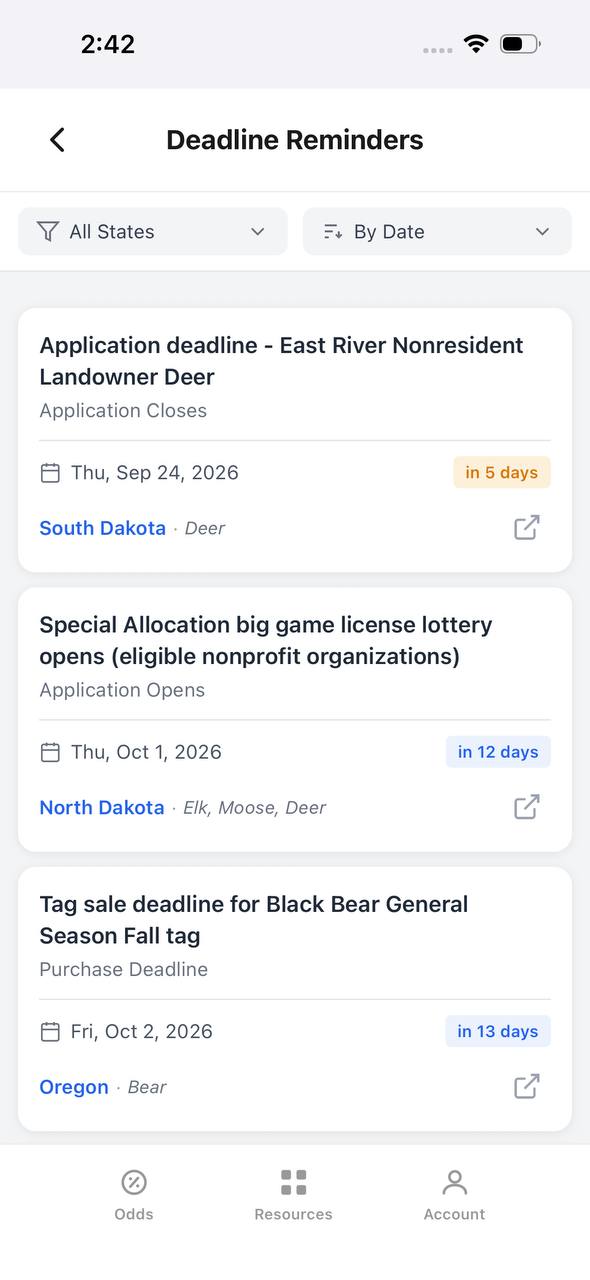
- Deadline reminders
- 18 states covered

Free to join
Download mobile app
- Detailed draw odds
- Point tracking
- Deadline reminders
- 18 states covered
Free to join
Download mobile app
- Detailed draw odds
- Point tracking
- Deadline reminders
- 18 states covered
Multi-State Strategy Implications
Western hunters building points across multiple states create multi-year strategies. You might apply for Colorado elk points annually while hunting Wyoming antelope on leftover tags, saving Arizona and New Mexico applications for when you have enough points to compete for quality units.
Florida fits into this strategy as a bonus draw — a low-cost, high-reward application with no point investment. You can apply for a Florida gator tag every July without affecting your Western point totals or budget. If you draw, you gain an additional hunt. If not, you lose $5 and move on.
This makes Florida particularly appealing for hunters already applying in 5-8 Western states. The application process takes 10 minutes, costs less than a tank of gas, and offers a realistic chance at a unique hunting experience without derailing long-term Western strategies.
Species Differences and Hunt Structure
Western draws focus on big game — elk, mule deer, pronghorn, moose, bighorn sheep, and mountain goat. Hunts typically span 4-9 days during defined seasons. Success depends on physical conditioning, terrain navigation, and stalking skills.
Florida's lottery system centers on alligator and spring turkey. Alligator permits allow a two-day hunt on a specific lake or area. You hunt from a boat at night using harpoons, snatch hooks, and hand lines. Turkey hunts occur on designated Wildlife Management Areas during morning-only seasons.
The species and methods are not comparable. A Colorado elk hunt in September requires backcountry camping, glassing ridgelines, and bugling bulls. A Florida gator hunt demands night vision, boat handling, and close-quarters coordination. Both are challenging hunts, but the skill sets do not transfer.
Regulation Complexity
Western state regulations run 100+ pages. Colorado's Big Game Brochure details unit boundaries, season dates, weapon restrictions, harvest reporting, and special management rules. Wyoming publishes separate regulation booklets for elk, deer, and antelope. Hunters must cross-reference unit maps, quota numbers, and draw odds reports.
Florida's alligator and turkey regulations are simpler. The alligator harvest permit specifies your assigned area and dates. You follow statewide bag limits and method restrictions. Spring turkey rules outline WMA-specific hunt periods and check-in requirements. The entire process requires less research and fewer decisions.
This simplicity benefits hunters new to draw systems but also limits strategic depth. Western hunters can filter units by terrain, public land percentage, and historical harvest data to find hidden opportunities. Florida hunters pick an area, apply, and hope.
Technology and Planning Tools
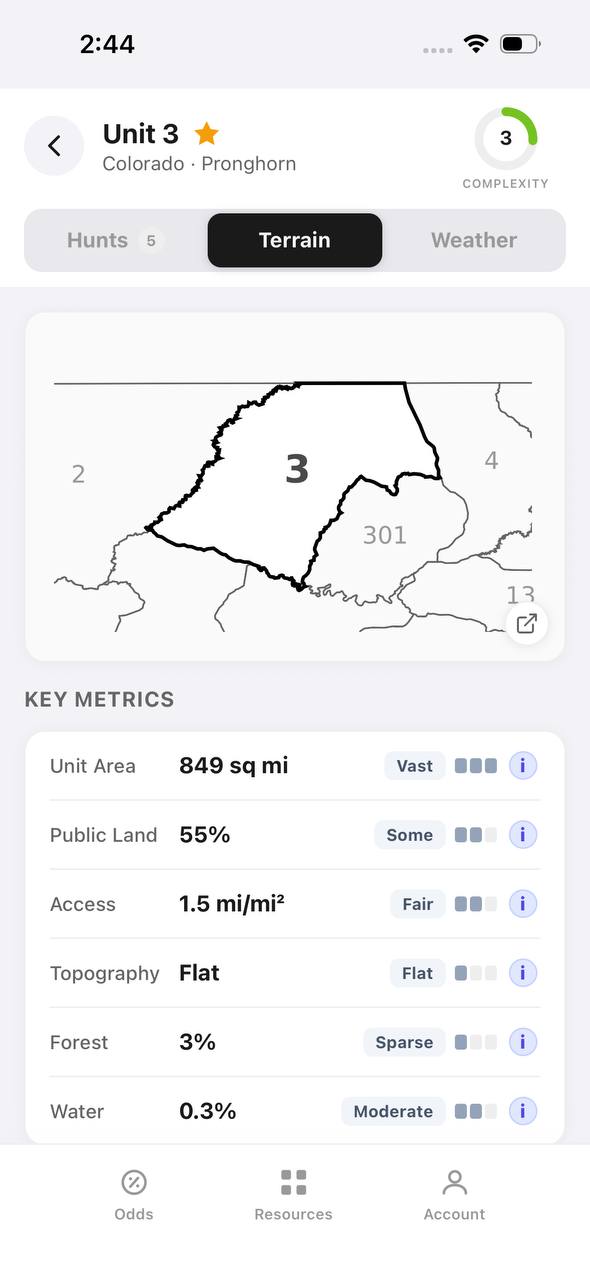
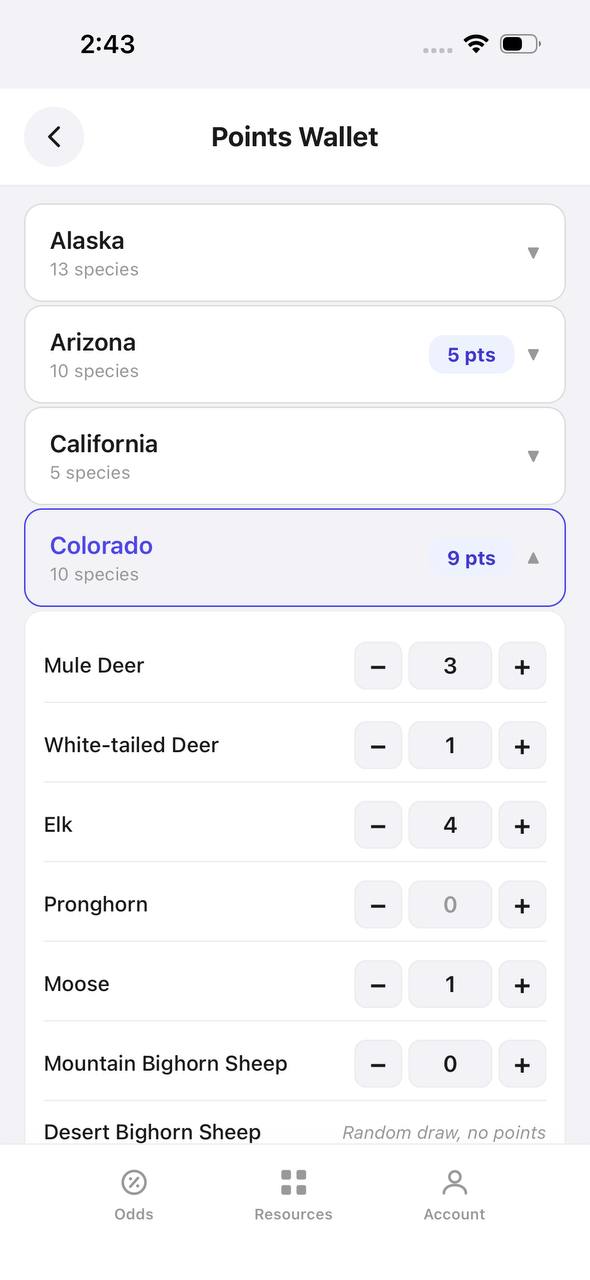
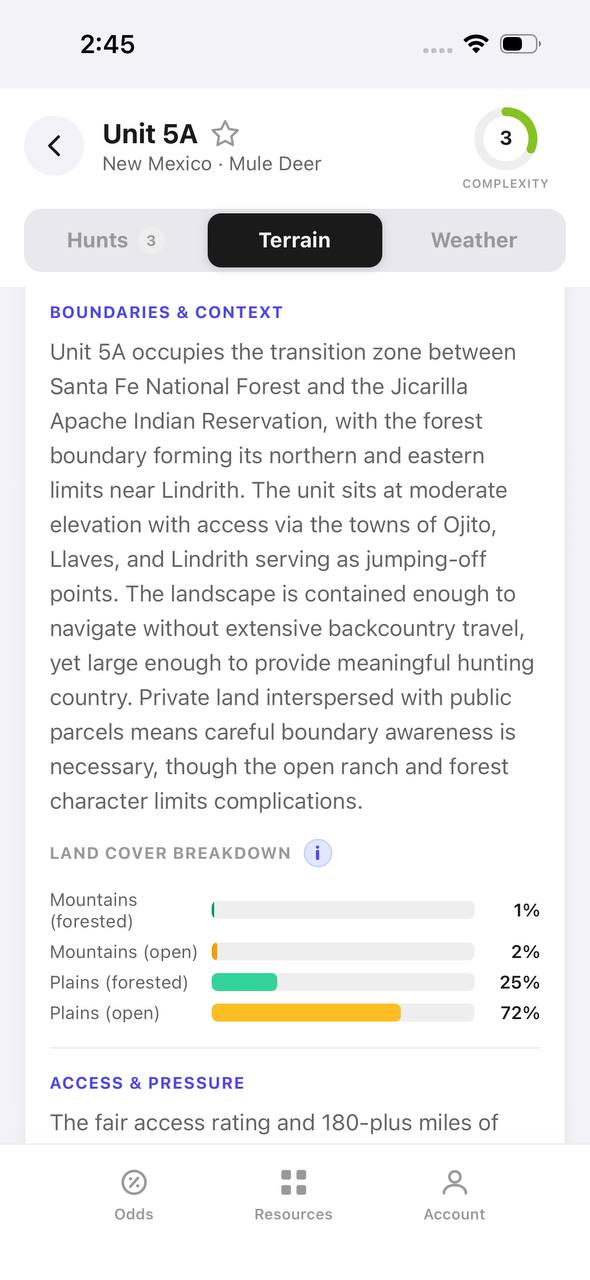
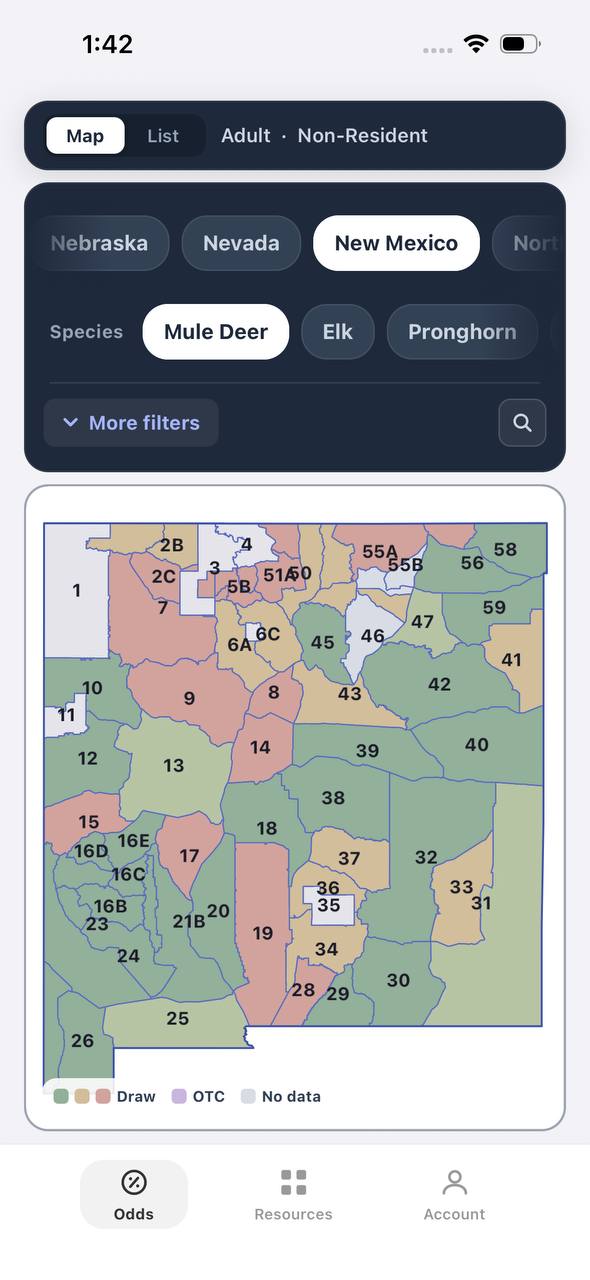
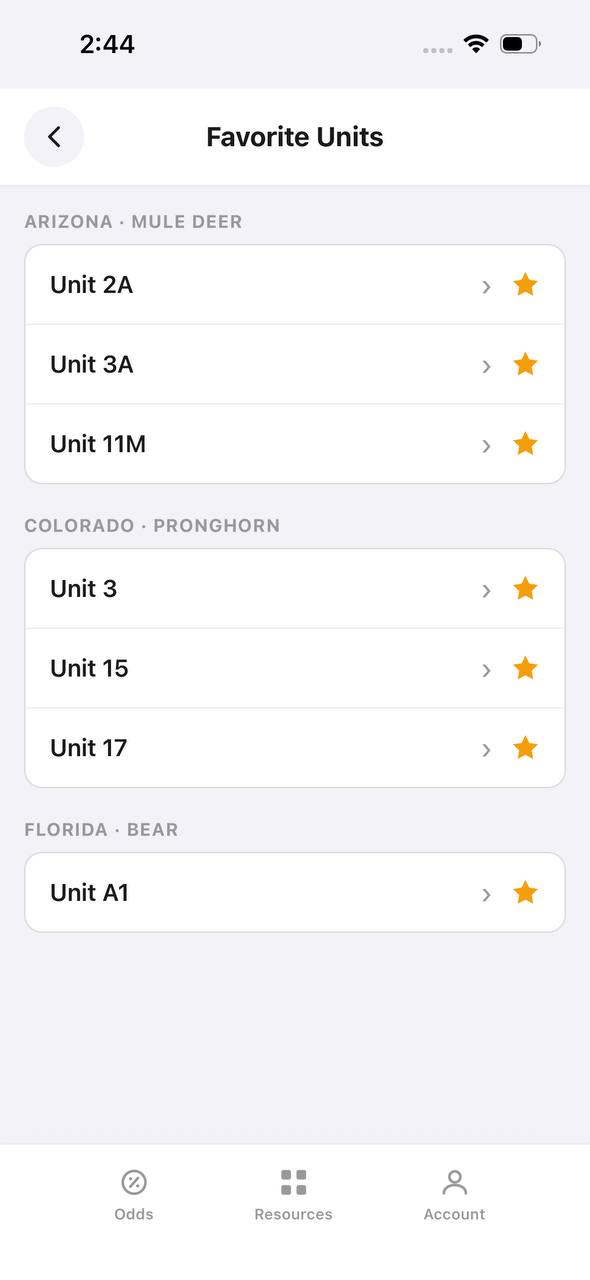
Western hunters rely heavily on draw odds tools, mapping software, and unit research platforms. TAGZ allows you to track preference points across states, compare draw odds by unit and weapon, and filter hunts by season length and terrain type. OnX and GoHunt provide similar functionality.
Florida offers fewer digital planning resources. The Florida Fish and Wildlife Conservation Commission (FWC) website lists application deadlines and harvest data, but no equivalent to Western draw odds databases exists. Hunters piece together information from forums, local biologists, and prior draw results.
This gap creates opportunity for hunters willing to research. Talking to area biologists, reading WMA-specific reports, and networking with local hunters provides advantages that technology cannot replicate in Florida the way it does in Western states.
Long-Term Opportunity vs. Immediate Access
Western systems reward patience. Hunters accept that premium tags require 10-20 years of point accumulation. You apply for points annually, hunt general units or second-choice areas in the meantime, and eventually cash in for a trophy hunt.
Florida offers no long-term payoff. You cannot build toward anything. But you also cannot get shut out by point creep. A hunter applying for 20 years has no advantage over a first-timer. This levels the playing field for younger hunters and those entering the draw game late.
The trade-off is predictability. Western hunters know that applying in Wyoming for 5 years will eventually yield a general elk tag. Florida hunters face the same odds every year with no guarantee they will ever draw.
FAQ — Florida vs. Western Draws
Does Florida use preference points or bonus points?
No. Florida wildlife draws operate as pure random lotteries. Every applicant has equal odds regardless of how many years they have applied.
How much does it cost to apply for Florida alligator tags compared to Western elk?
Florida alligator applications cost $5. Western elk applications range from $3 to $15, but you must first purchase a hunting license — often $160+ for nonresidents. The alligator permit itself costs $272 for nonresidents if drawn, while Western elk tags run $600 to $1,200+.
Can I apply for Florida draws and Western big-game draws in the same year?
Yes. Florida draws are independent from Western state point systems. You can apply for Florida alligator and turkey permits without affecting your Colorado elk points, Wyoming preference points, or any other Western application strategy.
Are Florida draw odds published like Western states?
No. Florida does not release detailed draw odds reports. The FWC publishes the number of applicants and permits issued, but you must calculate approximate odds yourself. Western states like Colorado and Wyoming provide unit-by-unit historical draw data.
Do nonresident hunters have a realistic chance at Florida tags?
Yes. Florida does not limit nonresident tag allocation the way Western states cap nonresident permits at 10-20%. Everyone enters the same lottery. Your odds depend on total applicants for a given area, not your residency.
Is applying for Florida hunts worth it for Western hunters?
Yes if you want additional hunting opportunities at low cost. The $5 application fee and simple process make Florida draws easy to add to your annual strategy. If you draw, you gain a unique hunt. If not, you risk almost nothing.
Was this article helpful?
Previous
Best Premium Hunting Optics for Western Big Game in 2025
Premium hunting optics deliver unmatched clarity, durability, and low-light performance when it matters most. This guide breaks down the best binoculars, spotting scopes, and rangefinders for serious western hunters pursuing elk, mule deer, and sheep across demanding terrain.

Related
Guided vs DIY Moose Hunts: Cost, Success Rates & What You Need to Know
Moose hunts require major investments of time and money. This guide breaks down guided vs DIY approaches—comparing costs, success rates, logistics, and what it takes to hunt moose on your own vs with professional support.
Next
Weatherby Vanguard vs Tikka T3x: Which Rifle Wins for Western Hunting?
The Weatherby Vanguard and Tikka T3x dominate the mid-tier hunting rifle market, but they take different approaches to accuracy, ergonomics, and value. Here's how they stack up for western big-game hunters.