Hornady ELD-X Review: Real-World Performance on Western Big Game
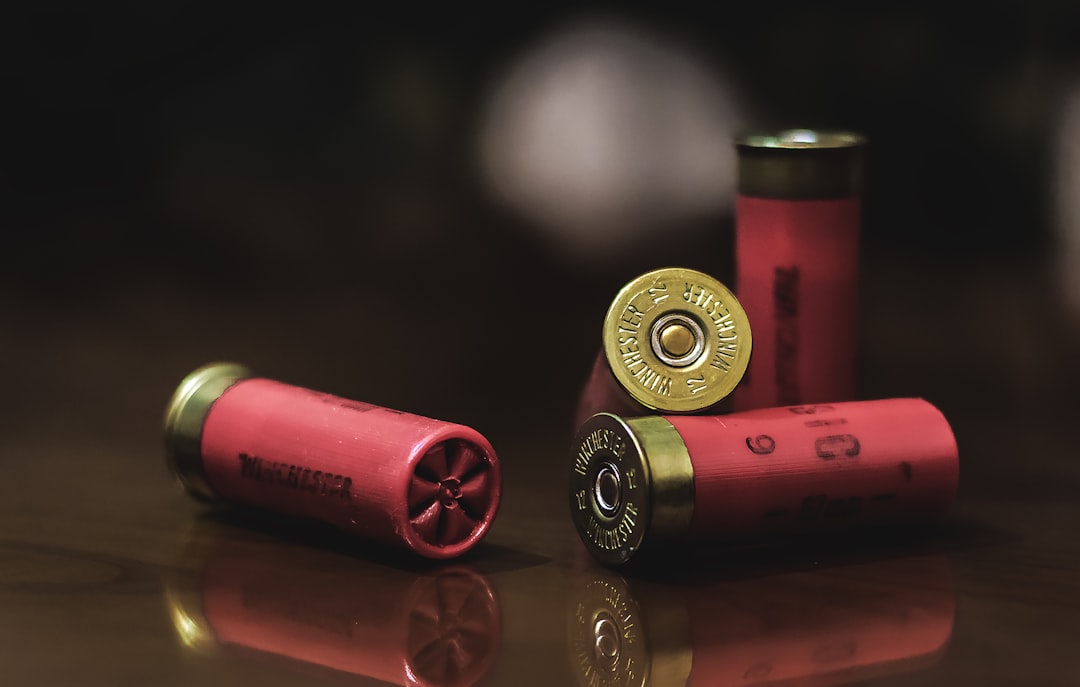
The Hornady ELD-X has become a go-to choice for western hunters chasing elk, mule deer, and pronghorn across open country where shots can stretch beyond 400 yards. Designed to bridge the gap between long-range match bullets and traditional hunting projectiles, the ELD-X promises consistent BC, reliable expansion, and deep penetration. After running this bullet through multiple rifles and game animals over three seasons, here is what works, what does not, and whether it lives up to the hype.
What Makes the ELD-X Different
The ELD-X stands for Extremely Low Drag - eXpanding. Hornady built this bullet around a Heat Shield tip that resists deformation during flight, maintaining a consistent ballistic coefficient even at extended ranges. Traditional polymer tips can melt or deform from aerodynamic heating, which degrades BC and causes vertical stringing at distance. The Heat Shield tip addresses this problem directly.
The bullet uses an InterLock ring to mechanically lock the core and jacket together during expansion. This design is meant to prevent jacket-core separation on heavy bone impacts while still allowing controlled expansion at lower velocities. Weight retention typically runs 60-75 percent on broadside shots through the ribs, with fragments creating secondary wound channels.
Available weights range from 143 grains in 6.5mm up to 220 grains in .30 caliber. The most popular for western hunting are the 6.5mm 143-grain, 7mm 162-grain and 175-grain, and .30 caliber 178-grain and 200-grain options. Each weight is optimized for a specific velocity window and impact range.
Ballistic Performance and Accuracy
The ELD-X delivers on its long-range accuracy claims. Across four different rifles in 6.5 Creedmoor, 7mm Rem Mag, .280 Ackley Improved, and .300 Win Mag, groups consistently measured under one MOA at 100 yards with proper load development. The BC numbers Hornady publishes are honest and verified through drop testing at 600 yards. Velocity retention is excellent compared to conventional cup-and-core bullets.
In a 7mm Rem Mag pushing the 162-grain ELD-X at 2,950 fps muzzle velocity, the bullet carries 1,800 fps and 1,170 ft-lbs of energy at 600 yards. That is well above the 1,800 fps threshold Hornady recommends for reliable expansion. Wind drift at that distance is 22 inches in a 10 mph full-value crosswind, which is manageable with a good range card and practice.
The 6.5 Creedmoor 143-grain load remains supersonic past 1,200 yards and holds 1,000 ft-lbs of energy out to 550 yards. For deer and pronghorn hunters working open basins and prairie ridges, this combination provides a legitimate 500-yard capability in the right hands. Recoil is mild enough to spot your own impacts through the scope.
Terminal Performance on Game
The ELD-X performs best on broadside or quartering-away shots through the ribs. Expansion is rapid and dramatic, creating large wound channels and quick kills. On six cow elk taken between 220 and 480 yards with the 7mm 162-grain bullet, average penetration was 18-24 inches with full pass-throughs on four animals. Blood trails were excellent when exits occurred.
Mule deer and pronghorn results are equally strong. The bullet expands violently on lighter game, often fragmenting significantly while the base penetrates deeply. A quartering-away pronghorn buck at 380 yards with the 6.5 143-grain bullet entered behind the last rib, destroyed both lungs, and exited the off-side shoulder. The buck traveled less than 40 yards.
Quartering-toward shots and heavy bone encounters are where the ELD-X shows limitations. On a mature bull elk hit at 285 yards in the point of the shoulder with a 7mm 175-grain bullet, penetration stopped at 16 inches after striking the scapula and fragmenting heavily. The bull was recovered 200 yards later after a follow-up shot. A more bonded or monolithic bullet would have driven deeper on that angle.
Shoulder shots on deer-sized game often result in significant meat damage. The rapid expansion creates dramatic wound channels but destroys more edible meat than a tougher, slower-expanding bullet. For hunters prioritizing meat preservation, rib shots are the better choice with this bullet.
Best Cartridges and Applications
The ELD-X shines in cartridges that launch it fast enough to flatten trajectory but not so fast that impact velocities cause explosive fragmentation. The 6.5 Creedmoor, 6.5 PRC, 7mm-08, .280 Ackley Improved, 7mm Rem Mag, and .300 Win Mag all pair well with their respective ELD-X offerings.
For deer and pronghorn, the 6.5mm 143-grain and 7mm 162-grain bullets are ideal. They expand reliably down to 1,800 fps, making them effective from 50 to 600 yards. The light recoil and high BC make them easy to shoot accurately under field conditions.
Elk hunters should lean toward the heavier options. The 7mm 175-grain and .30 caliber 200-grain bullets carry more momentum and penetrate deeper on steep angles and heavy bone. They still expand well at distance but hold together better on close-range impacts inside 200 yards. The 178-grain .30 caliber bullet works well for elk at extended range but may fragment excessively on close shots.
For mixed-bag hunts where you might shoot a mule deer at 450 yards one day and a bull elk at 220 the next, the 7mm 162-grain or .30 caliber 178-grain bullets offer the best compromise. They handle both species effectively if you respect their limitations and avoid heavy quartering-toward angles on elk.
Free to join
Download mobile app
- Detailed draw odds
- Point tracking
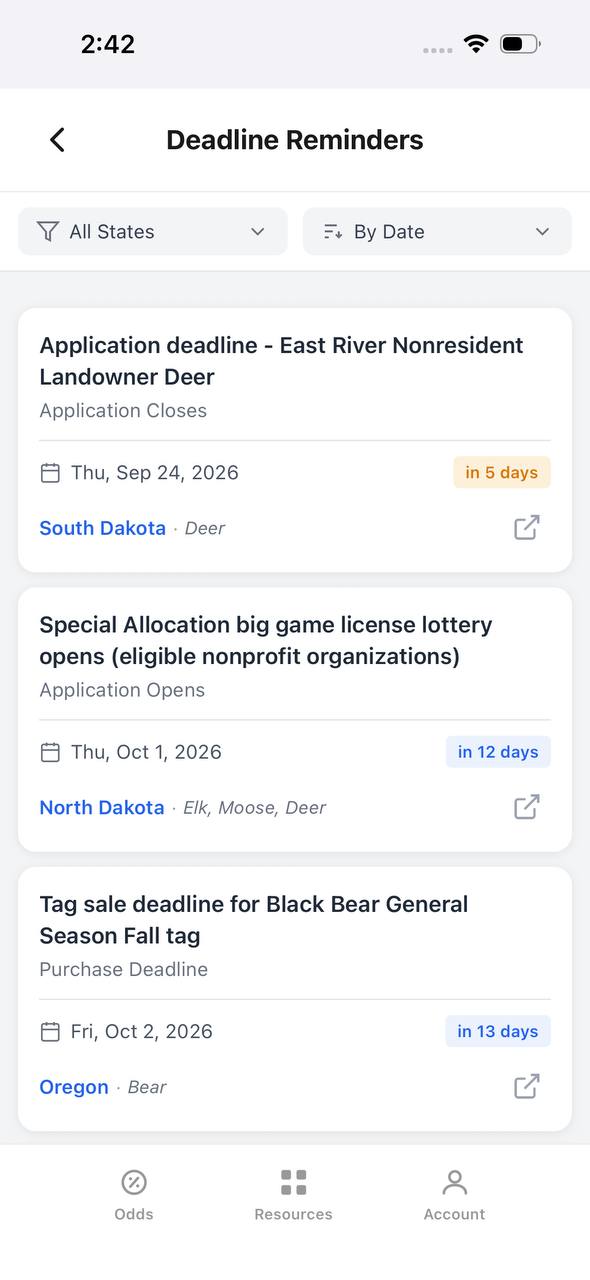
- Deadline reminders
- 18 states covered


Free to join
Download mobile app
- Detailed draw odds
- Point tracking
- Deadline reminders
- 18 states covered
Free to join
Download mobile app
- Detailed draw odds
- Point tracking
- Deadline reminders
- 18 states covered
How It Compares to Alternatives
The ELD-X sits between match bullets like the ELD-M and tougher hunting bullets like the Nosler AccuBond or Barnes TTSX. It is more explosive than bonded bullets but tougher than pure match projectiles. For hunters prioritizing long-range accuracy with adequate terminal performance, it is a strong middle option.
Compared to the Nosler AccuBond Long Range, the ELD-X has a slightly higher BC and flatter trajectory. The AccuBond retains more weight and penetrates deeper on heavy bone, making it better for elk at close to moderate range. The ELD-X edges ahead past 500 yards where BC and wind drift matter more.
The Berger VLD Hunting bullet offers even higher BC numbers but fragments more dramatically. Bergers create massive wound channels through hydraulic shock but may not exit and can fail to penetrate on heavy shoulder shots. The ELD-X is more forgiving on marginal shot placement.
Monolithic bullets like the Barnes LRX or Cutting Edge MTH penetrate deeper and retain 95-100 percent of their weight. They are superior for large game at close range and steep angles but give up BC and wind performance. The ELD-X is a better choice when most of your shots will be past 300 yards.
Load Development and Factory Options
Hornady offers loaded ammunition in Precision Hunter and Match lines. Precision Hunter is optimized for hunting with the ELD-X bullet, and accuracy is consistently good across multiple rifles. Expect velocities within 50 fps of advertised numbers from 24-inch barrels.
Handloaders can achieve tighter groups and slightly higher velocities with load development. The ELD-X is not overly finicky about seating depth or powder choice. In 7mm Rem Mag, H1000 and Retumbo both produced sub-MOA groups with the 162-grain bullet. The 6.5 Creedmoor likes H4350 and the .300 Win Mag shoots well with H1000 and Retumbo.
Seating depth tuning typically shows the best results between 0.020 and 0.050 inches off the lands. Compressed charges with slow-burning powders maximize velocity without excessive pressure. Expect to find an accurate load within 20-30 rounds if you work methodically.
Real-World Considerations
The ELD-X is a specialized tool, not a do-everything bullet. It excels in situations where you need to make precise shots at extended range on game that will not require heavy penetration. Open-country mule deer and pronghorn hunts are the ideal application. Elk hunters should use the heavier weights and avoid hard-quartering shots inside 200 yards.
Meat loss is higher than with bonded or monolithic bullets. Plan for 5-10 pounds of shoulder meat damage on elk if you hit heavy bone. Rib shots minimize waste and still produce quick kills. If you prioritize meat over antlers, consider a tougher bullet or accept that you will lose some edible meat.
The bullet performs poorly below its design velocity window. Do not push it beyond 600 yards on elk or 700 yards on deer unless you verify it is still traveling faster than 1,800 fps at impact. Expansion becomes unreliable at lower velocities, and you risk penciling through without adequate wounding.
Is the ELD-X Worth It
For western hunters who routinely shoot past 400 yards and prioritize accuracy over penetration, the ELD-X is a strong choice. It delivers the trajectory and wind performance of a match bullet with adequate terminal performance for broadside shots on game from deer to elk. The Heat Shield tip works as advertised, and BC numbers are honest.
If your hunting style involves timber hunting, close-range calling setups, or steep-angle mountain shots, a tougher bullet is a better fit. The ELD-X is not designed for those applications and will disappoint if you expect bonded-bullet penetration.
The price point is competitive with other premium hunting bullets. Factory Precision Hunter ammunition costs slightly more than Core-Lokt or PowerPoint but less than Nosler Trophy Grade. Component bullets for handloading are priced in line with AccuBonds and Bergers.
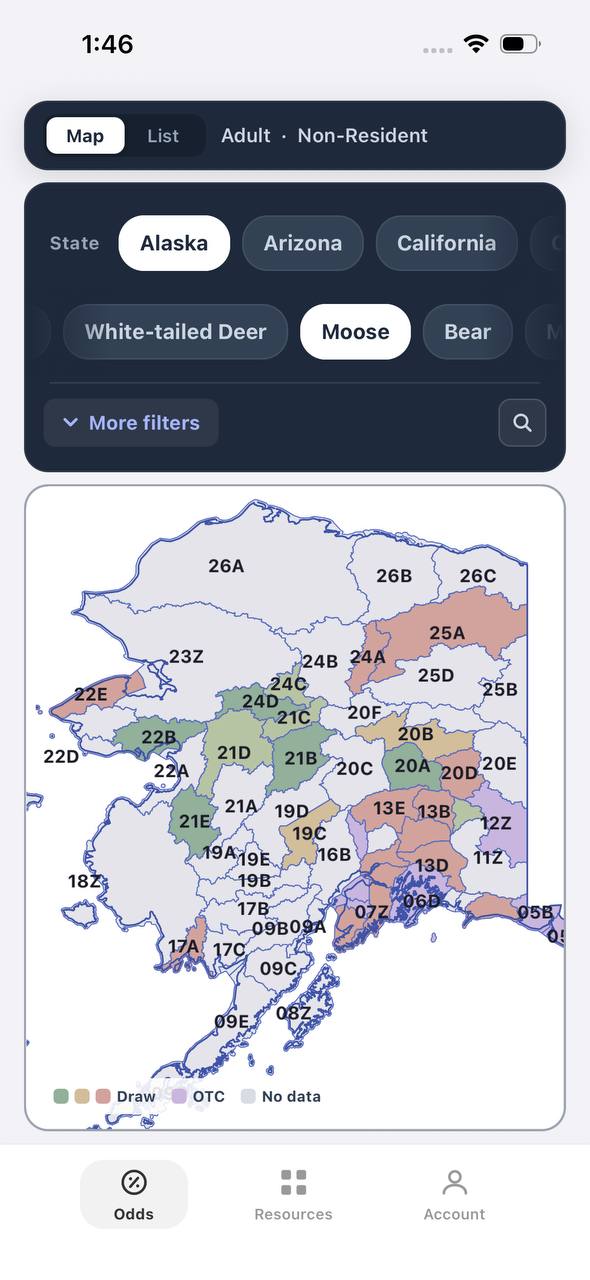
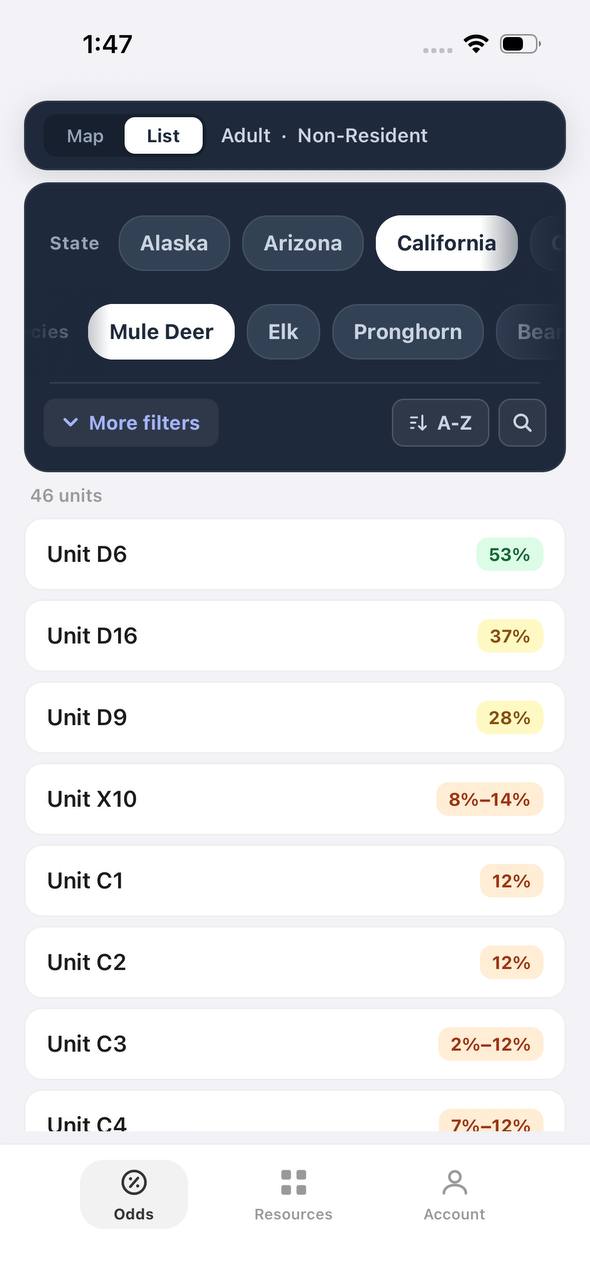
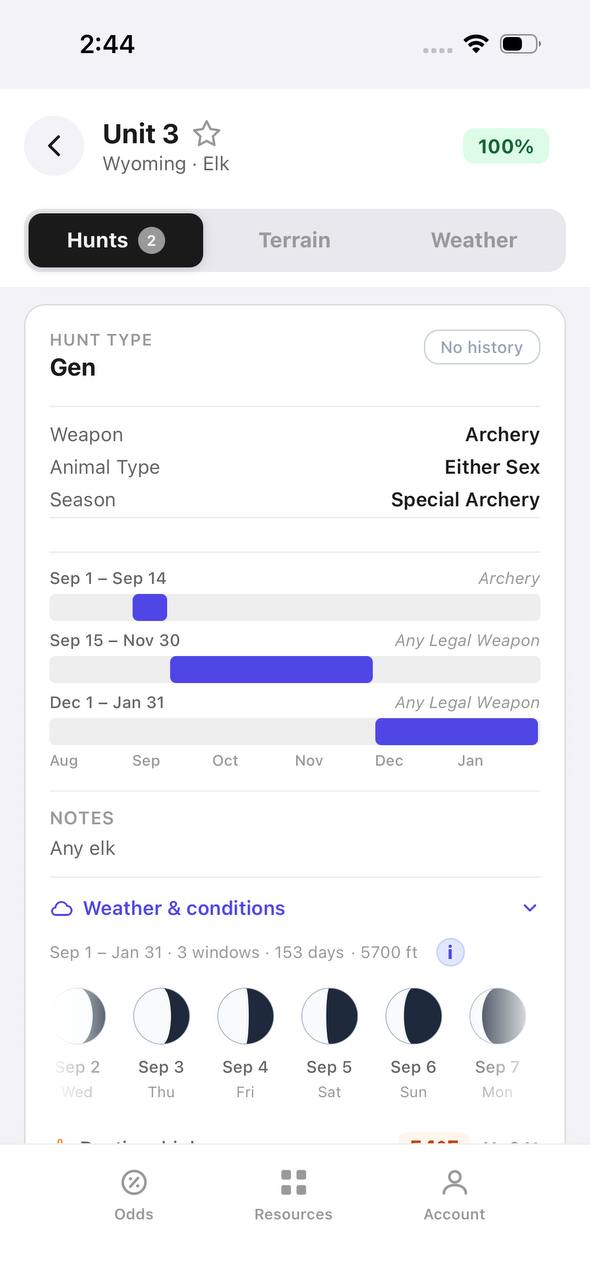
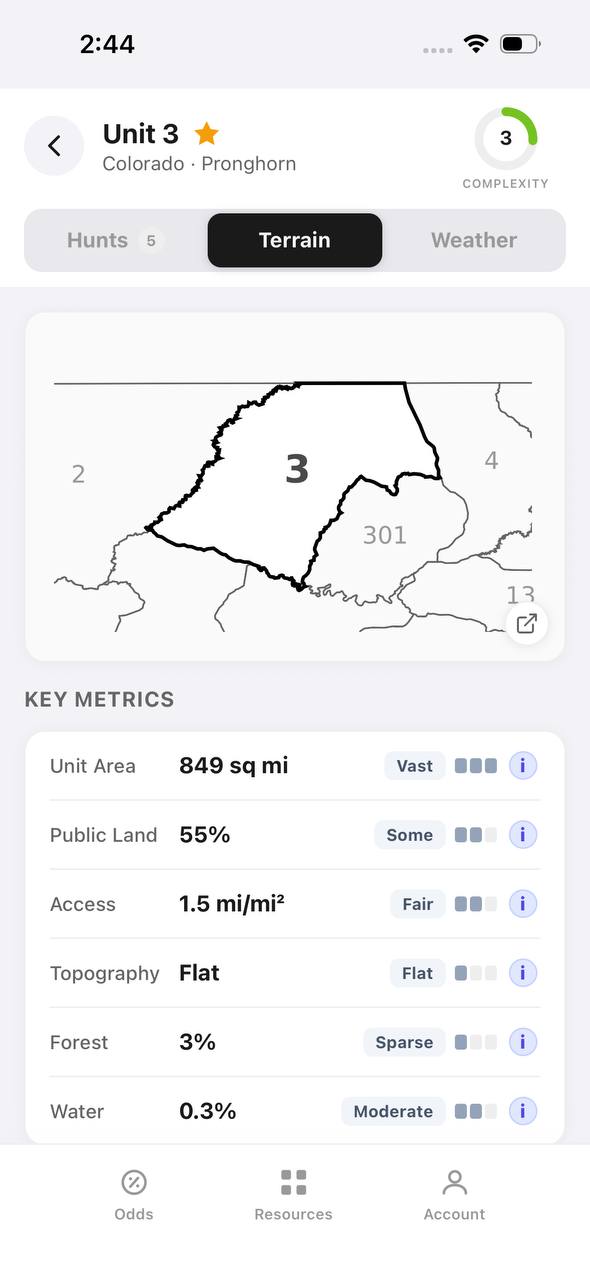
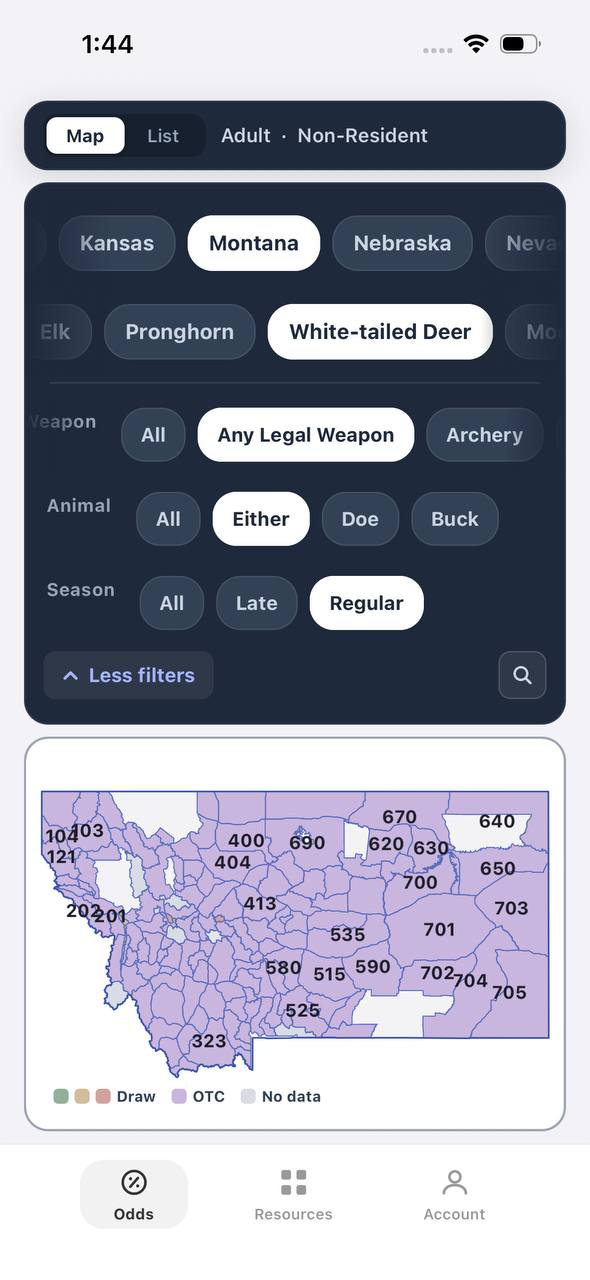
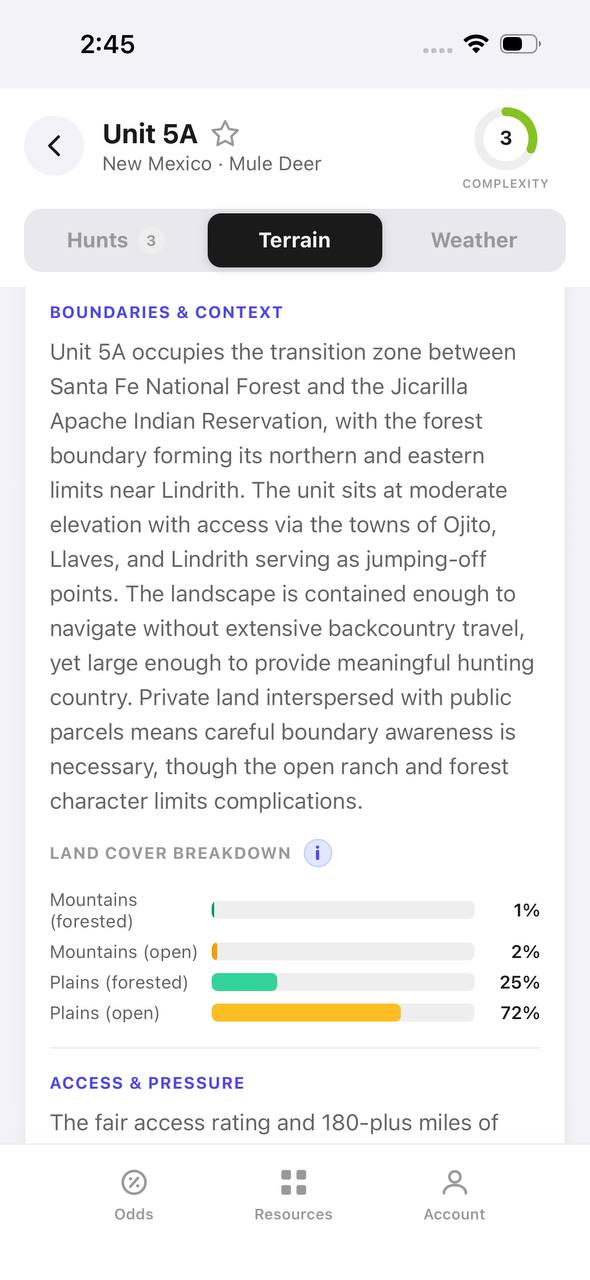
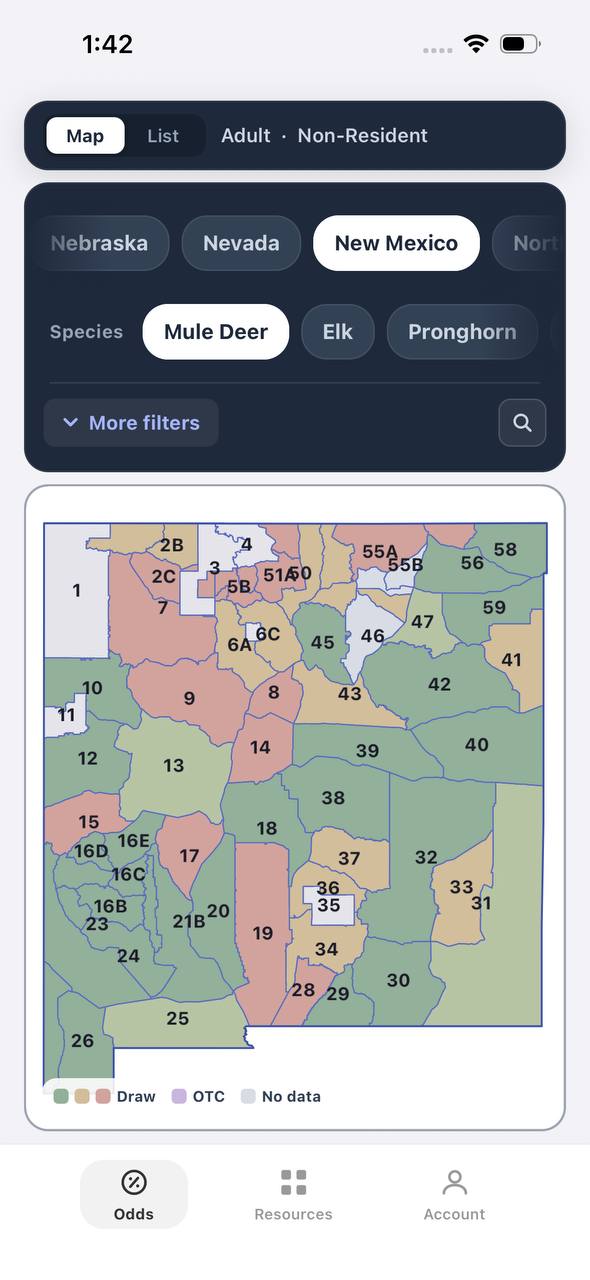
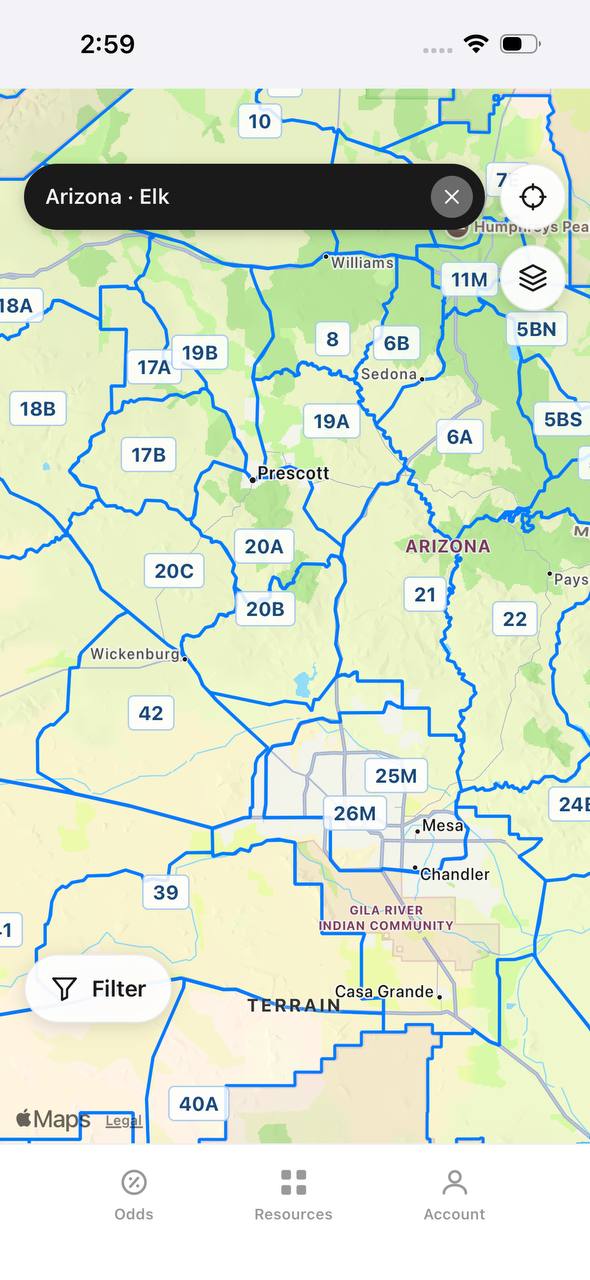
TAGZ helps you plan your hunt by comparing unit terrain, draw odds, and public land access so you know exactly what kind of shots to expect before you choose your bullet and load. Whether you are chasing high-country mule deer in Colorado or pronghorn on Wyoming's prairies, TAGZ gives you the research tools to match your gear to the hunt.
FAQ — Hornady ELD-X
What is the effective range of the Hornady ELD-X on elk? The ELD-X remains effective on elk out to 600 yards if impact velocity stays above 1,800 fps. Heavier bullets like the 7mm 175-grain or .30 caliber 200-grain are better choices than lighter options for elk at any distance.
Does the ELD-X work well for shoulder shots on elk? Not ideal. The ELD-X can fragment heavily and may not penetrate deeply enough on heavy bone impacts or steep quartering angles. Rib shots produce better results with less meat damage.
How does the ELD-X compare to the Nosler AccuBond for long-range hunting? The ELD-X has a higher BC and shoots flatter past 500 yards, but the AccuBond penetrates deeper and holds together better on close-range impacts through heavy bone. Choose based on your typical shot distances.
What is the minimum impact velocity for reliable expansion? Hornady recommends 1,800 fps as the minimum impact velocity for consistent expansion. Below that threshold, the bullet may pencil through without opening adequately.
Is the ELD-X too explosive for deer and pronghorn? The ELD-X expands rapidly on lighter game and can cause significant meat damage on shoulder shots. It works well on rib shots and produces quick kills, but expect more bloodshot meat than with a bonded bullet.
Can you use the ELD-X for close-range shots inside 100 yards? Yes, but expansion can be violent at high impact velocities. On elk at close range with magnum cartridges, the ELD-X may fragment excessively and not penetrate as deeply as tougher bullets. It works fine on deer at close range with moderate cartridges like the 6.5 Creedmoor or 7mm-08.
Was this article helpful?
Previous
Best Fire Starters for Hunters: Reliable Options for Backcountry Camps
From waterproof matches to ferrocerium rods, choosing the right fire starter can mean the difference between a warm meal and a cold night in elk camp. Here's what actually works when conditions turn against you.

Related
Backpack Bear Hunting: How to Plan a Self-Guided Backcountry Hunt
Backpack bear hunting combines wilderness adventure with serious trophy potential. Learn how to scout, pack light, and execute a multi-day backcountry bear hunt without a guide.
Next
What to Wear for September Elk Hunting: Layering for Early-Season Backcountry Success
September elk hunting demands versatile clothing that handles 70-degree afternoons and freezing mornings. Learn the layering system that keeps you mobile, quiet, and ready for bugling bulls in unpredictable alpine weather.