Hammer Absolute Hunter Review: Field-Tested Performance for Western Big Game
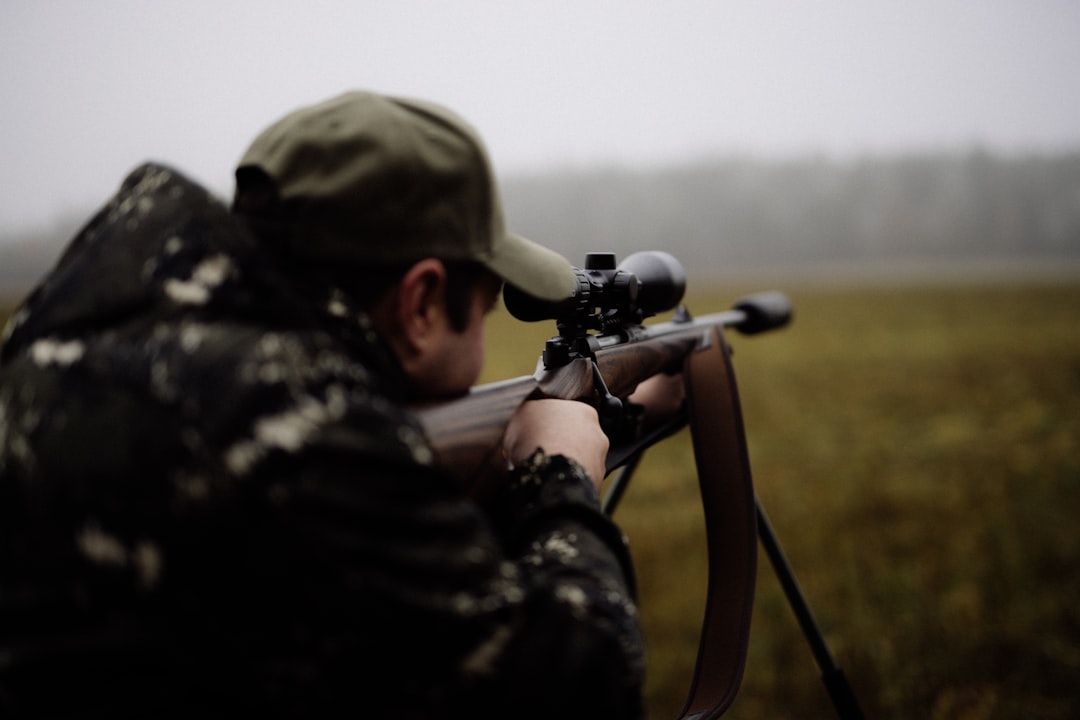
The Hammer Absolute Hunter has earned a loyal following among western hunters who prioritize deep penetration and consistent terminal performance. Unlike traditional cup-and-core bullets that can fragment on impact, the Absolute Hunter is a monolithic copper design that sheds its front petals while the solid shank continues driving forward. After running these bullets through multiple rifles and taking them into the field on elk and mule deer hunts, the results paint a clear picture of where they excel and where hunters should set realistic expectations.
What Makes the Absolute Hunter Different
The Absolute Hunter belongs to Hammer's PDR (parabolic drag reduction) line, which features a unique band-and-groove profile designed to reduce bearing surface and minimize copper fouling. The bullet's nose contains pre-scored petals that separate on impact, creating wound channels while the remaining shank penetrates straight through vitals. This design philosophy differs fundamentally from bonded or partition bullets that aim to retain all their mass.
The reduced bearing surface allows these bullets to be pushed faster than comparable weight bullets without excessive pressure. A 181-grain Absolute Hunter in .30 caliber, for example, can often be loaded to velocities typically reserved for 165-grain conventional bullets. This speed advantage translates to flatter trajectories and more energy on target at extended ranges.
Accuracy and Load Development
Accuracy with Hammer bullets follows a pattern most handloaders will recognize, though the reduced bearing surface changes some traditional approaches. Across multiple rifles including a .300 WSM, 7mm Rem Mag, and .270 Winchester, the Absolute Hunter consistently produced sub-MOA groups once the right powder and seating depth were identified.
The key difference from cup-and-core bullets is that Hammers typically shoot best when seated to engage the rifling or jumped slightly. The standard practice of jamming into the lands often degrades accuracy. Most rifles in testing preferred a jump of 0.020 to 0.050 inches. Powder selection matters more than with conventional bullets. Fast-burning powders that work well with heavy cup-and-core bullets often leave velocity on the table with Hammers. Medium-burn-rate powders like H4350, IMR 4451, and Reloder 16 delivered the best combination of accuracy and velocity across multiple cartridges.
Copper fouling proved minimal compared to other monolithics. Rifles maintained accuracy through 40-50 round strings without cleaning, though starting with a clean barrel produced the tightest groups during initial load development.
Terminal Performance on Game
The Absolute Hunter's real test comes in the field, and its terminal performance follows predictable patterns based on impact velocity. On a Colorado bull elk shot broadside at 312 yards with a 181-grain Absolute Hunter from a .300 WSM, the bullet entered behind the shoulder, shed its four front petals through the lungs, and the shank exited the far side. The bull traveled less than 40 yards. Recovered petals showed clean separation, and the entrance wound measured roughly caliber-sized while the exit was approximately silver-dollar-sized.
A Wyoming mule deer buck taken at 180 yards with a 143-grain Absolute Hunter from a 7mm Rem Mag showed similar results. The bullet passed completely through both lungs with massive internal damage. The deer covered less than 20 yards before expiring. Internal examination revealed the characteristic petal separation and straight-line shank penetration.
The design shows its strengths on quartering shots where deep penetration matters most. A Montana elk cow shot quartering-to at 245 yards required the bullet to penetrate through the shoulder blade and traverse the chest cavity. The 181-grain Absolute Hunter from a .30-06 drove through and lodged against the hide on the far side. The elk dropped within sight.
Velocity Considerations and Range Limitations
Hammer recommends a minimum impact velocity of 1,800 fps for reliable expansion with the Absolute Hunter. This threshold is lower than many bonded bullets but higher than some soft-point designs. Practical maximum range depends on your cartridge and load. A 181-grain Absolute Hunter launched at 2,900 fps from a .300 WSM maintains 1,800 fps to approximately 650 yards at 5,000 feet elevation. The same bullet from a .30-06 at 2,650 fps drops below that threshold around 475 yards.
Shooting beyond these distances risks penciling through without petal separation. The solid copper shank will still penetrate, but wound channels narrow considerably without the petals creating tissue damage. For most western hunting scenarios inside 400 yards, impact velocity remains well above the expansion threshold.

Free to join
Download mobile app
- Detailed draw odds
- Point tracking
- Deadline reminders
- 18 states covered


Free to join
Download mobile app
- Detailed draw odds
- Point tracking
- Deadline reminders
- 18 states covered

Free to join
Download mobile app
- Detailed draw odds
- Point tracking
- Deadline reminders
- 18 states covered

Comparing Hammer to Traditional Bullets
The Absolute Hunter occupies a distinct space between premium bonded bullets and traditional cup-and-core designs. Bonded bullets like the Nosler AccuBond or Swift Scirocco retain more weight, typically 70-90 percent, while the Absolute Hunter intentionally sheds its petals and retains only the shank, roughly 60-70 percent of original weight.
This difference shows up in two ways. First, Hammers create wider initial wound channels through petal separation. Second, bonded bullets carry more residual mass for breaking through heavy bone. On broadside or quartering-away shots through the ribs and lungs, the Absolute Hunter's wound channel advantage matters more. On frontal or heavily quartering-to shots requiring shoulder-blade penetration, the bonded bullet's retained weight provides a margin of safety.
Compared to cup-and-core bullets like the Hornady InterLock or Sierra GameKing, the Absolute Hunter costs significantly more but delivers more predictable performance. Cup-and-core bullets fragment unpredictably based on impact velocity and bone contact. The Absolute Hunter's engineered petal separation produces consistent results across varying impact conditions.
Where the Absolute Hunter Excels
Three scenarios highlight this bullet's strengths. First, shots on lighter-bodied game like mule deer, pronghorn, and black bear where violent expansion and complete pass-throughs matter. The petal separation creates devastating wound channels while the shank ensures exits for blood trailing.
Second, situations requiring flatter trajectories. The ability to push lighter-for-caliber Absolute Hunters to higher velocities than conventional bullets of the same weight class reduces holdover at extended ranges. A 143-grain Absolute Hunter in 7mm shoots flatter than most 160-grain conventional bullets.
Third, rifles prone to copper fouling with traditional monolithics. The PDR bands significantly reduce fouling, allowing more shots between cleanings without accuracy degradation.
Limitations and Considerations
The Absolute Hunter's design creates trade-offs hunters should understand. The reduced bearing surface requires different load development approaches. Recipes that work for cup-and-core bullets rarely transfer directly. Expect to invest time and components finding the right powder and seating depth combination.
Cost per bullet runs higher than conventional options. A box of 50 Absolute Hunters costs roughly double what premium bonded bullets run and triple the price of standard cup-and-core designs. For hunters shooting 20 rounds per year at game, the difference is negligible. For high-volume practice shooters, the cost adds up.
Availability fluctuates more than major-manufacturer bullets. Hammer is a smaller operation, and popular weights sell out during peak hunting season. Ordering well in advance of hunting season avoids supply issues.
Optimal Cartridge and Game Pairings
The Absolute Hunter works best in standard and magnum cartridges where velocity can be pushed high enough to extend the effective range beyond the 1,800 fps threshold. Cartridges like the .270 Winchester, 7mm Rem Mag, .308 Winchester, .30-06, and .300 WSM all provide enough case capacity to maximize the bullet's potential.
For elk-sized game, the 181-grain .30 caliber and 166-grain 7mm weights deliver sufficient mass for deep penetration even after petal separation. Lighter weights like the 143-grain 7mm or 124-grain .30 caliber work well on mule deer and pronghorn where extreme penetration is less critical.
The Absolute Hunter is overkill for whitetails in thick cover where shots stay inside 150 yards. Traditional soft points cost less and perform identically at woods ranges. The design shines on open-country game where shots extend beyond 250 yards and consistent expansion across varying impact velocities matters.
Free to join
Download mobile app
- Detailed draw odds
- Point tracking
- Deadline reminders
- 18 states covered
Free to join
Download mobile app
- Detailed draw odds
- Point tracking
- Deadline reminders
- 18 states covered
Free to join
Download mobile app
- Detailed draw odds
- Point tracking
- Deadline reminders
- 18 states covered
TAGZ Helps You Plan Hunts Where Bullet Choice Matters
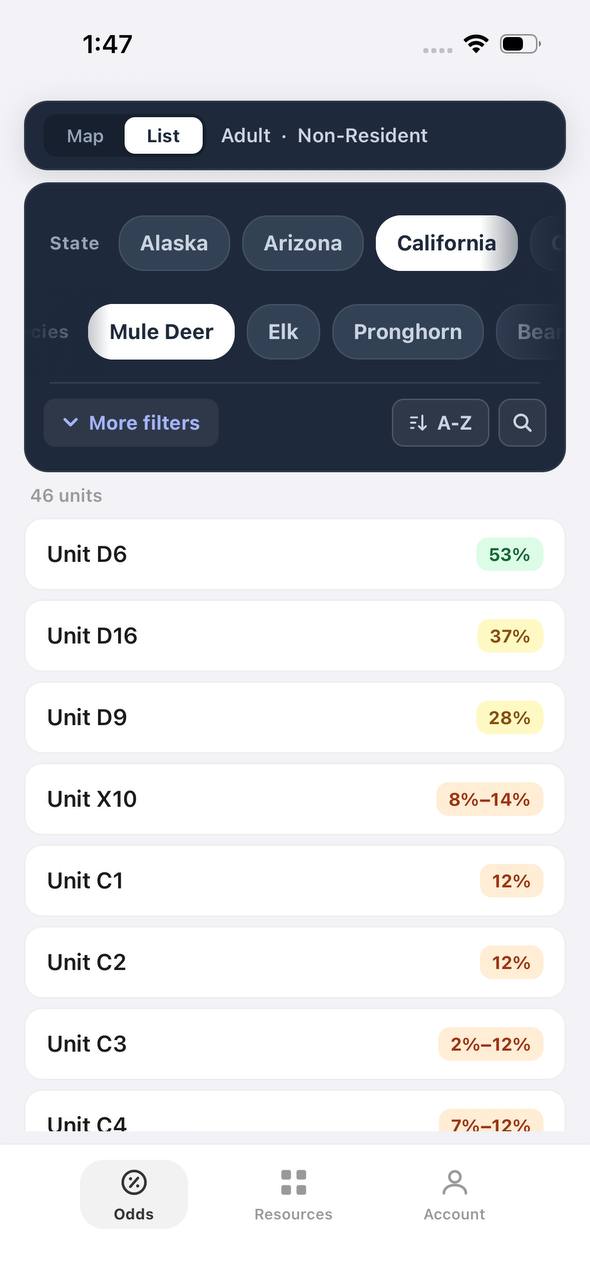
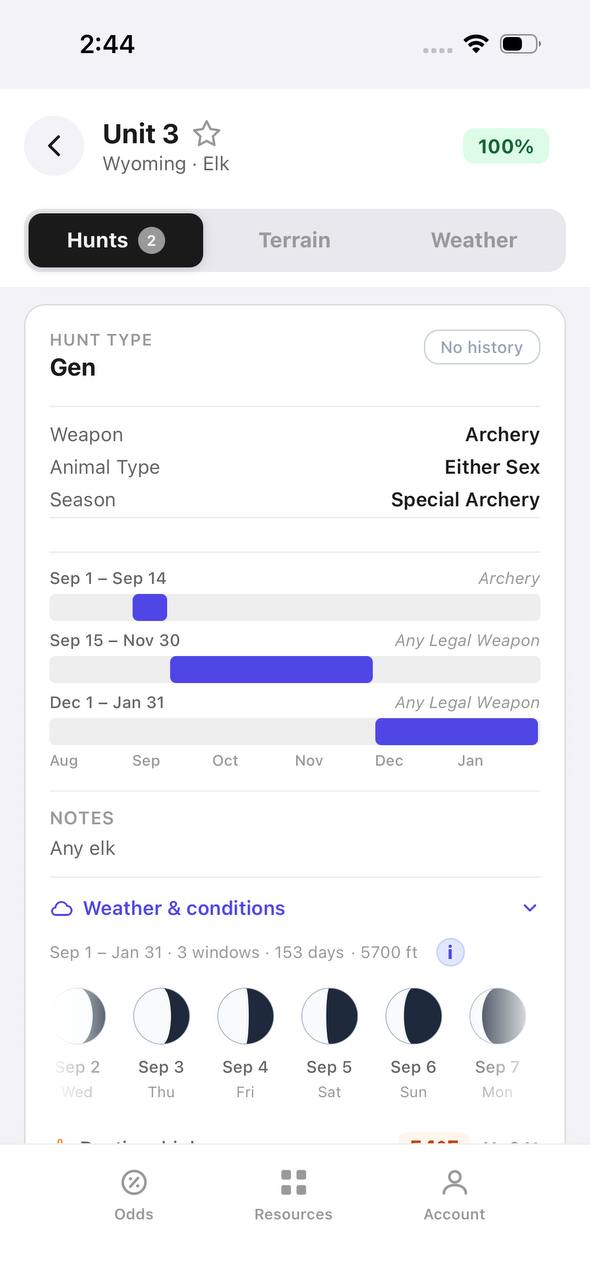
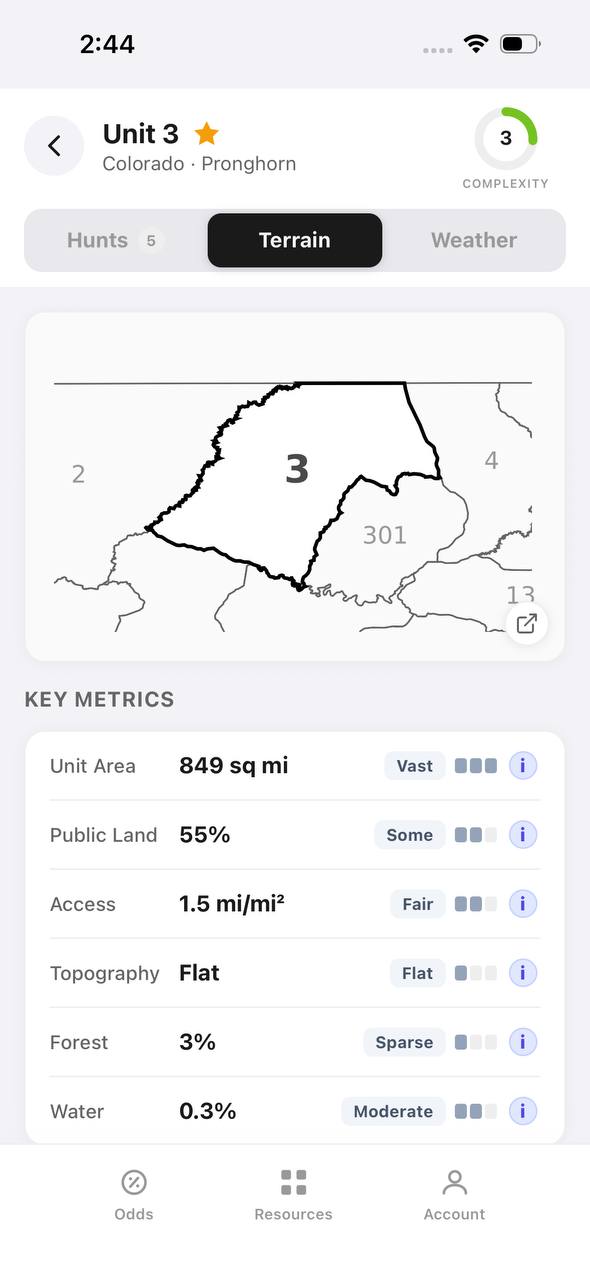
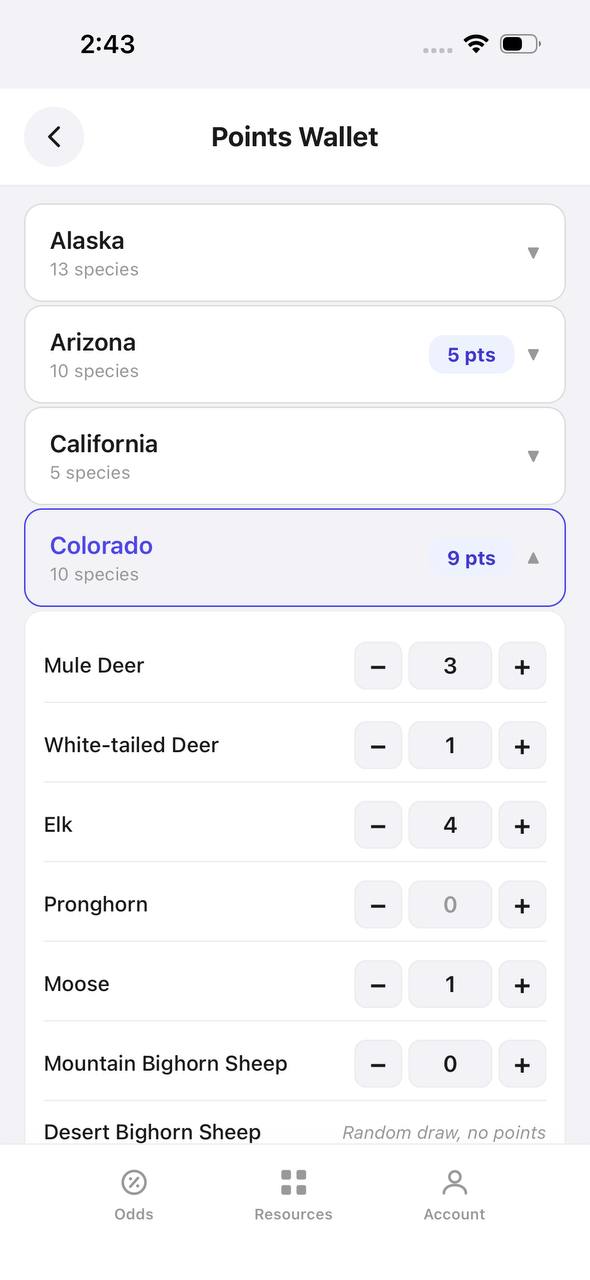
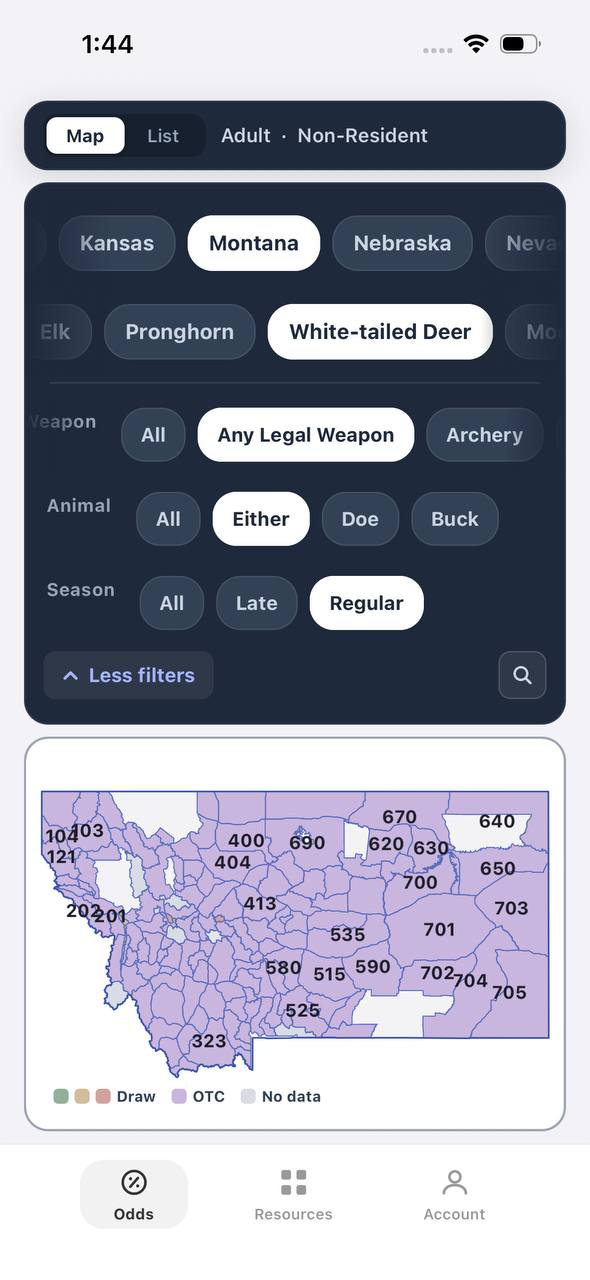
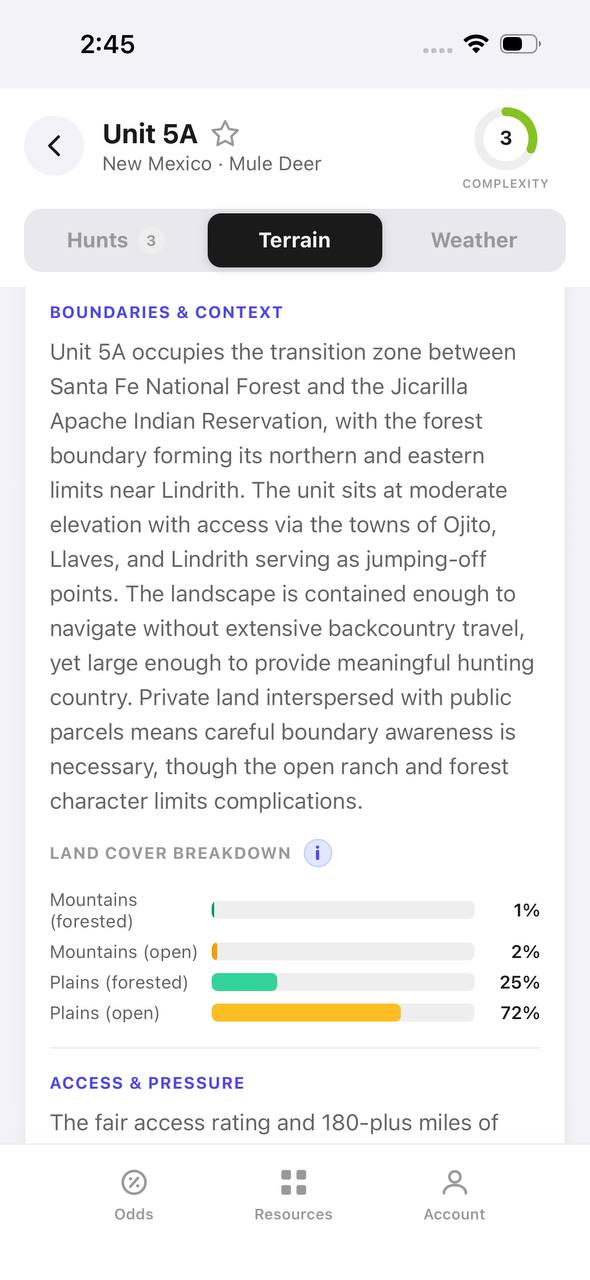
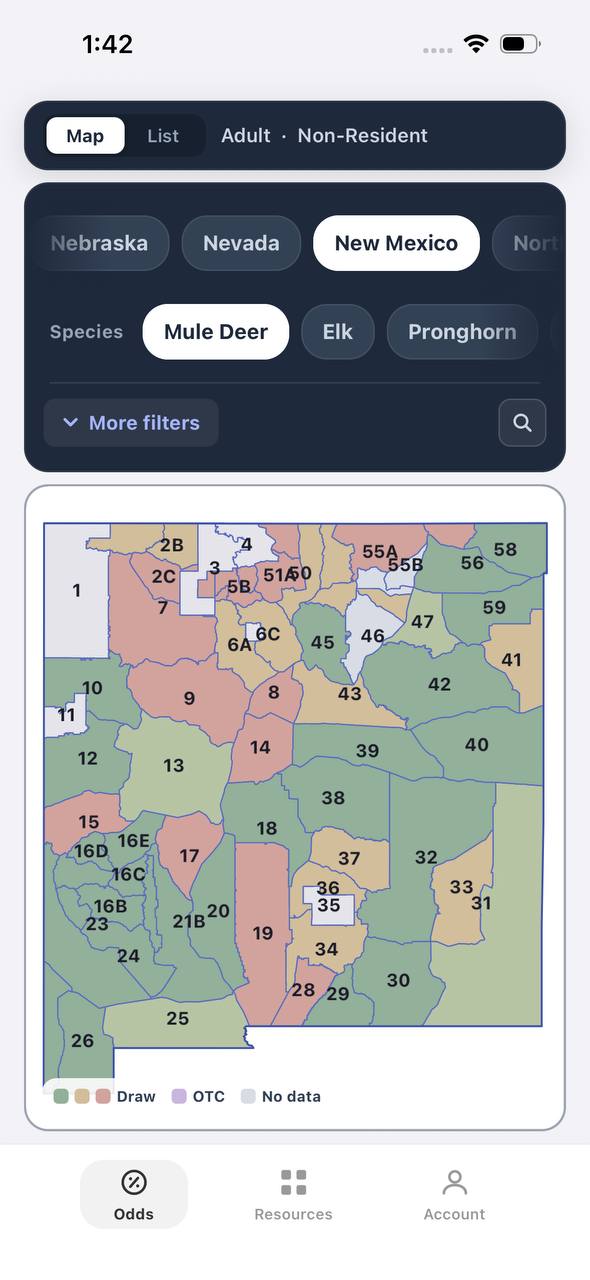
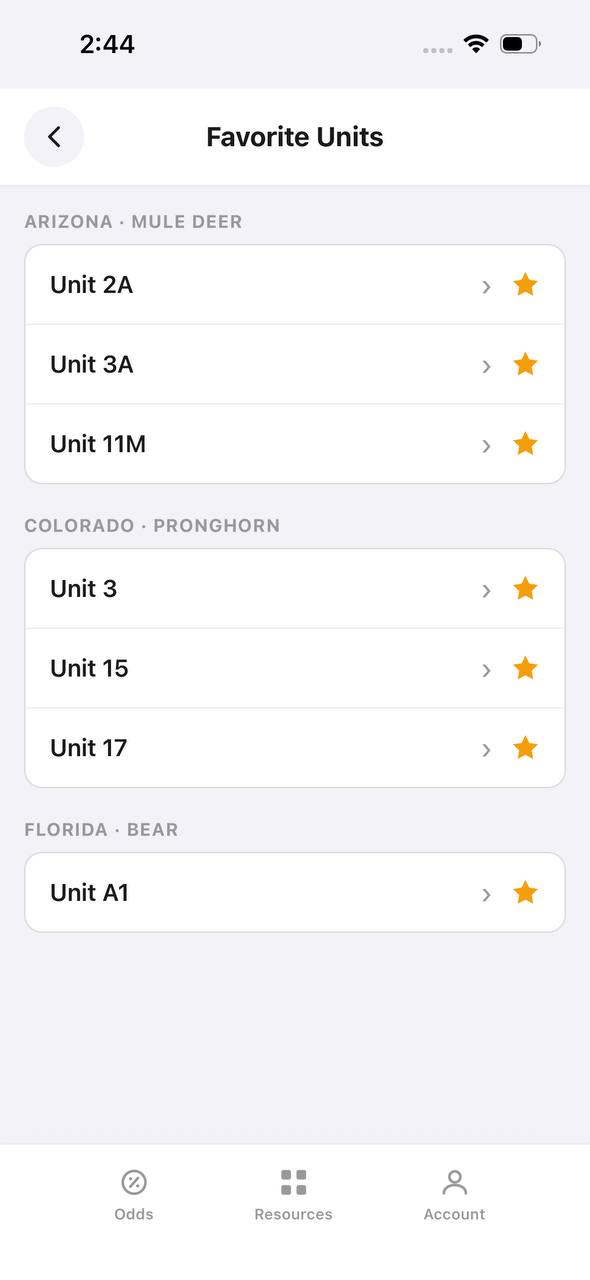
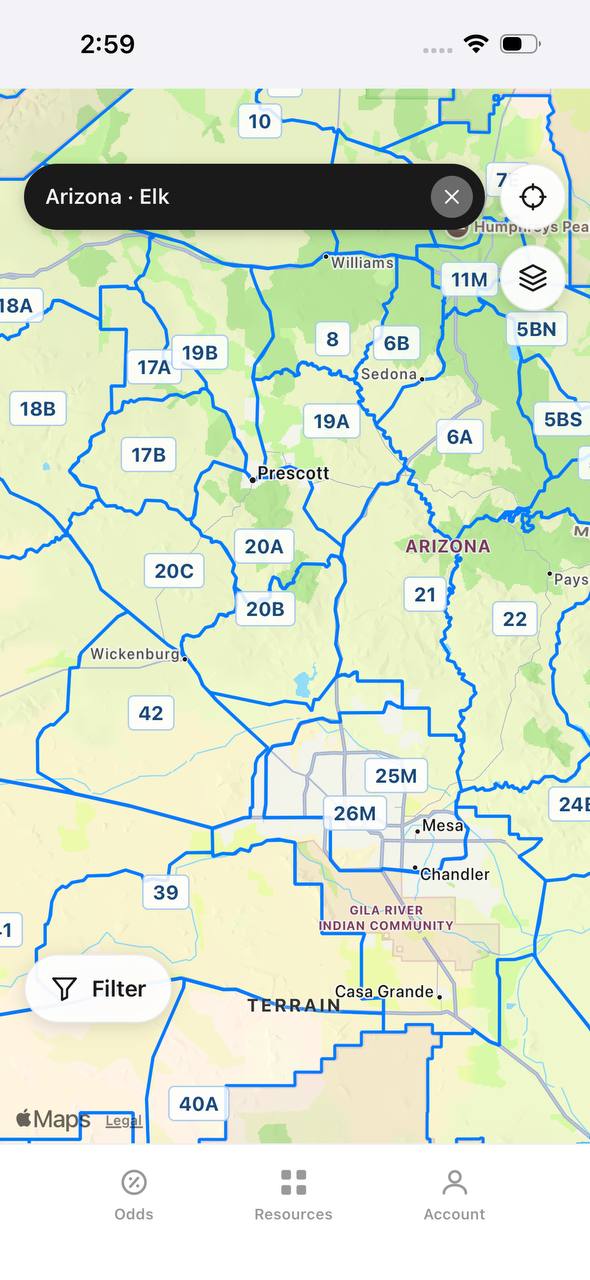
Choosing the right bullet matters most when you have drawn a tag that took years to earn. TAGZ helps you identify which units require longer shots across open basins versus close-range timber hunting where bullet selection changes. The platform's terrain maps show whether you are glassing ridges at 400 yards or still-hunting timber at 75. Filter units by weapon type, compare draw odds across states, and track your preference points so you apply strategically for hunts that match your gear and shooting abilities. Whether you are running Absolute Hunters in a magnum for wide-open mule deer country or traditional bullets for close-range elk timber, TAGZ gives you the unit research and draw data to plan hunts where your bullet choice aligns with the terrain and shot opportunities.
Barrel Break-In and Initial Accuracy
Hammer recommends a simplified break-in process that differs from traditional copper bullet protocols. Fire one shot, clean the barrel. Repeat for the first five rounds. After that, shoot normally and clean only when accuracy degrades or every 40-50 rounds, whichever comes first.
This minimal break-in produced good results across testing. A new .270 Winchester barrel showed copper fouling in the first ten rounds, but the PDR bands prevented the heavy buildup common with older monolithic designs. By round 15, fouling leveled off and accuracy stabilized. Groups at round 50 measured identically to groups at round 20 without cleaning.
Barrels with existing copper fouling from conventional bullets benefited from a thorough cleaning before shooting Hammers. Starting with a clean barrel established a baseline and made it easier to identify the right powder charge and seating depth.
Comparing Absolute Hunter to Hammer's Other Lines
Hammer makes several bullet lines, and understanding where the Absolute Hunter fits helps determine if it is the right choice. The Dead Blow Hammer uses a similar petal-shedding design but features a hollow point rather than the Absolute Hunter's solid nose. Dead Blow Hammers expand more violently at lower velocities but sacrifice some penetration on heavy bone.
The Shock Hammer is Hammer's bonded offering that retains the entire bullet rather than shedding petals. Shock Hammers provide deeper penetration on frontal or heavy-bone shots but create narrower wound channels on broadside lung shots.
For most western hunting applications on elk, mule deer, and pronghorn with broadside or quartering-away shot opportunities, the Absolute Hunter delivers the best balance of wound channel size and penetration. Hunters who regularly take frontal shots or hunt where regulations require lead-free bullets but extreme penetration is needed might prefer the Shock Hammer.
Real-World Accuracy Standards
What does acceptable accuracy look like with the Absolute Hunter? Across six different rifles spanning .270 Winchester through .300 WSM, every rifle produced at least one load shooting under 1 MOA at 100 yards. The best groups measured in the 0.5 to 0.7 MOA range, while average groups across all tested loads ran 0.8 to 1.2 MOA.
This level of accuracy exceeds what most hunters need for western big game inside 400 yards. A 1 MOA rifle puts shots inside a 4-inch circle at 400 yards, well within the vital zone on any elk or mule deer. Hunters who demand benchrest-level precision for long-range target shooting might find certain conventional bullets that group tighter, but for hunting accuracy, the Absolute Hunter performs exceptionally well.
Seating depth testing showed most rifles preferred a specific jump, and groups tightened significantly once the optimal depth was identified. Testing in 0.010-inch increments from 0.020 to 0.070 inches off the lands revealed distinct accuracy nodes. The .300 WSM shot best at 0.030 inches off, while the 7mm Rem Mag preferred 0.050 inches. Taking the time to test seating depth pays dividends.
Free to join
Download mobile app
- Detailed draw odds
- Point tracking
- Deadline reminders
- 18 states covered
Free to join
Download mobile app
- Detailed draw odds
- Point tracking
- Deadline reminders
- 18 states covered
Free to join
Download mobile app
- Detailed draw odds
- Point tracking
- Deadline reminders
- 18 states covered
Reloading Tips for Consistent Performance
Beyond seating depth and powder selection, several reloading practices improve consistency with Absolute Hunters. Uniform brass preparation matters more than with conventional bullets because the reduced bearing surface amplifies pressure variations. Weight-sorting brass by lots and ensuring consistent case lengths improved group sizes measurably.
Neck tension consistency also showed effects. Using a mandrel after sizing to establish uniform neck tension reduced velocity spreads and tightened groups. A Lee Factory Crimp Die applied lightly provided additional consistency, particularly in magnum cartridges where heavy recoil can shift bullets in the case during firing.
Primer selection followed standard practices. Federal 210M primers worked well in .30-06 and .270 Winchester loads, while Federal 215M primers handled magnum cartridges without pressure signs. CCI BR-2 primers also performed well and were easier to find during shortages.
Cost-Benefit Analysis for Average Hunters
The Absolute Hunter costs approximately $1.50 to $2.00 per bullet depending on weight and availability. Premium bonded bullets from major manufacturers run $1.00 to $1.30 per bullet, while standard cup-and-core bullets cost $0.40 to $0.70 each. For a hunter who shoots three boxes for load development and practice plus one box for hunting, the annual cost difference between Absolute Hunters and premium bonded bullets is roughly $40 to $60.
That cost buys predictable terminal performance across varying impact velocities, reduced copper fouling, and the ability to shoot lighter bullets faster for flatter trajectories. For hunters pursuing once-in-a-lifetime or multi-year-wait tags, the cost is negligible compared to the total hunt investment. For hunters shooting multiple deer tags annually in their home state, conventional bullets deliver similar on-game results at significantly lower cost.
The real value appears in specific scenarios: shooting at extended range where the flatter trajectory matters, hunting where complete pass-throughs aid tracking in poor blood-trailing conditions, or using rifles that fouled heavily with previous monolithic bullets.
Storage and Shelf Life Considerations
Copper bullets like the Absolute Hunter require no special storage beyond keeping them dry. Unlike lead-core bullets that can corrode if exposed to moisture, solid copper bullets remain stable indefinitely. Bullets loaded five years ago and stored in a climate-controlled space shot identically to fresh bullets in accuracy testing.
The PDR coating Hammer applies provides some lubricity to reduce fouling, but it does not wear off during normal handling. Bullets that spent a year in a range bag showed no visible coating degradation, and accuracy remained consistent.
One consideration for handloaders who prep large batches: the reduced bearing surface can make bullet pull force lighter than conventional bullets if neck tension is not properly established. Bullets seated without sufficient neck tension showed movement under recoil in magnum cartridges. A light crimp or slightly increased neck tension solved the issue.
FAQ — Hammer Absolute Hunter
What is the minimum impact velocity for the Hammer Absolute Hunter to expand properly? Hammer recommends 1,800 fps minimum impact velocity for reliable petal separation. Below this threshold, the bullet may pencil through without expanding, though the solid copper shank will still penetrate.
How does the Absolute Hunter compare to Nosler AccuBond for penetration on elk? The AccuBond retains more weight (70-90 percent) after impact, while the Absolute Hunter sheds its petals and retains the shank (60-70 percent). On broadside lung shots, the Absolute Hunter creates wider wound channels. On heavy-bone frontal shots, the AccuBond's retained weight provides a penetration advantage.
Do Hammer bullets foul barrels worse than cup-and-core bullets? No. The PDR bands reduce bearing surface and minimize copper fouling compared to both conventional bullets and most other monolithic designs. Most rifles maintain accuracy for 40-50 rounds between cleanings.
Can I use existing load data for conventional bullets when loading Absolute Hunters? No. Start 10 percent below maximum for conventional bullets of the same weight and work up carefully. The reduced bearing surface allows higher velocities but requires different powder charges. Never assume conventional load data transfers directly.
Are Hammer Absolute Hunters worth the extra cost over standard hunting bullets? For hunters pursuing limited-entry tags or hunting where extended range and consistent expansion matter, yes. For high-volume shooters or hunters taking game inside 200 yards where any premium bullet performs similarly, conventional bullets offer better value.
What seating depth do Hammer bullets typically shoot best? Most rifles prefer 0.020 to 0.050 inches off the lands. Test in 0.010-inch increments to find the accuracy node for your specific rifle. Avoid jamming into the lands, which typically degrades accuracy with Hammers.
Continue Planning Your Hunt
Bullet selection matters most when you are hunting units where shot distances vary and terminal performance across a range of impact velocities is critical. TAGZ helps you compare units using terrain maps and historical harvest data so you understand whether you are glassing open basins at 400 yards or hunting dark timber at 100. Track your preference points across multiple states, filter units by weapon type and season, and make smarter decisions about where to apply. Whether you are planning an OTC archery hunt or strategizing for a limited-entry rifle tag that took five years to draw, TAGZ gives you the tools to research units, compare draw odds, and plan hunts with confidence. Explore the platform at getmytagz.com, dive into more gear and strategy content on the Insights page, or see how the TAGZ product simplifies western draw applications and hunt planning from start to finish.
Was this article helpful?
Previous
Swift Scirocco II Review: The Ultimate Hunting Bullet for Western Big Game
The Swift Scirocco II delivers exceptional accuracy and devastating terminal performance on elk, mule deer, and pronghorn across western terrain. This bonded-core bullet bridges the gap between match-grade precision and controlled expansion for serious hunters who demand both.
Related
How to Age Mule Deer on the Hoof — Field Judging Buck Age Classes
Learning to age mule deer bucks in the field helps hunters make informed harvest decisions and improves long-term herd management. This guide covers body characteristics, antler development, and behavioral cues across age classes from yearlings to mature 5+ year olds.

Next
How to Pack Clothing for a Backpack Hunt: A Layering System That Works
Packing the right clothing for a backcountry hunt means balancing weight, weather protection, and versatility. Learn how to build a proven layering system that keeps you comfortable from spike camp to the pack-out without hauling unnecessary gear.