How to Age Mule Deer on the Hoof — Field Judging Buck Age Classes
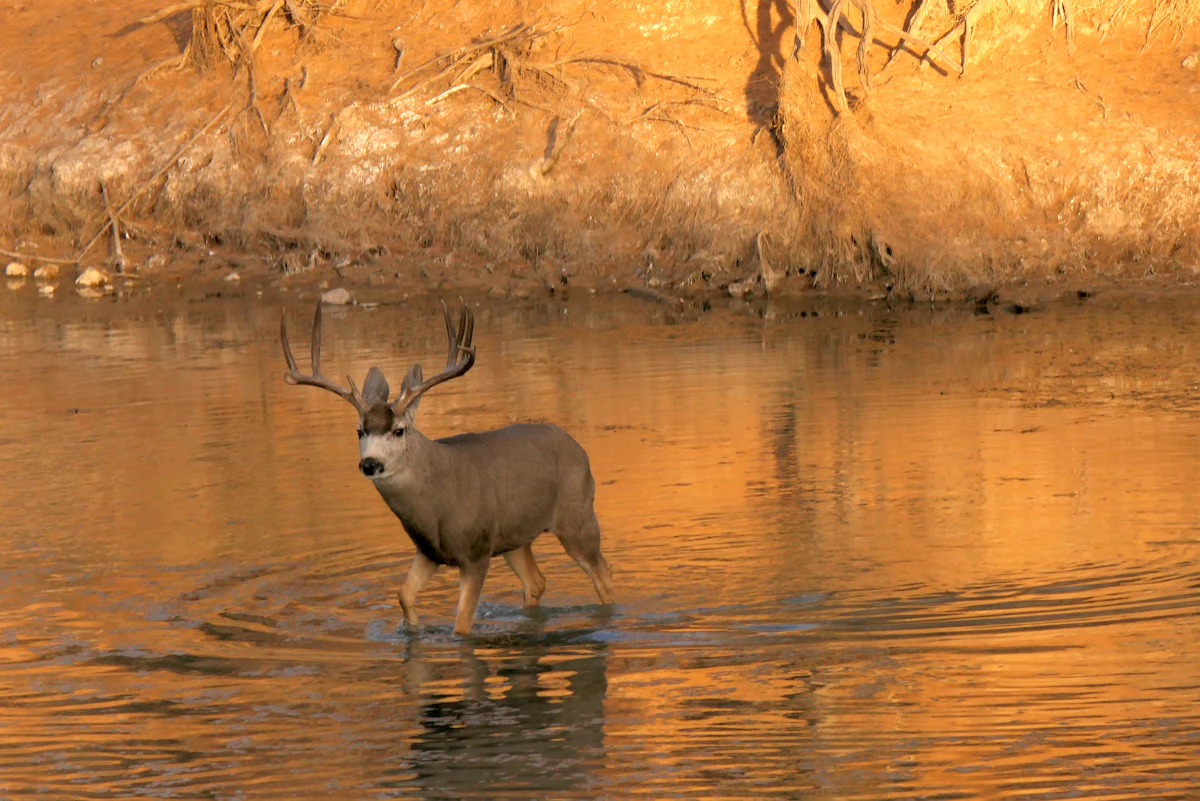
Accurately aging mule deer bucks in the field is one of the most valuable skills a western hunter can develop. Whether you are managing private land, choosing which buck to pursue on a limited-entry tag, or simply want to understand herd dynamics better, knowing how to distinguish a 2.5-year-old from a 5.5-year-old changes how you hunt. Age affects antler size, body mass, behavior, and reproductive contribution to the herd. This guide breaks down the physical and behavioral markers that separate age classes so you can make confident decisions through your binocular.
Why Age Matters More Than Antler Score
Most hunters focus on antler size first, but age tells a more complete story. A heavy-bodied 5-year-old with modest genetics might score less than a genetically superior 3-year-old, yet the older buck contributes more to herd health and offers a better hunting experience. Mature bucks behave differently, occupy different terrain, and present different shot opportunities than younger deer. They also represent the apex of what a unit can produce given its habitat and genetics. If your goal is trophy quality, targeting deer aged 4.5 years or older ensures you are harvesting bucks that have reached or approached their genetic potential. Younger bucks, especially 2.5 and 3.5 year olds, still have significant growth ahead and may develop into true trophies if given another year or two.
Understanding age also improves your success rate. Mature bucks are warier, less visible during daylight, and more likely to use escape terrain. Knowing you are glassing a 6-year-old rather than a 3-year-old adjusts your approach, your patience, and your expectations. Age-based management on public land is harder to control, but identifying age classes helps you target specific deer and pass younger bucks that will improve the hunting in future seasons.
Yearling Bucks — 1.5 Years Old
Yearling bucks are the easiest age class to identify and the easiest to mistake for does at a distance. Their bodies are slender, lanky, and lack the muscular depth of older deer. Legs appear disproportionately long relative to body size, giving them a deer-like appearance rather than a powerful, blocky shape. The neck is thin year-round and shows no swelling even during the rut. Chest depth is minimal, and the belly is tight with no sagging or paunch.
Antlers on yearlings are typically spikes, small forks, or narrow 3-points per side. Even well-fed yearlings rarely produce the mass or tine length seen in older age classes. Antler bases are pencil-thin, and the overall rack sits close to the head with minimal width. Some yearlings in excellent habitat may grow small 4-point frames, but the antlers lack the heavy beams and pronounced forks of mature bucks.
Behaviorally, yearlings are the least cautious. They feed openly during daylight, travel with does and fawns longer into fall, and show little of the wariness that defines older bucks. During the rut, they are often seen trailing mature does but rarely breeding. These deer represent the next generation and are almost never the target on limited-entry hunts unless population reduction is the management goal.
2.5-Year-Old Bucks — The Transition Stage
Two-and-a-half-year-old bucks are where many hunters make their first mistake. These deer have added significant body mass compared to yearlings and often carry respectable antlers, but they are still far from mature. The body is filling out but remains lean. The chest is deeper than a yearling, but the neck is still relatively thin outside of the rut. During breeding season, the neck swells slightly, but it does not develop the thick, blocky appearance of older bucks. Legs no longer look oversized, but the deer still appears athletic and rangy rather than heavy.
Antlers at 2.5 often show a full 4-point frame with decent tine length. Some deer in prime habitat will grow small 5-point racks, and a few genetically superior individuals may show early characteristics of mass and width. However, antler bases remain relatively thin, and the overall rack lacks the heavy, gnarly character of mature deer. Brow tines are present but short, and the main beams are still fairly straight without pronounced curves.
These bucks are more cautious than yearlings but still make mistakes. They feed in open terrain during legal light, especially early in the season, and are more visible than older age classes. Many 2.5-year-olds are harvested on general units because they look impressive at a distance and hunters lack the experience to distinguish them from 4- or 5-year-olds. If you can pass a 2.5-year-old, you are giving that deer two more years to reach its peak.
3.5-Year-Old Bucks — Young Adults
Three-and-a-half-year-old bucks cross into adulthood but are not yet fully mature. The body is well-muscled with a noticeably deeper chest and thicker hindquarters than younger deer. The belly begins to show slight sagging, and the neck swells considerably during the rut, though it still tapers smoothly into the shoulders rather than forming the distinct bulge of older bucks. The face remains relatively lean, and the overall appearance is still athletic.
Antler development takes a significant leap at 3.5. Most bucks in decent habitat will carry a full 4-point or 5-point frame with good tine length, noticeable mass, and increased width. Brow tines are longer and more pronounced, and the main beams begin to show curvature. Some deer will develop small cheaters or additional points. Antler bases are thicker, and the rack begins to take on a more impressive, mature look. In areas with excellent nutrition and genetics, 3.5-year-old bucks can score well into the 160s or even 170s Boone and Crockett.
Behaviorally, these bucks are more cautious and often shift to nocturnal feeding patterns on pressured units. They are active during the rut and will breed does, but they are often displaced by older, more dominant bucks. Many hunters consider 3.5-year-olds acceptable trophies, especially on general tags or moderate draw units, but they still have one to two years of growth remaining.
Free to join
Download mobile app
- Detailed draw odds
- Point tracking
- Deadline reminders
- 18 states covered


Free to join
Download mobile app
- Detailed draw odds
- Point tracking
- Deadline reminders
- 18 states covered

Free to join
Download mobile app
- Detailed draw odds
- Point tracking
- Deadline reminders
- 18 states covered

4.5 to 5.5-Year-Old Bucks — Prime Mature Deer
Bucks aged 4.5 and 5.5 years represent the prime age class for trophy hunters. These deer have reached or closely approached their maximum antler potential, and their bodies display all the characteristics of maturity. The chest is deep and barrel-like, the shoulders are heavily muscled, and the hindquarters are thick and powerful. The belly sags noticeably, and during the rut, the neck swells into a thick, blocky mass that blends into the shoulders with little taper. The face appears broader, and the eyes seem smaller relative to the head.
Antlers at this age are impressive. Main beams are thick and heavy with pronounced curves. Brow tines are long and swept forward. The rack is wide, often exceeding ear-tip width significantly, and mass is distributed throughout the antler rather than concentrated at the base. Five-point frames are common, and many bucks will have additional cheater points, split tines, or non-typical characteristics. Bases are heavy and gnarly, and the overall appearance is that of a mature, fully developed rack.
These bucks are difficult to hunt. They bed in thick cover or rugged terrain, feed primarily at night, and move cautiously during daylight. During the rut, they are more visible but remain wary and are often found in terrain that offers quick escape routes. A mature 4.5 or 5.5-year-old on a limited-entry unit represents the peak of what that area can produce, and harvesting one is the goal of most serious mule deer hunters.
6+ Year Old Bucks — Post-Prime and Declining
Bucks that reach 6 years or older are rare on most units, especially those with significant hunting pressure. These deer have survived multiple seasons and are often the wariest animals in the population. Physically, they show signs of aging. The body remains heavy, but muscle tone may decline slightly. The back often sags, the belly is pronounced, and the face appears grizzled with a Roman-nosed profile. The neck remains thick during the rut but may not swell as dramatically as it did at 5 years old.
Antler characteristics become less predictable. Some bucks continue to grow heavy, impressive racks, while others begin to regress. Antler mass may remain high, but tine length and symmetry often decline. Bases stay thick, but the rack may develop more non-typical points, sticker points, or irregular growth. Some very old bucks will revert to smaller, simpler racks as their bodies prioritize survival over antler production.
Behaviorally, these bucks are ghosts. They are almost entirely nocturnal on pressured units, bed in the most remote terrain, and move only when necessary. During the rut, they may be more visible but are still extremely cautious. Harvesting a 6-year-old or older buck is a rare accomplishment and often the result of exceptional scouting, patience, and luck.
Free to join
Download mobile app
- Detailed draw odds
- Point tracking
- Deadline reminders
- 18 states covered
Free to join
Download mobile app
- Detailed draw odds
- Point tracking
- Deadline reminders
- 18 states covered
Free to join
Download mobile app
- Detailed draw odds
- Point tracking
- Deadline reminders
- 18 states covered
Using Tooth Wear and Jaw Structure for Confirmation
Field aging through visual observation is effective but not perfect. Once a buck is down, examining tooth wear provides a more accurate age estimate. Mule deer have a predictable pattern of tooth eruption and wear that wildlife biologists use to assign age classes. The key is examining the lower jaw, specifically the premolars and molars.
Yearlings and 2.5-year-olds show minimal wear with sharp, distinct cusps on the molars. By 3.5, the cusps begin to flatten, and the enamel ridges show light wear. At 4.5 and 5.5, the teeth are noticeably worn with flattened surfaces and visible dentin exposure. Bucks 6 years and older show heavy wear with smooth, rounded tooth surfaces and significant dentin showing. In very old deer, the teeth may be worn nearly to the gum line.
If you are serious about learning to age deer, keep the lower jaw from every buck you harvest and reference aging guides or consult a biologist. Over time, you will develop an eye for correlating body and antler characteristics with actual age, making your field assessments far more accurate.
Common Mistakes When Aging Bucks in the Field
The most common mistake is overestimating age based on antler size alone. A genetically superior 3-year-old can carry a larger rack than an average 5-year-old, but the body and behavior will reveal the difference. Focus on body characteristics first, then antlers. A thick neck, deep chest, sagging belly, and heavy muscling are far more reliable indicators of maturity than point count or spread.
Another mistake is aging bucks during early season when they are in velvet or still lean from summer. Body condition improves significantly from August to November as bucks bulk up for the rut and winter. A buck that looks like a 3-year-old in August may appear more mature by October once his neck swells and his body fills out. Similarly, antlers can be deceptive in velvet, as the covering adds apparent mass that disappears once the velvet sheds.
Lighting and distance also distort perception. A distant buck glassed in low light may appear heavier-bodied than he is, while harsh midday sun can wash out details and make a mature deer look younger. Always glass deer in good light from multiple angles before making a final judgment. Use video if possible to study movement, posture, and proportions.
Putting It All Together — A System for Field Judging Age
When you glass a buck, follow this sequence. First, assess body proportions. Does the deer look rangy and athletic, or heavy and blocky? Are the legs proportional to the body, or do they appear long and thin? Second, examine the chest depth and neck. A deep, barrel chest and thick neck during the rut indicate maturity. Third, look at the belly and back. Does the belly sag? Does the back stay level, or does it curve downward? Fourth, study the face. Is it lean and refined, or broad and Roman-nosed?
Only after evaluating the body should you focus on antlers. Look at base circumference, beam mass, and tine length. Check for heavy, gnarly characteristics versus smooth, straight beams. Note the width and the presence of cheater points or non-typical growth. Finally, observe behavior. Is the buck feeding openly in daylight, or is he cautious and quick to retreat? Does he appear dominant during the rut, or is he trailing other bucks?
Combining all these factors gives you a reliable age estimate. With practice, you will be able to distinguish a 3.5-year-old from a 5.5-year-old within seconds of glassing a deer.
Free to join
Download mobile app
- Detailed draw odds
- Point tracking
- Deadline reminders
- 18 states covered
Free to join
Download mobile app
- Detailed draw odds
- Point tracking
- Deadline reminders
- 18 states covered
Free to join
Download mobile app
- Detailed draw odds
- Point tracking
- Deadline reminders
- 18 states covered
Why Age-Based Harvest Decisions Improve Hunting
Choosing to pass younger bucks in favor of mature deer improves the quality of your hunting experience and contributes to better herd management. Mature bucks are more challenging to hunt, more rewarding to harvest, and more likely to represent the best a unit can produce. Passing 2.5 and 3.5-year-old bucks allows them to reach their potential, increasing the number of mature deer on the landscape and improving future hunting opportunities.
On limited-entry units where tags are hard to draw, harvesting a young buck means years of waiting for a deer that had not yet peaked. On general units or OTC tags, passing young bucks sets a personal standard and makes you a more selective, skilled hunter. Over time, this discipline pays off in the form of better trophies and more memorable hunts.
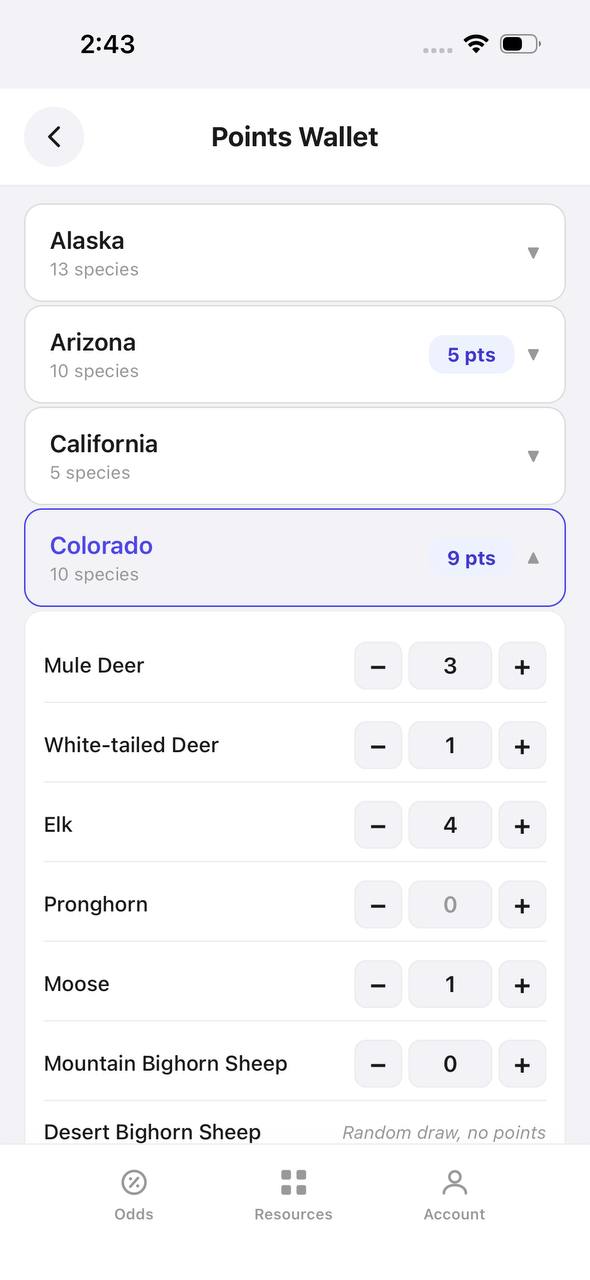
TAGZ helps you find units with age structure intact by analyzing harvest data, draw odds, and success rates. Compare units side by side to identify areas with lower pressure, better buck-to-doe ratios, and higher percentages of mature deer in the harvest. Track your preference points across states so you can time your applications to hunt units where bucks live long enough to reach 4.5 years or older.
FAQ — Aging Mule Deer
Can you accurately age a mule deer buck from a photo?
Yes, if the photo shows the full body in good light and from multiple angles. Body characteristics like chest depth, neck thickness, belly sag, and leg proportions are visible in photos and provide reliable age cues when combined with antler traits.
What is the most reliable physical trait for aging mule deer in the field?
Neck thickness during the rut and chest depth are the most reliable traits. Mature bucks develop a thick, blocky neck that blends into the shoulders, while younger bucks retain a tapered neck even when swollen.
Do mule deer antlers keep growing every year?
Antlers grow significantly from 1.5 to 5.5 years old, with the most dramatic growth between 2.5 and 4.5. After 5.5, growth plateaus, and some bucks begin to regress in antler size as they age past 6 or 7 years.
How old are most mule deer bucks harvested on general tags?
Most bucks harvested on general or OTC tags are 2.5 to 3.5 years old. Harvest data from western states shows that mature 4.5+ year-old bucks make up a small percentage of the general-season harvest due to hunting pressure and behavior.
Is it worth passing a 3.5-year-old buck on a hard-to-draw limited-entry tag?
It depends on the unit and your goals. On true trophy units with low tag numbers, passing a 3.5-year-old to wait for a 5-year-old makes sense. On units with moderate draw odds and older age classes present, a mature 3.5-year-old may be an excellent trophy.
Can a 2.5-year-old mule deer buck score 170 Boone and Crockett?
Rarely, but it is possible in areas with exceptional genetics and nutrition. Most 2.5-year-old bucks score in the 130 to 150 range. A deer that scores 170 at 2.5 will likely exceed 180 or 190 if allowed to reach 4.5 or 5.5 years old.
Continue Planning Your Hunt
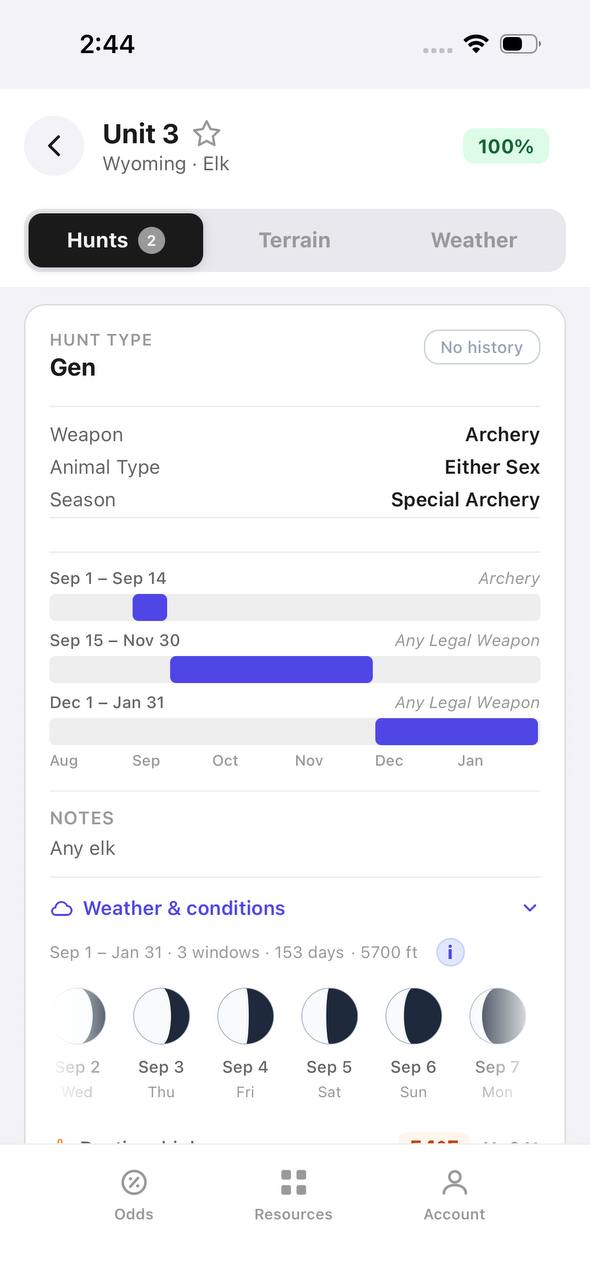
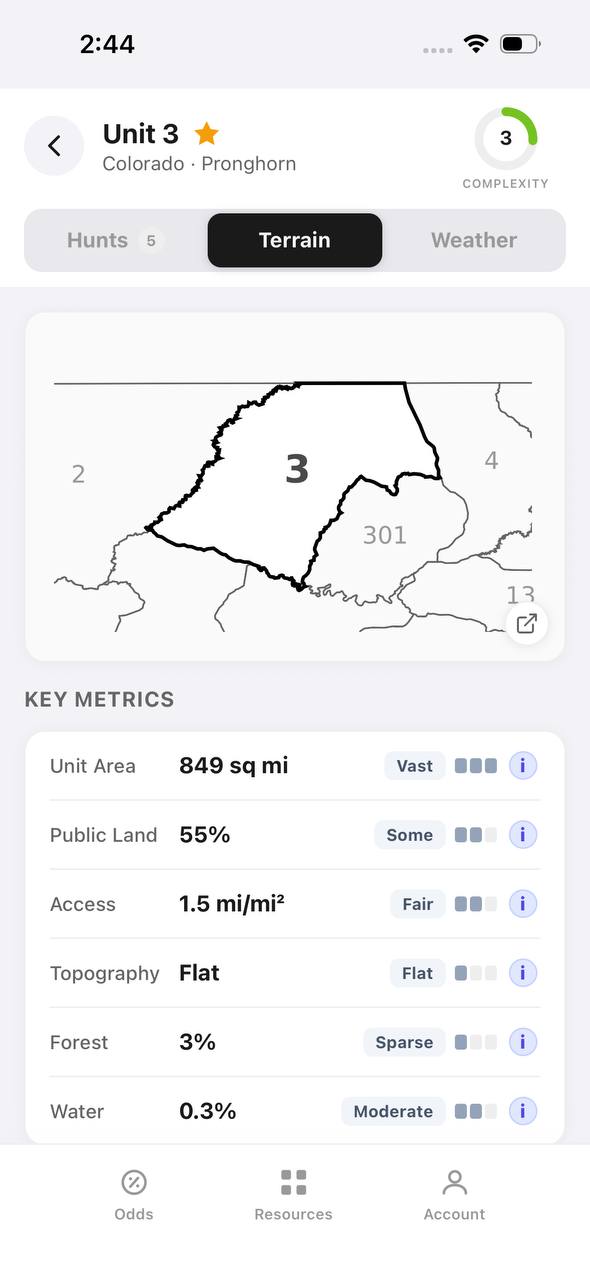
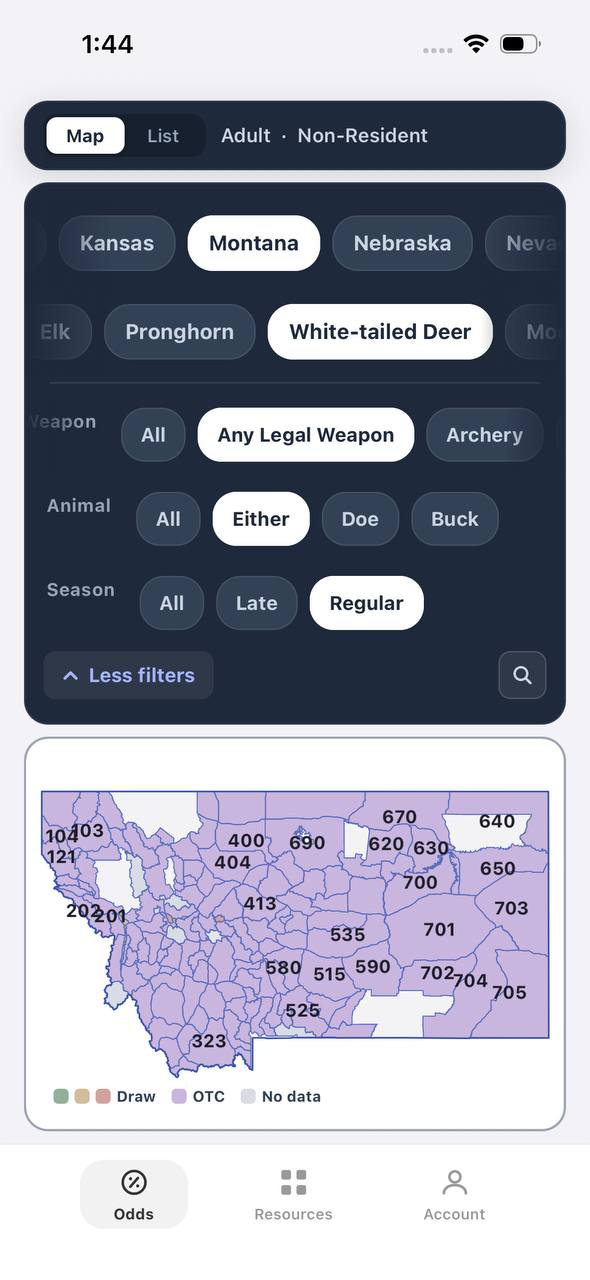
Learning to age mule deer improves every aspect of your hunting, from scouting to shot decisions. If you want to hunt units where bucks live long enough to reach maturity, TAGZ helps you compare draw odds, analyze unit terrain, and track your points across multiple states. Filter hunts by weapon, season, and species to find limited-entry tags with older age structure or identify general units with low pressure and better trophy potential. Whether you are building points for a once-in-a-lifetime tag or planning this season's hunt, TAGZ gives you the tools to make smarter decisions before you ever step into the field.
Explore unit breakdowns, draw deadlines, and public land maps at the TAGZ home page. Read more hunting insights and strategy guides on the TAGZ Insights blog. Compare membership options and start planning your next hunt at TAGZ Pricing. Dive into unit-level data, maps, and draw history on the TAGZ Product page.
Was this article helpful?
Previous
Hunting Pressure Heat Maps Explained: Find Your Edge This Season
Hunting pressure heat maps reveal where other hunters concentrate, helping you identify overlooked units and underutilized terrain. Learn how to read these maps, what data drives them, and how to use pressure analysis to find less-crowded hunting opportunities across the West.
Related
Hammer Absolute Hunter Review: Field-Tested Performance for Western Big Game
The Hammer Absolute Hunter bullet delivers consistent expansion and deep penetration across a wide range of velocities, making it a reliable choice for elk, mule deer, and other western game. This review breaks down real-world performance, optimal applications, and how it stacks up against traditional cup-and-core bullets.
Next
Best Moose Ammunition: Calibers, Bullets, and Loads for Clean Kills
Moose demand heavy, controlled-expansion bullets that penetrate deep through thick hide and bone. We break down proven calibers, bullet construction, and commercial loads that deliver reliable performance on North America's largest deer.