Florida Bear Hunting Zones Explained: BMUs, Seasons & How to Draw a Tag
Florida's black bear population has rebounded dramatically over the past three decades, growing from fewer than 300 bears in the 1970s to an estimated 4,050 animals today. That recovery enabled the Florida Fish and Wildlife Conservation Commission (FWC) to open limited black bear seasons in recent years, managed through a quota system tied to distinct geographic zones. For hunters unfamiliar with Florida's approach, understanding the Bear Management Unit (BMU) structure is the first step toward a successful application and hunt.
What Are Bear Management Units?
Florida divides the state into four Bear Management Units based on bear population density, habitat type, and geographic distribution. These zones are not arbitrary administrative boundaries. They reflect decades of research tracking bear movements, breeding rates, and habitat connectivity across the peninsula. Each BMU operates independently with its own harvest quota, season structure, and draw process.
The four BMUs are:
- Central BMU — Spanning the Ocala National Forest and surrounding counties, this zone holds the densest bear population in the state.
- East Panhandle BMU — Covering Apalachicola National Forest and adjacent timberlands in the northern panhandle.
- North BMU — Stretching across Osceola National Forest and private lands in Baker, Columbia, and Union counties.
- South BMU — Encompassing Big Cypress National Preserve, Everglades periphery, and southwest Florida.
Each unit supports different bear densities and experiences different hunting pressure. The Central BMU consistently draws the most applications due to accessible public land and higher success rates. The South BMU, by contrast, sees fewer applicants but also holds fewer bears and more challenging terrain.
How Florida's Bear Quota System Works
Florida does not use preference points or bonus points for bear tags. The draw is a true lottery. Every applicant within a BMU has an equal chance regardless of how many years they have applied. FWC sets annual harvest quotas for each zone based on population models, reproductive rates, and long-term management goals. Once the statewide harvest reaches the combined quota across all BMUs, the season closes immediately in all zones.
In 2015, the only statewide season in recent history, FWC set a quota of 320 bears. Hunters harvested 304 animals in two days before the season closed. That rapid closure highlighted the need for tighter zone-level controls. Current proposals under review would impose per-BMU quotas rather than a pooled statewide cap, allowing some zones to remain open longer even if others close early.
Quotas are conservative by design. FWC aims to stabilize bear numbers while minimizing conflict with urban expansion and agriculture. Harvest caps typically represent less than 5 percent of the estimated population in any given BMU, ensuring sustainable long-term management.
Central BMU: Ocala National Forest and Beyond
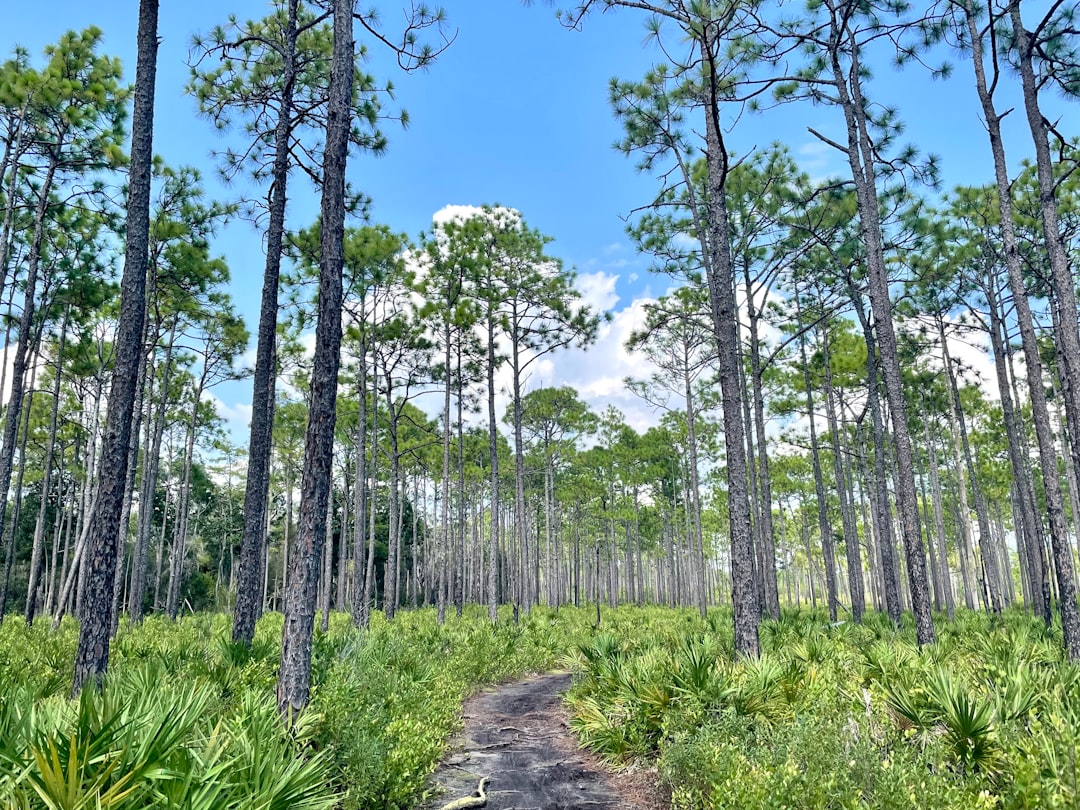
The Central BMU is the crown jewel of Florida bear hunting. This zone includes Marion, Lake, Putnam, Volusia, Flagler, and portions of adjacent counties. The Ocala National Forest anchors public access, offering hundreds of thousands of acres of mixed pine flatwoods, hardwood hammocks, and sand pine scrub. Bear density here often exceeds one bear per square mile in prime habitat.
Hunters targeting the Central BMU should expect thick vegetation, limited visibility, and challenging tracking conditions. Most successful hunters use hounds, spot-and-stalk techniques at forest edges during early morning and late evening, or stand hunting over oak flats during acorn mast years. The road system in Ocala is extensive, making scouting easier than in more remote BMUs.
Draw odds in the Central BMU vary by year but typically hover around 10 to 15 percent when seasons are offered. Success rates for drawn hunters range from 20 to 30 percent, higher than most western big-game limited-entry hunts.
East Panhandle BMU: Apalachicola National Forest
The East Panhandle BMU covers Liberty, Franklin, Wakulla, Leon, and Gadsden counties. Apalachicola National Forest dominates the landscape, providing nearly 600,000 acres of public hunting land. Bear populations here are lower than in the Central BMU but still robust enough to support limited seasons.
Terrain in the East Panhandle leans toward longleaf pine savannas, cypress swamps, and river bottom hardwoods. Bears concentrate near creek drainages and palmetto thickets. Hunters here rely heavily on hounds due to dense understory and limited sightlines. Road access is good in most management areas, but expect significant foot travel once you leave the truck.
Draw odds in the East Panhandle BMU are typically better than the Central zone, often reaching 20 to 25 percent when seasons are active. Success rates lag slightly behind Ocala, averaging 15 to 20 percent, largely due to lower bear densities and more dispersed populations.
North BMU: Osceola National Forest
The North BMU includes Baker, Columbia, Union, Bradford, and Alachua counties. Osceola National Forest forms the core public land block, though private timber company lands also contribute significant huntable acreage through management area programs. Bear numbers in the North BMU are the lowest of the four zones, reflecting smaller total habitat and limited connectivity to other populations.
Hunters in the North BMU face similar terrain to the East Panhandle—pine flatwoods, cypress domes, and isolated hardwood hammocks. Bears here are more nomadic, often moving between widely separated food sources. Hound hunting remains the most effective method, though patient stand hunters occasionally succeed during peak feeding periods.
Draw odds in the North BMU can exceed 30 percent when tags are offered, making this the easiest zone to draw. Success rates, however, are the lowest statewide, typically under 15 percent. The combination of lower bear density and transient populations makes this a high-risk, high-reward zone for hunters willing to work harder for a tag.
South BMU: Big Cypress and the Everglades Periphery
The South BMU covers Collier, Hendry, Glades, and portions of Palm Beach and Broward counties. This zone presents the most unique challenge for Florida bear hunters. Big Cypress National Preserve dominates the landscape, offering vast swaths of sawgrass prairie, cypress strands, and mangrove transition zones. Bears in South Florida are genetically distinct and more wary of human presence than their northern counterparts.
Access in the South BMU is extremely limited compared to other zones. Much of Big Cypress requires permits, and large sections are off-limits during bear season due to overlapping panther management priorities. Private land access is critical for serious hunters, and success rates are the lowest statewide, often under 10 percent even for experienced guides.
Draw odds in the South BMU vary widely depending on quota levels. In years when tags are offered, odds can range from 15 to 40 percent. The low application pressure reflects both limited access and the zone's reputation as the toughest draw tag to fill.
Season Structure and Application Process
Florida bear seasons are not annual. FWC evaluates population data yearly and decides whether to open a season based on harvest sustainability models. When seasons are offered, they typically run for one to two weeks in October, coinciding with pre-denning activity and peak food availability. The season structure may include separate archery-only periods, though most zones allow all legal weapons during the primary season.
Applications open in late summer, usually August, with a deadline in early September. Hunters apply online through the FWC licensing portal, selecting one BMU per application. You cannot apply for multiple zones in the same year. Resident and nonresident fees differ, with nonresident tags costing significantly more. Florida does not offer over-the-counter bear tags.
Drawn hunters receive notification by email and must purchase their permit within a specified window. Tags are not transferable. If you draw and cannot hunt, the tag is forfeited. FWC requires all harvested bears to be checked at an official check station within 24 hours of recovery, where biologists collect teeth, tissue samples, and measurements for population monitoring.
TAGZ helps you track application deadlines across all four BMUs and compare historical draw odds side by side. Whether you are targeting high-density zones like Central BMU or long-shot tags in South Florida, TAGZ gives you the data to choose the right zone for your goals and timeline.
Public Land vs. Private Land Opportunities
Public land access varies dramatically by BMU. The Central and East Panhandle zones offer the most public acreage through national forests and wildlife management areas. The North BMU provides moderate public access, while the South BMU is heavily restricted. Hunters without private land connections should focus applications on the Central or East Panhandle zones to maximize huntable ground.
Private land opportunities exist in all zones, particularly in the North and South BMUs where timber companies and ranches control large blocks. Florida's hunter access programs and wildlife management area leases expand private land opportunities, though competition for these permits is high. Building relationships with landowners or hiring an outfitter are the two most reliable paths to quality private ground in limited-access zones.
Harvest Reporting and Season Closures
Florida's bear season operates under real-time harvest monitoring. FWC tracks check station data daily and closes the season statewide or by zone once quotas are met. In 2015, the season closed after just two days when the statewide quota was nearly reached. Under proposed BMU-specific quotas, hunters would see more predictable season lengths, with slower zones remaining open longer than high-pressure areas.
All harvested bears must be presented at a check station within 24 hours. FWC staff extract a premolar tooth for aging, measure skull dimensions, and collect reproductive data. Hunters receive their bear back after processing, minus the tooth and tissue samples. Skull and hide retention rules follow standard big-game regulations, with no mandatory surrender periods.
Using TAGZ to Plan Your Florida Bear Hunt
TAGZ tracks Florida bear draw odds, quota levels, and season structures across all four BMUs. You can filter by zone, compare success rates, and set reminders for application deadlines. The platform also shows public land boundaries, WMA locations, and access points for each BMU, helping you scout before your tag is even drawn.
Whether you are chasing a tag in the high-odds North BMU or waiting for a rare South Florida season, TAGZ helps you make smarter decisions about where and when to apply. Track your applications across multiple states, compare zone-level data side by side, and never miss another deadline.
FAQ — Florida Bear Hunting Zones
Which Florida bear zone has the best draw odds?
The North BMU typically offers the highest draw odds, often exceeding 30 percent when tags are available, due to lower application pressure and smaller quotas.
Does Florida use preference points for bear tags?
No. Florida's bear draw is a true lottery with no preference points, bonus points, or weighted systems. Every applicant has equal odds regardless of prior applications.
Can I apply for multiple bear zones in the same year?
No. Florida allows only one bear tag application per year. You must choose a single BMU when applying.
What is the success rate for drawn bear hunters in Florida?
Success rates vary by zone. Central BMU hunters average 20 to 30 percent success, while South BMU success often falls below 10 percent. Statewide average is approximately 15 to 20 percent.
How much public land is available in each bear zone?
Central and East Panhandle BMUs offer the most public access through national forests. North BMU has moderate access, and South BMU is heavily restricted with limited public entry.
When does Florida typically open bear season applications?
Applications usually open in late August with early September deadlines, though seasons are not held every year. FWC announces season decisions based on annual population assessments.
Continue Planning Your Hunt
Florida's bear zones offer unique challenges and opportunities for hunters willing to navigate the limited-entry draw system. Understanding BMU boundaries, quota structures, and terrain differences gives you a significant edge when deciding where to apply. For hunters targeting multiple western states alongside Florida, coordinating draw schedules and tracking deadlines across regions becomes complex fast.
TAGZ simplifies multi-state hunt planning by tracking draw odds, application deadlines, and unit-level data in one platform. Compare Florida bear zones against western elk, deer, and antelope units. Set reminders for every draw deadline so you never miss a limited-entry opportunity. Whether you are chasing a Central BMU tag or planning a multi-year western hunt strategy, TAGZ helps you make confident decisions before you ever submit an application.
Explore more hunt planning strategies and state-by-state breakdowns on the TAGZ Insights blog, or dive into the platform today to start tracking your applications, preference points, and draw odds across every state you hunt. Ready to take control of your hunt planning? Check out TAGZ pricing and see how the platform helps you maximize draw opportunities and plan smarter hunts from application season through the field.
Was this article helpful?
Previous
Why Most Hunters Walk Past Elk (And How to Stop)
Most elk hunters never realize they've walked past bedded bulls or cows hiding in plain sight. Understanding elk behavior, terrain use, and where to look will dramatically increase your success rate.
Next
Bull Elk Chuckles Explained: What They Mean and How to Use Them
Bull elk chuckles are short, guttural grunts that signal aggression, dominance, and readiness to fight. Understanding when and why bulls chuckle helps hunters identify hot rut activity and call in mature bulls more effectively.