Fixed Blade vs Replaceable Blade Knives: Which Is Better for Hunters?
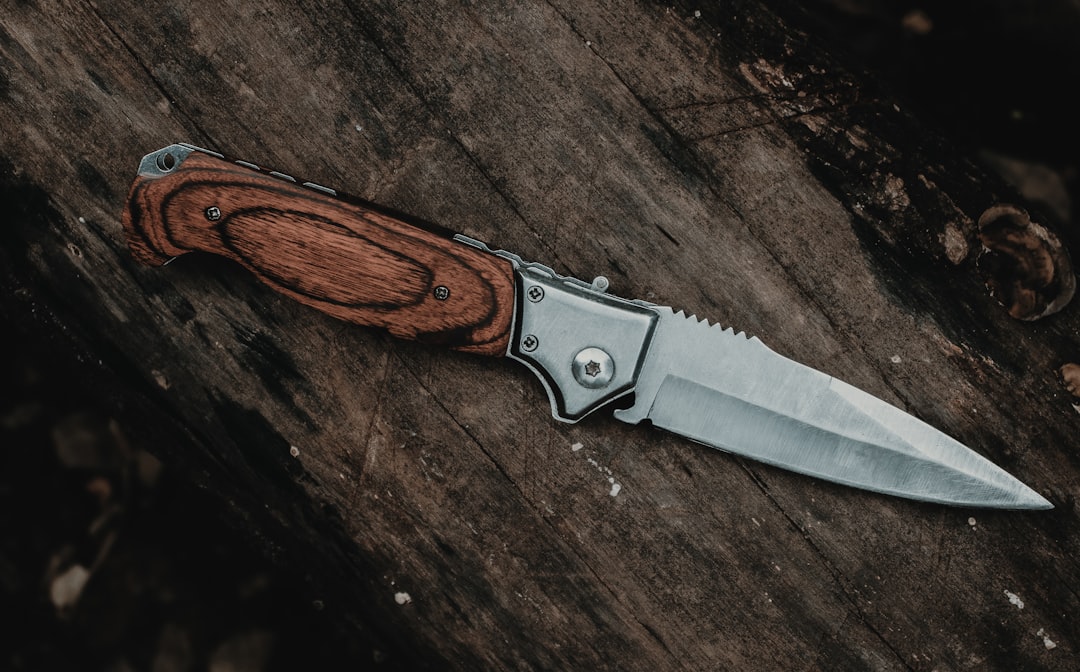
The knife is the one tool every western hunter carries into the field, yet the debate between fixed blade and replaceable blade systems divides camps like few other gear decisions. Both designs have earned their place in hunting packs, but they excel in different scenarios. Understanding the strengths and limitations of each system helps you choose the right blade for your hunting style, the species you pursue, and how far you are from the trailhead.
Fixed blade knives have been the standard for generations. Replaceable blade systems arrived more recently but gained traction fast among guides, meat hunters, and anyone who has dulled a blade three elk quarters into a backcountry breakdown. Neither is universally superior. The right choice depends on what you value most: edge retention, field serviceability, weight, or the ability to maintain scalpel sharpness without carrying a sharpening system.
Fixed Blade Knives: Proven Durability and Control
A fixed blade knife is a single piece of steel running from tip to handle. No moving parts, no blade changes, no mechanisms to fail. This simplicity translates to strength. Fixed blades handle hard use without concern — splitting pelvic bones, cutting through cartilage, prying apart ball joints. The blade will not fold, slip, or shift under pressure.
Edge retention is where quality fixed blades shine. A well-made knife in a high-carbon or premium stainless steel holds a working edge through multiple animals if maintained properly. Steels like S30V, CPM-154, or even basic 440C can process an entire elk without becoming dangerously dull, though performance varies widely based on steel composition, heat treatment, and how you use the knife.
The trade-off is maintenance. Fixed blades require sharpening in the field or shortly after use. Carrying a compact sharpening system adds weight, and learning to sharpen freehand on a stone or ceramic rod takes practice. A dull fixed blade in the backcountry means slower work, more fatigue, and compromised meat care. If you cannot sharpen confidently, a fixed blade loses much of its advantage.
Weight and bulk matter on multi-day hunts. Most fixed blade hunting knives weigh between 4 and 8 ounces with the sheath, and they occupy meaningful space on a belt or pack strap. Blade length typically ranges from 3.5 to 5 inches for general game processing — long enough for efficient work but short enough to avoid the unwieldiness of oversized camp knives.
Fixed blades offer superior control during detailed work like caping or removing tenderloins. The solid construction allows precise cuts with confidence. For boning out quarters or filleting backstraps, the tactile feedback and balance of a quality fixed blade give you an edge over any mechanical system.
Replaceable Blade Knives: Field-Ready Sharpness Without Maintenance
Replaceable blade systems like the Havalon Piranta, Outdoor Edge RazorLite, or Tyto 1.1 flip the maintenance equation. Instead of sharpening, you swap blades. Each fresh blade is surgically sharp — sharper than most hunters can achieve with a stone. When the edge dulls, you replace it in seconds and keep working.
This makes replaceable blade knives nearly ideal for meat care. Skinning an elk with a fresh blade every few cuts ensures clean work, less hair contamination, and faster processing. Guides and meat hunters who process multiple animals per season often prefer replaceable systems because sharpness never becomes a limiting factor.
The blades themselves are thin and light. A pack of ten replacement blades weighs an ounce or two and occupies less space than a sharpening stone. On long backcountry trips where weight matters, replaceable blade systems offer a compelling advantage. The entire knife and handle weigh 2 to 4 ounces — half or less than a comparable fixed blade with sheath.
The weakness is durability. Replaceable blades are designed for slicing, not prying or heavy structural work. They excel at skinning and deboning but struggle with tasks that demand torque or lateral pressure. Cutting through the pelvis or heavy connective tissue risks snapping a blade. Most experienced users carry a small fixed blade or hatchet as a backup for the rough work, then switch to the replaceable blade for precision cuts.
Blade retention varies by design. Lower-end replaceable blade knives sometimes suffer from blades that shift or release under pressure. Higher-quality models use robust locking mechanisms that hold the blade securely, but even the best systems introduce a mechanical point of failure that does not exist with a fixed blade.
Replacement blades are consumables. Each blade costs between 50 cents and two dollars depending on the brand. Processing one elk might use three to six blades. Over a lifetime of hunting, the cost adds up, though it remains far cheaper than professional sharpening services or repeated stone purchases. The bigger issue is availability — running out of blades in the field leaves you with a useless handle.
Edge Retention and Sharpness: Different Philosophies
Fixed blades prioritize longevity. A quality fixed blade in a good steel might hold a working edge through two or three deer before requiring touch-up. The edge will not be scalpel-sharp the entire time, but it remains functional. For hunters who process game quickly and sharpen regularly, this works.
Replaceable blades prioritize peak sharpness. Every cut happens with a fresh edge. This matters most during skinning, where sharpness directly affects speed, precision, and hide quality. A dull knife drags and tears. A sharp blade glides.
The practical difference shows up during long processing sessions. With a fixed blade, sharpness degrades gradually. You adapt by applying more pressure or adjusting technique. With a replaceable blade, sharpness stays constant until you swap blades. The work feels effortless until the blade dulls, then you change it and reset.
Neither approach is wrong. Fixed blades reward skill and preparation. Replaceable blades reward planning and pragmatism. Both get the job done if matched to the task.
Versatility and Secondary Uses
Fixed blades handle a wider range of tasks. Beyond game processing, they work for shelter building, fire prep, cutting cord, food preparation, and general camp chores. A quality fixed blade is a true multipurpose tool. If you carry only one knife into the backcountry, it should probably be a fixed blade.
Replaceable blade knives are specialists. They excel at one job — processing game — and struggle with everything else. The thin blades are too fragile for prying, batoning, or heavy cutting. For dedicated meat hunters who carry other tools for camp tasks, this specialization is an asset. For solo hunters or minimalists, it is a limitation.
Some hunters split the difference by carrying both. A small fixed blade handles rough work and serves as a backup. A replaceable blade system handles the detail work during processing. The combined weight is still lighter than carrying a large fixed blade and a sharpening system.
Free to join
Download mobile app
- Detailed draw odds
- Point tracking
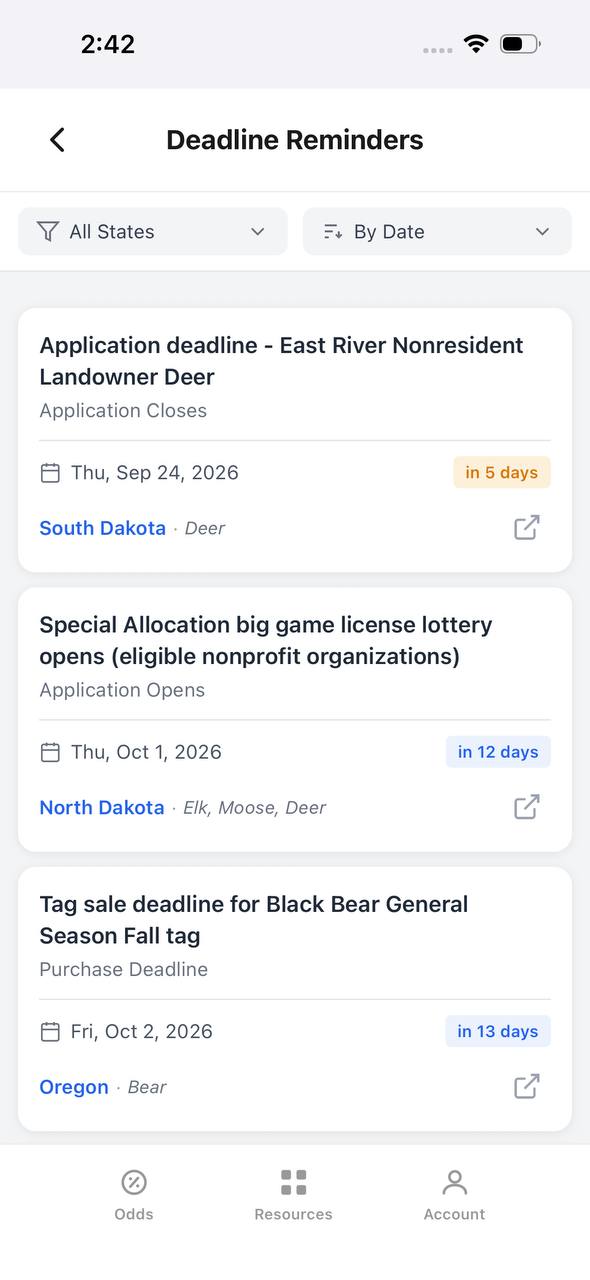
- Deadline reminders
- 18 states covered

Free to join
Download mobile app
- Detailed draw odds
- Point tracking
- Deadline reminders
- 18 states covered

Free to join
Download mobile app
- Detailed draw odds
- Point tracking
- Deadline reminders
- 18 states covered

Which System Fits Your Hunting Style?
Your choice depends on how you hunt, what species you pursue, and how comfortable you are maintaining a blade in the field.
Fixed blades make sense for hunters who value durability, versatility, and self-sufficiency. If you hunt close to the truck, process game quickly, or already carry a sharpening system, a quality fixed blade delivers reliable performance across every task. They are the better choice for sheep, goat, or other hunts where a single tool must handle everything. Fixed blades also suit hunters who enjoy the craft of sharpening and take pride in maintaining their gear.
Replaceable blade systems make sense for meat hunters, backcountry hunters counting ounces, or anyone processing multiple animals per season. If you prioritize weight savings, hate sharpening, or want guaranteed sharpness for every cut, a replaceable blade system is hard to beat. They excel during elk camp, where processing speed and meat care matter more than versatility. They are also ideal for hunters who lack confidence sharpening in the field.
Species matters. Deer and antelope are small enough that a single sharp blade often handles the entire animal. A fixed blade works well. Elk and moose require sustained cutting over hours. Replaceable blades keep sharpness consistent and reduce fatigue. For spot-and-stalk hunting where you might hike miles before making a shot, weight becomes a deciding factor. A replaceable blade system saves half a pound or more compared to a fixed blade with sharpening gear.
Distance from the trailhead also influences the decision. Day hunts and truck-based hunts allow heavier gear. A fixed blade and sharpening stone are no burden. Multi-day backcountry hunts punish every extra ounce. A replaceable blade system with spare blades weighs less than a fixed blade alone.
Steel Quality and Blade Geometry
Not all fixed blades perform equally. Steel composition, heat treatment, and grind geometry affect edge retention, toughness, and ease of sharpening. Budget knives in 420HC or 440A stainless dull quickly but sharpen easily. Mid-tier steels like AUS-8 or 8Cr13MoV balance performance and cost. Premium steels like S30V, S35VN, or CPM-154 hold an edge longer but require more effort to sharpen.
Blade geometry matters as much as steel. A thin grind with a low blade angle cuts efficiently but chips more easily. A thicker grind with a steeper angle resists damage but requires more force. For game processing, a grind between 15 and 20 degrees per side offers the best balance. Anything thinner risks rolling or chipping. Anything thicker slows the work.
Replaceable blades are typically stamped from tool steel or surgical-grade stainless. They arrive razor-sharp but dull faster than a quality fixed blade. The thinness that makes them sharp also makes them fragile. Blade geometry is less variable — most replaceable blades use a similar grind optimized for slicing.
Free to join
Download mobile app
- Detailed draw odds
- Point tracking
- Deadline reminders
- 18 states covered
Free to join
Download mobile app
- Detailed draw odds
- Point tracking
- Deadline reminders
- 18 states covered
Free to join
Download mobile app
- Detailed draw odds
- Point tracking
- Deadline reminders
- 18 states covered
Real-World Performance and Field Testing
Fixed blades prove themselves during extended use. Processing an elk with a fixed blade means stopping periodically to touch up the edge. A few strokes on a ceramic rod or diamond stone restore cutting ability. The process becomes routine. The blade never reaches the surgical sharpness of a fresh replaceable blade, but it never becomes useless either. The work stays steady.
Replaceable blades shine during intensive processing. Skinning an elk with a fresh blade every quarter keeps the work fast. Sharpness eliminates frustration. The thin blade slips between hide and meat with minimal resistance. When the blade dulls, the contrast is immediate. A quick swap restores performance. The work continues without interruption.
Both systems fail in predictable ways. Fixed blades fail when they become too dull to cut effectively and the hunter lacks the skill or tools to sharpen them. Replaceable blades fail when the blade snaps during heavy use or the supply of replacement blades runs out. Both failures are preventable with preparation.
Cost Over Time
Fixed blades require a higher upfront investment but minimal ongoing cost. A quality hunting knife costs between 60 and 200 dollars. A sharpening system adds another 20 to 50 dollars. After that, the only cost is time spent maintaining the edge. A well-cared-for fixed blade lasts decades.
Replaceable blade systems cost less upfront — handles range from 15 to 60 dollars — but replacement blades add up. Processing five elk per year at four blades per elk means buying 20 blades annually. At one dollar per blade, that is 20 dollars per year. Over ten years, the consumable cost matches or exceeds the price of a premium fixed blade. The trade-off is convenience, not economy.
Safety Considerations
Both systems demand respect. Fixed blades are heavier and more rigid, which means mistakes cause deeper cuts. The solid construction encourages confidence that can turn into carelessness. Always cut away from your body and maintain awareness of hand placement.
Replaceable blades are extremely sharp but fragile. The thinness makes them prone to snapping, and broken blades are dangerously unpredictable. When swapping blades, handle the old blade carefully — the edge remains sharp enough to cause serious cuts. Dispose of used blades in a secure container, not loose in a pack or pocket.
Both systems work best with a sharp blade. A dull knife requires more force, which increases the chance of slipping. Keep your fixed blade sharp or swap replaceable blades before they dull completely.
Free to join
Download mobile app
- Detailed draw odds
- Point tracking
- Deadline reminders
- 18 states covered
Free to join
Download mobile app
- Detailed draw odds
- Point tracking
- Deadline reminders
- 18 states covered
Free to join
Download mobile app
- Detailed draw odds
- Point tracking
- Deadline reminders
- 18 states covered
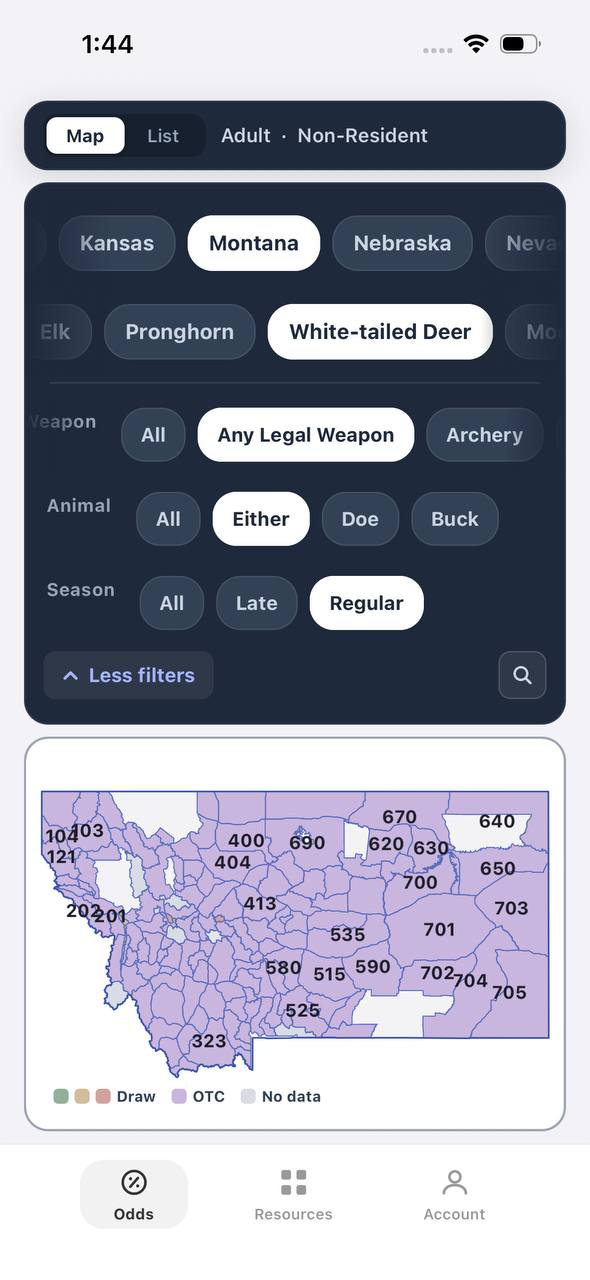
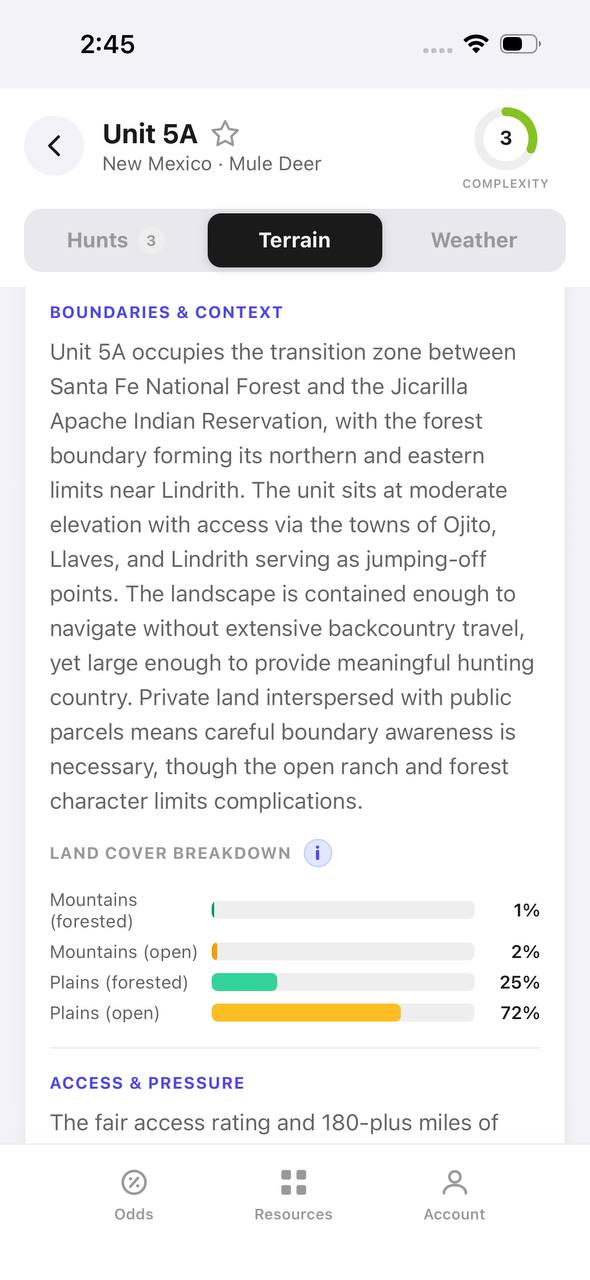
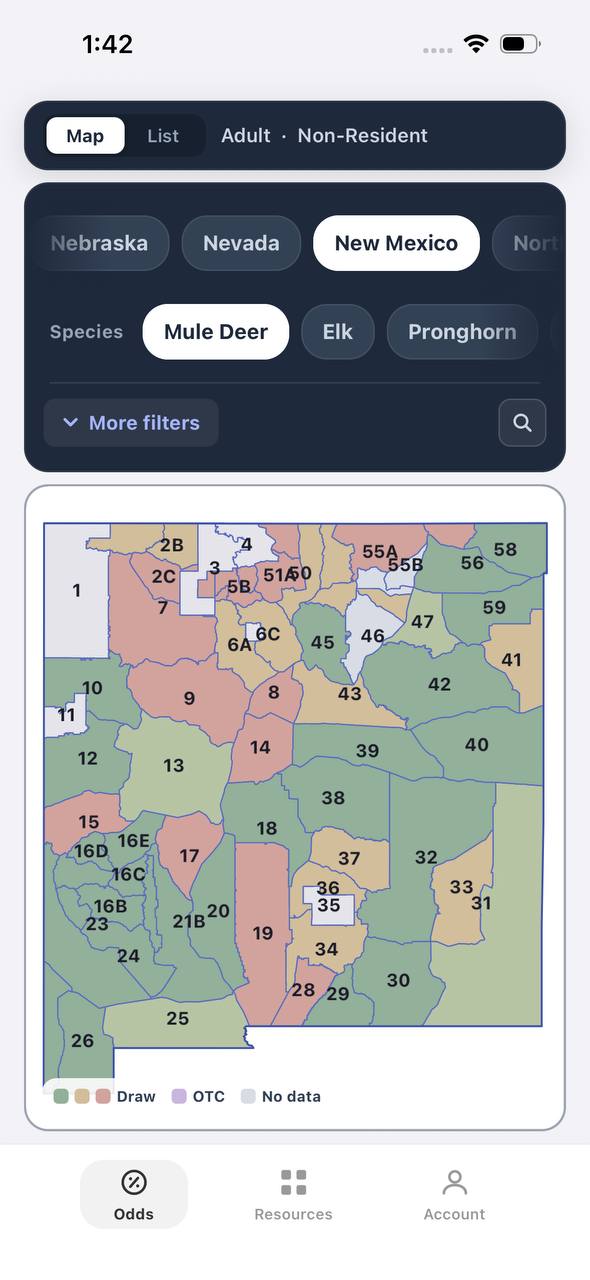
TAGZ helps hunters make smarter gear decisions by providing unit-specific research tools, terrain maps, and historical draw data that show exactly what species, terrain, and hunting conditions to prepare for before the season. Whether you are comparing Colorado high-country elk units or researching Montana deer habitat, TAGZ gives you the data to pack the right gear for the hunt.
FAQ — Fixed Blade vs Replaceable Blade Knives
Which knife is better for processing elk in the backcountry?
Replaceable blade systems are generally better for elk because they maintain surgical sharpness across multiple quarters without adding sharpening weight. Carry a small fixed blade as backup for heavy bone work.
Do replaceable blades break easily?
Yes, if used incorrectly. Replaceable blades are designed for slicing, not prying or cutting through bone. Use them for skinning and deboning, and switch to a fixed blade or saw for structural cuts.
Can you sharpen a fixed blade well enough in the field to match a fresh replaceable blade?
No. A field-sharpened fixed blade will be sharp enough to work efficiently, but it will not match the surgical edge of a fresh replaceable blade. The difference matters most during skinning.
How many replacement blades should you carry for a backcountry elk hunt?
Carry 8 to 12 blades for a solo elk. Plan for 3 to 4 blades per quarter, plus extras in case of breakage or dulling during difficult conditions.
Are fixed blade knives more versatile than replaceable blade knives?
Yes. Fixed blades handle game processing, camp chores, shelter building, and general cutting tasks. Replaceable blades are specialists designed for processing game and little else.
What is the best knife setup for a solo backcountry hunter?
Carry a mid-sized fixed blade as your primary tool and a lightweight replaceable blade system for detail work during processing. The combined weight is still lighter than a large fixed blade with sharpening gear, and you gain both versatility and sharpness.
Continue Planning Your Hunt
Choosing the right knife is just one part of preparing for a successful hunt. TAGZ helps you research units, compare draw odds, track preference points across multiple states, and plan hunts using detailed terrain maps and unit boundaries. Whether you are chasing OTC tags or applying for limited-entry elk, TAGZ gives you the tools to make smarter decisions before you step into the field. Explore the platform at getmytagz.com or dive into more hunting insights on the TAGZ blog. Ready to start planning? Check out pricing options or learn how the TAGZ platform simplifies western hunting applications.
Was this article helpful?
Previous
Best Bison Ammunition 2026: Cartridges and Bullets That Actually Work
Choosing the right bison ammunition means balancing penetration, energy retention, and bullet construction for animals that can weigh 2,000 pounds. This guide breaks down the cartridges, bullet weights, and loadings that consistently anchor bison on public hunts across the West.
Related
Best Hunting Gloves for 2026: Field-Tested Gear That Actually Works
After years of frozen fingers and blown stalks, we've tested dozens of hunting gloves across every season and condition. Here's what actually works in 2026, from early-season bow hunts to late-season rifle sits in single-digit temps.
Next
Best Hunting Rifles Under $750 in 2026: Proven Budget Choices That Perform
Quality hunting rifles under $750 deliver accuracy and reliability without breaking the bank. We compare proven models from Ruger, Savage, Tikka, and others that western hunters trust for elk, deer, and antelope.