Essential Gear Guide for Western Big-Game Hunters — What You Actually Need
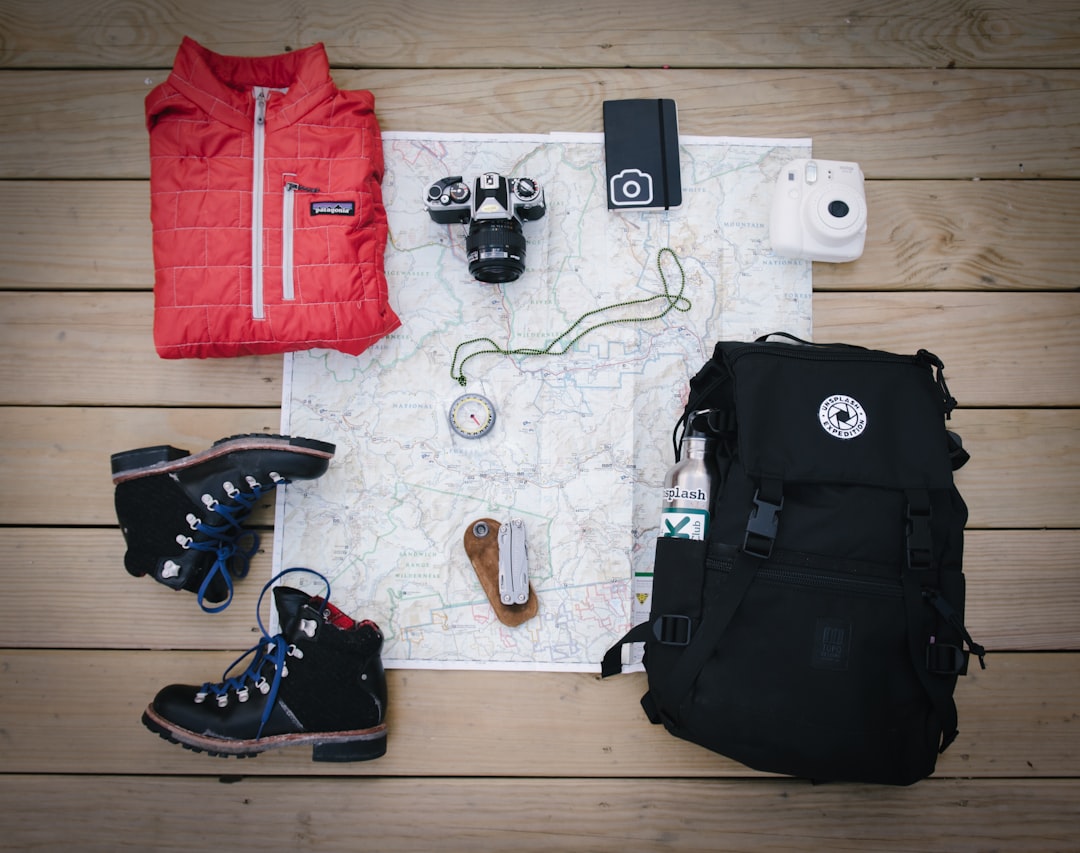
Walk into any outdoor retailer before hunting season and you will see hundreds of products promising to make you a better hunter. Most of it is marketing. The reality is that western big-game hunting demands a small list of reliable gear that performs under pressure — and knowing the difference between essential equipment and nice-to-have extras will save you money and keep you in the field longer.
Optics — The Non-Negotiable Investment
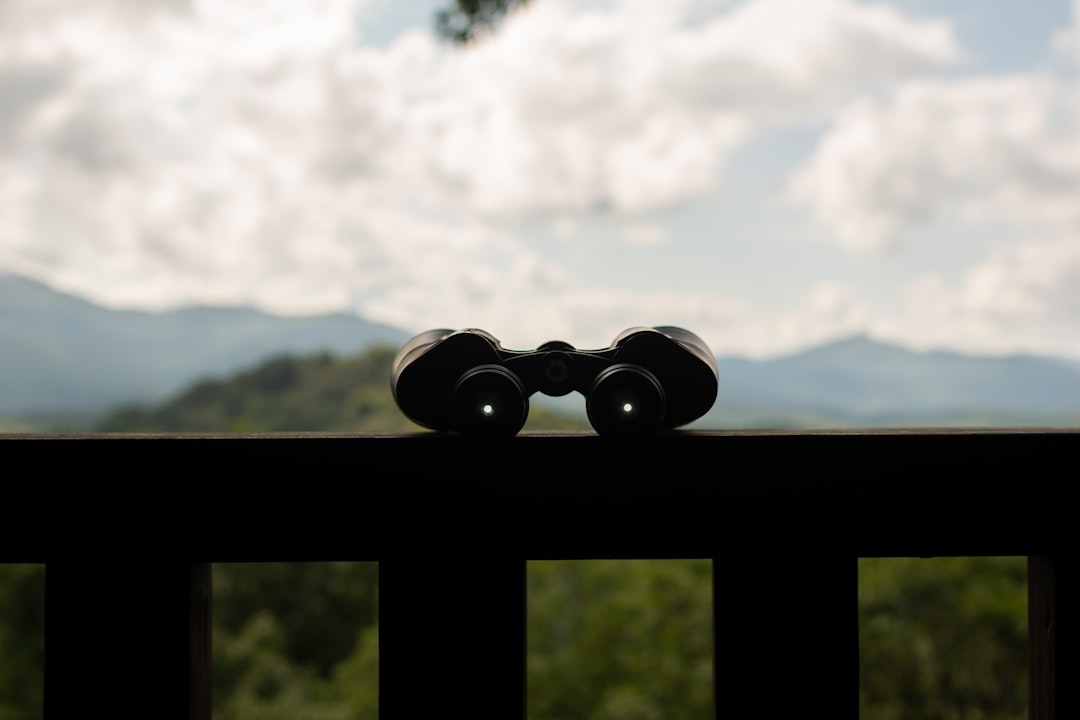
You cannot kill what you cannot see. Quality optics are the single most important gear investment a western hunter makes. A good binocular will locate animals miles away and help you judge trophy quality before you commit to a stalk. For general hunting, an 8x42 or 10x42 binocular strikes the right balance between magnification and field of view. Hunters covering open country benefit from 10x or 12x models. Expect to spend $500 to $1,500 for reliable mid-tier glass that will last a lifetime.
A spotting scope is essential for hunters who glass long distances or need to judge antler measurements before committing to a hunt. A 65mm objective lens with 15–45x magnification handles most situations. Pair it with a solid tripod — glassing for hours with a shaky setup will burn you out fast. Hunters who chase high-country elk or mule deer in wide-open basins cannot afford to skip this.
Rangefinders are standard equipment now. Laser rangefinders that read to 1,000 yards cover nearly every realistic shooting scenario. Angle-compensating models adjust for uphill and downhill shots, which matters in mountain terrain. Budget $200 to $400 for a dependable unit.
Packs — Comfort and Capacity for the Long Haul
Your pack is your lifeline in the backcountry. A daypack in the 1,800 to 2,500 cubic-inch range works for hunters who return to camp or the truck each night. Look for external gear loops, a hydration sleeve, and a meat shelf for packing out quarters. Fit matters more than features — a poorly fitted pack will wreck your back after a few miles.
Multi-day hunters need a 4,000 to 6,000 cubic-inch pack with a suspension system that transfers weight to the hips. Adjustable torso lengths, load lifters, and padded hipbelts are not luxuries — they are requirements. Test the pack with 40 to 60 pounds of weight before your hunt. If it feels wrong in the store, it will feel worse at 10,000 feet.
Meat hauling is part of western hunting. Packs with removable frames or compression systems designed for heavy loads make the difference between one brutal trip and two manageable ones. Bonus points for bags with rifle or bow carriers that keep your hands free during the hike.
Layering System — Staying Warm and Dry in Changing Conditions
Mountain weather shifts fast. A layering system that adapts keeps you comfortable from pre-dawn glassing sessions to midday stalks and back to frigid evening sits. The system works in three parts: base layer, insulation, and shell.
Base layers should be merino wool or synthetic blends that wick moisture and dry fast. Cotton kills in cold, wet conditions. A lightweight 150-weight merino top and bottom works for early-season hunts. Late-season hunters add a midweight 200 or 250-weight layer.
Insulation layers trap warmth without adding bulk. Synthetic puffy jackets work well as active mid-layers because they insulate even when damp. Down jackets offer the best warmth-to-weight ratio for stationary glassing or stand hunting but lose insulation value when wet. Bring both if you have room.
Shell layers block wind and rain. A quality waterproof-breathable jacket is worth the investment. Look for pit zips, a hood that fits over a ball cap, and pockets that sit above a pack's hipbelt. Waterproof pants are often overlooked but critical in wet conditions or for busting through brush.
Boots — The Foundation of Every Hunt
Cheap boots will ruin a hunt faster than anything else. Western terrain demands boots that support your ankles, grip on loose rock, and protect your feet over long miles. Leather boots with full-grain uppers last longer and provide better ankle support than lightweight hikers, but they require a break-in period. Synthetic boots are lighter and faster to break in but wear out sooner.
Insulation depends on the season and your activity level. Uninsulated boots work for early-season archery hunts and high-output pursuits. Add 400-gram insulation for late rifle seasons and cold sits. Hunters who spend hours glassing in frigid temperatures may want 800 to 1,000 grams.
Fit is everything. Boots should feel snug in the heel and midfoot with enough room in the toe box to prevent jamming on downhill grades. Wear the socks you plan to hunt in when trying boots. Walk downhill in the store — if your toes hit the front, size up or try a different model.
Free to join
Download mobile app
- Detailed draw odds
- Point tracking
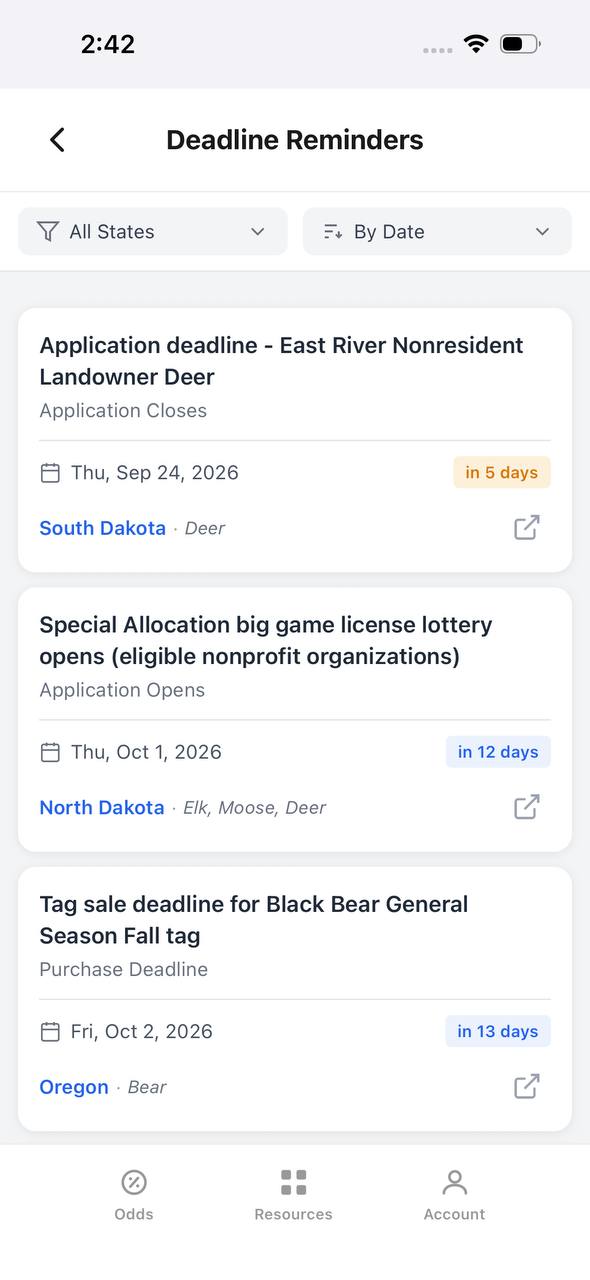
- Deadline reminders
- 18 states covered

Free to join
Download mobile app
- Detailed draw odds
- Point tracking
- Deadline reminders
- 18 states covered
Free to join
Download mobile app
- Detailed draw odds
- Point tracking
- Deadline reminders
- 18 states covered
Essential Accessories That Actually Matter
A sharp knife is non-negotiable. A replaceable-blade model like a Havalon speeds up field dressing and eliminates sharpening in the field. Pair it with a traditional fixed-blade as a backup. Game bags keep meat clean and allow airflow during the packout. Lightweight synthetic bags are reusable and packable.
Trekking poles reduce joint strain on long descents and provide stability on uneven ground. They double as monopods for shooting or glassing. Hunters covering 5 to 10 miles a day will feel the difference by midweek.
Headlamps with red-light modes preserve night vision and allow early-morning preparation without spooking game. Bring extra batteries. A lightweight GPS or smartphone with offline maps prevents wrong turns in unfamiliar country. Paper maps are solid backups.
Water filtration beats carrying extra weight. A lightweight squeeze filter or purification tablets let you refill from streams instead of hauling two liters from camp. Dehydration wrecks decision-making and endurance faster than most hunters realize.
Rifles, Bows, and Weapon-Specific Gear
Rifle hunters need a caliber that balances effective range, recoil, and availability. Cartridges like .30-06, .270 Winchester, 7mm Remington Magnum, and 6.5 Creedmoor are proven performers on elk and mule deer. Match your rifle to your comfort level and practice shooting from realistic field positions — prone, sitting, kneeling, and off a pack.
A quality scope in the 3–9x or 4–12x range handles most western hunting situations. Dial-up turrets help with longer shots, but only if you practice with them. Bring lens covers and a lens cloth. Dust and moisture will fog or scratch glass without protection.
Bowhunters should confirm their setup is tuned before the hunt. Broadheads, arrows, and sights need to group tight at realistic distances. Practice shooting uphill and downhill angles. Bring extra release aids, nocks, and strings. Mechanical failures happen in the field — redundancy matters.
Both rifle and bow hunters benefit from shooting sticks or bipods. Freehand shots at 300 yards sound good until your heart is pounding and your legs are shaking. A stable rest increases accuracy and confidence.
Planning Your Hunt with TAGZ
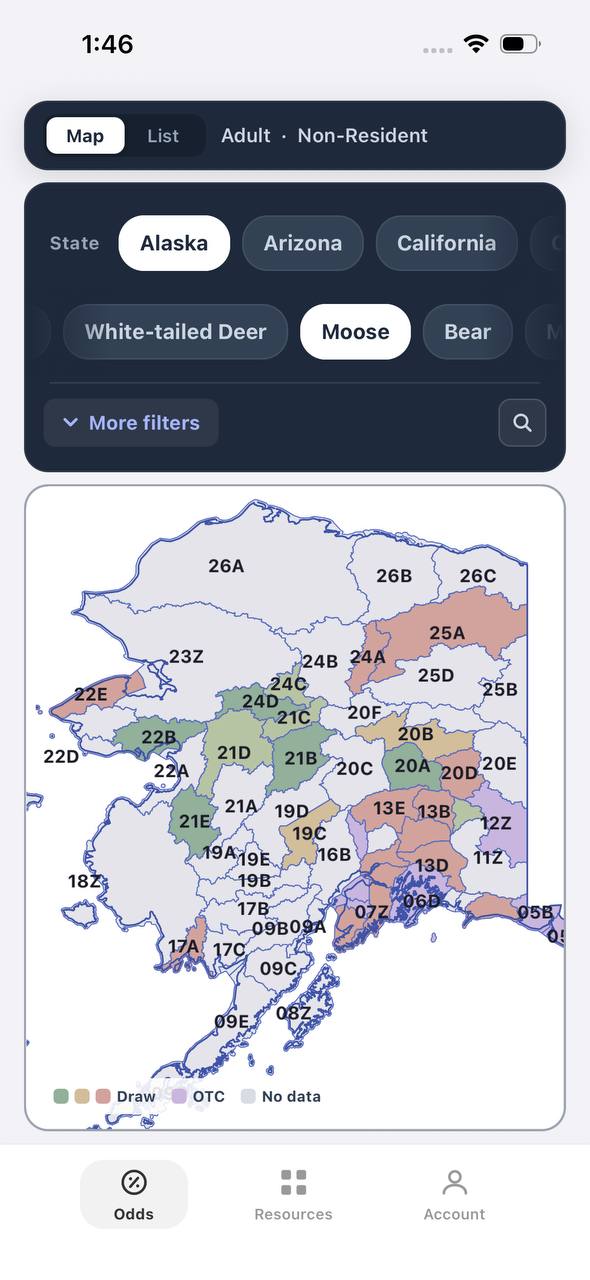
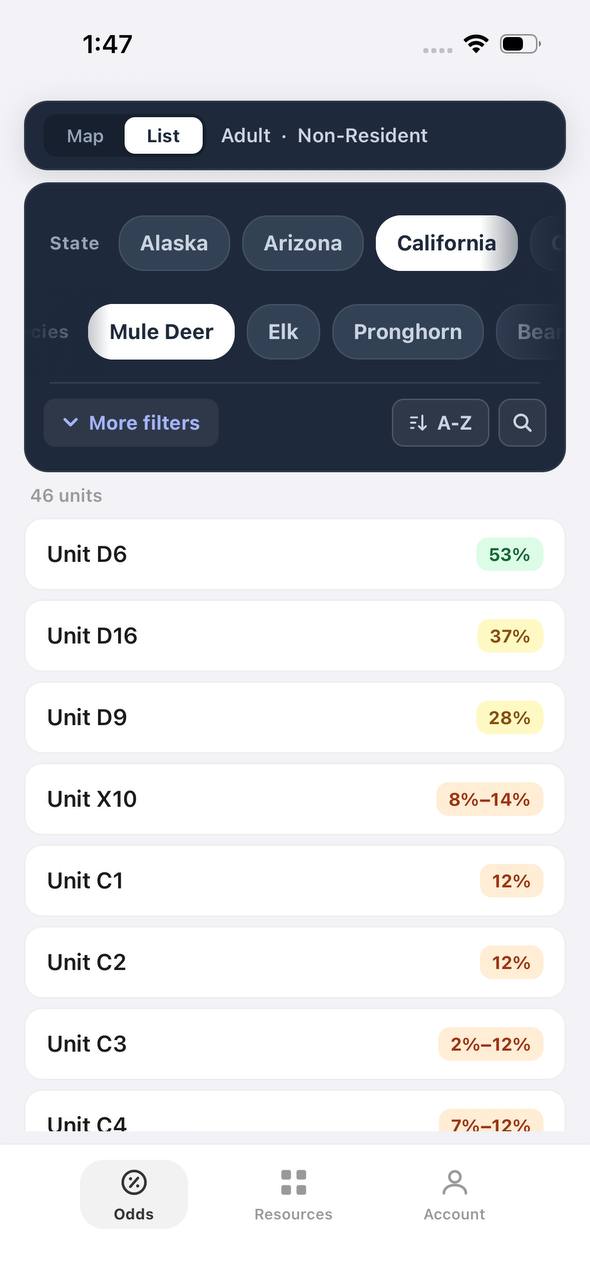
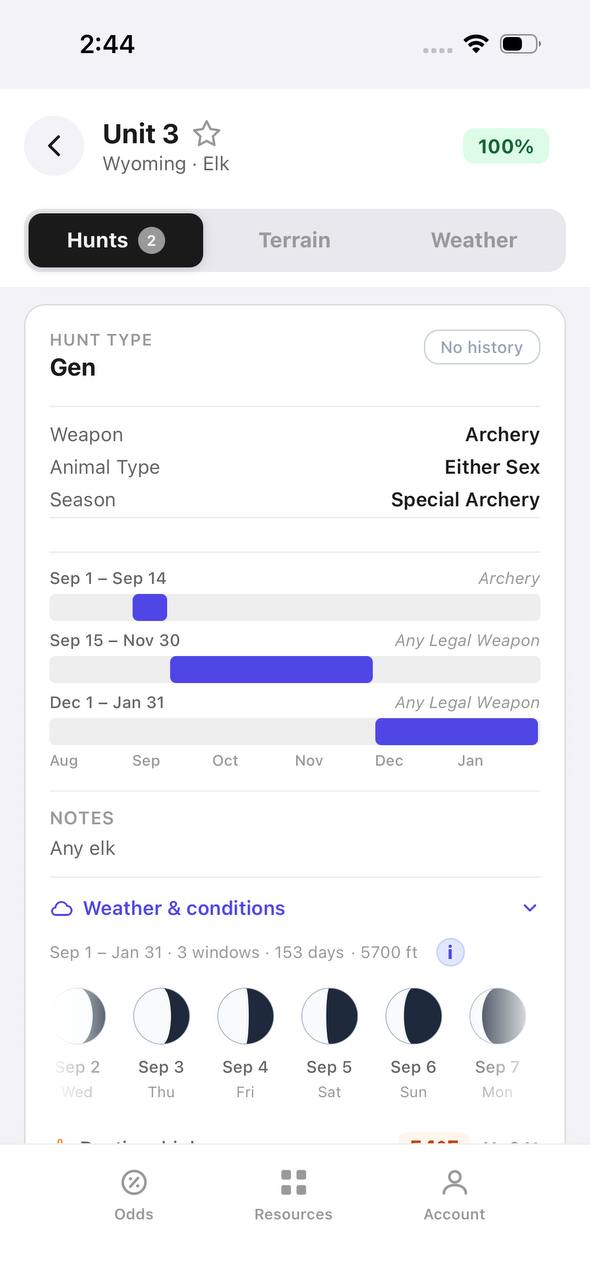
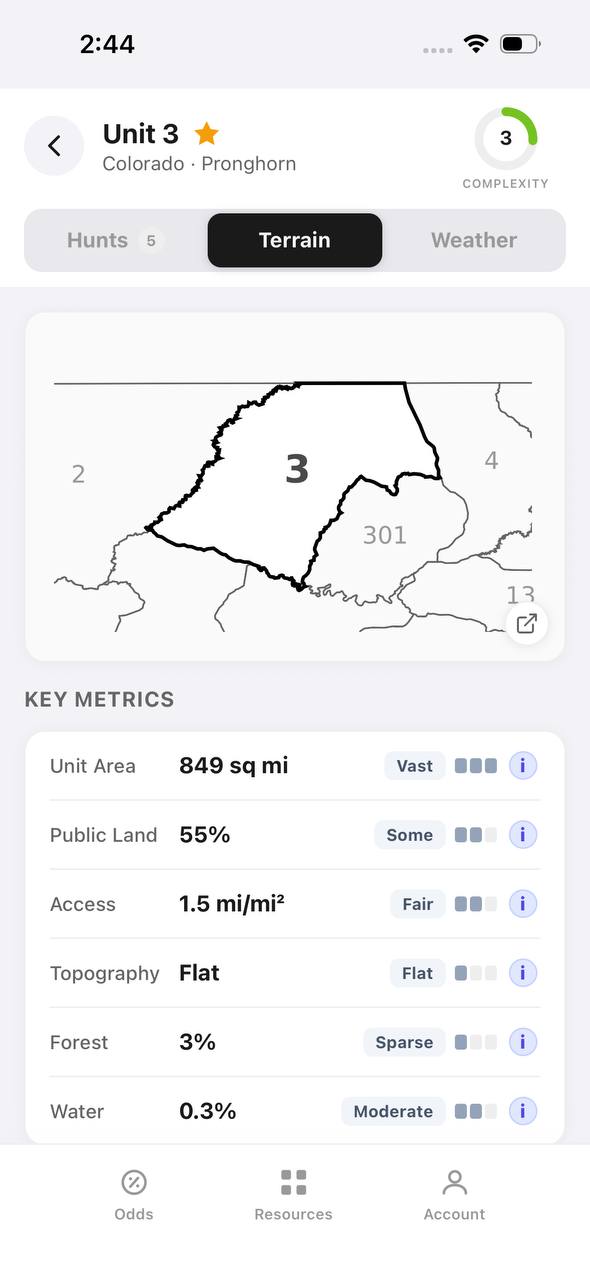
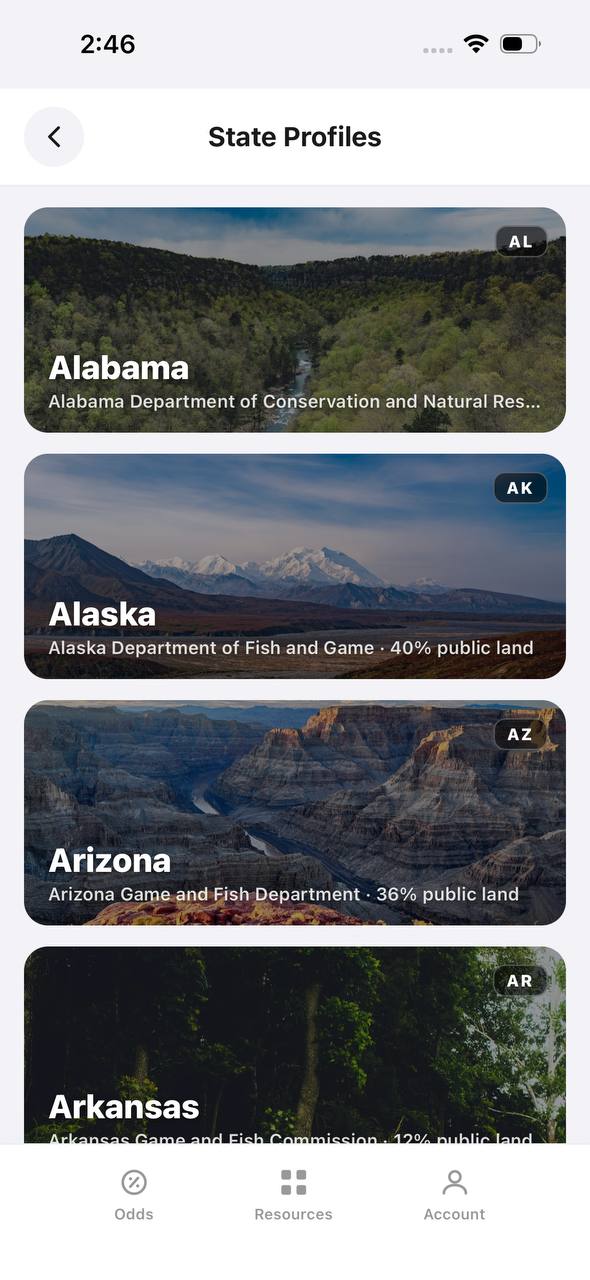
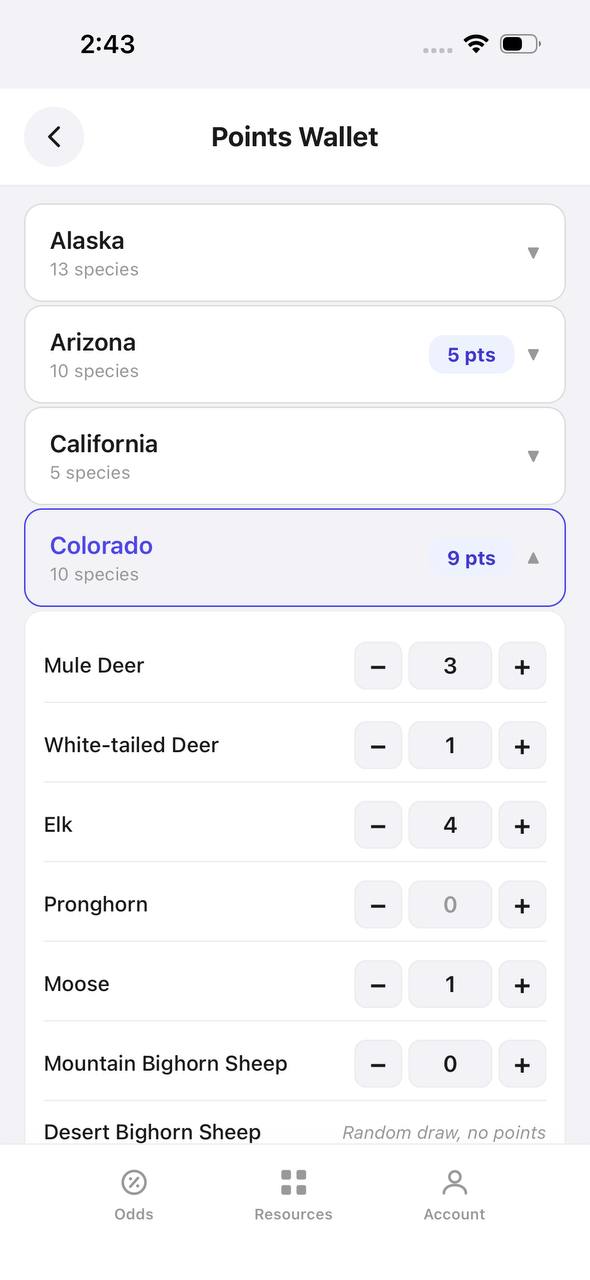
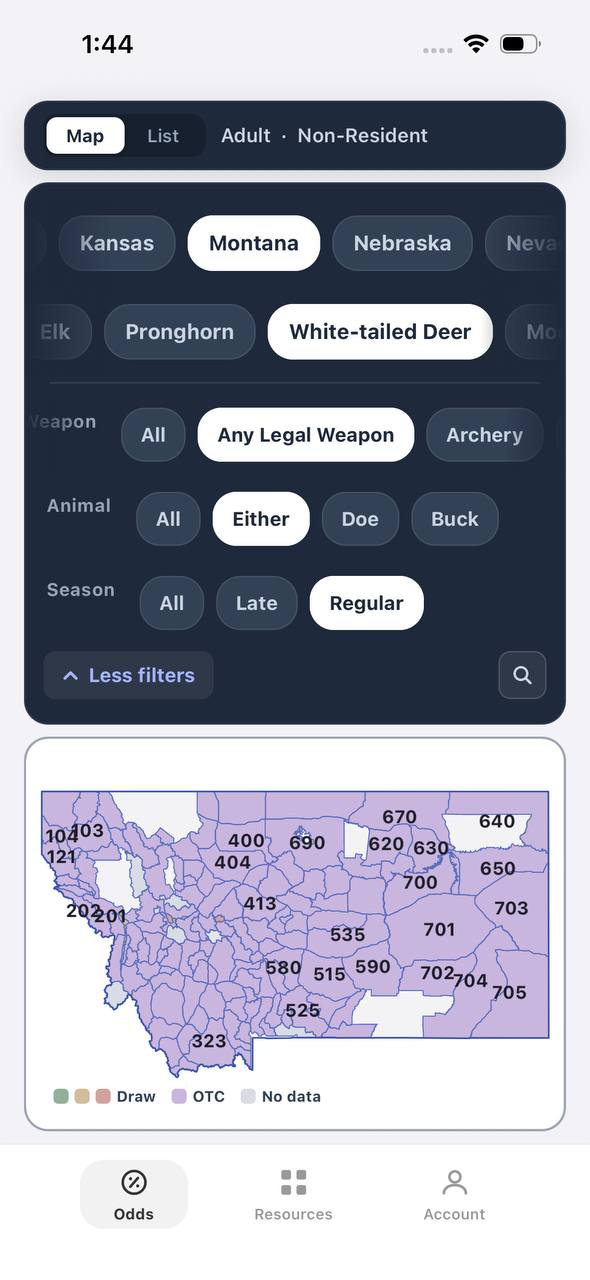
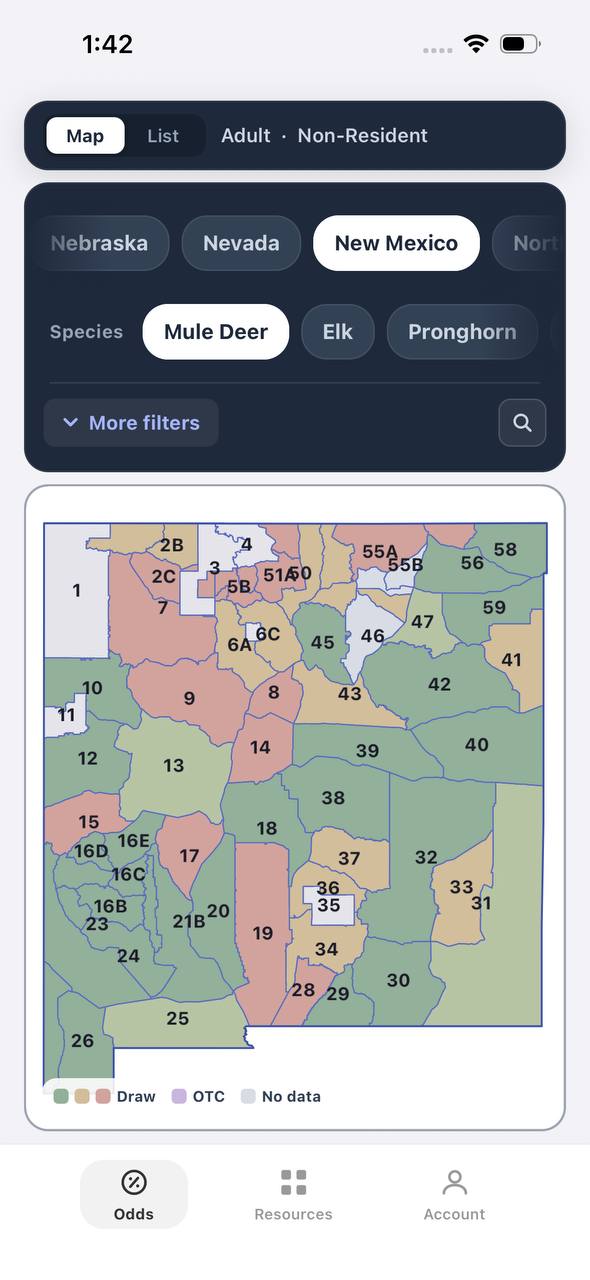
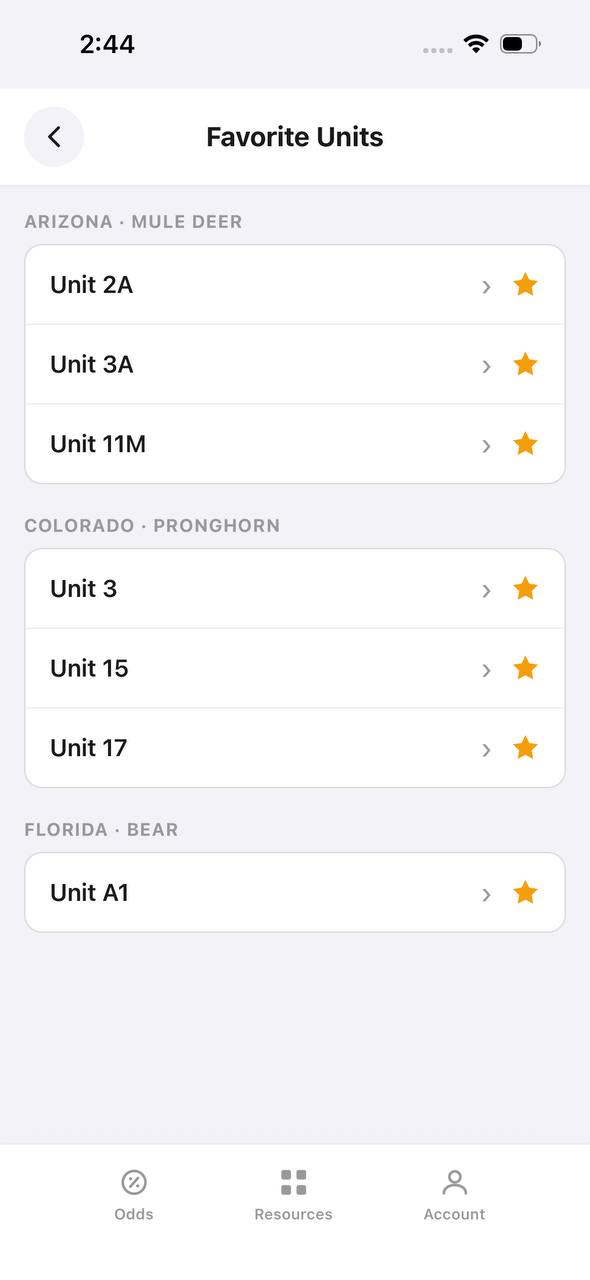
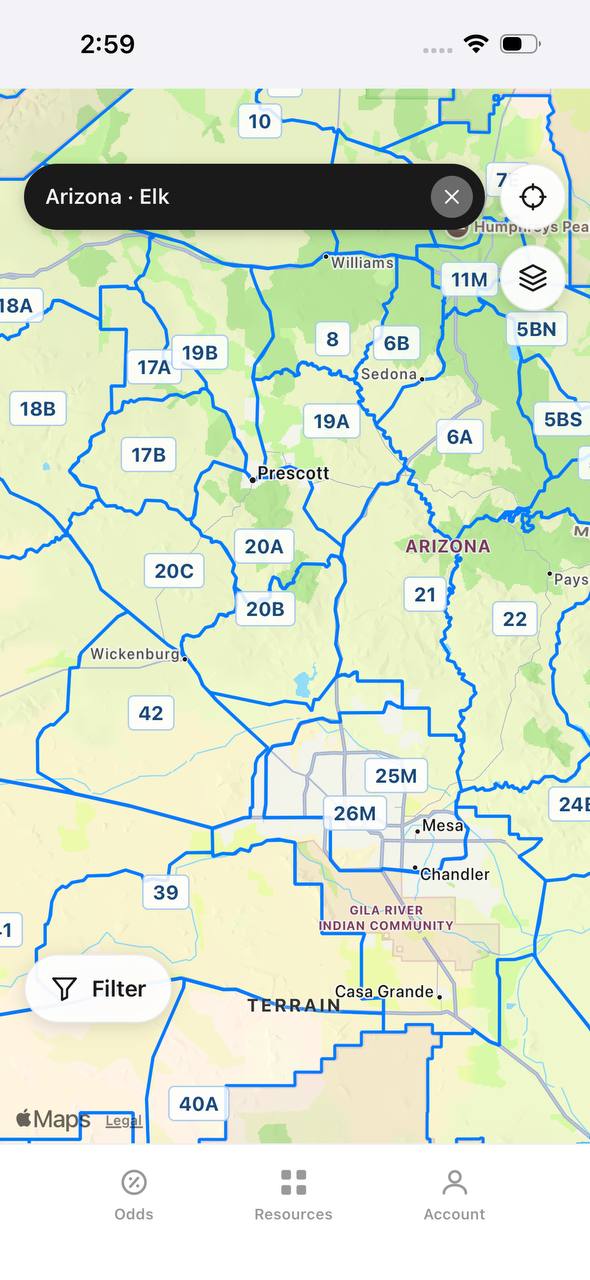
Gear matters, but knowing where to use it matters more. TAGZ helps you compare units side by side using terrain maps, unit boundaries, and historical draw data. Track your preference points and bonus points across multiple states so you never miss a draw deadline. Whether you are chasing OTC tags or planning a trophy limited-entry hunt, TAGZ gives you the tools to make smarter decisions before you ever step into the field.
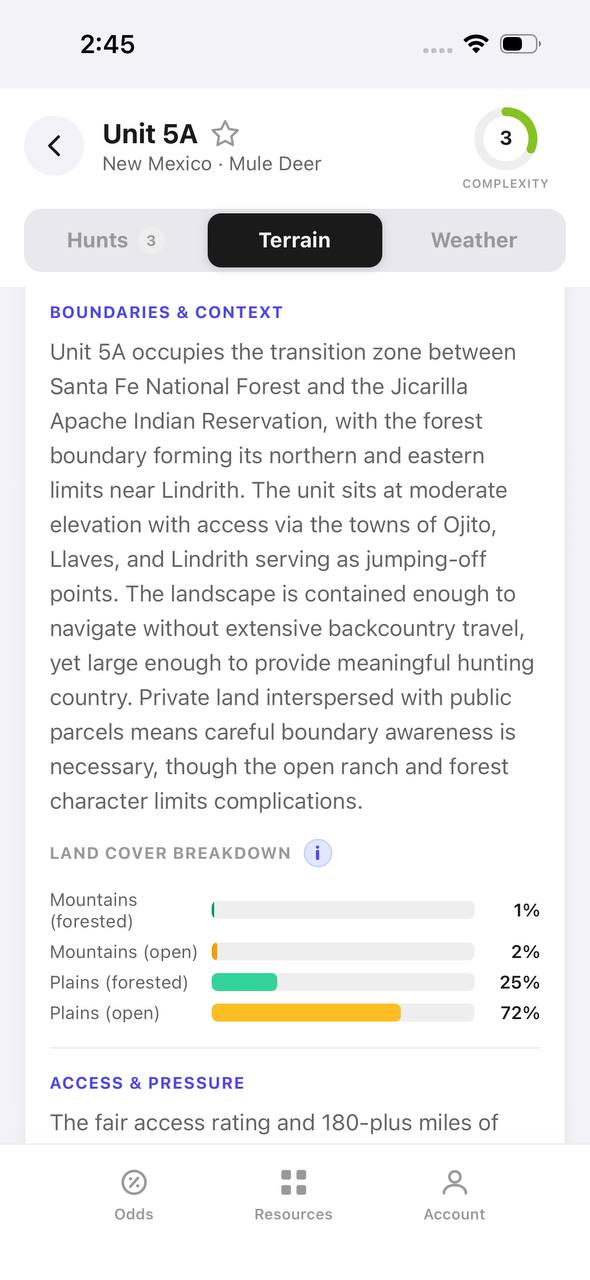
Filter hunts by weapon type, season, and species to match your gear and schedule. Review public land boundaries and terrain breakdowns to understand what your boots, pack, and optics will face before you arrive. Hunters who combine the right equipment with solid research spend more time hunting and less time guessing.
What You Can Skip
Not every piece of gear marketed to hunters is worth the space or expense. Gadgets like electronic game calls, scent-eliminating sprays, and excessive camouflage patterns are often overrated. Focus on fundamentals — good boots, reliable optics, a solid pack, and a layering system you trust. Hunt the wind, move quietly, and glass thoroughly. Skill and persistence outperform fancy accessories every time.
Hunters obsessed with the latest gear often overlook the most important preparation — physical conditioning. A $4,000 rifle scope will not help you keep up on a steep ridge if your lungs give out. Train before the hunt and your existing gear will perform better.
Testing Gear Before the Hunt
Do not wait until opening morning to discover your pack does not fit or your boots cause blisters. Test every piece of gear on training hikes with realistic weight. Wear your layering system through temperature swings. Confirm your rifle or bow shoots accurately with the ammunition or broadheads you plan to use in the field.
Break in boots over several weeks with progressively longer hikes. Adjust pack straps under load and identify hot spots before they become problems. Charge batteries, replace worn components, and organize your kit so you know where everything is. The field is no place for surprises.
FAQ — Western Hunting Gear
What is the most important piece of gear for western big-game hunting?
Quality optics. A reliable binocular and rangefinder let you locate animals, judge distance, and make smart decisions before you commit to a stalk. Boots are a close second — you cannot hunt effectively if your feet are destroyed.
How much should I spend on a hunting pack?
Expect to spend $200 to $500 for a quality daypack and $400 to $700 for a multi-day backcountry pack. Fit and durability matter more than features. A well-fitted pack that carries weight comfortably is worth every dollar.
Do I need a spotting scope for elk hunting?
It depends on the terrain. Hunters in open basins and alpine country benefit greatly from a spotting scope for glassing distant ridges and judging antler size. Timber hunters who rely on calling and close-range setups can often skip it.
What caliber is best for elk and mule deer?
Cartridges like .30-06, .270 Winchester, 7mm Remington Magnum, and 6.5 Creedmoor are proven performers. Choose a caliber you can shoot accurately and practice with regularly. Shot placement beats magnum calibers every time.
Should I prioritize lightweight gear or durability?
Balance both. Ultralight gear saves energy over long miles, but fragile equipment that fails in the field is worse than carrying an extra pound. Invest in durable items for high-wear areas like boots, packs, and outerwear, and go lightweight on accessories.
How do I know if my layering system is adequate?
Test it in conditions that match your hunt. If you are hunting late-season high country, train in cold mornings and evaluate whether your insulation keeps you warm during stationary glassing. Adjust based on real-world performance, not manufacturer claims.
Continue Planning Your Hunt
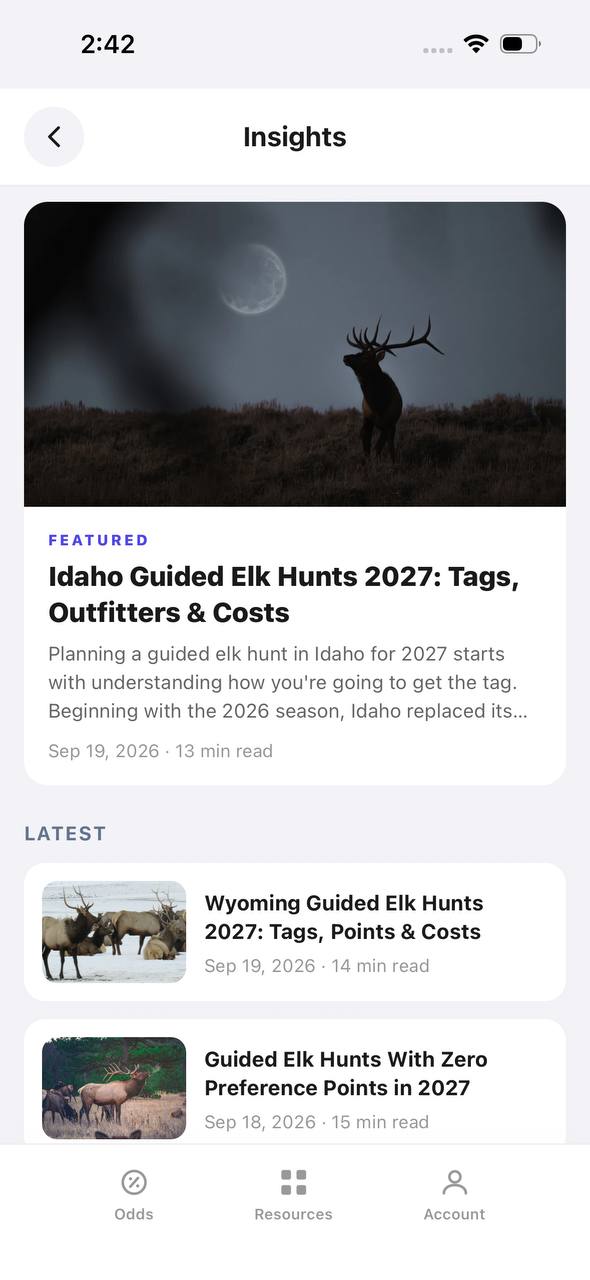
Gear is only part of the equation. Success in western hunting depends on choosing the right unit, understanding draw odds, and applying strategically across multiple states. TAGZ simplifies that process with tools that help you compare units, track deadlines, and filter hunts by species, weapon, and season. Explore the TAGZ Insights blog for unit breakdowns, draw strategy articles, and species-specific tips that complement your gear preparation. Ready to take your hunt planning to the next level? Check out TAGZ pricing and see how the platform helps hunters make smarter decisions from application season through the hunt itself. Whether you are researching elk units in Colorado or tracking preference points across six states, the TAGZ platform organizes everything in one place so you spend more time hunting and less time managing spreadsheets.
Was this article helpful?
Previous
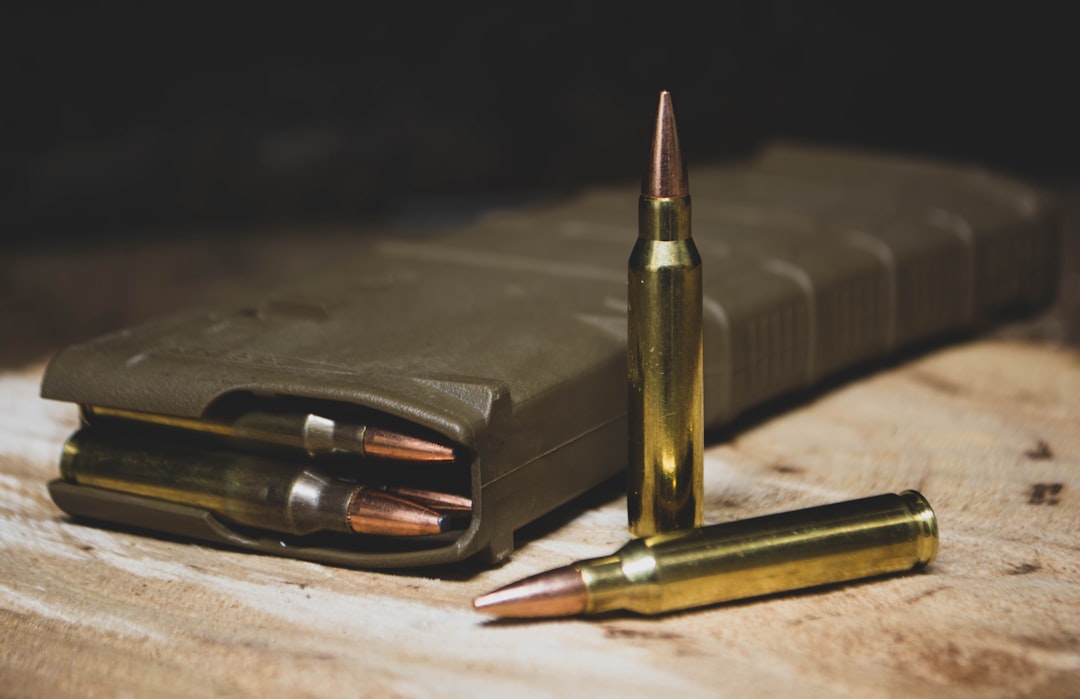
Best 7mm-08 Mule Deer Ammo: Top Loads for Western Hunts
The 7mm-08 Remington delivers excellent performance on mule deer with the right ammunition. This guide covers the best factory loads and bullet weights for western hunting situations, from open sagebrush to timber.
Related
What Every Hunter Should Keep in Their Truck During Elk Season
A well-stocked truck can mean the difference between salvaging a hunt and watching opportunity slip away. Here's the essential gear every elk hunter should carry from opening day through the end of the season.
Next
How to Judge Animals Through Binoculars — Field Techniques for Trophy Assessment
Master the art of field judging big game through binoculars with proven techniques for estimating antler mass, body size, and age class. Learn what to look for when glassing elk, mule deer, pronghorn, and other western species before you commit to a stalk.