DIY Elk Hunting in New Mexico: 2027 Public Land Guide
New Mexico ranks among the best Western states for do-it-yourself elk hunting, combining huntable public land with reasonable draw odds for nonresidents and excellent opportunities for residents. The state manages elk through a controlled draw system that covers nearly all units and weapon types, meaning planning starts months before the season. Unlike Colorado's over-the-counter model or Idaho's general tags, New Mexico requires deliberate application strategy, but the reward is quality hunting with less crowded units and strong bull-to-cow ratios.
How New Mexico's Elk Draw System Works
New Mexico uses a pure lottery system with no preference points or bonus points. Every applicant has equal odds in each year's draw, regardless of how many times they have applied before. This makes New Mexico appealing for first-time applicants and frustrating for those accustomed to point-building strategies in other states. The draw occurs once per year in late March or early April for hunts beginning in August. Applicants may list up to three hunt choices in order of preference, and the system awards tags in random order through each choice pool.
Nonresidents receive 12 percent of tags in most units, with residents taking the remaining 88 percent. Landowner authorizations add a separate allocation outside the public draw. The 12 percent nonresident cap means competitive units can be difficult to draw, but plenty of quality units still offer 20 to 40 percent nonresident odds in less-pressured hunt codes.
Resident vs Nonresident Draw Odds and Strategy
Residents enjoy dramatically better odds across the board. Many archery and early rifle hunts show resident odds above 50 percent, and even premium units remain within reach over a few application cycles. Nonresidents face tighter odds but should focus on second and third choices rather than burning all selections on long-shot units. A common mistake is listing three low-odds trophy units and drawing nothing. A better approach is to put a reach unit in the first choice, a solid mid-tier unit in the second choice, and a near-certain draw in the third choice.
Some of the most accessible nonresident elk hunts appear in units with significant private land or lower elk densities, but public-land DIY hunters can still find success by targeting early-season hunts when elk are more dispersed and hunting pressure is lighter. Late rifle hunts in high-elevation units with snow access can also offer opportunity, though weather becomes a major variable.
Best Public Land Units for DIY Hunters
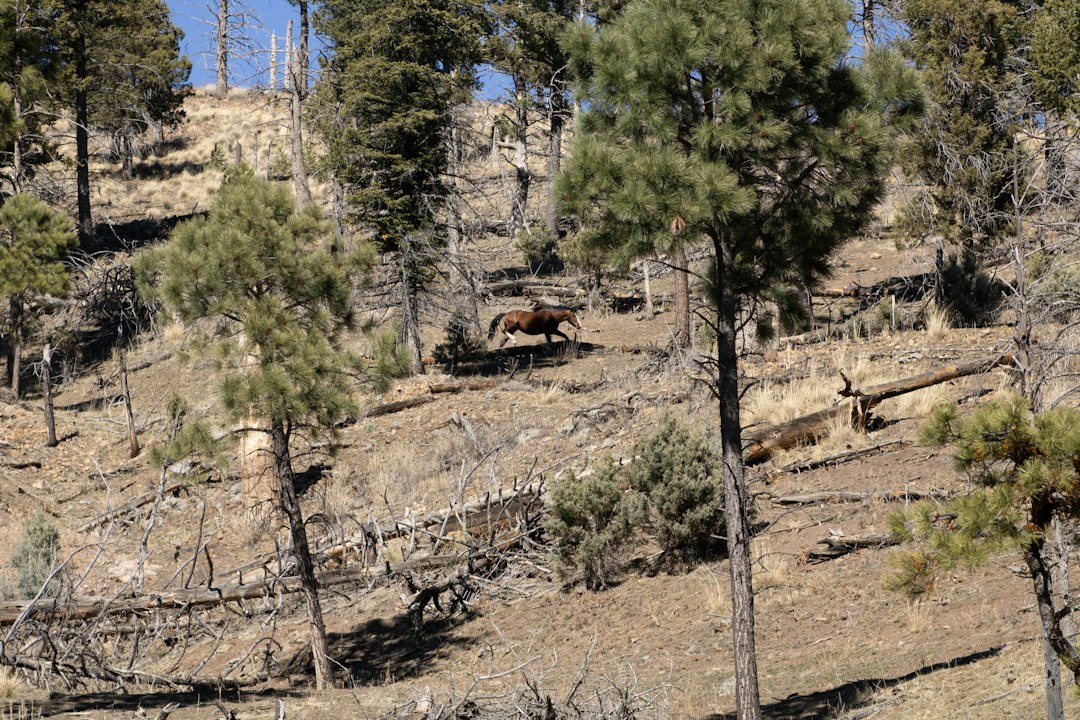
Public land makes up roughly 35 percent of New Mexico, concentrated in national forests, BLM land, and state trust parcels. The Gila National Forest in the southwest offers the largest contiguous block of public elk habitat, with units like 16A, 16C, and 16D providing good access and reasonable draw odds. These units are rugged and require physical conditioning, but hunters willing to hike beyond road systems find less competition and responding bulls during the rut.
The Carson and Santa Fe National Forests in the north hold strong elk populations, though some units carry more hunting pressure due to proximity to population centers. Units in the Jemez Mountains and around the Pecos Wilderness offer quality hunting for those who can backpack into roadless areas. The San Mateo and Manzano Mountains east of the Rio Grande also hold huntable public land, though access can be more fragmented.
Scouting access beforehand is critical. New Mexico allows walk-in access across some state trust land, but rules vary and hunters must check current regulations. OnX or similar mapping apps are essential for identifying legal access points and avoiding inadvertent trespass on checkerboard ownership patterns.
Weapon Choice and Season Timing
New Mexico divides elk hunts into archery, muzzleloader, and rifle seasons, each with distinct characteristics. Archery hunts run from late August into mid-September, coinciding with the peak of the rut. Bulls are vocal and responsive to calling, making this the most exciting hunt for many DIY hunters. Draw odds tend to be better than rifle hunts in the same unit, and success rates hover around 15 to 25 percent depending on the unit.
Muzzleloader hunts occur in September and early October, after the rut has cooled but before rifle pressure begins. These hunts can be productive in units where elk are still in predictable patterns. Rifle hunts span from October into December, with early rifle overlapping the tail end of bugling and late rifle pushing elk into winter range. Late hunts can concentrate animals, but snow and cold add logistical challenges.
First-time DIY hunters often find the most success in early-season archery or muzzleloader hunts, where calling skills and mobility matter more than long-range shooting or hauling heavy packs through deep snow.
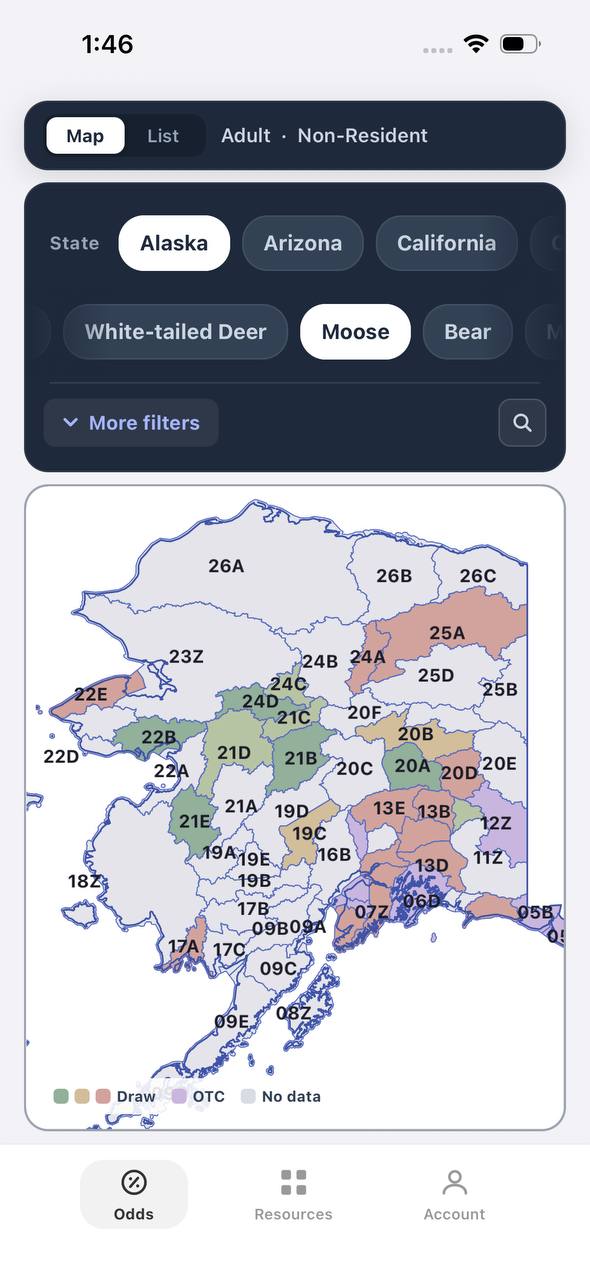
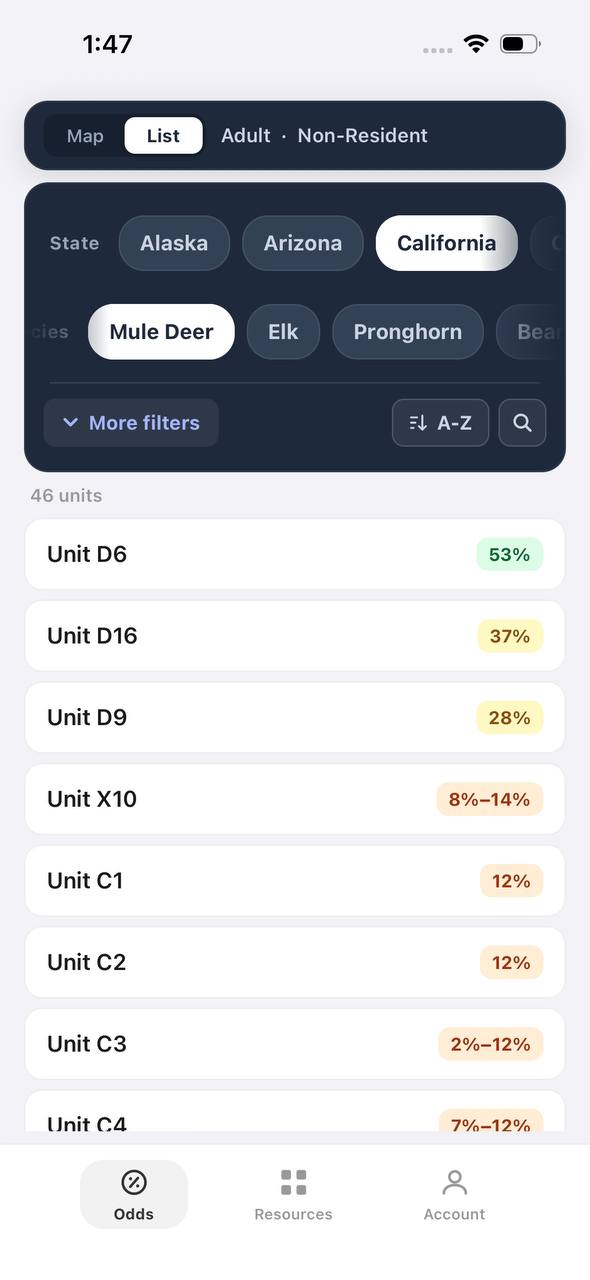
Free to join
Download mobile app
- Detailed draw odds
- Point tracking
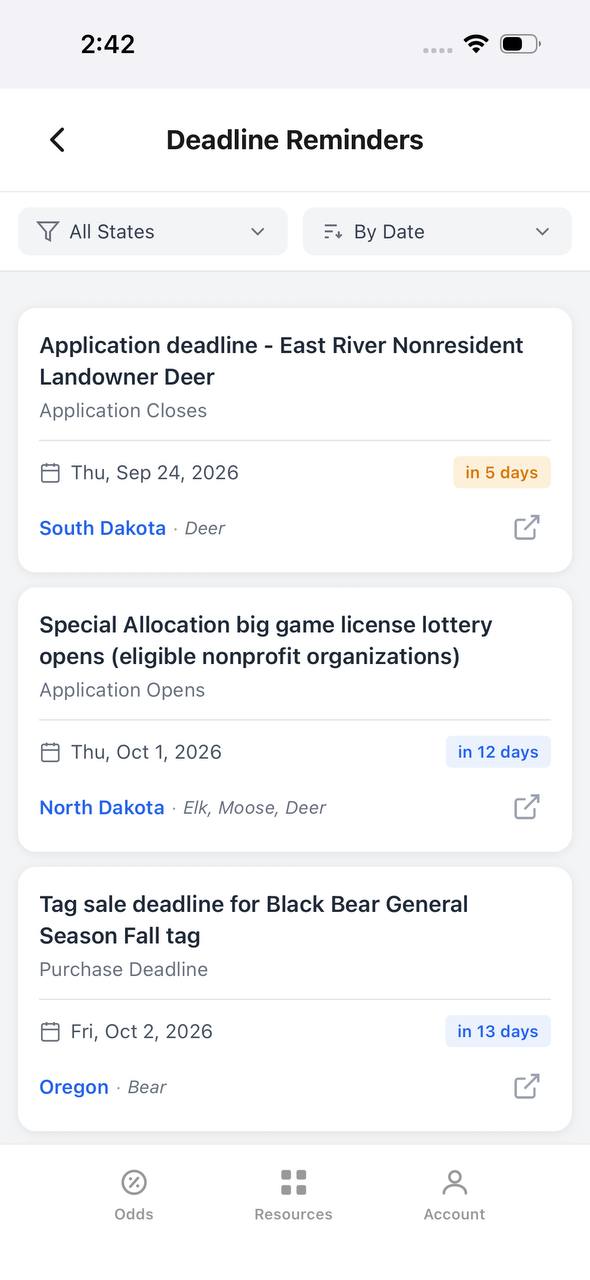
- Deadline reminders
- 19 states covered

Free to join
Download mobile app
- Detailed draw odds
- Point tracking
- Deadline reminders
- 19 states covered
Free to join
Download mobile app
- Detailed draw odds
- Point tracking
- Deadline reminders
- 19 states covered
Application Deadlines and Costs
Applications for New Mexico elk open in early January and close in mid-March. The 2027 application period is expected to follow this pattern, with the draw results released in late March or early April. The application fee is typically around $10, and nonresidents must purchase a hunting license at the time of application, which costs approximately $65. If drawn, the elk license itself costs roughly $562 for nonresidents and $73 for residents, though exact fees should be verified each year on the New Mexico Department of Game and Fish website.
Hunters who draw a tag must also purchase the appropriate game-hunting or game-hunting-and-fishing license if they have not already done so. Point-creep and changing quotas do not exist in New Mexico's system, but annual quota adjustments and hunt-code changes do occur, so reviewing the current proclamation before applying is essential.
Physical Preparation and Gear Considerations
DIY elk hunting in New Mexico demands strong physical conditioning and self-sufficiency. Most productive public land sits above 7,000 feet, with the best hunting often occurring between 8,000 and 10,000 feet. Steep terrain, thin air, and mile-long stalks are standard. Hunters should train with a loaded pack on hills or stairs for several months before the hunt.
Gear must cover wide temperature swings, from 80-degree afternoons in early September to below-freezing mornings in late November. Layering systems, quality boots, and reliable optics matter more than expensive rifles. A good spotting scope or 10x binoculars will locate more elk than any rifle upgrade. Game bags, a meat pack, and a sharp knife are non-negotiable, since all meat must be packed out on foot in most public-land scenarios.
Water sources are scarce in many units, especially during dry years. Carry a filtration system and plan camp locations around reliable springs or creeks. Cell service is nonexistent in much of the backcountry, so a GPS device or downloaded maps are critical for navigation.
Understanding New Mexico's Elk Populations and Success Rates
New Mexico holds an estimated elk population of around 80,000 animals, with the largest concentrations in the Gila, Carson, and Cibola National Forests. Statewide hunter success rates average approximately 25 to 30 percent, varying widely by unit, weapon, and season. Archery success rates typically fall between 15 and 25 percent, while rifle hunts push closer to 30 to 40 percent in productive units.
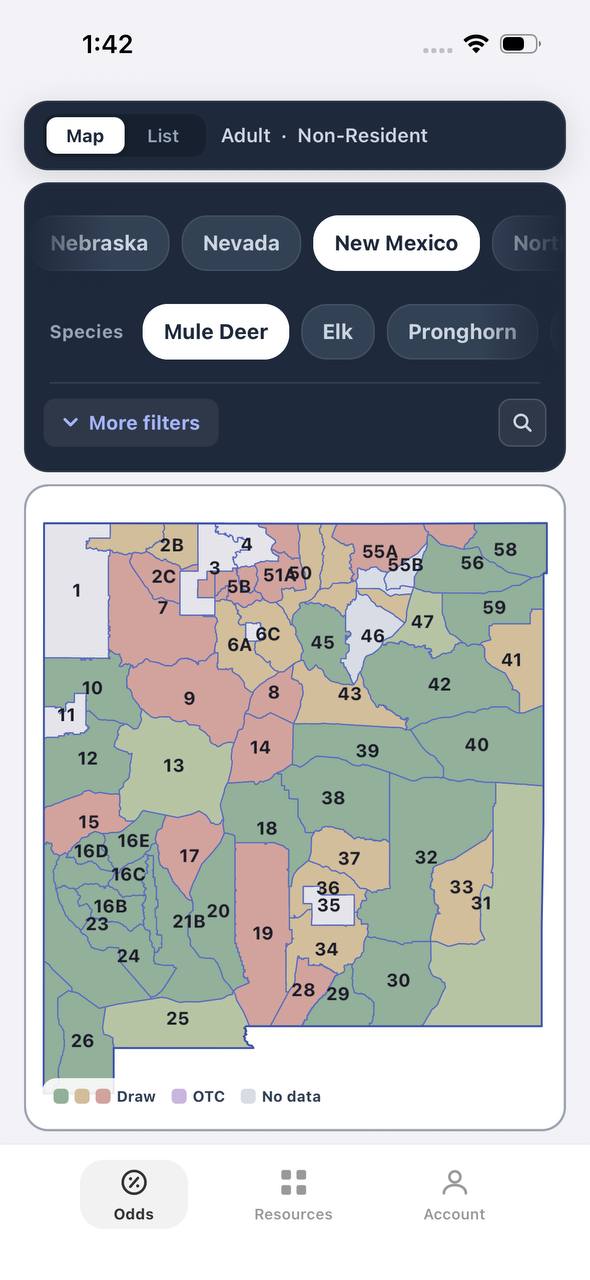
Bull-to-cow ratios are managed to maintain herd health and hunter opportunity, with most units targeting 20 to 30 bulls per 100 cows. This balance supports both trophy potential and general-season opportunity. New Mexico does not publish draw odds in the same transparent format as some Western states, but historical data and third-party tools like TAGZ provide insight into unit-by-unit trends.
Common Mistakes DIY Hunters Make
Many first-time New Mexico elk hunters waste their application on three low-odds trophy units and draw nothing. A smarter strategy is to use the first choice as a reach unit, the second choice as a realistic target, and the third choice as a near-guaranteed backup. Another frequent error is underestimating the physical demands of hunting public land at elevation. Hunters who train on flat ground at sea level often struggle in the mountains.
Poor scouting and access planning lead to wasted hunt days. Arriving without a clear understanding of where you can legally hunt, where elk are likely to be, and how to get meat out results in frustration. Spending time with maps, satellite imagery, and boots-on-the-ground scouting before the season pays off.
Finally, hunters often overlook early-season archery hunts in favor of rifle, missing out on better draw odds, less pressure, and the experience of calling bulls during the rut. Archery hunting requires different skills, but the reward is a more intimate hunt in less-crowded country.
How to Plan Your First New Mexico Elk Hunt
Start by studying the New Mexico elk proclamation and identifying units with reasonable nonresident draw odds and significant public land. Cross-reference elk population estimates, harvest statistics, and access points using mapping software. Apply early in the window to avoid last-minute technical issues, and make sure your hunting license is current before submitting the application.
If you draw, book time off work and begin physical training immediately. Plan to arrive at least two days before your hunt to acclimate to elevation and finalize scouting. Identify multiple backup areas in case your primary zone is crowded or elk have moved. Set realistic expectations: success rates are modest, but the experience of hunting wild country on your own terms is the real reward.
Network with other hunters online or in person to gather intel on access, weather patterns, and unit conditions. New Mexico's hunting community is generally helpful, though specific honey holes remain closely guarded. Respect private property, pack out all trash, and follow leave-no-trace principles to preserve access for future hunters.
Internal Resources for Draw Strategy
For detailed draw-odds analysis and unit-by-unit breakdowns, refer to TAGZ's New Mexico Elk Draw Odds guide. Hunters interested in understanding how bonus and preference points work in other states can compare New Mexico's lottery system to point-based models in the Western Big Game Draw Systems Explained article. To explore other DIY-friendly Western elk states, see Best States for DIY Elk Hunting.
FAQ — DIY Elk Hunting in New Mexico
Does New Mexico use preference points for elk?
No. New Mexico uses a pure lottery system with no preference or bonus points. Every applicant has equal odds each year, regardless of past applications.
What are nonresident draw odds for New Mexico elk?
Nonresidents receive 12 percent of most tags. Odds vary widely by unit and weapon, ranging from under 5 percent in trophy units to over 40 percent in less-pressured areas. Second and third choices often offer better odds than first-choice-only strategies.
How much does a nonresident elk tag cost in New Mexico?
The elk license costs approximately $562 for nonresidents, plus a base hunting license of around $65 and a $10 application fee. Residents pay roughly $73 for the elk license.
When is the application deadline for New Mexico elk?
Applications typically open in early January and close in mid-March, with draw results announced in late March or early April. Verify exact dates each year on the New Mexico Department of Game and Fish website.
Is there enough public land for DIY elk hunting in New Mexico?
Yes. About 35 percent of New Mexico is public land, with large blocks in the Gila, Carson, and Santa Fe National Forests. Access and elk density vary by unit, but DIY hunters willing to hike and scout can find quality hunting away from roads.
What is the best season for a first-time DIY elk hunter in New Mexico?
Early-season archery hunts during the rut offer better draw odds, less pressure, and vocal bulls. Muzzleloader hunts in September are also productive. Rifle hunts have higher success rates but face more competition and tougher draws in quality units.
Was this article helpful?
Previous
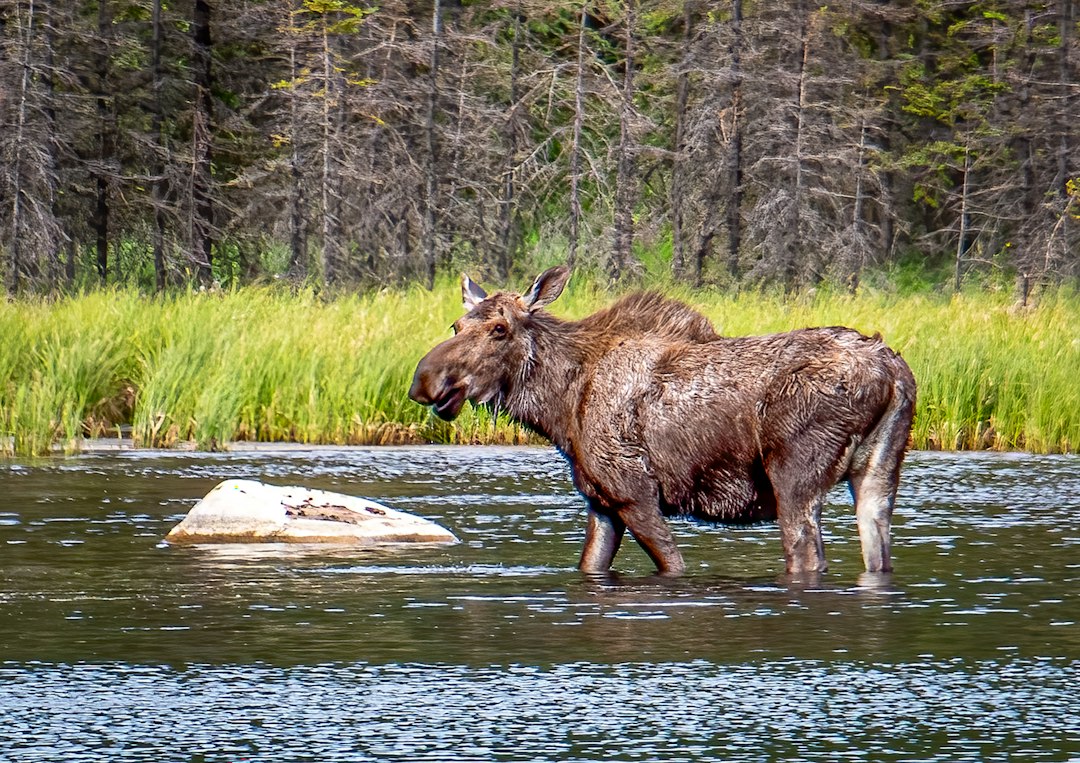
Alaska Moose Hunting Guide 2027: Drawing, Permits & Prime Units
Alaska offers both general-season moose hunting and controlled permit hunts for nonresidents. Most hunts require a registered guide, while resident hunters enjoy broader access across the state's most productive units.
Related
Rifle Elk Hunting in Wyoming: Draw Odds, Units, and Season Strategies
Wyoming offers world-class rifle elk hunting across diverse terrain from the Bighorns to the Wyoming Range. Understanding the draw system, identifying high-opportunity units, and timing your hunt to the rut are key to success.
Next
9 Critical Questions to Ask Before Booking a Western Canadian Moose Hunt
Western Canada offers world-class moose hunting, but not all outfitters and hunt structures deliver the same experience. Ask the right questions up front to avoid disappointment and find a hunt that matches your expectations and budget.