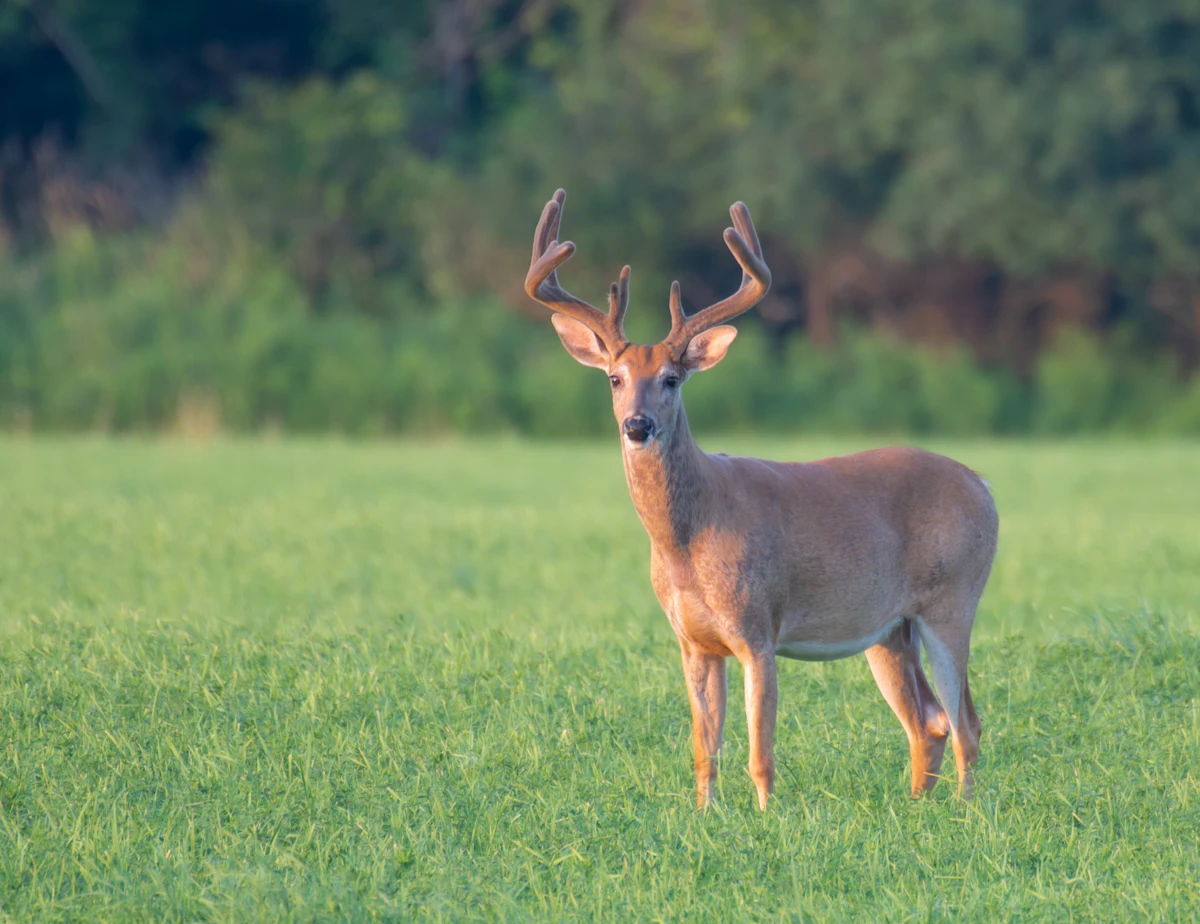
The right bullet makes the difference between a clean kill and a wounded animal that disappears into heavy timber. Bullet selection is not about brand loyalty or what your buddy uses. It is about matching construction, weight, and velocity to the animal you are hunting, the terrain you are hunting in, and the distances you expect to shoot. A bullet that performs flawlessly on a pronghorn at 400 yards may fail catastrophically on an elk at 75 yards. Understanding how bullets work and why specific designs suit specific game will make you a more effective and ethical hunter.
Understanding Bullet Construction
Bullets are not all built the same. Construction determines how a bullet behaves when it strikes an animal. Soft-point and ballistic-tip bullets expand rapidly, creating large wound channels ideal for deer-sized game. Bonded-core bullets hold together better on heavy bone and deep penetration, making them the standard for elk and moose. Monolithic copper bullets shed no weight, penetrate deeply, and are required by law in some states like California. Partition-style bullets combine controlled expansion up front with a solid base that guarantees penetration even if the front half fragments. Each design has strengths and limitations.
Expansion and penetration exist in tension. A bullet that mushrooms aggressively transfers energy fast but may not reach vitals on a quartering shot through heavy shoulder muscle. A bullet that holds together and drives deep may pass through without expanding enough to cause rapid blood loss. The goal is a bullet that expands reliably at your impact velocity while penetrating far enough to reach vitals from any reasonable angle. Construction matters more than brand.
Bullet Weight and Caliber Matching
Heavier bullets penetrate better and retain energy at distance, but they also drop more and kick harder. Lighter bullets shoot flatter and recoil less, but they shed velocity quickly and may not hold together on big animals. The key is matching bullet weight to both your caliber and your game.
For a .308 Winchester, 150-grain bullets work well for deer and pronghorn where flat trajectory matters. A 165-grain or 180-grain bullet is better for elk, moose, or bear where you need penetration through heavy bone and muscle. In a 6.5 Creedmoor, 140-grain to 143-grain bullets handle both deer and elk if you use a tough, bonded or monolithic design. Magnum calibers like the .300 Win Mag can push heavier bullets faster, making 180-grain to 200-grain weights practical for the biggest game.
Sectional density, the ratio of bullet weight to diameter, predicts penetration. A long, heavy-for-caliber bullet punches deeper than a short, light one. High ballistic coefficient bullets retain velocity and energy downrange, extending effective range. Match bullet weight to the toughest animal you expect to encounter, then practice enough that you can handle the recoil and trajectory.
Elk — Penetration Over Expansion
Elk are big, tough animals with heavy shoulder bones and thick hide. A poorly chosen bullet will fragment on the shoulder blade or fail to reach the far lung on a quartering shot. Elk require bullets that hold together and drive deep.
Bonded-core bullets like the Federal Fusion, Nosler AccuBond, or Swift Scirocco are excellent choices. Partition-style bullets such as the Nosler Partition or Swift A-Frame combine expansion with guaranteed penetration. Monolithic copper bullets like the Barnes TTSX, Hornady GMX, or Federal Trophy Copper penetrate extremely well and retain 95 to 100 percent of their weight. For standard calibers like the .308 or .30-06, use 165-grain to 180-grain bullets. Magnums can handle 180-grain to 200-grain weights effectively.
Avoid thin-jacketed varmint bullets and lightweight ballistic tips designed for deer. Elk are often shot at close range in timber where heavy bone contact is common. A bullet that fragments or stops short turns a good shot into a long tracking job or a lost animal. Choose bullets designed to penetrate and expansion will take care of itself.
Mule Deer and Whitetail — Balanced Performance
Deer are smaller than elk but still require bullets that expand reliably and penetrate vitals. Most modern deer bullets perform well if you match them to your shooting distance and terrain. The challenge is choosing a bullet that works at both close range in timber and longer range across open sage or agriculture.
For mule deer in open country where shots may stretch past 300 yards, high ballistic coefficient bullets like the Hornady ELD-X, Berger VLD Hunter, or Nosler AccuBond Long Range deliver flat trajectories and reliable expansion at lower velocities. For whitetail in timber where shots are inside 200 yards, traditional soft points like the Remington Core-Lokt or Federal Power-Shok work fine and cost less for practice. Ballistic-tip bullets like the Nosler Ballistic Tip or Hornady SST expand aggressively and drop deer fast at any realistic range.
Bullet weight depends on caliber and personal preference. In a .270 Winchester, 130-grain to 150-grain bullets cover all deer hunting. A .308 handles 150-grain to 165-grain weights well. Smaller calibers like the 6.5 Creedmoor or .243 Winchester perform best with 120-grain to 143-grain bullets designed for controlled expansion. Avoid bullets that are too tough. A bonded or monolithic bullet built for elk may pencil through a deer without expanding enough to cause rapid shock.
Free to join
Download mobile app
- Detailed draw odds
- Point tracking
- Deadline reminders
- 18 states covered

Free to join
Download mobile app
- Detailed draw odds
- Point tracking
- Deadline reminders
- 18 states covered
Free to join
Download mobile app
- Detailed draw odds
- Point tracking
- Deadline reminders
- 18 states covered
Pronghorn — Flat Shooting and Fast Expanding
Pronghorn are small, lightly built animals hunted at long range across open country. Bullet selection for pronghorn prioritizes flat trajectory, high ballistic coefficient, and rapid expansion. Penetration is rarely an issue. A pronghorn weighs 100 to 130 pounds and has thin skin and light bones. Almost any center-fire rifle bullet will pass completely through.
The best pronghorn bullets are light-for-caliber with high velocity and aggressive expansion. In a 6.5 Creedmoor, a 120-grain to 130-grain ballistic tip shoots flat and expands violently. A .270 Winchester with a 130-grain soft point or polymer tip is ideal. Even smaller calibers like the .243 Winchester with 85-grain to 100-grain bullets work well. Focus on bullets with high ballistic coefficients that retain velocity past 300 yards, where most pronghorn are shot.
Avoid heavy, tough bullets designed for elk or moose. A 180-grain bonded bullet from a .30-06 will kill a pronghorn, but it may not expand much and the added recoil and drop are unnecessary. Match-grade target bullets are not ideal either. They may shoot accurately but are not designed to expand consistently on game. Stick with hunting bullets designed for deer-sized animals and you will have more than enough performance for pronghorn.
Moose — Deep Penetration and Bone Breaking
Moose are the largest big game animal most western hunters will encounter. A mature bull can weigh 1,200 pounds with massive shoulder bones and a deep chest cavity. Moose require bullets that penetrate deeply from any angle and break heavy bone without fragmenting.
The best moose bullets are heavy-for-caliber bonded or monolithic designs. In a .300 Win Mag, use 180-grain to 200-grain bullets like the Nosler AccuBond, Swift A-Frame, or Barnes TTSX. A .30-06 can handle moose with 180-grain to 200-grain bonded bullets, though magnum calibers offer more margin. Partition bullets like the Nosler Partition are proven performers. Monolithic copper bullets penetrate extremely well and are ideal for quartering shots where you need to reach vitals through heavy shoulder muscle.
Moose are often shot at close range in thick brush or standing in water where follow-up shots are difficult. A bullet that stops in the shoulder or fails to reach the far lung can turn a good hit into a long, difficult recovery. Penetration is more important than expansion. A moose with a bullet hole through both lungs will die quickly even if the bullet does not mushroom perfectly. A moose with a shoulder wound and no vital damage may travel miles before bedding down.
Bear — Tough Construction for Heavy Muscle
Bear, whether black bear or grizzly, have thick hides, heavy bones, and dense muscle. They are also tenacious animals that can cover ground quickly if not hit well. Bear hunting demands bullets that penetrate deeply and hold together on impact with heavy bone.
For black bear, use the same bullets you would choose for elk. Bonded-core bullets like the Federal Fusion or Nosler AccuBond, partition bullets, or monolithic copper designs all work well. Bullet weight should be on the heavier end for your caliber. A .308 should use 165-grain to 180-grain bullets, a .300 Win Mag should use 180-grain to 200-grain weights. Bears are often shot at close range in timber or over bait where angles may be less than ideal. A tough bullet guarantees penetration even on a quartering shot.
For grizzly or brown bear, especially in Alaska or Montana, step up to premium bullets designed for dangerous game. Swift A-Frame, Nosler Partition, Barnes TSX, or Federal Trophy Bonded Bear Claw bullets are proven performers. Avoid thin-jacketed bullets that may fragment on the shoulder. A bear that is wounded and not anchored quickly can be dangerous and difficult to recover. Choose a bullet that will break bone, penetrate vitals, and put the animal down fast.
Free to join
Download mobile app
- Detailed draw odds
- Point tracking
- Deadline reminders
- 18 states covered
Free to join
Download mobile app
- Detailed draw odds
- Point tracking
- Deadline reminders
- 18 states covered
Free to join
Download mobile app
- Detailed draw odds
- Point tracking
- Deadline reminders
- 18 states covered
Testing and Practice
The best bullet on paper means nothing if it does not shoot accurately in your rifle. Every rifle has preferences. A bullet that groups half-MOA in one rifle may scatter two inches in another. Buy several different loads in the bullet weight and construction you want, then shoot groups at 100 yards to see what your rifle likes. Once you find a load that shoots well, buy enough to practice and hunt for the season.
Practice at the distances you expect to shoot. If you hunt mule deer in open country where 400-yard shots are common, practice at 400 yards. If you hunt elk in timber where 150 yards is typical, practice at that range. Know your bullet's trajectory, wind drift, and terminal performance at impact velocities you will actually see in the field. Confidence comes from practice, and practice reveals whether your bullet choice will work when it matters.
Matching Bullet to Terrain and Shot Distance
Terrain and expected shot distance should influence your bullet choice as much as the species you are hunting. Open country hunting for mule deer or pronghorn where shots often exceed 300 yards requires bullets with high ballistic coefficients that retain velocity and energy downrange. Heavy-for-caliber bullets with sleek polymer tips or boat-tail designs shoot flatter and drift less in wind.
Timber hunting for elk or whitetail where shots are typically inside 200 yards allows you to prioritize toughness and penetration over ballistic coefficient. A traditional bonded soft point or partition bullet that may not have the highest BC will still perform perfectly at close range and will hold together better on heavy bone. Thick brush and angled shots demand bullets that drive deep and do not deflect.
If you hunt in California or other states that require non-lead ammunition, copper monolithic bullets are your only option. The good news is that modern copper bullets like the Barnes TTSX, Hornady GMX, or Federal Trophy Copper perform as well or better than traditional lead-core designs in terms of penetration and weight retention. They also allow you to use lighter bullet weights than you would with lead because copper is less dense and creates longer bullets with better sectional density.
Free to join
Download mobile app
- Detailed draw odds
- Point tracking
- Deadline reminders
- 18 states covered
Free to join
Download mobile app
- Detailed draw odds
- Point tracking
- Deadline reminders
- 18 states covered
Free to join
Download mobile app
- Detailed draw odds
- Point tracking
- Deadline reminders
- 18 states covered
Common Bullet Selection Mistakes
The most common mistake is choosing a bullet based on what is available or cheap rather than what matches the hunt. Buying a box of whatever is on the shelf the day before season opens is a recipe for poor performance. Plan ahead, test loads, and stock up on what works in your rifle.
Another mistake is using bullets that are too tough for the game. A bonded or monolithic bullet designed for elk may not expand enough on a deer or pronghorn, especially at longer ranges where velocity drops. The result is a small wound channel and poor blood trails. Match bullet toughness to the animal. Deer and pronghorn need bullets that expand reliably. Elk, moose, and bear need bullets that hold together and penetrate.
Using bullets that are too light or fragile for big game is equally problematic. A varmint bullet or light ballistic tip may shoot flat and group well, but it can grenade on an elk shoulder and fail to reach vitals. Choose bullets designed for the game you are hunting, not bullets designed for paper or predators.
How TAGZ Helps You Prepare for Your Hunt
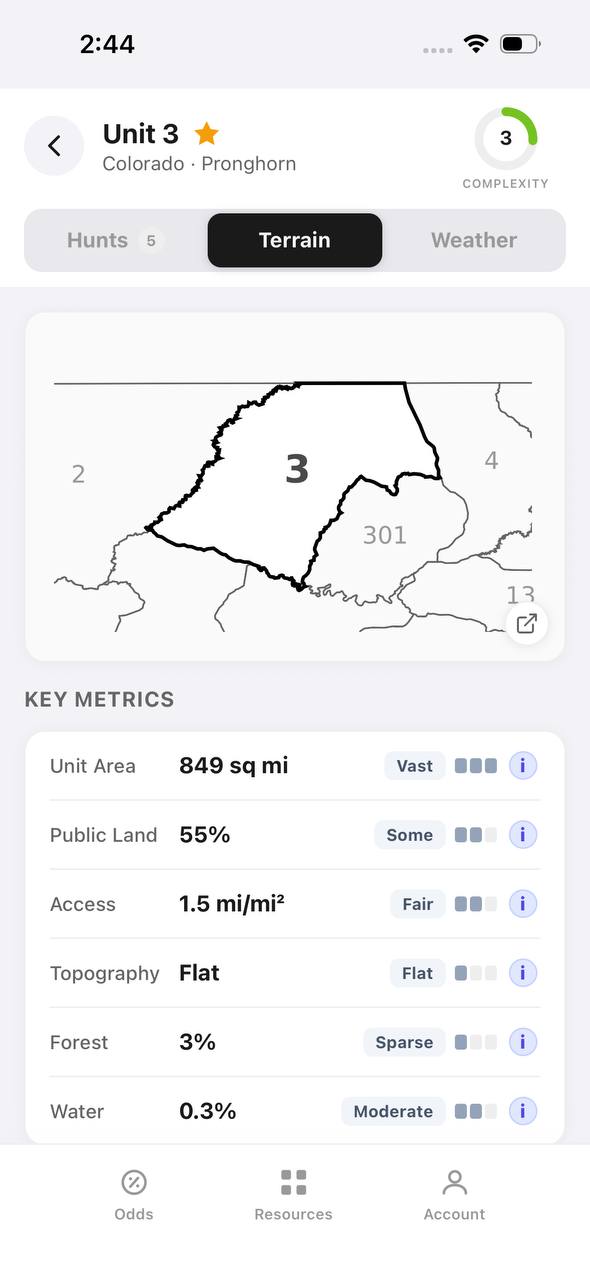
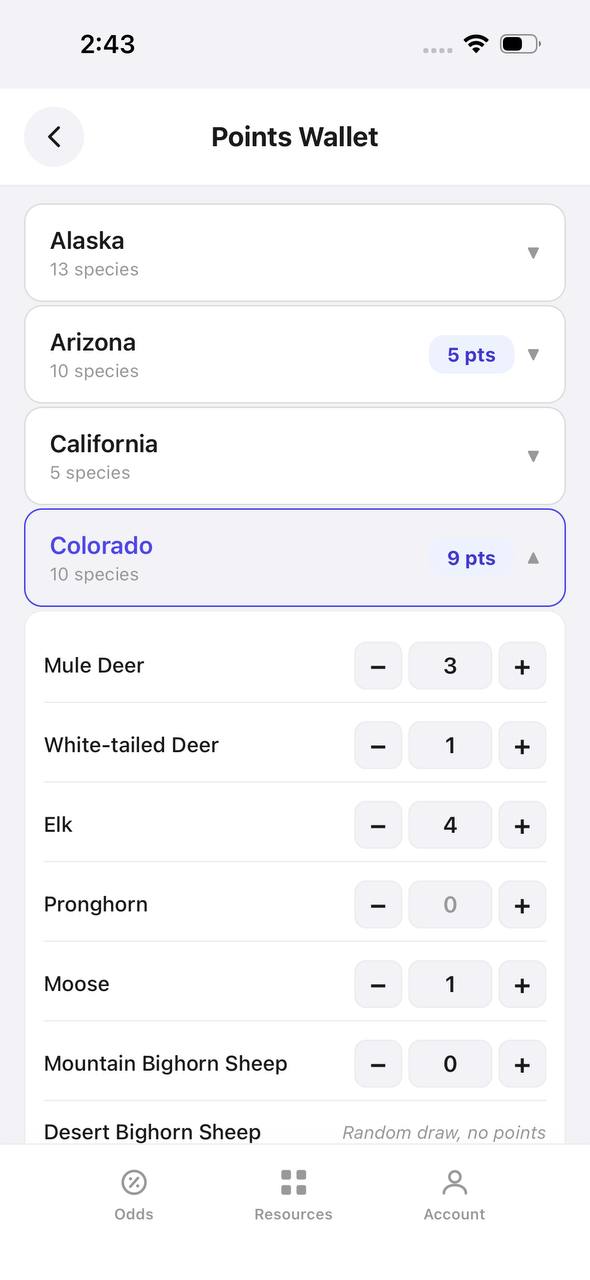
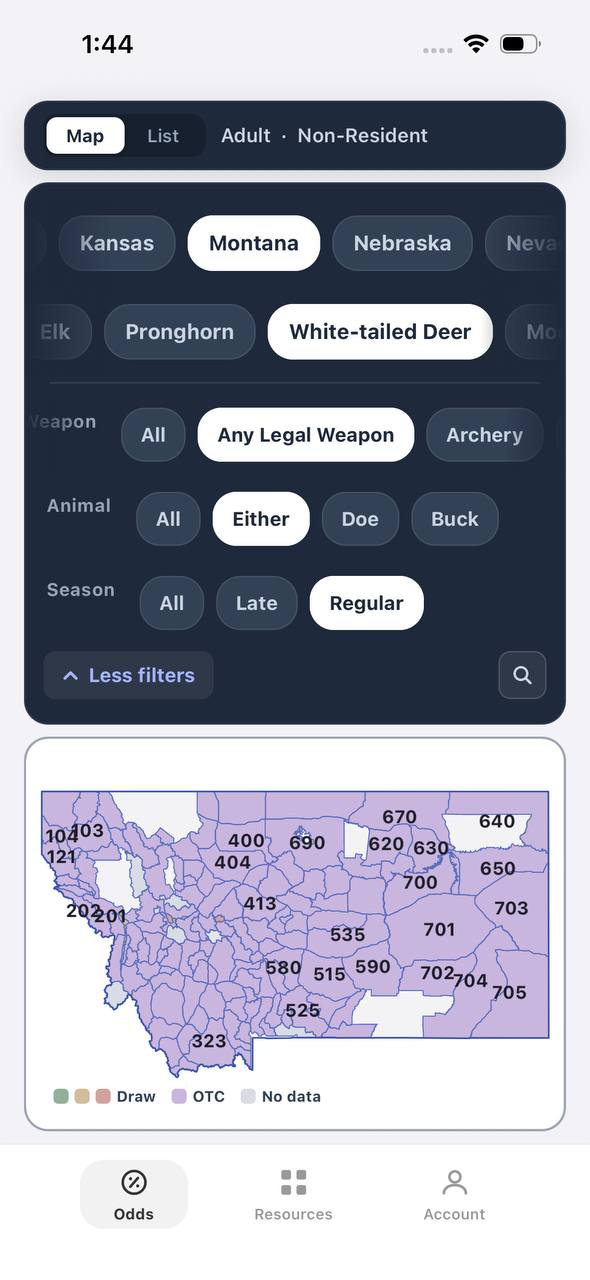
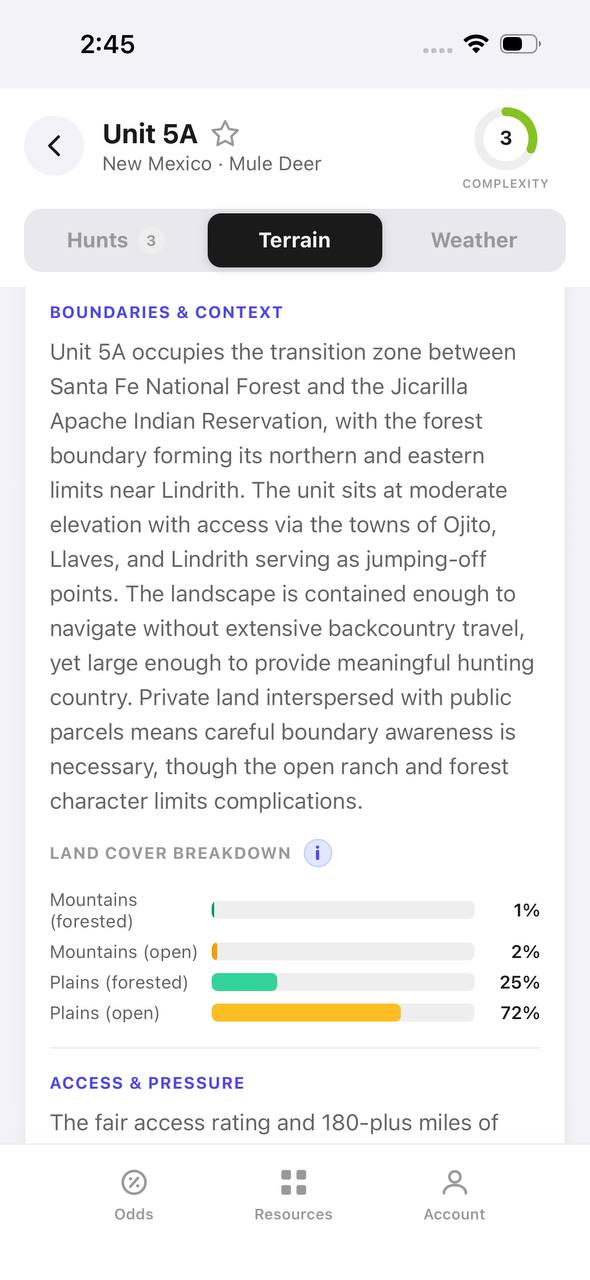
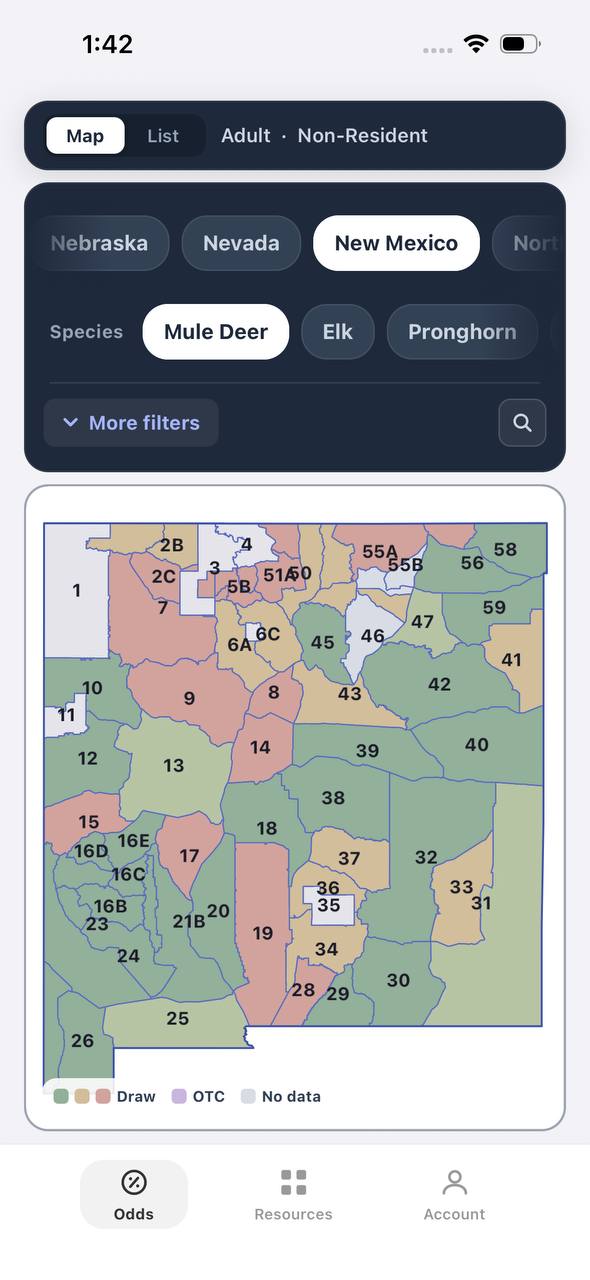
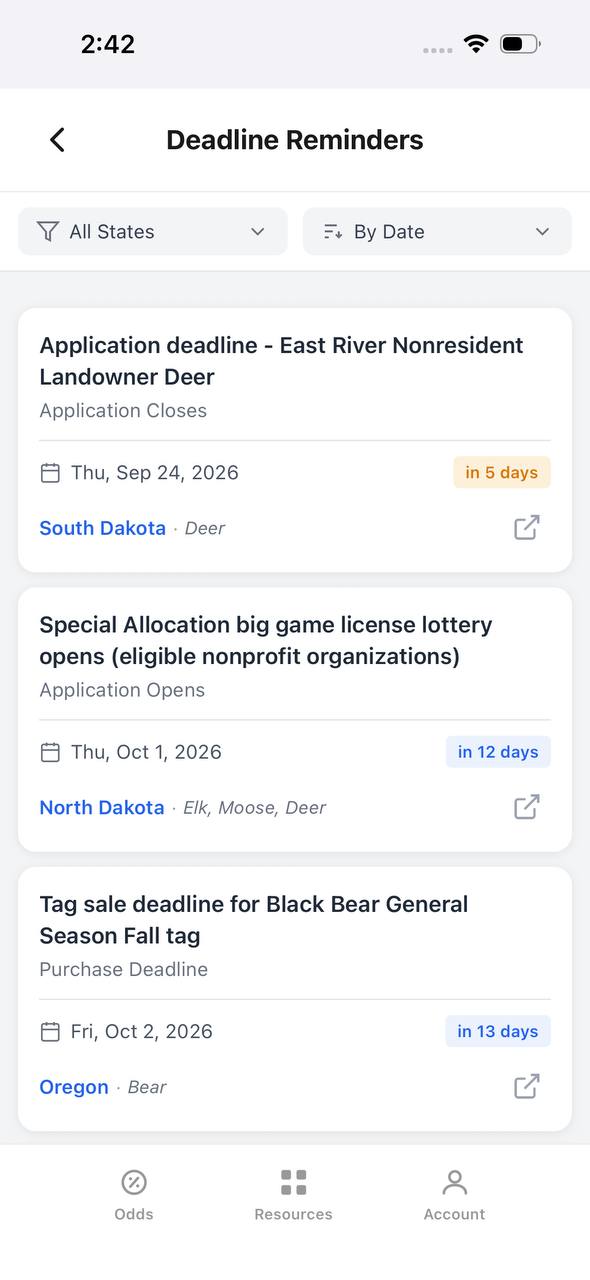
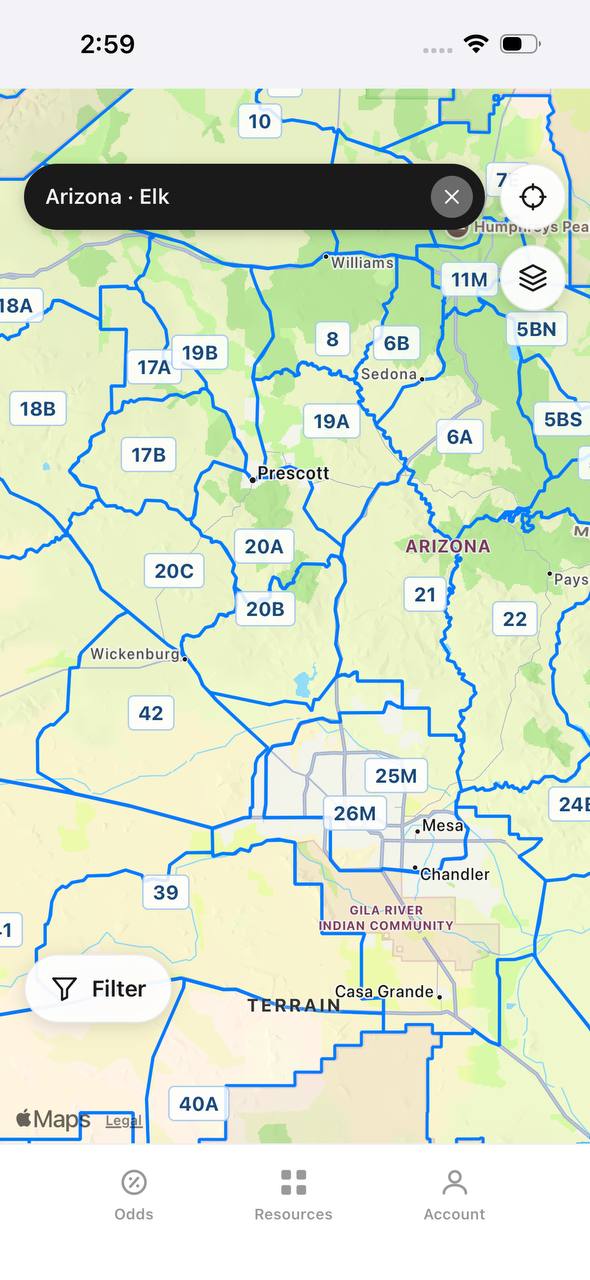
Once you have the right bullet, TAGZ helps you find the right hunt. TAGZ lets you compare draw odds, track preference points and bonus points, and research units using terrain maps and unit boundaries. Whether you are planning an OTC elk hunt in Colorado or applying for a limited-entry mule deer tag in Nevada, TAGZ gives you the tools to make smarter decisions. Filter hunts by weapon type, season, and species, then track draw deadlines so you never miss an application. Plan your hunt with confidence before you ever load your rifle.
FAQ — Bullet Selection for Big Game
What is the best all-around bullet for western hunting? A bonded-core bullet in the 150-grain to 180-grain range for standard calibers like the .308, .30-06, or .270. Bullets like the Nosler AccuBond or Federal Fusion handle deer through elk with reliable expansion and penetration.
Can I use the same bullet for deer and elk? Yes, if you choose a tough, bonded or monolithic bullet in appropriate weight. A 165-grain AccuBond from a .308 will work on both, but avoid light, fragile bullets designed only for deer.
Do I need premium bullets or will cheap soft points work? Cheap soft points work fine for deer and pronghorn at reasonable distances. For elk, moose, and bear, premium bonded or monolithic bullets are worth the cost for better penetration and weight retention.
What bullet weight should I use for elk? For standard calibers like the .308 or .30-06, use 165-grain to 180-grain bonded or monolithic bullets. Magnums can push 180-grain to 200-grain weights effectively.
Are copper bullets as effective as lead-core bullets? Yes. Modern monolithic copper bullets like the Barnes TTSX penetrate deeper and retain more weight than traditional lead-core designs. You can often use a lighter copper bullet than you would with lead and still get better performance.
Should I choose bullets based on ballistic coefficient or construction? Both matter. For long-range shooting, high ballistic coefficient helps with trajectory and wind drift. For close-range hunting or tough game like elk and moose, construction and penetration are more important than BC.
Continue Planning Your Hunt
Selecting the right bullet is one piece of a successful hunt. The next step is choosing the right unit, understanding draw odds, and planning your strategy. TAGZ helps you compare units side by side using terrain maps, unit boundaries, and historical draw data. Track your preference points and bonus points across multiple states so you never miss a draw deadline. Whether you are chasing OTC tags or planning a trophy limited-entry hunt, TAGZ gives you the tools to make smarter decisions before you ever step into the field. Start planning your next hunt at getmytagz.com and explore the Insights blog for more hunting strategies and application tips.
Was this article helpful?
Previous
Complete Mountain Goat Hunting Guide: Planning, Draws, and Strategy
Mountain goat hunting demands meticulous planning, physical conditioning, and strategic draw management. This comprehensive guide covers application strategies, unit selection, gear essentials, and field tactics for one of North America's most challenging alpine hunts.

Related
How to Recover a Stuck Hunting Truck: Field-Tested Extraction Methods
Getting stuck on remote hunting roads is a rite of passage for Western hunters. Learn proven recovery techniques, essential gear to carry, and prevention strategies that work when you're miles from help.

Next
Reading Deer Feeding Patterns to Predict Movement and Plan Your Hunt
Understanding when and where deer feed gives you a critical edge during hunting season. Learn how to read feeding patterns, identify primary food sources by season, and use that knowledge to set up in the right place at the right time.