Calling Elk in Dark Timber: Proven Tactics for Tight-Cover Bulls
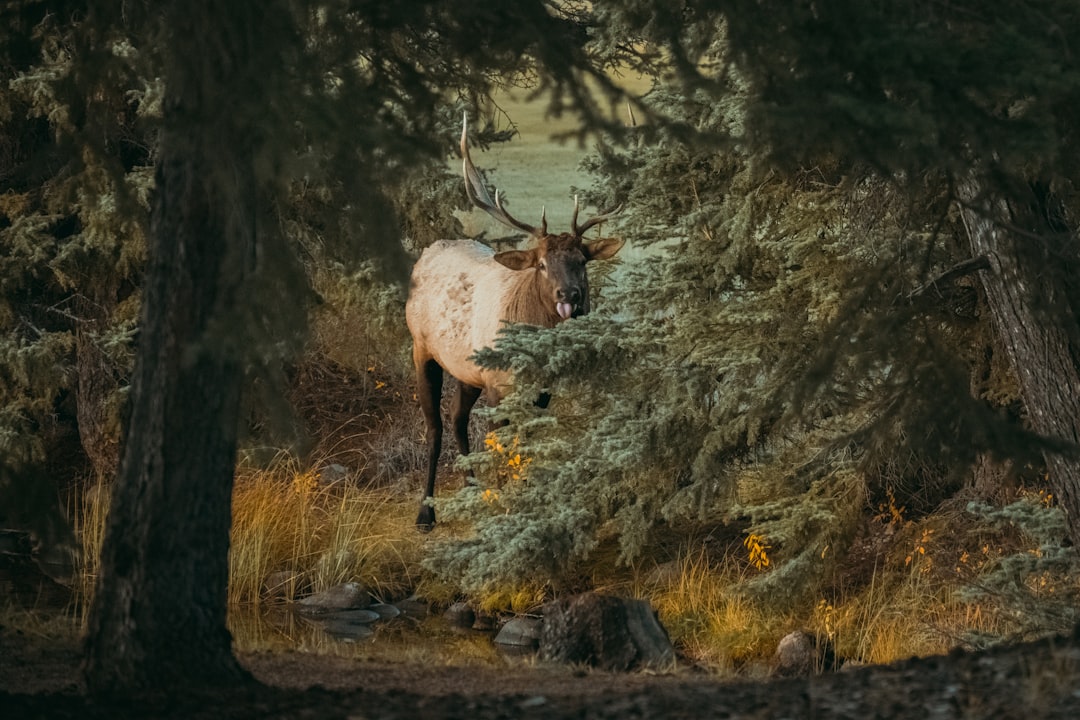
Dark timber elk hunting strips away the luxury of distance. You cannot glass a ridge, watch a herd bull work cows across an open basin, or plan an intercept from half a mile away. Instead, you are operating in lodgepole thickets, spruce tunnels, and fir stands where visibility rarely exceeds 30 yards and every step sounds like it echoes through the entire drainage. Bulls live in these pockets because they offer security, thermal cover, and escape routes that frustrate hunters who rely on long-range glassing. Calling elk in dark timber is not about patience or waiting for a bull to commit from 200 yards out. It is about aggressive setups, tight ranges, and reading wind in spaces where a single thermal shift can blow your entire morning.
Why Bulls Hold in Dark Timber
Elk use dark timber for three reasons: security from hunting pressure, thermal regulation during warm early-season days, and bedding cover that breaks up their outline. During September archery seasons, bulls often bed in north-facing timber pockets where temperatures stay cooler and human scent does not carry as predictably as it does across open slopes. Mature bulls especially favor these spots after they have been pressured on ridgelines or meadow edges earlier in the week. By mid-morning, they are deep in the black timber with cows scattered in feeding pockets nearby.
These areas also concentrate sign. Rubs appear on smaller-diameter trees, wallows sit in seeps and springs within the timber, and trails funnel through natural corridors where the canopy thins just enough for elk to move efficiently. If you are finding fresh sign but never seeing elk in the open, they are likely spending daylight hours in the darkest, nastiest cover within a half-mile of that sign.
Setup Strategy: Get Closer Than You Think
Dark timber calling is a close-range game. Your first setup should be within 100 yards of where you expect the bull to be, not 300 yards away hoping he will cover the distance. Elk in thick cover are conditioned to respond to nearby sounds, not distant bugles echoing across a basin. If you set up too far out, the bull may answer but never commit because he expects the cow or satellite bull to come to him. In dark timber, the bull that bugles back is often within 80 yards already.
Move slowly and deliberately until you hit fresh sign or hear a bull sound off naturally. Then close the gap to within 75–100 yards before your first calling sequence. Use terrain features like ridges, benches, or creek bottoms to mask your final approach. Elk in timber rely heavily on thermals, and those thermals shift unpredictably as the sun hits different aspects of the mountain. Plan your setup so prevailing wind or morning thermals carry your scent away from where you expect the bull to approach.
Once you pick your spot, clear shooting lanes with your hands, not a saw. You need 15–25 yards of visibility in at least two directions. Trim a few low branches if necessary, but avoid making noise that signals human activity. Elk in pressured areas associate snapping branches and scraping sounds with danger. Your caller should set up 20–30 yards behind you, ideally slightly uphill or offset so the bull focuses on the sound source and not your position.
Calling Sequences That Work in Tight Cover
In dark timber, aggressive calling outperforms timid sequences. Bulls that bed in thick cover are less likely to respond to soft cow calls or distant location bugles. They want to hear a challenge, competition, or a cow that sounds close and ready to move. Start with a locator bugle or a sharp cow call to confirm the bull is still in the area. If he answers immediately, he is close. If he answers after 10–15 seconds, he is likely bedded and evaluating whether to get up.
Once you have a response, follow up with an aggressive sequence: a series of excited cow calls mixed with a few estrous whines, then a challenge bugle from your caller. The goal is to make the bull think a satellite bull is moving in on a hot cow. This works especially well on herd bulls that are already managing cows in the timber. They will often leave their cows temporarily to run off what they perceive as a younger intruder.
If the bull answers but does not move, wait 90 seconds and hit him again with the same sequence, slightly louder. Some bulls need to hear the threat twice before they commit. Others will circle downwind to scent-check before showing themselves. Be ready for both. If the bull goes silent after your second sequence, stay put for at least 20 minutes. He may be closing the distance without vocalizing, especially if he has been pressured before.
Avoid over-calling. Three aggressive sequences in 10 minutes is usually enough. If the bull is not responding or moving after that, he either is not interested, has cows locked down, or has already pinpointed your location and decided you are not worth the risk. Move 200 yards and try again from a different angle.
Reading Wind and Thermals in Confined Spaces
Wind in dark timber behaves differently than it does on open ridges. Thermals drop into drainages at first light, rise as the sun hits the canopy, and swirl unpredictably around rock outcrops, deadfall pockets, and thick brush. A bull 80 yards away may catch your scent even if you set up perfectly for the prevailing wind, simply because a thermal eddy carried it sideways into his bedding area.
Check wind direction every few minutes using milkweed seed, unscented powder, or a wind indicator. If you notice a shift, reposition immediately or prepare for the bull to vanish without ever showing himself. Mature bulls in pressured timber will ghost at the first hint of human scent. They do not offer second chances.
One effective tactic is to use the caller as a wind blocker. Position your caller slightly uphill and offset from your shooting lane. If the bull circles downwind to scent-check, he will hit the caller's scent cone first, giving you a few extra seconds to prepare for a shot as he angles back toward the sound.
Shot Opportunities and Shooting Lanes
In dark timber, your shot window may be two seconds. Bulls appear in shooting lanes, pause to pinpoint the sound source, and either commit or retreat based on what they see and smell. You will not have time to range, settle your pins, and draw after the bull steps into view. You need to be at full draw, anchored, and ready the moment you hear the bull closing distance.
Pre-range multiple trees and landmarks within your shooting lanes. Know that the dead fir 18 yards to your left is your reference point for anything moving through that corridor. Anchor on nearby trees or stumps so you can hold at full draw for 30–60 seconds without fatigue. If you are bowhunting, use a release aid you trust under pressure. Rushed shots in thick cover often result in marginal hits or clean misses because the archer tries to thread a gap instead of waiting for a clean broadside opportunity.
Rifle hunters face the same challenge: limited visibility and fast-moving targets. A bull stepping through a shooting lane at 40 yards may only present a three-second window before disappearing into the next pocket of black timber. Scope magnification should be low, 3–9x at most, so you can acquire the target quickly without losing field of view.
What to Do When a Bull Hangs Up
Some bulls respond aggressively to calling but refuse to close the final 50 yards. They bugle back, rake trees, and posture, but will not commit to coming all the way in. This happens when the bull expects the cow or challenger to come to him, when he has cows already locked down, or when he has learned through previous encounters that closing distance often ends badly.
If a bull hangs up, stop calling. Let the woods go quiet for five minutes. The silence often triggers curiosity or frustration, and the bull may take a few steps forward to investigate. If he still will not move, have your caller back out slowly while making soft cow calls as if leaving the area. This can pull the bull forward because he thinks the competition is walking away.
Another option is to reposition aggressively. If the bull is locked on your current location but will not commit, circle 100 yards to the side and set up again. Call from the new position as if a different elk just entered the area. This can break the stalemate and pull the bull off his original line of approach.
How TAGZ Helps You Find Dark Timber Elk Habitat
TAGZ helps you identify dark timber elk habitat before you ever step into the field. Use terrain maps and unit boundaries to locate north-facing slopes, drainages with dense canopy cover, and pockets of lodgepole or spruce within a mile of known feeding areas. Filter units by weapon type, season dates, and historical draw odds so you can target hunts that overlap peak elk activity in these cover-heavy zones. Track your preference points and bonus points across multiple states so you are always positioned for the next opportunity, whether that is an OTC Colorado archery tag or a limited-entry Idaho dark timber hunt. TAGZ gives you the tools to make smarter decisions before you ever call in your first bull.
Common Mistakes in Dark Timber Calling
The biggest mistake hunters make in dark timber is setting up too far from the bull. They hear a bugle 400 yards away and immediately start calling from that distance, expecting the bull to cover the ground. In thick cover, bulls rarely commit to long-distance responses. Close the gap before you call.
Another common error is over-calling. Aggressive sequences work, but only if you give the bull time to respond and move. Constant calling makes you sound like a hunter, not an elk. Three sequences in 10 minutes is aggressive. Six sequences in 10 minutes is pushy and unnatural.
Failing to manage wind is the fastest way to educate bulls without ever seeing them. Check wind direction constantly, reposition when thermals shift, and always assume the bull will try to circle downwind before committing. If you are not thinking about wind every three minutes, you are gambling with your setup.
FAQ — Calling Elk in Dark Timber
How close should I set up when calling elk in dark timber?
Within 75–100 yards of where you expect the bull to be. Dark timber bulls rarely commit to calls from 200+ yards because they expect nearby competition to close the distance.
What calling sequence works best in thick cover?
Aggressive sequences combining excited cow calls, estrous whines, and challenge bugles. Bulls in dark timber respond to competition and nearby threats, not distant locator bugles.
How do I manage wind in confined timber?
Check wind direction every few minutes using a wind indicator. Position your caller uphill and offset so the bull hits their scent cone first if he circles downwind to investigate.
What should I do if a bull bugles back but will not come in?
Stop calling for five minutes. If he still hangs up, have your caller back out slowly while making soft cow calls as if leaving. This often pulls the bull forward out of curiosity.
How much shooting lane clearance do I need in dark timber?
Clear 15–25 yards of visibility in at least two directions. Trim low branches by hand, but avoid making noise that signals human activity to nearby elk.
Can I use this tactic on pressured public land?
Yes, but pressured bulls are more cautious. They may respond to calling but circle downwind to scent-check before committing. Aggressive setups and tight wind management are critical in heavily hunted areas.
Continue Planning Your Hunt
Dark timber elk hunting rewards hunters who understand close-range calling, wind management, and aggressive setups. Whether you are chasing OTC tags in Colorado lodgepole stands or limited-entry Idaho bulls in dense spruce pockets, TAGZ helps you research units, compare draw odds, and track application deadlines so you are always positioned for your next dark timber opportunity. Explore more proven elk hunting strategies on the TAGZ Insights page, compare units side by side using terrain maps and historical data on the TAGZ platform, or start planning your next western hunt at getmytagz.com.
Was this article helpful?
Previous
Best States for Hunting Coues Deer: Where to Chase the Grey Ghost
Coues deer hunting demands precision and patience in rugged desert terrain. Arizona and New Mexico offer the best opportunities, with distinct draw systems, habitat, and trophy potential that serious hunters need to understand before applying.
Next
How Elk Communicate Throughout the Day: A Hunter's Guide to Vocalizations and Body Language
Elk use a complex system of bugles, barks, mews, and body language that shifts dramatically from dawn to dusk. Understanding these communication patterns gives hunters a tactical edge for calling setups and predicting elk movement.