Best Moose Rifles: Calibers, Actions, and Setups That Anchor Bulls
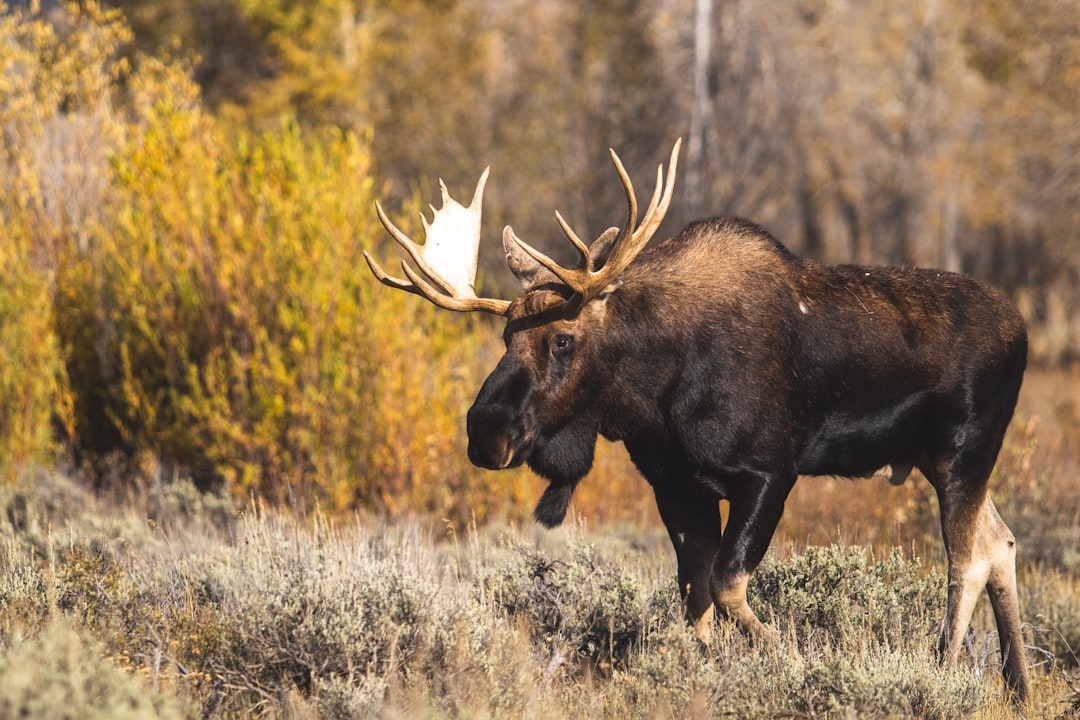
Moose are the largest member of the deer family in North America, with mature bulls weighing 900 to 1,500 pounds. Their massive bone structure, heavy muscle mass, and vital zone placement demand rifles that deliver controlled expansion, deep penetration, and immediate energy transfer. A marginal shot on an elk might still result in quick recovery. The same shot on a moose can mean tracking a wounded animal through swamps, alder thickets, or miles of black spruce.
The best moose rifles balance sufficient power with manageable recoil, accurate shot placement at realistic hunting ranges, and reliability in cold, wet conditions. This guide covers caliber selection, bullet performance, rifle actions, and complete setups proven across Alaska, Canada, and the northern Rockies.
Why moose require heavy-for-caliber bullets
Moose anatomy differs significantly from elk or deer. Their shoulder blade is nearly two inches thick on mature bulls. The ribcage is deep and heavily muscled. Vitals sit low in the body cavity, often obscured by heavy shoulder structure when bulls are quartering toward or away from the shooter.
Light, fast bullets designed for deer-sized game can fragment on heavy bone before reaching the vitals. Cup-and-core bullets that perform well on whitetails sometimes shed too much weight when punching through moose shoulder. The most reliable moose bullets feature bonded cores, monolithic construction, or controlled-expansion designs that retain 85 to 100 percent of their weight.
Bullet weight matters more than velocity for moose. A 180-grain .30-caliber bullet at 2,700 fps will outpenetrate a 150-grain bullet at 3,000 fps when both encounter heavy bone. Sectional density—the relationship between bullet weight and diameter—directly correlates with penetration depth. Moose hunters should choose the heaviest bullet their rifle stabilizes accurately.
Proven calibers for moose hunting
Several cartridges have earned reputations for reliably anchoring bulls. The right choice depends on shooting distance, terrain, rifle weight considerations, and personal recoil tolerance.
.30-06 Springfield
The .30-06 remains the most popular moose caliber in North America for good reason. Loaded with 180 to 220-grain bullets, it delivers 2,500 to 2,800 foot-pounds of energy at 200 yards with moderate recoil. Premium 200-grain bullets like the Swift A-Frame, Nosler Partition, or Barnes TSX provide deep penetration on quartering shots.
The .30-06 offers the widest selection of factory ammunition and works in standard-length actions. Rifles chambered in .30-06 are typically lighter than magnum platforms, making them easier to carry during long moose hunts. The cartridge performs well in cold weather and functions reliably in semi-automatic, bolt-action, and lever-action platforms.
.300 Winchester Magnum
The .300 Win Mag extends effective range and increases energy on impact compared to the .30-06. With 200 to 220-grain bullets, it delivers 3,000 to 3,200 foot-pounds at the muzzle and maintains 2,000 foot-pounds past 400 yards. This extra power provides more margin for error on shot placement and increases penetration on steep quartering angles.
Recoil jumps significantly compared to the .30-06—typically 25 to 30 foot-pounds versus 17 to 20 foot-pounds. Shooters who practice regularly can manage the recoil, but flinching becomes a real concern for hunters who only shoot a few rounds before the season. Magnum rifles also weigh more, carry more felt recoil, and generate more muzzle blast.
.338 Winchester Magnum
The .338 Win Mag represents the upper threshold before diminishing returns. It pushes 225 to 250-grain bullets at velocities comparable to lighter .300 Win Mag loads, but with substantially higher sectional density. On moose, this translates to reliable penetration regardless of shot angle.
Guides in Alaska and northern Canada favor the .338 for clients hunting in thick timber where shot angles are unpredictable. The cartridge also works well for hunters who may encounter brown bears in moose country. Recoil approaches 35 to 40 foot-pounds in most rifles, making practice essential.
8mm Mauser and 9.3x62
These European cartridges offer excellent sectional density with moderate recoil. The 8mm Mauser pushes 200-grain bullets at .30-06 velocities, while the 9.3x62 launches 286-grain bullets at similar speeds. Both have proven themselves on African plains game and translate well to moose hunting.
Ammunition selection is more limited compared to American cartridges, but premium loads from Norma, Sako, and RWS perform exceptionally well. These cartridges work in standard-length actions and generate less barrel wear than magnums.
.375 H&H Magnum
The .375 H&H represents overkill for most moose hunting situations, but it guarantees penetration from any angle and doubles as dangerous game insurance in bear country. With 300-grain bullets at 2,500 fps, it delivers devastating terminal performance.
Recoil exceeds 50 foot-pounds in most rifles. The cartridge requires magnum-length actions, increasing rifle weight and bulk. For hunters who already own a .375 for Alaska brown bear or African hunting, it works perfectly well on moose. For dedicated moose rifles, smaller calibers are more practical.
Rifle actions and configurations
Moose hunting happens in diverse terrain, from open tundra to dense black spruce forests. The ideal rifle configuration depends on where you hunt and how you hunt.
Bolt-action rifles
Bolt-action rifles dominate moose hunting because they offer the best accuracy, widest caliber selection, and most reliable feeding with heavy bullets. Models like the Tikka T3x, Weatherby Vanguard, Ruger Hawkeye, and Sako 85 provide sub-MOA accuracy in field conditions.
Look for rifles with controlled-round feeding if you hunt in brush where follow-up shots may be necessary. Push-feed actions work fine for open-country hunting. Synthetic stocks handle wet conditions better than wood and maintain zero in temperature swings. A detachable magazine allows quick unloading when crossing obstacles or loading into boats.
Lever-action rifles
Lever guns chambered in .45-70 Government or .450 Marlin work well in thick timber where shots rarely exceed 150 yards. These cartridges push heavy, large-diameter bullets at moderate velocities, creating wide wound channels and deep penetration. The Marlin 1895 and Henry Big Boy models are popular choices.
Lever actions point quickly in tight cover and allow fast follow-up shots on moving bulls. They carry well on ATVs and horses. The main limitation is effective range—most loads drop below 1,500 foot-pounds of energy by 200 yards.
Semi-automatic rifles
Semi-autos like the Browning BAR or Benelli R1 offer the fastest follow-up shots for hunters who prefer not to work a bolt. They function reliably in cold weather when properly maintained. Recoil is typically 15 to 20 percent less than comparable bolt guns due to the operating system absorbing some energy.
The trade-off is added weight and slightly reduced accuracy compared to bolt-action rifles. Most semi-autos group 1 to 1.5 MOA with quality ammunition, which is sufficient for moose hunting. Regular cleaning is essential, especially in wet or dusty conditions.
Optimal barrel length and rifle weight
Moose rifles should balance velocity, packability, and shooting comfort. Barrel length affects velocity, overall rifle length, and handling characteristics.
For standard cartridges like the .30-06, a 22-inch barrel provides optimal velocity without excessive length. Magnum cartridges benefit from 24-inch barrels to burn slower powders completely. Shorter barrels—20 inches or less—sacrifice 50 to 100 fps per inch removed but improve maneuverability in thick cover.
Rifle weight should fall between 8 and 10 pounds with scope and ammunition. Lighter rifles increase felt recoil and are harder to shoot accurately from field positions. Heavier rifles are more pleasant to shoot but become burdensome during long days of glassing or hiking.
A 9-pound rifle in .30-06 or .300 Win Mag provides a good balance for most hunters. Shooters who struggle with recoil should consider adding a muzzle brake or upgrading to a better recoil pad.
Free to join
Download mobile app
- Detailed draw odds
- Point tracking
- Deadline reminders
- 18 states covered


Free to join
Download mobile app
- Detailed draw odds
- Point tracking
- Deadline reminders
- 18 states covered
Free to join
Download mobile app
- Detailed draw odds
- Point tracking
- Deadline reminders
- 18 states covered

Optics for moose rifles
Most moose are shot between 100 and 250 yards. Optics should prioritize low-light performance, generous eye relief, and simple reticles over long-range features.
A 3-9x40mm or 2.5-10x scope covers all realistic moose hunting scenarios. Variable magnification allows precise shot placement at longer ranges while remaining usable at close range if a bull appears in thick cover. Scopes with illuminated reticles help in low light but are not essential.
Look for scopes with at least 3.5 inches of eye relief to accommodate heavy recoil. Second focal plane reticles are simpler for hunting than first focal plane designs. A duplex or simple MOA/mil-dot reticle works better than complex Christmas tree reticles.
Quality matters more than features. A reliable Leupold VX-3HD, Vortex Viper, or Trijicon Huron will outperform a budget long-range scope in moose hunting conditions.
Bullet selection and shot placement
The right bullet matters as much as caliber choice. Moose bullets must retain weight, penetrate deep, and expand reliably at impact velocities between 1,800 and 3,000 fps.
Premium bullet recommendations
Swift A-Frame: Bonded front core with solid rear shank. Expands to 1.5x caliber and retains 95 percent of weight. Excellent on shoulder shots.
Nosler Partition: The original premium hunting bullet. Front core expands while rear core penetrates. Proven on moose for 70 years.
Barnes TSX/TTSX: Monolithic copper bullets that retain 100 percent of weight. Four petals create wide wound channels. Work well at extended range.
Federal Trophy Bonded Tip: Bonded core with polymer tip for consistent expansion. Retains 90 percent of weight on heavy bone impacts.
Hornady InterLock: Budget option that performs well on broadside shots. Less reliable on heavy bone compared to bonded bullets.
Shot placement fundamentals
Moose vitals sit low and forward in the chest cavity. The heart sits just above the brisket, about one-third up from the bottom of the chest. Lungs extend from the diaphragm forward to the shoulder.
Broadside shots should target the crease directly behind the shoulder, one-third up from the bottom of the chest. This placement strikes both lungs and often the heart. Avoid shooting high—moose can travel surprising distances with one lung hit.
Quartering-away shots should aim for the off-side shoulder, angling the bullet through the diaphragm and into the vitals. Quartering-toward shots are risky but sometimes necessary. Aim for the near-side shoulder to break bone and reach the vitals.
Never take Texas heart shots (rear-end shots angling forward). The rumen and paunch contents will contaminate the wound channel, and penetration is uncertain even with premium bullets.
Complete rifle setup examples
These configurations represent proven combinations for different moose hunting scenarios.
Budget-conscious all-around setup
Rifle: Ruger American in .30-06 Springfield
Optic: Vortex Diamondback 3-9x40mm
Ammunition: Federal Fusion 180-grain
Total weight: 8.5 pounds
Effective range: 300 yards
Cost: $800-900
This setup provides reliable accuracy and terminal performance without premium pricing. The Ruger American shoots 1 to 1.5 MOA with quality ammunition and handles harsh weather well.
Premium open-country setup
Rifle: Tikka T3x Lite in .300 Winchester Magnum
Optic: Leupold VX-5HD 3-15x44mm
Ammunition: Barnes TTSX 200-grain
Total weight: 9 pounds
Effective range: 400+ yards
Cost: $2,200-2,500
This combination extends effective range for tundra hunting and provides superior low-light performance. The Tikka action is smooth and accurate, while the Barnes bullets guarantee penetration.
Timber/brush setup
Rifle: Marlin 1895 SBL in .45-70 Government
Optic: Leupold VX-Freedom 1.5-4x20mm
Ammunition: Buffalo Bore 430-grain hardcast
Total weight: 8.5 pounds
Effective range: 150 yards
Cost: $1,400-1,600
For hunters working thick alder patches or black spruce, the .45-70 provides devastating close-range power with manageable recoil. The low-magnification scope allows fast target acquisition.
Preparing your rifle for moose season
Moose hunts often happen in remote locations where rifle malfunctions can end a hunt. Proper preparation prevents problems in the field.
Confirm zero at 100 yards before the hunt. Fire at least three three-shot groups to verify consistency. If hunting in significantly different temperatures than your practice sessions, re-check zero in similar conditions.
Clean the bore and chamber thoroughly, then run a lightly oiled patch through the bore. Excess oil can cause pressure spikes in cold weather. Check all scope mount screws and action screws for proper torque.
Verify magazine function with your hunting ammunition. Some premium bullets have different profiles than standard loads and may not feed reliably. Cycle at least ten rounds through the magazine to confirm feeding.
Pack a cleaning kit, bore snake, and small bottle of gun oil. Even reliable rifles can malfunction if debris enters the action during a river crossing or wet conditions. Bring a backup scope or iron sights if possible.
How TAGZ helps plan moose hunts
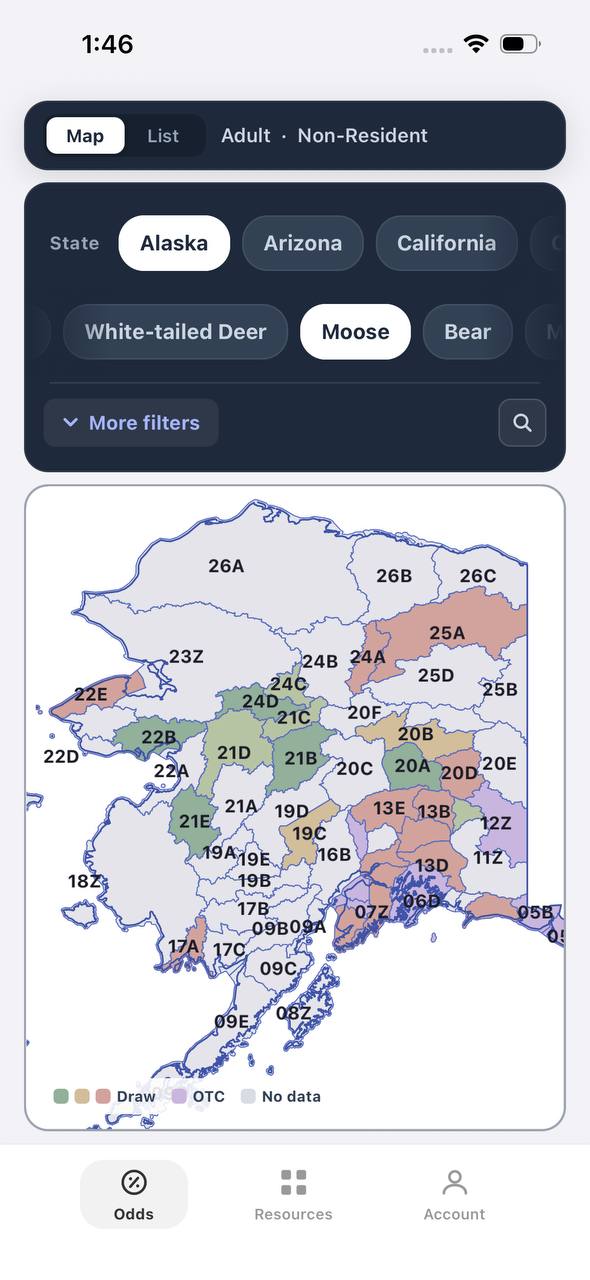
Moose draw odds vary significantly across states and provinces. Alaska offers over-the-counter opportunities in many units, while Montana, Wyoming, and Idaho require preference points for most moose tags. Understanding draw statistics helps hunters decide where to apply and how many points to invest.
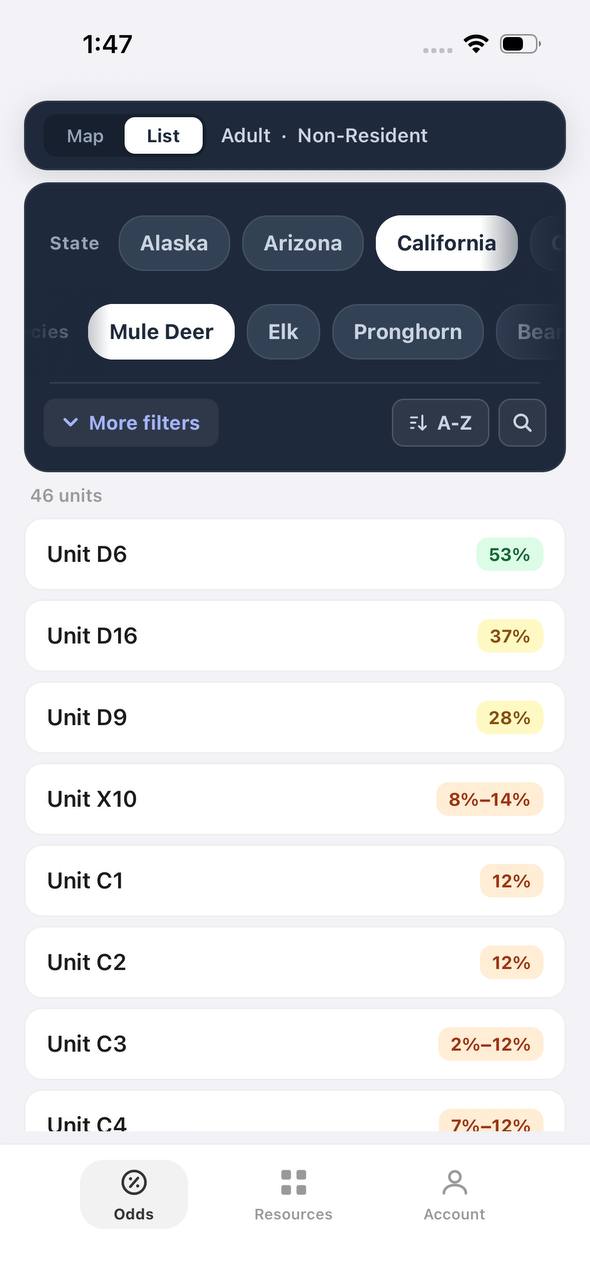
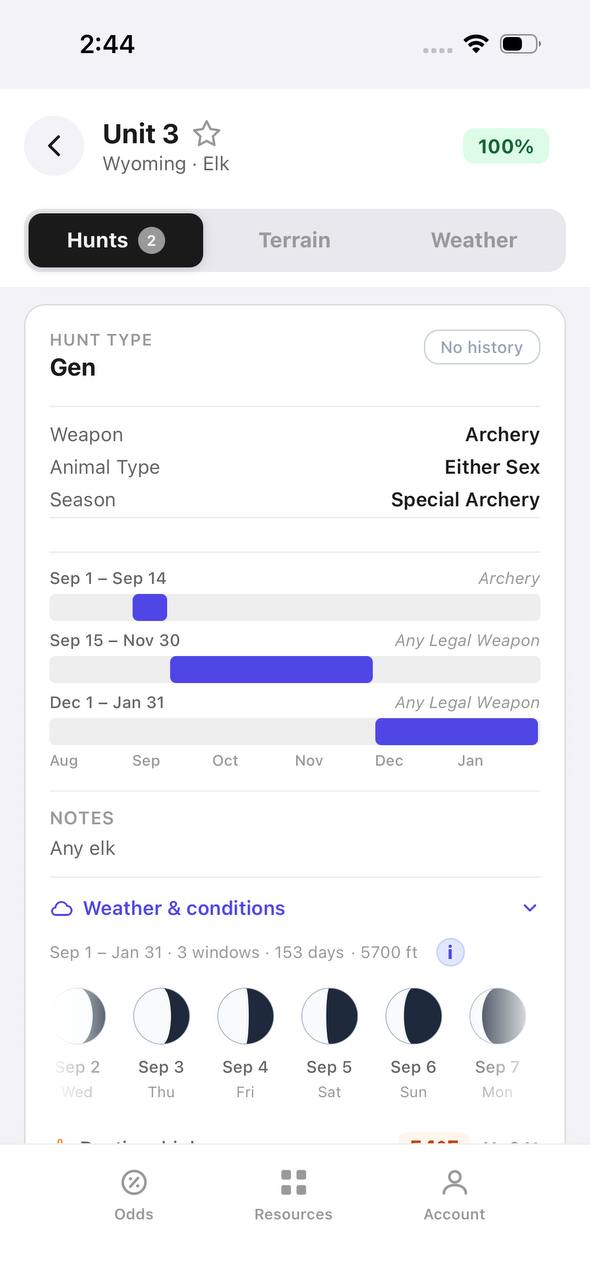
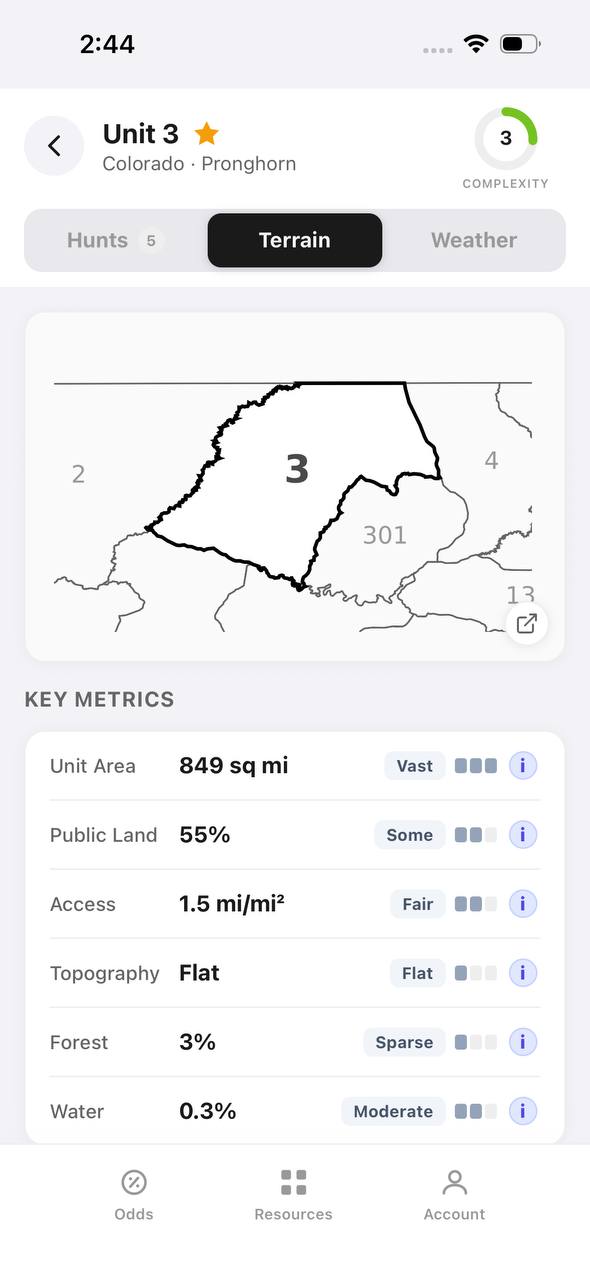
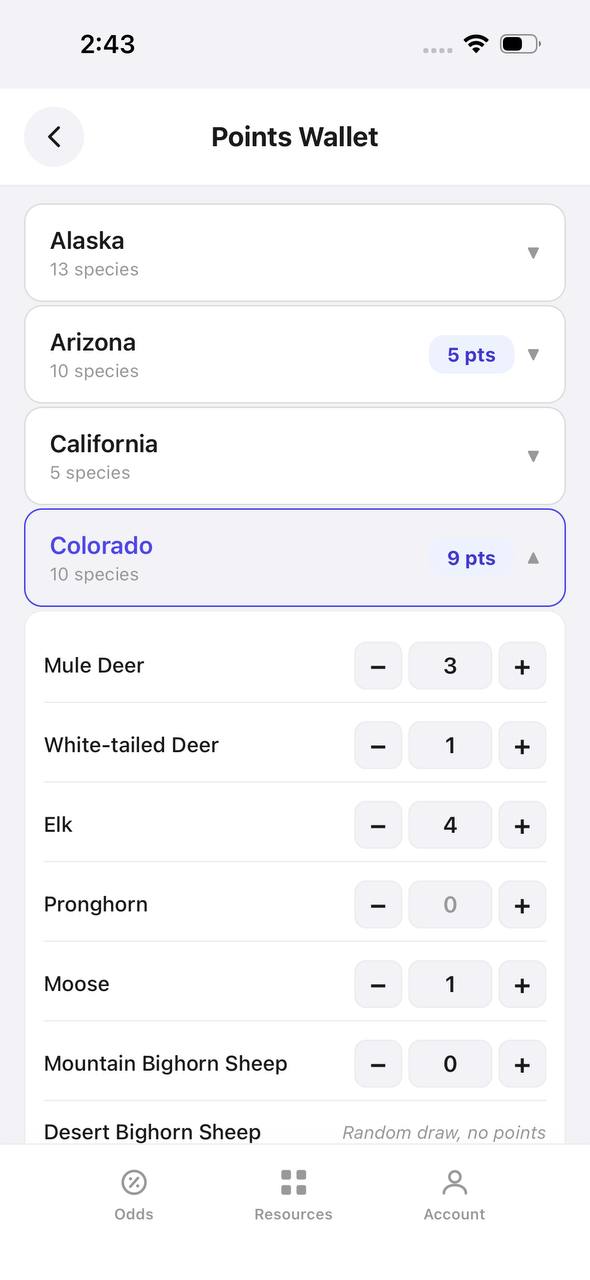
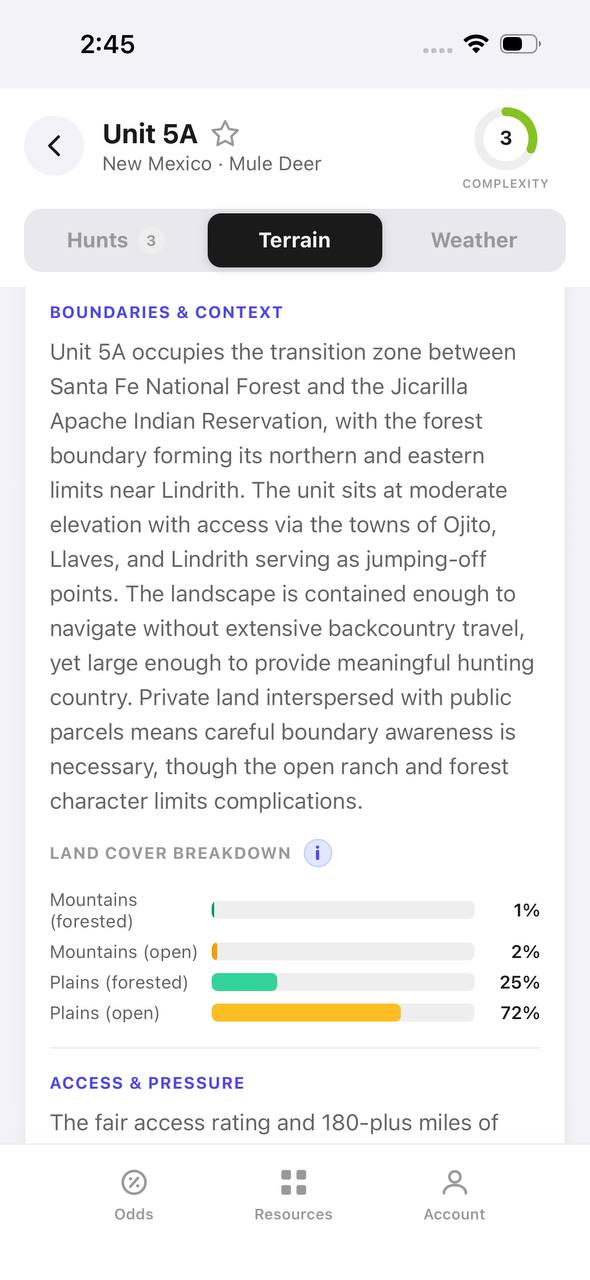
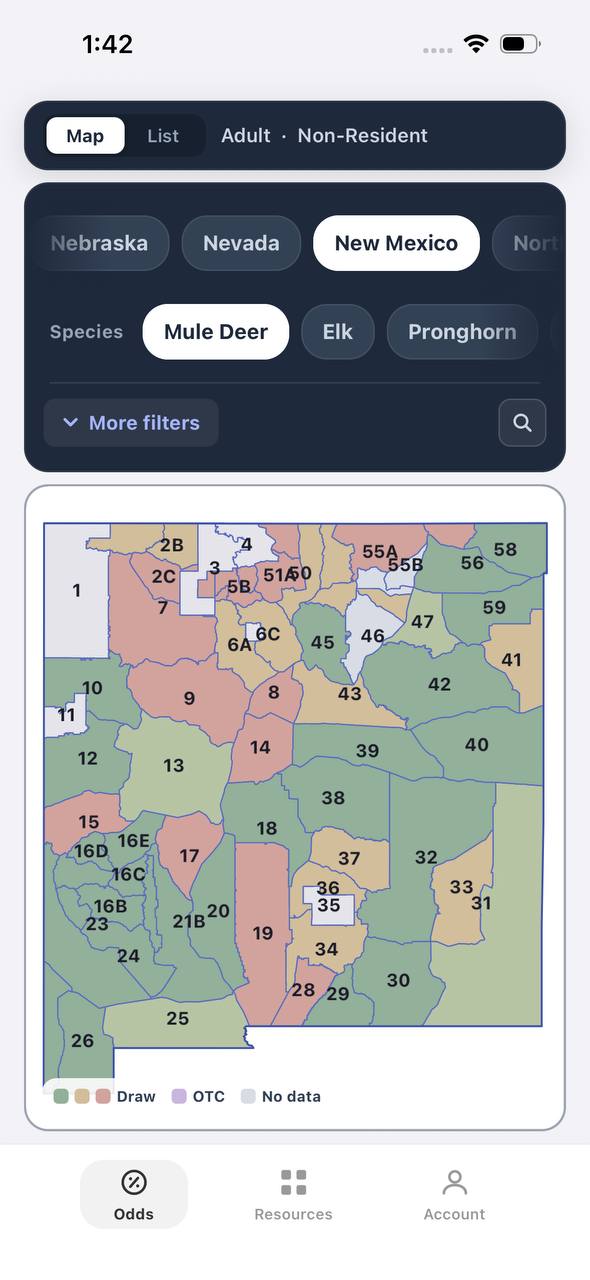
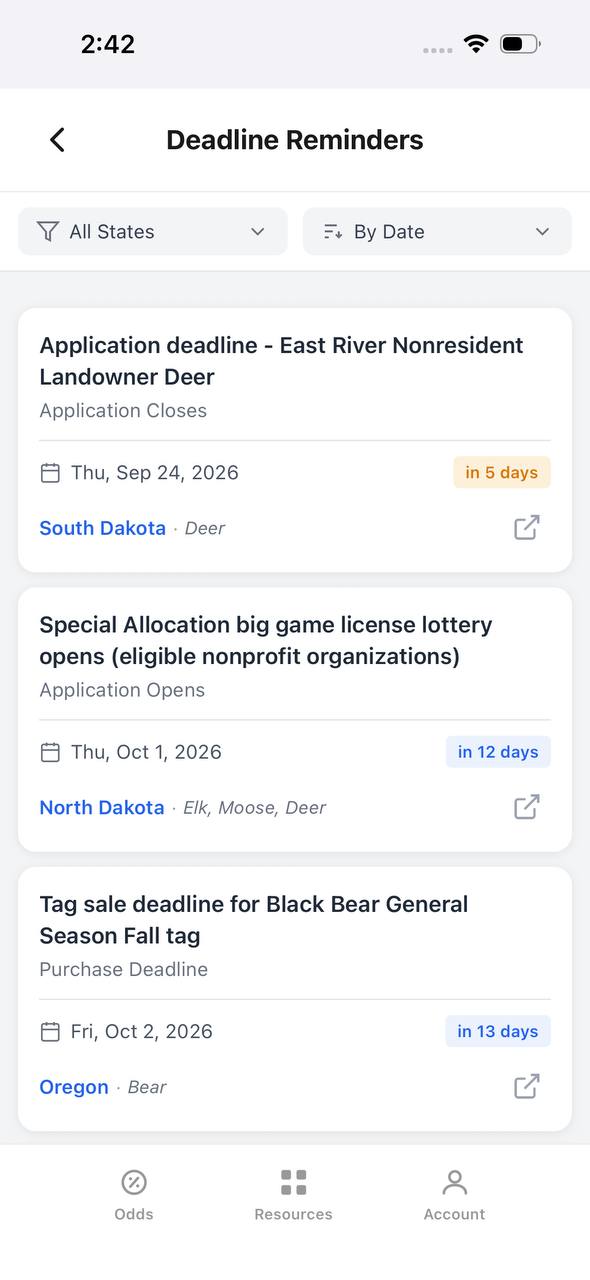
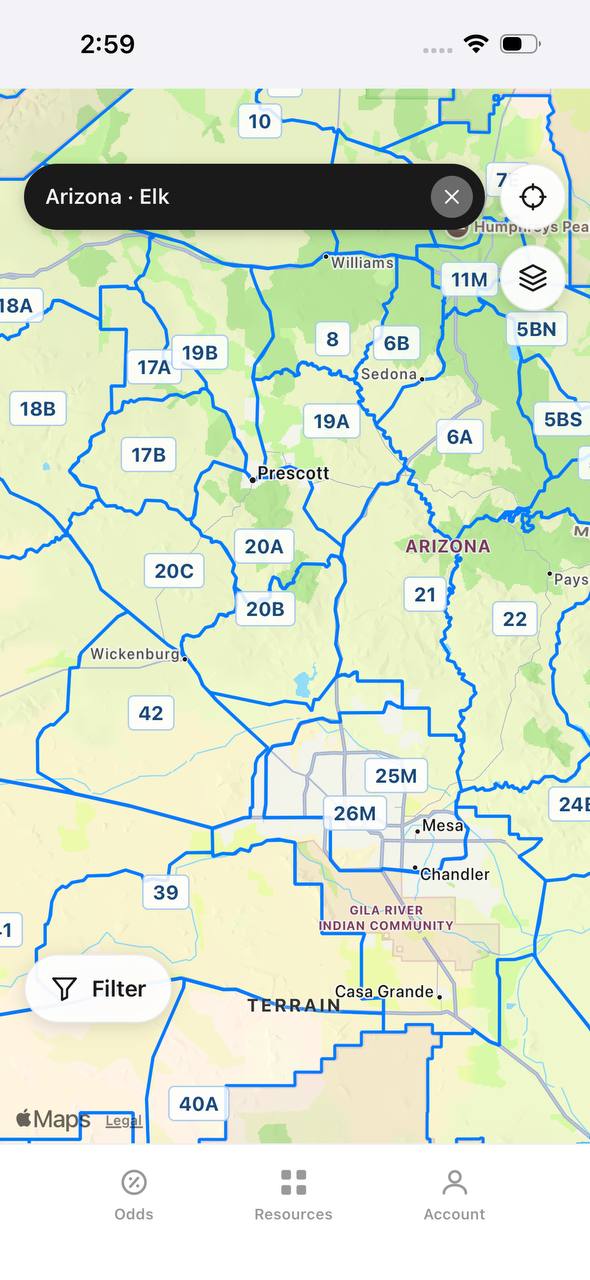
TAGZ helps you compare moose units side by side using terrain maps, unit boundaries, and historical draw data. Track your preference points and bonus points across multiple states so you never miss a draw deadline. Whether you are chasing OTC tags in Alaska or planning a trophy limited-entry hunt in Wyoming, TAGZ gives you the tools to make smarter decisions before you ever step into the field.
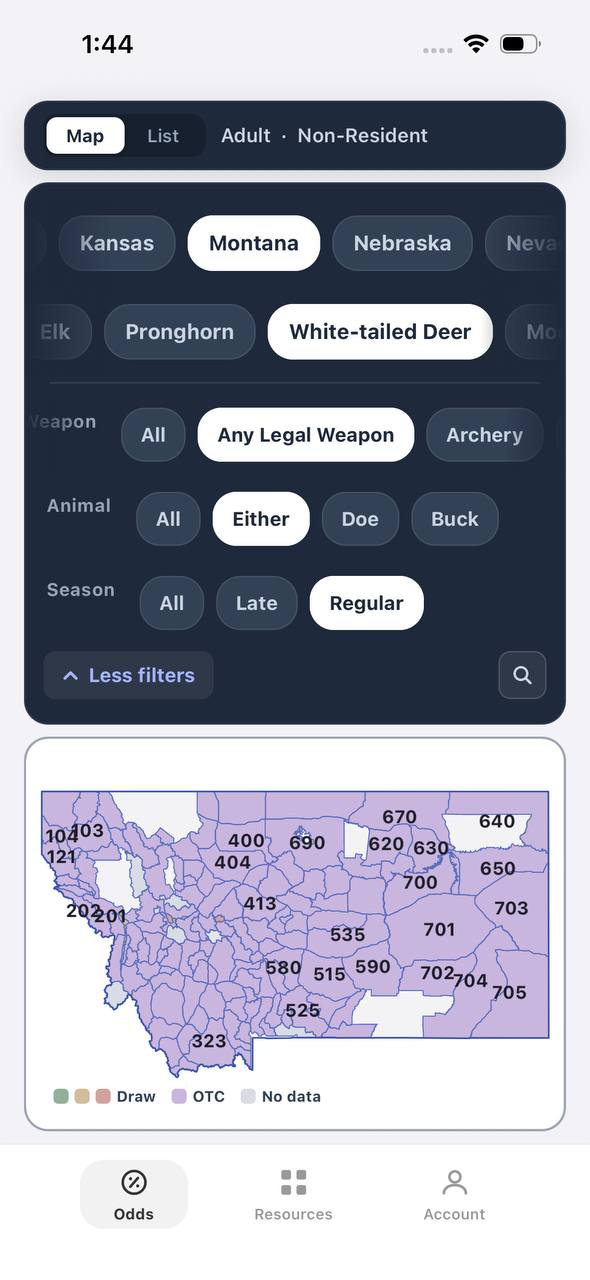
The platform shows public land access, historical success rates, and average bull size by unit. Filter opportunities by weapon type, season dates, and residency status to find hunts that match your schedule and experience level. Multi-state moose hunters can manage applications for Alaska, Montana, Wyoming, Idaho, Colorado, and Utah from a single dashboard.
FAQ — Moose Rifles
What is the best caliber for moose hunting?
The .30-06 Springfield with 180 to 220-grain premium bullets is the most versatile moose caliber, offering excellent penetration with manageable recoil. The .300 Win Mag and .338 Win Mag provide more power for longer shots or heavy timber situations where shot angles are unpredictable.
Is a .308 Winchester adequate for moose?
Yes, the .308 Win with 180 to 200-grain bonded or monolithic bullets will reliably kill moose at ranges under 250 yards. It offers less energy than the .30-06 but remains effective with proper shot placement and quality bullets. Avoid light deer bullets and choose controlled-expansion designs.
Do I need a magnum cartridge for moose?
No. Standard cartridges like the .30-06, 8mm Mauser, and .35 Whelen kill moose efficiently when loaded with heavy, premium bullets. Magnums extend effective range and provide more margin for error on shot placement but generate significantly more recoil and cost.
What bullet weight is best for moose in .30 caliber?
Use 180-grain bullets as the minimum, with 200 to 220-grain bullets providing optimal penetration on quartering shots and heavy bone. Heavier bullets maintain momentum through dense muscle and bone better than lighter, faster bullets.
Can you use a .270 Winchester for moose?
Yes, but it represents the light end of acceptable moose cartridges. Use 150 to 160-grain premium bullets and limit shots to broadside presentations under 200 yards. The .270 lacks sectional density for reliable penetration on steep quartering angles.
What scope magnification do I need for moose hunting?
A 3-9x or 2.5-10x variable scope covers all realistic moose hunting distances. Most moose are shot between 100 and 250 yards, where 6x to 9x magnification provides sufficient target resolution. Higher magnification makes low-light shooting and close encounters more difficult.
Continue Planning Your Hunt
Moose hunting represents the pinnacle of North American big game pursuits, combining remote wilderness adventure with the challenge of taking the continent's largest deer. Whether you are planning your first moose hunt or working toward a tag that requires years of preference points, preparation separates successful hunts from disappointments.
Explore more western hunting strategies and draw system insights on the TAGZ Insights page, where you will find detailed unit breakdowns, application deadlines, and hunt planning resources. Ready to start comparing units and tracking your points across multiple states? Check out TAGZ pricing options to see how the platform simplifies complex draw systems and helps you maximize draw opportunities every year.
For hunters serious about western moose, elk, and deer applications, learn more about the TAGZ platform and how it consolidates draw odds, terrain analysis, and deadline tracking into one decision-making tool that works the way serious hunters think.
Was this article helpful?
Previous
Best Survival Kits for Western Big-Game Hunters in 2025
Backcountry hunts demand reliable survival gear. From ultralight day-hunt kits to multi-day emergency setups, we break down the essential components and top pre-built options that keep Western hunters safe when plans fall apart.
Related
Florida Alligator Hunting Costs Explained: Permits, Guides & DIY Breakdown
Florida alligator hunting costs range from $272 for a DIY resident hunt to $2,500+ for guided trophy hunts. Permits, meat processing, and taxidermy add up fast—here's what to budget before you apply.
Next
How to Age a Bighorn Sheep Ram in the Field — Horn Growth, Brooming, and Quarter Curls Explained
Learning to age rams by horn structure, brooming patterns, and quarter-curl measurements helps hunters identify legal and mature sheep. Field judging takes practice, but understanding growth rings, mass, and tip wear makes quick, ethical assessments possible.