Best States for DIY Desert Bighorn Sheep Hunting
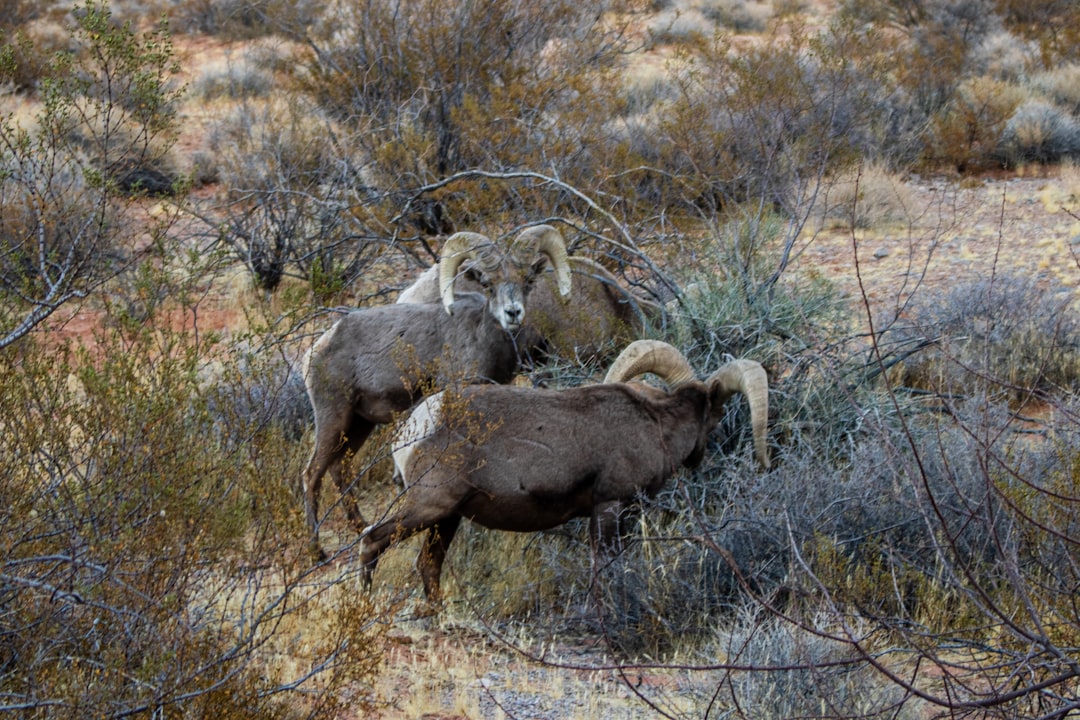
Desert bighorn sheep represent the ultimate DIY challenge: low tag quotas, extreme terrain, and animals that have survived in some of North America's harshest landscapes for millennia. If you're committed to hunting one without hiring an outfitter, your state selection matters more than almost any other factor. Not all desert bighorn states are created equal, and understanding the draw systems, tag allocations, and realistic timelines will save you decades of wasted applications.
The states offering DIY desert bighorn opportunities include Nevada, Arizona, Utah, New Mexico, and Texas, with California and Colorado holding small populations. Each state presents different trade-offs between draw odds, tag costs, and the quality of rams you might encounter.
Nevada: The Best Odds in a Tough Game
Nevada consistently issues more desert bighorn tags than any other state, making it the statistical favorite for DIY hunters. The state offers both resident and nonresident tags through a bonus point system, and some units see draw odds in the 1-3% range for applicants with maximum points.
The key advantage in Nevada is unit diversity. With dozens of desert bighorn units spread across the southern half of the state, you can target units with better odds while still hunting quality rams. The bonus point system means your odds improve over time, but it's not a strict preference system — a first-year applicant can draw over someone with 20 points.
Nevada rams tend to run smaller than Arizona trophies, but 160-170 class rams are absolutely achievable on public land without a guide. The terrain is brutal — think volcanic rock, extreme heat, and scarce water — but it's navigable for a prepared hunter who scouts thoroughly.
For nonresidents, Nevada charges a $1,500 tag fee plus license costs, making it one of the more affordable desert bighorn options. The application deadline typically falls in mid-April, and you can apply online through the NDOW website.
Arizona: Dream Tags With Nightmare Odds
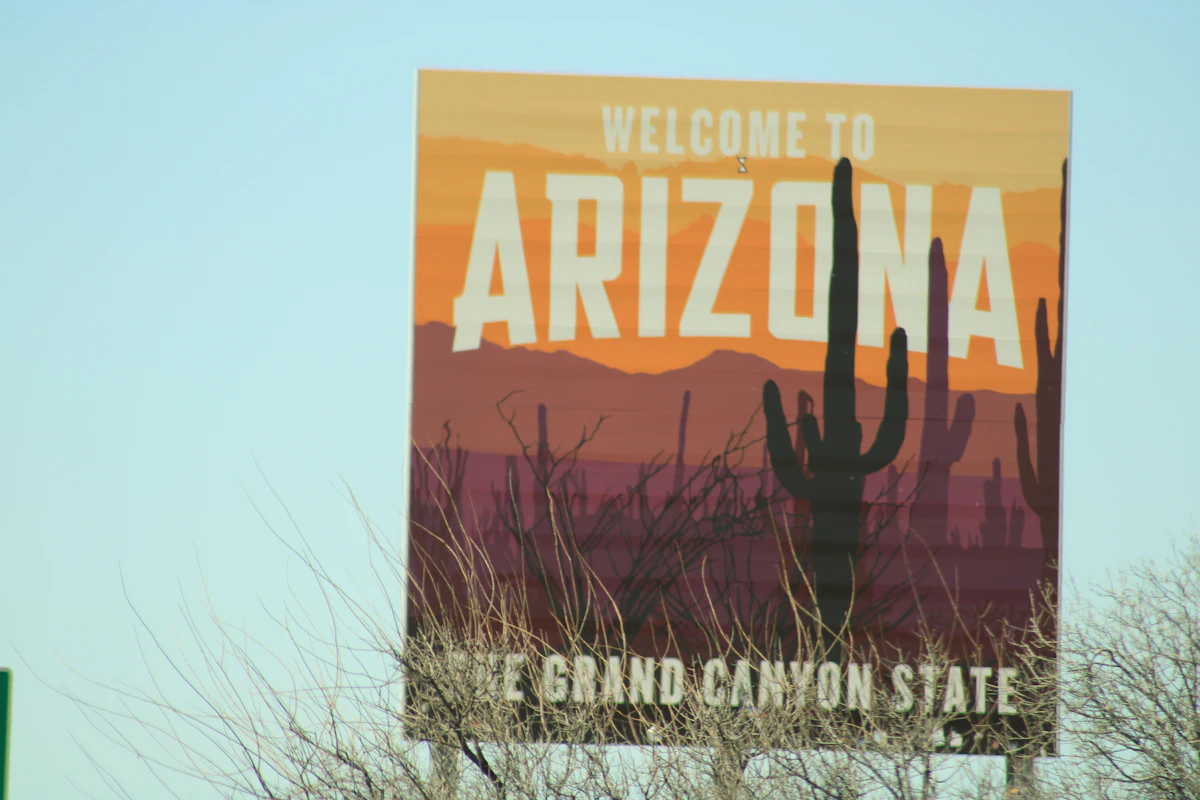
Arizona produces the largest desert bighorn rams in North America, with multiple Boone and Crockett entries coming from units like 22, 27, and 45C. The problem is that everyone knows this, and the state's draw system makes Nevada look generous.
Arizona uses a bonus point system similar to Nevada, but tag quotas are significantly lower relative to applicant numbers. Drawing a desert bighorn tag in Arizona often takes 25+ years of applying, and some hunters never draw despite decades of dedication. Nonresident odds are particularly grim, often falling below 0.5% even with maximum points.
If you do draw an Arizona desert bighorn tag, you're holding one of the most valuable permits in North American hunting. The terrain varies from the Sonoran Desert's saguaro forests to rugged mountain ranges, and the state's management has produced exceptional ram genetics. Many DIY hunters who draw invest in extensive preseason scouting — often 10+ days — to locate shooter rams before the season opens.
The tag fee for nonresidents runs around $1,600, but the real cost is time. If you're under 30 and start applying now, you might draw before retirement. If you're starting at 50, Arizona probably shouldn't be your primary focus.
Utah: Limited Entry With Growing Opportunities
Utah's desert bighorn population has expanded significantly over the past two decades, and the state now offers tags in multiple units across the southeastern corner. The draw system uses preference points, meaning dedicated applicants will eventually draw if they keep applying.
Utah's preference point system creates a more predictable timeline than Nevada or Arizona's bonus systems. Check the current point creep for your target units — some require 15+ points, while newer units may draw in under 10 years. The state also offers a random tag allocation in some years, giving newer applicants a small chance at immediate success.
Ram quality in Utah has improved dramatically as transplanted herds have matured. Units like the San Rafael and Henry Mountains periphery hold rams that can push 170+ inches, though most hunters should expect animals in the 155-165 range. The terrain is classic canyon country — sandstone cliffs, desert washes, and sparse vegetation that makes glassing productive.
Nonresident tag fees run approximately $1,500, with application deadlines in late January or early February. Utah's online licensing system is straightforward, and the state provides solid public hunt data to help you analyze draw odds before committing.
New Mexico: Once-in-a-Lifetime Simplicity
New Mexico designates desert bighorn as a once-in-a-lifetime species, meaning you get exactly one application opportunity before being removed from the pool permanently if you draw. The state uses a random draw with no point system, creating equal odds for first-year applicants and 20-year veterans.
This randomness is New Mexico's greatest strength and weakness. Your odds won't improve with time, but you also won't compete against point creep. For hunters who want a simple "apply and hope" strategy without tracking points across multiple states, New Mexico offers clean simplicity.
The desert bighorn units cluster along the Rio Grande corridor and in the southwestern bootheel region. Ram quality is solid, with mature animals typically scoring 150-165. The terrain includes classic Chihuahuan Desert habitat — rocky outcrops, sparse grass, and enough vegetation to make stalking possible.
Tag fees for nonresidents sit around $3,100, making New Mexico one of the more expensive options. However, you're not paying for license products and point fees over decades, so total investment may actually be lower than states with point systems.
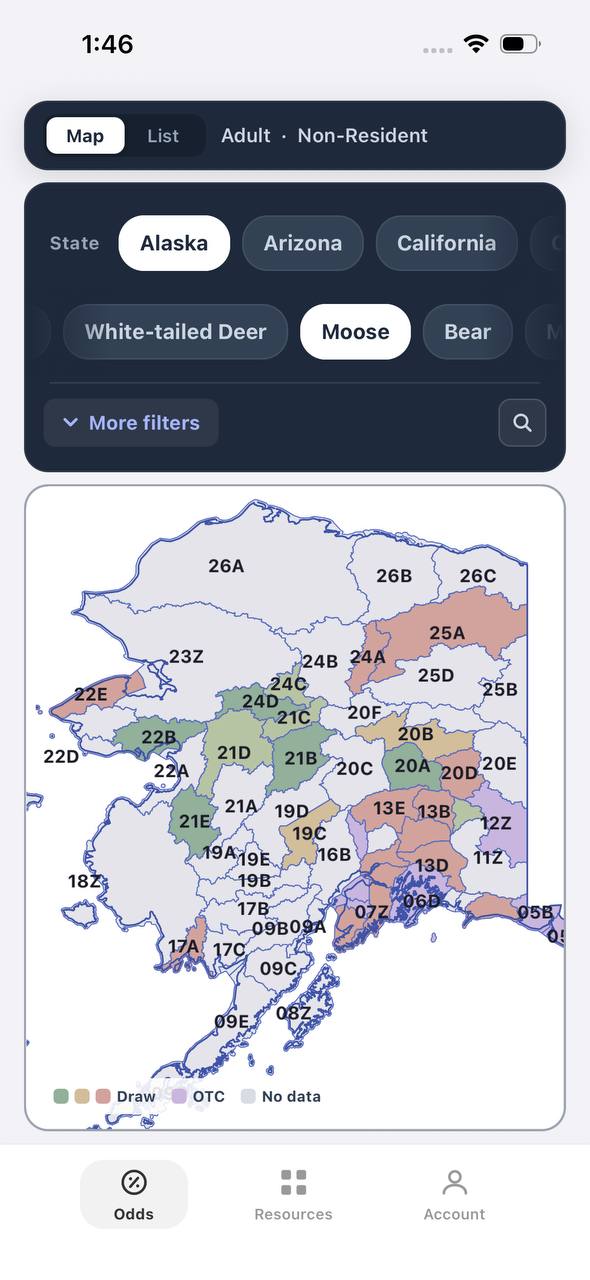
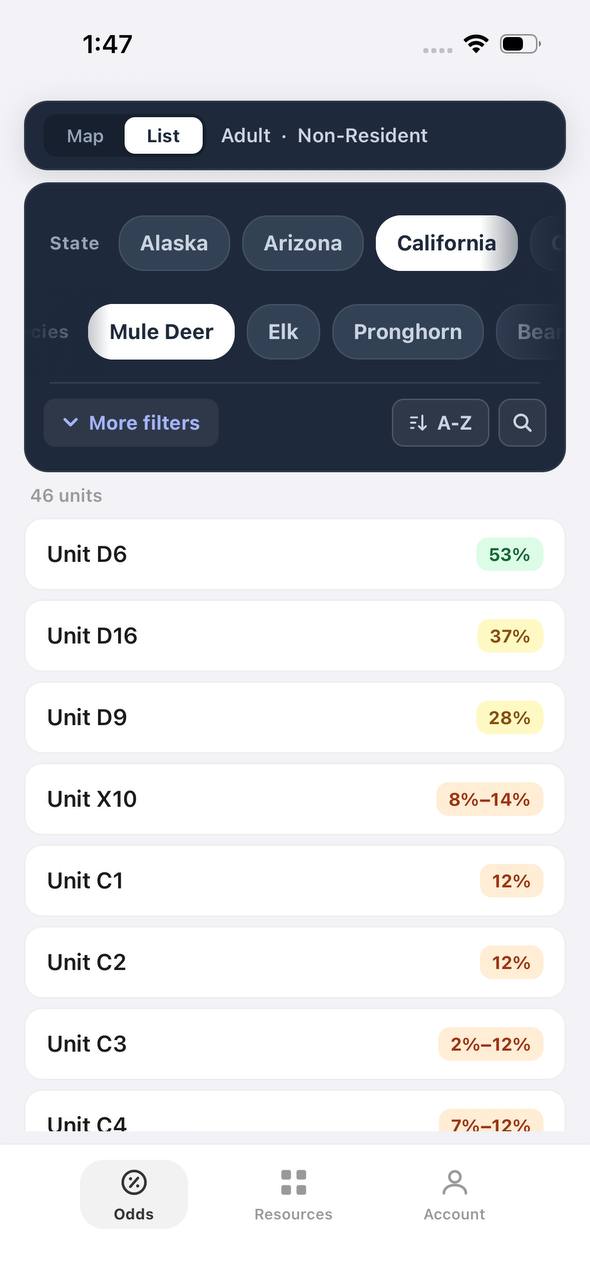
Free to join
Download mobile app
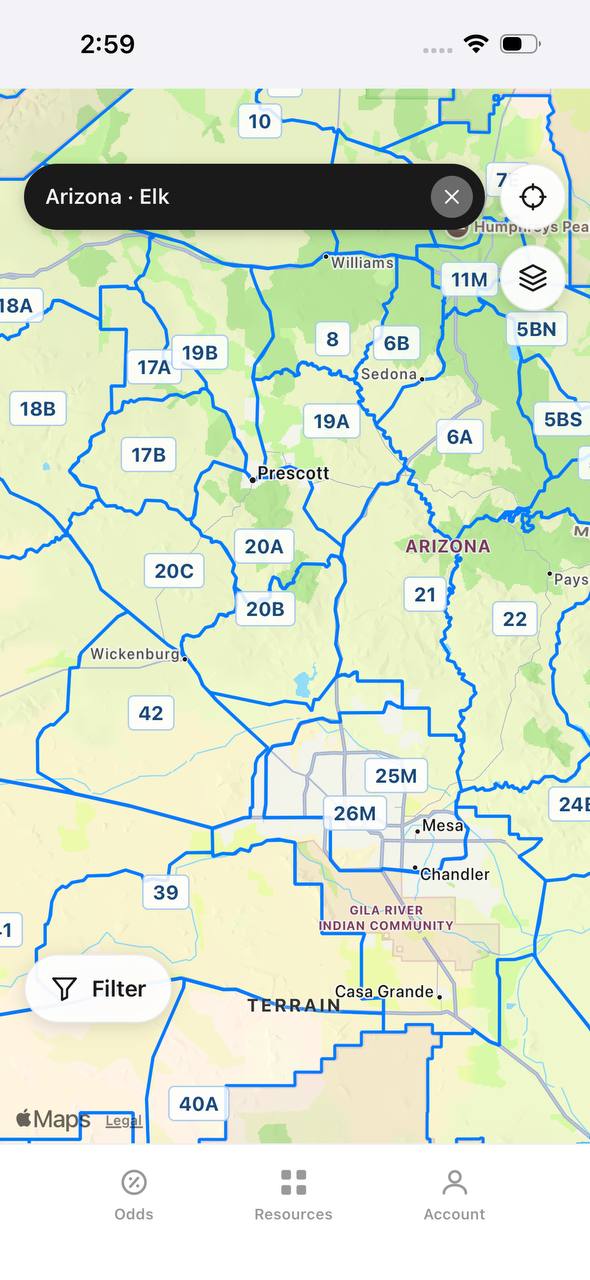
- Detailed draw odds
- Point tracking
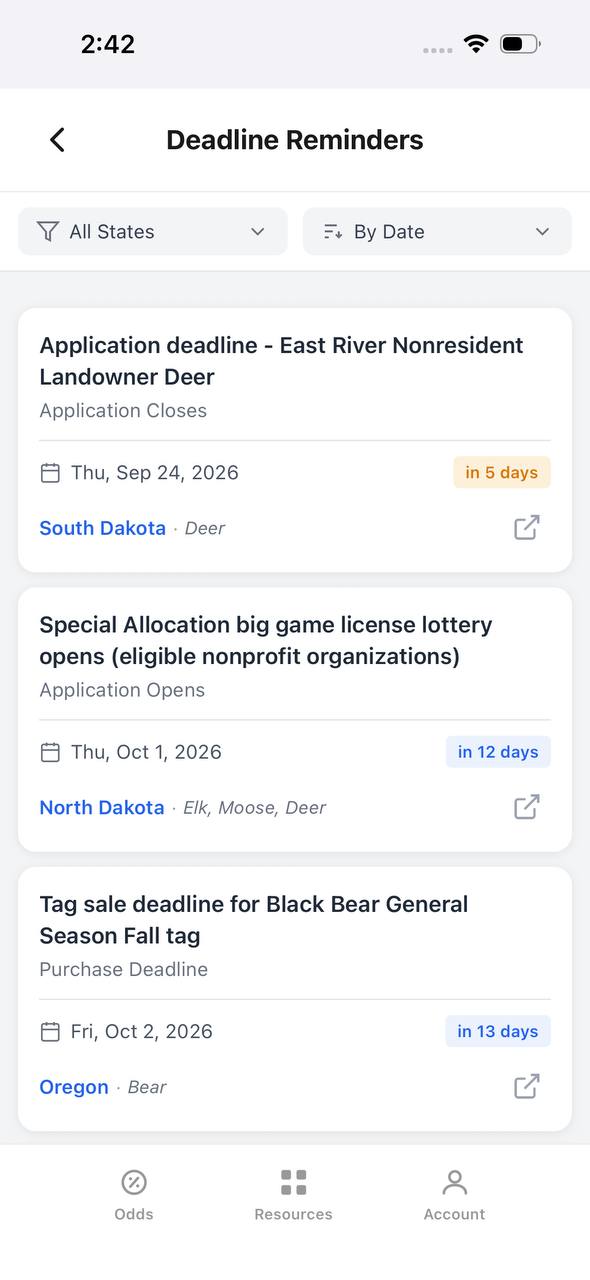
- Deadline reminders
- 18 states covered

Free to join
Download mobile app
- Detailed draw odds
- Point tracking
- Deadline reminders
- 18 states covered
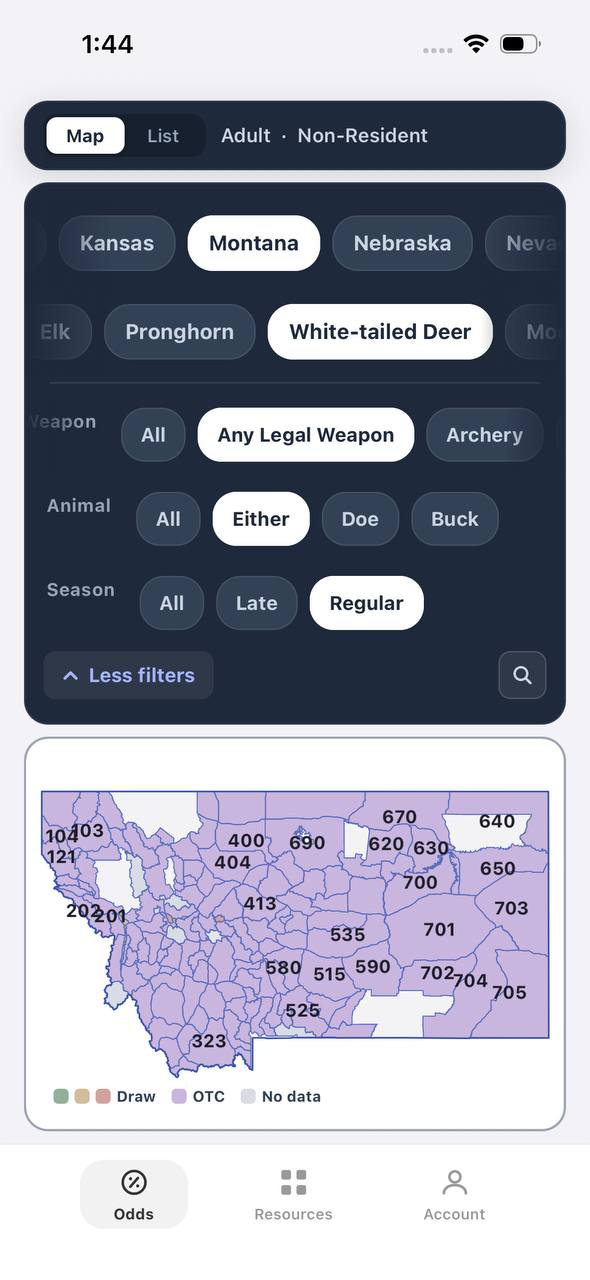
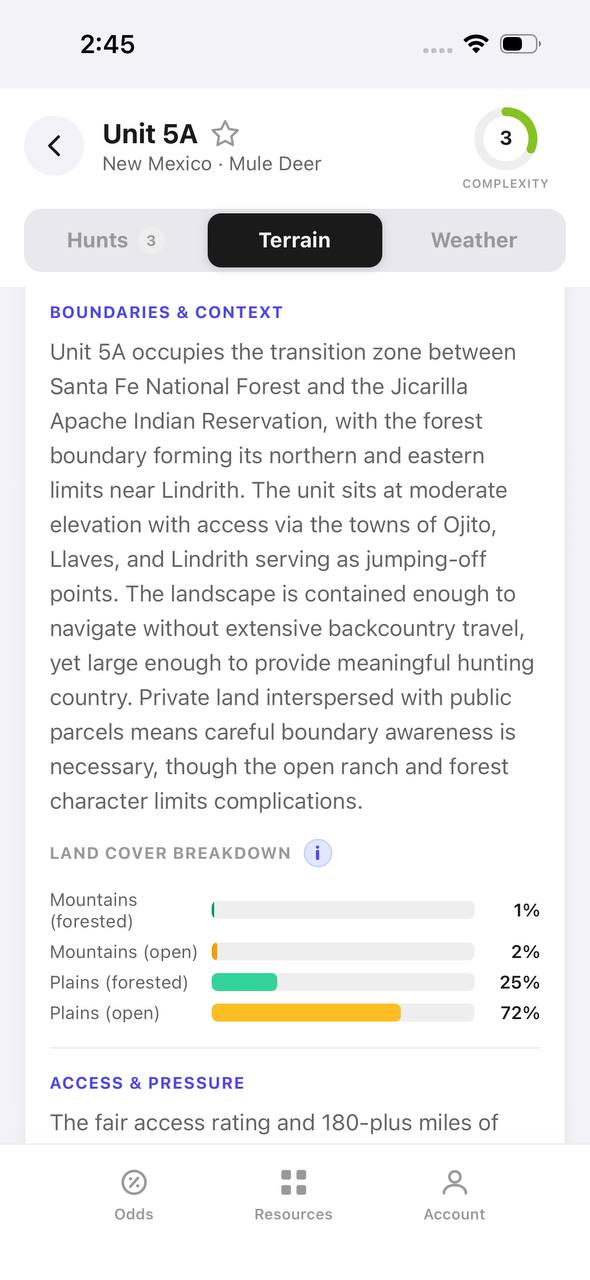
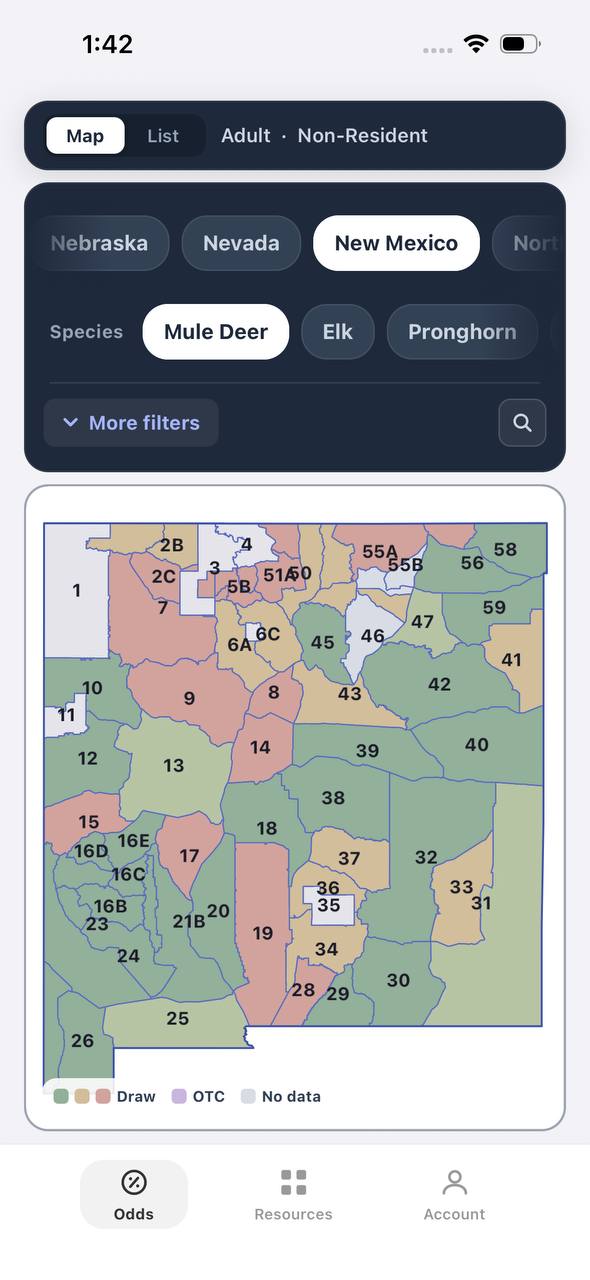
Free to join
Download mobile app
- Detailed draw odds
- Point tracking
- Deadline reminders
- 18 states covered
Texas: The Pay-to-Play Alternative
Texas operates differently than other Western states, with most desert bighorn hunting occurring on private ranches through expensive guided hunts or landowner tags. However, Texas Parks and Wildlife does offer a small number of public draw tags each year for free-range desert sheep in the Trans-Pecos region.
Public draw odds in Texas are extremely low — often sub-1% — but the application is free for residents, making it worth a speculative entry if you're already a Texas license holder. Nonresidents face additional restrictions and fees that reduce the appeal compared to other states.
For DIY hunters, Texas is generally not the primary focus unless you have a personal connection to landowners who might offer access. The state's public land is limited in sheep habitat, and most successful DIY hunts require extensive networking and local knowledge.
Building Your Multi-State Strategy
The smartest approach to DIY desert bighorn hunting involves applying in multiple states simultaneously. Here's a realistic framework:
Primary focus: Nevada. Apply every year, accumulate bonus points, and study units thoroughly. Nevada offers the best combination of tag availability, reasonable costs, and quality hunting.
Secondary focus: Utah. Build preference points while waiting for Nevada. Utah's predictable system gives you a realistic timeline to plan around.
Opportunistic applications: Arizona and New Mexico. Arizona points are cheap insurance for a dream tag, even if you never draw. New Mexico's random system costs nothing but the application fee and might hit at any time.
Budget approximately $200-400 annually for application fees and point maintenance across these states. Over a 20-year hunting career, that's a small investment for the chance at North America's most challenging game animal.
What DIY Desert Bighorn Hunting Actually Requires
Drawing a tag is only the beginning. Desert bighorn hunting demands serious physical preparation, extensive scouting, and equipment suited to extreme conditions.
Expect to hike 5-15 miles daily over rocky terrain in temperatures ranging from freezing nights to 90+ degree days. Quality optics matter more than in almost any other hunt — a spotting scope in the 65-85mm range and 10-12 power binoculars are essential for picking apart distant cliffs and rock faces.
Water and logistics pose constant challenges. Many desert bighorn units lack reliable water sources, and you'll need to pack everything you need for multi-day backcountry trips. A GPS with downloaded topo maps is non-negotiable; cell service is nonexistent in most sheep country.
Scouting trips before your hunt dramatically increase success rates. Plan to spend at least one extended weekend in your unit during summer, locating water sources, glassing for rams, and learning the terrain. Many successful DIY hunters make 2-3 scouting trips before their season opens.
FAQ — DIY Desert Bighorn Sheep Hunting
Which state has the best odds for drawing a desert bighorn tag?
Nevada offers the highest statistical odds due to larger tag quotas and a bonus point system that rewards persistence without being strictly preference-based. Some units see 1-3% draw rates for hunters with accumulated points.
How long does it take to draw a desert bighorn tag?
Timelines vary dramatically by state. Nevada hunters with maximum points might draw in 10-15 years. Arizona often takes 25+ years. Utah's preference system creates more predictable waits of 10-20 years depending on the unit. New Mexico is purely random and could happen on your first application.
Can you realistically hunt desert bighorn sheep without a guide?
Yes, but success requires extensive preparation. Plan multiple scouting trips, invest in quality optics, and be prepared for physically demanding terrain in extreme conditions. DIY success rates are lower than guided hunts, but plenty of hunters take quality rams every year without outfitter support.
How much does a desert bighorn hunt cost for nonresidents?
Tag fees range from $1,500 (Nevada) to $3,100 (New Mexico), plus annual application and point fees that add up over decades of applying. Budget $5,000-10,000 total for the tag, travel, and equipment if you're doing the hunt yourself.
What's the best caliber for desert bighorn sheep?
Most hunters choose flat-shooting cartridges in the .270 to .300 magnum range. Shots can exceed 300 yards in open terrain, so a rifle you've practiced with extensively at longer distances is more important than the specific caliber. The 6.5 Creedmoor, .270 Winchester, and 7mm Rem Mag are all popular choices.
Is desert bighorn sheep hunting worth the wait?
For hunters who value challenge and rarity over convenience, absolutely. Desert bighorn represent one of the last true wilderness hunting experiences in North America. The multi-decade commitment filters out casual interest, and the hunt itself demands everything you have physically and mentally.
For detailed state-by-state draw odds analysis, explore our Product Preview | TAGZ to compare your options. Understanding Idaho Game Units | TAGZ will help you build a smarter long-term strategy. If you're new to sheep hunting applications, our guide to Pricing | TAGZ breaks down the math behind multi-state application strategies.
Was this article helpful?
Previous
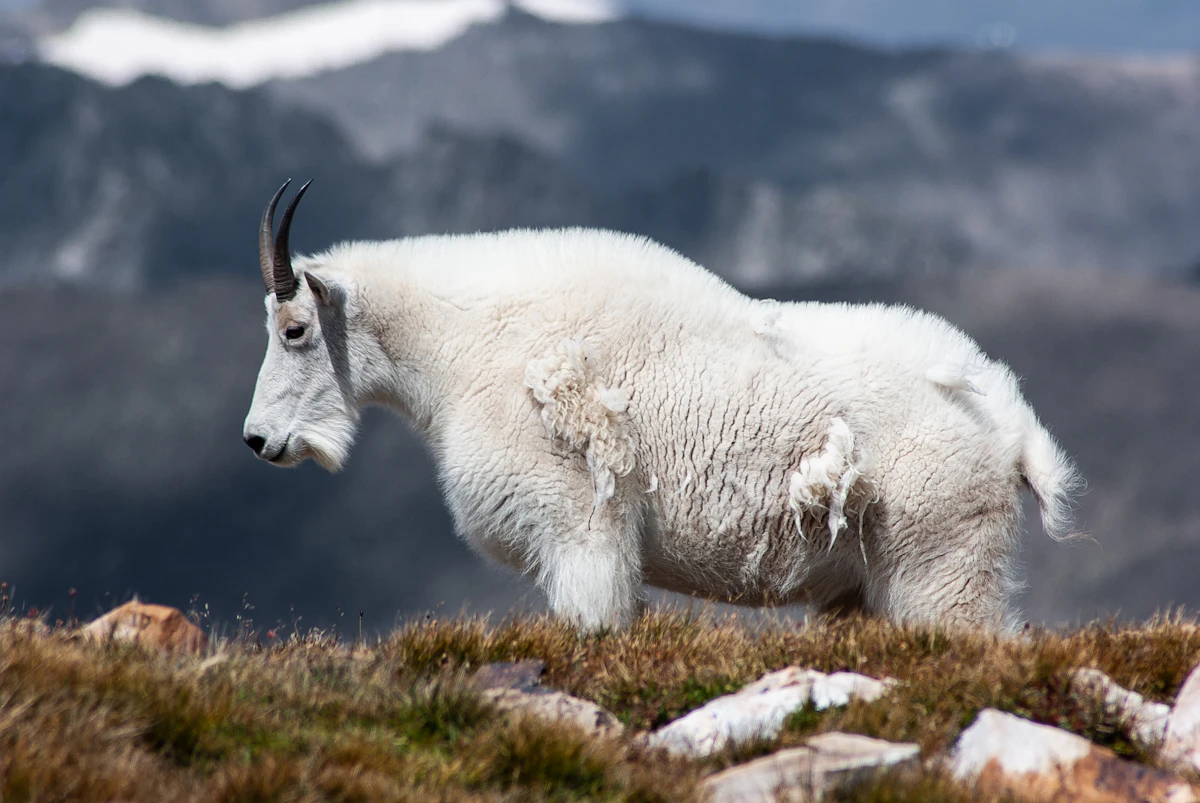
Best States for DIY Mountain Goat Hunting: Where to Apply and What to Expect
Mountain goat tags are among the hardest to draw in North America, but a handful of Western states offer realistic DIY opportunities. Here's where to focus your applications and how to build a strategy that actually results in a tag.
Related
How Arizona Bonus Points Work — Complete Draw Guide
Arizona uses a bonus point system that gives every hunter a chance to draw while rewarding long-term applicants with better odds. Understanding bonus points, loyalty points, hunter education points, and the bonus pass can help hunters build a successful Arizona application strategy.
Next
How Montana's Preference & Bonus Point Systems Work | Complete Draw Guide
Montana is unusual because it runs two point systems at once — preference points for nonresident combination licenses and squared bonus points for limited-entry permits. Here's how to use both without wasting years.