Species You Can Hunt
- White-tailed Deer
- Mule Deer
- Elk
- Pronghorn
- Moose
- California Bighorn Sheep
- Mountain Bighorn Sheep
- Mountain Goat
- Bear
- Wolf
State Overview
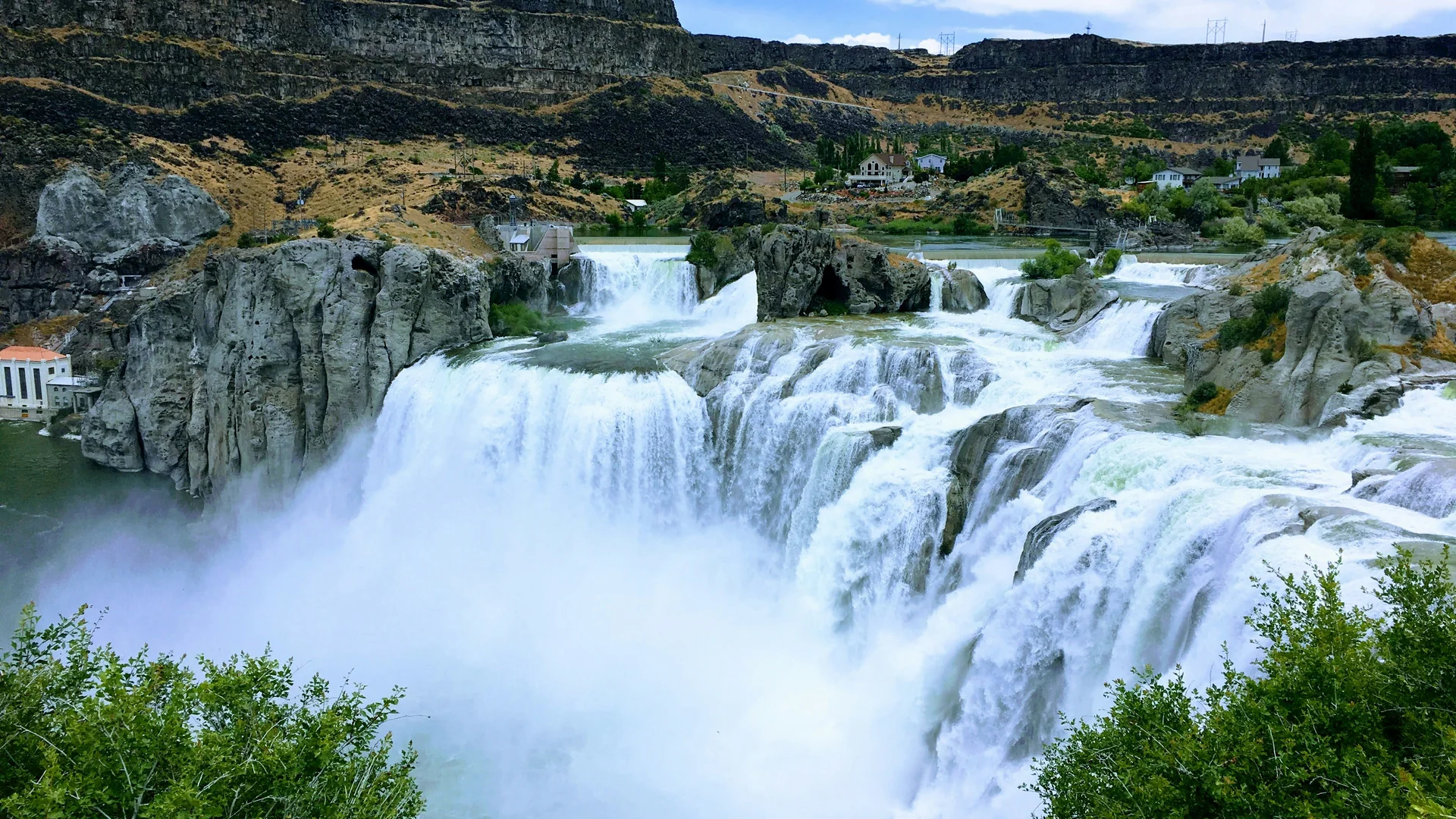
Idaho is rugged and heavily forested, encompassing the northern Rockies, enormous roadless wilderness such as the Frank Church, the Snake River Plain, and high desert in the south.
Hunters pursue elk, mule and white-tailed deer, pronghorn, moose, bighorn sheep, mountain goat, black bear, mountain lion, and wolf. With one of the largest public-land bases in the country, Idaho offers tremendous do-it-yourself opportunity through capped general-season tags and additional controlled hunts.
Licensing & Draw
How it works
Idaho is run by the Idaho Department of Fish and Game (IDFG). Limited-tag hunts are called "controlled hunts," and tags are handed out by a purely random drawing — there are no preference or bonus points, so a first-time applicant has the same odds as someone who has applied for years.
Not every hunt is a draw. Many deer and elk opportunities are general-season hunts where you simply buy a tag, though some tags are capped by zone or unit and can sell out. Nonresidents face tighter limits: within any controlled hunt, no more than about 10% of the tags may go to nonresidents (often just one in small hunts).
Before you can apply for a controlled hunt or buy most tags, you need a valid Idaho hunting license (holders of a nongame license or Hunting Passport can't apply for controlled hunts).
Idaho has no point system of any kind, so applying is a fresh random draw each year. Many general-season tags — including capped elk-zone tags and a limited number of nonresident general deer and elk tags — are sold on a first-come basis, with the nonresident general deer/elk tags moving to a random draw beginning in 2026.
Applying & deadlines
You apply per species: one application lists a first choice hunt and an optional second choice. If you aren't drawn for your first choice, you're automatically entered into the second-choice drawing when tags remain. Only one application per person (or group) per species is allowed, though you may submit one extra application for eligible "Extra" deer/elk/pronghorn hunts.
Groups can apply together on one form — up to four hunters for deer, elk, or pronghorn, and up to two for black bear, turkey, moose, bighorn sheep, or mountain goat. Everyone on a group application draws or fails together. Apply online at GoOutdoorsIdaho.com, by phone at 1-800-554-8685, or in person at any IDFG office or license vendor; IDFG does not accept mail-in controlled-hunt applications.
For the 2026 season: deer, elk, pronghorn, and fall black bear controlled hunts have a first application period of May 1 – June 5, with first-drawing results posted in early July and successful hunters needing to buy their tag by August 1. A second application period runs August 5 – 15, with results and leftover first-come sales around August 25. Spring black bear applications run January 15 – February 15.
Moose, bighorn sheep, and mountain goat use a separate window of April 1 – 30, with winners notified by June 10 and a second drawing period of June 15 – 25. Dates shift year to year — always confirm exact deadlines in the current IDFG regulations before applying.
Draw mechanics
The draw is a plain random lottery: names are pulled at random up to the tag quota for each hunt, with no points, seniority, or weighting involved. Nonresident tags are capped within each hunt before the general pool is filled.
This overview doesn't estimate your chances. TAGZ calculates draw-odds separately using Idaho's published historical drawing statistics; see the app's odds figures for that.
Fees at a glance
Figures below are 2026 ballparks (standard, non-price-locked adult rates) — see IDFG's full fee schedule for exact and discounted pricing. Residents pay about $15.75 for an annual hunting license; nonresidents about $185.00. The controlled-hunt application fee is $6.25 (resident) / $18.00 (nonresident) for most species, rising to $16.75 / $45.75 for moose, sheep, and goat.
Tag costs vary widely by residency. Examples: deer $24.75 resident vs. $351.75 nonresident; elk $36.75 vs. $651.75; pronghorn $36.50 vs. $342.75; and the trophy species (moose, bighorn sheep, mountain goat) $199.75 vs. $2,626.75. A mandatory access/depredation fee (about $5 resident, $10 nonresident) is added to your first annual license each year.
How TAGZ Projects Odds in Idaho
Idaho uses a pure random draw with no bonus or preference point system. Every applicant has an equal chance regardless of how many previous applications they have submitted.
Our projections are based on five years of official controlled hunt draw statistics (2021-2025), weighted to give more importance to recent years. When we see a consistent decline in draw odds over three or more years in a row — a drop of more than 15% — we project that decline forward rather than averaging it away, so the estimate better reflects growing competition. For stable or improving trends, we use the standard weighted average.
One challenge unique to Idaho is that hunt numbers change frequently: between 33% and 41% of hunt numbers are reassigned between seasons due to periodic program reorganizations. To track the same hunt opportunity reliably across years, we built a matching system that connects hunt numbers that carry over from season to season and uses location-based matching for ones that were renumbered.
Projections use first-drawing data only — the second drawing for leftover tags operates differently and is not included. Species covered include deer, elk, pronghorn, moose, bighorn sheep, mountain goat, and California bighorn sheep.
Good to Know
Capped tags can vanish fast. Capped general elk-zone tags and the limited nonresident general deer and elk tags routinely sell out, so timing matters even outside the draw. Note that if a resident applies for a controlled elk hunt, they can't buy a capped elk-zone tag until five days after those go on sale.
The trophy species carry restrictions that make them effectively once-in-a-lifetime: harvest an antlered moose, a bighorn ram, or (since 1977) a mountain goat in Idaho and you generally can't apply for that same species again, and drawing one of these tags triggers a multi-year wait. Antlered deer/elk and pronghorn carry a one-year wait after a successful first-period draw. Remember the core split: general hunts let you buy a tag outright (subject to caps), while controlled hunts require winning the draw first.
Free to join
Access the full draw odds database for Idaho
View up to date season schedule and projected odds across all units.


All Game Units
630 units — Unit details, topography, landcover, and access are open to everyone. Draw odds projections are available with a TAGZ account.