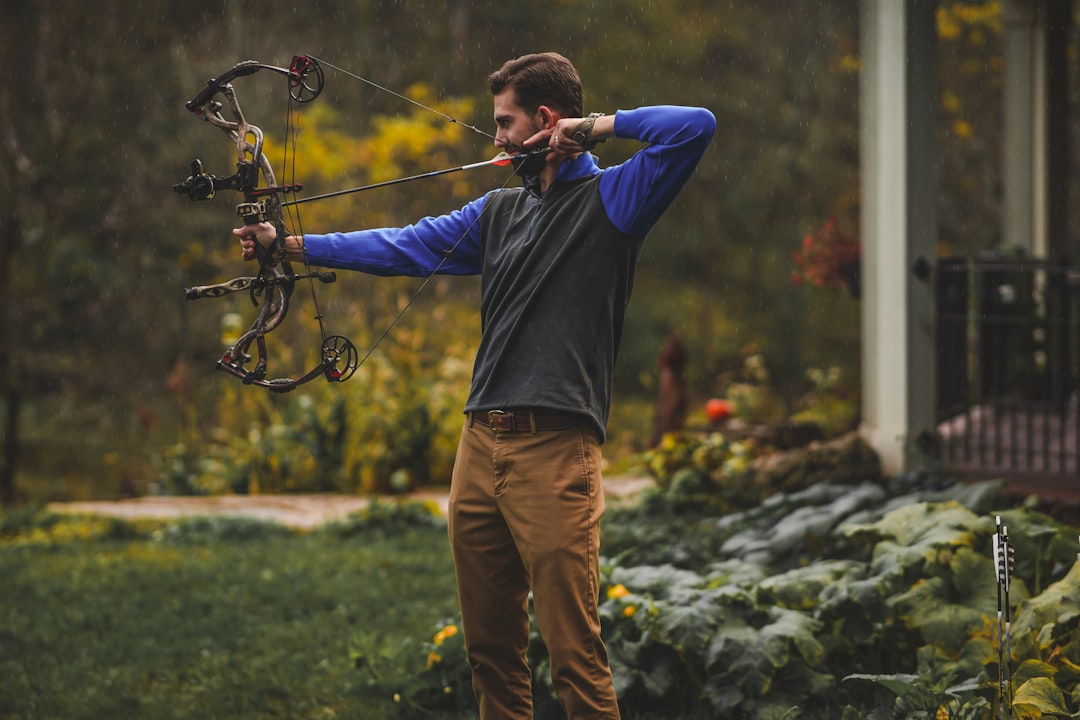
Prime Archery has built a reputation for delivering tournament-grade accuracy in hunting platforms. Their parallel-cam system and rigid riser designs create bows that hold steady at full draw and forgive minor form flaws that matter when a bull steps into a shooting lane at last light. For 2026, Prime offers four core models that cover everything from backcountry elk to whitetail saddle hunting. Here is how they stack up.
Prime Nexus 7: Flagship Accuracy
The Nexus 7 is Prime's top-tier hunting bow and the choice for archers who refuse to compromise on precision. With a 33-inch axle-to-axle length and 7-inch brace height, the Nexus delivers a forgiving draw cycle and dead-in-the-hand stability that makes it nearly impossible to torque at full draw. IBO speeds clock in around 340 fps with a 70-pound draw weight, which gives you flat arrow flight out to 60 yards without sacrificing the smooth release that builds confidence on steep uphill shots.
The Nexus 7 uses Prime's Shift Technology cam system, which lets you adjust draw length without a press. Turn a hex key, slide the module, and you can shift half an inch in either direction to fine-tune your anchor point. This matters when you are wearing heavy layers in November or switching between target practice and hunting setups. The bow weighs 4.6 pounds bare, so it balances well with a loaded quiver and sits steady on a saddle platform without feeling front-heavy.
Expect to pay around $1,299 for a bare bow. Add $200–$400 for a sight, rest, stabilizer, and quiver. The Nexus 7 is built for hunters who glass all day and need a bow that holds rock-solid when the moment finally arrives.
Prime Logic CT5: Speed Without Compromise
The Logic CT5 bridges the gap between speed and shootability. At 32 inches axle-to-axle with a 6-inch brace height, the Logic is slightly more compact than the Nexus but still forgiving enough for field positions. IBO speeds reach 348 fps with a 70-pound draw, making it one of the faster bows in Prime's lineup without the harsh wall or aggressive valley that punishes inconsistent form.
The CT5 uses the same Shift Technology cam system, so you get tool-free draw length adjustment across a 3-inch range. The draw cycle is smooth through the early pull, hits a defined wall at full draw, and settles into a valley that lets you hold comfortably without creeping forward. Back wall tension is firm enough that you know exactly where full draw is, even when your focus is locked on a bedded buck 40 yards out.
At 4.4 pounds, the Logic CT5 is lighter than the Nexus and easier to carry on long spot-and-stalk days. Retail price is typically $1,199 bare bow. The Logic CT5 works for hunters who want speed for longer shots but still need a bow that forgives the small mistakes that happen when you are kneeling in a creek bottom or drawing from an awkward angle.
Prime Diverge: Budget-Friendly Performance
The Diverge is Prime's entry-level hunting bow, but it shares the same parallel-cam architecture and build quality as the flagship models. At $899, the Diverge delivers accuracy and reliability that competes with bows priced $300 higher. The 32.5-inch axle-to-axle length and 7-inch brace height make it stable and forgiving, while IBO speeds around 335 fps give you enough velocity for western hunting without requiring perfect form on every shot.
The Diverge does not include Shift Technology, so draw length adjustments require a bow press and module swap. If you know your draw length and do not need on-the-fly adjustments, this is not a dealbreaker. The bow weighs 4.5 pounds and balances well with a typical hunting setup. The draw cycle is smooth and predictable, with a solid back wall that helps you anchor consistently.
For hunters on a budget or archers buying their first serious hunting bow, the Diverge offers Prime's core technology without the premium price tag. It is a proven platform that performs in the field and does not feel like a compromise when you are face-to-face with a screaming bull.
Prime Inline 5: Compact for Backcountry and Saddle Hunting
The Inline 5 is Prime's shortest hunting bow at 30 inches axle-to-axle, designed for hunters who need maneuverability in tight cover or minimal weight for backpack hunts. The 5-inch brace height is aggressive, which means the bow is less forgiving of torque and inconsistent form, but it also delivers serious speed. IBO ratings hit 350 fps with a 70-pound draw, making the Inline 5 one of the fastest production hunting bows available.
The compact design shines in saddle hunting setups where longer bows feel unwieldy, and it is easier to pack on your back during long approaches in steep terrain. The Inline 5 weighs just 4.2 pounds bare, so you barely notice it on a bivy hunt. The trade-off is a draw cycle that requires clean execution. If your anchor point drifts or you torque the grip, the shorter brace height will expose those mistakes on target.
Pricing sits around $1,199. The Inline 5 is the right choice for experienced archers who prioritize speed and packability and have the form discipline to shoot a short-axle bow consistently.
Free to join
Download mobile app
- Detailed draw odds
- Point tracking
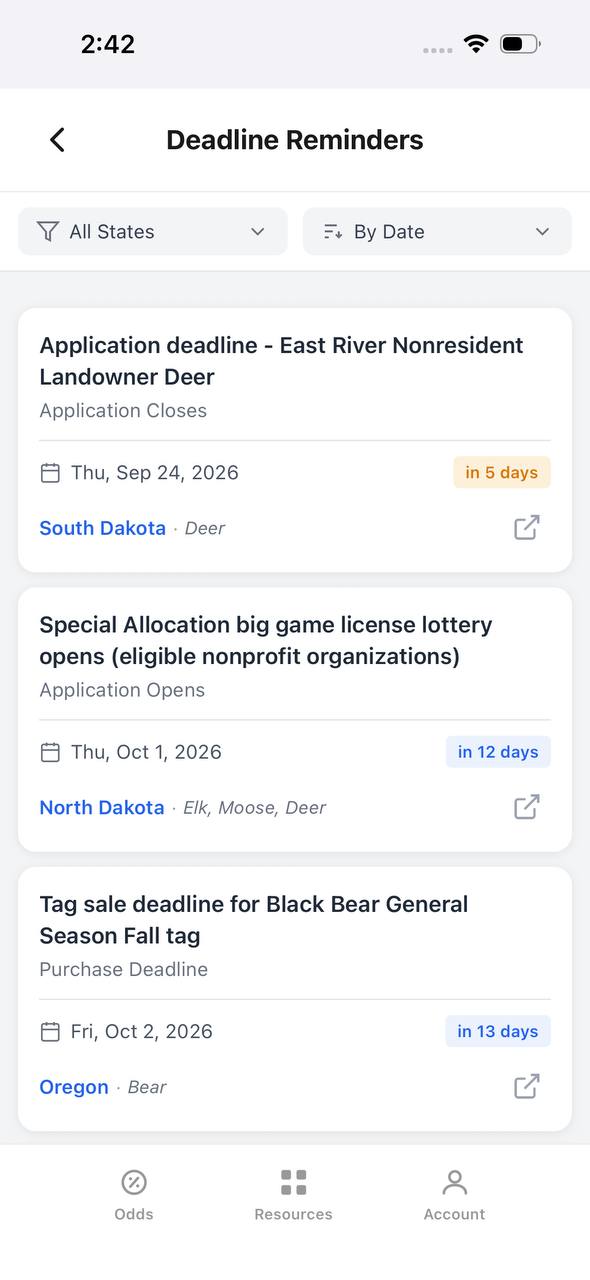
- Deadline reminders
- 18 states covered

Free to join
Download mobile app
- Detailed draw odds
- Point tracking
- Deadline reminders
- 18 states covered
Free to join
Download mobile app
- Detailed draw odds
- Point tracking
- Deadline reminders
- 18 states covered
How Prime Bows Help Hunters in the Field
Prime's parallel-cam system delivers two advantages that matter during actual hunts. First, the cams stay synchronized without frequent tuning, so your bow shoots the same in September as it did in June. Second, the design reduces torque sensitivity, which means you can get away with a slightly inconsistent grip when you are drawing on an animal from a kneeling position or twisted around a tree.
The rigid riser construction minimizes flex at full draw, which translates to tighter groups and more forgiving shooting when you are cold, tired, or dealing with an awkward angle. Prime bows are also known for quiet shots. The parallel-limb design reduces vibration, and the riser geometry dampens noise without requiring heavy aftermarket stabilizers or additional dampeners.
Choosing the Right Prime Bow for Your Hunt
If you prioritize accuracy and forgiveness for western spot-and-stalk hunting or long treestand shots, the Nexus 7 is the best all-around option. The forgiving geometry and smooth draw cycle make it easy to shoot well under pressure, and the 7-inch brace height covers small form inconsistencies that happen in the field.
For hunters who need speed for longer-range shots but still want a forgiving platform, the Logic CT5 strikes the best balance. It is fast enough for 70-yard elk shots and short enough to maneuver in dense timber, with a draw cycle that does not punish you for minor mistakes.
The Diverge is the right call for hunters on a budget or archers who want a reliable backup bow. It shoots like a flagship model and costs $300 less, with the only real trade-off being fixed draw length modules instead of tool-free adjustment.
The Inline 5 is built for saddle hunters and backcountry archers who need minimal weight and maximum packability. It requires clean shooting form, but it rewards you with serious speed and easy carrying on long approaches.
Bow Setup and Accessories
No matter which Prime model you choose, plan to spend $200–$400 on essential accessories. A single-pin slider sight like the Spot Hogg Fast Eddie XL or HHA Optimizer Lite gives you precise aiming at varying distances without cluttering your sight picture. A quality arrow rest like the QAD Ultrarest or Hamskea Hybrid Hunter Pro ensures consistent arrow flight and quiet operation.
Add a 6- to 8-inch stabilizer to balance the bow and dampen vibration. Brands like Bee Stinger, Mathews, and Dead Center Archery make solid options in the $60–$150 range. A 4- or 5-arrow quiver keeps your arrows secure and does not throw off the bow's balance. Tight Spot, Mathews, and Prime's own quivers all work well.
Tune your bow with the arrows you plan to hunt with. Shoot broadheads at 40 yards to confirm point of impact matches your field points. Small adjustments to rest position or nocking point height can make a huge difference in consistency. If your groups open up with broadheads, you likely have a tuning issue, not an accuracy problem with the bow.
How TAGZ Helps You Plan Around Your Equipment
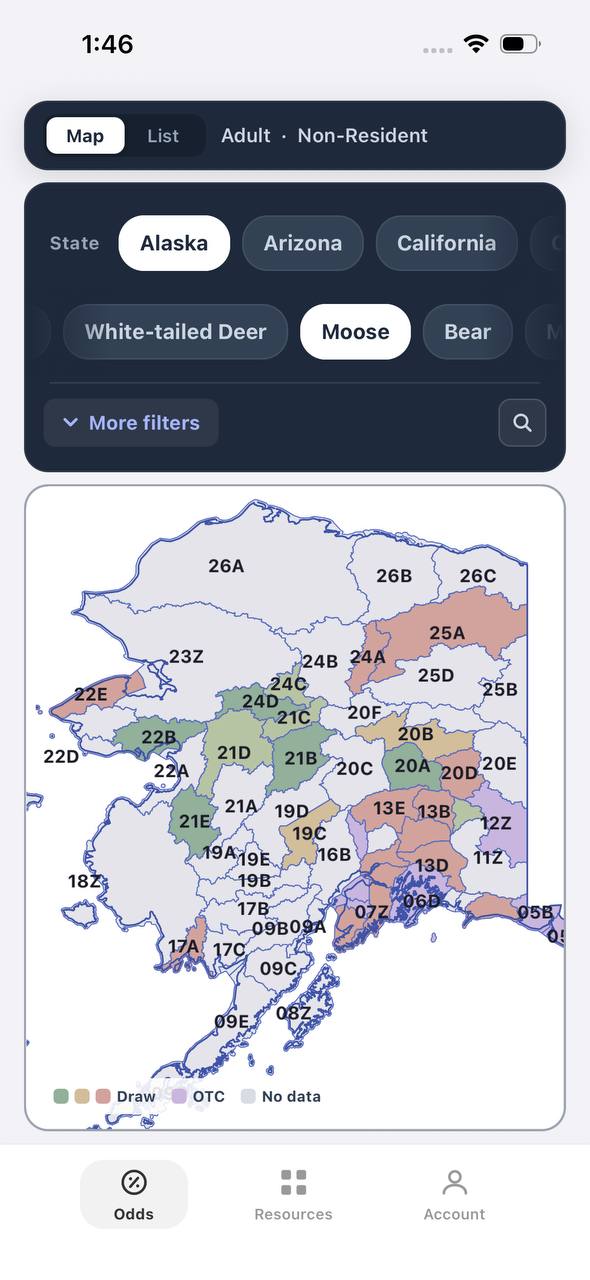
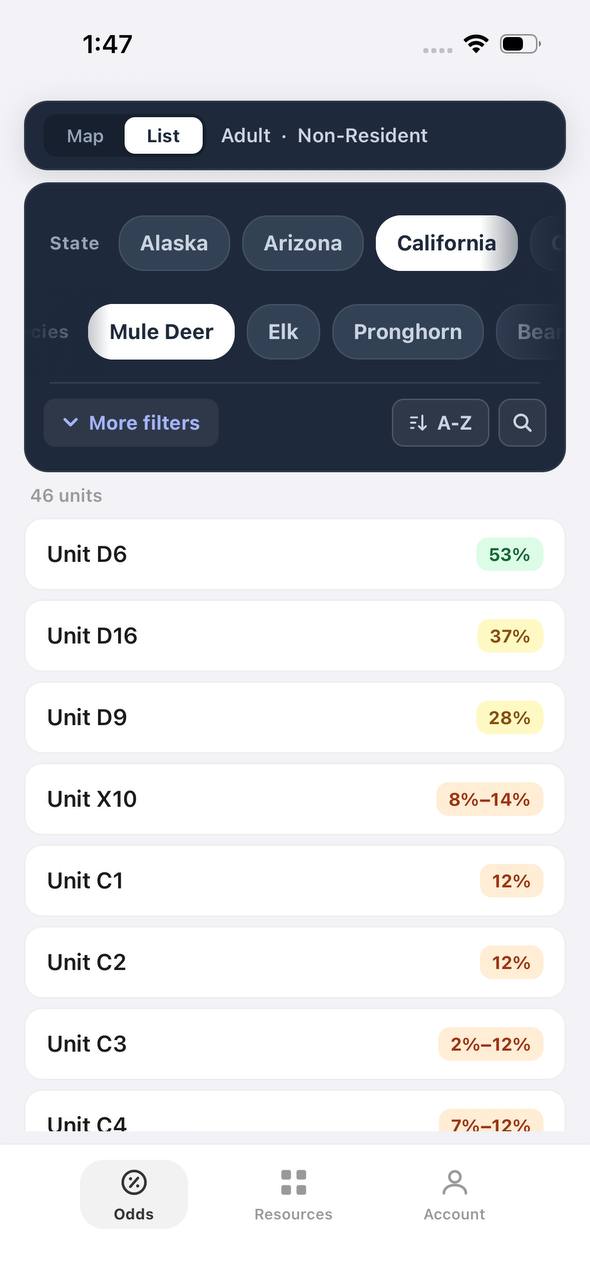
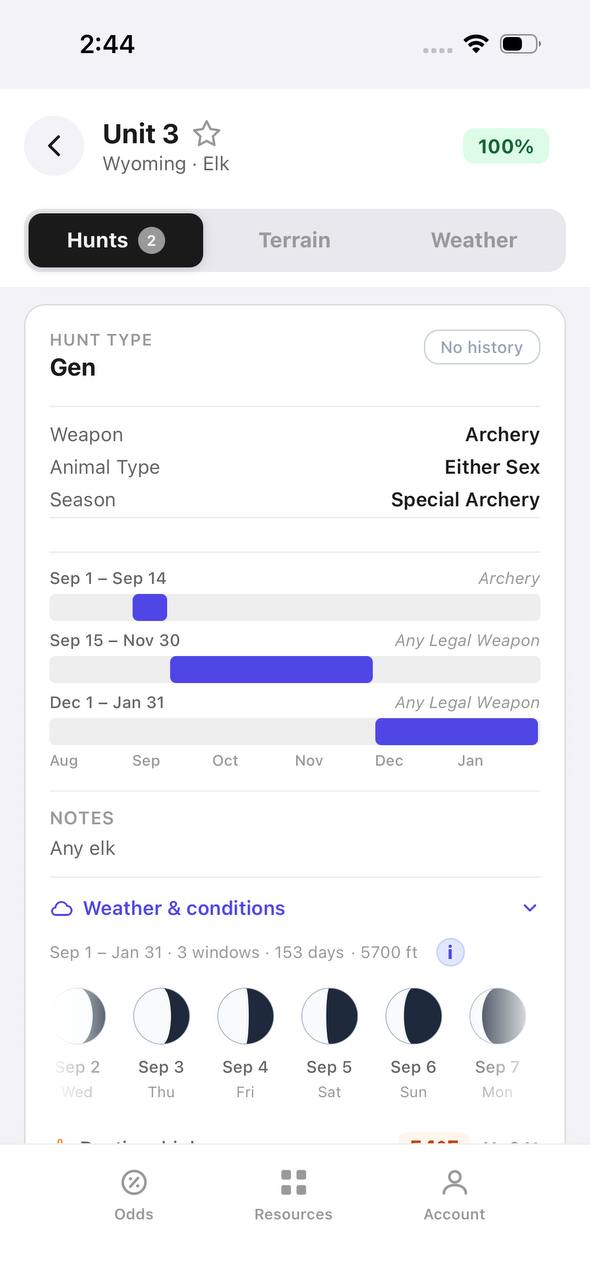
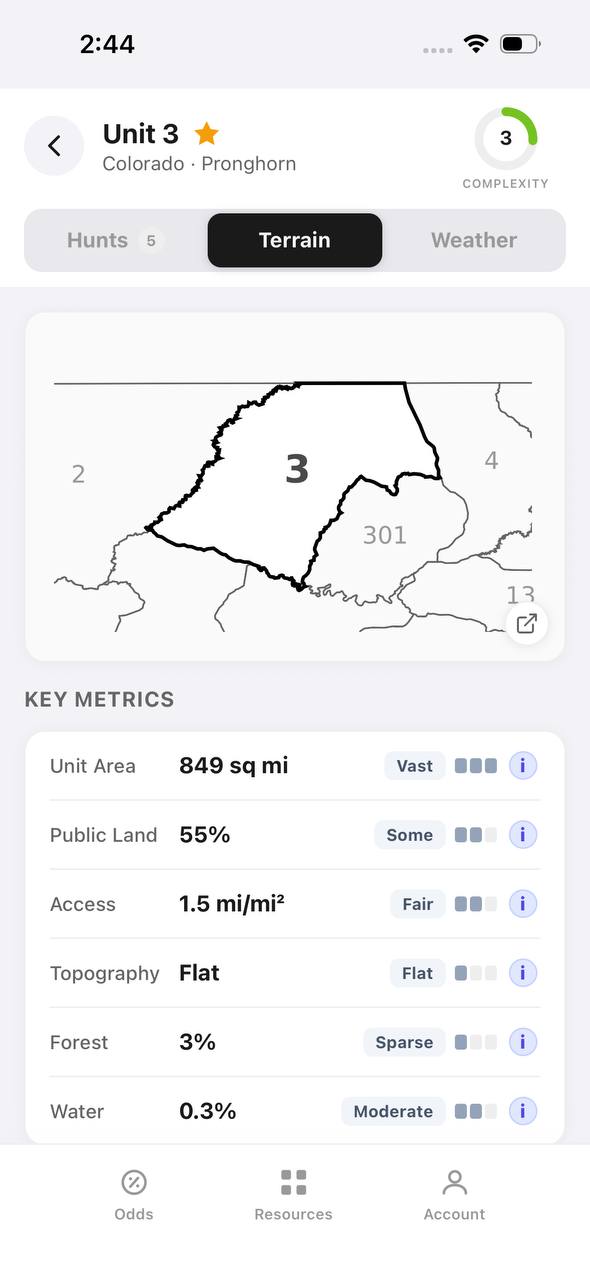
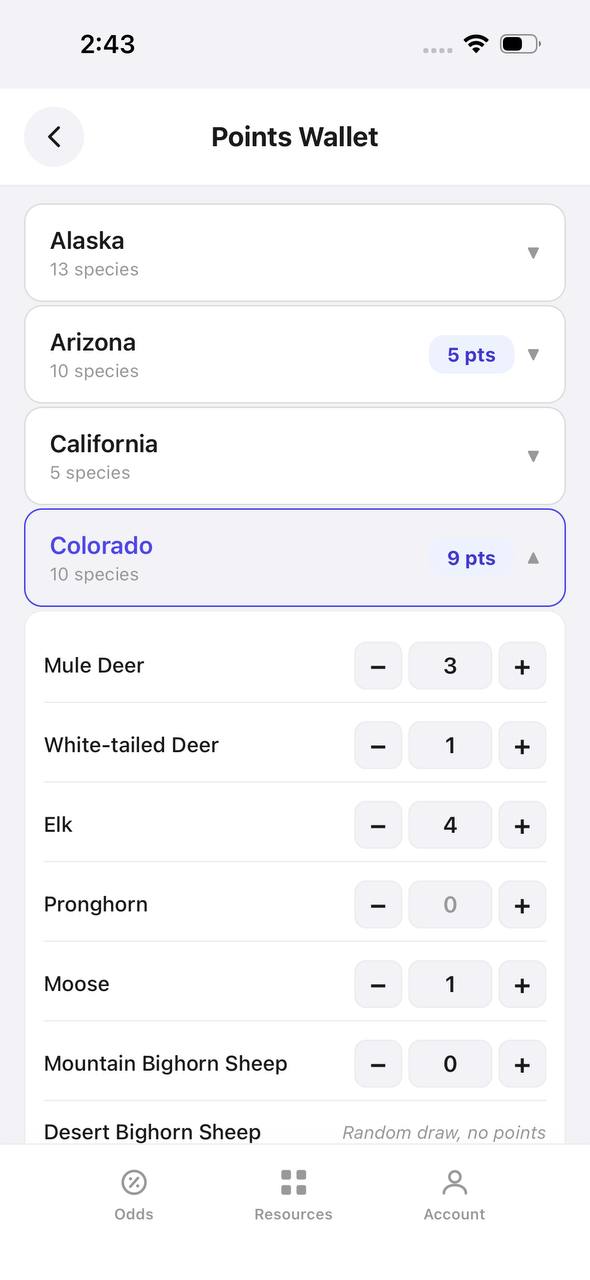
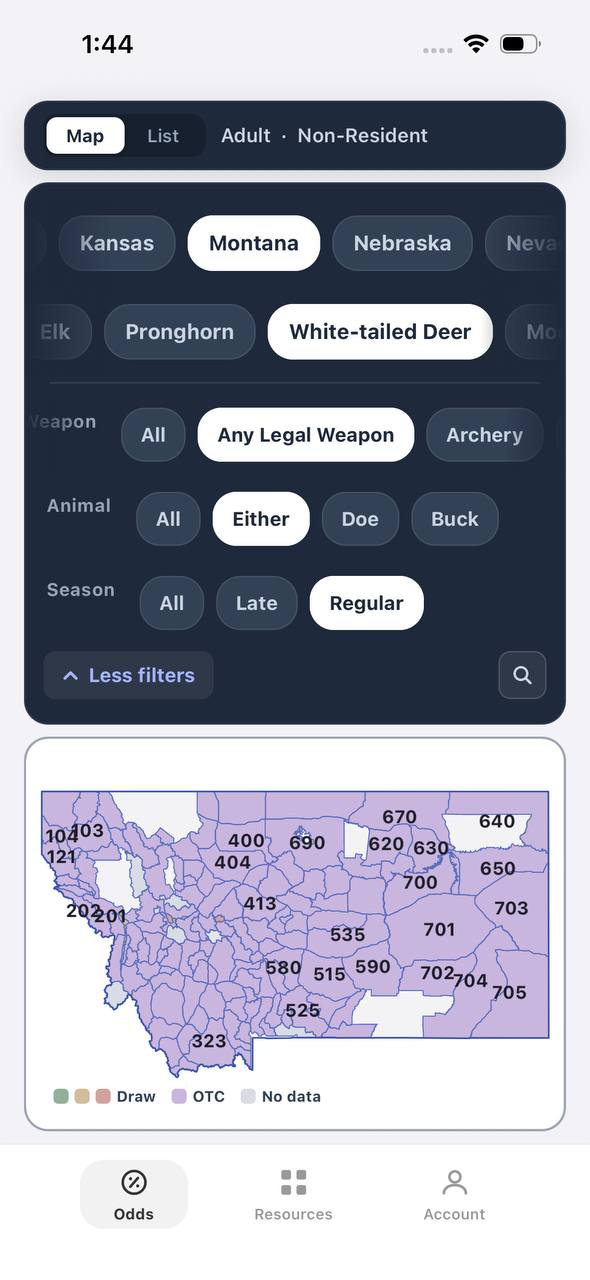
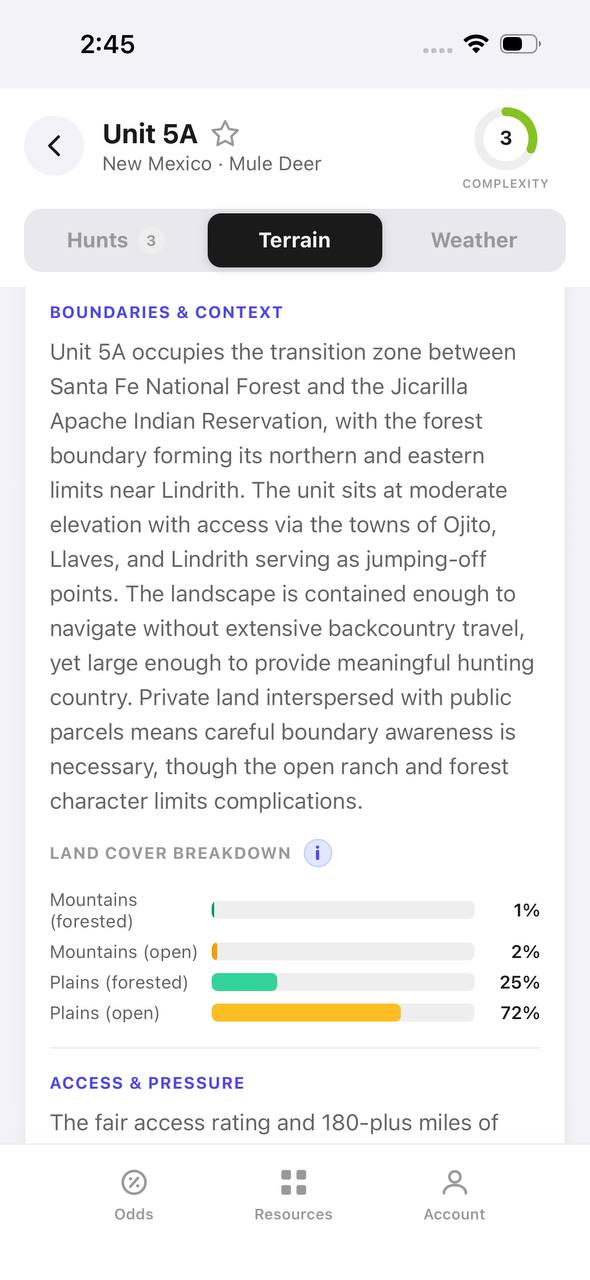
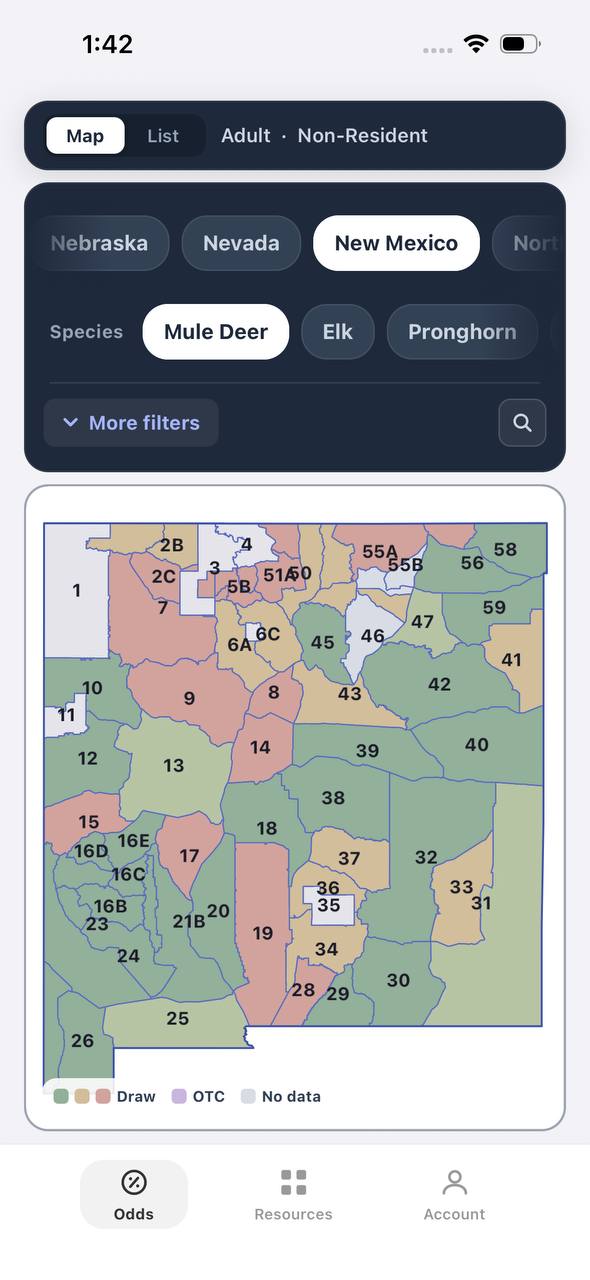
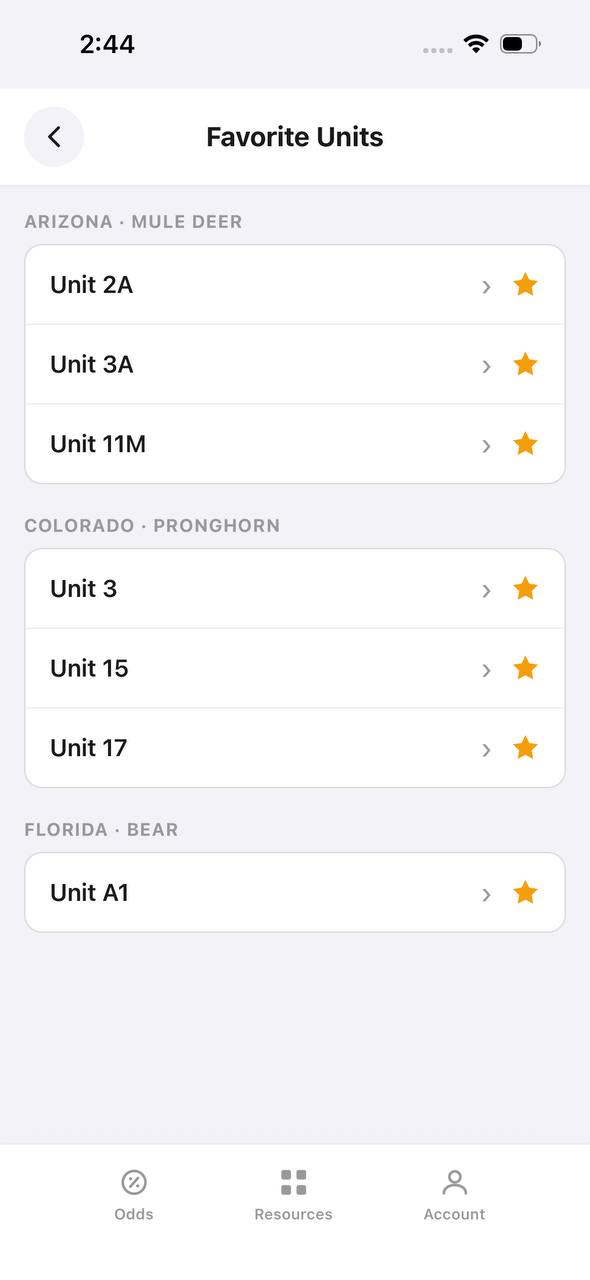
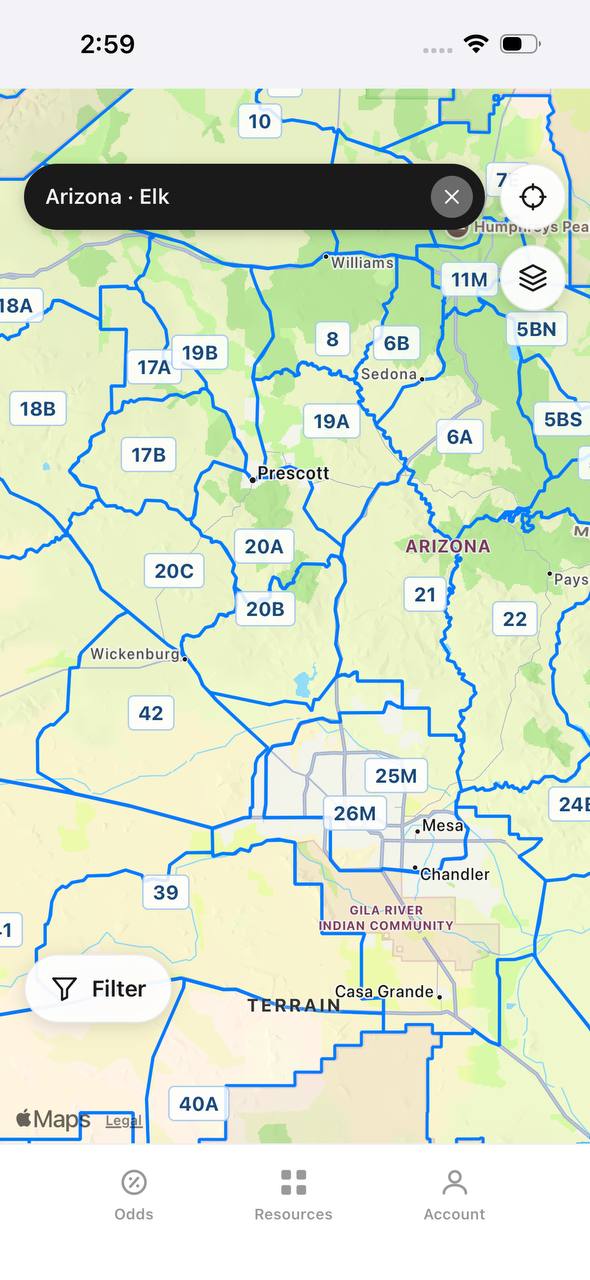
Once you have your bow dialed in, the next step is figuring out where to use it. TAGZ helps you compare western hunting units side by side using terrain maps, public land boundaries, and historical draw odds. Track your preference points and bonus points across multiple states so you never miss a deadline for the units you are targeting. Whether you are applying for an OTC Colorado archery elk tag or planning a limited-entry Utah mule deer hunt, TAGZ gives you the tools to make smarter decisions before you ever step into the field.
You can filter hunts by weapon type, season, and species, then dig into terrain breakdowns and access points for each unit. If you are hunting public land, TAGZ shows you where the boundaries are and what kind of terrain you will be dealing with. It is the decision-making platform that connects your shooting ability with the right hunting opportunity.
FAQ — Prime Bows for Hunting
Which Prime bow is best for elk hunting?
The Nexus 7 is the best all-around choice for elk because of its forgiving 7-inch brace height, smooth draw cycle, and accuracy at longer distances. The Logic CT5 is a close second if you want more speed.
Is the Prime Diverge good enough for serious hunting?
Yes. The Diverge uses the same parallel-cam system and build quality as Prime's flagship models and shoots as accurately as bows priced $300 higher. The only trade-off is fixed draw length modules instead of tool-free adjustment.
How fast are Prime bows compared to other brands?
Prime bows range from 335 fps (Diverge) to 350 fps (Inline 5) at IBO specs. That puts them in the middle to upper range of hunting bow speeds. They prioritize accuracy and shootability over raw speed, but the Logic CT5 and Inline 5 are both fast enough for long-range western hunting.
Do Prime bows require a lot of maintenance?
No. The parallel-cam system stays synchronized longer than many dual-cam designs, so you need less frequent tuning. Standard maintenance includes waxing strings and cables every 10–15 shooting sessions and checking cam timing once or twice a season.
Can you adjust draw length on all Prime bows?
No. Only the Nexus 7, Logic CT5, and Inline 5 have Shift Technology, which allows tool-free draw length adjustment. The Diverge requires a bow press and module swap to change draw length.
Is the Inline 5 too short for beginners?
Yes, for most beginners. The 30-inch axle-to-axle length and 5-inch brace height make the Inline 5 less forgiving of form mistakes. New archers should start with the Nexus 7 or Diverge, which have longer brace heights and more stability.
Continue Planning Your Hunt
Having the right bow is only part of the equation. Once you are confident in your shooting, you need to pick the right hunt and navigate the draw system to actually get a tag in your hand. TAGZ simplifies that process by showing you draw odds, unit boundaries, terrain features, and application deadlines across all western states. Whether you are chasing your first archery elk or planning a trophy mule deer hunt, TAGZ helps you compare units, track points, and make smarter decisions that get you into the field. Start planning your next hunt at getmytagz.com.
For more hunting strategies, unit breakdowns, and application guides, explore the full library of articles at TAGZ Insights. If you are ready to take control of your western hunting applications, check out TAGZ pricing and see how the platform helps you organize points, track deadlines, and filter hunts by weapon, season, and species. Learn more about the features that make TAGZ the decision-making tool for serious western hunters at getmytagz.com/product.
Was this article helpful?
Previous
Best Compound Bows for Hunting in 2026: Complete Buyer's Guide
Choosing the right compound bow can make or break your hunting season. This guide breaks down the top models for 2026, key specs that matter in the field, and how to match a bow to your hunting style and budget.
Related
Best Custom Mountain Rifles: Top Gunsmiths Building Ultralight Hunting Rifles
Custom mountain rifles from top gunsmiths deliver sub-6-pound precision for backcountry hunts. Learn which builders specialize in ultralight rifles, what features matter most, and how to choose the right rig for steep-country elk, sheep, and mule deer.
Next
Truck Maintenance Checklist Before Hunting Season: Don't Get Stranded
A breakdown 40 miles from pavement can end your hunt before it starts. This pre-season truck maintenance checklist covers tires, fluids, suspension, and recovery gear so your rig handles backcountry roads when it matters most.