Best Compound Bows for Hunting in 2026: Complete Buyer's Guide
Compound bow technology keeps evolving, but the fundamentals of what makes a great hunting bow stay the same: accuracy, reliability, and a smooth draw you can execute under pressure. The 2026 lineup delivers refinements across all price points, from flagship speed demons to proven workhorses that won't drain your wallet.
This guide walks through the standout models for this year, the specs that actually matter when you're drawing on a bull at 40 yards, and how to choose a bow that fits your draw length, hunting style, and budget. Whether you're upgrading from an older rig or buying your first compound, you'll leave with a clear picture of what's worth your money.
What Makes a Great Hunting Compound Bow
Speed sells bows, but it's not the whole story. A hunting bow needs to balance IBO speed with shootability — the feel of the draw cycle, how it settles at full draw, and whether you can hold steady while a bull rakes a tree 30 yards out.
Look for these core attributes:
- Draw cycle smoothness — A harsh wall or stacking draw makes it harder to pull undetected in tight situations. The best hunting bows build draw weight gradually and hit a clean back wall.
- Let-off percentage — Most modern bows offer 75–85% let-off. Higher let-off means less holding weight at full draw, which helps when you're waiting for a shot angle.
- Brace height — Shorter brace heights (5.5–6.5 inches) generate more speed but are less forgiving of form mistakes. Longer brace heights (7+ inches) sacrifice a few fps for easier shooting and quieter shots.
- Axle-to-axle length — Compact bows (28–31 inches) maneuver well in treestands and thick timber. Longer bows (33+ inches) tend to be more stable for spot-and-stalk or open-country hunting.
- Weight — A lighter bow (under 4 pounds) is easier to carry all day but may feel twitchy at full draw. Heavier bows absorb more vibration and settle faster for the shot.
IBO speed ratings (how fast the bow shoots a 70-pound draw with a 30-inch draw length and 350-grain arrow) help compare models, but real-world hunting setups — with heavier arrows, sights, quivers, and stabilizers — will clock 15–30 fps slower. Prioritize how the bow feels over chasing advertised numbers.
Top Flagship Bows for 2026
Flagship models pack the latest tech and highest performance, but they come with premium price tags. These are the bows serious hunters choose when they want every advantage.
Mathews Phase4 37
Mathews refined an already excellent platform. The Phase4 37 stretches to a 37-inch axle-to-axle length, offering exceptional stability without feeling cumbersome in a treestand. The Switchweight technology lets you adjust peak draw weight without a bow press, and the new Integrate Mounting System cleans up accessory attachment.
IBO speed sits at 343 fps — not the fastest, but the draw cycle is buttery smooth with zero hand shock. The 6-inch brace height forgives minor form breaks, and the solid back wall makes consistent anchor points effortless. This bow shines for whitetail hunters who want a quiet, forgiving rig that holds rock-steady.
Specs: 37" ATA | 6" brace height | 343 fps IBO | 4.46 lbs | MSRP $1,199
Hoyt RX-9
Hoyt's RX-9 delivers top-end speed without sacrificing shootability. The In-Line cam system produces a smooth draw with minimal valley creep, and the Shock Pod dampening system kills vibration at the shot. At 340 fps IBO, it's competitive with anything on the market.
The RX-9 excels in spot-and-stalk scenarios where you need to draw quickly and settle into the shot. The shorter 31-inch axle-to-axle makes it maneuverable, and the 6.25-inch brace height keeps it forgiving. Hoyt's build quality is bombproof — this bow will handle backcountry abuse.
Specs: 31" ATA | 6.25" brace height | 340 fps IBO | 4.5 lbs | MSRP $1,299
Elite Omnia
Elite built the Omnia for hunters who want a bow that does everything well. The Synchronized Binary Cam system delivers exceptional tuning ease and consistent nock travel, while the asymmetric riser design balances perfectly in hand. This bow feels alive at full draw without being twitchy.
What sets the Omnia apart is its versatility. Whether you're hunting from a stand, hiking miles into the backcountry, or shooting 3D to stay sharp, this bow adapts. The draw cycle is smooth enough for beginners but technical enough to satisfy competitive shooters. At 338 fps IBO, it's fast enough for any hunting situation.
Specs: 33" ATA | 6.25" brace height | 338 fps IBO | 4.2 lbs | MSRP $1,099
Best Mid-Range Hunting Bows
Mid-tier bows sacrifice minor refinements, not core performance. These models deliver flagship-level shootability at prices that won't require selling a rifle to afford.
Bowtech Solution SS
Bowtech's Solution SS (Smooth Sailing) lives up to its name with one of the smoothest draw cycles in any price bracket. The DeadLock Cam System makes tuning simple and consistent, and the Orbit dampeners kill vibration and noise.
This bow punches well above its price point. At 335 fps IBO, it's plenty fast for any North American game, and the 31-inch axle-to-axle balances maneuverability with stability. The 6-inch brace height keeps it forgiving, and the solid wall makes anchoring repeatable shot after shot.
Specs: 31" ATA | 6" brace height | 335 fps IBO | 4.3 lbs | MSRP $799
PSE Carbon Air Stealth EC
PSE's carbon-riser technology drops weight without sacrificing strength. The Carbon Air Stealth EC weighs just 3.4 pounds bare bow, making it ideal for mountain hunters who count ounces. The Evolve Cam system produces a smooth draw and solid back wall, and the carbon construction dampens vibration naturally.
At 342 fps IBO, this is one of the fastest bows in its class. The shorter 30-inch axle-to-axle makes it nimble in tight cover, though the 5.75-inch brace height demands cleaner form. If you're chasing elk or mule deer in steep country, the weight savings alone make this bow worth considering.
Specs: 30" ATA | 5.75" brace height | 342 fps IBO | 3.4 lbs | MSRP $849
Bear Perception
Bear's Perception delivers reliable performance without gimmicks. The Contraband Cam System produces consistent speed and a forgiving draw, while the Shock Wires dampen vibration effectively. This bow isn't flashy, but it's deadly accurate and built to last.
The 32-inch axle-to-axle and 7-inch brace height make this one of the most forgiving bows available. It's perfect for hunters who prioritize accuracy over speed or anyone transitioning from a crossbow or rifle. At 330 fps IBO, it's fast enough for ethical shots out to 50–60 yards on any big game.
Specs: 32" ATA | 7" brace height | 330 fps IBO | 4.1 lbs | MSRP $699
Top Budget-Friendly Options
You don't need a flagship bow to kill elk. These budget models deliver solid performance and reliability without cutting corners where it counts.
Diamond Infinite Edge Pro
Diamond's Infinite Edge Pro remains the go-to choice for new hunters or anyone who wants maximum adjustability. The draw length adjusts from 13 to 31 inches and draw weight from 5 to 70 pounds without a bow press, making it perfect for growing kids or hunters still dialing in their setup.
At 310 fps IBO, it's not the fastest bow here, but speed doesn't kill — shot placement does. The 31-inch axle-to-axle and 7-inch brace height make it easy to shoot accurately, and the forgiving draw cycle builds confidence. This bow has put more first-time bowhunters on game than any other model.
Specs: 31" ATA | 7" brace height | 310 fps IBO | 3.1 lbs | MSRP $399
Mission Switch
Mission (Mathews' value line) built the Switch for serious hunters on a budget. The adjustable draw length (19–30 inches) and draw weight (15–70 pounds) make it versatile, and the smooth draw cycle rivals bows twice the price.
At 320 fps IBO, the Switch delivers enough speed for any hunting situation. The 30-inch axle-to-axle keeps it maneuverable, and the 6.5-inch brace height balances forgiveness with performance. If you're looking for a reliable hunting bow that won't break the bank, this is the one.
Specs: 30" ATA | 6.5" brace height | 320 fps IBO | 3.4 lbs | MSRP $449
Free to join
Download mobile app
- Detailed draw odds
- Point tracking
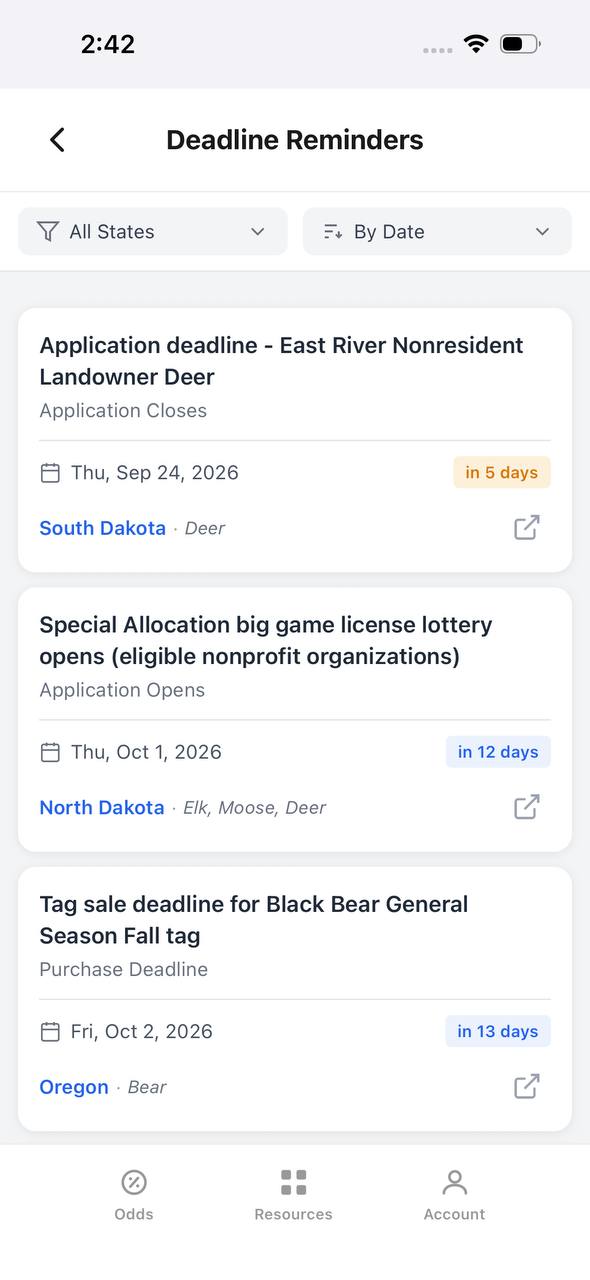
- Deadline reminders
- 18 states covered

Free to join
Download mobile app
- Detailed draw odds
- Point tracking
- Deadline reminders
- 18 states covered
Free to join
Download mobile app
- Detailed draw odds
- Point tracking
- Deadline reminders
- 18 states covered
How to Choose the Right Bow for Your Hunting Style
The best bow for you depends on where and how you hunt. A treestand whitetail hunter needs different specs than a backcountry elk chaser.
Treestand hunters benefit from compact bows (28–31 inches ATA) that maneuver in tight spaces and longer brace heights (6.5–7+ inches) that forgive rushed shots when a buck appears. Prioritize smooth draw cycles and minimal vibration over raw speed.
Spot-and-stalk hunters want lightweight bows (under 4 pounds) that won't wear you down over miles of hiking. Slightly longer axle-to-axle lengths (32–34 inches) improve stability when shooting from awkward positions. A shorter brace height trades forgiveness for speed, which helps at longer ranges.
Western mountain hunters chasing elk, mule deer, or sheep need bows that balance weight, speed, and durability. Look for bows that handle altitude changes without tuning shifts and can take a beating in a backpack. Carbon risers save weight, and longer axle-to-axle lengths improve accuracy at 40–60 yards.
Beginners should prioritize forgiveness over speed. Longer brace heights (7+ inches), smooth draw cycles, and adjustable draw lengths let you focus on building form without fighting the bow. A forgiving bow builds confidence faster than a speed bow that punishes mistakes.
Draw Length and Draw Weight Considerations
Proper draw length is non-negotiable for accuracy and consistency. A bow shop can measure your draw length precisely, but a rough estimate is your wingspan (fingertip to fingertip) divided by 2.5. Most adult male hunters fall between 28 and 30 inches.
Draw weight determines how much energy you transfer to the arrow, but more isn't always better. Most states require a minimum draw weight of 40 pounds for big game, but 50–60 pounds is plenty for elk-sized animals with a well-tuned setup and proper arrow selection.
Don't max out your draw weight. You should be able to draw smoothly and hold at full draw for 30 seconds without shaking. If you're struggling to reach full draw or your form breaks down after a few shots, drop 5–10 pounds. Consistent accuracy beats raw power every time.
Modern cam systems often allow 10 pounds of adjustment without changing modules, giving you room to grow into your bow or adjust for seasonal fitness levels. Always verify your effective draw weight (the poundage you're actually pulling) with a bow scale at full draw.
Free to join
Download mobile app
- Detailed draw odds
- Point tracking
- Deadline reminders
- 18 states covered
Free to join
Download mobile app
- Detailed draw odds
- Point tracking
- Deadline reminders
- 18 states covered
Free to join
Download mobile app
- Detailed draw odds
- Point tracking
- Deadline reminders
- 18 states covered
Essential Specs Explained
IBO speed measures how fast a bow shoots a 350-grain arrow at 70 pounds draw weight and 30-inch draw length. It's useful for comparing bows, but your real-world setup will be slower. Add 100 grains of arrow weight, drop 10 pounds of draw weight, or shorten draw length an inch, and you'll lose speed.
Kinetic energy (KE) matters more than speed for hunting. KE measures how much force your arrow delivers on impact, calculated as (arrow weight in grains × velocity²) ÷ 450,000. For elk, aim for 65+ foot-pounds of KE. For deer, 40–50 ft-lbs is plenty.
Let-off is the percentage of draw weight reduced at full draw. A 70-pound bow with 80% let-off holds just 14 pounds at full draw, making it easier to wait for the perfect shot angle. Most hunting bows offer 75–85% let-off, with some adjustable models offering multiple settings.
Cam systems determine draw cycle feel and speed. Single-cam systems are easier to tune and maintain but typically slower. Binary cams (two cams slaved together) deliver more speed and nock travel consistency but require precise tuning. Hybrid cams split the difference.
Accessories That Matter
A bare bow is just the starting point. These accessories turn a bow into a complete hunting system:
- Arrow rest — Drop-away rests provide maximum clearance and accuracy. Quality options like QAD Ultrarest or Hamskea Hybrid Hunter are worth the investment.
- Sight — Single-pin sights force range estimation but offer cleaner sight pictures. Multi-pin sights provide faster target acquisition at varying distances. Sliders split the difference.
- Release — Wrist-strap releases are faster to deploy and more forgiving. Handheld releases promote better back tension and more consistent shots but require practice.
- Stabilizer — A quality stabilizer dampens vibration and improves balance. Front stabilizers (8–12 inches) work for treestands; longer stabilizers (12+ inches) help in open country.
- Quiver — Integrated quivers add weight but keep arrows accessible. Detachable quivers reduce bow weight but add a step when you spot game.
- Peep sight — A properly sized and aligned peep sight ensures consistent anchor points and sight alignment shot after shot.
Don't cheap out on arrows. A quality carbon arrow with proper spine, weight, and broadhead combination delivers better accuracy and penetration than the best bow shooting cheap arrows.
Break-In and Tuning Your New Bow
A new bow needs proper setup and break-in before opening day. Shoot 100–200 arrows through it to let strings and cables settle, then have a bow shop check timing, cam synchronization, and centershot alignment.
Paper tuning reveals arrow flight issues. Shoot through paper at 6–8 feet and adjust rest position until you get a clean bullet hole. Walk-back tuning at 20, 30, 40, and 50 yards verifies your centershot is correct.
Check bow weight at full draw with a bow scale. Many bows pull 2–5 pounds heavier than advertised, especially after strings settle. If you're over your target weight, back off the limb bolts or move to lighter draw weight limbs.
Practice from the positions you'll actually hunt. Shooting from a treestand, kneeling, or uphill changes your form and anchor point. The more realistic your practice, the more confident you'll be when a bull steps out at 35 yards.
Free to join
Download mobile app
- Detailed draw odds
- Point tracking
- Deadline reminders
- 18 states covered
Free to join
Download mobile app
- Detailed draw odds
- Point tracking
- Deadline reminders
- 18 states covered
Free to join
Download mobile app
- Detailed draw odds
- Point tracking
- Deadline reminders
- 18 states covered
TAGZ Helps You Plan Beyond the Bow
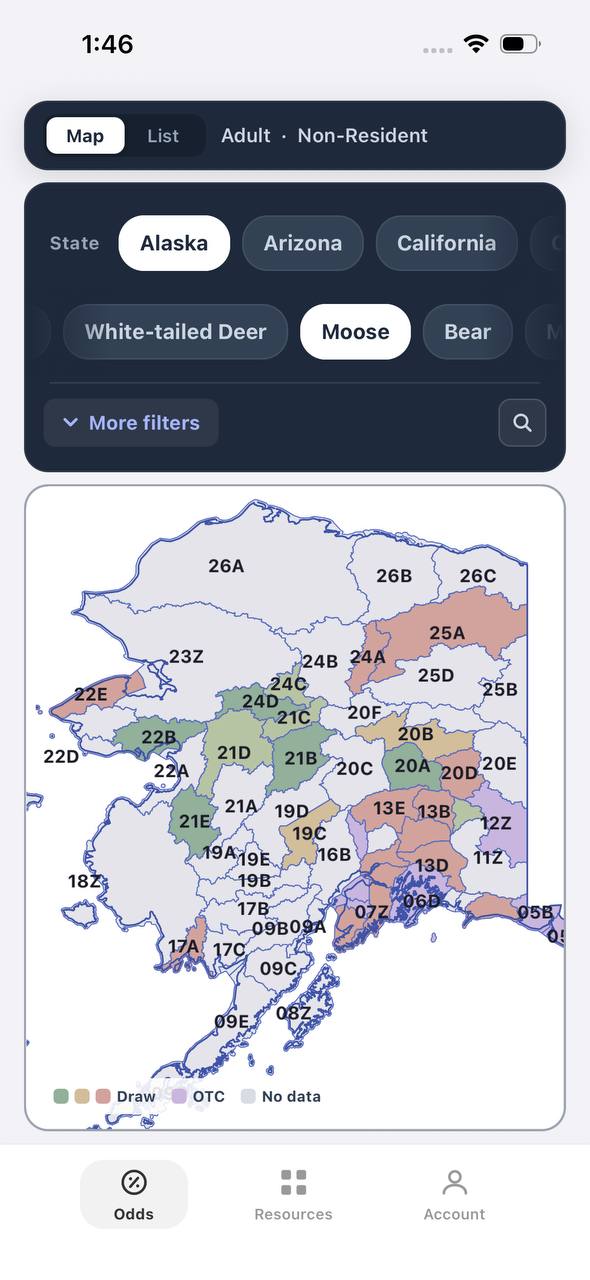
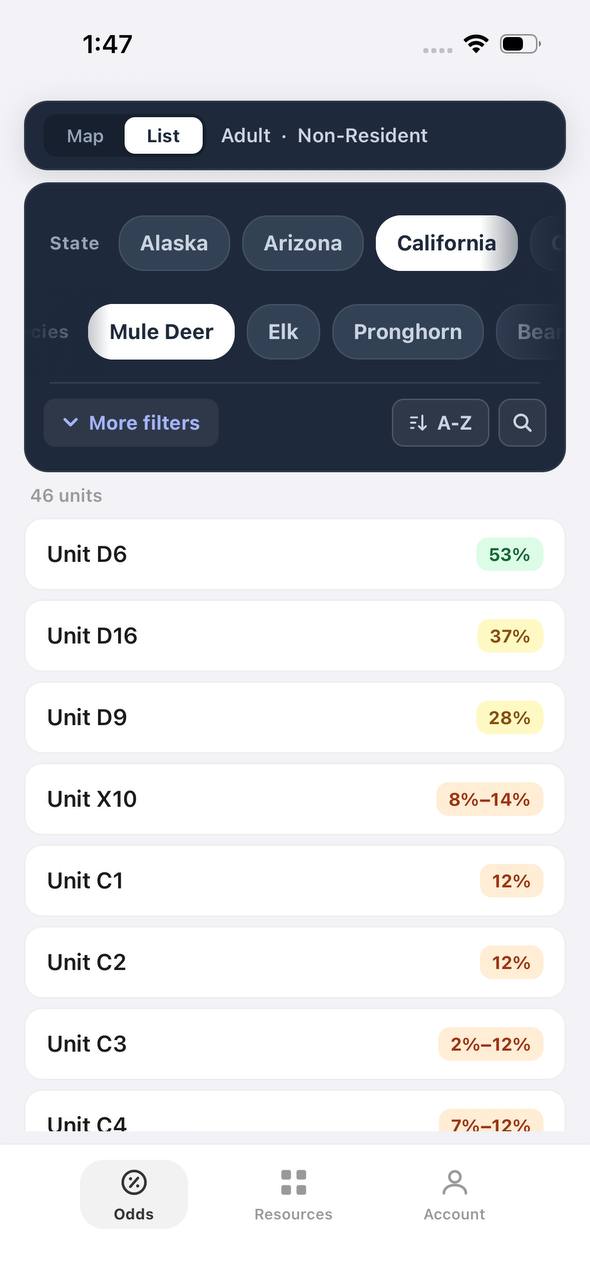
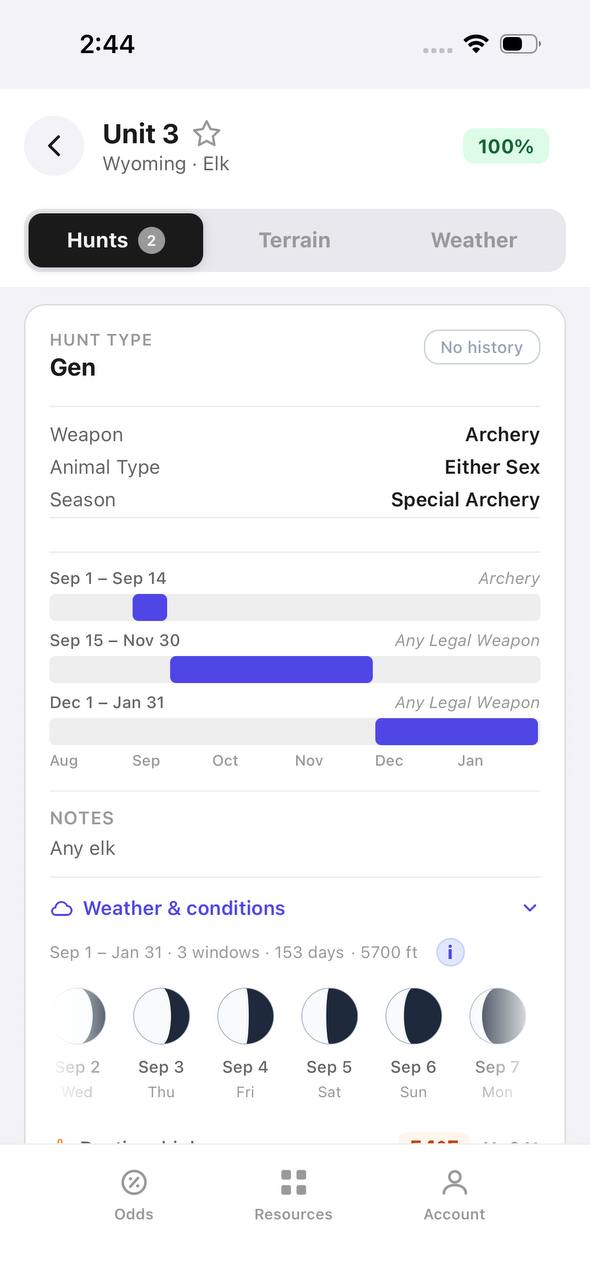
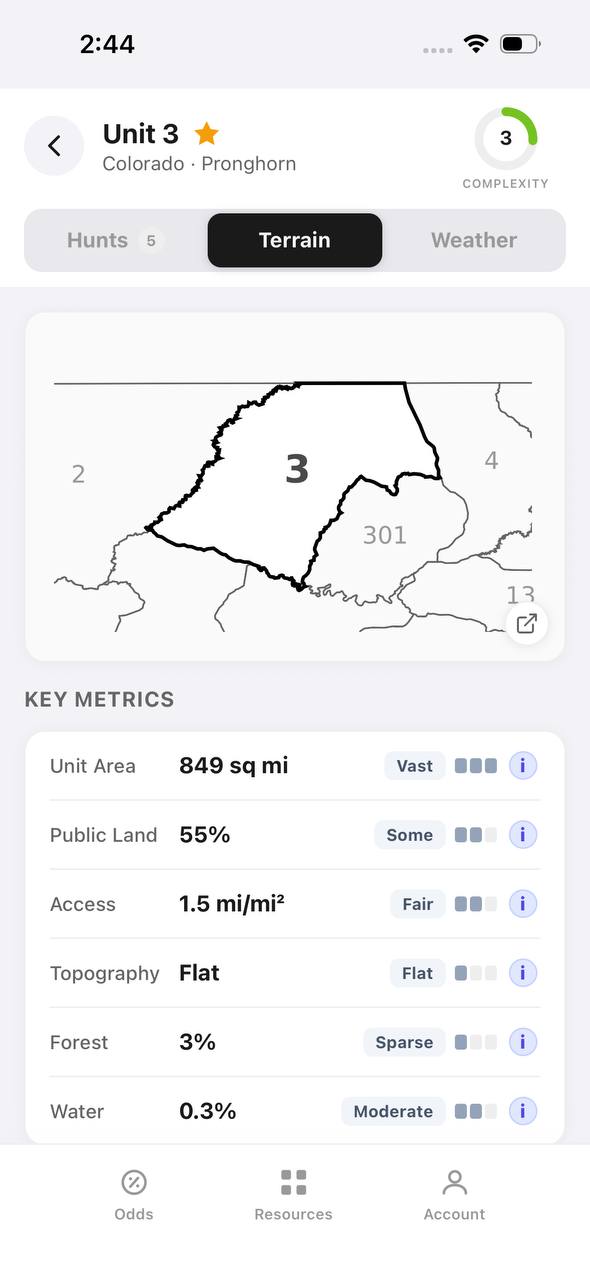
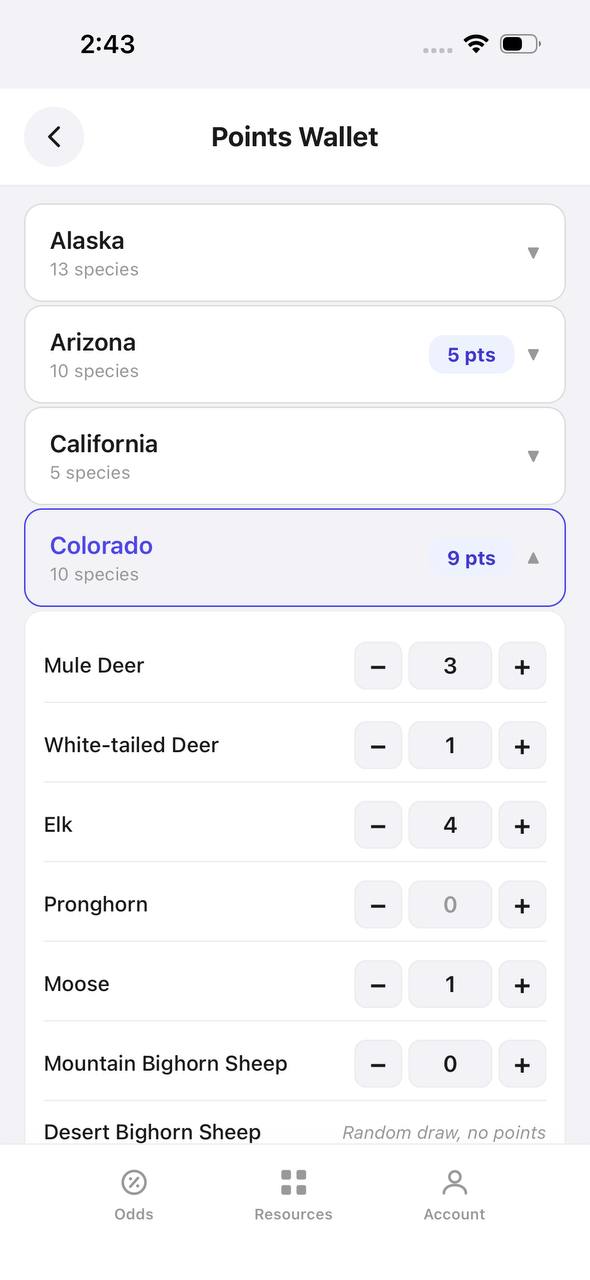
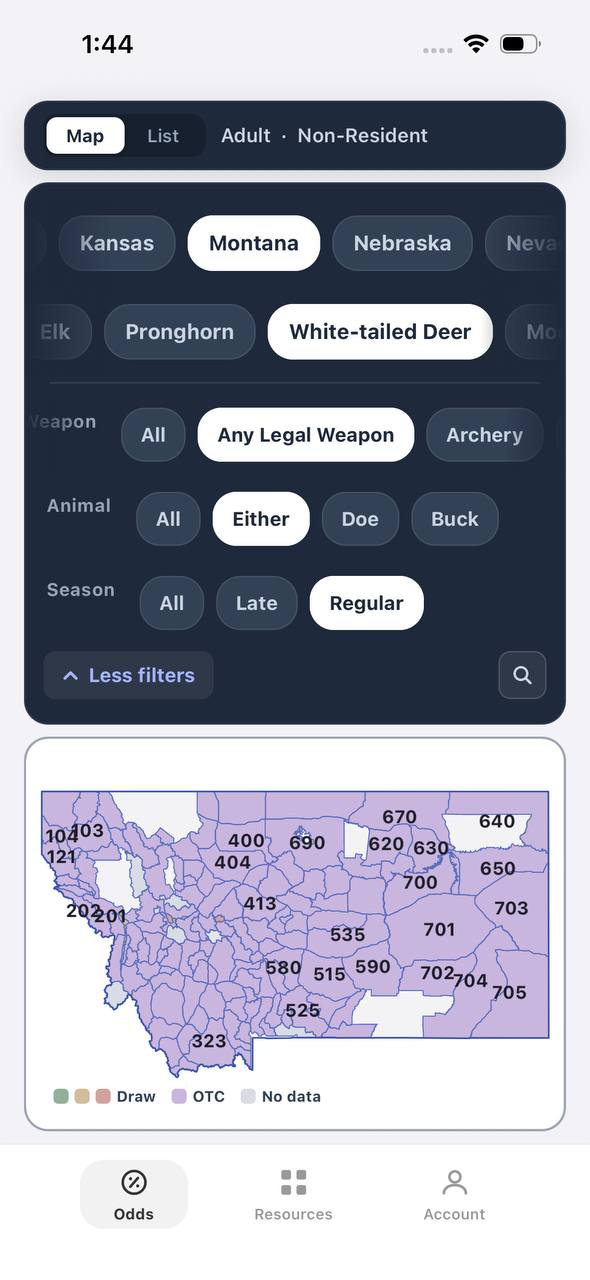
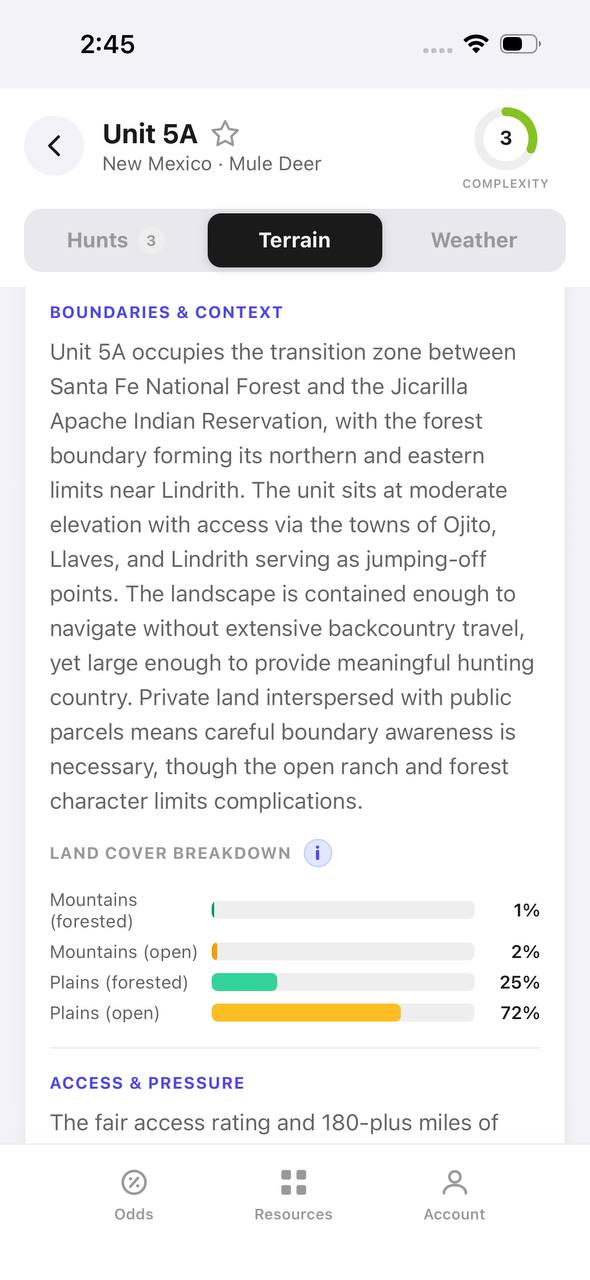
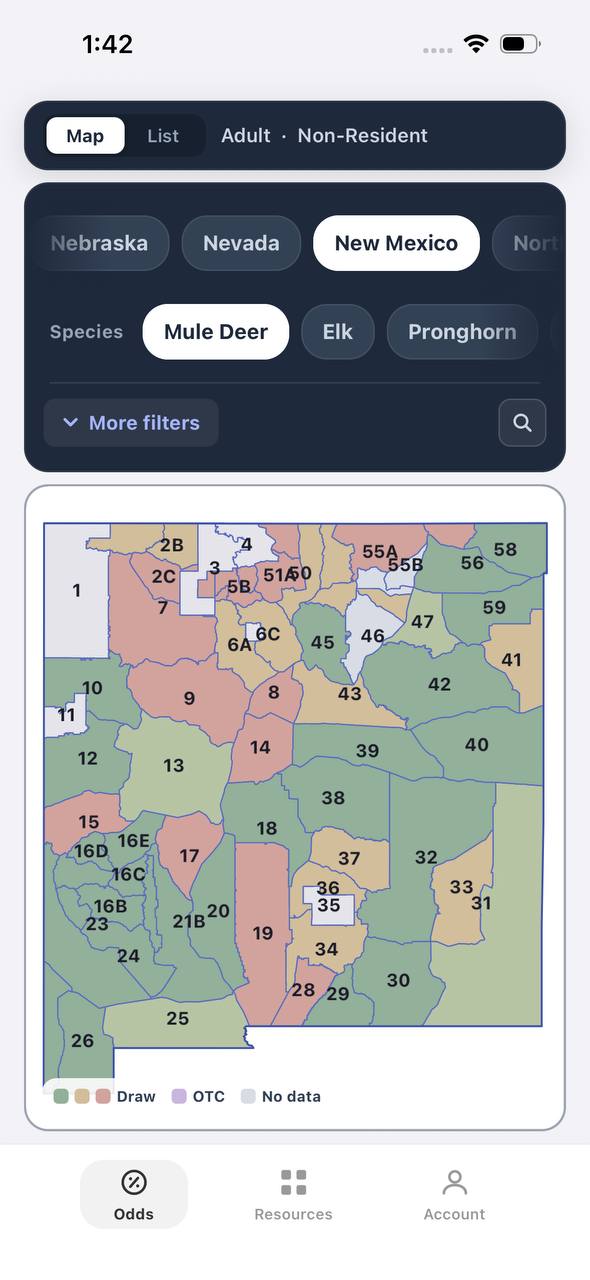
Choosing the right compound bow sets you up for success, but getting drawn for premium tags requires strategy. TAGZ helps you compare draw odds across western states, track your preference points and bonus points, and identify units where your points give you a realistic shot at a tag.
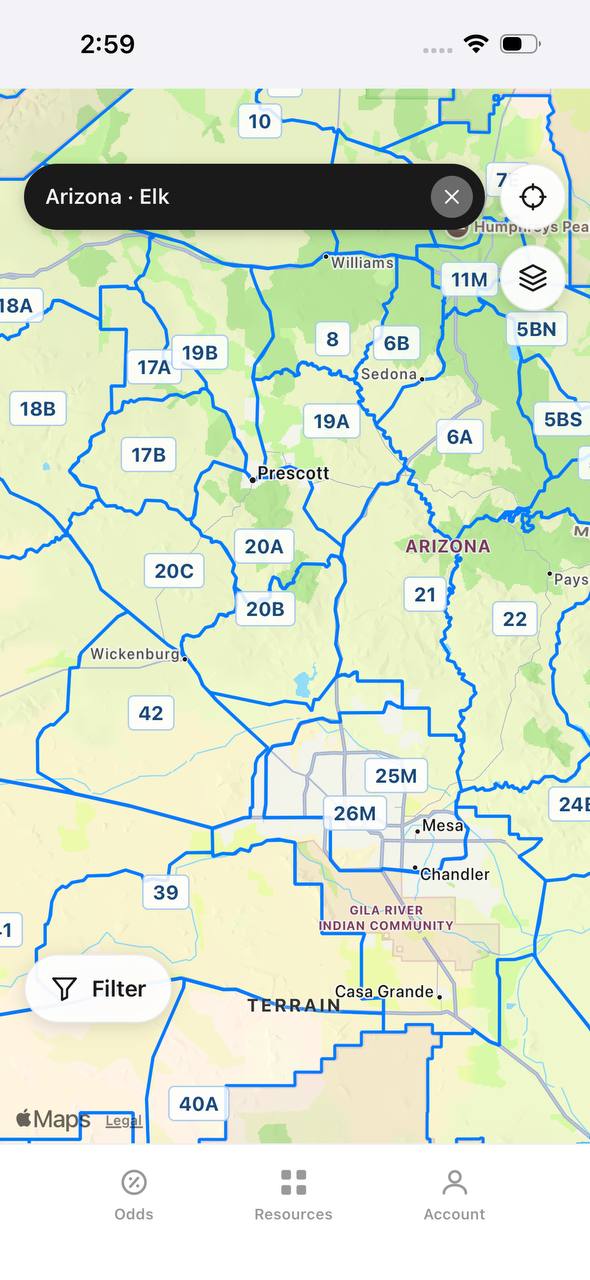
Whether you're applying in multiple states or targeting a specific trophy unit, TAGZ shows you unit boundaries, terrain maps, public land access, and historical draw data side by side. Filter hunts by weapon type, season, and species to find opportunities that match your new bow setup. Track draw deadlines so you never miss an application window, and build a multi-year point strategy that maximizes your odds.
TAGZ turns the overwhelming western draw system into a clear plan. You've invested in a quality bow — make sure you draw tags that let you use it.
FAQ — Compound Bows for Hunting
What draw weight do I need for elk hunting?
Most western states require 40–50 pounds minimum, but 50–60 pounds with a well-tuned setup and proper arrows delivers plenty of kinetic energy for ethical kills on elk. Don't max out your draw weight if it compromises your form or ability to draw smoothly.
How much should I spend on a hunting compound bow?
Budget $400–$500 for a reliable entry-level bow, $700–$900 for mid-tier performance, or $1,000+ for flagship models with the latest technology. Add another $300–$600 for essential accessories like a sight, rest, release, and arrows.
What's the difference between single-pin and multi-pin sights?
Single-pin sights require adjusting for range but offer cleaner sight pictures and less clutter. Multi-pin sights provide faster target acquisition at multiple distances but can crowd your field of view. Most western hunters prefer multi-pin for quicker shots on moving animals.
Can I hunt with an older compound bow?
Yes, if it's properly tuned and meets your state's minimum draw weight requirements. Modern bows offer refinements in speed, vibration dampening, and adjustability, but a 10-year-old flagship bow will still kill elk just fine with good shot placement.
How often should I replace my bow strings?
Replace strings and cables every 2–3 years or after 5,000–10,000 shots, whichever comes first. Watch for fraying, serving separation, or peep sight rotation, which indicate it's time for new strings regardless of age.
Do I need a bow press to work on my compound bow?
Yes, for string and cable replacement, cam timing adjustments, or module changes. Most bow shops offer press services for $20–$40, or you can buy a portable press for $100–$200. Never try to remove strings without a press — the stored energy can cause serious injury.
Continue Planning Your Hunt
Ready to put your new bow to work on a western hunt? Explore the TAGZ Insights blog for unit breakdowns, application strategies, and draw odds analysis across elk, mule deer, pronghorn, and more.
Create a free account at TAGZ to compare units side by side, track your points across states, and build a multi-year draw strategy. Whether you're chasing OTC tags or planning a trophy limited-entry hunt, TAGZ gives you the tools to make smarter decisions before you ever step into the field. Check out pricing options to unlock full access to draw data, unit maps, and planning tools, or dive into the product features to see how TAGZ simplifies western hunt planning.
Was this article helpful?
Previous
Best Custom Mountain Rifles: Top Gunsmiths Building Ultralight Hunting Rifles
Custom mountain rifles from top gunsmiths deliver sub-6-pound precision for backcountry hunts. Learn which builders specialize in ultralight rifles, what features matter most, and how to choose the right rig for steep-country elk, sheep, and mule deer.
Related
Best Prime Bows for Hunting in 2026: Top Models Reviewed
Prime bows deliver tournament-level accuracy and field-proven reliability. We break down the top models for 2026, from the flagship Nexus to the budget-friendly Diverge, to help you choose the right rig for your next hunt.
Next
Truck Maintenance Checklist Before Hunting Season: Don't Get Stranded
A breakdown 40 miles from pavement can end your hunt before it starts. This pre-season truck maintenance checklist covers tires, fluids, suspension, and recovery gear so your rig handles backcountry roads when it matters most.