Best Custom Mountain Rifles: Top Gunsmiths Building Ultralight Hunting Rifles
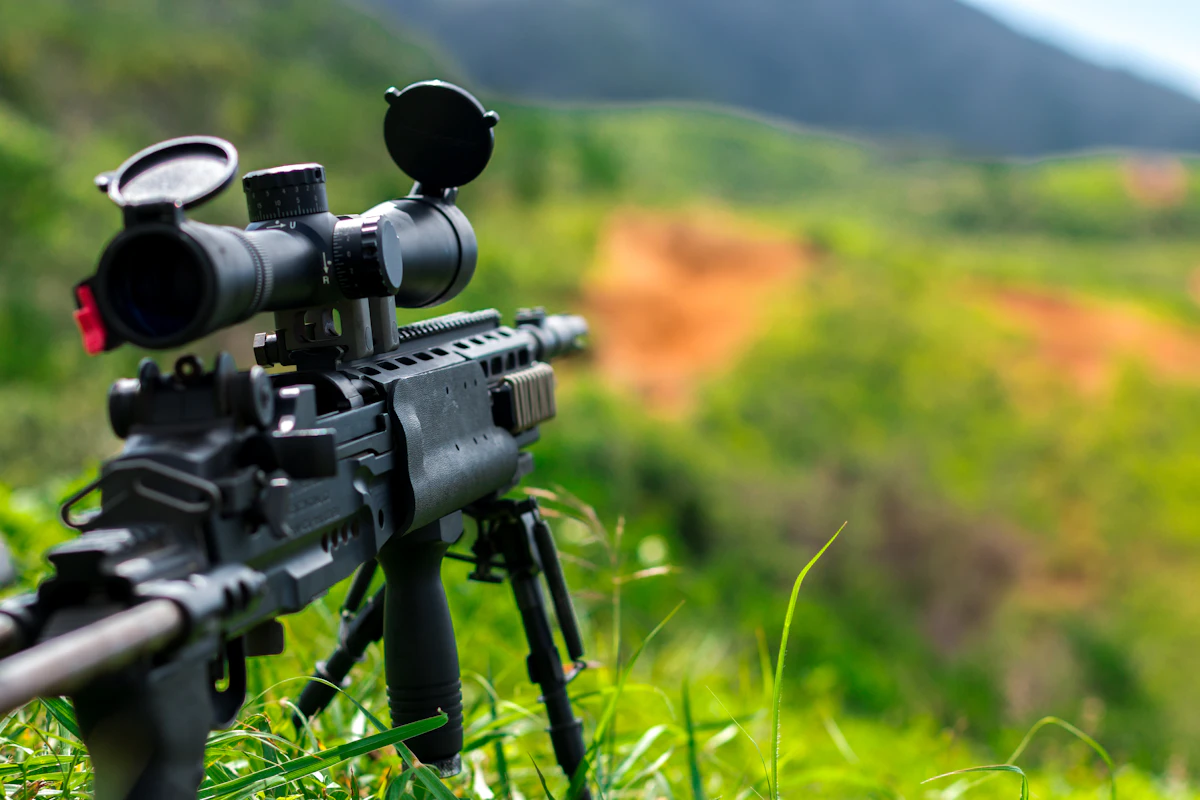
A custom mountain rifle is not just lighter than a factory gun. It is purpose-built for the hunter who covers miles in steep country, where every ounce matters and a single shot opportunity demands absolute reliability. The best custom gunsmiths understand this balance between weight, accuracy, and durability better than any production line.
Whether you are planning a Colorado high-country elk hunt, a Wyoming wilderness mule deer hunt, or a sheep hunt in Alaska, the rifle on your back shapes how far you can push and how confidently you execute when the moment arrives. Here is what separates the best custom mountain rifle builders from the rest, and how to choose the right one for your hunts.
What Defines a True Mountain Rifle
A mountain rifle is not simply a lightweight rifle. It is a hunting tool engineered to perform in thin air, extreme weather, and technical terrain where a second shot is rarely an option. True mountain rifles typically weigh 5.5 to 6.5 pounds scoped, chamber magnum cartridges without punishing recoil, and maintain sub-MOA accuracy after days on your back.
The best custom builders achieve this through carbon fiber barrels, titanium actions, and stock designs that shed weight without compromising rigidity. A well-executed custom build feels alive in your hands — balanced, responsive, and confident. Factory ultralight rifles often sacrifice one element to save weight. Custom gunsmiths dial in all three.
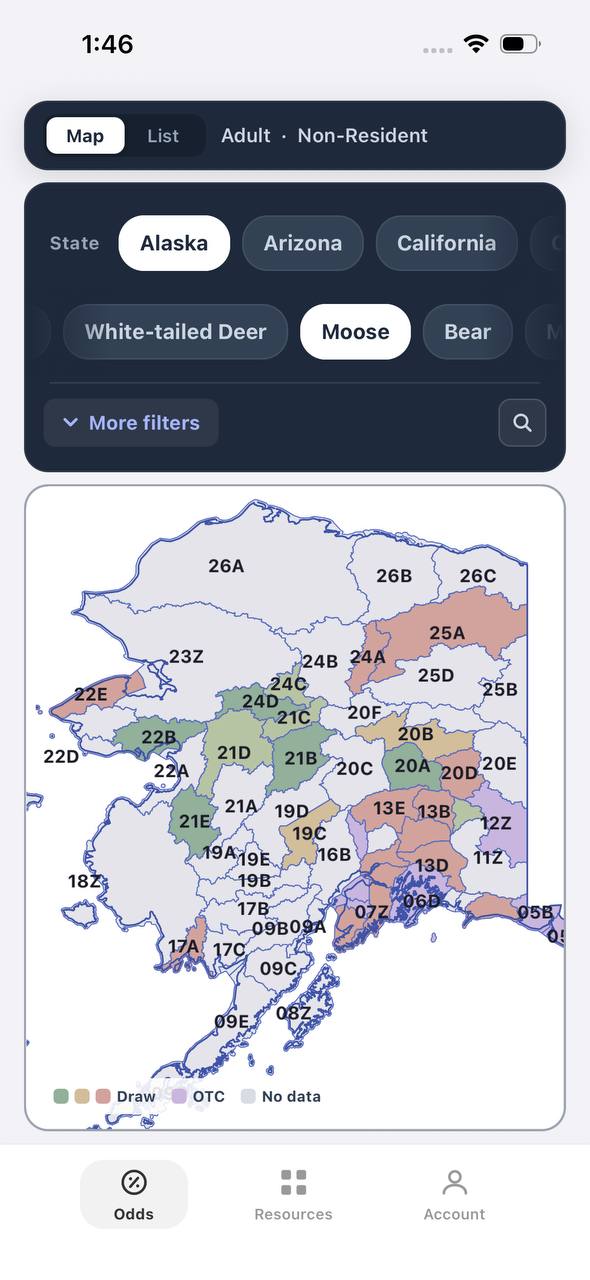
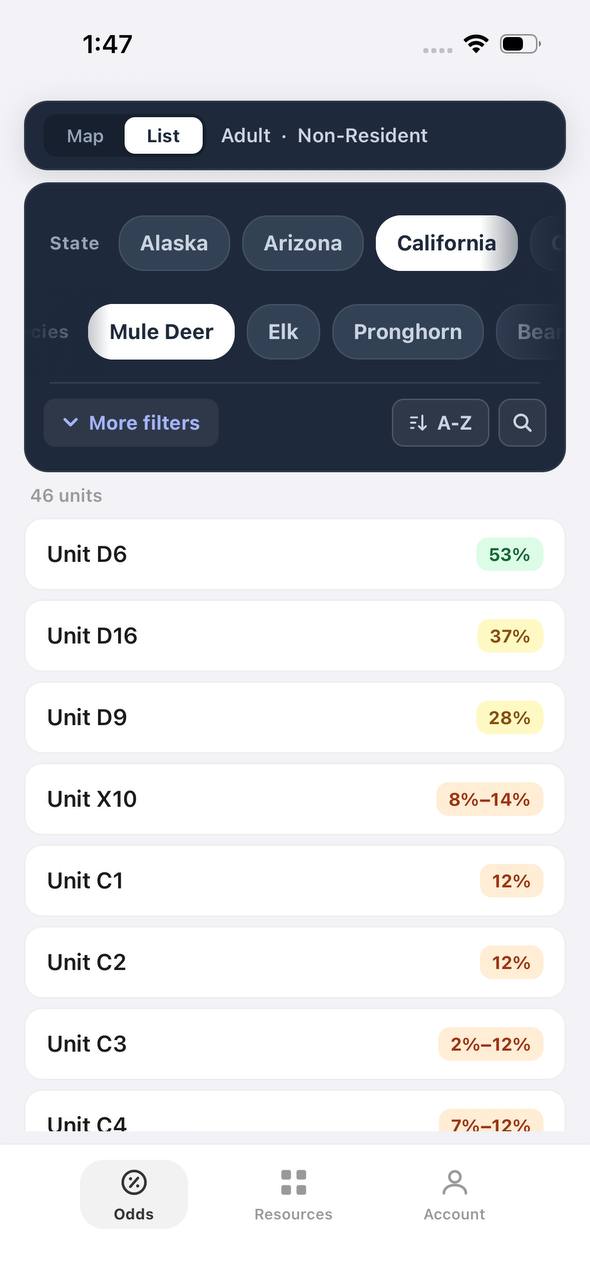
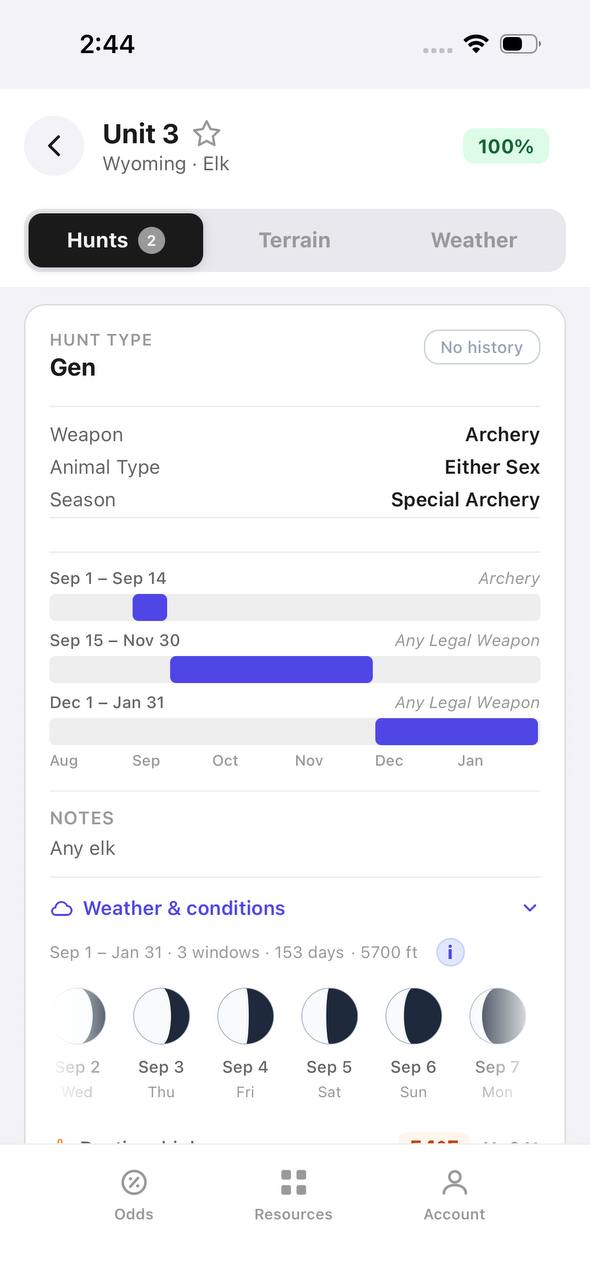
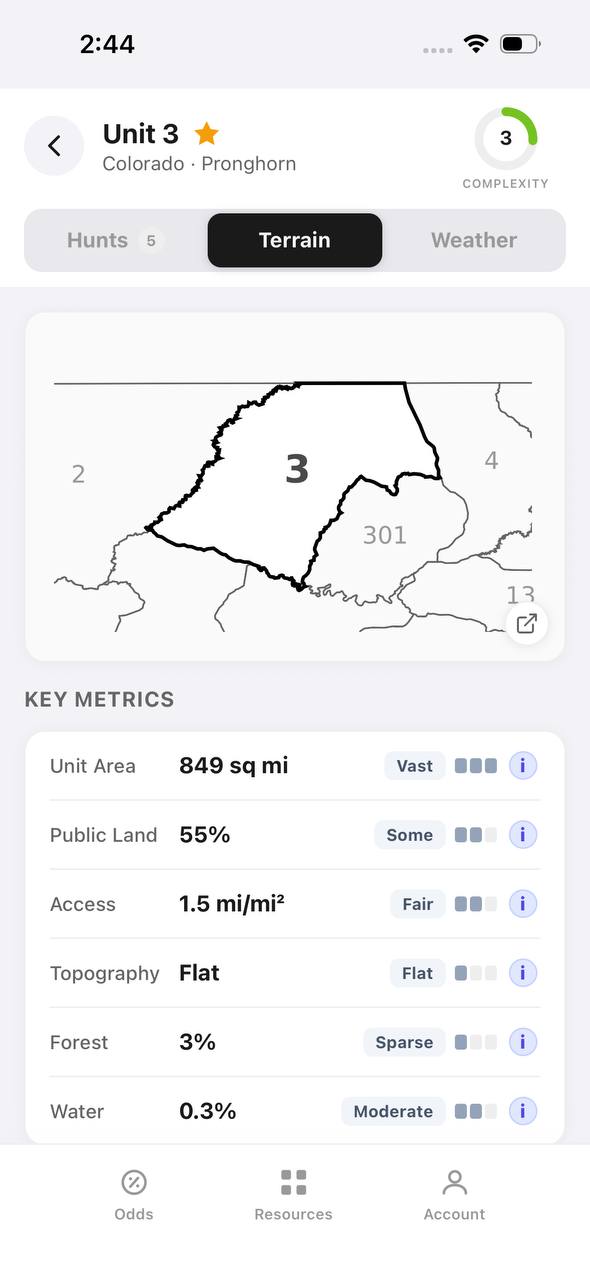
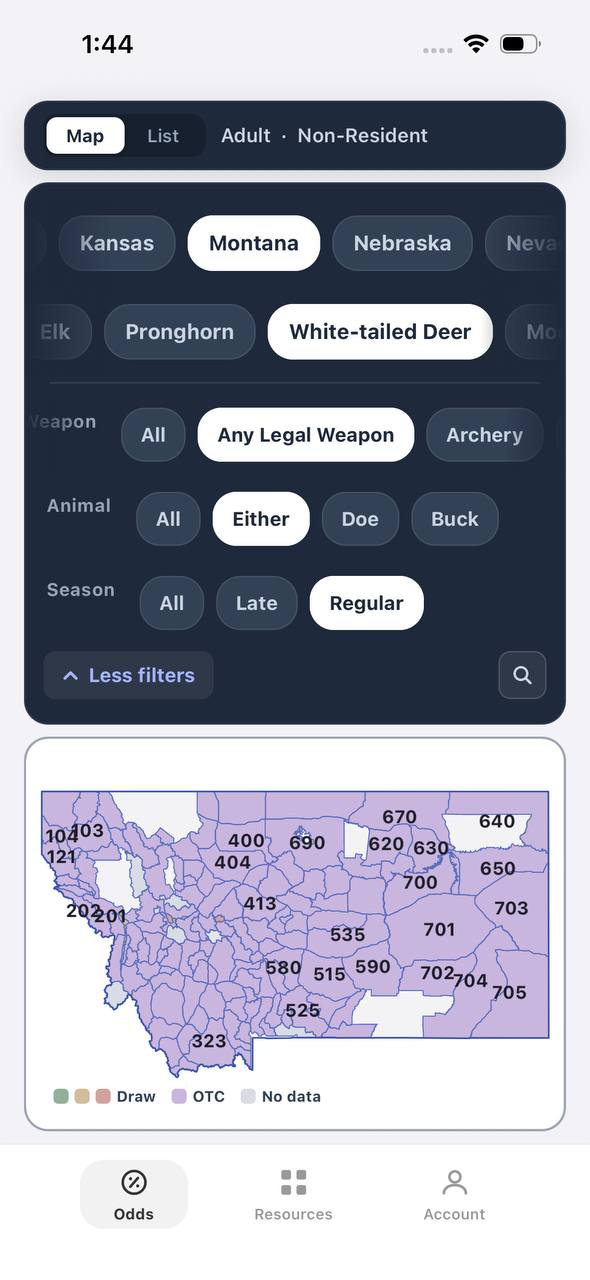
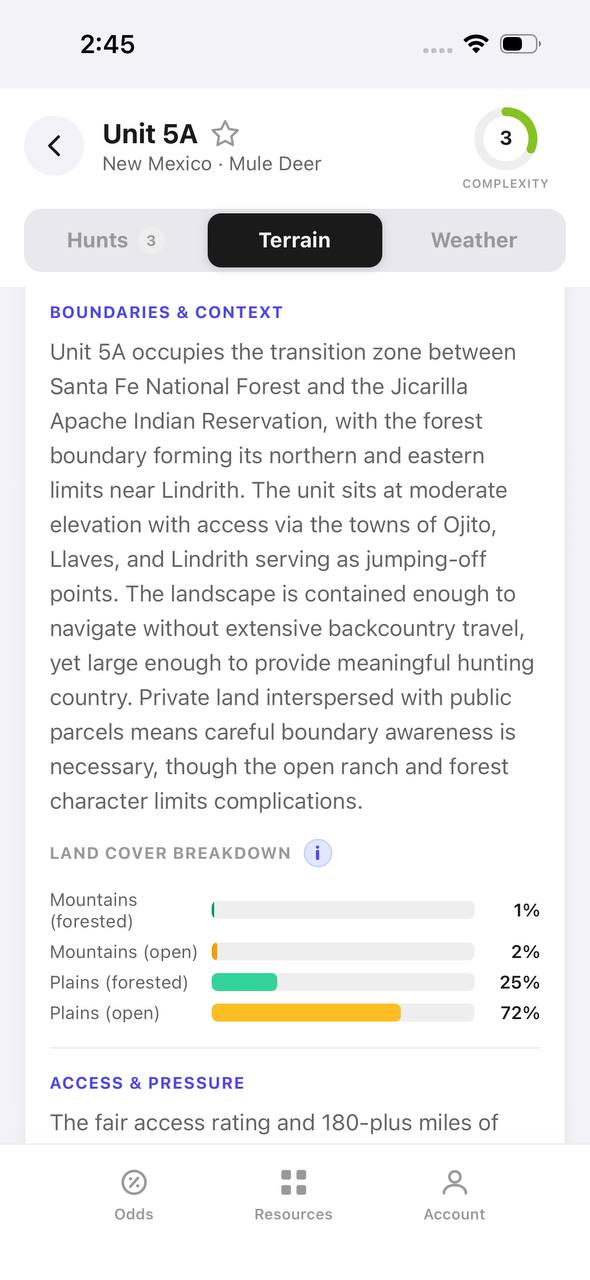
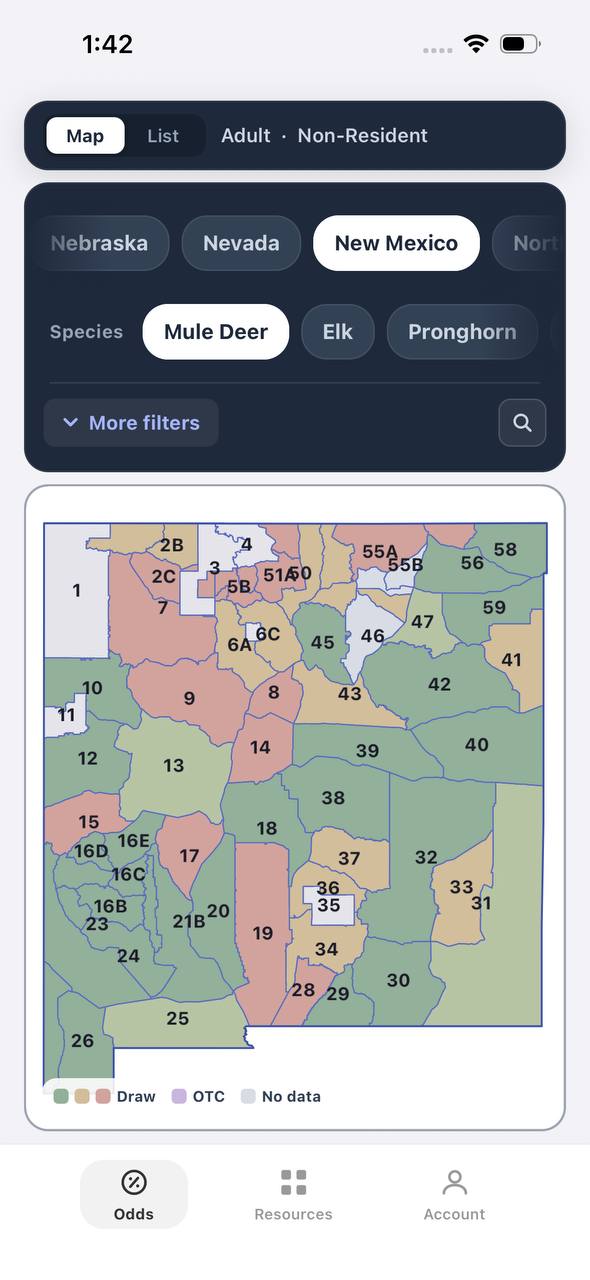
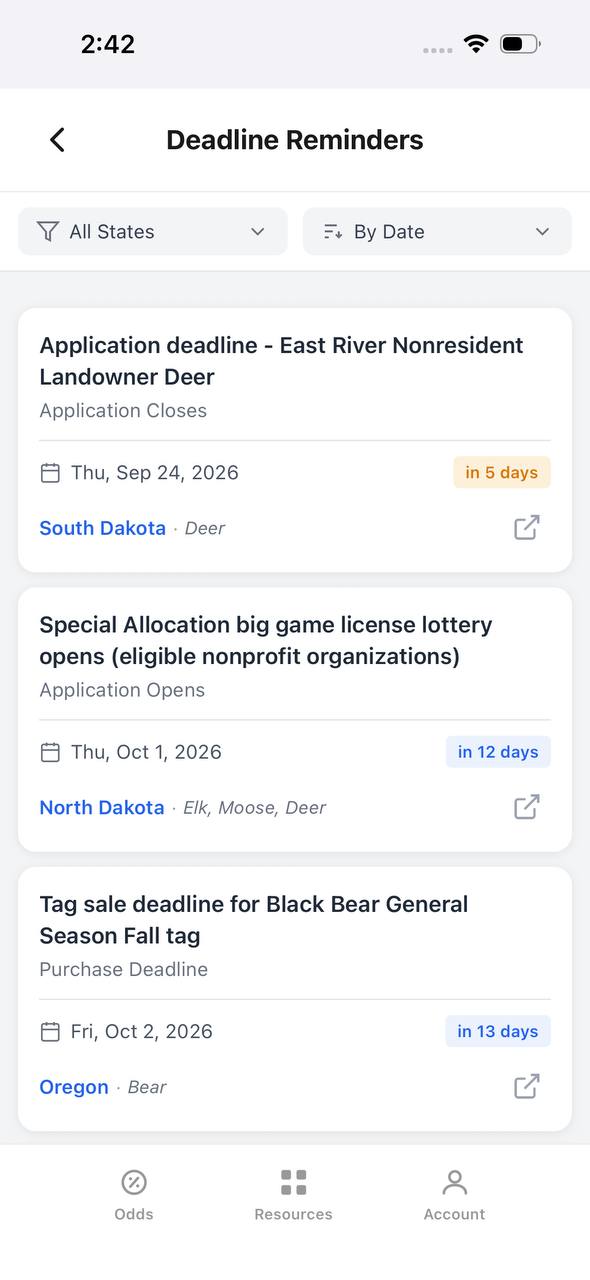
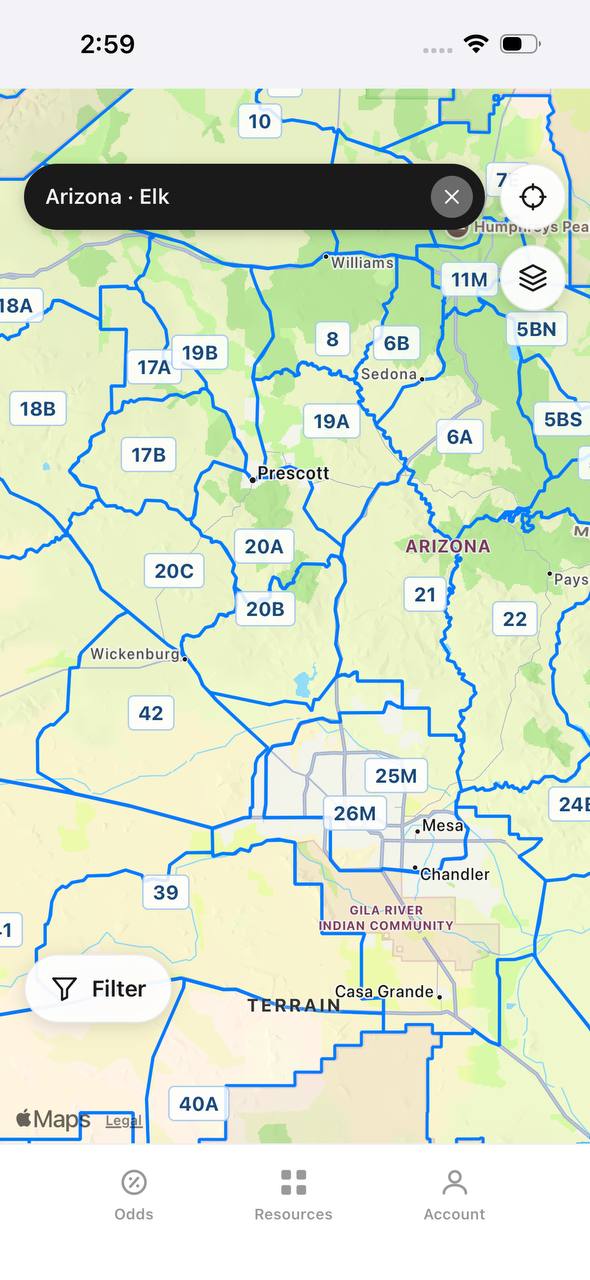
TAGZ helps you plan hunts where this level of gear makes the difference. Use terrain maps and unit boundaries to identify steep, remote units where backpack hunting is the only way in. Compare draw odds for limited-entry sheep, goat, and wilderness elk tags across multiple states. Track application deadlines so you never miss a chance at the hunt that demands your best rifle.
Top Custom Gunsmiths for Mountain Rifles
Beanland Custom Rifles
Based in Montana, Beanland builds some of the lightest production-style custom rifles available. Their Signature Series rifles start around 5.5 pounds scoped using carbon-wrapped barrels, titanium actions, and proprietary lightweight stocks. Beanland specializes in magnum cartridges — 300 WSM, 7mm Rem Mag, 28 Nosler — configured for one-shot stops on elk and sheep.
Lead times run 12 to 18 months. Expect to invest $8,000 to $12,000 depending on barrel choice, action, and stock upgrades. Beanland rifles are built for hunters who demand sub-6-pound performance without compromise.
Gunwerks
Gunwerks in Wyoming pioneered the long-range mountain rifle category. Their ClymR series delivers turnkey precision with carbon barrels, custom actions, and fully bedded stocks. Every rifle ships with a ballistic solution tuned to your specific load and scope. Most ClymR builds weigh 6 to 6.5 pounds scoped.
Gunwerks rifles excel for hunters who shoot past 400 yards regularly. Prices start around $10,000 and climb with glass and accessories. Lead times are typically six to nine months. The included ballistic data and load development removes guesswork — critical for high-stakes hunts where practice time is limited.
Proof Research
Proof Research does not build complete rifles, but their carbon fiber barrels anchor most top-tier custom mountain builds. Proof barrels save 1 to 2 pounds over steel while maintaining accuracy and stiffness. Hundreds of custom gunsmiths use Proof barrels, but going direct through Proof's semi-custom program lets you pair their barrel with Defiance, Lone Peak, or Zermatt actions.
Proof semi-custom builds start around $5,000 before optics. Lead times are six to 12 months depending on action and stock selection. If you want maximum flexibility in caliber and component choice, Proof's platform is hard to beat.
Stocky's
Stocky's in Montana offers accessible custom builds through their AccuStock platform. By pairing proven actions like Defiance Deviant and barrels from Bartlein or Proof with their proprietary carbon fiber stocks, Stocky's delivers sub-6-pound rifles at $4,000 to $7,000. Lead times are often shorter — three to six months — making them a strong option for hunters planning a hunt inside a year.
Stocky's rifles prioritize value without cutting corners on critical components. Their stock designs balance weight and rigidity better than many factory ultralight options. For hunters who want custom performance at near-production pricing, Stocky's is worth serious consideration.
Kelblys
Kelblys in Ohio has built precision rifles for decades. Their custom mountain builds use Kelblys' own actions — known for smooth bolt throw and reliability — paired with carbon or fluted steel barrels. Most Kelblys mountain rifles weigh 6 to 7 pounds scoped and are chambered in cartridges from 6.5 Creedmoor to 300 Win Mag.
Pricing runs $5,000 to $8,000 depending on barrel and stock choice. Kelblys rifles are workhorses built for hunters who prioritize function and durability over the absolute lightest build. Lead times are typically six to 12 months.
Key Features to Prioritize
Carbon Fiber vs. Steel Barrels
Carbon fiber barrels from Proof, NEMO, or Christensen Arms save 1 to 2 pounds over steel without sacrificing accuracy. They also dissipate heat faster — important on multi-shot practice sessions before your hunt. Carbon barrels cost $800 to $1,200 more than steel but deliver the single biggest weight reduction in a custom build.
Steel barrels, especially fluted models from Bartlein or Krieger, still perform exceptionally well. They cost less and some gunsmiths argue they maintain zero better over time. For sheep and goat hunts where every ounce counts, carbon is the move. For elk and mule deer hunts where durability matters more than the last pound, quality steel is hard to beat.
Action Choice
Titanium actions from Lone Peak, Defiance, or Zermatt save 8 to 12 ounces over steel. They also cost $1,500 to $2,500 compared to $800 to $1,200 for steel actions. Most custom mountain builders offer both. Titanium makes sense for extreme weight savings on sheep and goat rifles. Steel actions are plenty light for elk and mule deer builds where you want every dollar going toward glass and barrel quality.
Action length matters too. Short actions chambered in 6.5 PRC, 7mm-08, or 300 WSM save length and weight over long-action magnums. If you are building for elk in timber and mule deer under 500 yards, short actions make sense. For sheep, goat, and long-range elk work, long-action cartridges like 7mm Rem Mag and 28 Nosler deliver the velocity you need.
Stock Design
Stock design is where custom builders separate themselves. A stock must be rigid enough to maintain barrel harmonics but light enough to hit your target weight. The best mountain stocks use carbon fiber or advanced composites with minimal bedding material.
AG Composites, Manners, and McMillan build excellent lightweight stocks that pair well with most custom actions. Expect to spend $600 to $1,200 for a quality stock. Custom builders often mold their own stocks — Beanland and Stocky's both do — which allows them to dial in length of pull, cheek height, and grip angle specifically for mountain hunting positions.
A poorly designed stock telegraphs recoil and magnifies fatigue on long days. A great stock makes a 6-pound 300 WSM feel manageable and keeps you shooting confidently when the shot presents itself.
Caliber Selection for Mountain Rifles
6.5 PRC
The 6.5 PRC has become the go-to cartridge for mule deer, sheep, and goat hunters who shoot inside 600 yards. It delivers excellent ballistics with mild recoil, making it easy to shoot well from awkward field positions. Factory ammunition is widely available, and barrel life exceeds 2,000 rounds.
The 6.5 PRC works well in short-action builds, saving weight and length. It is marginal on elk past 400 yards but absolutely lethal on mule deer and sheep with proper shot placement. For hunters who prioritize low recoil and long barrel life, the 6.5 PRC is hard to beat.
7mm Rem Mag
The 7mm Rem Mag remains the standard for all-around western hunting. It hits harder than 6.5 cartridges, shoots flatter than .30 calibers, and delivers enough energy for elk at 600+ yards. Recoil is manageable in a 6-pound rifle, and ammunition is available everywhere.
Most custom builders offer 7mm Rem Mag as a default option for good reason. It does everything well and nothing poorly. If you are building one rifle for mule deer, elk, and sheep across multiple states, the 7mm Rem Mag is the safest bet.
300 WSM
The 300 WSM splits the difference between the 7mm Rem Mag and full-size .30 caliber magnums. It delivers 300 Win Mag performance in a short action, saving weight and length. Recoil is stout but manageable in a well-designed stock.
The 300 WSM is ideal for elk hunters who hunt timber and alpine basins where shots range from 50 to 500 yards. It hits hard up close and retains energy downrange. Barrel life is shorter than 6.5 or 7mm cartridges — expect 1,000 to 1,500 rounds — but for a hunting rifle that sees 50 rounds per year, that is a lifetime of performance.
28 Nosler
The 28 Nosler is the choice for hunters who prioritize long-range performance above all else. It delivers 7mm ballistics with significantly higher velocity, extending effective range on elk and mule deer past 700 yards. Recoil is sharp, and barrel life is short — 800 to 1,000 rounds — but for sheep and high-country elk hunts where one shot at distance is the only opportunity, the 28 Nosler is unmatched.
Factory ammunition availability is improving, but handloading is still the best way to maximize performance. If you are building a rifle for a once-in-a-lifetime sheep hunt, the 28 Nosler is worth the trade-offs.
Free to join
Download mobile app
- Detailed draw odds
- Point tracking
- Deadline reminders
- 18 states covered

Free to join
Download mobile app
- Detailed draw odds
- Point tracking
- Deadline reminders
- 18 states covered
Free to join
Download mobile app
- Detailed draw odds
- Point tracking
- Deadline reminders
- 18 states covered
Cost Breakdown and Lead Times
Custom mountain rifles are not cheap. Expect to invest $5,000 to $12,000 for a complete build before optics. Here is where the money goes:
- Action: $800 to $2,500 (steel to titanium)
- Barrel: $600 to $1,200 (steel to carbon fiber)
- Stock: $600 to $1,200
- Gunsmithing and assembly: $1,000 to $2,000
- Trigger: $200 to $400
- Cerakote or finishing: $200 to $500
Lead times vary by builder. Beanland and Gunwerks run 12 to 18 months. Stocky's and Proof Research often deliver in six to 12 months. Kelblys and smaller shops fall somewhere in between. Plan your build timeline around your hunt schedule — not the other way around. Missing a sheep hunt because your rifle is not ready is a costly mistake.
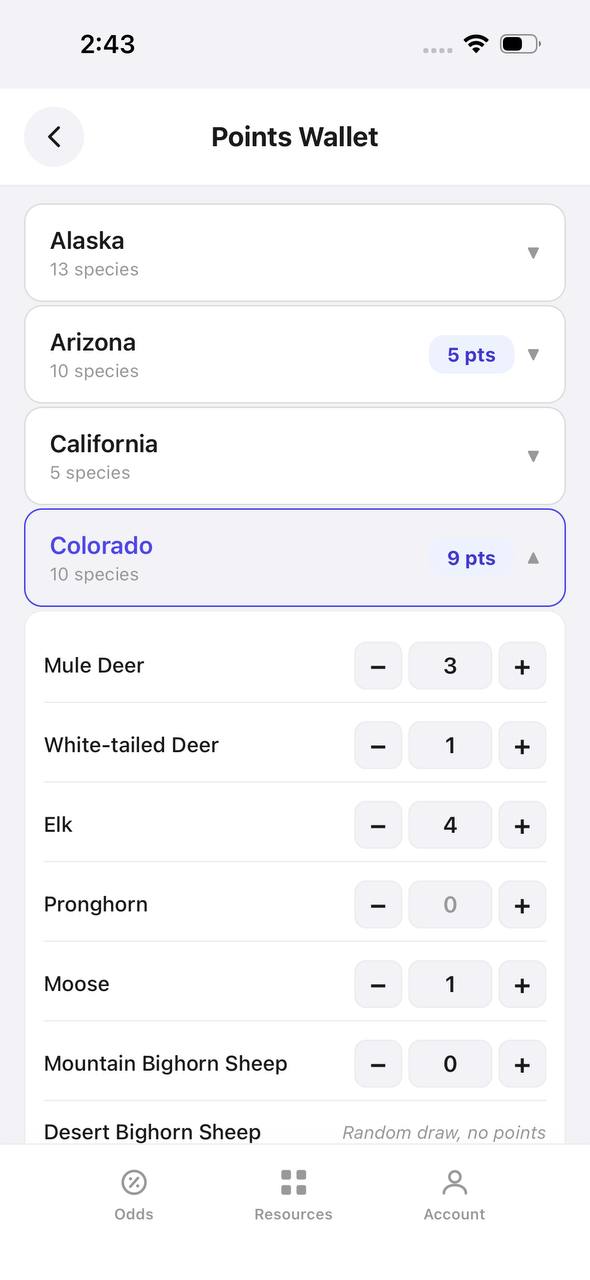
TAGZ helps you plan hunts years in advance so you have time to build your rifle right. Track preference points across states like Wyoming, Montana, and Nevada to know when you are likely to draw. Compare draw odds for limited-entry units so you can time your build to arrive before your hunt. Use hunt filtering by weapon, season, and species to identify opportunities that match your rifle's strengths.
How to Choose the Right Builder
Start by defining your primary hunting style. If you backpack hunt for elk, sheep, and goat in wilderness units, prioritize weight savings above all else. Beanland, Gunwerks, and Proof Research builds all deliver sub-6-pound performance. If you hunt mule deer and elk in mixed terrain where durability and value matter more than the last ounce, Stocky's and Kelblys offer excellent builds at lower price points.
Talk to the builder directly. Ask about lead times, component availability, and their experience with your chosen cartridge. The best custom gunsmiths are hunters themselves and understand the demands of backcountry hunting. They should ask about your typical shot distances, hunting style, and physical build to recommend stock dimensions and caliber.
Request examples of completed builds in your target weight and caliber range. A reputable builder will show you finished rifles, accuracy guarantees, and customer references. If a builder cannot provide this, keep looking.
Testing and Break-In
Once your rifle arrives, plan to shoot 100 to 200 rounds before your hunt. Custom rifles often require a break-in period to settle bedding and smooth barrel harmonics. Follow your builder's break-in procedure exactly — it matters.
Test your rifle at the distances you expect to shoot on your hunt. If you are hunting Colorado high-country elk, practice from 200 to 500 yards in field positions. If you are hunting Wyoming mule deer in open sage country, stretch it to 600 yards. Confidence comes from knowing exactly how your rifle performs under pressure.
Develop a load or validate factory ammunition at elevation if possible. Thin air changes ballistics, especially at long range. A rifle that shoots 0.5 MOA at sea level may open up to 1 MOA at 10,000 feet due to environmental factors. Test it where you will hunt it.
Maintenance and Longevity
Custom mountain rifles require minimal maintenance but benefit from proper care. Clean your barrel every 50 to 100 rounds depending on cartridge and powder choice. Magnum cartridges with slow-burning powders create more fouling and require more frequent cleaning.
Check stock screws and scope mounting screws before every hunt. Temperature swings and recoil can loosen screws over time. A single loose screw can shift zero and cost you the animal.
Re-zero your rifle every season or after flying with it. Airlines and rough trails can shift zero even in well-built customs. A quick confirmation at 200 yards before your hunt takes 10 minutes and prevents blown opportunities.
FAQ — Custom Mountain Rifles
What is the ideal weight for a custom mountain rifle?
Most hunters target 5.5 to 6.5 pounds scoped for backcountry hunting. Lighter builds sacrifice durability or cost significantly more. Heavier rifles add fatigue on long days and steep climbs.
Are carbon fiber barrels worth the extra cost?
Yes for sheep, goat, and wilderness elk hunts where weight matters most. Carbon barrels save 1 to 2 pounds and dissipate heat faster than steel. For mule deer and general elk hunting, quality fluted steel performs just as well and costs less.
How long does a custom mountain rifle build take?
Expect six to 18 months depending on the builder. Top-tier gunsmiths like Beanland and Gunwerks often run 12 to 18 months. Mid-tier builders like Stocky's deliver in six to 12 months. Plan your build timeline around your hunt schedule.
What caliber is best for an all-around western hunting rifle?
The 7mm Rem Mag remains the standard for mule deer, elk, and sheep across all ranges and terrain. The 6.5 PRC works well for hunters who prioritize low recoil and shoot inside 500 yards. The 300 WSM and 28 Nosler deliver more energy for elk and long-range work but with sharper recoil.
Do I need a titanium action for a mountain rifle?
No, but it helps. Titanium actions save 8 to 12 ounces over steel and cost $1,500 to $2,500. For sheep and goat hunters chasing the lightest possible build, titanium makes sense. For elk and mule deer hunters, quality steel actions deliver excellent performance at lower cost.
How much should I budget for a complete custom mountain rifle?
Plan to spend $5,000 to $12,000 before optics. Mid-tier builds using steel actions and carbon barrels run $5,000 to $7,000. Top-tier builds with titanium actions and premium components run $8,000 to $12,000. Quality glass adds another $1,500 to $3,000.
Continue Planning Your Hunt
A custom mountain rifle is only as good as the hunt you plan around it. TAGZ helps you compare units side by side using terrain maps, unit boundaries, and historical draw data. Track your preference points and bonus points across multiple states so you never miss a draw deadline. Whether you are chasing OTC tags or planning a trophy limited-entry hunt, TAGZ gives you the tools to make smarter decisions before you ever step into the field.
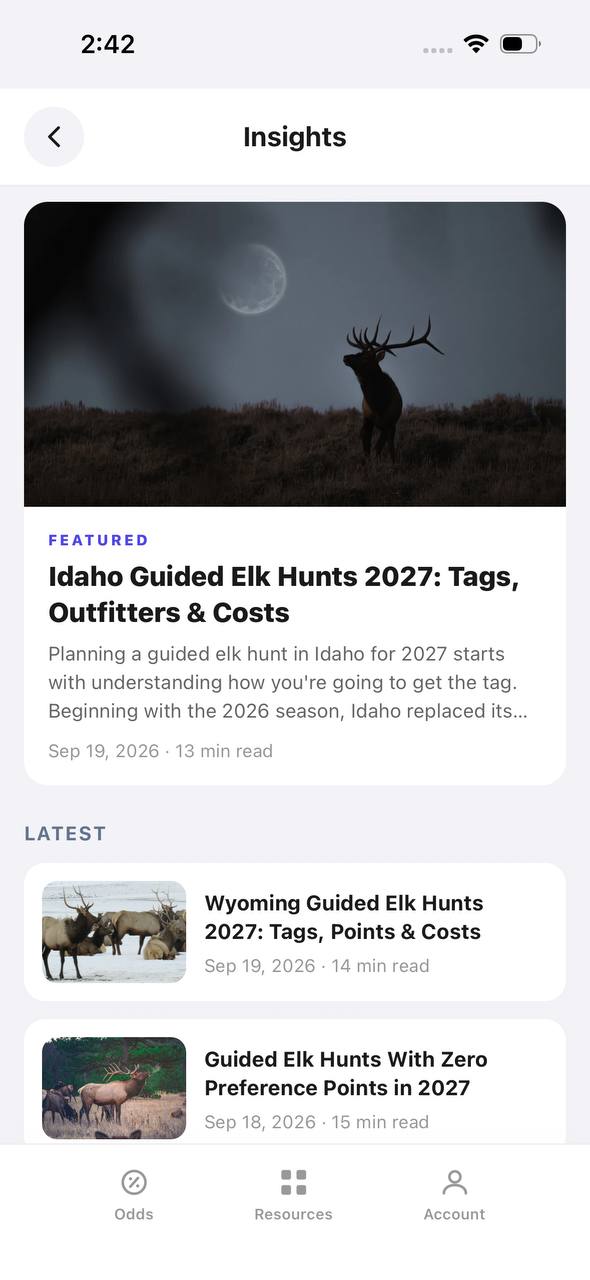
Explore the TAGZ Insights blog for unit breakdowns, draw strategy, and gear guides. Compare draw odds across states and weapon types on the TAGZ platform. Ready to plan your next hunt? Start your free trial and see how TAGZ simplifies western hunting applications and hunt planning from application season through the moment you squeeze the trigger.
Was this article helpful?
Previous
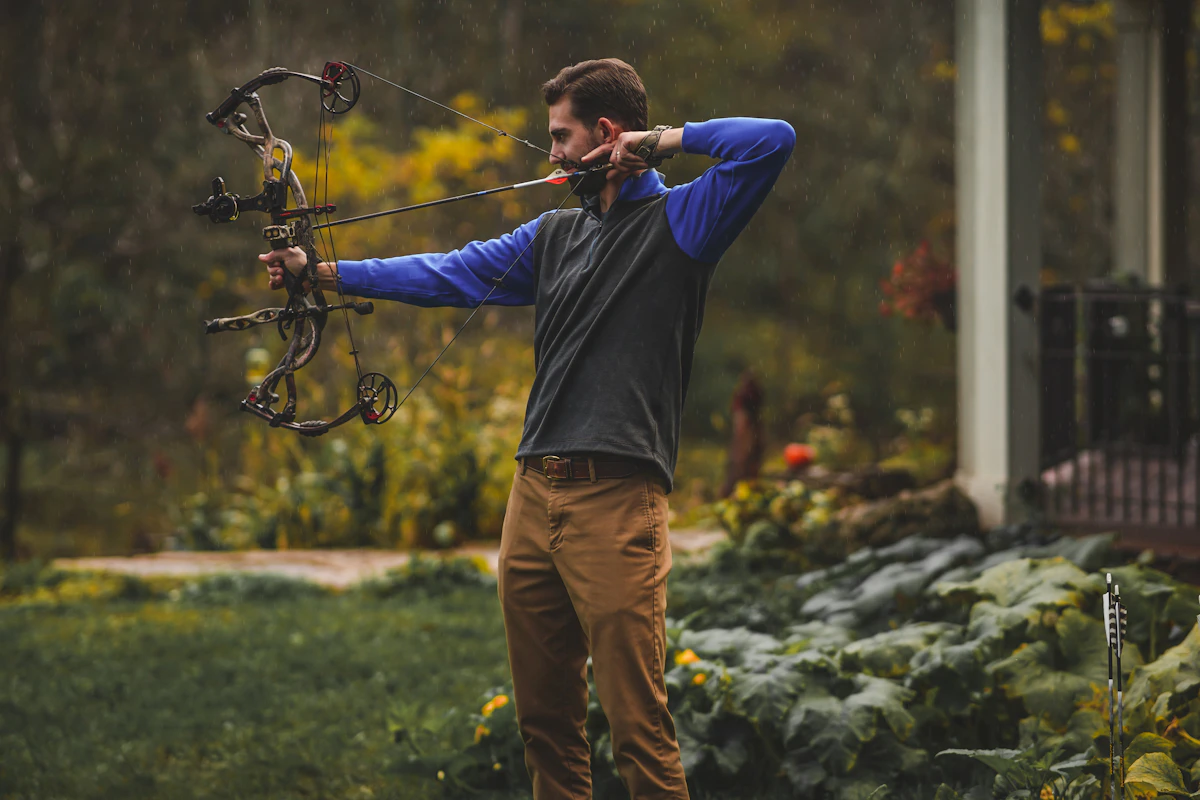
Best Compound Bows for Hunting in 2026: Complete Buyer's Guide
Choosing the right compound bow can make or break your hunting season. This guide breaks down the top models for 2026, key specs that matter in the field, and how to match a bow to your hunting style and budget.
Related
Best Prime Bows for Hunting in 2026: Top Models Reviewed
Prime bows deliver tournament-level accuracy and field-proven reliability. We break down the top models for 2026, from the flagship Nexus to the budget-friendly Diverge, to help you choose the right rig for your next hunt.
Next
Truck Maintenance Checklist Before Hunting Season: Don't Get Stranded
A breakdown 40 miles from pavement can end your hunt before it starts. This pre-season truck maintenance checklist covers tires, fluids, suspension, and recovery gear so your rig handles backcountry roads when it matters most.