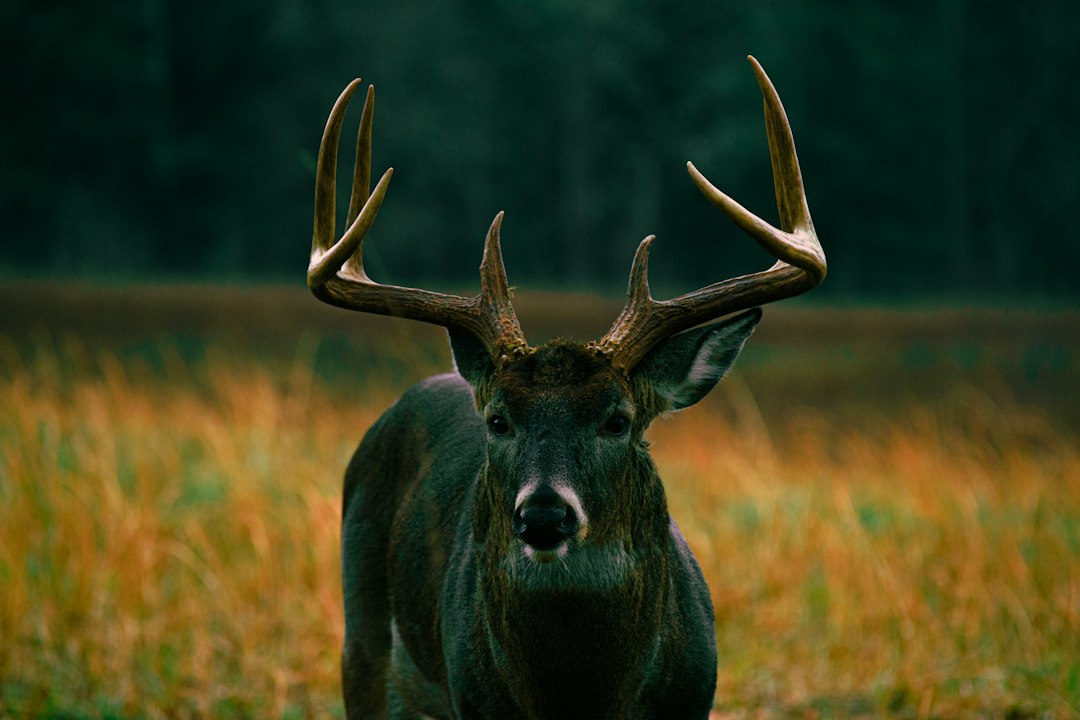
Best Idaho Mule Deer Units to Hunt If You Win the Super Hunt
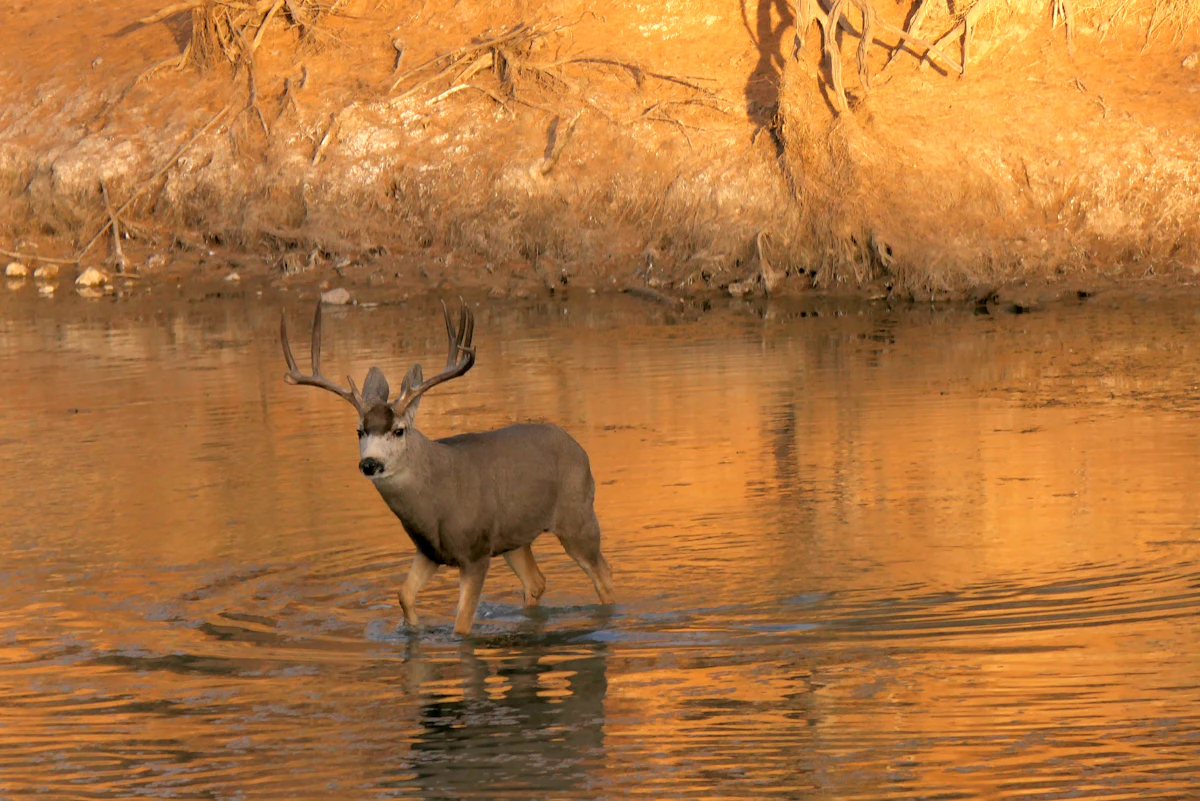
Best Idaho Mule Deer Hunts for a Super Hunt Winner
Winning an Idaho Super Hunt deer tag gives a hunter an extraordinary amount of flexibility.
Instead of being locked into one Game Management Unit or one controlled hunt, a Super Hunt deer winner can participate in any open deer hunt in Idaho, including general and controlled hunts.
That makes the real question much bigger than:
What's the best Idaho mule deer unit?
A better question is:
Which Idaho deer hunts give a Super Hunt winner the best combination of season timing, mule deer opportunity, access, terrain, public land, weather, and hunting style?
The answer can change throughout the season.
How the Idaho Super Hunt Deer Tag Works
Idaho's Super Hunt is a special drawing administered by Idaho Fish and Game.
Individual Super Hunt opportunities are available for:
Deer
Elk
Pronghorn
Moose
There is also a four-species Super Hunt Combo.
For 2026, Idaho awards:
First Drawing
8 deer
8 elk
8 pronghorn
1 moose
1 Combo
Second Drawing
2 deer
2 elk
2 pronghorn
1 moose
1 Combo
That means 10 individual Super Hunt deer tags are awarded across the two drawings, in addition to the two Combo winners who also receive a deer tag.
The first entry deadline is May 31 and the second is August 10.
Idaho Doesn't Use Preference Points
One major misconception needs to be cleared up immediately.
Idaho does not use a traditional preference-point or bonus-point accumulation system for its standard controlled big-game drawings.
Hunters aren't waiting 10, 15, or 20 years to accumulate enough Idaho deer points.
There are no accumulated Idaho deer points to "burn."
Instead, highly desirable controlled deer hunts can simply have extremely difficult draw odds because many hunters compete for relatively few tags.
That distinction matters when comparing Idaho to states such as Colorado.
Can a Super Hunt Winner Hunt Controlled Mule Deer Hunts?
Yes.
Idaho Fish and Game states that a Super Hunt winner can participate in any open hunt in Idaho for the species drawn, including general and controlled hunts.
A deer Super Hunt winner doesn't have to separately draw the controlled deer hunt they want to participate in.
However, the winner still has to follow the rules of that hunt.
That includes:
Season dates
Hunt-area boundaries
Weapon restrictions
Antlered or antlerless restrictions
Species restrictions
Motorized hunting restrictions
Legal access requirements
Other applicable regulations
Super Hunt provides access to the hunt.
It doesn't eliminate the hunt's rules.
Can You Hunt Multiple Idaho Deer Hunts?
Yes.
This is where the Super Hunt becomes especially powerful.
If you're unsuccessful during one legal open deer hunt, you can potentially move to another legal open hunt.
You aren't necessarily forced to spend your entire season in one GMU.
That means a serious Super Hunt mule deer strategy could potentially incorporate:
September archery
October general or controlled hunts
November controlled hunts
Muzzleloader opportunities
Weather-dependent late-season hunts
The exact opportunities depend on the current year's regulations.
Unit 66 — A Long Controlled Deer Season
Unit 66 deserves consideration because of its 2026 controlled deer structure.
For 2026, Idaho lists Deer Controlled Hunt 1051 in Unit 66.
The hunt provides:
10 tags
October 10–November 30 season
Antlered mule deer and white-tailed deer
Any-weapon designation
For a normal applicant, this is a limited controlled opportunity.
For a Super Hunt deer winner, it becomes one of many potential open hunts that could be incorporated into a broader season strategy.
The Oct. 10–Nov. 30 window is particularly interesting because it spans a significant portion of Idaho's fall deer season rather than forcing the hunter into a very short hunt.
Unit 66A — Extremely Limited Controlled Hunt
Unit 66A provides another interesting option.
For 2026, Deer Controlled Hunt 1052 offers only:
5 tags
The season runs:
October 10–November 30
It is an antlered mule deer and white-tailed deer hunt with an any-weapon designation.
Historical demand illustrates how limited the opportunity is for ordinary applicants.
In the 2026 first drawing, Idaho Fish and Game reported:
175 resident first-choice applicants
20 nonresident first-choice applicants
5 total permits awarded
A Super Hunt winner doesn't face that same draw barrier when participating in the open controlled hunt.
That makes hunts like this particularly worth researching.
Unit 66A Also Has General Archery Opportunity
Super Hunt winners shouldn't automatically focus exclusively on controlled rifle hunts.
For 2026, Unit 66A also has a general archery deer season from:
August 30–September 30
for antlered mule deer and white-tailed deer.
That creates an interesting strategic possibility.
A Super Hunt winner could potentially begin with an early archery opportunity and, if unsuccessful, evaluate later legal controlled opportunities.
That's a much better way to use the flexibility of the tag than arbitrarily choosing one hunt months before the season.
Don't Confuse Unit Numbers With Regions
The original version of this guide incorrectly described Units 66 and 66A as the "Island Park Region."
Don't build an Idaho hunting strategy around assumed regional labels.
Idaho's Game Management Units, deer hunt areas, elk zones, and geographic regions don't always line up the way hunters unfamiliar with the state might expect.
Always verify:
Exact GMU
Hunt number
Hunt area
Season dates
Species
Weapon
Boundary description
before committing to a hunt.
Units 36, 36A and 37
Central and east-central Idaho also deserve consideration when researching a Super Hunt mule deer strategy.
Units such as 36, 36A, and 37 contain mountainous terrain where glassing, elevation, access, weather, and deer movement can play major roles in hunt strategy.
However, don't select one of these units simply because an online article says it "produces 190-inch bucks."
Trophy-size claims need evidence.
Instead, research the actual hunt opportunity.
Look at:
Current season structure
Historical harvest
Number of hunters
Success rates
Antler data where available
Public-land distribution
Elevation
Road density
Migration
Weather
Access
The best unit on paper isn't necessarily the best unit for your hunt.
Units 73 and 74
Units 73 and 74 provide another example of why current regulations matter.
For 2026, Unit 74 has a general archery deer season from August 30 through September 30 for antlered mule deer and white-tailed deer.
It also has a controlled muzzleloader deer hunt from November 16–30 for antlered mule deer and white-tailed deer.
That's very different from saying Unit 74 simply has a November rifle hunt.
Weapon restrictions matter.
If you're participating in a muzzleloader-only controlled hunt with a Super Hunt tag, you must use equipment legal for that hunt.
The Super Hunt tag doesn't convert it into a rifle hunt.
Why Late-Season Hunts Can Be Attractive
Late-season mule deer opportunities naturally attract attention because deer behavior can change significantly as fall progresses.
Several factors can make later hunts interesting:
Breeding activity
Snow
Migration
Reduced foliage
Changes in feeding patterns
Increased daylight movement
But a November hunt isn't automatically better than an October or September hunt.
Weather can alter deer distribution dramatically.
Heavy snow can improve movement in one location while making another difficult to access.
Warm conditions can delay expected migration.
Private-land distribution can also become increasingly important as deer move toward winter range.
A Super Hunt winner should have multiple options rather than betting everything on one predicted migration event.
Archery Mule Deer Strategy
Early archery hunts provide a completely different experience.
During late August and September, hunters may encounter bucks using summer range before later fall movements occur.
The primary challenge is obvious:
You have to get close.
A Super Hunt winner considering archery should research:
Summer buck habitat
Water
Bedding cover
Feeding areas
Elevation
Glassing locations
Prevailing winds
Stalking terrain
The advantage of the Super Hunt is that an unsuccessful archery hunt doesn't necessarily end your Idaho deer season.
You may have additional legal open hunts later.
Rifle and Any-Weapon Strategy
Any-weapon controlled hunts can provide additional flexibility.
Longer effective range can be valuable in open mule deer terrain, especially where bucks are visible across large basins, sagebrush country, burns, or broken mountain slopes.
But don't assume every controlled deer hunt is a rifle hunt.
Idaho also offers:
Archery-only hunts
Muzzleloader hunts
Short-range weapon hunts
Any-weapon hunts
Always check the individual hunt.
Muzzleloader Strategy
Idaho's muzzleloader hunts should be treated as their own category.
For example, Unit 74's 2026 controlled deer opportunity from November 16–30 is designated as a muzzleloader hunt.
A Super Hunt tag lets the winner participate in that open controlled hunt.
It does not allow the winner to ignore the muzzleloader restriction.
This distinction is critical when building a multi-season plan.
Build a Super Hunt Deer Portfolio
Instead of selecting one "best unit," identify several potential hunts.
Your plan could look something like:
Early Season
Identify one or two archery opportunities where you can scout bucks before the season.
October
Identify an open general or controlled hunt that matches your preferred terrain and weapon.
November
Identify one or two controlled opportunities where later season timing could benefit your strategy.
Backup
Have another legal hunt researched in case weather, access, fire, hunting pressure, or deer movement makes your first choice less attractive.
That's how you take advantage of the Super Hunt.
Trophy Potential vs. Huntability
A Super Hunt winner will naturally want to hunt a mature buck.
But don't confuse theoretical trophy potential with actual opportunity.
A unit could have excellent genetics but:
Extremely difficult access
Heavy private-land concentration
Low deer density
Difficult glassing
Limited road access
Severe terrain
Unfavorable weather
Another hunt might have slightly less trophy reputation but give you significantly more time behind glass and more opportunities to locate mature deer.
For a once-in-a-lifetime tag, huntability matters.
Public Land and Access
Super Hunt doesn't provide special access to private property.
Private land remains private.
You also need to account for:
Motorized Hunting Rule areas
Road closures
Seasonal closures
Wilderness
Trail access
Private-land boundaries
Public-land ownership
For example, Idaho Fish and Game specifically notes that the Motorized Hunting Rule applies in Unit 66A.
Access research should happen before you decide where to spend your hunt.
Should You Hire an Outfitter?
There's no universal answer.
Some Super Hunt winners may want professional help because of the rarity and flexibility of the tag.
An outfitter can potentially provide:
Local knowledge
Preseason scouting
Horses or stock
Camp
Packing
Access knowledge
Meat care
Experience with specific terrain
But a capable DIY hunter may prefer to scout extensively and hunt independently.
Choose based on the actual hunt rather than assuming a Super Hunt requires a guide.
What About Other Super Hunt Species?
Super Hunt isn't just for deer.
Idaho offers individual Super Hunt drawings for:
Deer
Elk
Pronghorn
Moose
The Super Hunt Combo includes all four.
It does not include:
Bighorn sheep
Mountain goat
Black bear
Mountain lion
Those species should not be presented as Super Hunt choices.
How Much Does It Cost to Enter?
For 2026, individual Super Hunt entries cost:
$6 each
for deer, elk, pronghorn, or moose.
Super Hunt Combo entries cost:
$20 each
There is no limit to the number of entries an individual can purchase.
You also don't need an Idaho hunting license merely to enter the drawing.
A winner must be eligible to obtain and purchase the appropriate Idaho hunting license before hunting.
FAQ — Idaho Super Hunt Mule Deer Strategy
Does Idaho Super Hunt have a mule deer-specific drawing?
No. Idaho offers a deer Super Hunt. A deer winner can participate in legal open deer hunts according to the applicable hunt regulations.
Can a Super Hunt deer winner participate in controlled mule deer hunts?
Yes. Idaho Fish and Game states that Super Hunt winners can participate in open controlled hunts for the species they drew.
Do I need to separately draw the controlled hunt?
No. That's one of the major advantages of winning a Super Hunt tag.
Can I hunt more than one unit?
Yes, provided you're participating in legal open deer hunts and haven't harvested your deer.
Can I hunt both archery and later-season hunts?
Potentially, yes. You must follow the dates and weapon restrictions of each hunt.
Does Idaho use preference points for mule deer?
No. Idaho doesn't use a traditional preference-point or bonus-point accumulation system for its standard controlled big-game drawings.
Is Unit 66A difficult to draw normally?
Yes. For its 2026 first drawing, Deer Controlled Hunt 1052 had 195 combined resident and nonresident first-choice applicants competing for five permits.
When is the Unit 66A controlled deer hunt in 2026?
The antlered controlled hunt runs October 10 through November 30 and is designated any weapon.
Can I rifle hunt every controlled hunt because I have a Super Hunt tag?
No. You must follow the weapon restriction of the hunt you're participating in.
Are bighorn sheep and mountain goat included in Super Hunt?
No. The Super Hunt species are deer, elk, pronghorn, and moose.
What's the best Idaho unit for a Super Hunt mule deer winner?
There isn't one objectively best unit. Compare the actual open hunts based on season timing, harvest data, terrain, access, public land, weapon restrictions, weather, deer movement, and your hunting style.
Continue Planning Your Hunt
Winning an Idaho Super Hunt deer tag gives you something most mule deer hunters never have:
the ability to build an Idaho season around multiple legal open hunts instead of being locked into one controlled hunt.
Use that flexibility.
Research early archery opportunities, October hunts, November controlled hunts, and backup areas. Verify weapon restrictions. Study access. Watch weather. And compare actual IDFG harvest and hunt data rather than relying on unsupported trophy-unit rankings.
Use TAGZ to research Idaho units and build your Western hunting strategy.
Explore more Idaho mule deer and draw-planning content through the TAGZ Insights blog, or use the TAGZ platform to compare hunting opportunities, historical draw information, seasons, and units.
Before hunting, verify current regulations and hunt information directly through Idaho Fish and Game.
Was this article helpful?
Previous
Idaho Super Hunt Draw Statistics: Which Species Gives You the Best Chance?
Idaho's Super Hunt lottery offers premium controlled hunt tags across multiple species. Understanding which species historically offers the best draw odds helps hunters maximize their chances in this once-a-year opportunity.
Next
Idaho Super Hunt Odds by Species: Elk vs. Deer vs. Moose vs. Pronghorn
Idaho's Super Hunt offers hunters a chance at premium controlled hunt tags through a separate lottery with zero preference points required. Odds vary dramatically by species, with pronghorn and deer tags easier to draw than coveted moose and elk permits.