Best Hunting Rifles Under $1,000 for Western Big Game in 2025
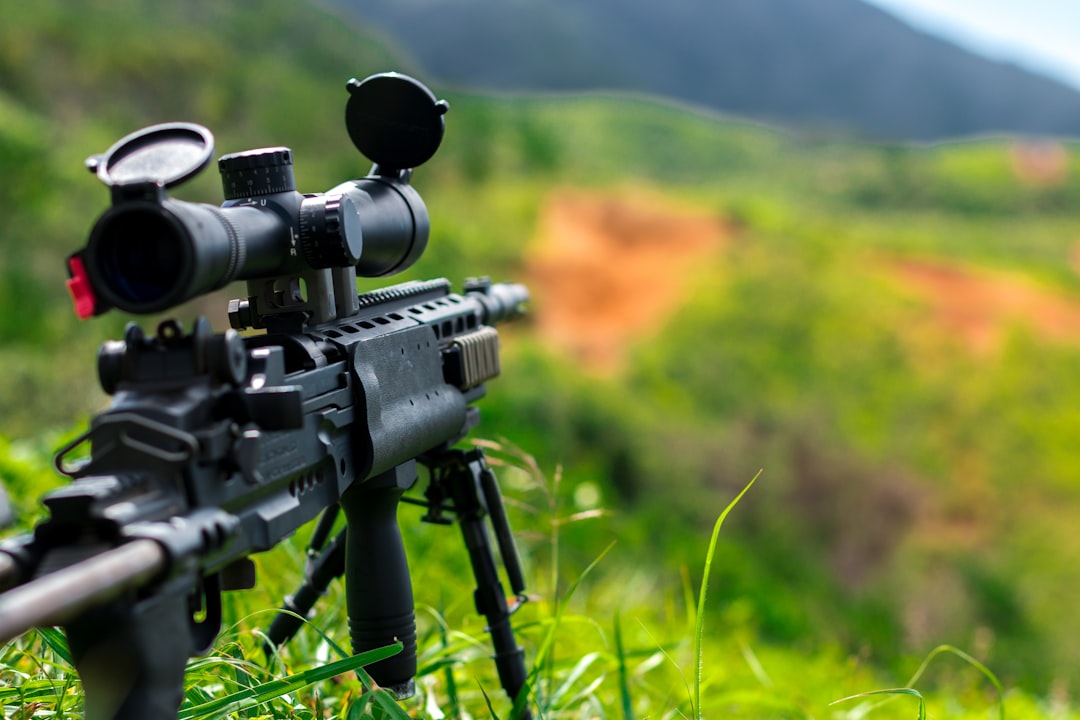
Quality hunting rifles have never been more affordable. A decade ago, a sub-MOA rifle under $1,000 was rare. Today, several manufacturers consistently deliver accurate, reliable rifles at price points that leave money for optics, ammunition, and tags. Whether you are planning your first western hunt or replacing an aging rifle, these models represent the best value for elk, mule deer, antelope, and other western game.
The rifles below were selected based on real-world performance in western conditions, accuracy potential with factory ammunition, aftermarket support, and hunter feedback from backcountry hunts across the Rockies. Every model listed regularly shoots under 1.5 MOA with quality factory loads and will handle years of hard use.
What to Prioritize in a Sub-$1,000 Hunting Rifle
Accuracy matters more than features. A rifle that shoots 2 MOA with a fancy stock is less useful than a plain rifle that consistently prints 1 MOA groups. For western hunting, prioritize a rifle that shoots well with the ammunition you will actually use in the field.
Weight becomes critical on mountain hunts. An 8-pound rifle feels manageable at the range but punishing after five miles and 2,000 vertical feet. For backcountry hunts, keep your bare rifle under 7.5 pounds. For truck hunts or stand hunting, an extra pound matters less than stability for long shots.
Caliber selection depends on your target species and hunting style. For general-purpose western hunting covering mule deer, elk, and antelope, a 6.5 Creedmoor, .308 Winchester, or 7mm-08 Remington handles most situations. Pure elk hunters should consider .30-06 Springfield or 7mm Remington Magnum for added energy at longer ranges.
Trigger quality separates good rifles from great ones. Most factory triggers break between 3 and 5 pounds. A crisp 3-pound trigger helps you shoot better than a gritty 5-pound trigger, but many budget rifles ship with adjustable triggers you can tune yourself or have a gunsmith refine for under $50.
Ruger American Rifle — Best Overall Value
The Ruger American Rifle consistently delivers the best accuracy-per-dollar ratio in the budget category. Street price sits around $500 to $600, leaving substantial budget for quality glass. The rifle uses a one-piece, three-lug bolt and a free-floated barrel bedded in the stock with V-blocks for consistent accuracy.
Factory triggers adjust down to 3 pounds and break cleanly. The rotary magazine holds four rounds and feeds reliably. Accuracy with quality factory ammunition typically runs 1 to 1.25 MOA across multiple caliber options.
The synthetic stock feels utilitarian but sheds water and takes abuse. Hunters report the rifle holding zero through truck rides and backcountry scrambles. Available calibers include 6.5 Creedmoor, .308 Winchester, .30-06 Springfield, 7mm-08 Remington, and several magnums.
Aftermarket support has grown substantially. Boyd's, Magpul, and MDT all offer replacement stocks if you want to upgrade. Scope mounting is straightforward with the included bases, though upgrading to a 20 MOA rail helps with long-range shooting.
Tikka T3x Lite — Best for Accuracy and Reliability
The Tikka T3x Lite represents the upper end of the sub-$1,000 category at $700 to $850 but delivers accuracy that competes with rifles costing twice as much. Most T3x rifles shoot under 1 MOA with factory ammunition, and many approach 0.5 MOA with handloads.
The bolt cycles smoother than any rifle in this price range. The two-lug design locks up tight, and the 70-degree bolt throw works well with low-mounted scopes. Factory triggers break cleanly around 2 to 2.5 pounds with minimal creep.
Weight runs light at 6.2 to 6.5 pounds depending on caliber. The synthetic stock is basic but functional. Magazines are expensive at $60 to $80 each but feed flawlessly and hold three or four rounds depending on caliber.
Calibur options cover every western hunting scenario: 6.5 Creedmoor, .308 Winchester, .30-06 Springfield, 7mm Remington Magnum, and .300 Winchester Magnum. The rifle comes with a 20 MOA rail for long-range shooting.
Savage 110 — Best for Customization
Savage 110 models range from $500 to $900 depending on features. The AccuTrigger adjusts from 1.5 to 6 pounds and breaks crisply at any setting. Accuracy typically runs 1 to 1.5 MOA with factory loads, and the rifle responds well to handloading.
The AccuFit stock system lets you adjust length of pull and comb height with included spacers. This matters for hunters who shoot in heavy layers during late-season hunts or want to fit the rifle to a smaller-statured shooter.
Barrel nut design makes barrel swaps and caliber changes straightforward if you want to tinker. Aftermarket barrel options from Criterion, Proof Research, and McGowen allow upgrading to carbon fiber or match-grade steel without a gunsmith.
Available calibers include nearly every common hunting cartridge. The detachable magazine holds three or four rounds depending on caliber. Scope mounting uses Weaver-style bases that accommodate most rings and rails.
Free to join
Download mobile app
- Detailed draw odds
- Point tracking
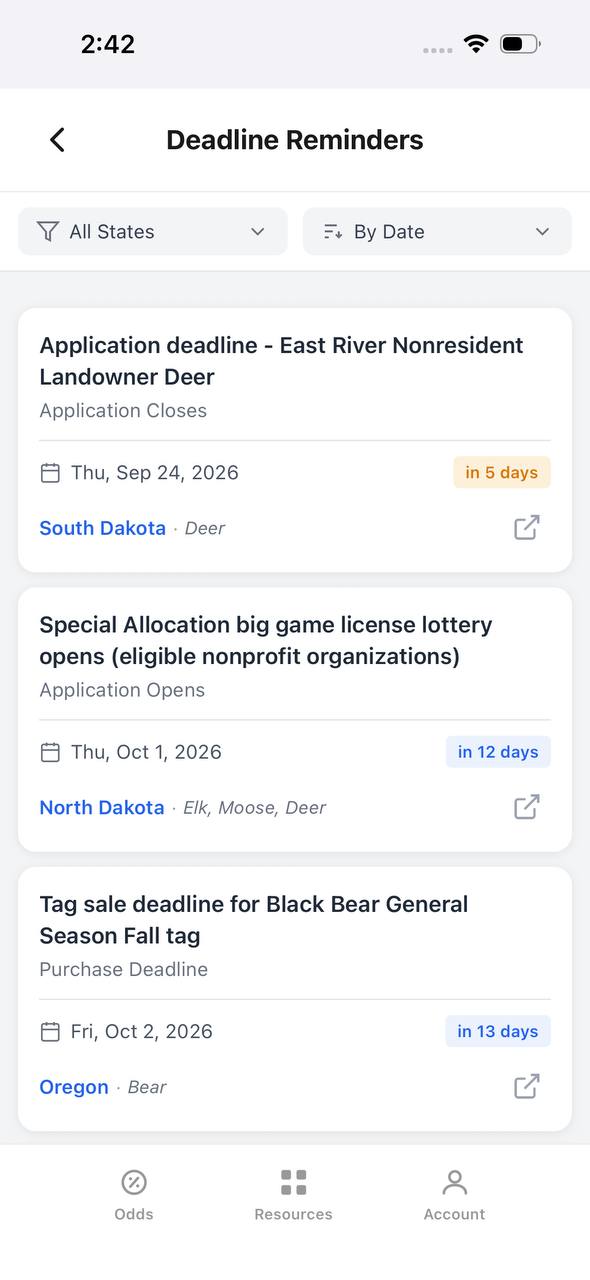
- Deadline reminders
- 18 states covered

Free to join
Download mobile app
- Detailed draw odds
- Point tracking
- Deadline reminders
- 18 states covered
Free to join
Download mobile app
- Detailed draw odds
- Point tracking
- Deadline reminders
- 18 states covered

Weatherby Vanguard — Best for Magnum Calibers
Weatherby Vanguard models run $600 to $800 and handle magnum recoil better than lighter rifles in this category. The action is a licensed Howa 1500 design known for accuracy and reliability. Weight sits around 7.5 pounds, which helps manage recoil from cartridges like 7mm Remington Magnum and .300 Winchester Magnum.
Factory triggers adjust down to 2.5 pounds and break cleanly. Accuracy runs 1 to 1.5 MOA with quality factory ammunition. The three-position safety allows bolt operation with the safety engaged, which is useful when unloading or checking a chamber.
The Griptonite synthetic stock sheds moisture and provides a secure grip in wet conditions. The monte carlo comb helps position your eye behind the scope, particularly important with magnums that require consistent cheek weld for recoil management.
Available calibers emphasize bigger cartridges suited to elk and larger game: .270 Winchester, .30-06 Springfield, 7mm Remington Magnum, .300 Winchester Magnum, and .300 Weatherby Magnum. The hinged floorplate holds three or four rounds depending on caliber.
Mossberg Patriot — Best Budget Option
The Mossberg Patriot delivers surprising accuracy for a rifle that streets around $400 to $500. The spiral-fluted bolt looks distinctive and cycles smoothly. Factory triggers adjust from 2 to 7 pounds, though most benefit from professional adjustment to remove creep.
Accuracy runs 1.5 to 2 MOA with factory loads, which is adequate for most western hunting scenarios inside 400 yards. The free-floated button-rifled barrel delivers consistent performance once you find ammunition it prefers.
The synthetic stock is basic but functional. Weight sits around 6.5 to 7 pounds depending on barrel length and caliber. The flush-fit box magazine holds five rounds in most calibers.
Available calibers include 6.5 Creedmoor, .308 Winchester, .30-06 Springfield, 7mm Remington Magnum, and .300 Winchester Magnum. For hunters wanting a basic, reliable rifle that saves money for better optics and ammunition, the Patriot represents solid value.
Bergara B-14 Ridge — Best for Precision Hunting
The Bergara B-14 Ridge pushes right to the $1,000 ceiling at $900 to $1,050 but delivers match-grade accuracy from a hunting rifle. Most B-14 models shoot under 1 MOA with factory ammunition, and 0.5 MOA is achievable with good handloads.
Bergara barrels are made on the same machines used for their competition barrels. The free-floated barrel and rigid stock bedding contribute to consistent accuracy across temperature swings and field conditions.
The two-position safety and cone-style bolt nose ensure reliable feeding and extraction. The adjustable trigger breaks cleanly around 3 pounds. Weight runs 7.3 to 7.7 pounds depending on caliber.
Calibur options include 6.5 Creedmoor, 6.5 PRC, .308 Winchester, .30-06 Springfield, 7mm Remington Magnum, and .300 Winchester Magnum. The hinged floorplate design is traditional and reliable.
Free to join
Download mobile app
- Detailed draw odds
- Point tracking
- Deadline reminders
- 18 states covered
Free to join
Download mobile app
- Detailed draw odds
- Point tracking
- Deadline reminders
- 18 states covered
Free to join
Download mobile app
- Detailed draw odds
- Point tracking
- Deadline reminders
- 18 states covered
How to Choose the Right Caliber
For general-purpose western hunting, 6.5 Creedmoor dominates the efficiency category. The cartridge generates less recoil than .308 Winchester, shoots flatter than .30-06 Springfield, and ammunition is available everywhere. Factory loads with 140-grain bullets handle mule deer, antelope, and elk inside 400 yards with proper shot placement.
.308 Winchester remains the practical choice for hunters who reload or want widely available military surplus brass. The cartridge handles any North American game with proper bullets, and factory match ammunition delivers excellent accuracy. Recoil is manageable for new shooters, and shorter barrels maintain velocity better than magnum cartridges.
.30-06 Springfield offers more versatility than 6.5 Creedmoor for hunters targeting elk as a primary species. The cartridge pushes 180-grain bullets to useful velocities and carries more energy at extended ranges. Ammunition selection is broader than any cartridge except .308 Winchester.
7mm Remington Magnum bridges the gap between standard cartridges and true magnums. The cartridge shoots flatter than .30-06 with similar recoil and delivers sufficient energy for elk past 500 yards. Barrel life runs shorter than non-magnums, typically 1,500 to 2,000 rounds before accuracy degrades.
What About Used Rifles?
Used rifles offer excellent value if you know what to inspect. Check the bore with a borescope or bright light. Look for sharp rifling without pitting or excessive throat erosion. Inspect the bolt face for cracks or peening around the firing pin hole.
Operate the action repeatedly. The bolt should cycle smoothly without binding or gritty resistance. Check that the safety engages positively and that the trigger breaks cleanly without excessive creep or overtravel.
Examine the stock for cracks around the action screws, recoil lug, and barrel channel. Small cosmetic dings matter less than structural damage. Remove the action from the stock if possible and check for rust or corrosion.
Used Tikka, Ruger, and Savage rifles hold value well and typically show minimal wear even after years of use. Avoid rifles with aftermarket trigger jobs or action work unless documented by a reputable gunsmith. A poorly executed trigger job creates safety hazards.
Optics Matter More Than the Rifle
A $600 rifle with a $400 scope outperforms a $1,000 rifle with a $200 scope. Quality glass helps you identify animals at distance, shoot accurately in low light, and spot hits or misses for follow-up shots.
For western hunting, prioritize a scope with 4x to 5x magnification on the top end minimum. A 3x9x40 works for timber hunting and shorter ranges. For open country and longer shots, consider 4x16x44 or 5x25x50 models.
Scope weight adds up quickly. A 30-ounce scope on a 7-pound rifle creates a front-heavy balance that is fatiguing to carry. Look for scopes in the 18 to 24-ounce range unless you are building a dedicated long-range rifle.
Budget $300 to $500 for quality glass from Vortex, Leupold, or Bushnell. Spend more if your budget allows, but these brands deliver reliable performance at mid-tier prices with solid warranties.
Free to join
Download mobile app
- Detailed draw odds
- Point tracking
- Deadline reminders
- 18 states covered
Free to join
Download mobile app
- Detailed draw odds
- Point tracking
- Deadline reminders
- 18 states covered
Free to join
Download mobile app
- Detailed draw odds
- Point tracking
- Deadline reminders
- 18 states covered
Break-In and Load Development
Most modern rifles shoot well without formal break-in procedures. Shoot one round, clean the bore, repeat for five rounds. After that, clean every 20 to 30 rounds during load development.
Start with three different factory loads from reputable manufacturers. Shoot three-shot groups at 100 yards with each load. Most rifles show a clear preference for one load over others. Buy several boxes of your best-performing ammunition and verify accuracy over multiple range sessions.
If no factory load shoots under 1.5 MOA, check scope mounting and ring torque. Remove the action from the stock and inspect bedding contact points. Many budget rifles benefit from glass bedding the recoil lug, which costs $50 to $100 from a gunsmith.
For hunters who reload, work up loads in 0.5-grain increments looking for nodes where accuracy tightens. Most hunting rifles show clear accuracy nodes that are forgiving across a range of seating depths and powder charges.
What TAGZ Helps You Plan
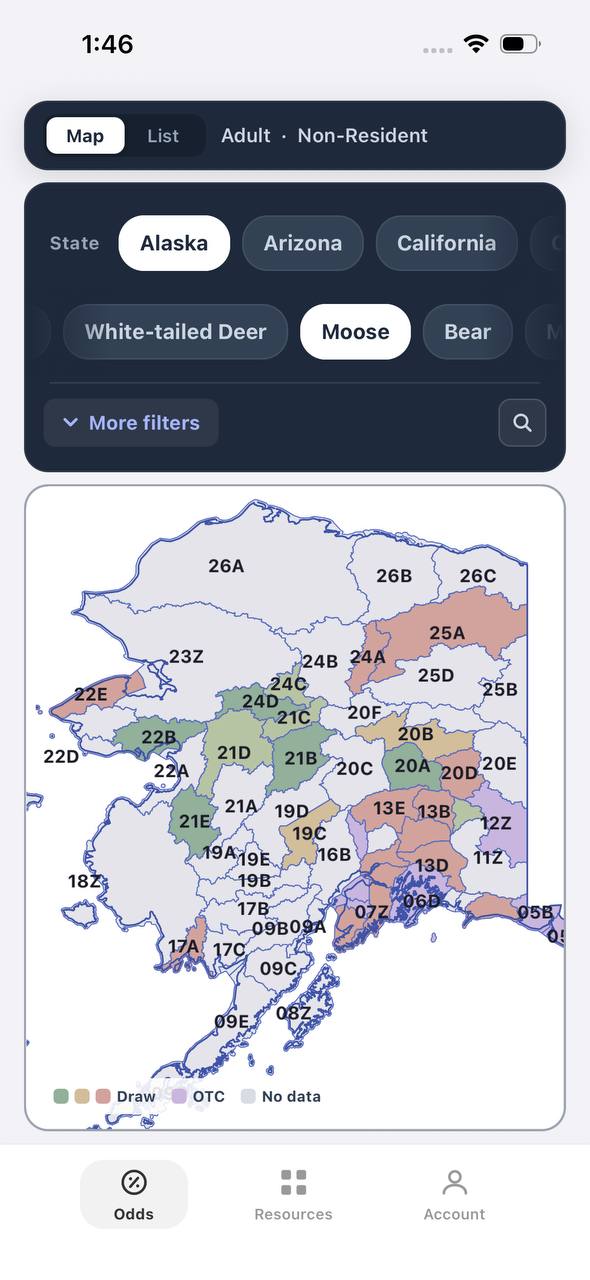
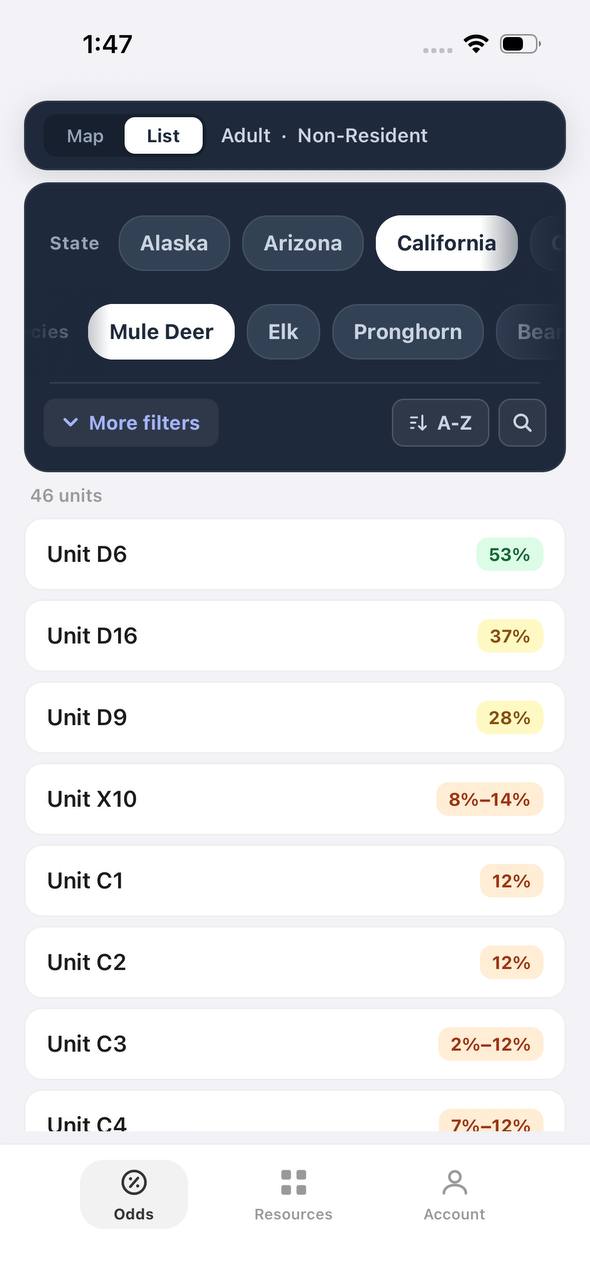
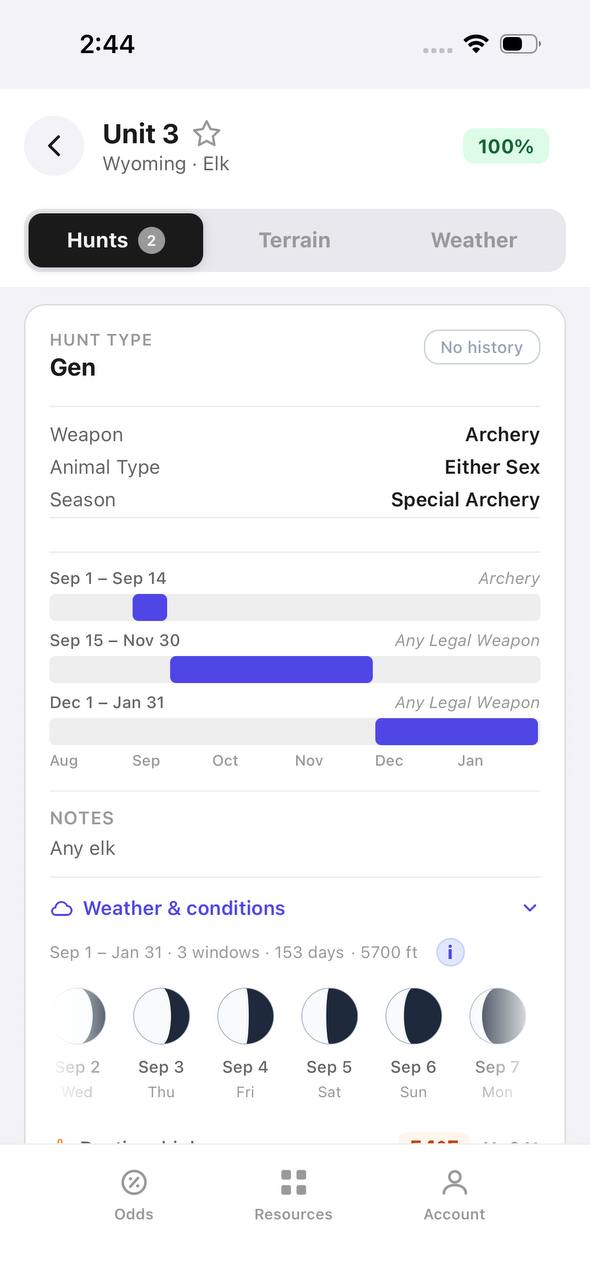
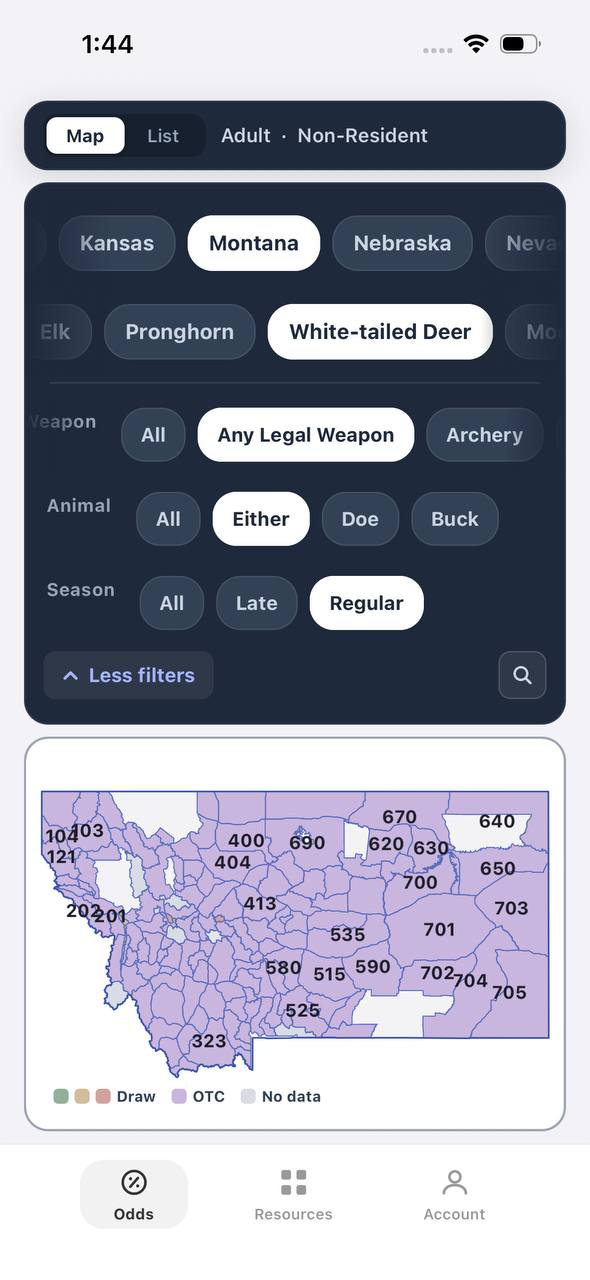
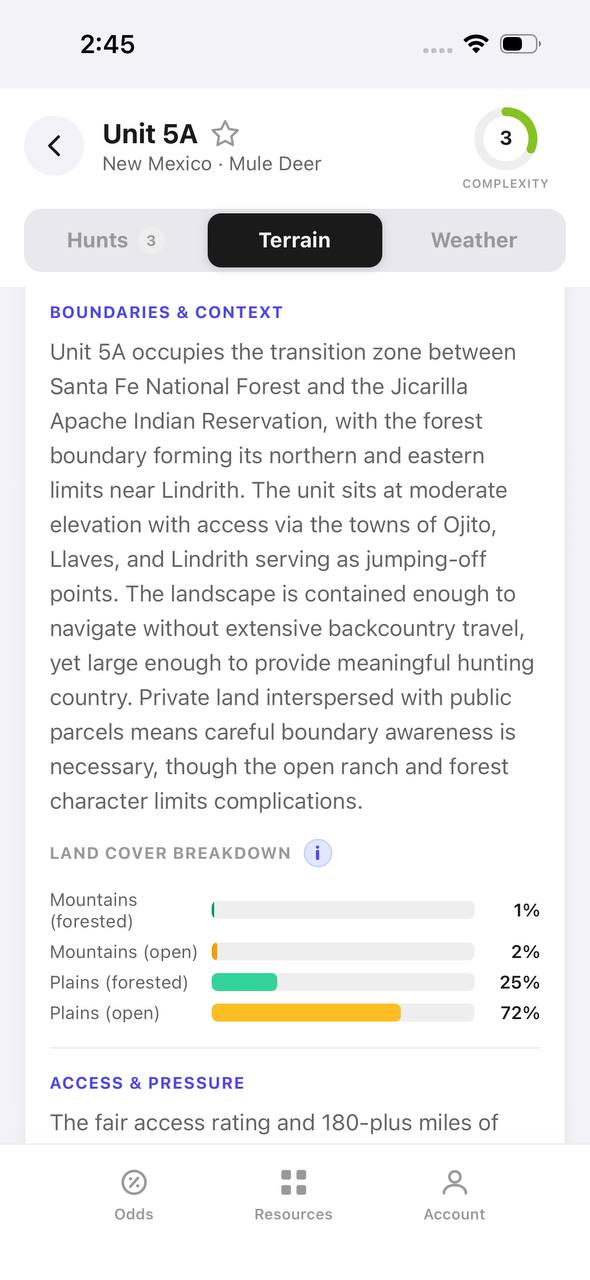
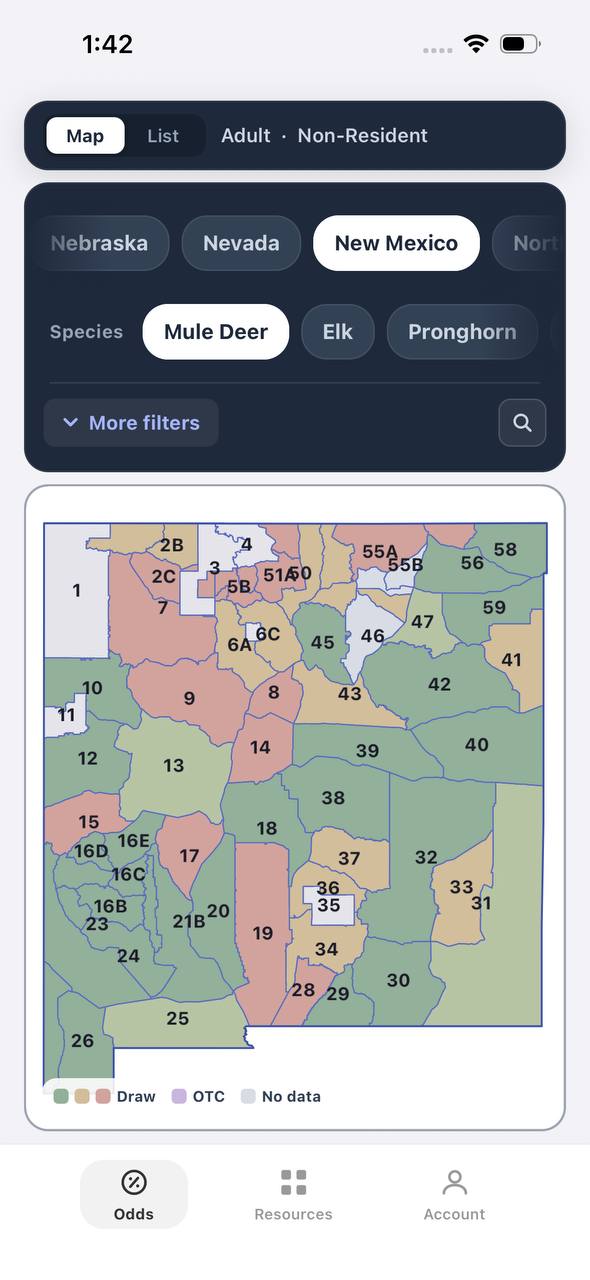
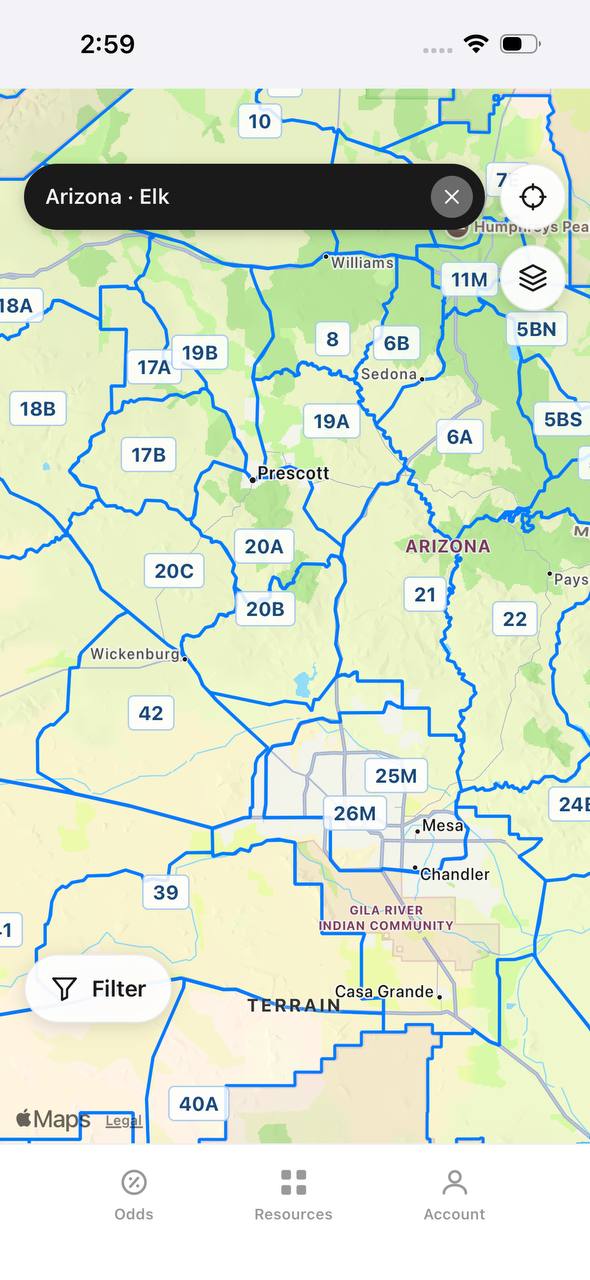
Once you have your rifle dialed in, TAGZ helps you find the hunts that match your equipment and experience level. Compare draw odds across multiple states to identify the best opportunities for your preference points. Filter units by weapon type, season dates, and terrain to match your hunting style and rifle capabilities.
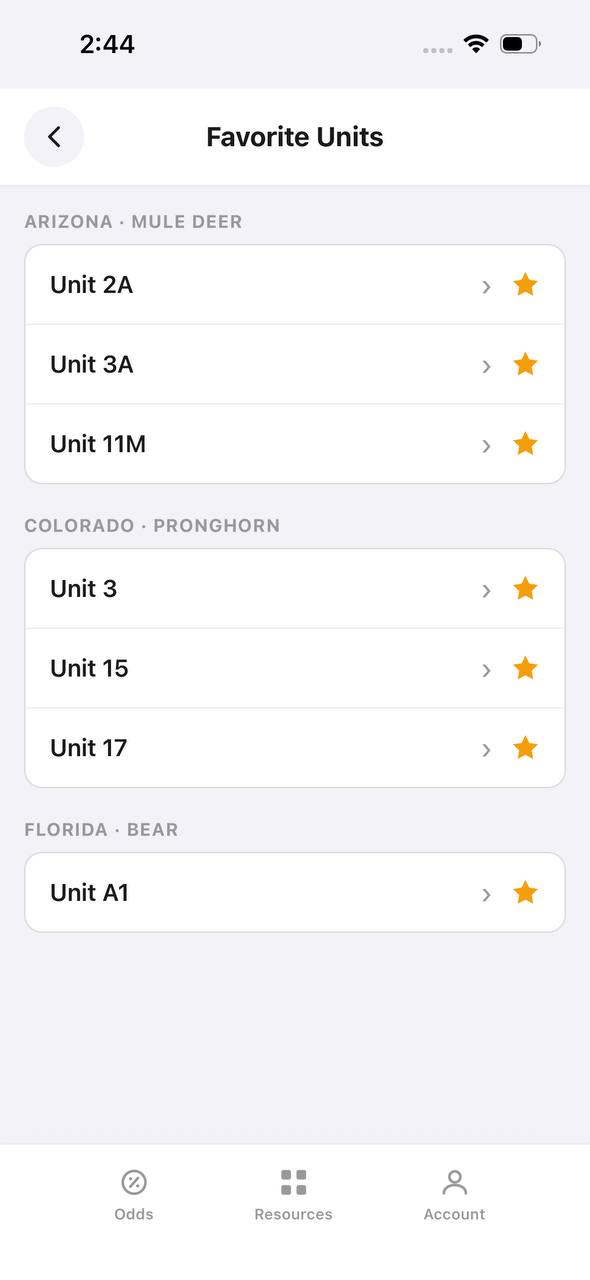
Track application deadlines across states so you never miss a draw window. TAGZ shows you which units require long-range shooting across open basins and which offer timber hunting inside 200 yards, helping you choose hunts that fit your rifle setup and shooting skills.
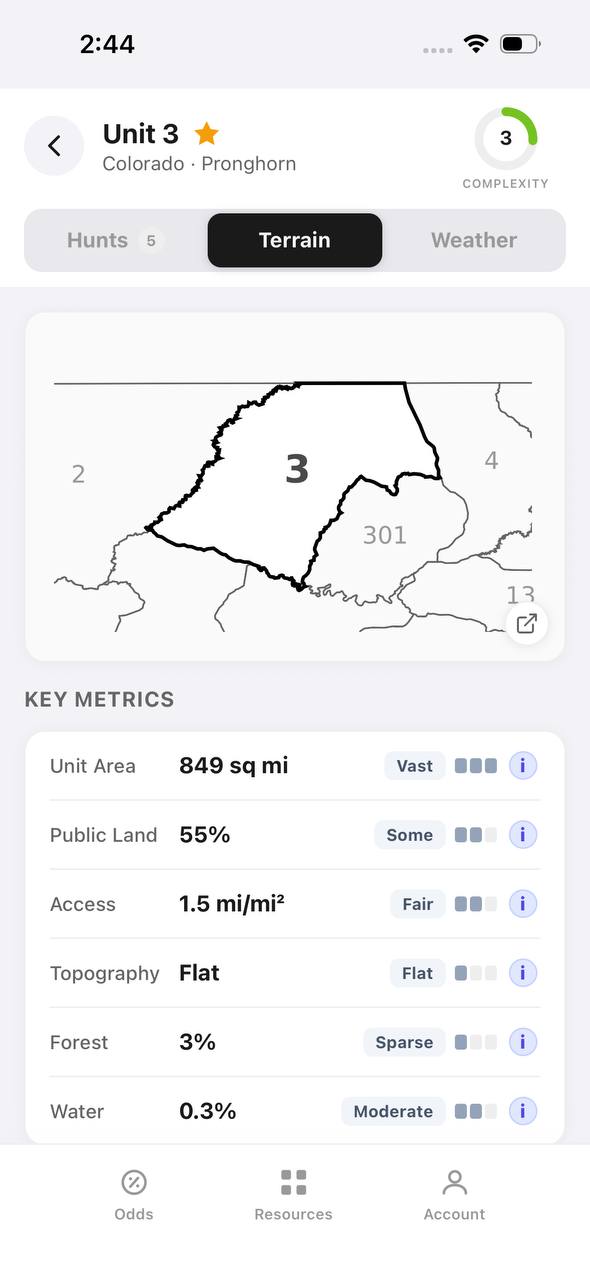
Use unit maps and terrain layers to scout from home. Identify glassing points, access routes, and camp locations before you arrive. Whether you are chasing OTC tags or planning a limited-entry hunt with years of point investment, TAGZ gives you the tools to make smarter decisions before you ever step into the field.
FAQ — Hunting Rifles Under $1,000
What is the best all-around hunting rifle under $1,000?
The Tikka T3x Lite delivers the best combination of accuracy, reliability, and smooth operation. Most shoot under 1 MOA with factory ammunition, and the rifle handles years of hard use without issues.
Is 6.5 Creedmoor enough for elk?
Yes, with proper shot placement and quality bullets. Use 140-grain or heavier bonded or monolithic bullets, keep shots inside 400 yards, and avoid extreme angles or heavy shoulder bones. Thousands of elk fall to 6.5 Creedmoor every year.
Should I buy used or new?
Buy new unless you can inspect the rifle thoroughly or trust the seller completely. Used rifles can offer excellent value, but hidden issues with the bore, action, or bedding can cost more to fix than the savings justify.
Do I need a magnum cartridge for western hunting?
No. Standard cartridges like 6.5 Creedmoor, .308 Winchester, and .30-06 Springfield handle all North American game with proper bullets and shot placement. Magnums extend effective range and provide more energy, but most western game is shot inside 400 yards where standard cartridges perform well.
How much should I spend on a scope?
Plan to spend 50 to 75 percent of your rifle cost on optics. A $600 rifle benefits from a $300 to $500 scope. Quality glass matters more than a fancy stock or features you will rarely use.
Will these rifles shoot handloads accurately?
Yes. Every rifle listed responds well to load development. Expect 0.25 to 0.5 MOA improvement over factory ammunition with proper load work, quality brass, and consistent technique.
Continue Planning Your Hunt
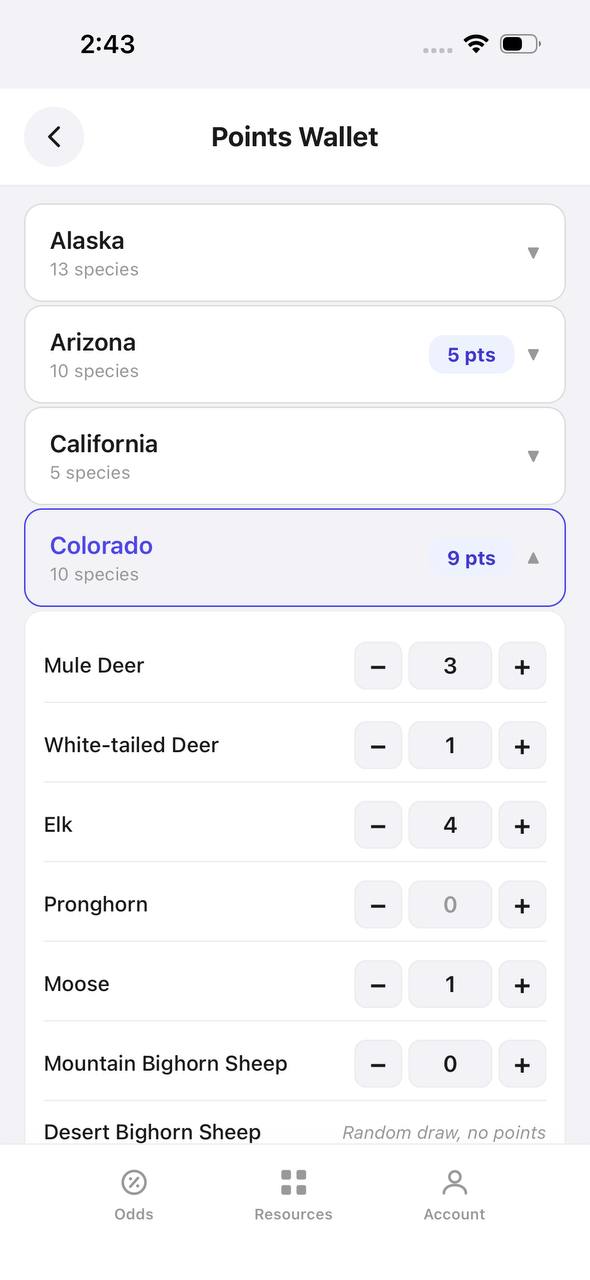
Once you have your rifle sorted, start planning your next hunt with TAGZ. Compare draw odds across western states, filter units by terrain and season, and track your preference points so you know exactly when to apply for that tag you have been building toward.
Explore the TAGZ Insights blog for unit-specific research, draw strategy guides, and hunt planning articles. Ready to take your hunt planning to the next level? Check out TAGZ pricing options and see how the platform helps you make smarter draw decisions.
Learn more about how TAGZ helps western hunters research units, track points, and plan multi-state application strategies. The right rifle gets you to the field — TAGZ helps you choose which field to hunt.
Was this article helpful?
Previous
Garmin inReach vs ZOLEO: Which Satellite Communicator Should Hunters Choose?
Garmin inReach and ZOLEO both deliver two-way satellite messaging and SOS for backcountry hunters, but they differ in hardware durability, subscription flexibility, and message handling. This breakdown helps you choose the device that fits your hunt style and budget.
Related
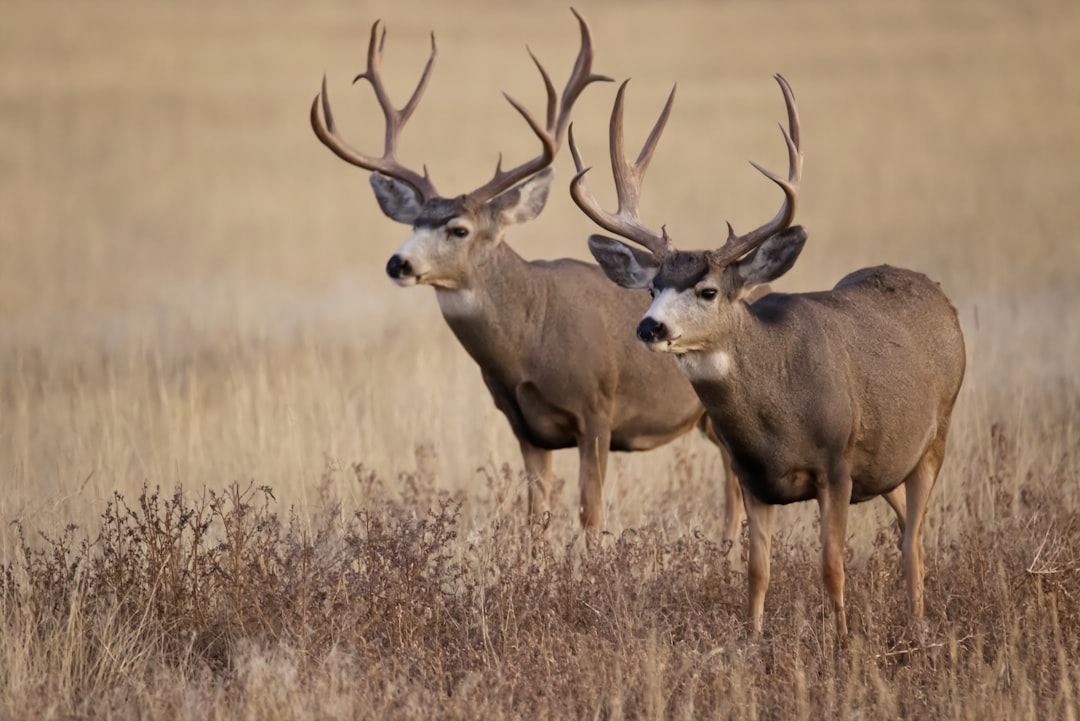
Early Season Mule Deer: Hunt Strategies for Velvet Bucks and Hot Weather
Early season mule deer hunts offer velvet bucks and predictable patterns, but success requires adapting to hot weather and shifting behavior. Learn how to hunt water sources, glass effectively in heat, and maximize your August or September archery tag.
Next
Field Judging Moose — How to Score Bulls in the Field
Learn proven techniques for estimating moose antler size in the field, from palmation width to point count. This guide helps hunters make confident harvest decisions on bulls scoring 140 to 200+ inches.