Best Compound Bows for Spot-and-Stalk Hunting in 2025
Spot-and-stalk bowhunting is the most physically demanding way to chase western big game. You cover miles glassing ridges, closing distance on feeding elk, or crawling through sagebrush to cut the gap on a bedded mule deer buck. Your bow needs to be light enough to carry all day, compact enough to maneuver through brush, and deadly accurate when you finally draw at 40 yards after a two-hour stalk.
The right compound bow for spot-and-stalk work balances forgiveness, noise control, and packability. This is not about maxing out speed or shooting 80-pound arrows. It is about a bow that shoots the same whether you are on flat ground at the range or kneeling behind a juniper at 8,000 feet with your heart pounding. The bows below are built for that.
What Makes a Bow Good for Spot-and-Stalk
Spot-and-stalk bows share a few core traits. Axle-to-axle length matters more than most hunters think. A 30-inch ATA bow is easier to draw in tight cover and balances better on a pack than a 35-inch target bow. Brace height directly affects forgiveness—longer brace heights (6.5 to 7 inches) hide form flaws that show up when you are winded and shaking after a stalk.
Weight is critical. Every ounce counts when you are covering ten miles a day. A 4.5-pound bow feels fine in the truck but heavy by mile eight. Look for bows under 4.2 pounds if you hunt public land where long approaches are the norm. Noise control is non-negotiable. A loud bow will cost you animals at close range. String stops, limb dampeners, and quality rubber components make the difference between a sharp crack and a quiet thump.
Adjustability helps if you share a bow with family or hunt in multiple seasons where layering affects draw length. Most flagship bows now offer modular cams that adjust draw length without a bow press. That flexibility is worth the extra cost if you hunt both September velvet and November rut.
Top Flagship Spot-and-Stalk Bows
Mathews Phase4
The Phase4 is the benchmark for western spot-and-stalk work. It runs 29 inches axle-to-axle with a 6-inch brace height. At 4.49 pounds bare bow, it is light enough for long days but stable enough for accurate shots. The Switchweight Technology lets you change draw weight by rotating modules—no bow press needed—which is useful if you build strength during the season or want to back off after an injury.
What makes the Phase4 shine is how quiet it shoots. The Integrate Mounting System eliminates most torque, and the resistance phase in the draw cycle feels smooth even when you are gassed. Speed sits around 342 fps IBO, which is plenty for western hunting. Most hunters shoot it at 70 pounds with a 450-grain arrow and get pass-throughs on elk inside 50 yards. The only downside is cost—expect to spend $1,200 to $1,400 depending on finish and accessories.
Hoyt RX-8
Hoyt's RX-8 builds on the carbon riser platform that made the RX-7 popular. At 30.5 inches ATA and 4.2 pounds, it is one of the lightest hunting bows available. The carbon riser absorbs vibration better than aluminum, which translates to less noise and less felt recoil. Draw cycle is smooth with a solid back wall, and the In-Line Shock Pods dampen any hand shock.
The RX-8 runs a 6.75-inch brace height, making it extremely forgiving for hunters who do not practice year-round. Speed tops out around 338 fps IBO. The downside is the carbon riser adds $400 to $500 to the price compared to aluminum models. If weight and noise are priorities, the RX-8 justifies the cost. If you are on a budget, the aluminum-frame Ventum series delivers similar performance at a lower price point.
Bowtech Solution
The Solution is Bowtech's answer to hunters who want speed without sacrificing accuracy. It measures 31.5 inches ATA with a 6-inch brace height and weighs 4.6 pounds. The DeadLock Cam System is the standout feature—it allows precision cam timing and center-shot adjustments without a bow press. For hunters who tune their own setups, this is a game-changer.
Speed hits 343 fps IBO, and the draw cycle is aggressive but manageable. The valley is deep, so holding at full draw during a long stalk is comfortable. Noise levels are good with the Orbit Dampener and string stops, though not quite as quiet as the Phase4. The Solution runs around $1,100 to $1,300, making it competitive with other flagships while offering more tuning flexibility.
Elite Ritual 35
Elite's Ritual 35 is a 35-inch ATA bow that should not make a spot-and-stalk list, but it does because of how well it shoots in field positions. The longer ATA makes it more stable on off-angle shots—kneeling, sitting, or leaning around cover. It weighs 4.5 pounds and has a 6.5-inch brace height.
The draw cycle is butter smooth with zero hump, and the back wall is firm without being harsh. Speed sits at 338 fps IBO. The Ritual 35 excels in situations where you have time to set up a shot and need maximum accuracy. If your spot-and-stalk style involves more patience and fewer scrambles, this bow outperforms shorter models. It runs $1,000 to $1,200 depending on the package.
Best Mid-Tier and Budget Options
Bear Redemption EKO
The Redemption EKO is one of the best values in bowhunting. It measures 30 inches ATA, weighs 3.4 pounds, and runs around $600 to $700. At that weight, it is the lightest production bow available and feels almost unnoticeable on long stalks. The EKO Cam System produces speeds up to 340 fps IBO, which is flagship-level performance.
The downside is the shorter brace height at 5.75 inches, which requires better form. If you practice regularly and can maintain consistent anchor points, the Redemption EKO delivers performance that punches well above its price. It is an excellent choice for hunters building their first dedicated western setup or anyone who values weight savings over maximum forgiveness.
Prime Logic CT5
Prime's Logic CT5 sits in the mid-tier range at $900 to $1,000. It runs 32 inches ATA with a 7-inch brace height, making it the most forgiving bow on this list. The Centergy Hybrid Cam System produces a smooth draw and consistent speeds around 335 fps IBO. At 4.3 pounds, it is light enough for all-day carries.
What sets Prime apart is the Parallel Cam System—both cams are identical and interchangeable, which simplifies tuning and eliminates cam-lean issues. The CT5 is dead quiet and produces almost no hand shock. If you are newer to bowhunting or hunt in conditions where shot opportunities happen fast and form breaks down, the CT5's forgiveness is worth the extra cost.
Mission Sub-1
For hunters on a tight budget, the Mission Sub-1 delivers honest performance at $500 to $600. It measures 30 inches ATA, weighs 3.8 pounds, and has a 6.5-inch brace height. Speed tops out around 330 fps IBO, which is adequate for most western hunting inside 60 yards.
The Sub-1 uses Mathews technology at a lower price point—it is essentially a simplified version of Mathews platforms. The draw cycle is smooth, the back wall is solid, and noise levels are acceptable with aftermarket string silencers. Accuracy is good for a budget bow, and it holds up to hard use. The biggest limitation is adjustability—draw length changes require a bow press, so make sure you are fitted correctly before buying.
Bow Setup Considerations for Spot-and-Stalk
Your bow setup matters as much as the bow itself. For spot-and-stalk work, run a stabilizer between 6 and 8 inches. Longer stabilizers help with balance, but anything over 10 inches catches on brush and adds weight. A good compromise is a 6-inch front stabilizer with a rear-facing 4-inch counterbalance. This keeps the bow steady without turning it into a tree magnet.
Arrow weight should sit between 425 and 475 grains for most western big game. Heavier arrows penetrate better on quartering shots, which are common in spot-and-stalk situations. A 450-grain arrow at 280 fps delivers more reliable results on elk vitals than a 350-grain arrow at 310 fps. Prioritize penetration over speed.
Sight choice depends on hunting style. Single-pin sliders are popular for open country where you have time to range and adjust. Multi-pin sights are faster for close-range encounters in timber or brush. Most spot-and-stalk hunters run 3-pin or 5-pin setups with pins at 20, 30, 40, 50, and 60 yards. Practice with whatever system you choose until ranging and aiming happen without thought.
Quivers should attach directly to the bow for balance and noise control. Detachable quivers work for treestand hunting but add steps during a stalk. A 5-arrow integrated quiver keeps arrows secure and reduces bow movement. Use foam inserts to eliminate arrow rattle—small details like this prevent blown stalks.
Free to join
Download mobile app
- Detailed draw odds
- Point tracking
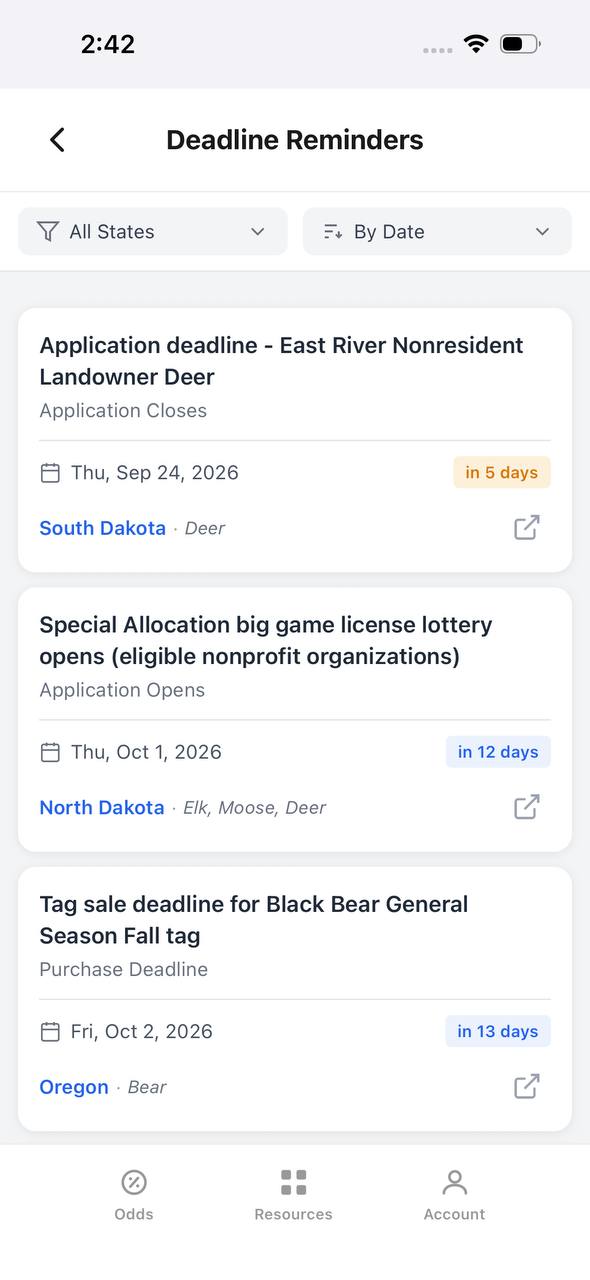
- Deadline reminders
- 18 states covered

Free to join
Download mobile app
- Detailed draw odds
- Point tracking
- Deadline reminders
- 18 states covered
Free to join
Download mobile app
- Detailed draw odds
- Point tracking
- Deadline reminders
- 18 states covered

How TAGZ Helps Plan Spot-and-Stalk Hunts
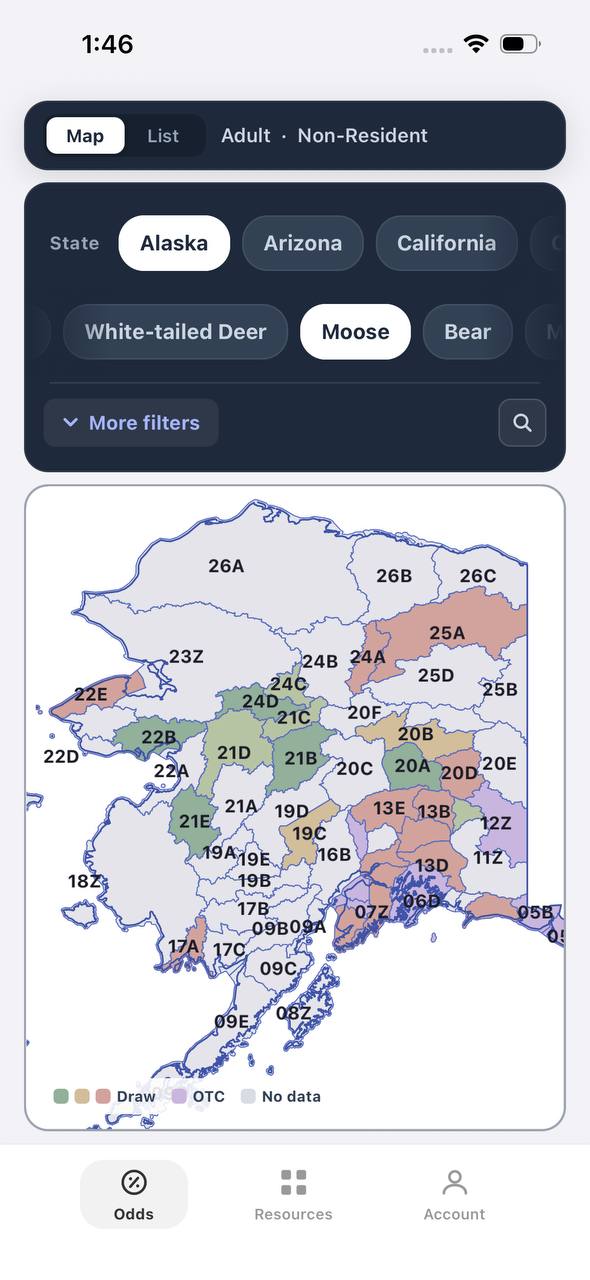
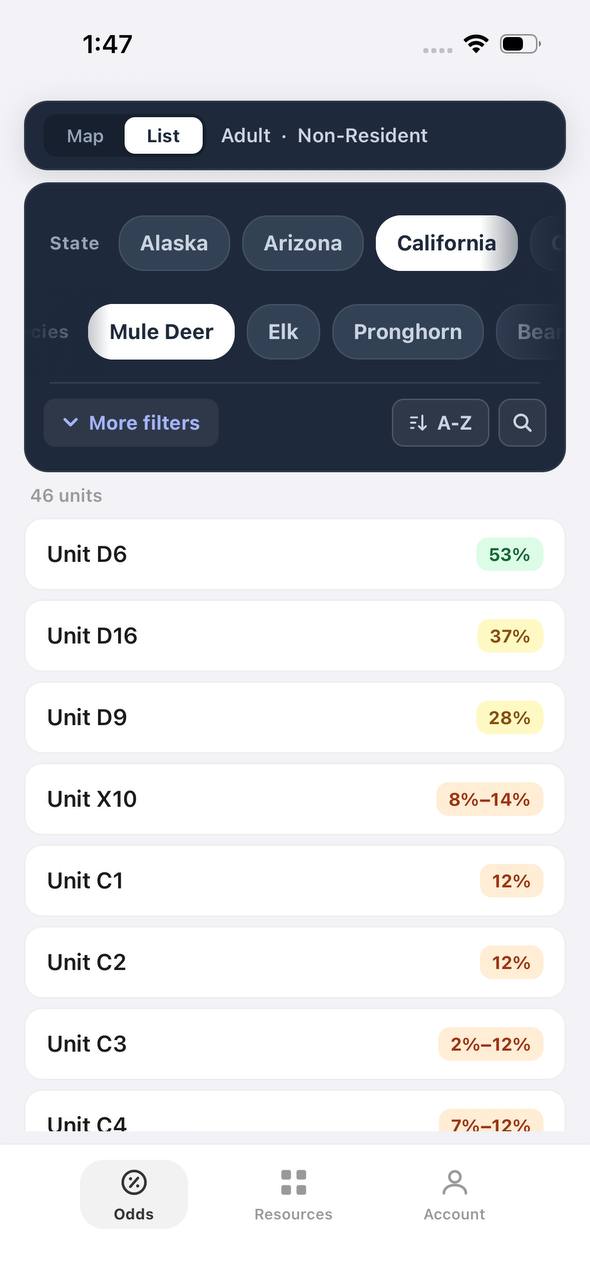
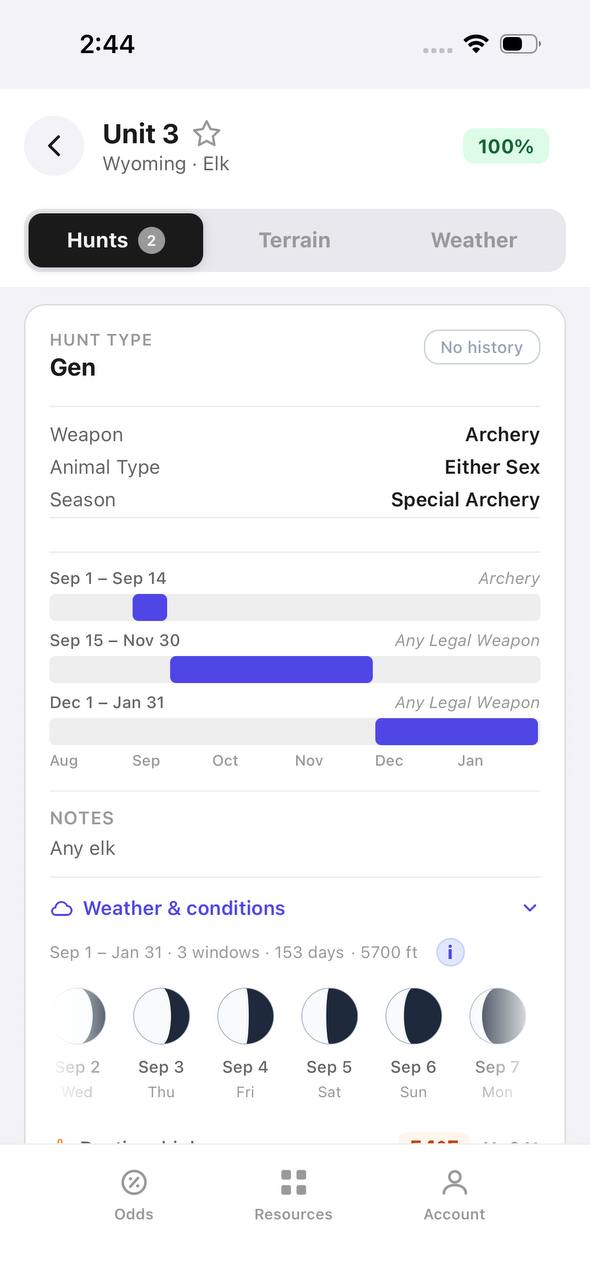
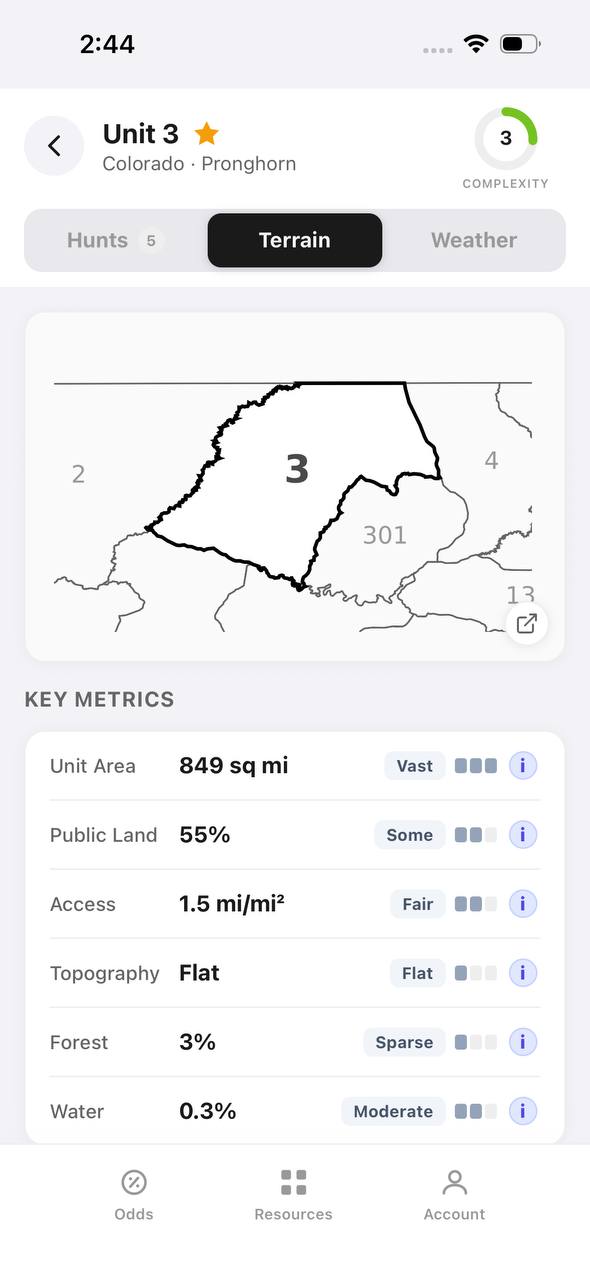
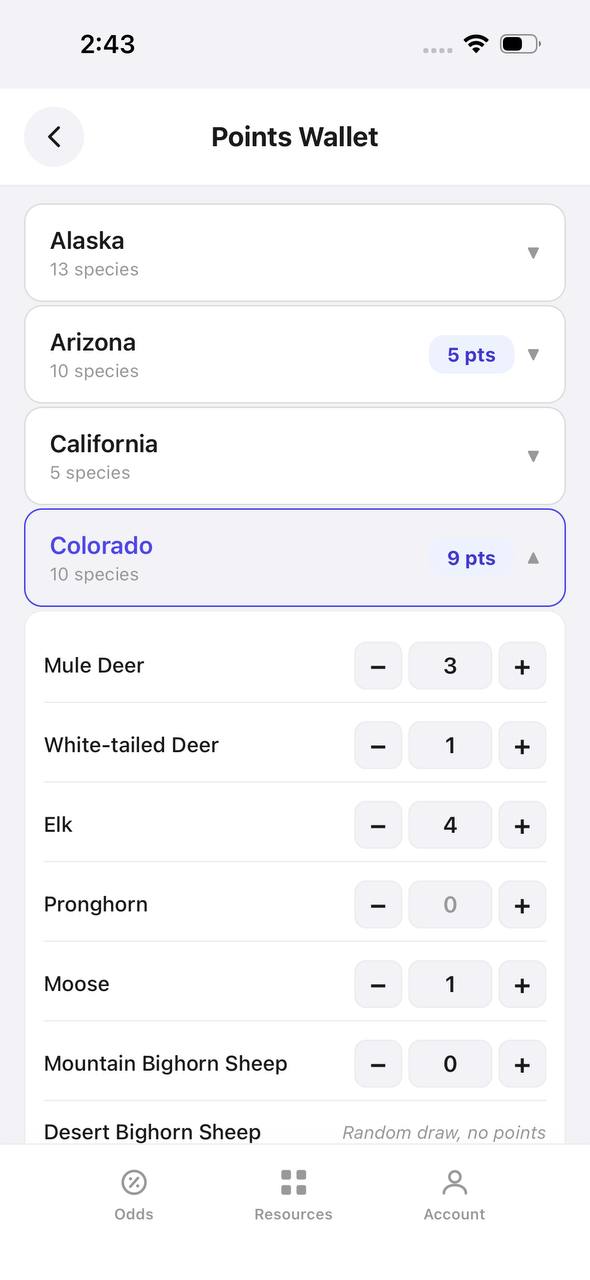
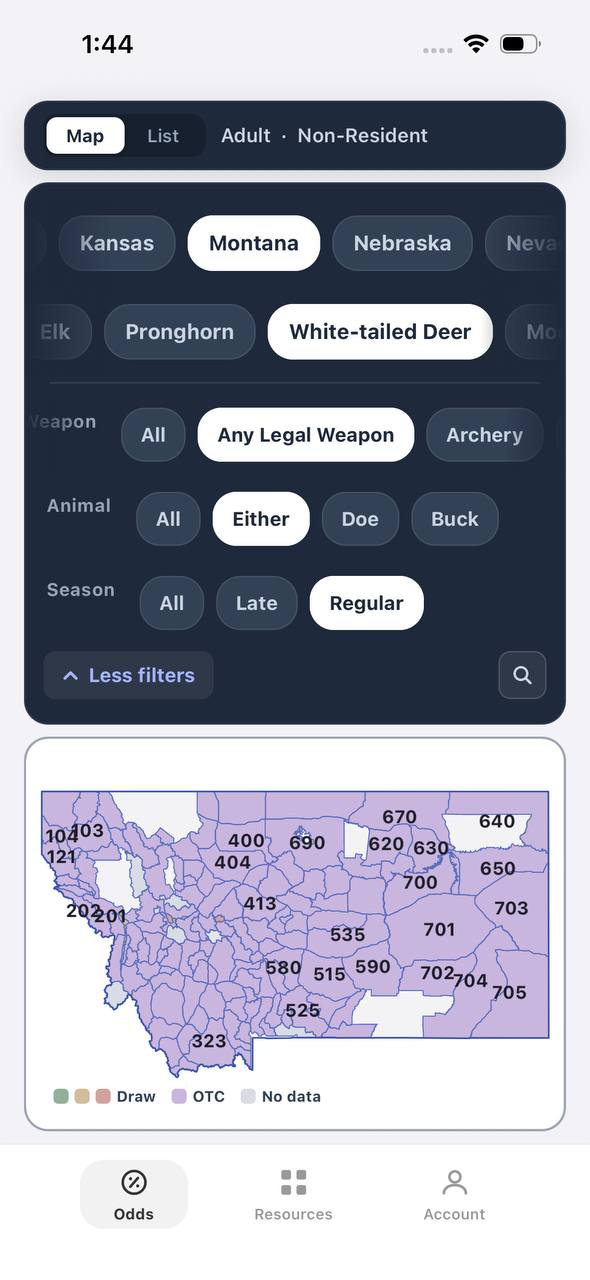
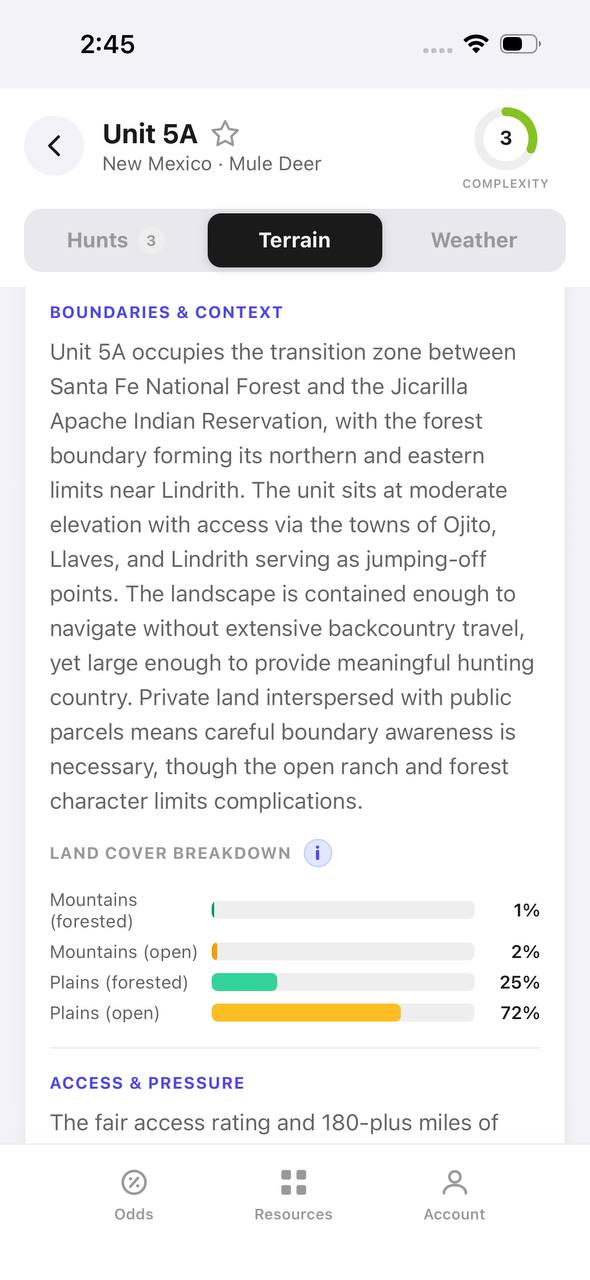
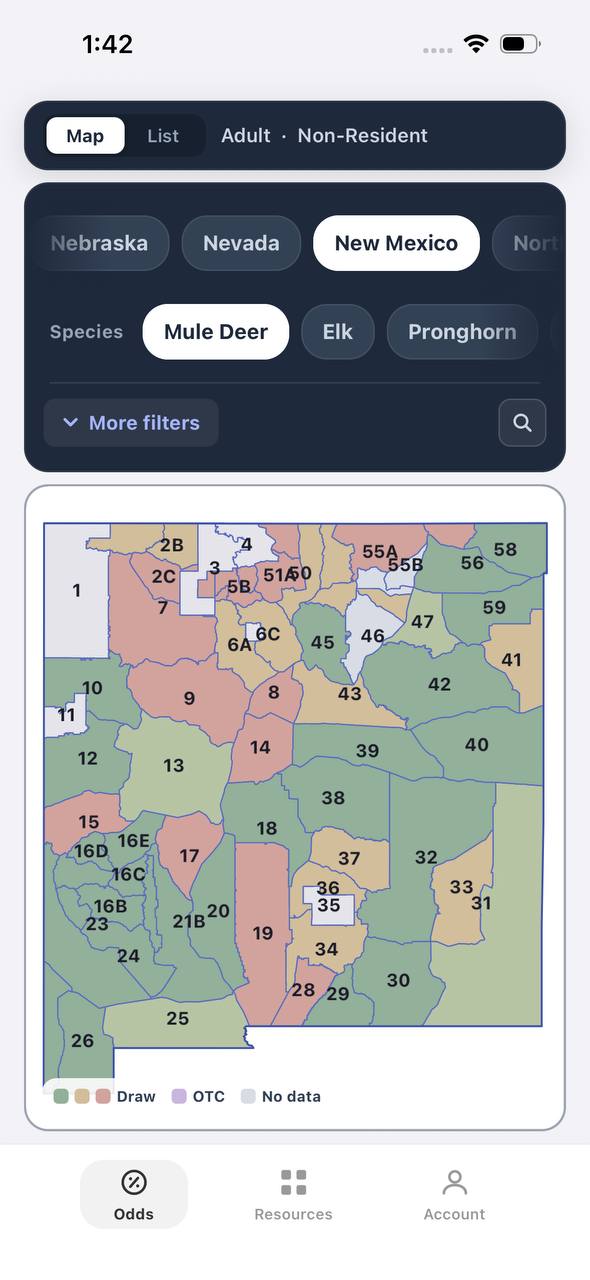
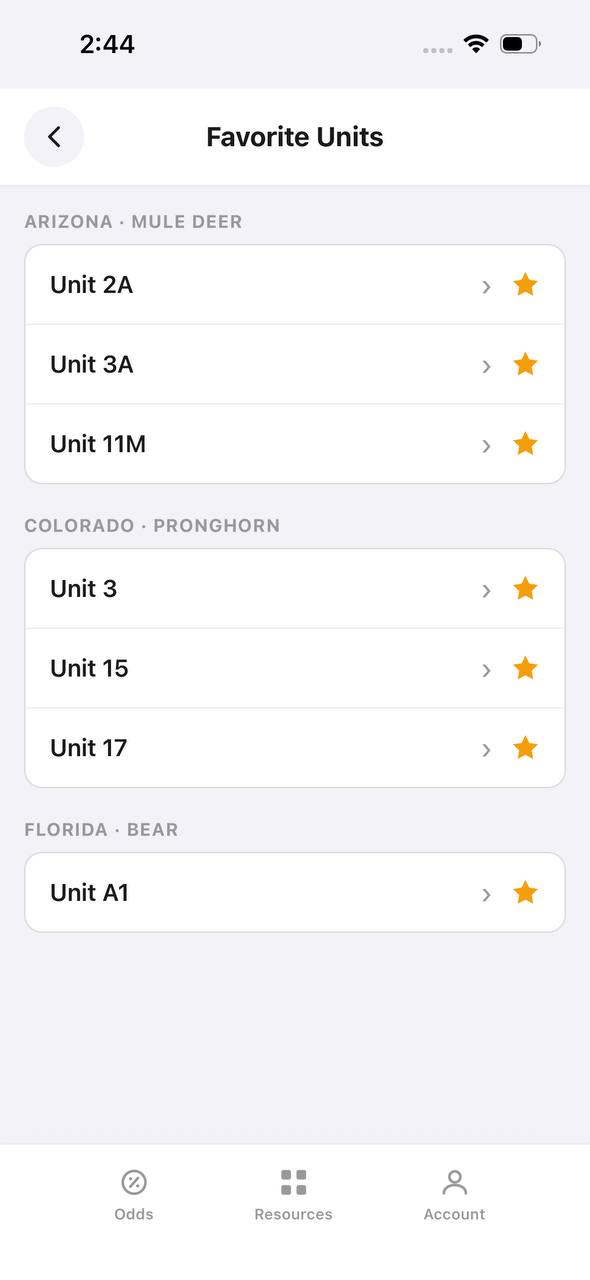
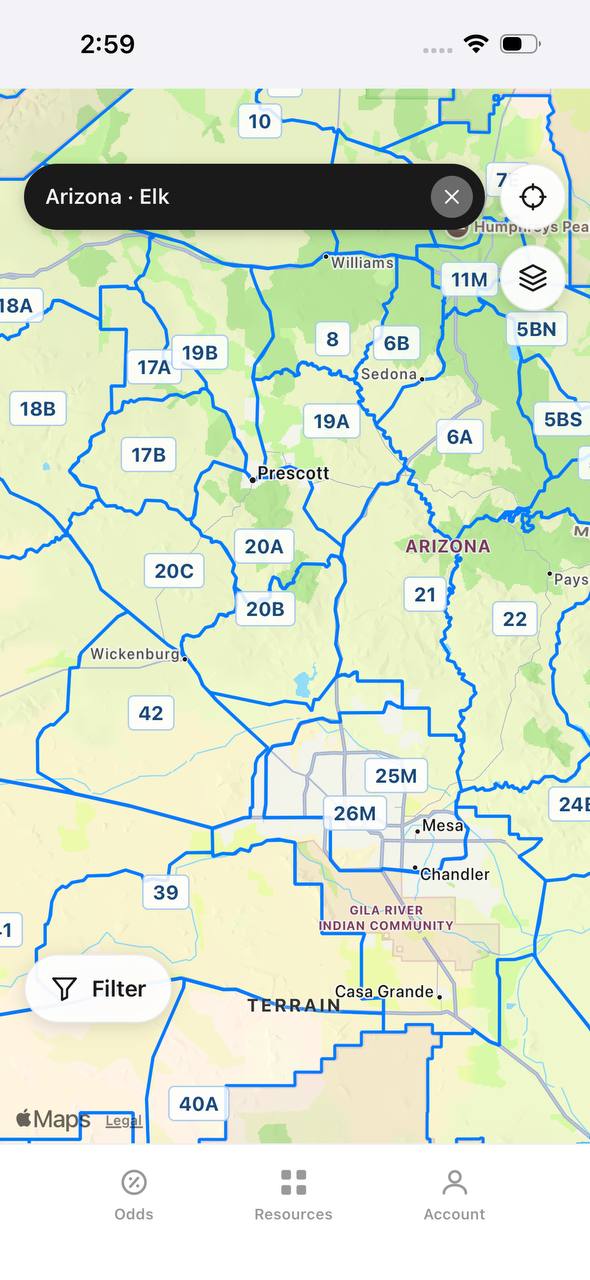
Finding the right unit for spot-and-stalk bowhunting requires more than gear. You need terrain that supports glassing, public land access, and tag opportunities that match your skill level. TAGZ helps you compare units side by side using terrain maps, unit boundaries, and historical draw data. Track your preference points and bonus points across multiple states so you never miss a draw deadline.
Whether you are chasing OTC tags in Colorado or planning a limited-entry mule deer hunt in Nevada, TAGZ gives you the tools to make smarter decisions before you ever step into the field. Filter hunts by weapon type, season dates, and species to find archery units with the terrain and tag availability that fit your spot-and-stalk style. The platform shows you where to focus your applications and how to maximize your draw odds based on your point totals.
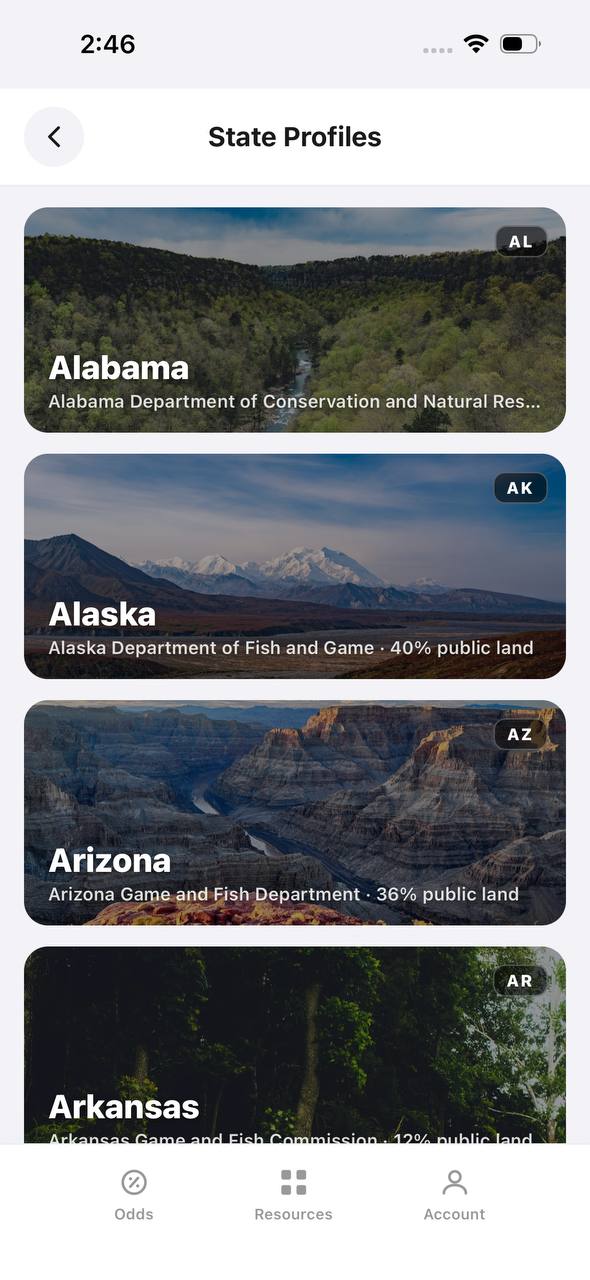
Many western states offer archery tags with better draw odds than rifle hunts. TAGZ breaks down which units are realistic first-year draws versus those requiring years of points. You can see unit-level success rates, public land percentages, and terrain breakdowns that help you decide whether a unit supports the style of hunting your bow setup is built for.
Bows Built for Real Hunting Conditions
The best spot-and-stalk bow is the one you shoot confidently after carrying it all day. Flagship models offer refinements that matter in the field—better noise control, lighter weight, smoother draw cycles. Budget bows get you in the game and perform well if you practice and tune them properly.
Test multiple bows if possible. Draw them, hold them at full draw for 30 seconds, and see how they feel after you have been standing for a while. Pay attention to how the bow balances when you cant it for uphill or downhill shots. The bow that feels best in the shop might not be the one that shoots best on a mountainside.
Ultimately, accuracy under field conditions beats speed or brand loyalty. A 4-pound bow that you shoot confidently is better than a 3.5-pound bow that feels unstable. A 6.5-inch brace height that forgives form breakdown is better than a 6-inch brace height that punishes mistakes. Choose based on how you hunt, not on what the internet says is fastest.
FAQ — Compound Bows for Spot-and-Stalk
What is the best axle-to-axle length for spot-and-stalk bowhunting?
Between 29 and 32 inches is ideal. Bows under 30 inches are easier to maneuver in brush and balance better on a pack. Bows over 32 inches are more stable but harder to carry and draw in tight cover.
How much should a spot-and-stalk bow weigh?
Under 4.5 pounds is the target for all-day carries. Bows under 4 pounds feel significantly lighter after ten miles. Anything over 5 pounds becomes noticeable by mid-day, especially when combined with a loaded pack.
Is a longer brace height better for spot-and-stalk hunting?
Yes. Brace heights between 6.5 and 7 inches are more forgiving when you are tired or shooting from awkward positions. Shorter brace heights demand better form, which breaks down during long stalks.
Do I need a flagship bow or will a budget bow work for spot-and-stalk?
Budget bows like the Bear Redemption EKO and Mission Sub-1 perform well if you practice regularly and tune them correctly. Flagship bows offer refinements like better noise control, lighter weight, and smoother draw cycles that matter more in challenging field conditions.
What arrow weight is best for western big game?
425 to 475 grains works for most hunters. Heavier arrows penetrate better on quartering shots and handle wind better at distance. A 450-grain arrow at 280 fps is more reliable on elk than a 350-grain arrow at 310 fps.
Should I use a single-pin or multi-pin sight for spot-and-stalk hunting?
Multi-pin sights are faster for close encounters in timber or brush where ranging takes too long. Single-pin sliders work better in open country where you have time to range and adjust. Most spot-and-stalk hunters run 3-pin or 5-pin setups as a compromise.
Was this article helpful?
Previous
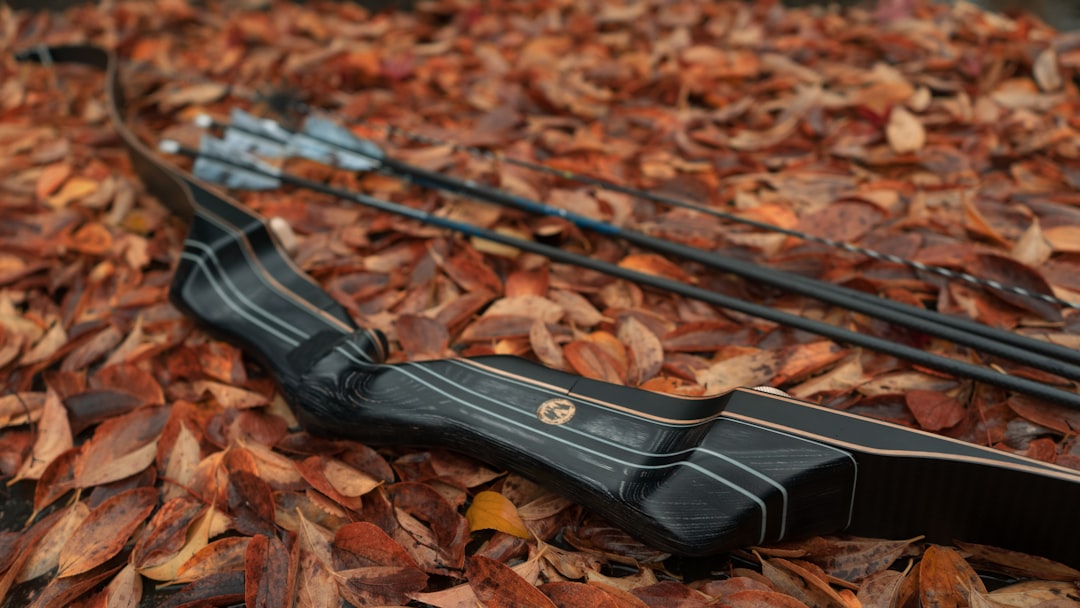
Carbon vs Aluminum Compound Bows: Which Is Better for Hunting in 2026?
Carbon and aluminum compound bows each offer distinct advantages for western hunters. Carbon risers deliver lighter weight and superior vibration dampening, while aluminum provides proven durability and thermal stability at a lower price point.
Related
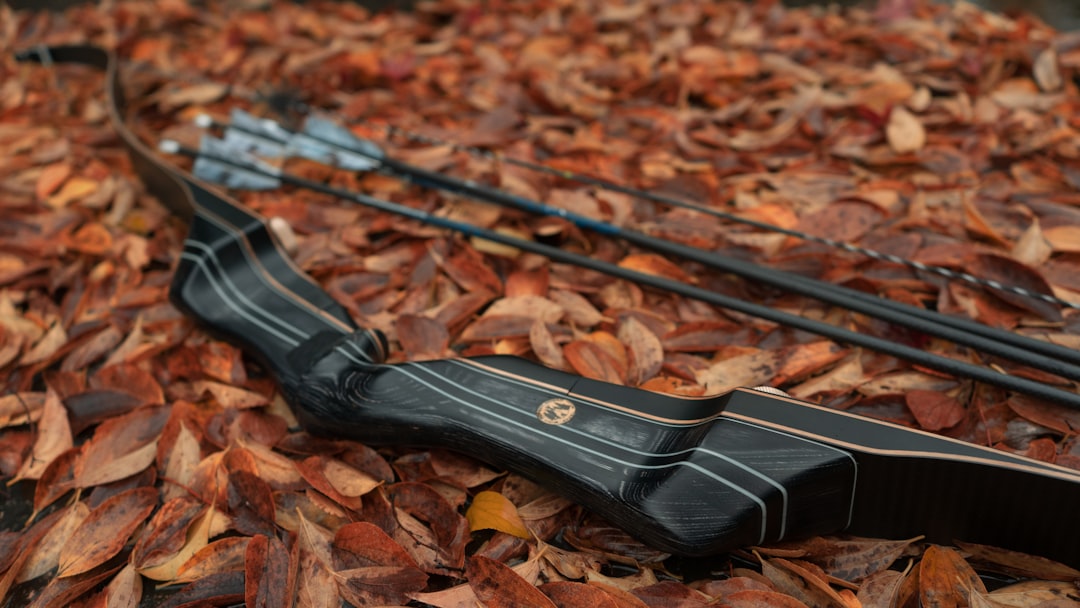
Best Compound Bows for Treestand Hunting in 2026
Treestand hunting demands short axle-to-axle bows with smooth draw cycles and quiet shots. We break down the top compound bows for 2026 based on maneuverability, forgiveness, and real-world performance from elevation.
Next
How to Choose the Right Compound Bow for Hunting in 2026
Selecting the right compound bow means matching draw weight, draw length, and axle-to-axle measurements to your hunting style and physical build. This guide breaks down specs, performance features, and what matters most when shopping for a hunting bow in 2026.