Choosing a compound bow for mule deer hunting is about matching technology to terrain. Western hunts demand long shots across canyons, quick adjustments on steep slopes, and the reliability to perform in wind, cold, and altitude. The best bows for 2026 balance speed with forgiveness, weight with stability, and adjustability with consistency.
This guide focuses on flagship models that excel in mule deer country — bows built for the hunter who hikes miles, sits in a treestand over a waterhole, or stalks through sage and pinyon. We evaluate each bow on draw cycle, accuracy at hunting distances, weight for all-day carries, and real-world performance in the field.
What Makes a Great Mule Deer Bow
Mule deer hunting spans environments. You might spot-and-stalk across open basins in Wyoming, hunt oak brush thickets in Colorado, or set up over a waterhole in New Mexico. The bow that works for all of these scenarios prioritizes versatility over specialization.
Speed matters — but only to a point. A bow shooting 330 fps flattens trajectory and reduces wind drift on 60-yard shots. Beyond that, diminishing returns. Bows pushing 350 fps often sacrifice draw cycle smoothness and forgiveness, traits that matter more when you are shooting from awkward positions or after a long stalk.
Adjustability is critical for western hunters who shift elevation, weather, and shot angles constantly. A bow with wide draw length and weight adjustments lets you fine-tune for different clothing layers, pack configurations, and shooting positions. Modular cam systems or adjustable draw stops give you flexibility without a bow press.
Weight and balance affect every part of the hunt. A six-pound bow feels manageable at the truck but burns your shoulder after three miles and 2,000 vertical feet. Balance matters more than raw weight — a well-balanced seven-pound bow steadies faster than a nose-heavy six-pounder.
Forgiveness shows up when fatigue sets in or the shot is not perfect. A longer axle-to-axle measurement (32 inches or more) increases stability. Higher brace height (six inches or more) reduces sensitivity to form breakdowns. These traits do not show up on spec sheets, but they show up in filled tags.
Mathews Phase4 — Smooth Draw, Ultimate Forgiveness
The Mathews Phase4 remains the benchmark for draw cycle quality and forgiveness. At 33 inches axle-to-axle and a 6.5-inch brace height, it is one of the most forgiving flagship bows on the market. Shooters notice the difference immediately — the draw is buttery smooth, the valley is comfortable, and the bow stays steady at full draw even when your form is not perfect.
Speed is respectable at 332 fps IBO, fast enough for western distances without sacrificing the smooth pull. The Phase4 excels in situations where you need to hold at full draw — waiting for a buck to step into a lane, timing a shot around brush, or steadying yourself on a steep angle.
Weight is 4.49 pounds, light enough for long packs but substantial enough to feel stable in wind. The dual-bridge riser dampens vibration effectively, and the bow is nearly silent after the shot. Hunters who prioritize accuracy and consistency over raw speed find the Phase4 hard to beat.
Best for: Hunters who value smooth draw cycles, forgiveness, and all-day carry comfort over maximum speed.
Hoyt RX-9 — Proven Accuracy, Rock-Solid Stability
The Hoyt RX-9 is built for precision. It features a 34-inch axle-to-axle measurement and Hoyt's In-Line Roller Guard system, which centers string angles and reduces cam lean. The result is a bow that holds steadier in wind and shoots tighter groups at distance than shorter, more compact models.
Speed sits at 335 fps IBO — fast without being twitchy. The draw cycle is firm but predictable, with a solid back wall that makes anchor points repeatable. The RX-9 is not as smooth as the Phase4, but it rewards good form with exceptional accuracy. Hunters who practice regularly and shoot from stable positions will appreciate the RX-9's consistency.
Weight is 4.6 pounds, manageable for spot-and-stalk hunts but heavier than ultralight models. The advantage is stability — the RX-9 does not bounce around at full draw, even on steep downhill shots or in gusting wind. Hoyt's HBX Pro cam system is modular, allowing draw length adjustments without a bow press.
Best for: Accuracy-focused hunters who shoot from stable positions and prioritize tight groups at 40-plus yards.
Bowtech SR350 — Maximum Speed, Aggressive Performance
The Bowtech SR350 is the speed king of 2026. At 350 fps IBO, it is the fastest production bow on this list. Speed translates to flatter trajectory, less wind drift, and more kinetic energy on impact — advantages that matter on long shots across open country.
The trade-off is a more aggressive draw cycle. The SR350 ramps up quickly and hits a firm wall, which some shooters find abrupt compared to smoother-drawing bows. But for hunters who prioritize performance over comfort, the SR350 delivers. Bowtech's Deadlock cam system allows precise tuning without a bow press, a major advantage for traveling hunters who need to adjust for altitude or temperature changes.
Weight is 4.6 pounds with a 31.5-inch axle-to-axle measurement — compact and maneuverable in tight cover. The shorter length sacrifices some forgiveness but gains agility, making the SR350 a strong choice for hunters who stalk through brush or shoot from treestands.
Best for: Hunters chasing maximum speed for long-range shots and who have the form consistency to handle an aggressive draw cycle.

Free to join
Download mobile app
- Detailed draw odds
- Point tracking
- Deadline reminders
- 18 states covered



Free to join
Download mobile app
- Detailed draw odds
- Point tracking
- Deadline reminders
- 18 states covered


Free to join
Download mobile app
- Detailed draw odds
- Point tracking
- Deadline reminders
- 18 states covered

Elite Omnia — Balanced Performance, Smooth Shooting
The Elite Omnia sits in the middle ground between smoothness and speed. At 336 fps IBO, it is fast enough for western distances without the aggressive draw cycle of the SR350. The S.E.T. (Simplified Exact Tuning) cam system produces a smooth, natural draw that feels similar to the Phase4 but with slightly more speed.
The Omnia measures 32.75 inches axle-to-axle and weighs 4.4 pounds — a balanced package that feels nimble without sacrificing stability. Elite's Riser Reduction Technology removes material from non-critical areas, reducing weight without compromising strength. The result is a bow that carries well on long hunts but still holds steady in wind.
One standout feature is Elite's micro-adjustable limb stops, which allow precise draw length tuning in quarter-inch increments. This level of adjustability is rare in flagship bows and makes the Omnia a versatile option for hunters who switch between different clothing layers or shooting styles throughout the season.
Best for: Hunters who want a balanced bow that performs well across different hunting scenarios without leaning too far into speed or forgiveness.
Bear Perception — Budget-Friendly, Highly Adjustable
The Bear Perception proves you do not need to spend flagship money to get a capable mule deer bow. At around 40 percent less than the Phase4 or RX-9, the Perception offers exceptional value without major performance sacrifices.
Speed is 330 fps IBO, on par with more expensive models. The Perception's standout feature is adjustability — it spans a massive draw length range (23.5 to 30.5 inches) and draw weight range (45 to 70 pounds) without requiring a bow press or module swap. This makes it an excellent choice for new bowhunters, youth hunters growing into their equipment, or hunters who share gear with family.
The draw cycle is smooth for a budget bow, though not as refined as the Phase4. At 4.2 pounds and 32 inches axle-to-axle, it is light and maneuverable. The Perception does not have the premium finish or micro-tuning features of flagship bows, but it shoots accurately and holds up in the field.
Best for: Budget-conscious hunters, new bowhunters, or anyone prioritizing adjustability and value over flagship features.
Free to join
Download mobile app
- Detailed draw odds
- Point tracking
- Deadline reminders
- 18 states covered
Free to join
Download mobile app
- Detailed draw odds
- Point tracking
- Deadline reminders
- 18 states covered
Free to join
Download mobile app
- Detailed draw odds
- Point tracking
- Deadline reminders
- 18 states covered
PSE Mach 34 — Long Axle-to-Axle, Maximum Forgiveness
The PSE Mach 34 is built for hunters who prioritize stability and forgiveness over compactness. At 34.5 inches axle-to-axle, it is the longest bow on this list and one of the most forgiving. The longer length increases stability at full draw, reduces hand torque sensitivity, and makes the bow easier to shoot accurately from awkward positions.
Speed is 343 fps IBO — impressively fast for such a long bow. PSE's Evolve Cam System delivers a smooth draw cycle with a comfortable valley and a solid back wall. The Mach 34 is not as smooth as the Phase4, but it is smoother than most bows in its speed class.
Weight is 4.7 pounds, slightly heavier than other models but still manageable for all-day hunts. The extra length makes the Mach 34 less maneuverable in thick cover, but it excels in open country where long shots and wind are common. Hunters who shoot from the ground or elevated positions will appreciate the added stability.
Best for: Hunters who prioritize forgiveness and stability for long-range shots in open terrain and are willing to accept a longer, slightly heavier bow.
Real-World Considerations for Mule Deer Bows
Spec sheets do not tell the full story. A bow that shoots well on flat range does not always perform the same at 9,000 feet, in 30-degree weather, or after a four-mile stalk. Real-world factors separate good bows from great ones.
Altitude affects performance. Thinner air at higher elevations slightly reduces arrow speed, but the bigger impact is on your body. Fatigue sets in faster, breathing gets harder, and form breaks down. A forgiving bow with a smooth draw cycle helps maintain accuracy when you are gassed.
Cold weather changes everything. Draw weight feels heavier in cold temperatures, and string materials stiffen. Bows with smooth draw cycles and comfortable valleys are easier to pull when you are wearing heavy layers. Test your bow in cold conditions before the hunt — do not discover draw weight issues on opening morning.
Wind is constant in mule deer country. A heavier, longer bow holds steadier in wind than a lightweight, compact model. Brace height also matters — higher brace heights are less sensitive to wind-induced form errors. If you hunt exposed ridges or open basins regularly, prioritize stability over weight savings.
Shot angles vary. Mule deer hunting involves steep uphill and downhill shots. A bow with a comfortable draw cycle and forgiving design makes these awkward angles easier to execute. Practice shooting from elevated positions and steep slopes before the season.
How TAGZ Helps You Plan Your Mule Deer Hunt
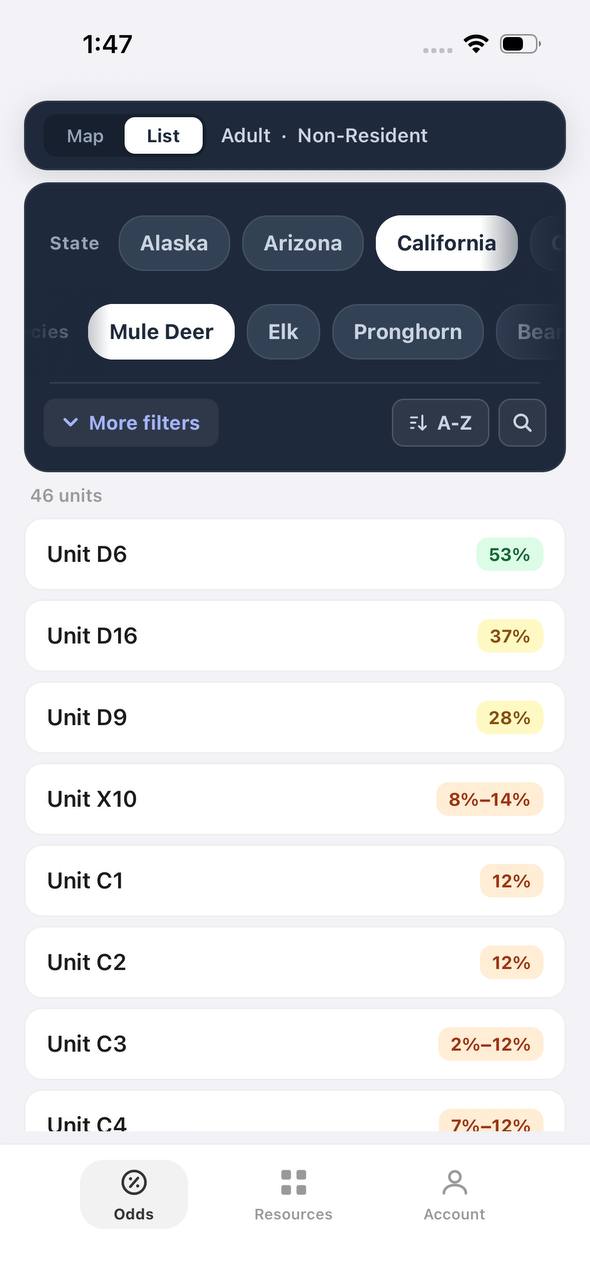
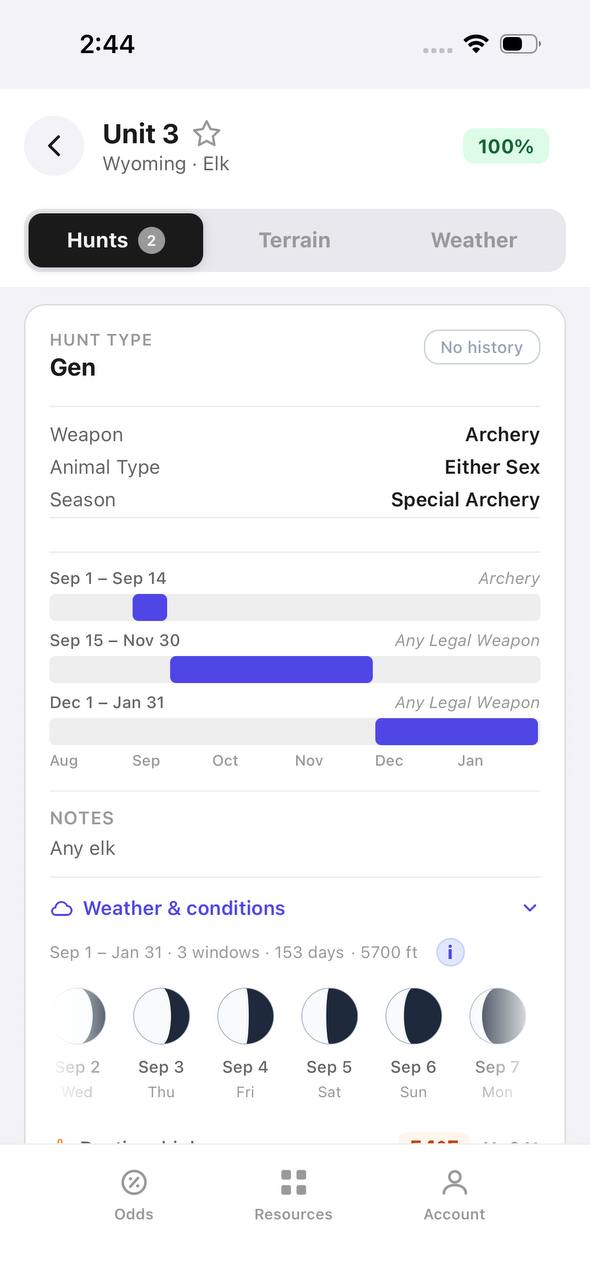
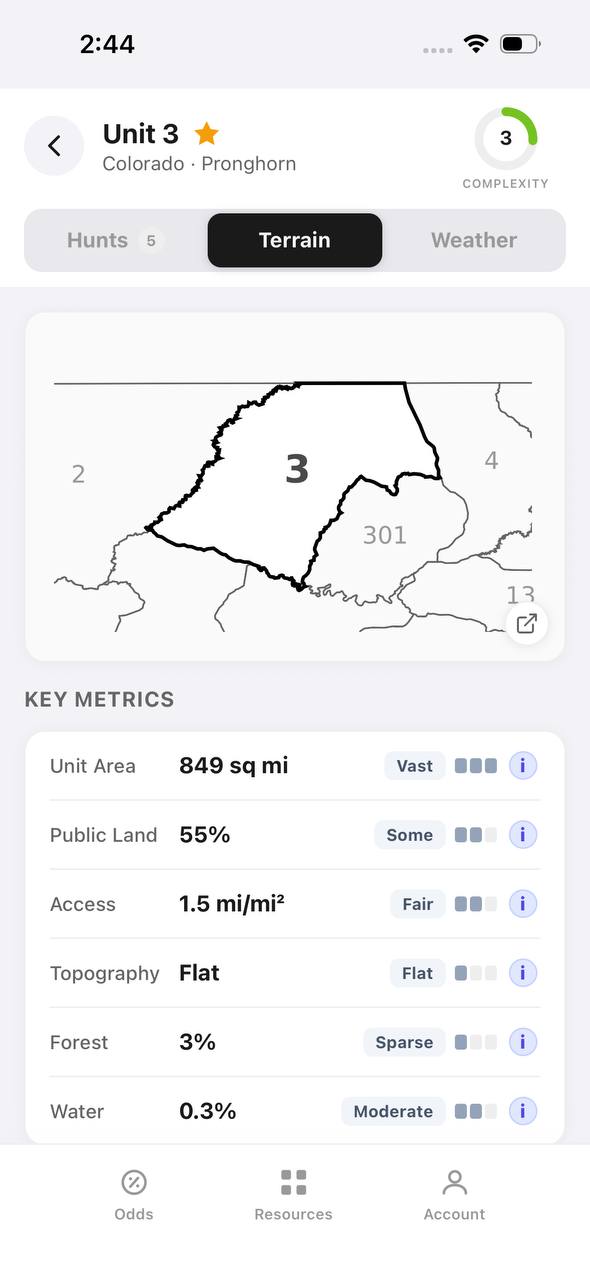
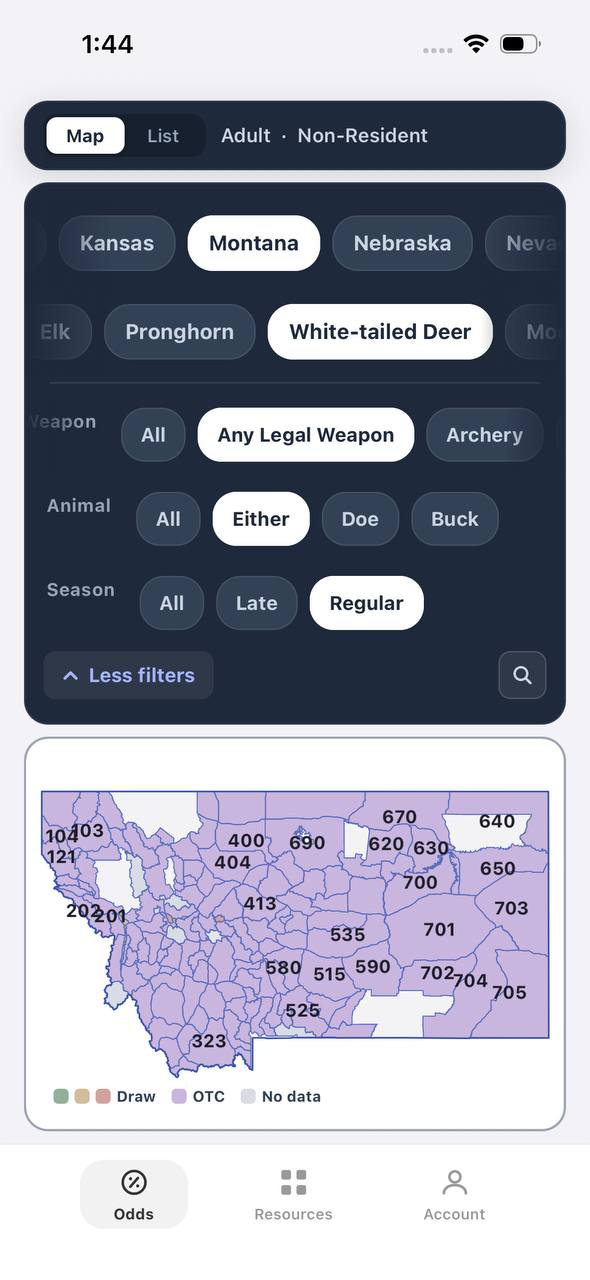
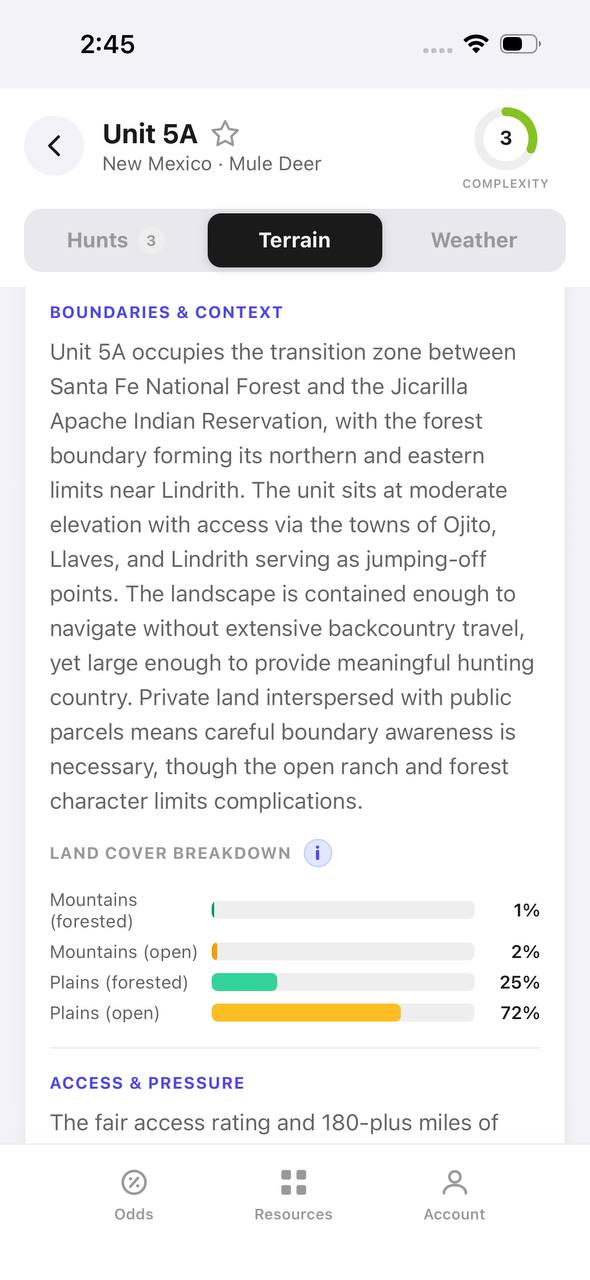
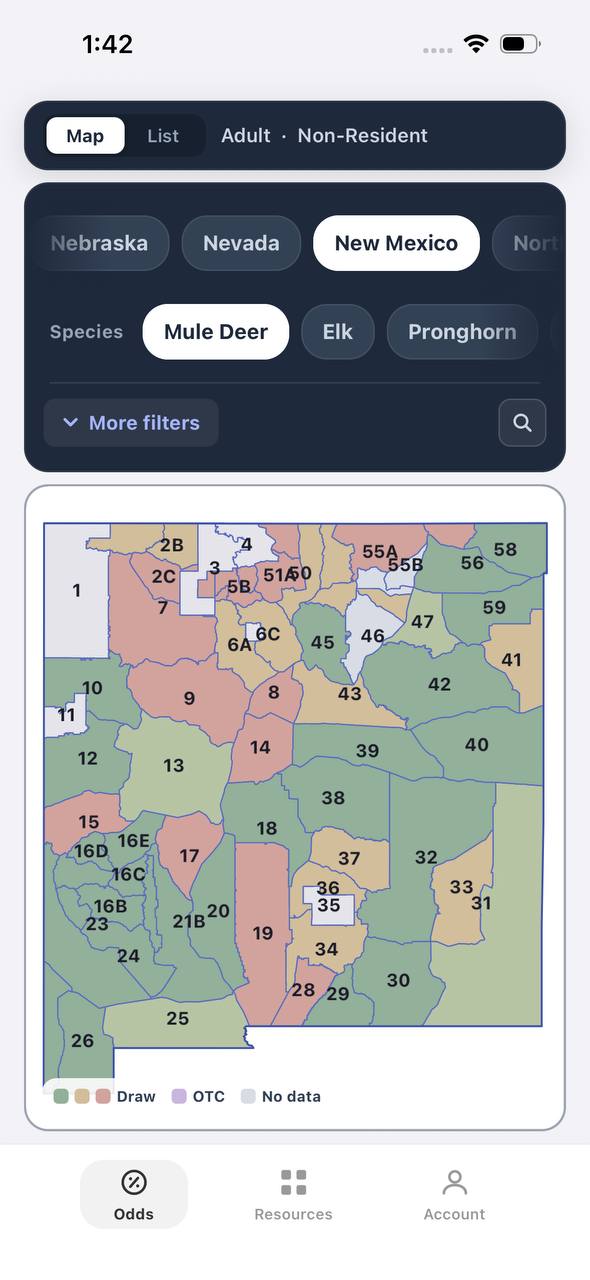
Once you have the right bow, the next step is finding the right unit. TAGZ helps you compare mule deer units side by side using terrain maps, unit boundaries, and historical draw data. Track your preference points and bonus points across multiple states so you never miss a draw deadline.
Whether you are chasing OTC tags in Colorado or planning a trophy limited-entry hunt in Nevada, TAGZ gives you the tools to make smarter decisions before you ever step into the field. Filter hunts by weapon type, season dates, and draw odds to find opportunities that match your gear, experience level, and point totals.
Free to join
Download mobile app
- Detailed draw odds
- Point tracking
- Deadline reminders
- 18 states covered
Free to join
Download mobile app
- Detailed draw odds
- Point tracking
- Deadline reminders
- 18 states covered
Free to join
Download mobile app
- Detailed draw odds
- Point tracking
- Deadline reminders
- 18 states covered
Choosing the Right Bow for Your Hunting Style
The best compound bow for mule deer hunting depends on how you hunt. Spot-and-stalk hunters covering miles of open terrain benefit from lightweight, forgiving bows like the Phase4 or Elite Omnia. Hunters who shoot from elevated stands or stable positions can take advantage of the accuracy and speed of the RX-9 or SR350.
If you are new to bowhunting or on a budget, the Bear Perception delivers flagship-level performance without the flagship price. If you prioritize forgiveness and stability for long-range shooting, the PSE Mach 34's longer axle-to-axle measurement makes it easier to execute tough shots.
No bow compensates for poor practice or bad shooting form. The bows on this list are tools — they improve your odds, flatten your trajectory, and increase your effective range. But success still comes down to preparation, practice, and knowing your limitations in the field.
Shoot your bow regularly at hunting distances, practice from realistic field positions, and test your gear in the conditions you will actually hunt. A perfectly tuned bow that you can shoot confidently beats the fastest, most expensive model that you struggle to control.
FAQ — Compound Bows for Mule Deer Hunting
What is the best compound bow speed for mule deer hunting? Between 330 and 340 fps is ideal. This range flattens trajectory for 40- to 60-yard shots without sacrificing draw cycle smoothness or forgiveness. Speeds above 350 fps offer minimal real-world advantages and often compromise shootability.
Does axle-to-axle length matter for mule deer bows? Yes. Longer bows (32 inches or more) are more forgiving and stable, especially for long-range shots or shooting in wind. Shorter bows (under 32 inches) are more maneuverable in thick cover but require better form consistency.
What draw weight should I use for mule deer? Most hunters are well-served by 60 to 70 pounds. This range provides enough kinetic energy for ethical kills at hunting distances without requiring excessive strength. Prioritize a draw weight you can pull smoothly and hold comfortably at full draw.
Are expensive flagship bows worth it for mule deer hunting? Not always. Budget bows like the Bear Perception shoot accurately and perform well in the field. Flagship bows offer smoother draw cycles, better tuning options, and premium materials, but they do not guarantee more filled tags. Choose based on how much you hunt and your performance priorities.
What brace height is best for mule deer hunting? Six inches or higher. Higher brace heights are more forgiving of form errors, which matters when you are tired, cold, or shooting from awkward positions. Bows with brace heights under six inches are faster but less forgiving.
How important is bow weight for western mule deer hunts? Very important if you hike long distances or hunt at high elevation. Every ounce matters after several miles. That said, a well-balanced seven-pound bow often shoots better than a poorly balanced six-pound bow. Test your bow on realistic terrain before committing.
Continue Planning Your Hunt
Now that you have the right bow, it is time to find the right hunt. Use TAGZ to research mule deer units, compare draw odds, and track application deadlines across multiple states. Whether you are targeting a Colorado OTC unit or building points for a Nevada trophy tag, TAGZ simplifies the planning process so you can focus on the hunt itself. Visit the TAGZ Insights page for more hunting strategy articles, or explore the TAGZ product to start building your hunt plan today.
Was this article helpful?
Previous
Fastest Compound Bows of 2026: Does Speed Really Matter for Hunting?
The 2026 compound bow market features models exceeding 370 fps, but raw speed isn't everything. This guide breaks down the fastest bows available, explains how velocity affects hunting performance, and helps you decide whether speed should drive your next bow purchase.
Related
Most Forgiving Compound Bows for Hunting in 2026
The most forgiving compound bows blend long axle-to-axle lengths, generous brace heights, and smooth draw cycles to minimize shooter error. We break down the top choices for hunters who prioritize accuracy over speed.
Next
Best Lightweight Compound Bows for Backcountry Hunting in 2025
Backcountry bowhunters need gear that performs at altitude without destroying their backs. We break down the best lightweight compound bows under 4.5 pounds, comparing draw cycles, forgiveness, and real-world packability for mountain hunters.