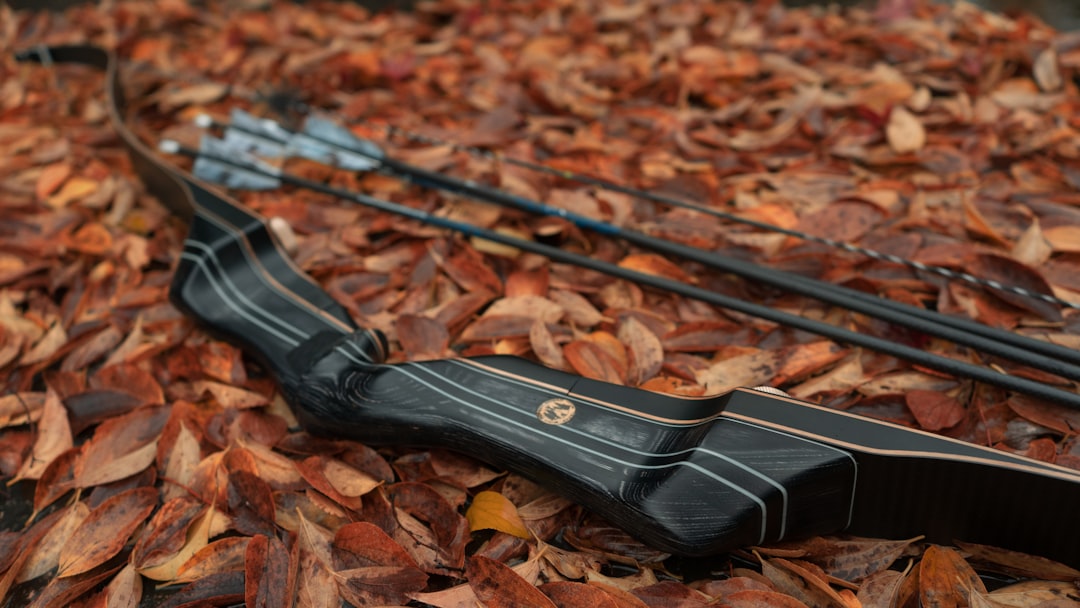
Buying your first compound bow is one of the most important gear decisions you will make as a new bowhunter. The right bow grows with you as your form improves, while the wrong one frustrates you out of archery altogether. In 2026, manufacturers have doubled down on adjustable, forgiving platforms specifically designed to take beginners from backyard targets to filled tags without requiring a second mortgage or a complete setup overhaul six months in.
This guide focuses on compound bows that balance forgiveness, adjustability, and field-ready performance. These are not department store toys. They are legitimate hunting tools built to handle real western conditions, whether you are chasing mule deer in Colorado sagebrush or calling elk in Montana timber.
What Makes a Compound Bow Beginner-Friendly?
Beginner bows share three core traits: wide adjustability, mechanical forgiveness, and manageable draw weight. Adjustability matters because your draw length and strength will change as you develop proper form and build back muscles. A bow that adjusts from 25 to 70 pounds and 19 to 30 inches of draw length lets you start comfortable and scale up without buying new limbs or a new bow.
Forgiveness refers to how much the bow tolerates small form mistakes. Longer axle-to-axle measurements and higher brace heights create stability and reduce the penalty for slight grip pressure or inconsistent anchor points. A 7-inch brace height forgives more than a 6-inch speed bow that punishes every flinch.
Draw weight is where most beginners overcommit. Pulling 70 pounds sounds impressive until you cannot draw smoothly in a treestand or hold at full draw long enough to settle your pin. Start at 40 to 50 pounds. Modern compounds with 80 percent let-off generate more than enough kinetic energy at those weights to ethically kill any big game animal in North America within reasonable archery range.
Top Beginner Compound Bows for 2026
Bear Cruzer G3
The Bear Cruzer G3 remains the gold standard for first-time bowhunters. It adjusts from 12 to 70 pounds and 12 to 30 inches of draw length without a bow press, meaning you can tune it in your garage as you grow. The 7-inch brace height and 80 percent let-off make it exceptionally forgiving.
At full adjustability, the Cruzer G3 weighs 3.8 pounds and measures 30 inches axle to axle. It shoots 310 feet per second at 70 pounds and 30-inch draw, which is more than adequate for whitetail, mule deer, and even elk inside 40 yards. The rotating module system lets you adjust draw length with an Allen wrench in under five minutes.
The Cruzer G3 comes as a ready-to-hunt package with a sight, rest, quiver, and peep sight for around $400 to $450. That package setup is not top-tier, but it gets you shooting immediately. Most hunters upgrade the rest and sight within a year, but the bow itself remains relevant for a decade.
Diamond Infinite Edge Pro
Diamond Archery's Infinite Edge Pro dominated the beginner market for years, and the current generation stays competitive. It adjusts from 13 to 70 pounds and 15 to 31 inches of draw length, covering an even wider range than the Cruzer. The 7-inch brace height and 31-inch axle-to-axle length provide a stable shooting platform that masks form inconsistencies.
Speed tops out at 310 feet per second with a 70-pound draw and 30-inch draw length. The dual-cam system stays synchronized better than single-cam designs on cheaper beginner bows, and tuning is straightforward. The Infinite Edge Pro weighs 3.1 pounds bare bow, making it one of the lightest adjustable compounds available.
Package deals run $350 to $420 depending on included accessories. Like the Cruzer, the factory sight and rest are functional but not exceptional. The bow itself handles western spot-and-stalk hunting and eastern treestand setups equally well.
Mission Switch
Mission Archery, a subsidiary of Mathews, built the Switch specifically for archers transitioning from youth bows or starting fresh. It adjusts from 15 to 70 pounds and 19 to 30 inches of draw length using a tool-free adjustment system. Twist two bolts, slide the module, tighten, and shoot.
The Switch measures 29 inches axle to axle with a 7.25-inch brace height, the longest on this list. That extra brace height forgives more than any other beginner bow reviewed here. Speed reaches 295 feet per second at maximum settings, slightly slower than the Bear or Diamond but still more than enough for ethical shots inside 50 yards.
Weight sits at 3.6 pounds bare bow. The Mission Switch costs $450 to $500 as a package, slightly more expensive than entry-level competitors but backed by Mathews engineering and build quality. The investment pays off in smoother draw cycles and better cam timing out of the box.
Draw Weight, Let-Off, and Kinetic Energy Explained
Draw weight measures the force required to pull the bow to full draw. Most states require a minimum of 40 pounds for big game, though some allow 35. Let-off is the percentage of draw weight reduced at full draw. An 80 percent let-off on a 50-pound bow means you hold only 10 pounds at full draw, making it easier to aim and control shot execution.
Kinetic energy determines how much force your arrow carries downrange. A 400-grain arrow shot from a 50-pound bow at 270 feet per second generates roughly 65 foot-pounds of kinetic energy, well above the 40 foot-pound threshold recommended for deer-sized game. You do not need 70 pounds and 350 feet per second to kill effectively. Proper shot placement with adequate penetration matters infinitely more than raw speed.
For elk and moose, aim for 70 foot-pounds minimum. A 500-grain arrow from a 55-pound bow at 260 feet per second delivers that comfortably. The key is arrow weight and broadhead selection, not maxing out draw weight before your form is ready.
Adjustability vs. Performance Trade-Offs
Highly adjustable bows sacrifice some speed and refinement compared to fixed-spec target and performance hunting bows. A flagship model like the Mathews Phase 4 or Hoyt RX-9 will outshoot any beginner bow in raw speed, accuracy, and shot feel. But those bows require precise fitting and cost $1,200 to $1,800 bare bow.
Beginner bows prioritize versatility. The rotating modules and wide limb adjustability add slight weight and reduce efficiency, but they let you dial in fit without a pro shop visit. That matters more in year one than shooting 320 feet per second instead of 290.
Once your form solidifies and you know your exact draw length and preferred draw weight, upgrading to a performance bow makes sense. Until then, an adjustable platform teaches you proper shooting mechanics without punishing you for still learning.
Free to join
Download mobile app
- Detailed draw odds
- Point tracking
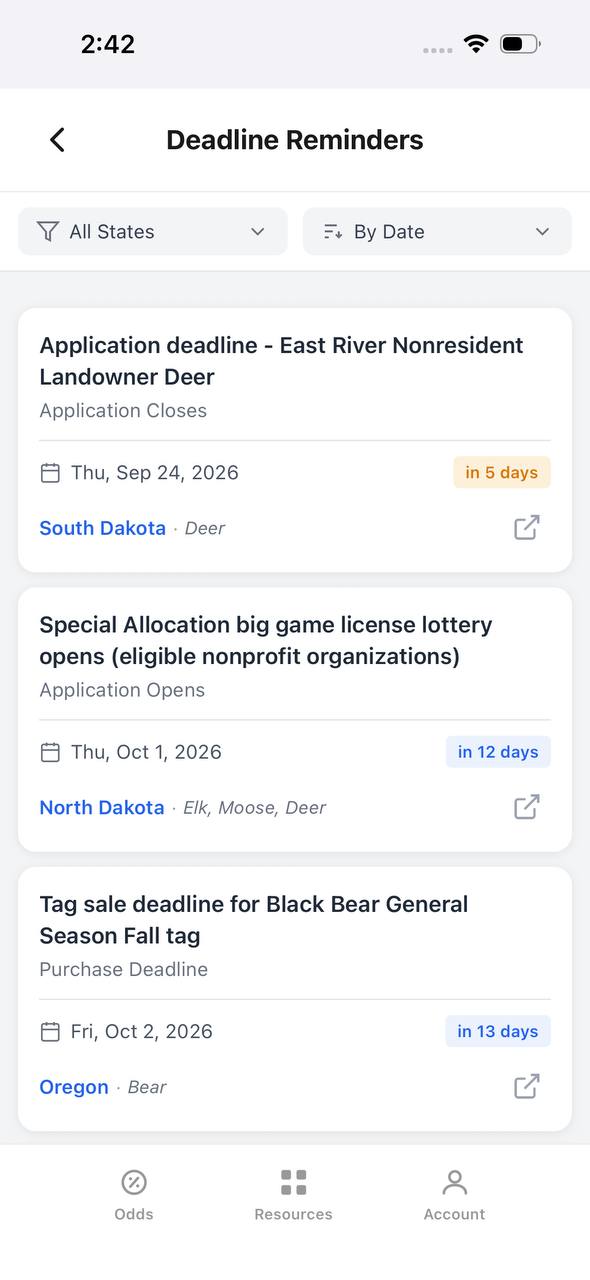
- Deadline reminders
- 18 states covered

Free to join
Download mobile app
- Detailed draw odds
- Point tracking
- Deadline reminders
- 18 states covered
Free to join
Download mobile app
- Detailed draw odds
- Point tracking
- Deadline reminders
- 18 states covered

Accessories That Actually Matter
Most beginner package bows include factory sights, rests, and stabilizers that are functional but not optimal. The single most important upgrade is the arrow rest. Factory rests are often simple whisker biscuits or basic drop-away designs that do not stay tuned through rough field conditions.
Upgrade to a quality drop-away rest like the QAD UltraRest HDX or Hamskea Hybrid Hunter within the first season. Spend $100 to $150 for a rest that locks your arrow in place during the draw and clears completely on the shot. Improved arrow flight and tighter groups justify the cost immediately.
The factory sight works fine initially, but consider upgrading to a multi-pin sight with a built-in level and micro-adjustments once you start practicing at longer distances. A sight like the Trophy Ridge React or Black Gold Ascent costs $150 to $250 and dramatically improves your ability to adjust for yardage.
Stabilizers matter less for beginners. A simple 6 to 8-inch front stabilizer adds enough weight to steady your hold without overcomplicating the setup. Save the 12-inch side rod systems for later.
Setting Up Your Bow for Hunting
Proper setup starts with establishing your correct draw length. Visit a pro shop and have them measure you using a draw length gauge or wingspan method. Most adult males fall between 28 and 30 inches, but individual variation is significant. Drawing a bow that is too long or too short ruins accuracy and creates bad habits.
Once draw length is set, start with a conservative draw weight. If you can draw smoothly 20 times in a row without shaking or using your back to yank the string, the weight is appropriate. If you struggle past 10 repetitions, drop 5 pounds. Building strength takes weeks, not days.
Tune your bow by paper tuning or bare shaft tuning at a pro shop. A well-tuned bow shoots arrows that fly straight without fishtailing or porpoising. Tuning adjusts rest position, nocking point height, and cam timing to match your specific arrows and shooting form. Every bow needs tuning, even out of the box.
Arrow Selection for Beginner Hunters
Arrow choice matters as much as the bow. For adjustable beginner compounds shooting 40 to 60 pounds, choose arrows with a total weight between 375 and 450 grains. Heavier arrows penetrate better and stay quieter in flight, while lighter arrows fly flatter but lose energy faster.
Carbon arrows dominate the market. Easton Axis, Gold Tip Hunter, and Carbon Express Maxima Red are all excellent mid-tier hunting arrows that balance durability, weight, and straightness. Expect to spend $80 to $120 per dozen.
Match arrow spine to your draw weight and draw length using the manufacturer's spine chart. Incorrect spine causes arrows to fishtail and impacts to scatter. Most 50-pound bows with 28 to 30-inch draws shoot a 340 or 400 spine, but always verify with the chart.
Practice Drills That Build Hunting Skills
Range time builds muscle memory, but realistic practice scenarios build hunting competence. Start with basic form at 10 yards, focusing on consistent anchor point, relaxed bow grip, and smooth release. Shoot 50 to 100 arrows per session three times per week for the first month.
Once groups tighten at 10 yards, move to 20, then 30, then 40. Hunt inside your maximum comfortable range. If you cannot consistently hit a 6-inch circle at 40 yards, keep your hunting shots inside 30. Ethical archery hunting demands precise shot placement, not hopeful long-range attempts.
Practice from field positions: kneeling, sitting, uphill, downhill, and through small shooting lanes. Western spot-and-stalk hunting rarely offers a flat, standing broadside shot. Eastern treestand hunting requires shooting at steep downward angles. Practice the scenarios you will face in the field.
TAGZ Helps You Plan Your First Archery Hunt
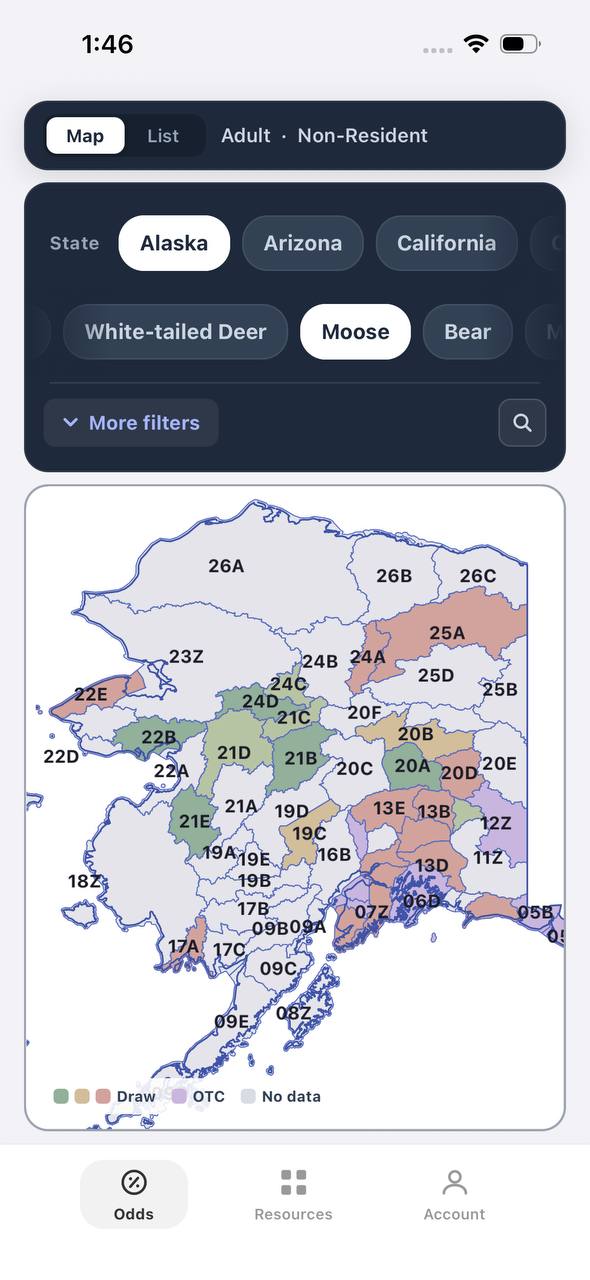
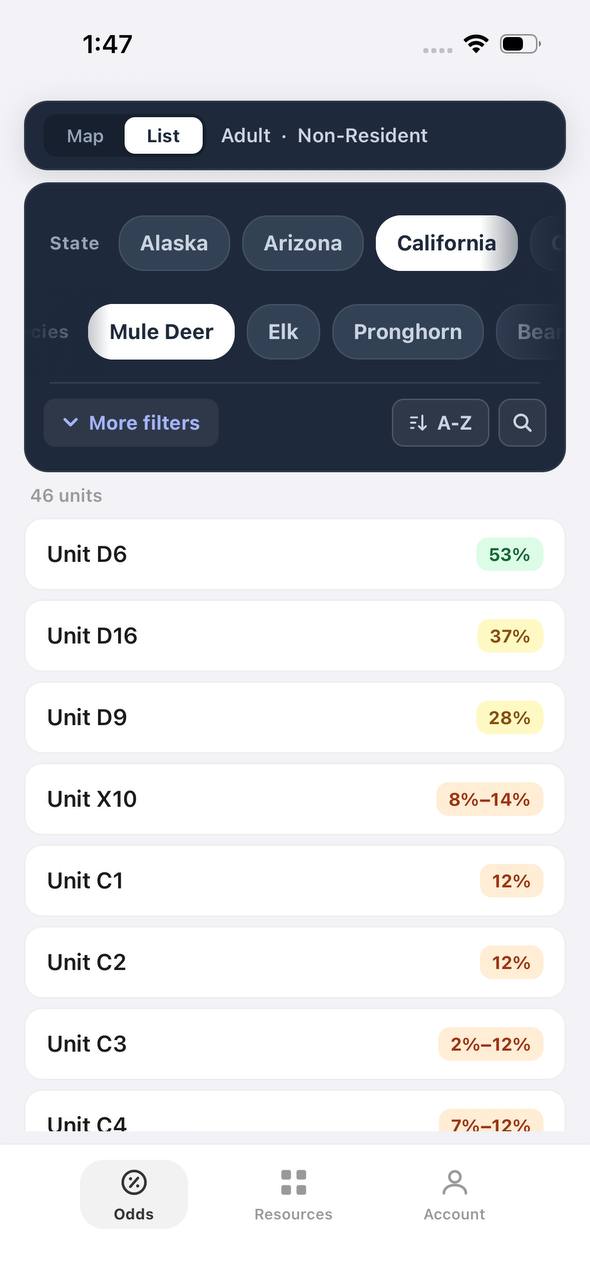
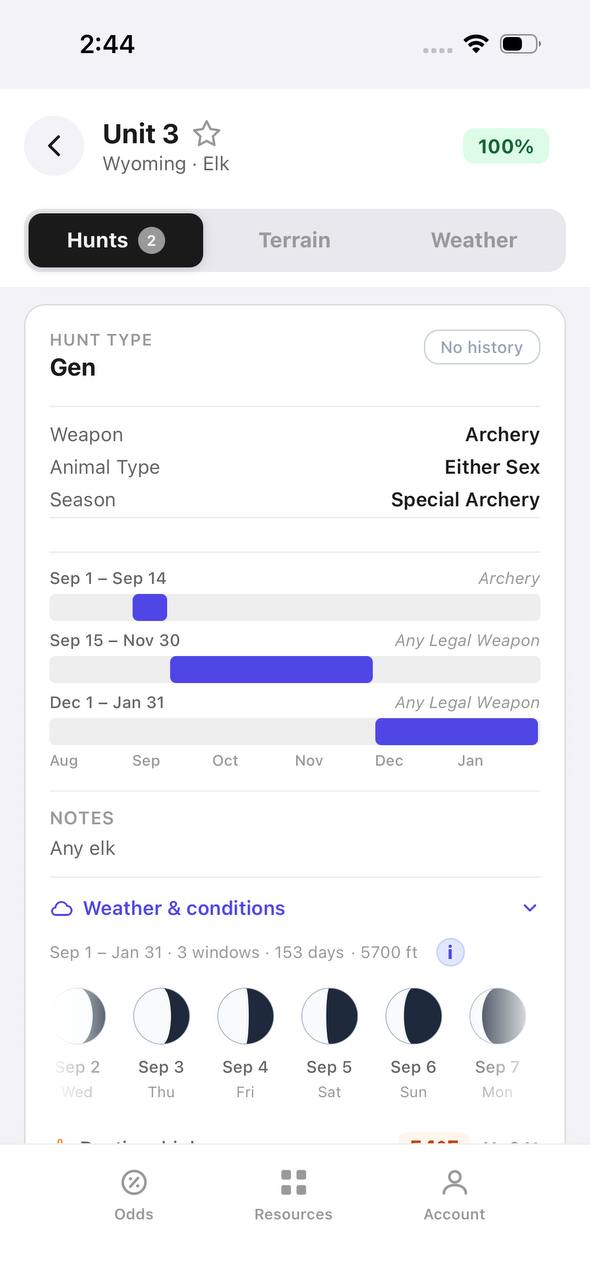
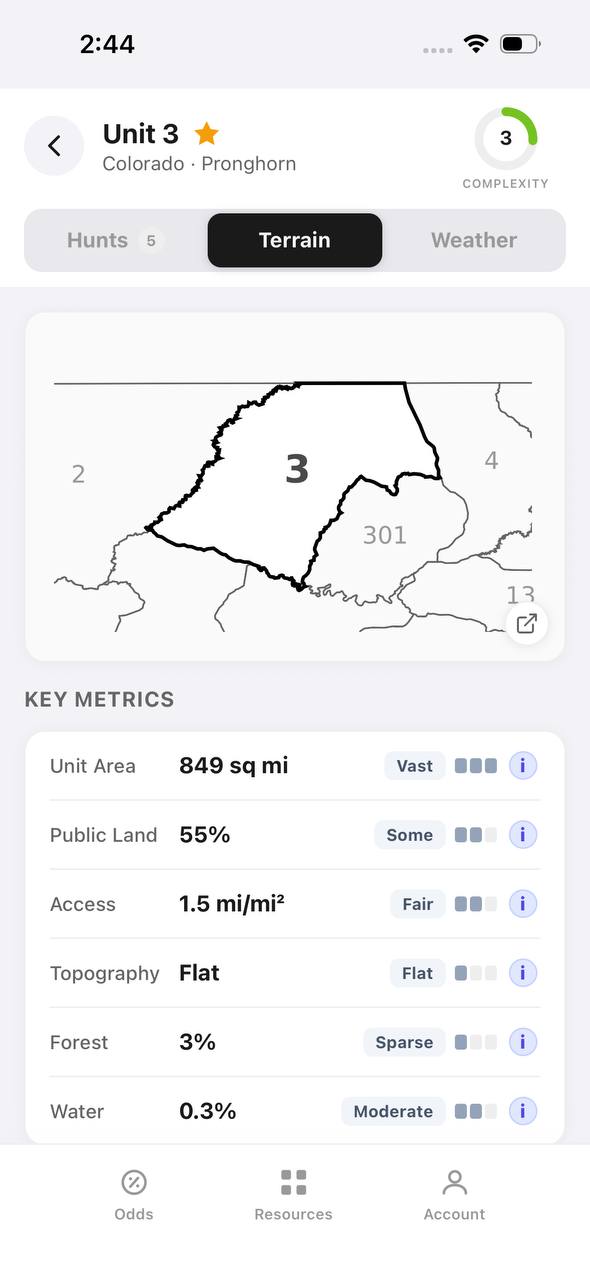
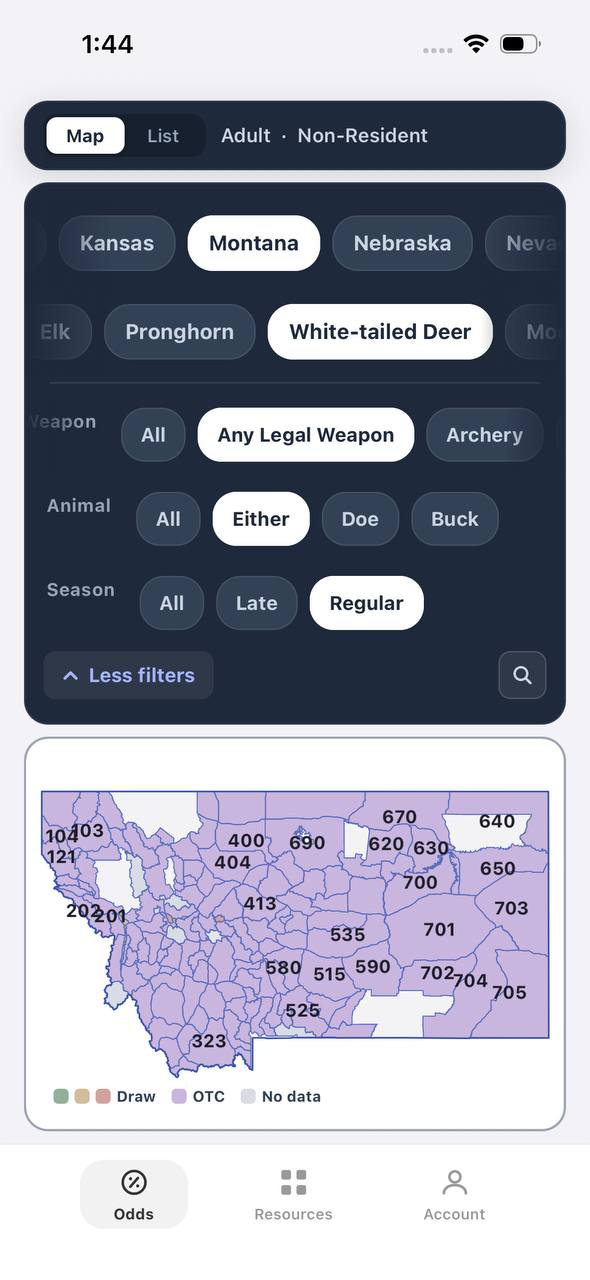
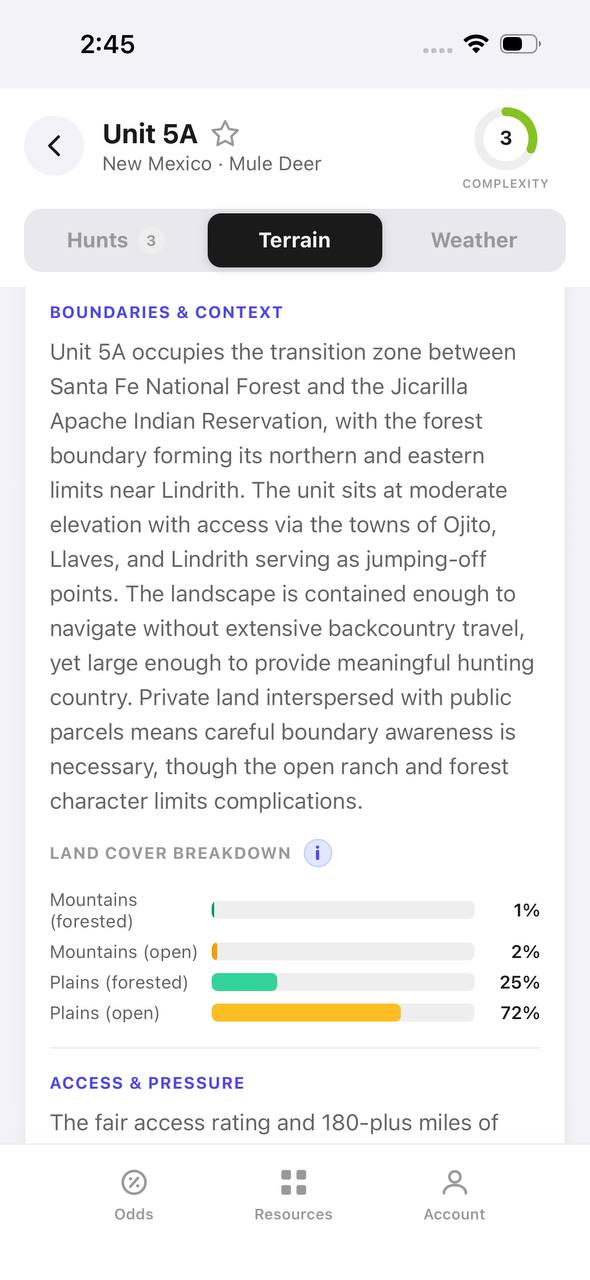
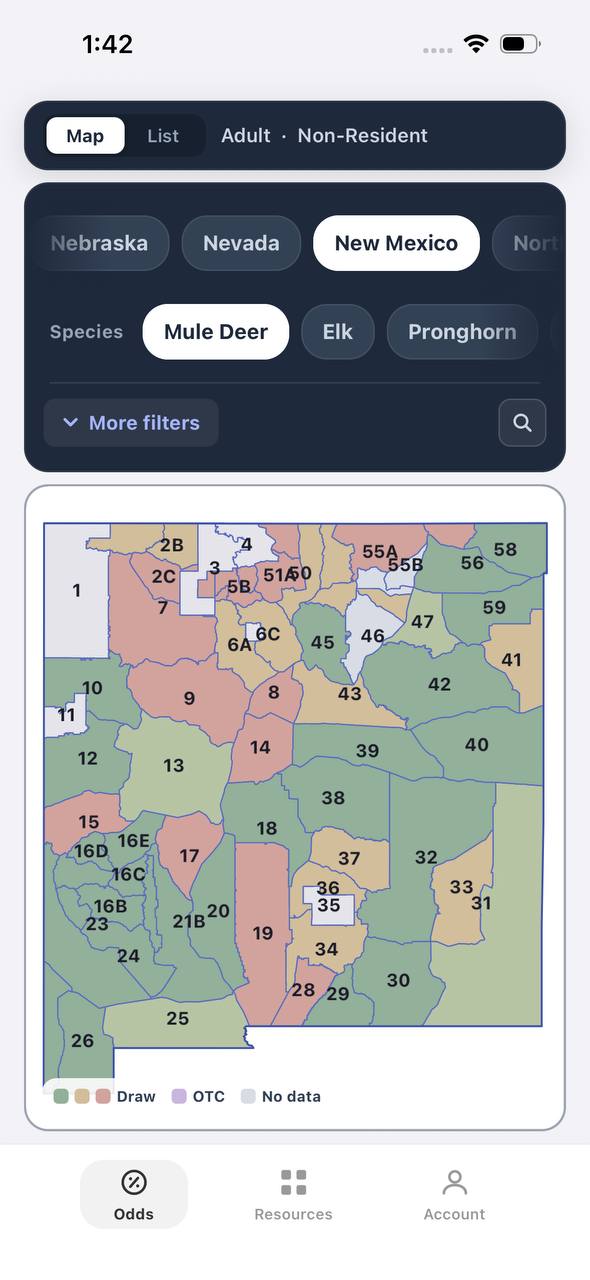
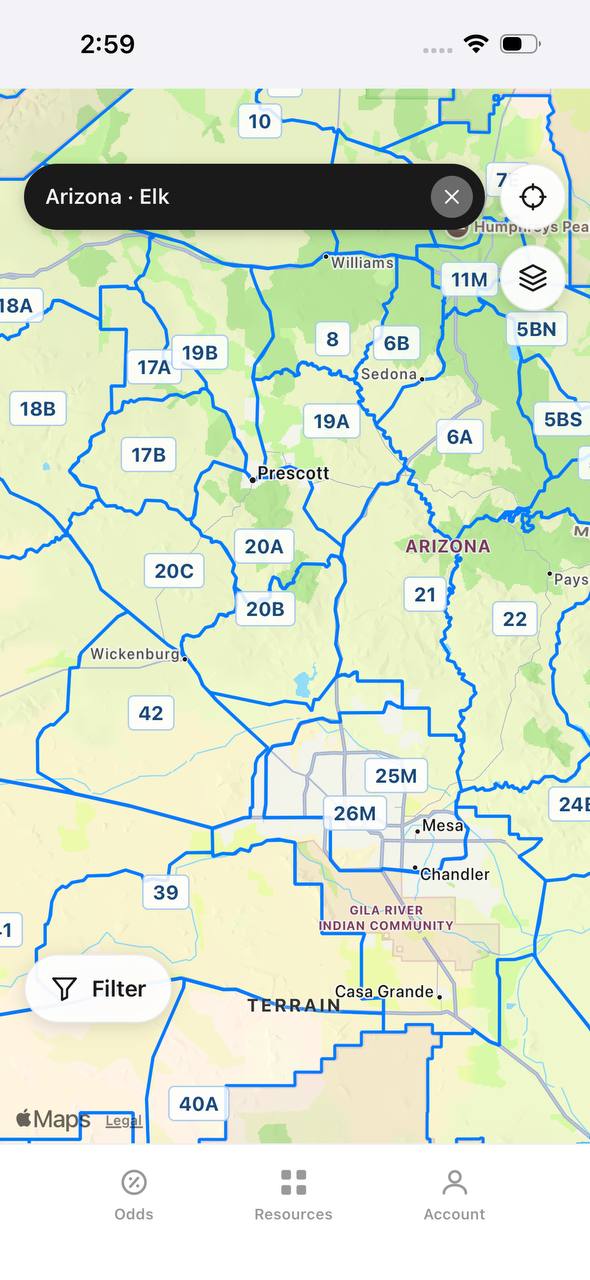
Once your bow setup is dialed and your shooting is consistent, the next step is finding the right archery hunt. TAGZ helps you compare archery seasons across western states using draw odds, unit maps, and terrain data. Whether you are chasing Colorado OTC archery elk or applying for limited-entry mule deer tags in Wyoming, TAGZ shows you which units match your skill level and timeline.
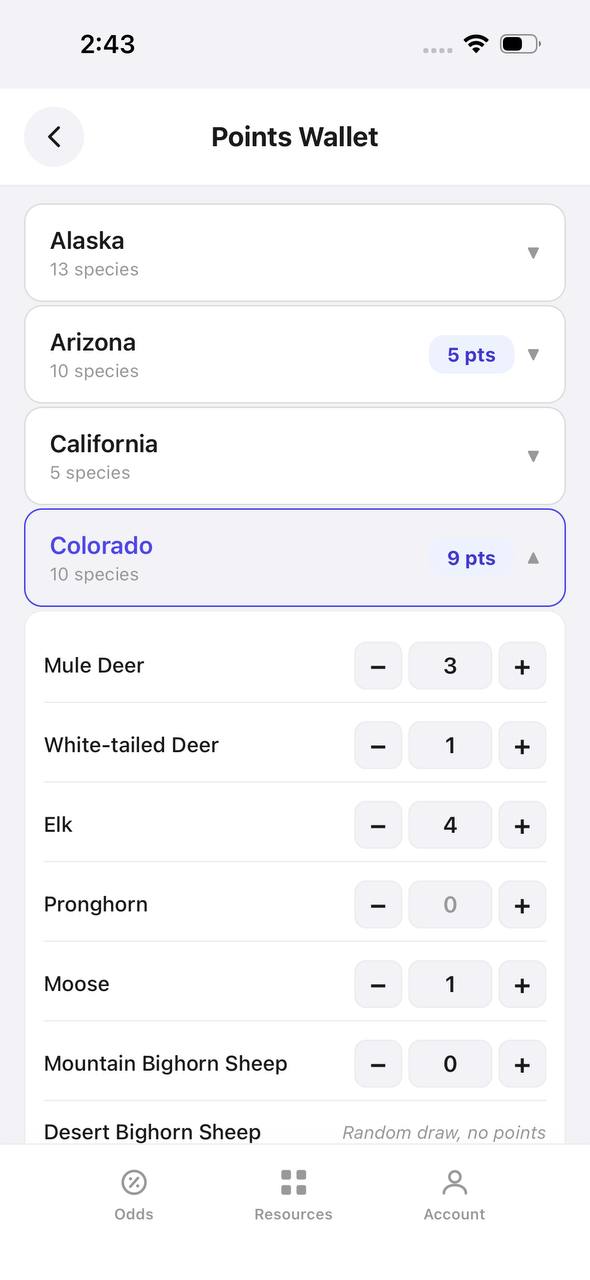
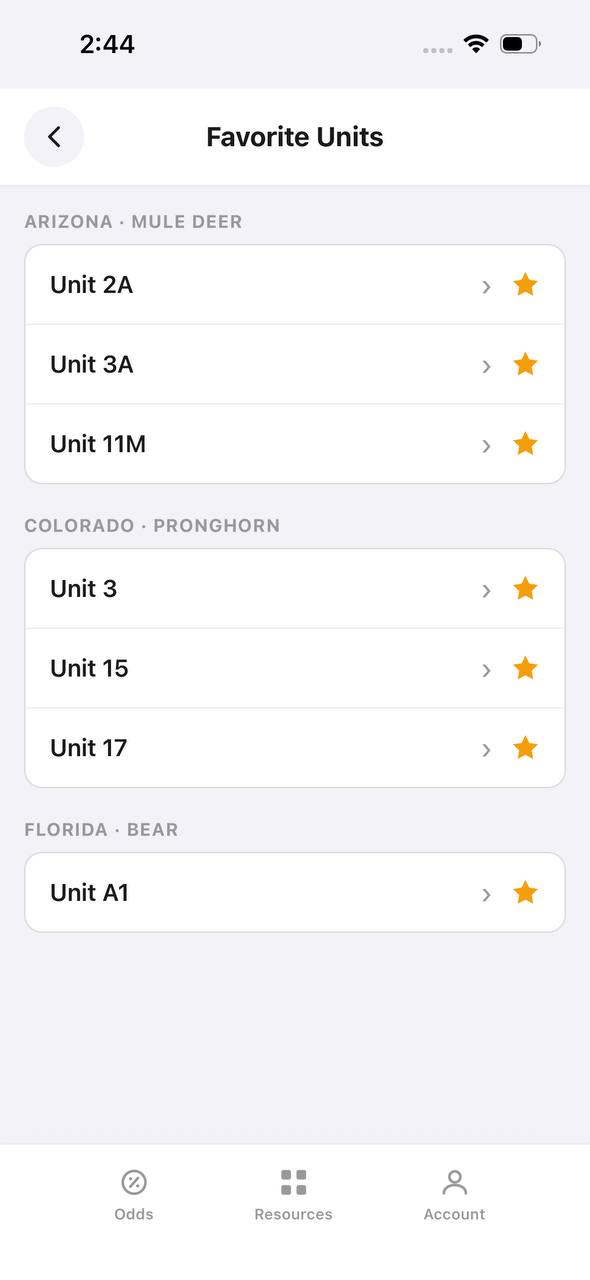
Track preference points and bonus points across multiple states so you never miss a draw deadline. Use TAGZ's unit research tools to filter hunts by weapon, season, and public land access. The platform breaks down unit boundaries, terrain features, and historical draw odds side by side, helping you make smarter application decisions before you ever step into the field.
FAQ — Beginner Compound Bows
What draw weight should a beginner bowhunter start with?
Start at 40 to 50 pounds. Most states require a minimum of 35 to 40 pounds for big game, and 50 pounds with modern compounds generates more than enough kinetic energy for ethical kills on deer and elk inside 40 yards.
Can you adjust draw weight on beginner compound bows without a bow press?
Yes. Models like the Bear Cruzer G3 and Diamond Infinite Edge Pro adjust draw weight and draw length using only an Allen wrench. No bow press is required for those adjustments, though limb replacement still requires pressing.
How much should I spend on my first compound bow?
Budget $350 to $500 for a quality adjustable compound bow package that includes a sight, rest, and quiver. You can start cheaper, but bows under $300 often lack the adjustability and build quality that help beginners progress.
Do I need a 70-pound draw weight to hunt elk?
No. A 50 to 55-pound bow with a properly weighted arrow and sharp broadhead will penetrate an elk's vitals cleanly inside 40 yards. Shot placement and arrow weight matter far more than raw draw weight.
What is the difference between adjustable and fixed compound bows?
Adjustable bows like the Bear Cruzer or Diamond Infinite Edge let you change draw weight and draw length without replacing parts, making them ideal for beginners still finding their fit. Fixed bows require limb or cam module changes to adjust, but they often shoot faster and smoother once dialed in.
Should I buy a bow online or at a pro shop?
Buy at a pro shop if possible. A shop will measure your draw length, set up the bow, tune it, and teach you proper shooting form. That service is worth paying slightly more than online prices, especially for your first bow.
Continue Planning Your Hunt
Once your bow is set up and you are shooting confidently, it is time to start planning your first archery hunt. TAGZ helps you navigate the western draw system, compare archery seasons, and identify units with strong public land access and realistic draw odds for first-time applicants.
Visit the TAGZ home page to explore how the platform simplifies multi-state hunt planning, or check out the TAGZ Insights blog for more archery hunting strategies, gear reviews, and draw deadline updates. Ready to start tracking your applications and preference points across multiple states? Review TAGZ pricing and see how the platform helps you maximize draw opportunities and confidently plan your first western archery hunt.
Was this article helpful?
Previous
Best Compound Bows for Western Hunting in 2026
The top compound bows for western big-game hunters in 2026 balance speed, forgiveness, and packability for backcountry hunts. We break down the standout models from Mathews, Hoyt, Bowtech, and Elite for elk, mule deer, and mountain terrain.
Related
Most Forgiving Compound Bows for Hunting in 2026
The most forgiving compound bows blend long axle-to-axle lengths, generous brace heights, and smooth draw cycles to minimize shooter error. We break down the top choices for hunters who prioritize accuracy over speed.
Next
Best Compound Bows for Treestand Hunting in 2026
Treestand hunting demands short axle-to-axle bows with smooth draw cycles and quiet shots. We break down the top compound bows for 2026 based on maneuverability, forgiveness, and real-world performance from elevation.