Best ATVs for Western Hunting: Models Built for Backcountry Access
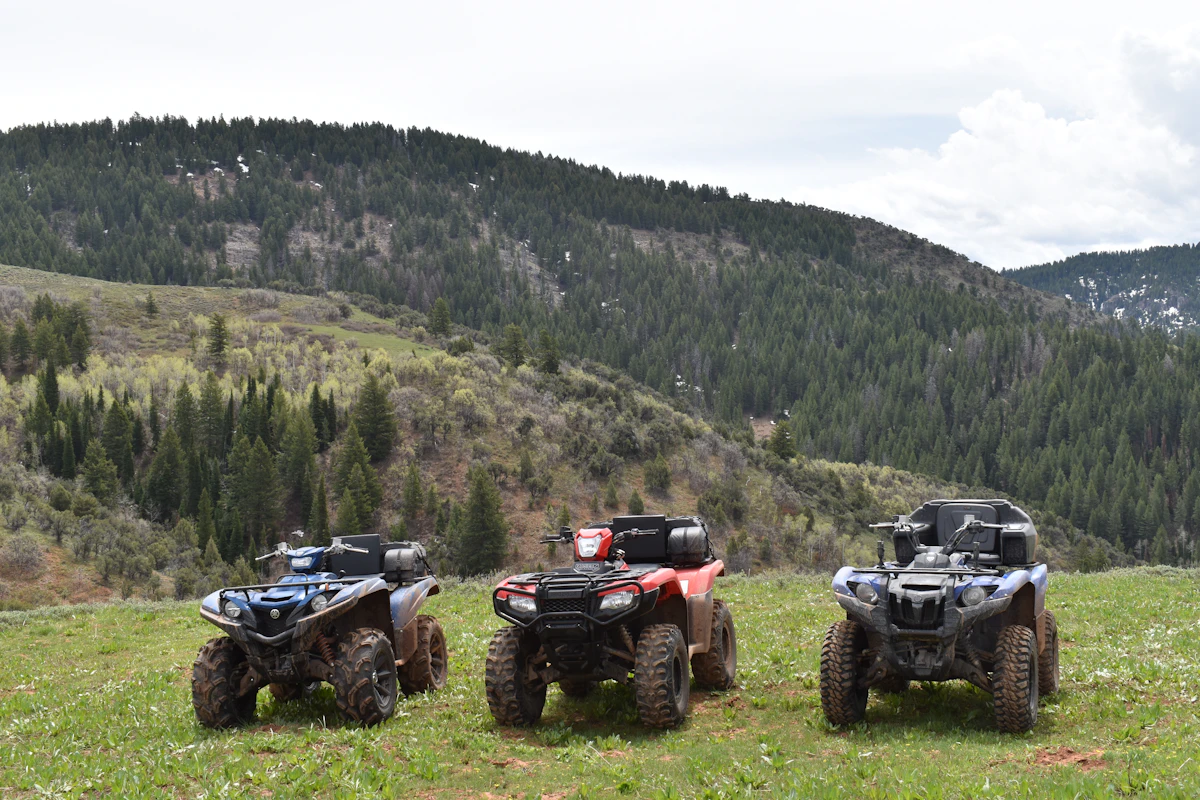
The right ATV turns a grueling packout into a manageable two-trip haul and opens country that would otherwise require horses or multiple days on foot. Western hunting puts unique demands on machines—extended fuel range for 40-mile loop roads, payload capacity for quartered elk, and low-end torque for boulder fields and sidehill two-tracks. The models that dominate dealership lots are not always the ones that hold up in October at 9,000 feet.
This guide covers proven workhorses across price points, focusing on the attributes that matter when you are 12 miles from the trailhead with 400 pounds of meat and camp gear.
What Makes an ATV Hunting-Ready
Hunting-specific demands differ sharply from recreational trail riding. Payload capacity tops the list—a quartered bull elk runs 300–400 pounds of boned meat, plus camp, water, and gear. Most sport quads max out around 200 pounds of usable cargo; true utility models handle 400–600 pounds without bottoming the suspension.
Fuel range determines how far you can scout or access remote units. A 3.5-gallon tank at 20 mpg gives you 70 miles—not enough for all-day glassing loops in Nevada or Wyoming's Red Desert. Look for 4.5–5.5 gallon tanks or budget for auxiliary fuel.
Ground clearance and low-end torque matter more than top speed. Steep, rocky trails and alpine basins require 10–11 inches of clearance and engine braking in low range. Electric power steering reduces fatigue on technical terrain but adds weight and potential failure points.
Top Models for Elk and Mule Deer Country
These ATVs have earned reputations in alpine basins, lodgepole forests, and high-desert canyon rims where western big game live.
Polaris Sportsman 570
The Sportsman 570 is the default choice for hunters who need reliable utility at a mid-tier price. The 567cc engine delivers enough torque for loaded climbs without over-gearing for trail speed. Payload capacity hits 385 pounds on the rear rack, and the 4.5-gallon tank provides reasonable range.
Electric power steering (EPS) is standard on most trims and makes a tangible difference on long scouting days. The independent rear suspension (IRS) smooths out washboard roads but adds complexity compared to solid-axle designs. Polaris reliability has improved since the mid-2010s, though older models had issues with electronic throttle bodies and voltage regulators.
This machine works best for hunters who split time between maintained forest roads and moderate backcountry access. It is not the toughest option for extreme rock crawling but handles the majority of western terrain without drama.
Honda Rancher 420
The Rancher 420 is the choice for hunters who prioritize bulletproof reliability over features. Honda's longitudinal-mounted engine and solid rear axle create a simple, durable platform that starts in November at 10,000 feet and runs for decades with basic maintenance.
Payload capacity tops out around 374 pounds, and the 3.9-gallon fuel tank limits range compared to Polaris or Can-Am. Ground clearance sits at 8.3 inches—adequate for most trails but marginal in deep ruts or boulder fields. The manual shift or semi-automatic DCT transmission options both work well; DCT adds convenience on technical terrain at the cost of added weight and complexity.
This ATV suits hunters who operate mostly on established roads and trails, pack light, or hunt areas where the truck can reach base camp. The lack of EPS makes long days harder on the arms, but the mechanical simplicity means fewer failure points in remote country.
Can-Am Outlander 650 XT
The Outlander 650 XT balances power and payload for hunters who need to haul heavy loads over mixed terrain. The 650cc Rotax engine provides strong low-end torque, and the 5.4-gallon fuel tank extends range for all-day scouting missions. Payload capacity hits 390 pounds on the rear rack.
Can-Am's Tri-Mode Dynamic Power Steering (DPS) adjusts assist levels for different terrain—helpful when transitioning from highway-speed forest roads to slow technical climbs. The IRS delivers a smooth ride but requires more maintenance than solid-axle setups. Build quality is generally strong, though some model years have had issues with exhaust sensors and throttle position sensors.
This machine works well for hunters tackling varied terrain in a single trip—paved highways to trailheads, maintained roads to camp, then steep two-tracks to glassing points. The added power and fuel capacity justify the price jump over mid-size models if your hunting covers serious miles.
Yamaha Kodiak 700
The Kodiak 700 delivers reliable utility with Yamaha's reputation for long-term durability. The 708cc engine provides ample torque for loaded climbs, and the Ultramatic transmission with engine braking works well on steep descents. Payload capacity reaches 353 pounds, and the 4.76-gallon tank offers solid range.
Yamaha's On-Command 4WD system lets you shift between 2WD, limited-slip 4WD, and fully locked 4WD on the fly—useful when conditions change mid-trail. EPS is standard on most trims and reduces steering effort without feeling overly assisted. The solid rear axle is simpler and tougher than IRS, though it transmits more trail feedback.
This ATV suits hunters who want reliable backcountry performance without cutting-edge features. It is not the most refined machine on smooth roads but holds up well in rough country and cold weather.
Choosing Between Mid-Size and Full-Size Models
Mid-size ATVs (400–500cc) offer better fuel economy, lighter weight, and easier trail maneuverability. They work well for solo hunters packing out deer or pronghorn, or for accessing tight timber where full-size machines struggle. Most mid-size models max out around 300–350 pounds of payload, which limits their usefulness for quartered elk.
Full-size models (650–850cc) provide the power and payload for heavy loads and long-range access. The weight penalty (typically 100–150 pounds heavier than mid-size) matters less on wide forest roads but becomes noticeable on narrow sidehill trails. Fuel consumption increases, but larger tanks often result in similar or better total range.
For elk hunters operating in steep, remote country, full-size models justify the added cost and weight. For deer and pronghorn hunters working flatter terrain or closer to roads, mid-size machines offer better value.
Payload and Hauling Considerations
Manufacturer payload ratings assume evenly distributed weight on racks and hitches. Real-world packouts rarely meet that standard—most hunters stack meat bags on rear racks, which stresses suspension and handling.
A quartered bull elk yields roughly 350–400 pounds of boned meat. Add camp gear, optics, rifle, water, and fuel, and total cargo approaches 500 pounds on a single machine. This exceeds the rear rack capacity of nearly every ATV.
Practical solutions include splitting loads across two trips, packing the front rack and rear simultaneously to balance weight, or towing a small utility trailer on maintained roads. Heavy-duty springs and shocks help, but overloading consistently shortens drivetrain and suspension life.
Free to join
Download mobile app
- Detailed draw odds
- Point tracking
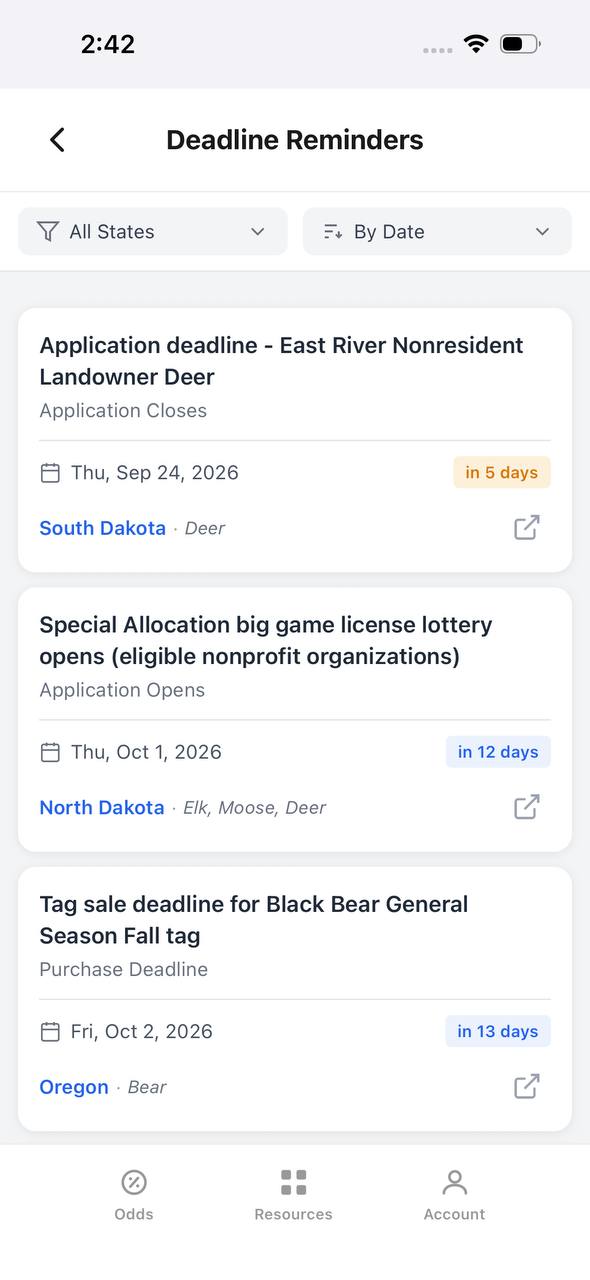
- Deadline reminders
- 18 states covered

Free to join
Download mobile app
- Detailed draw odds
- Point tracking
- Deadline reminders
- 18 states covered
Free to join
Download mobile app
- Detailed draw odds
- Point tracking
- Deadline reminders
- 18 states covered
Fuel Range and Tank Capacity
Fuel range determines how far you can scout without carrying jerry cans or planning resupply. Most ATVs average 15–25 mpg depending on terrain, load, and throttle use. A 4-gallon tank at 20 mpg gives you 80 miles of total range; plan for 50–60 usable miles before refueling to avoid getting stranded.
Western units often require 30–50 mile round trips from the nearest fuel. Hunters operating in Nevada, Wyoming, or eastern Oregon should prioritize models with 5+ gallon tanks or install auxiliary fuel systems. Rotopax or similar fuel packs work but add weight and require secure mounting.
Carry a siphon hose and know where the nearest ranch or highway is. Cell service is rare in good hunting country, and a breakdown 25 miles from the truck becomes a genuine emergency without backup fuel.
Suspension and Ground Clearance
Ground clearance determines what obstacles you can clear without high-centering or damaging the skid plate. Most utility ATVs offer 9–11 inches of clearance, which handles the majority of western trails. Steep, rocky terrain or deep ruts may require aftermarket lift kits or larger tires.
Independent rear suspension (IRS) provides a smoother ride and better traction on uneven ground but adds weight, complexity, and maintenance. Solid rear axles are simpler, cheaper to repair, and handle heavy loads better, but they transmit more trail feedback and can cause one rear wheel to lift on steep sidehills.
For hunters who spend most of their time on established roads and moderate trails, IRS improves comfort. For those tackling extreme terrain or prioritizing durability, solid axles make more sense.
Power Steering and Rider Fatigue
Electric power steering (EPS) reduces arm fatigue on long scouting days and makes low-speed technical maneuvering easier. The difference becomes noticeable after 20+ miles of trail riding or when muscling a loaded machine through tight switchbacks.
Some hunters prefer the direct feedback of manual steering, especially on high-speed sections where EPS can feel over-assisted. Most modern systems allow you to adjust assist levels or disable EPS entirely. The added weight (typically 10–15 pounds) and potential electrical failure points are minor trade-offs for most hunting applications.
If you are glassing all day and riding 40+ miles on loop roads, EPS pays off. If you are driving short distances to stationary stands or tree-stand locations, manual steering works fine.
Free to join
Download mobile app
- Detailed draw odds
- Point tracking
- Deadline reminders
- 18 states covered
Free to join
Download mobile app
- Detailed draw odds
- Point tracking
- Deadline reminders
- 18 states covered
Free to join
Download mobile app
- Detailed draw odds
- Point tracking
- Deadline reminders
- 18 states covered
Tires and Traction in Backcountry Conditions
Stock tires on most ATVs are trail-rated compromises—adequate for moderate terrain but not optimized for mud, snow, or steep sidehills. Aggressive tread patterns improve traction in loose soil and mud but increase rolling resistance and reduce fuel economy.
For western hunting, consider tires with strong sidewalls and puncture resistance. Cactus, sharp rocks, and deadfall create more flats than mud or snow. Foam inserts or tire sealant reduce downtime but add weight.
Snow traction becomes critical for late-season hunts. Chains work well on hard-packed snow and ice but damage trails and are illegal in some wilderness areas. Studded or aggressive winter-rated tires provide better all-around performance without the legal complications.
Reliability and Field Repairs
Mechanical failures in the backcountry turn into serious problems fast. Carry basic tools, spare drive belts (for CVT-equipped models), tire repair kits, zip ties, and duct tape. Know how to diagnose common issues like fouled spark plugs, clogged fuel filters, and electrical shorts.
Polaris and Can-Am models have more electronic systems, which means more potential failure points. Honda and Yamaha machines are mechanically simpler and generally easier to troubleshoot without diagnostic tools. Older models with carburetors are easier to repair in the field than fuel-injected machines, but EFI performs better at altitude and in cold weather.
Join online forums specific to your ATV model and learn common failure points before hunting season. Pack a shop manual or download troubleshooting guides to your phone for offline reference.
Accessories and Upgrades for Hunting Applications
Aftermarket racks increase payload capacity and provide better tie-down options for meat bags and camp gear. Front and rear bumpers protect plastics during trail contact and provide winch mounting points. Skid plates shield the engine and undercarriage from rock strikes.
Winches are essential for solo hunters. A 3,000–4,500 pound winch handles most ATV self-recovery situations and can assist with game recovery on steep slopes. Synthetic rope is lighter and safer than steel cable.
Gun boots or scabbards mount to the front rack and keep rifles secure and accessible. Ensure the mount does not interfere with steering or create snag points on tight trails.
Free to join
Download mobile app
- Detailed draw odds
- Point tracking
- Deadline reminders
- 18 states covered
Free to join
Download mobile app
- Detailed draw odds
- Point tracking
- Deadline reminders
- 18 states covered
Free to join
Download mobile app
- Detailed draw odds
- Point tracking
- Deadline reminders
- 18 states covered
Maintenance Considerations for Seasonal Hunters
ATVs used primarily during hunting season require different maintenance schedules than year-round machines. Change oil and filters before the season, even if hour meters indicate otherwise—fuel and oil degrade during storage. Check tire pressure, battery voltage, and coolant levels before the first ride.
Store machines with a full fuel tank treated with stabilizer to prevent ethanol-related fuel system corrosion. Disconnect the battery or use a trickle charger to prevent discharge. Drain the carburetor (if applicable) or run the engine dry to avoid varnish buildup in fuel systems.
High-altitude use increases engine strain and reduces performance. Jets and fuel maps optimized for sea level run rich above 8,000 feet, causing fouled plugs and poor throttle response. Some EFI systems auto-adjust for altitude; carbureted models may require rejetting or manual choke adjustment.
Legal and Land-Use Regulations for ATV Hunting
ATV regulations vary by state, land ownership, and management agency. National Forests generally allow ATVs on designated roads and trails but prohibit cross-country travel. Wilderness areas prohibit all motorized vehicles. BLM land often allows broader ATV use, but specific travel management plans vary by field office.
Some states restrict ATV use during hunting seasons or require spark arresters and noise limits. Know the regulations for the units you hunt and carry required permits or OHV registrations. Violating travel restrictions can result in citations, vehicle impoundment, or loss of hunting privileges.
Respect road and trail closures. Enforcement is increasing in high-use areas, and illegal travel damages habitat and creates political pressure that results in broader access restrictions.
FAQ — ATVs for Western Hunting
What size ATV is best for elk hunting?
Full-size models (650–700cc) offer the payload and power needed to haul quartered elk and handle steep, rough terrain. Mid-size models work for solo hunters willing to make multiple packout trips.
How much can an ATV carry for a meat haul?
Most utility ATVs handle 350–400 pounds on the rear rack, enough for a quartered elk or deer. Exceeding payload limits stresses suspension and drivetrains, especially on steep terrain.
Do I need power steering on a hunting ATV?
Power steering reduces arm fatigue on long scouting days and technical terrain. It is not essential but becomes valuable on rides exceeding 20 miles or when maneuvering loaded machines.
What fuel range do I need for backcountry hunting?
Aim for 80–100 miles of total range (plan to refuel at 50–70 miles). This requires a 4.5–5.5 gallon tank at typical fuel economy rates. Carry auxiliary fuel for remote units.
Are Polaris ATVs reliable enough for hunting?
Modern Polaris models (2018+) have improved significantly in reliability. Expect more electronic components than Honda or Yamaha, which means more potential failure points but better features like EPS and ride modes.
Should I get independent rear suspension or a solid axle?
Independent rear suspension (IRS) provides a smoother ride and better traction on uneven ground. Solid axles are simpler, cheaper to repair, and handle heavy loads better. Choose IRS for comfort, solid axle for durability.
Continue Planning Your Hunt
ATV access opens country that would otherwise require horses, multi-day backpack trips, or long packouts on foot. Once you have the machine dialed in, the next step is finding units where that access translates into better hunting.
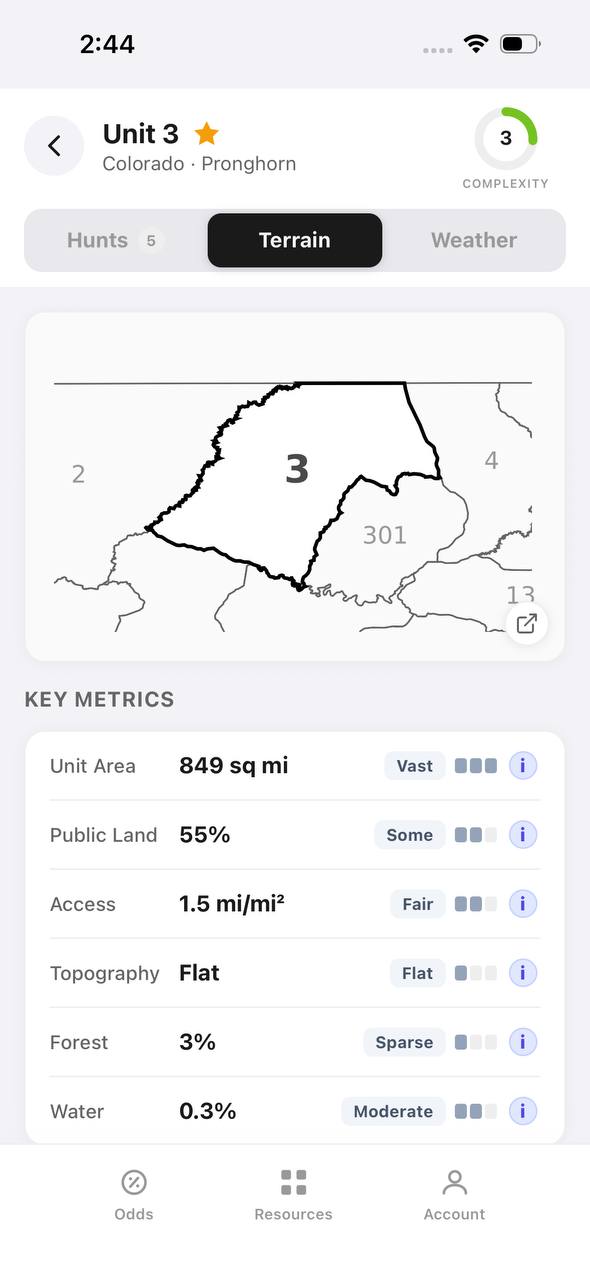
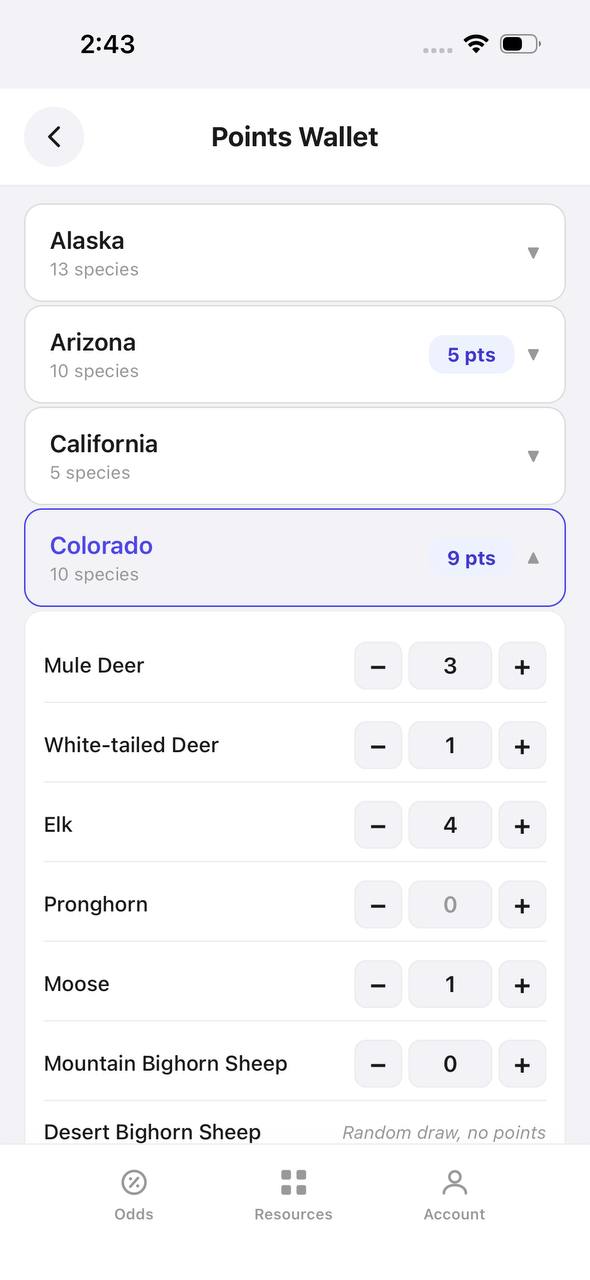
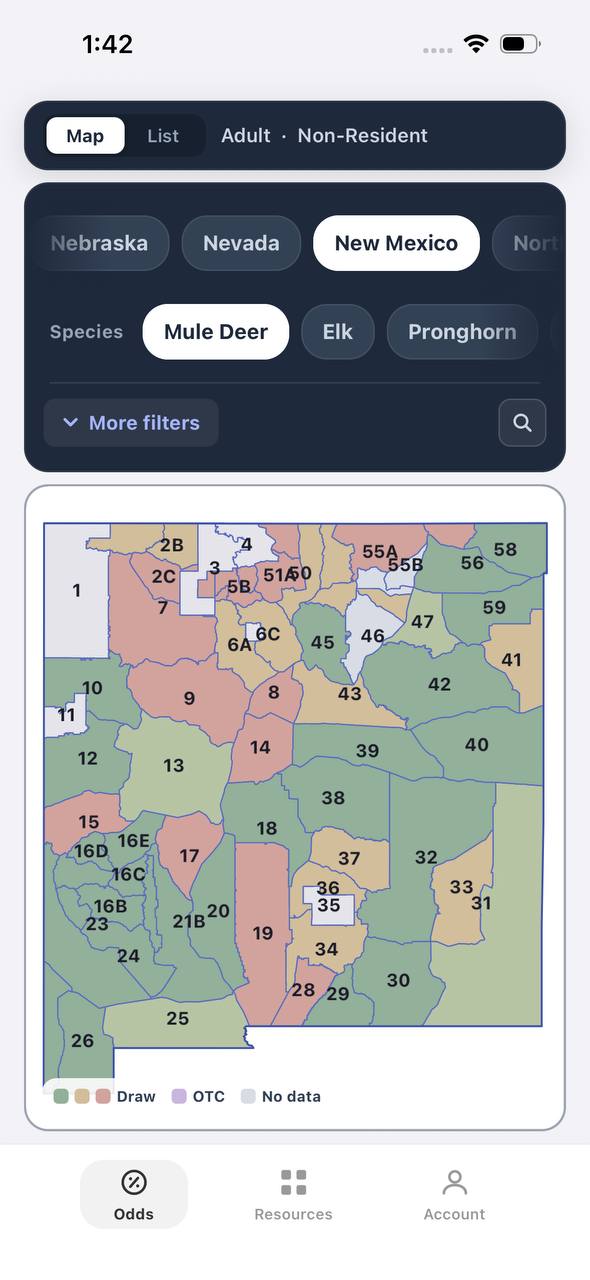
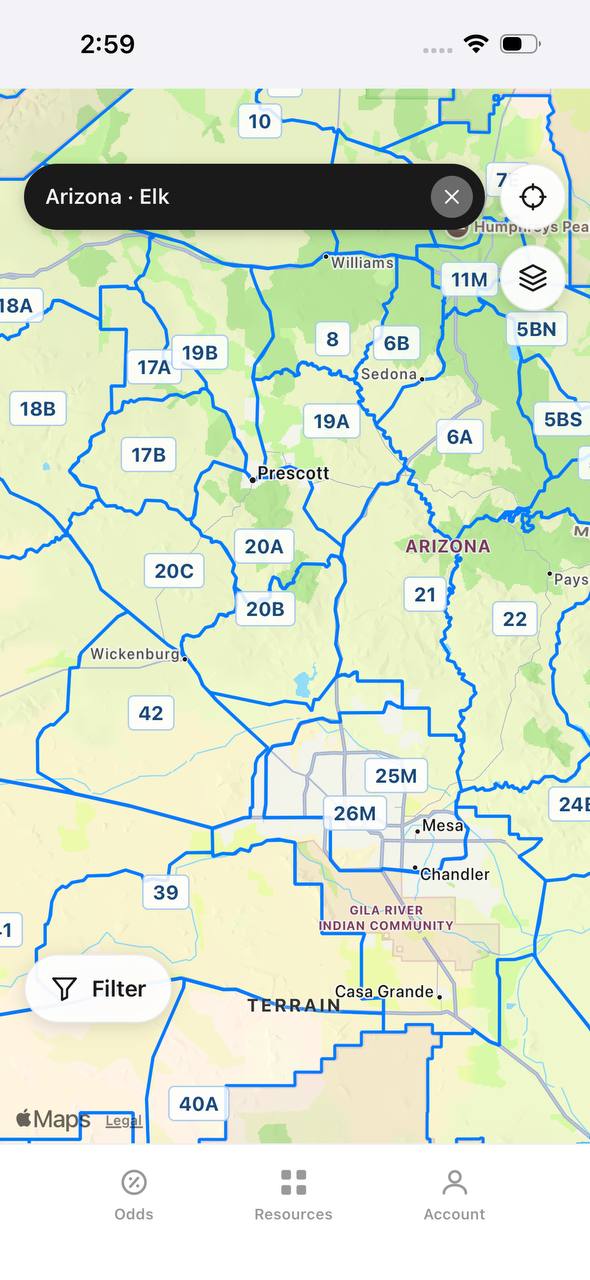
TAGZ helps you compare units side by side using terrain maps, unit boundaries, and historical draw data. Track your preference points and bonus points across multiple states so you never miss a draw deadline. Whether you are chasing OTC tags or planning a trophy limited-entry hunt, TAGZ gives you the tools to make smarter decisions before you ever step into the field.
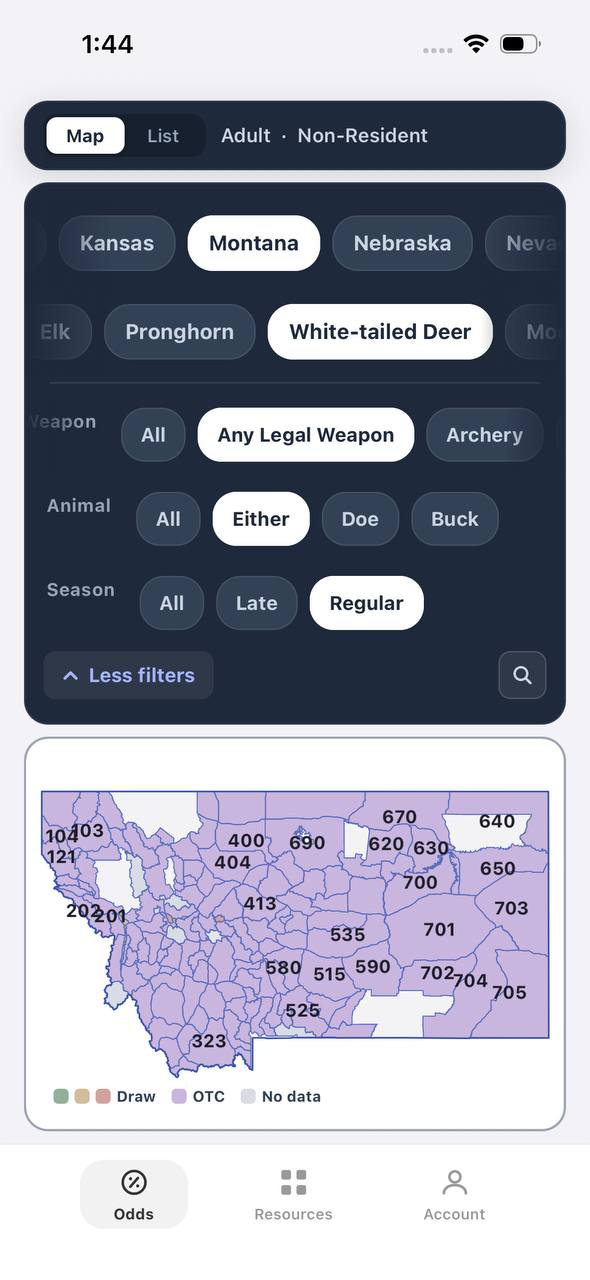
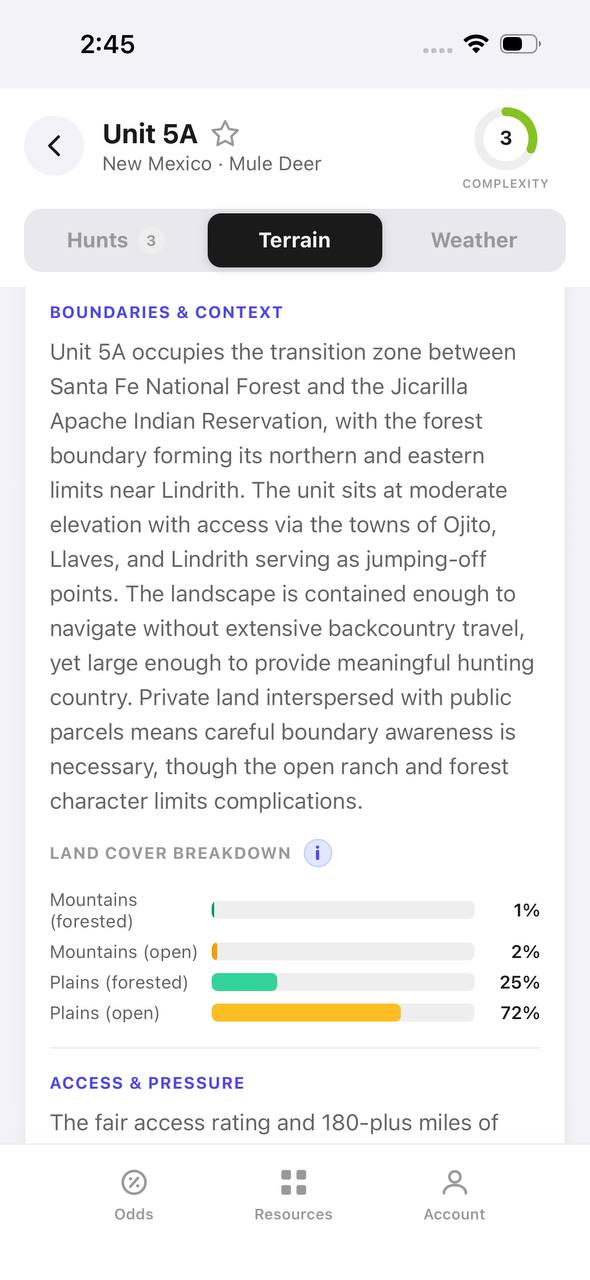
Filter hunts by weapon, season, and species. Review unit maps showing public land boundaries, road access, and terrain features. See where your points position you for hunts that match your ATV's capabilities and your tolerance for crowds.
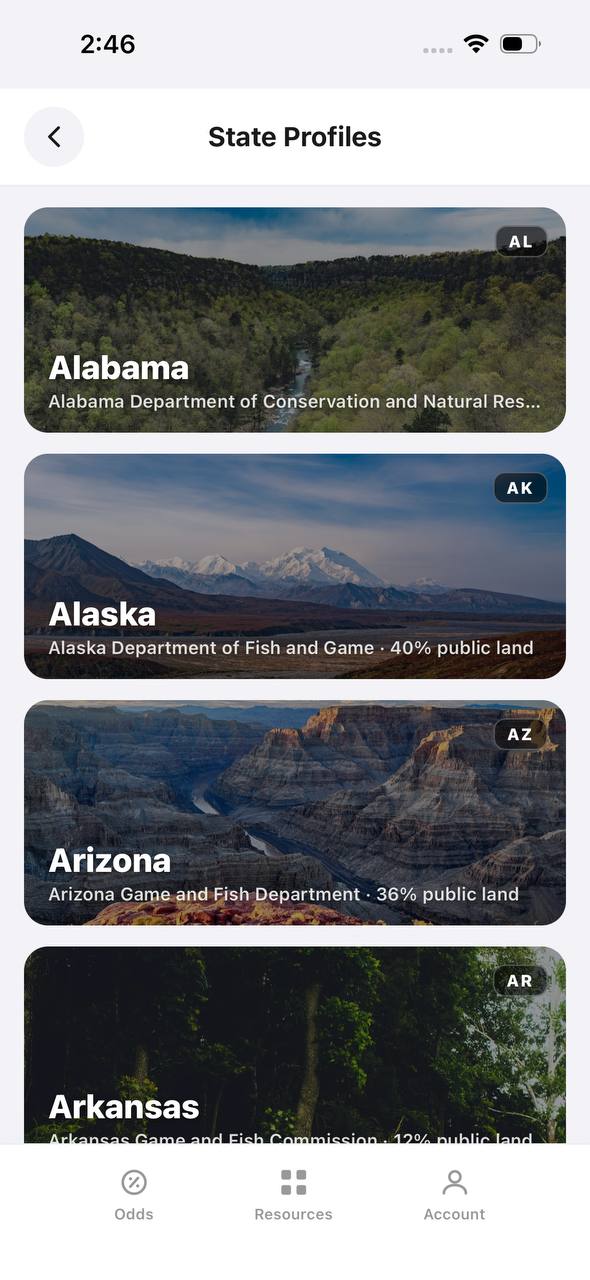
Explore more hunt planning resources and research tools on the TAGZ Insights page. Ready to start tracking your points and building a multi-state application strategy? Check out TAGZ pricing options or learn more about how the platform works on the TAGZ product page. Visit the TAGZ home page to create an account and start planning your next hunt with better data and clearer strategy.
Was this article helpful?
Previous
Best Game Bags for Elk and Big Game in 2026: Field-Tested Picks
Quality game bags protect your meat from flies, dirt, and spoilage during the critical hours between kill and cooler. We break down the top breathable, tear-resistant options for elk, deer, and backcountry packing in 2026.
Related
Mountain Goat Behavior: How These Alpine Masters Survive Extreme Terrain
Mountain goats inhabit some of North America's harshest alpine environments, displaying unique behaviors that allow them to thrive where few species can survive. Understanding their seasonal movements, feeding patterns, social structure, and predator avoidance tactics is essential for hunters planning a once-in-a-lifetime goat hunt.
Next
Hunt Smarter: Navigation Skills Every Western Hunter Needs
Learn essential GPS, map, and compass navigation techniques that keep western big-game hunters on target and safe in remote backcountry terrain.